

The Ultimate Stretching Routine for Runners
A solid stretching routine for runners is a powerful tool for boosting performance and staying healthy. So many of us are still stuck on outdated advice. I see it all the time. Runners hold deep, static stretches before they even take their first step. That old-school habit can actually do more harm than good.
The secret isn't just if you stretch. It is when and how.
Why Your Stretching Approach Matters
Running science has come a long way. We have moved past the one-size-fits-all approach to stretching. For decades, common wisdom was to hold a hamstring or quad stretch. We now know that this type of stretching is called static stretching. It can temporarily weaken your muscles and reduce their elastic power. This is exactly what you don't want right before a run.
Instead, the smartest runners use a two-part system. This system works with the body's needs before and after a workout. This is a core principle we teach here at RunDreamAchieve. It is not just for the elites. It’s a fundamental shift that helps everyone. This includes 5K first-timers and veteran marathoners. By matching your stretch to the right phase, you set your body up for success. You also give it the recovery it craves.
Dynamic Versus Static The Core Difference
The modern approach to a runner's stretching routine is simple. You warm up with movement and cool down with holds.
Dynamic Stretching (Pre-Run): This involves active movements that look like running. Think leg swings, high knees, and walking lunges. The goal is to get your blood flowing. It raises your core body temperature. It also wakes up the connection between your brain and your muscles.
Static Stretching (Post-Run): This is the classic "hold-a-stretch" method you know. It’s best saved for after your run. Your muscles are already warm and more receptive to being lengthened. Holding these stretches for 30-60 seconds helps improve long-term flexibility. It eases muscle tightness and signals your body to start recovering.
The real breakthrough for most runners is realizing stretching isn't just one thing. It's two different tools for two different jobs. Using the right one at the right time is key. It separates an effective routine from one holding you back.
To give you a quick visual summary, here’s how the two types of stretching stack up.
Dynamic vs Static Stretching Key Differences
| Attribute | Dynamic Stretching (Pre-Run) | Static Stretching (Post-Run) |
|---|---|---|
| Purpose | To prepare muscles for activity, increase blood flow, and activate the nervous system. | To improve long-term flexibility, release tension, and aid muscle recovery. |
| Timing | Before the run, after a light warm-up (e.g., 5-10 minutes of walking or jogging). | After the run, while muscles are still warm and pliable. |
| Movement | Active, controlled movements through a full range of motion. Mimics running actions. | Holding a stretch in a fixed position for a set duration. |
| Benefits | Improves performance, reduces the risk of injury by prepping muscles, enhances mobility. | Increases flexibility, reduces post-run soreness, promotes relaxation. |
This isn't just theory; the research backs it up. The science was clear even back in 2011. One study showed a dynamic stretching session boosted performance by 9.8%. On the flip side, static stretches for 90 seconds per muscle decreased performance by 1.4%. This made it tougher to hit your goal pace.
That evidence makes a compelling case for rethinking your pre-run routine. This one simple switch is a huge step in your journey to how to become a better runner.
The Pre-Run Dynamic Warm-Up Your Body Craves
Forget everything you learned in gym class. The modern, science-backed approach is about dynamic movements. These movements mimic the act of running. This is how you actively prep your body for the miles ahead. You increase blood flow and raise your core temperature. You also wake up your brain-to-muscle connection.
Think of it as a dress rehearsal for your run. It ensures every muscle is primed and ready to fire correctly.

The idea here isn't to tire yourself out. It is to gently move through a full range of motion. We're targeting powerhouse running muscles. These are your glutes, hamstrings, quads, and hip flexors. This improves your form and efficiency from the first stride.
Core Dynamic Movements for Every Runner
A great pre-run routine is built on quality, not quantity. Rushing through exercises won't do you any favors. Instead, focus on performing key movements with control.
Here are the essentials I recommend to every runner I work with:
- Leg Swings (Forward & Sideways): Find a wall or fence for balance. Swing one leg forward and back like a pendulum. Keep your upper body still. After 10-15 swings, turn and swing the leg side-to-side. This is fantastic for opening up the hips.
- Walking Lunges with a Torso Twist: Step forward into a lunge. Your front knee shouldn't drift past your toes. As you lunge, rotate your torso over your front leg. This move fires up your quads and glutes. It also mobilizes your upper back for a powerful arm swing.
- High Knees: This classic drill mirrors the knee drive for a strong stride. Jog in place or move forward. Focus on driving your knees up toward your chest. The key is to be quick and light on your feet.
- Butt Kicks: The perfect partner to high knees, butt kicks zero in on your hamstrings. As you jog, flick your heel straight up toward your glute. This preps the muscles that pull your leg back.
These four movements create a simple but effective warm-up. They systematically get the major muscle groups ready for running.
How to Scale Your Warm-Up
Your warm-up shouldn't be a one-size-fits-all script. It needs to adapt to your fitness and workout. A beginner starting a couch-to-5k plan needs something different. A seasoned marathoner about to hit the track has other needs.
If you're new, focus on mastering the form with controlled movements. Your leg swings may not be as high. Your lunges might not be as deep. That's perfectly fine. The goal is to build the habit and nail the technique.
More advanced runners can dial up the intensity. You can start adding more explosive, plyometric-style movements. Many experienced runners see huge gains with specific plyo exercises for runners. Drills like A-skips and B-skips can also sharpen neuromuscular coordination.
The best dynamic warm-up is a flexible framework. On an easy recovery day, a shorter warm-up may suffice. Before a hard workout or race, a more intense routine is necessary.
No matter your level, the goal is the same. Finish your warm-up feeling energized, mobile, and mentally switched on.
Why Dynamic Warm-Ups Prevent Injury
So, what's the big deal? Dynamic warm-ups play a direct role in injury prevention. When you increase muscle temperature, you improve their elasticity. Warm, pliable muscles are far less likely to strain or tear.
Beyond that, these movements fine-tune your proprioception. This is your body's internal GPS. By rehearsing running motions, you strengthen brain-muscle communication. This leads to better stability and smoother movement. It lowers the risk of an awkward foot plant that can sideline you.
Mastering Your Post-Run Recovery Routine
After you’ve logged your miles, the second part of your workout begins. Your body is primed for recovery. Static stretching can finally take center stage. A dedicated cool-down isn't just a nice-to-have. It's a critical piece of the puzzle. It helps lengthen tight muscles and improve your long-term flexibility. It also kick-starts the repair process that makes you a stronger runner.

Unlike a dynamic warm-up, the goal here is stillness. While your muscles are warm, you can safely hold these stretches. This signals your nervous system to shift from high alert to rest. It’s a simple habit that makes a huge difference.
The Foundation of an Effective Cool-Down
A great post-run stretching routine targets the major muscle groups. We're talking about the engine of your running stride. This includes your hamstrings, quads, hip flexors, glutes, and calves.
Aim to hold each stretch for 30 to 60 seconds. This is the sweet spot for encouraging your muscles to release tension.
Remember to breathe deeply and ease into each position. You’re looking for a gentle pulling sensation, never sharp pain. Pushing too hard can lead to micro-tears in the muscle. That is the opposite of what we're trying to do. Just relax into the stretch and let your body open up naturally.
Essential Static Stretches for Runners
Here are the cornerstones of a solid post-run routine. Each one addresses the specific tightness that plagues runners.
- Standing Hamstring Stretch: Stand with your feet together. Step one foot forward with the leg straight. Slightly bend the other knee. Hinge forward at the hips with a straight back. You will feel a stretch along the back of your front leg.
- Standing Quadriceps Stretch: Stand tall, using a wall for balance. Bend one knee and grab your ankle. Gently pull your heel toward your glute. Keep your knees aligned and push your hips slightly forward.
- Kneeling Hip Flexor Stretch: Kneel on one knee. Place the other foot flat on the floor in front of you. Gently press your hips forward with an upright torso. You'll feel a great release in the front of your hip.
- Pigeon Pose: This is a fantastic stretch for tight glutes and hips. Start on all fours. Bring one knee forward toward the matching wrist. Extend the other leg straight behind you. Let your hips sink toward the floor.
Consistency is far more important than intensity. A 10-minute cool-down after every run provides greater benefits. It is better than one aggressive 30-minute session once a week. Make it a non-negotiable part of your running ritual.
Integrating Mobility Tools for Deeper Recovery
Sometimes, static stretching alone isn't enough. It may not release deep muscle knots or tackle tightness. This is where tools like foam rollers come into play.
Foam rolling applies direct pressure to specific points on your muscles. It helps break up adhesions and get the blood flowing.
Focus on rolling slowly over major muscle groups. These include your quads, hamstrings, calves, and glutes. When you hit a tender spot, pause on it for 20-30 seconds. Breathe through it until the muscle starts to release. It can be uncomfortable, but it's incredibly effective.
Of course, post-run nutrition is also a huge part of the equation. After depleting your energy stores, refueling effectively is a must. You can learn more about the https://rundreamachieve.com/best-recovery-drink/ to help replenish your body properly.
For a deeper dive into specific nutrients, this guide is a fantastic resource. Check out these recommended supplements for runners.
Avoiding Common Cool-Down Mistakes
To get the most out of your post-run routine, watch out for these common errors.
- Stretching Cold: Never perform deep static stretches on cold muscles. Save them for after your run when your body is warm.
- Bouncing: That old-school bouncing you see in movies? Don't do it. Ballistic movements can trigger a protective reflex in the muscle. This causes it to tighten up instead of relax. All your holds should be smooth and steady.
- Holding Your Breath: This is a big one. Deep, controlled breathing helps relax your nervous system. This allows your muscles to release more effectively. Always exhale as you ease deeper into a stretch.
By mastering your post-run recovery, you’re investing in your future runs. This crucial practice is a core part of any successful stretching routine for runners.
Building Real Injury Resilience with Strength Training
A good stretching routine for runners is a key piece of the puzzle. But it isn't your primary defense against getting hurt. Let's be honest: stretching alone just isn't enough. You need a strong, resilient body to handle the impact of running.
This is where strength training comes in. It is arguably your most powerful ally. It goes far beyond just lengthening muscles. It’s about making them stronger and more capable. Think of strong muscles as your body's personal shock absorbers. They shield your joints, ligaments, and tendons from constant pounding.
Why Strength Outperforms Stretching for Injury Prevention
For a long time, the running world was convinced of one thing. More flexibility meant fewer injuries. We now know better. A growing body of solid research points in a different direction. It shows that muscular strength is far more critical.
One major analysis put the old stretching myth to bed. It found stretching only offered a 3.7% lower risk of injury. This number is not even statistically significant. Strength training cut the overall risk of injury by an incredible 68.5%. You can dig into the data at Marathon Handbook. The data makes it clear: building a stronger body is non-negotiable.
Strength training for runners isn't about getting huge. It's about functional strength. It's building a stable chassis to support an efficient running engine. It fixes imbalances and dials in your form. It ultimately makes you a much tougher athlete.
This approach is all about creating a durable runner. This is essential whether you're tackling your first 5k or a marathon.
Essential Strength Exercises for Runners
You don’t need a complicated gym routine to get the job done. A simple and consistent bodyweight program can lower your injury risk. The trick is to focus on movements that hit main running muscles. For a more detailed look, check out our guide to strength training for distance runners.
Here are three foundational exercises for every runner's toolkit:
- Squats: This is the king of lower-body exercises. It strengthens your quads, hamstrings, glutes, and core all at once. Nailing your squat form trains your body to fire up the right muscles. This translates to a more powerful and stable running stride.
- Glute Bridges: I see it all the time. Weak glutes are the culprit behind many running injuries. Glute bridges wake up and strengthen these powerhouse muscles. They are essential for proper hip extension and pelvic stability.
- Planks: A strong, stable core is the bedrock of good running form. Planks build deep endurance in your abs and lower back. They help you stay upright when fatigue sets in on long runs.
Working these exercises into your week two or three times helps. It builds a protective layer of strength around vulnerable areas. It’s a small time investment that pays off in injury prevention. You can train more consistently without the constant fear of a setback. When you pair this work with a smart stretching routine for runners, you create a complete system.
Sample Stretching Routines for Every Runner
Knowing how to stretch is one thing. Putting it into practice is what really moves the needle. To make it simple, I've outlined three different routines. They are based on where you are in your running journey. Whether you're a beginner, a PR chaser, or a marathoner, there’s a plan here. Each one includes a dynamic warm-up and a static cool-down.
A smart running plan is about more than just logging miles. It’s about building a body that can handle the work. This is where stretching, strength, and resilience come together.
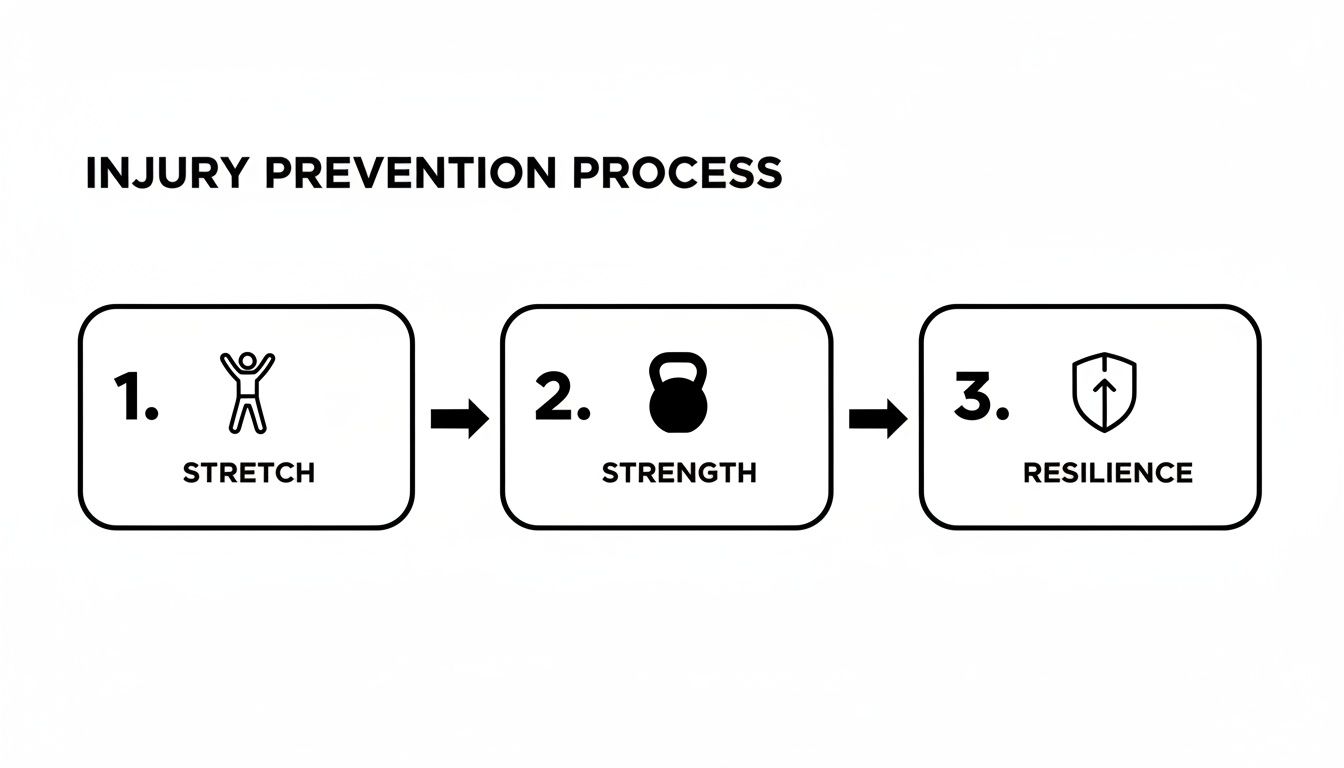
As you can see, stretching is the foundation. It prepares muscles for strength work that makes you a resilient runner.
To give you a clear, side-by-side look, here’s how the routines break down.
Stretching Routine Examples by Runner Level
This table provides a quick reference for your exercises. It includes recommendations for duration and reps.
| Runner Level | Sample Pre-Run Dynamic Routine | Sample Post-Run Static Routine |
|---|---|---|
| Beginner | • Leg Swings: 10 forward/back & 10 side-to-side per leg. • Walking Lunges: 8-10 per leg. • High Knees & Butt Kicks: 20-30 seconds of each. | • Standing Hamstring Stretch: 30 seconds per leg. • Standing Quad Stretch: 30 seconds per leg. • Kneeling Hip Flexor Stretch: 30 seconds per side. • Calf Stretch: 30 seconds per calf. |
| Recreational | • Leg Swings: 15 each direction per leg. • Walking Lunges w/ Twist: 10 per leg. • High Knees & Butt Kicks: 30-45 seconds of each. • Carioca: 20-30 yards each direction. | • Pigeon Pose: 45 seconds per side. • Seated Hamstring Stretch: 45 seconds per leg. • IT Band Stretch: 30 seconds per side. • Foam Rolling: 5 minutes (quads, hamstrings, calves). |
| Marathoner | • Full Leg Swing Circuit: 15-20 reps (forward, side, circular). • Advanced Drills: A-Skips & B-Skips, 20 yards each. • Lunge Matrix: 6-8 reps (forward, side, rotational). | • Deep Pigeon Pose: 60 seconds per side. • Supine Spinal Twist: 60 seconds per side. • Couch Stretch: 60 seconds per side. • Dedicated Foam Rolling: 10+ minutes (glutes, IT bands, TFL, quads, calves). |
As you progress, the complexity and duration of stretches increase. They match the demands of your training.
The Beginner Runner Routine
Just starting out? Your main goal is to build good habits. This routine is designed to gently prepare your body for running. It is not too complicated. Simplicity and consistency are your best friends here.
The Warm-Up (5-7 minutes): Your focus should be on controlled, quality movements. Grab a wall for balance during leg swings. The goal is a smooth motion, not a wild kick. For walking lunges, keep your chest up. Your front knee should track right over your ankle.
The Cool-Down (8-10 minutes): Think gentle and relaxed. This is your time to breathe deeply. Signal to your body that the work is done. Don't force any of these stretches. Just ease into them until you feel a light pull.
The Recreational Runner Routine
Are you consistently running a few times a week? Maybe a half marathon is on the horizon. Your routine needs to be a bit more thorough. We’re adding more variety here to improve your mobility. It will hit those classic runner "tight spots."
The Warm-Up (8-10 minutes): Now we're asking for a bigger range of motion. Adding a torso twist to your lunges wakes up your spine. Drills like the carioca improve coordination. It’s about becoming a more athletic runner.
The Cool-Down (10-12 minutes): This is where you can make recovery a priority. The pigeon pose is a game-changer for tight glutes and hips. This is the perfect time to introduce foam rolling. Just 5 minutes on your quads, hamstrings, and calves can make a huge difference.
Your cool-down is an active part of your recovery. Committing to it helps your body clear out metabolic waste. It seriously reduces next-day soreness. You will be fresh for your next run.
The Marathoner Routine
High mileage puts a massive strain on the body, period. This advanced routine is all about supporting that heavy workload. The focus shifts to maximizing mobility. It undoes chronic tightness from long hours on your feet. It also promotes deep tissue repair.
The Warm-Up (10-15 minutes): We're aiming for full-on neuromuscular activation. Drills like A-Skips and B-Skips aren't just for elite athletes. They help reinforce good running form. The lunge matrix ensures you’re activating muscles in every plane.
The Cool-Down (15-20 minutes): Think of this as a non-negotiable restoration session. You’re holding stretches longer (60 seconds). This gives your tissues time to truly release. The couch stretch is intense but very effective. Your foam roller becomes your best friend here. Dedicate a solid 10 minutes or more to it.
These routines are a fantastic starting point. You can explore different stretching techniques to customize your plan.
Common Runner Stretching Questions Answered
Even the most well-laid-out plan can leave you with questions. Runners are thinkers. They are always analyzing their training. A few topics about stretching cause confusion time and time again.
Let's cut through the noise. Here are some clear, straightforward answers to common questions.
How Long Should My Pre-Run Warm-Up Be?
Keep it short and sharp. Your dynamic warm-up should take just 5 to 10 minutes. The point is to get your heart rate up. It sends blood flow to your muscles. It also wakes up your nervous system for the run.
Remember, this isn't the workout itself. You should finish your warm-up feeling energized and primed to go. You should not feel like you've already run a mile.
Is It Bad to Feel Pain When Stretching?
Yes, absolutely. Sharp pain is a huge red flag. A good stretch feels like a gentle tension or a light pull. It should never, ever be painful.
Think of pain as your body’s alarm system. It's telling you you're pushing a muscle beyond its limits. This is a fast track to a strain or tear. If you feel anything sharp, back off immediately.
Your stretching routine is a conversation with your body. It is not a command. The goal is to release tension and improve mobility over time. You are not forcing flexibility you don’t have yet.
Will Stretching Make Me a Faster Runner?
This is a really common question. The science isn't as clear-cut as you might expect. Many runners stretch religiously to improve their running economy. But a direct link between stretching and speed is hard to find.
In fact, a recent review of 15 studies found no evidence. Pre-run stretching had no impact on running economy. A post-run static stretch feels fantastic for recovery. But we just don't have enough data to say stretching makes you faster. You can learn more about the research on stretching and running economy.
The best approach right now? Focus on a short dynamic warm-up. Think of post-run stretching as a recovery tool. It is not a performance booster.
Can I Skip Stretching if I'm Short on Time?
We've all been there. Life happens, and every minute counts. If you have to make a choice, always prioritize the dynamic warm-up. That pre-run prep is far more important for staying healthy.
Warming up properly gets your muscles ready for the stress of running. Post-run stretching is great for long-term flexibility. But your dynamic warm-up is the one part you can't afford to skip. It's better to shave minutes off your run than to skip the warm-up.


