

Finding the Best Recovery Drink for Running Performance
Finding the best recovery drink is crucial for runners. You’ll quickly realize there’s no single magic bullet. It’s all about understanding what your body needs. Matching the right ingredients to that need is key. The most effective recovery drinks all nail a powerful combination. This includes carbs to restock fuel, protein to rebuild muscle, and electrolytes to restore balance.
But just as important as what you drink is when you drink it. Nailing the timing is key to unlocking all the benefits.
What Makes The Best Recovery Drink For Runners

Think of your body like a race car after a grueling lap. You wouldn’t just leave it in the pit and walk away. You’d get right to work refueling it for the next race. That’s exactly what a good recovery drink does for your body post-run.
It’s a specialized tool designed to jump-start your body’s repair cycle. Intense exercise leaves your muscles tired and depleted. It also creates tiny micro-tears. This is a normal part of building strength. A recovery drink delivers the raw materials your body needs. It helps to begin the repair process immediately.
The Three Pillars Of Effective Recovery
The science behind a great recovery drink boils down to three core components. Once you understand these, you’ll know what to look for on a label.
- Carbohydrates to Refuel: This is your body’s premium fuel. A tough run drains your muscle glycogen. Topping those stores back up is crucial for your next run.
- Protein to Rebuild: Protein is the construction crew. It supplies amino acids to patch up muscle fibers. This repair-and-rebuild process makes you stronger.
- Electrolytes to Rehydrate: When you sweat, you lose more than just water. You lose minerals like sodium and potassium. These are essential for nerve signals and fluid balance.
This sharp focus on targeted nutrition explains why the recovery drink market is booming. It was valued at USD 11.2 billion in 2025. It is expected to more than double to USD 22.7 billion by 2034.
Key Components Of An Effective Recovery Drink
| Component | Primary Role in Recovery | Why It Matters for Runners |
|---|---|---|
| Carbohydrates | Replenishes muscle glycogen stores. | Restores energy levels quickly so you’re not running on empty for your next workout. |
| Protein | Provides amino acids for muscle repair. | Reduces muscle soreness and helps build stronger, more resilient muscles over time. |
| Electrolytes | Replaces minerals lost through sweat. | Prevents dehydration, muscle cramping, and helps maintain proper nerve function. |
This table serves as a quick cheat sheet. The real magic happens when these ingredients are consumed at the right time.
The most critical window for recovery nutrition is the 30-60 minute period right after you finish your run. Your body is like a sponge during this time. It is primed to absorb nutrients and kickstart repairs with maximum efficiency.
Getting your recovery strategy right is a huge piece of the puzzle. For a deeper dive, explore these science-backed tips for muscle recovery. To see how these drinks fit into a broader plan, check out this overview of nutrition supplements for runners.
Understanding the Science of Post-Run Recovery
To find the best recovery drink, you need to understand your body. After a tough run, your energy reserves are tapped out. Your muscle fibers are slightly damaged. Your hydration is low. The point of recovery is to rebuild everything better than before.
This rebuilding process hinges on a few key nutritional players. When you get the combination right, they kickstart muscle repair. They also top off your fuel tanks. It’s a coordinated effort. Each nutrient plays a vital role in getting you ready for your next run.
The Perfect Partnership: Carbohydrates and Protein
Right after a run, your body is ready to soak up nutrients like a sponge. The most critical partnership is between carbohydrates and protein. Consuming them together is more powerful than having either one alone.
Think of carbs as high-octane fuel. They power the machinery and get workers (your cells) to the job site fast. Protein provides the raw materials. These are the bricks and mortar needed to repair damaged muscles. Without energy from carbs, protein can’t be used as effectively.
This is why experts recommend a carbohydrate-to-protein ratio of 3:1 or 4:1. This ratio is the sweet spot for optimizing two critical recovery processes.
- Glycogen Replenishment: Carbs are stored as glycogen in your muscles and liver. The 3:1 ratio restocks these energy stores quickly.
- Muscle Protein Synthesis: Carbs trigger an insulin response. This acts like a key, unlocking your muscle cells. It allows amino acids from protein to rush in and start repair work.
This synergy is the foundation of any good recovery drink. It ensures you’re not just patching things up, but reloading for what’s next. Our guide on using protein powder after running has great insights.
Why Electrolytes Are Non-Negotiable
While carbs and protein handle fuel and repairs, they can’t work if you’re dehydrated. When you sweat, you lose essential minerals called electrolytes. The big three are sodium, potassium, and magnesium.
Think of these minerals as your body’s electrical system. They handle everything from firing nerve signals to maintaining fluid balance.
After a hard workout, chugging plain water isn’t always enough. Without electrolytes to help your body absorb fluids, a lot of that water passes right through you.
Replenishing electrolytes is crucial for a few key reasons.
- Restores Hydration: Sodium helps your body hold onto water. This speeds up the rehydration process.
- Prevents Cramping: A painful muscle cramp is often a result of an electrolyte imbalance.
- Supports Nerve Function: For your muscles to fire correctly, your nerves need to send clear signals. Electrolytes make that communication happen smoothly.
A great recovery drink delivers a complete solution. It tackles every major physiological need after you stop your watch. This sets you up for a faster, stronger comeback.
Matching Your Recovery Drink to Your Workout
Figuring out the best recovery drink isn’t a one-size-fits-all deal. The ideal formula depends on how hard and long you just ran. A light jog doesn’t place the same demands on your body as a long run. Your recovery fuel should reflect that.
Think of it like this: you wouldn’t use the same wrench for every bolt. You shouldn’t grab the same recovery drink after every run. The key is to tailor your post-run nutrition to the workout you just finished. By adjusting calories, carbs, and protein, you create a personalized plan. This gives your body what it needs, when it needs it.
This flowchart breaks down the core science of recovery.
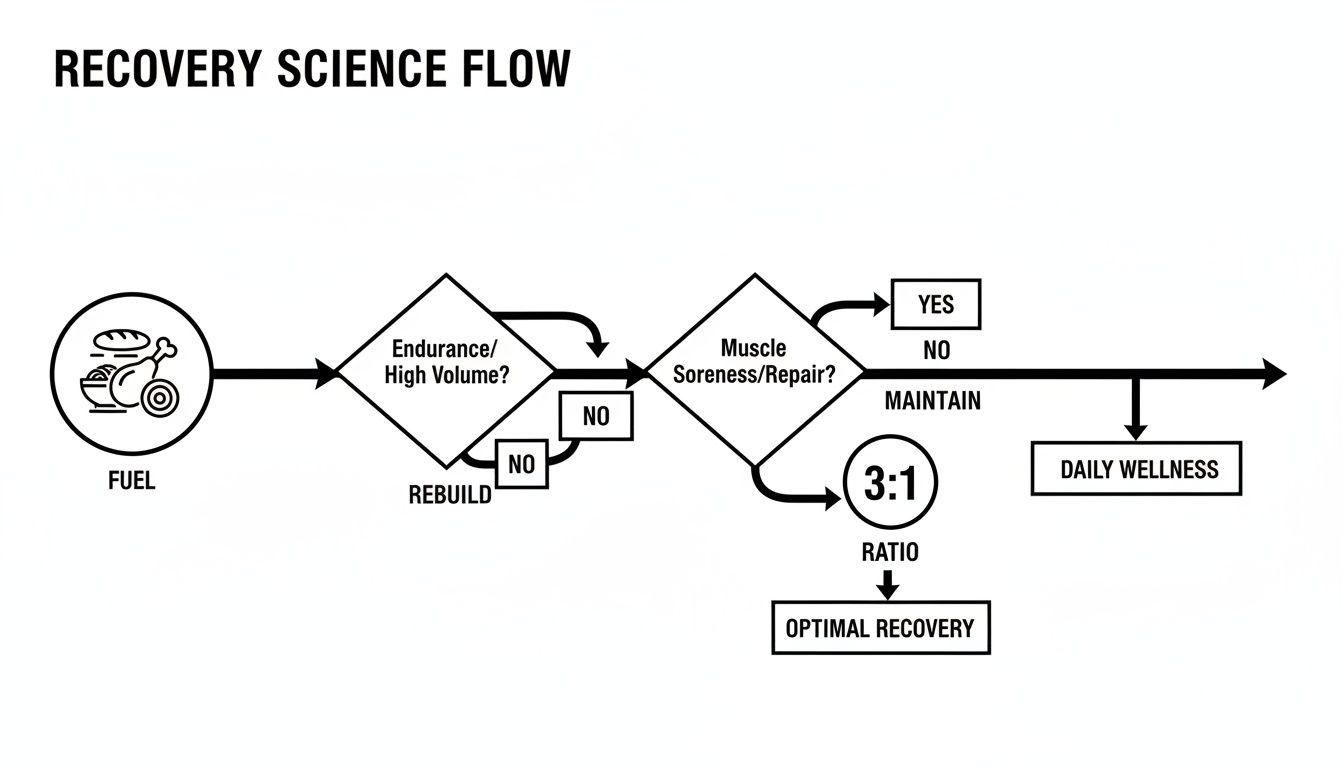
Effective recovery is a two-part process. First, replenish the fuel you burned (carbohydrates). Then, kickstart muscle repair (protein). The 3:1 ratio is often the sweet spot for making both happen efficiently.
Easy Runs and Short Distances
After a short, low-intensity run, your body’s recovery needs are straightforward. The main goal is to rehydrate and top off fuel. You haven’t drained glycogen stores or caused major muscle damage.
In this case, a heavy-duty recovery shake is overkill. Your focus should be simpler:
- Rehydration is the priority. Drink plenty of water to replace what you lost.
- A light snack is enough. A banana or a small glass of milk provides the nutrients you need.
- Timing isn’t as critical. You have a wider window to refuel. Your next regular meal will likely cover your bases.
For these easier efforts, a specialized drink isn’t necessary. Plain water is great. If it was a hot day, adding an electrolyte tab is smart. Learn more about the best electrolyte tablets for runners.
Long Runs and High-Intensity Workouts
This is where a dedicated recovery drink really earns its keep. After a long run of 90 minutes or more, your body is seriously depleted. Your glycogen stores are low, and your muscles need repairing.
For intense workouts, your recovery drink becomes a non-negotiable part of your training. Its purpose is to deliver a rapid dose of carbs and protein. This happens within the critical 30-60 minute post-run window.
Your drink needs to be built for these bigger demands. Aim for a 3:1 or 4:1 carbohydrate-to-protein ratio. This classic combination optimizes both glycogen replenishment and muscle protein synthesis. The carbs provide immediate energy for rebuilding. The protein delivers the amino acids required to repair muscle fibers.
How Different Runs Change Your Recovery Needs
Not all runs are created equal. Their recovery demands aren’t either. The table below matches your post-run drink to your workout.
| Run Type and Intensity | Primary Recovery Goal | Recommended Carb:Protein Ratio | Example Drink Type |
|---|---|---|---|
| Easy/Recovery Run (under 60 min) | Rehydration & maintenance | Not a primary concern | Water, electrolyte drink, or a small glass of milk. |
| Long Run (90+ minutes) | Max glycogen replenishment & muscle repair | 4:1 | High-carb sports recovery mix, chocolate milk. |
| High-Intensity Intervals/Tempo Run | Rapid glycogen refill & immediate muscle repair | 3:1 | Balanced recovery shake, fruit smoothie with protein powder. |
| Strength Training + Run Day | Enhanced muscle repair & growth | 2:1 | Higher-protein shake, Greek yogurt smoothie. |
This quick guide helps illustrate that your recovery nutrition should be dynamic. Paying attention to these details separates good training from great training.
Tailoring Drinks to Specific Goals
Your recovery strategy should also sync up with your bigger training goals. You can tweak your drink’s formula to support your objective.
Here’s a quick guide to help you match your drink to your goal:
- For Endurance: Focus on carbohydrates. A 4:1 ratio is perfect for maximizing glycogen resynthesis.
- For Strength: Bump up the protein. A 3:1 or 2:1 ratio can support muscle repair and growth.
- For Weight Management: Watch calories and prioritize lean protein. A lower-calorie drink with a 2:1 ratio helps you feel full.
Comparing Commercial Drinks and DIY Recipes
So, what’s the best way to get your recovery fuel in? It boils down to a classic debate: commercial drinks versus homemade. Both can get the job done right. They serve different runners with different priorities. It’s a trade-off between convenience and complete control.
After a tough run, you might not want to use a blender. That’s where commercial drinks shine. A pre-mixed shake is a lifesaver when you’re exhausted.
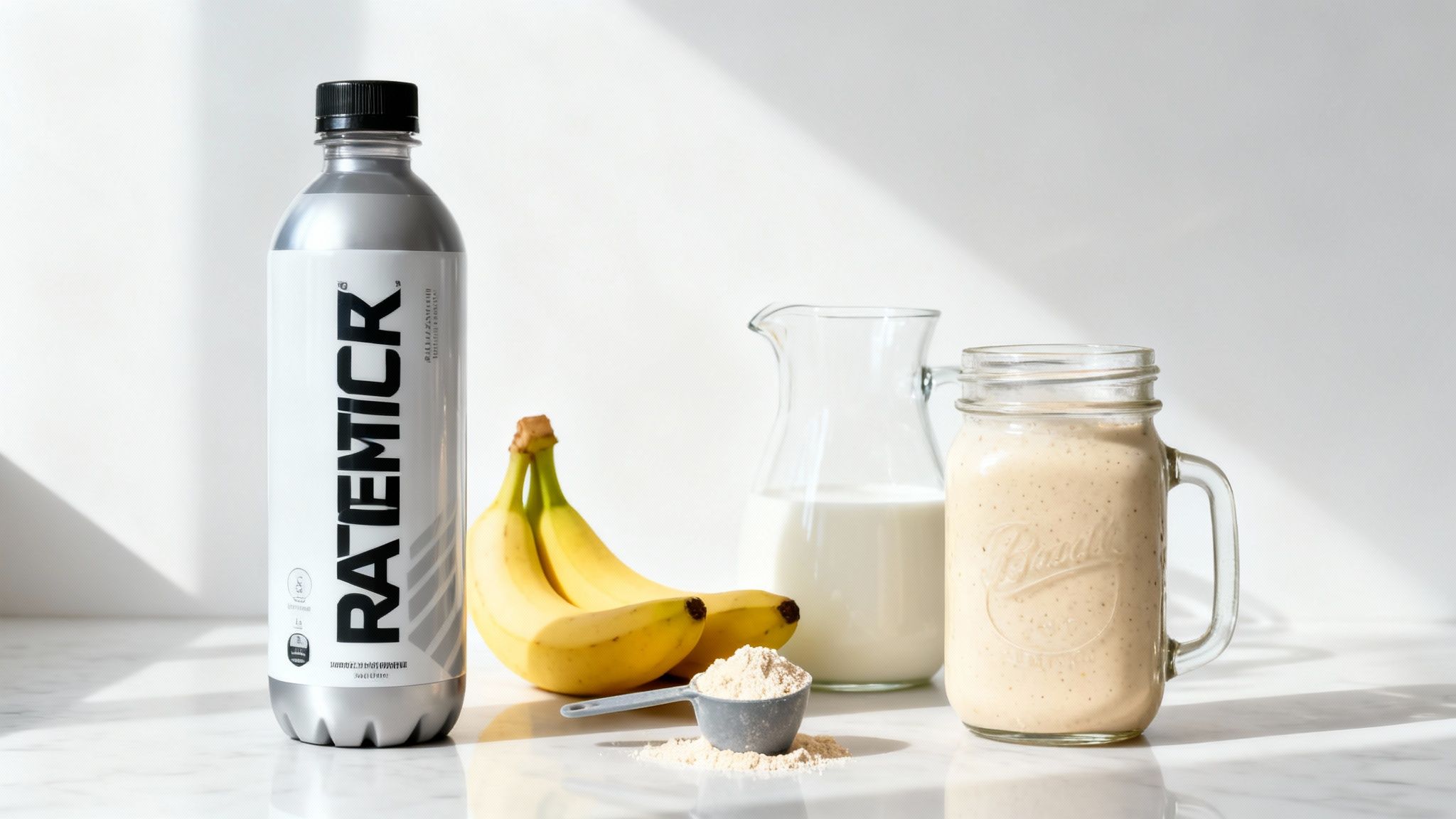
This grab-and-go ease is a huge reason for their popularity. The market for performance nutrition drinks is booming. Protein-based products saw a 16% jump in retail sales recently. This shows runners value easy, targeted solutions for recovery.
The Case for Commercial Recovery Drinks
Good commercial products are designed with science behind them. Companies research the perfect carb-to-protein ratios and electrolyte blends. This way, you know you’re getting what your body needs.
This scientific formulation takes the guesswork out of it. You can be confident that every serving gives you a consistent dose of nutrients. They are designed for quick absorption in the post-run window.
Key Advantage: Commercial drinks offer a reliable and scientifically balanced formula. This is perfect for athletes who need consistent results without the hassle.
Of course, this convenience can come with a higher price tag. You need to be a savvy shopper. It’s crucial to know what you’re drinking. Learning how to read supplement labels effectively is a skill every athlete should have. It helps you sidestep products with hidden sugars or artificial sweeteners.
The Power of DIY Recovery Recipes
On the other hand, there’s a lot to love about going homemade. The single biggest benefit? You have total control. You know every ingredient that goes into your drink. This means you can stick to high-quality, whole foods.
Going DIY is also friendlier on your wallet. The cost per serving is a fraction of a pre-packaged drink. Plus, the customization is endless. You can tweak your recipe to match your taste or dietary needs. If you’re weighing protein options, our guide on whey protein vs. plant protein can help.
Simple and Effective DIY Recovery Recipes
You don’t need to be a nutritionist to create a killer recovery shake. With a few basic ingredients, you can blend something effective and delicious.
Here are three go-to recipes to get you started:
1. The Classic Chocolate Milk Reviver
Chocolate milk is one of the best recovery drinks. It naturally hits the 4:1 carb-to-protein ratio.
- Ingredients: 12 oz of low-fat chocolate milk.
- Why it works: The simple sugars replenish energy fast. The protein gets to work on muscle repair. It also provides calcium and sodium.
2. The Simple Banana-Berry Smoothie
This is a whole-food powerhouse, loaded with carbs and adaptable protein.
- Ingredients: 1 frozen banana, 1/2 cup of mixed berries, 1 cup of milk (dairy or almond), and 1 scoop of protein powder.
- Why it works: The fruit delivers digestible carbs and antioxidants. The protein provides amino acids for your muscles.
3. The Green Recovery Machine
A handful of spinach adds vitamins and minerals without changing the flavor.
- Ingredients: 1 frozen banana, 1 scoop vanilla protein powder, 1 cup unsweetened almond milk, a large handful of spinach, and 1 tablespoon of chia seeds.
- Why it works: You get a perfect balance of carbs and protein. You also get extra fiber and iron.
Ultimately, the choice is yours. If you have a chaotic schedule, a pre-made drink might be a worthy investment. If you have a few minutes, nothing beats a homemade recipe.
Making Recovery Drinks Part of Your Training Plan
Choosing the right recovery drink is one thing. Knowing when and how to use it is what makes it a secret weapon. It’s all about making smart recovery nutrition a part of your routine.
We all live by the golden rule of racing: nothing new on race day. The same logic applies to your nutrition. Your training runs are the perfect testing ground. Use them to figure out what works best for you. This helps you avoid digestive surprises when it counts.
Plan Your Recovery Before You Even Run
Here’s a simple trick that makes a huge difference. Get your recovery drink ready before you lace up your shoes. After a tough workout, the last thing you want to do is fumble with powders. Having it ready to go removes all the friction.
Just mix your powder with water in a shaker bottle and stick it in the fridge. The moment you walk back in, a chilled drink is waiting. This small habit ensures you nail that critical 30-60 minute post-run window.
Match Your Drink to Your Training Cycle
Your recovery needs change with your training plan. A high-octane drink for a peak week is overkill during your taper. Smart athletes sync their recovery nutrition with their current workload.
Here’s a practical way to think about it:
- High-Mileage Phase: When logging serious miles, your body is in constant repair. Be religious about using a nutrient-packed recovery drink.
- Taper Period: As you cut back on mileage, your recovery demands drop. You can switch to lighter options focused on hydration and lean protein.
- Off-Season: You likely don’t need a formal recovery drink after every easy jog. A well-balanced meal or whole-food snack will do the trick.
This idea of matching nutrition to effort is a global one. A look at market trends shows North America leads in sports nutrition. This is thanks to a strong health-and-fitness culture. You can dig deeper into these sports nutrition market trends.
When you treat recovery with the same focus as your workouts, you build a stronger foundation for performance. Recovery isn’t just something you do after you train—it is the training.
In the end, it is about building smart, sustainable habits. By preparing ahead and adapting to your training, you become a stronger athlete.
Common Recovery Nutrition Mistakes to Avoid
Nailing down the right recovery drink is a massive win for any runner. But even disciplined runners can sometimes get it wrong. A few common slip-ups can easily undo all that hard work.
Knowing these pitfalls is the best way to ensure your post-run fuel is helping. Small missteps can compound over time. They can slow you down and leave you feeling flat for your next session.
Mistake #1: Waiting Too Long to Refuel
This is probably the most common mistake. You crush a tough run, then get caught up with other things. Suddenly an hour has flown by. That delay means you’ve missed the prime 30-60 minute “recovery window.”
Think of your muscles as sponges right after a run. They are primed to soak up carbs and protein. If you wait too long, that sponge starts to dry out.
Putting it off can lead to more intense muscle soreness. It can also leave your energy stores half-full. This is a recipe for a sluggish run the next day.
Mistake #2: Getting the Nutrient Balance Wrong
Another easy trap is focusing on just one piece of the recovery puzzle. Many runners grab a protein-only shake. They think muscle repair is the only thing that matters. While protein is essential, it can’t do its job properly on its own.
Carbohydrates are the energy source that powers the entire muscle-repair operation. Without them, it’s like trying to build a house with materials but no fuel. The whole process becomes slow and inefficient.
This is exactly why that 3:1 or 4:1 carb-to-protein ratio is so important. It gives your body both the fuel and the building blocks it needs.
Mistake #3: Forgetting About Hydration and Electrolytes
Rehydrating is more than just chugging water until you’re not thirsty. A huge oversight is failing to replace electrolytes you sweat out. After a long run, you’ve lost crucial minerals like sodium and potassium.
Here’s why plain water often isn’t enough:
- It’s Not Efficient: Without sodium, your body has a hard time holding onto water.
- It Invites Cramps: An electrolyte imbalance is a main culprit behind painful muscle cramps.
- It Affects Muscle Function: Electrolytes are critical for nerve signals that control your muscles.
Ignoring these vital minerals can leave you feeling foggy and fatigued. This is true even if you’ve had enough calories and protein.
Mistake #4: Reaching for Sugary or Fatty “Rewards”
Finally, the type of fuel you choose can make or break your recovery. It’s tempting to reward yourself with a soda or a greasy snack. But those choices often do more harm than good.
Highly processed sugars can send your energy levels on a rollercoaster. They can also increase inflammation. High-fat foods slow down digestion. This means the nutrients your muscles need get stuck in a traffic jam. Your best bet is always to stick with nutrient-dense, easy-to-digest foods.
Got Questions About Recovery Drinks? We’ve Got Answers.
Stepping into the world of post-run nutrition can feel overwhelming. You’ve put in the hard work on the road or trail. Now you want to refuel the right way. Let’s tackle some common questions runners ask about recovery drinks.
Getting these details sorted out will help you build a smarter recovery plan. It will give you confidence that you’re giving your body what it needs.
Do I Really Need a Recovery Drink After Every Single Run?
Honestly, no. If you just went for a short, easy jog, your body isn’t totally depleted. For those lighter efforts, a well-balanced meal within an hour or two will do the job.
Recovery drinks really shine after the tough stuff. This includes long runs or grueling interval sessions. They’re also clutch when you have to train again in less than 24 hours. The trick is to match your recovery fuel to the intensity of your workout.
Can’t I Just Drink Water and Eat a Meal Later?
Water is non-negotiable for rehydration, but it’s a one-trick pony. It has zero carbohydrates or protein. These are the building blocks your body needs to repair muscle damage.
While a solid meal will get nutrients into your system, timing is everything. Waiting too long means you miss the most critical window for recovery.
Think of the 30-60 minutes after a hard run as a “golden hour” for your muscles. During this period, your body is incredibly efficient at absorbing nutrients. A recovery drink is designed to deliver that fuel right now.
If you delay, you’re putting your body’s repair crew on hold. That can lead to more soreness and a slower bounce-back for your next workout.
Are Plant-Based Recovery Drinks as Good as Whey?
You bet they are. A plant-based recovery drink can be just as effective. It just needs to hit the right nutritional marks. The most important factor is a complete amino acid profile. This is crucial for muscle protein synthesis.
Look for formulas that blend different plant proteins, like pea and rice. Combining sources ensures you’re getting all essential amino acids. In the end, it boils down to your dietary needs and what your stomach tolerates best. As long as the carb-to-protein ratio is on point, either option will work.


