

Improve Running Economy Fast: 10 Tips for Success
One runner added strength work and started finishing long runs with more in the tank. That’s the kind of change that makes improve running economy fast worth the effort, because running economy simply means using less energy to hold the same pace.
Studies show strength training can improve running economy by about 2 to 8 percent, and that can make your stride feel smoother, lighter, and more controlled. The best part is that you don’t need a fancy gym setup to get started, since the most useful work for runners is practical, runner-friendly, and low on gear. If you want a deeper look at how this fits into your training, combining running and strength training is a smart place to start.
The 10 tips ahead break strength work into key areas that help you gain speed, stay durable, and waste less energy on every step. With consistent use, these moves can lead to faster, easier runs that feel better from the first mile to the last.
Why Strength Training Supercharges Your Running Efficiency
Strength training helps you run with less waste. In plain terms, it gives you better gas mileage on every mile. When your legs are stronger, each stride takes less effort, so you hold pace with less strain and finish with more left in the tank.
Build Your Running Performance System
Move from research to action with training, recovery, nutrition, pacing, and performance tools built for runners.
More Guides for This Runner Goal
Stronger muscles waste less energy
Weak legs tend to wobble, sink, and leak force. Strong legs stay more stable, so more of your effort goes straight into forward motion. That means less side-to-side movement, better posture, and a smoother stride when fatigue starts to creep in.
Research backs this up. A Journal of Strength study found that runners improved economy after adding resistance work, without adding unwanted bulk. Other studies have linked strength training to better muscle power and stiffness, both of which help you spring off the ground more efficiently.
Better running economy often comes from better force, not more effort.
Why runners skip strength work, and why that hurts progress
Many runners avoid lifting because they think it will slow them down or steal time from running. In reality, a smart plan usually supports both. If you want better form, fewer breakdowns late in a run, and more speed on hills, strength work belongs in the week.
A good place to start is simple:
- Train strength 2 to 3 times per week.
- Focus on squats, lunges, deadlifts, and single-leg work.
- Keep sessions short enough that your runs still feel sharp.
If you want a deeper structure, a strength training plan for runners can help you build the habit without overdoing it. For runners who want more stamina as well as efficiency, gym work to enhance running stamina fits neatly into the same goal.
The real payoff on race day
This is where it all connects. Stronger legs improve form, form improves economy, and better economy helps you run faster with less effort. That’s why runners who train strength often feel smoother on climbs, steadier at race pace, and more durable in the late miles.
Build Unstoppable Legs with Squats and Deadlifts
Strong legs do more than look powerful. They help you hold form, push off harder, and waste less energy when fatigue builds. Squats and deadlifts hit the quads, glutes, and hamstrings, which are the same muscles that keep your stride efficient and controlled.
When those muscles get stronger, each step costs less. That matters if you want to improve running economy fast, because better force production means less strain at the same pace. Squats help with knee drive and stable landing mechanics, while deadlifts build the backside that drives propulsion.
Master Squats for Smoother, Faster Strides
Squats build the quad strength you need for a stronger knee lift and a firmer push off the ground. They also improve control through the whole lower body, which helps you stay efficient when your legs start to tire. Runners who squat well often feel steadier on climbs and more powerful at race pace.
Start simple and keep the motion clean:
- Stand with your feet about shoulder-width apart.
- Brace your core, then lower until your thighs are parallel to the floor.
- Keep your chest up and your knees tracking over your toes.
- Drive through your heels and stand tall.
- Reset before the next rep.
Use 3 sets of 10 reps, about 2 times per week. Begin with air squats, then move to goblet squats or dumbbell squats as the movement feels solid. For runners, pause squats work well too, since the brief hold builds control in the bottom position and teaches better tension.
Watch for common mistakes. Knee cave is a big one, especially when the knees fold inward on the way up. Back rounding is another, and it usually means the load is too heavy or the torso is too loose. Keep the movement crisp and controlled.
If you want a more structured approach, strength workouts for runners’ legs in marathon prep can fit these lifts into a bigger plan.
Strong squats do not just build legs, they build cleaner force with less waste.
Deadlifts to Power Your Pull-Through Phase
Deadlifts strengthen the posterior chain, especially the glutes and hamstrings, which help you drive the body forward after each landing. That matters because efficient running depends on more than a strong front side. You also need a powerful backside to reduce braking forces and keep momentum moving.
Use this setup for a simple deadlift:
- Stand tall with the bar or weights close to your legs.
- Hinge at the hips while keeping a flat back.
- Bend the knees just enough to stay balanced.
- Lift by driving through the legs and squeezing the glutes.
- Lower under control and keep the weight close the whole time.
A Romanian deadlift is a great runner-friendly version because it places extra work on the hamstrings without forcing a deep knee bend. Do 3 sets of 8 reps, again 2 times per week, and keep the load moderate until your hinge feels smooth.
The biggest mistake is rounding the back. That usually happens when you chase the floor instead of sitting the hips back. Keep the spine long, the chest proud, and the bar path tight.
For runners who want to build the full lower body, squats and deadlifts for marathon endurance fit well with the rest of your weekly work. Plenty of pro runners use these same patterns because strong hips and hamstrings help them stay efficient late in a run, when form usually starts to fade.
If you train at home, dumbbells and bodyweight are enough to start. Build consistency first, then add load when the reps stay smooth.
Boost Balance and Agility Using Lunges and Step-Ups
Single-leg work is where running strength starts to feel useful on the road. Lunges and step-ups both train your body one side at a time, so they help close strength gaps that can throw off your stride.
That matters because running is already a single-leg sport. When one hip drops or one knee caves, you lose force and waste energy. Better balance and cleaner hip control help you improve running economy fast because more of each push goes straight into forward motion.
Lunges That Mimic Your Running Motion
Walking lunges are one of the best ways to train the same muscles you use in the stride phase. They load the quads, glutes, and hamstrings one leg at a time, which helps fix left-right imbalances that can drag down your form. They also teach control through hip, knee, and ankle alignment, so your body stays steadier when pace picks up.
Use forward, backward, and reverse walking lunges to keep the movement practical and balanced. Forward lunges challenge your landing control, while reverse lunges are often easier on the knees and still build strong drive. Either way, keep your torso upright and let the front knee track over the toes, not collapse inward.
A simple setup works best:
- Step long enough to keep your front shin angled naturally.
- Lower under control until both knees bend comfortably.
- Push through the front foot and stand tall.
- Alternate legs and stay smooth, not rushed.
Aim for 3 sets of 12 reps per leg. That volume is enough to build strength without turning the session into a grind.
The big mistake is leaning too far forward. That shifts work away from the hips and turns a clean lunge into a sloppy hinge.
If lunges feel shaky at first, that is useful feedback. The wobble shows you where balance is missing, and consistent practice builds better control. For runners who want more lower-body support, unilateral exercises to enhance runner balance can round out the same goal.
Step-Ups for Real-World Running Power
Step-ups are simple, but they carry over well to running because they train knee lift, balance, and push-off together. Each rep asks one leg to lift, stabilize, and drive, which is close to what happens every time you climb a hill or hold threshold pace late in a workout. The glutes do a lot of the work here, so this move is great for hip power and stride support.
Use a box, bench, or stair that lets you step up without losing posture. Keep the movement controlled, and alternate legs so both sides get equal work. If the box is too high, your back leg will help too much and your form will break down.
Focus on these cues:
- Drive through the whole foot on the box.
- Keep your chest tall and hips level.
- Bring the opposite knee up with control.
- Lower slowly instead of dropping off the box.
Do 3 sets of 10 reps per leg. That amount is enough to build useful strength, especially when you keep each rep clean. If you want more challenge, hold dumbbells at your sides or wear a light vest.
Step-ups also pair well with faster running because they build the kind of force you need for an efficient stride. Stronger hips and glutes help you stay upright at threshold pace, when fatigue usually starts to pull form apart. For a deeper look at how this fits into a bigger lower-body plan, step-ups for running strength gains is a helpful follow-up.
As you improve, progress the exercise in small steps. First, add control. Then add load. After that, raise the box slightly or slow the lowering phase. That steady progression keeps the work useful and keeps your mechanics honest.
Make Your Feet Springier with Calf Raises and Bounds
Your feet and ankles do a lot more work than most runners realize. When they stay stiff enough to store and release energy well, each step feels lighter and more controlled. That springy feel helps you improve running economy fast because less energy leaks into the ground.
Calf raises build that lower-leg strength first. Bounds then teach your body how to use it at speed. Together, they help your ankles act more like a loaded spring and less like a soft cushion.

Calf Raises to Add Bounce to Every Step
Calf raises are simple, but they matter. They strengthen the calves and Achilles area, which helps your ankle hold stiffness when your foot hits the ground. That stiffness stores energy, then gives it back on push-off, almost like a compressed spring snapping open.
Use both standing and seated calf raises to hit the whole calf. Standing raises work the gastrocnemius, while seated raises hit the soleus, which does a lot of steady work during running. A strong pair of calves gives you better push-off and a cleaner finish to each stride.
Start with 3 sets of 15 reps. On the way up, rise onto your toes with control. On the way down, use a slow eccentric, about 3 seconds lower. That lowering phase builds strength where runners often need it most.
A few form cues help a lot:
- Keep your heel high at the top.
- Stay tall through the torso.
- Lower slowly instead of dropping.
- Use a full range of motion.
If you feel calf tightness often, pair this work with smart recovery habits and watch how your lower legs respond. Strong calves support better mechanics, but they also need time to adapt. For runners dealing with calf issues, recovering from overworked calves is worth a look.
Plyometric Bounds for Explosive Efficiency
Bounds turn calf strength into running power. They train your body to absorb force quickly and return it just as fast, which improves elastic energy return. That means less time sinking into the ground and more time moving forward.
Begin with low volume. A good starting point is 3 sets of 6 bounds, with full recovery between sets. Keep the reps crisp, not long and sloppy. Quality matters more than distance here.
You can use double-leg bounds first if you want a safer entry point. They help you learn rhythm and ground contact. Then move to single-leg bounds once your landing control feels solid. Single-leg work asks more of the ankle, calf, and hip, so it carries over well to running.
Keep these safety points in mind:
- Warm up first with easy jogging and mobility.
- Land softly with a stable ankle.
- Stop if the calves feel sharp or strained.
- Save hard bounds for fresh legs, not tired ones.
Bounds work best when you stay relaxed through the upper body and quick off the ground. That fast contact is where the running economy payoff lives. For more on this style of work, plyometric exercises for runners can help you build the right base.
Lock in Core and Glutes for Rock-Solid Form
Your core and glutes are the brace and engine of your stride. When they work well, your torso stays steady, your pelvis stays level, and less energy slips away through wobble. That matters on easy runs, long runs, and especially late in a workout when form starts to fade.
This is where many runners miss easy gains. Strong legs help, but without a stable midsection and active hips, force gets lost. If you want to improve running economy fast, you need muscles that hold posture and muscles that drive you forward. The good news is that a few simple moves do both.
Planks That Keep Your Run Upright and Efficient
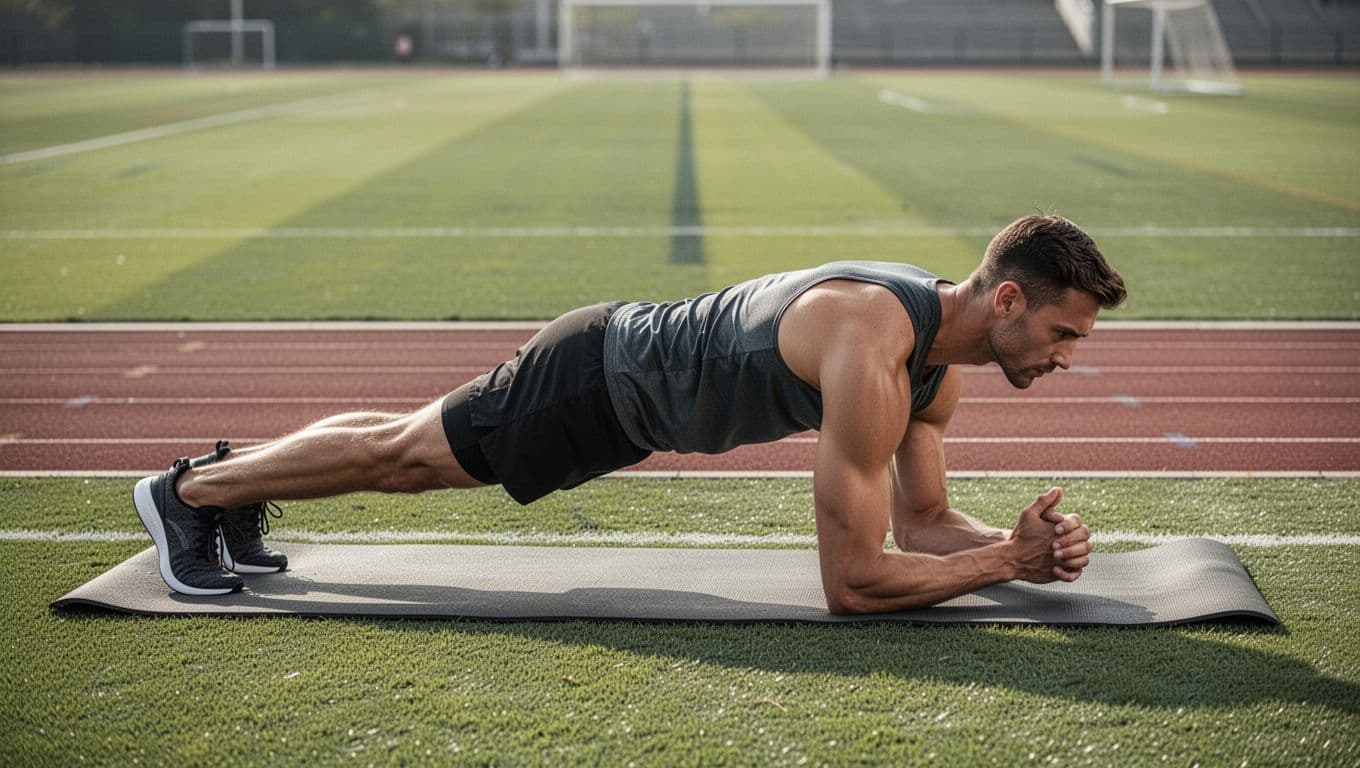
Planks train your body to resist motion, which is exactly what a runner needs. Instead of twisting, sagging, or arching under fatigue, you learn to hold a firm line from head to heels. That steady shape helps your arms and legs do their jobs without extra waste.
Start with a full plank or forearm plank, then add side planks once the basic hold feels solid. Keep your ribs down, squeeze your glutes, and brace your core like someone is about to poke your stomach. Hold each plank for 30 to 60 seconds, with clean form the whole time.
Side planks matter too, because running is full of side-to-side force. They build anti-rotation strength, which helps your torso stay square instead of drifting or swaying on each stride. That small control adds up over miles.
Use these cues:
- Keep your neck long and your gaze down.
- Press through your forearms or hands evenly.
- Avoid letting your hips drop or pike up.
- Stop the set when form starts to fade.
A strong plank should feel controlled, not strained.
If your midsection weakens late in runs, this work helps you stay tall and efficient. For more support, core strength training for runners gives you a bigger picture of how these stability drills fit into your week.
Glute Bridges to Propel You Forward
Glute bridges wake up the muscles that push you into each next step. Many runners sit a lot, so the glutes often go quiet and let the lower back or hamstrings take over. Bridges help fix that by teaching your hips to extend with power.
Lie on your back, feet flat, and drive through your heels until your hips rise. At the top, squeeze your glutes hard for a second or two before lowering under control. Aim for 3 sets of 12 reps, and move slowly enough to feel each rep.
Once the basic bridge feels smooth, progress to single-leg glute bridges. That version works one side at a time, so it exposes weak spots and builds better control. It also carries over well to running, where each leg has to support the body on its own.
A few details matter most:
- Keep your knees pointed forward.
- Do not overarch your lower back.
- Drive up from the glutes, not the hips alone.
- Stay level through both sides of the pelvis.
When your glutes fire well, each stride gets cleaner and more direct. That is why this simple drill belongs in any plan built around planks and bridges for runner resilience.
Fine-Tune with Single-Leg Work and Rows
This is the kind of strength work that makes running feel cleaner without adding bulk or extra noise. Single-leg hinges teach your hips to stay level, while rows help your upper body hold posture and keep your arms moving well late in a run.
When your body stays symmetrical, you waste less energy. That matters on easy miles, hills, and race day alike. These two moves also pair well with other stability work, so your stride stays organized instead of falling apart when fatigue builds.
Single-Leg Deadlifts for Perfect Symmetry
Single-leg deadlifts sharpen balance and stabilize the hips, which is a big deal for runners. Each rep asks one leg to support the body while the other leg reaches back, much like your stride during running. That makes this lift one of the best ways to clean up left-right imbalances that can steal efficiency.
Hold a light dumbbell in the hand opposite the standing leg. Then hinge at the hips, keep a soft bend in the knee, and let the back leg extend behind you. The goal is a long, flat line from head to heel, with the hips staying square to the floor.
Start with 3 sets of 10 reps per side. Move slowly enough to stay balanced, and stop the set if your back rounds or your hips twist. A small wobble is fine at first, because it shows where control is missing. Over time, that control helps you run with a steadier pelvis and a more reliable push-off.
A few cues help a lot:
- Keep the standing foot rooted.
- Reach the back leg long, not high.
- Lower the weight under control.
- Drive up through the glute, not the lower back.
If you want more support for hip and back position, correct running posture ties in well with this kind of work.
Rows to Swing Arms Without Draining Energy
Rows build the upper back muscles that keep your chest open and your shoulders from slumping forward. That matters more than many runners think, because a collapsed upper body makes arm swing sloppy and drains energy you need for forward motion.
Use a dumbbell or band for this move. Pull the weight toward your hip, not your chest, and keep your elbow close to your side. That path helps train a strong, compact arm drive that matches running mechanics better than wide, loose pulling.
A simple setup works well: support one knee and one hand on a bench, keep your spine flat, and row with control. Do 3 sets of 10 reps per side, then switch sides. Pause for a beat at the top so your shoulder blade fully squeezes back.
Strong rows help you stay tall when your form wants to fold.
The payoff shows up late in runs. Your shoulders stay calmer, your arms swing more freely, and your torso wastes less effort fighting posture collapse. For a deeper look at this pattern, how to correct posture for running is a useful companion.
Used together, single-leg deadlifts and rows give you a cleaner stride from the ground up. One builds balance and hip control, the other keeps your upper body steady so your legs can do their job.
Conclusion
The fastest way to improve running economy fast is to make strength work specific, simple, and repeatable. Squats, deadlifts, lunges, step-ups, calf work, core drills, glute work, and single-leg moves all help you waste less energy with each stride, so your pace feels smoother and more controlled.
A smart weekly plan does not need to be long. Two strength days of 20 to 30 minutes is enough for most runners, especially when the work stays focused and consistent. If you want a broader structure, resistance training for marathon runners fits this approach well. Track the real signs of progress, like easier workouts, steadier form, and less late-run fade, because those changes matter more than chasing perfect numbers.
Start with just 3 of these tips today, then build from there. Small changes add up fast when you keep showing up, and better efficiency often starts to show before you expect it.


