Stretching Routine for Runners
A few years ago, I kept dealing with tight calves, stiff hips, and nagging aches that showed up after almost every run. I tried to shrug it off and keep piling on miles, but the small issues kept turning into bigger ones, and I learned the hard way that skipping mobility work has a cost.
That’s why I keep a stretching routine for runners in my daily plan now, and it’s simple enough to stick with. Most runners skip stretching because they’re tired, pressed for time, or they think a quick run is enough on its own, but that habit can leave your muscles locked up and your recovery dragging. I’ve found that a short, repeatable routine after the right kind of warm-up helps me stay loose, recover faster, and feel smoother on the next run.
Here’s what this daily plan can do for you:
- lower the chance of those tight, cranky spots turning into pain
- help your legs recover faster after easy runs, workouts, and long efforts
- improve how your stride feels, so each step feels less restricted
- keep your hips, hamstrings, calves, and quads working with less stiffness
- make it easier to stay consistent, which matters more than any one perfect session
I’m also keeping this practical, because runners don’t need a long routine they’ll abandon after a week. The best plan is the one you can repeat, whether you’re heading out for a short jog or finishing a hard workout. If you want a fuller breakdown of the moving and holding work that fits into a run day, I’ve put that in my ultimate stretching routine for runners.
Next, I’ll walk through the daily stretch plan I use, when to do it, and how to match it to your run so you get the benefit without wasting time.
Why Stretching Delivers Massive Wins for Every Runner
I’ve seen my own runs improve because a consistent stretching routine for runners does more than loosen tight legs. It helps me stay on the road, hold my form longer, and bounce back faster after hard efforts.
Tight muscles act like rusty hinges. Every stride asks them to move, but they fight back instead of flowing. That extra drag adds up, especially when I’m logging more miles or stacking workouts close together.
Science backs up what runners feel in practice. One review found that static stretching can lower muscle injury risk in active people, while other studies show better flexibility can support smoother mechanics and longer, cleaner strides. Recovery gets a lift too, since regular post-run stretching helps reduce that heavy, locked-up feeling that shows up after tough sessions.
For me, the biggest win is simple, though. I can keep running more days in a row without feeling beat up.
Prevent Injuries Before They Sideline Your Training
Poor flexibility shows up fast in a runner’s weak spots. I see it most in the calves, hips, hamstrings, and outer thighs, where tight tissue can pull the body out of line and load the wrong areas. That can lead to shin splints, IT band pain, achy knees, or a stubborn hip that flares up on longer runs.
Targeted stretching helps because it spreads the work across the right muscles. When my hips move better, my knees do not have to absorb as much stress. When my calves are less tight, my shins and ankles handle impact with less strain.
A systematic review in Sports Medicine found that static stretching reduced muscle injuries in healthy active people, which fits what I’ve felt in my own training. It does not fix everything, but it gives weak spots less chance to become a bigger problem.
My quick tip is to stretch the spots that feel “fine” before the ones that scream at you. I always check hips and calves first, because those areas often cause trouble before I notice it.
Unlock Better Flexibility for Effortless Long Runs
Flexible muscles let me run with less fight in every step. My stride feels smoother, my hips open more easily, and my legs stop feeling stuck in one short, choppy rhythm. That matters most on long runs, when small restrictions turn into fatigue.
Tight hips shorten my stride and make me feel boxed in. Loose hips, paired with flexible hamstrings, let me move more naturally and keep my posture tall when miles start to pile up. I don’t need gymnast-level mobility, I just need enough range to keep my form from falling apart.
Research on runners has linked stretching and warm-up mobility with better running mechanics and performance, especially when the body is prepared the right way. I’ve noticed the same thing on tempo runs, where a little more freedom in the hips helps me settle into pace faster.
I measure progress in simple ways:
- less tugging in my hamstrings after easy runs
- smoother stride turnover on long efforts
- fewer compensations when I’m tired
- better hip openness during daily mobility checks
When those signs improve, my runs feel less forced and more efficient.
Recover Faster and Run More Days in a Row
Post-run soreness can make the next day feel like a gamble. If I skip stretching, my legs stay stiff longer, and the first few miles of the next run feel rough. When I stick with my routine, the tightness fades sooner and my body settles down faster.
Stretching does not magically erase soreness, but it helps blood flow, eases tension, and supports the recovery process after hard work. That matters after intervals, hills, or a long run that leaves my legs heavy. I’ve found that even a short cool-down stretch makes back-to-back runs feel much more manageable.
My routine is built for real life, too. I can finish it in a few minutes after a run, or trim it down even more on busy days. That makes it easier to stay consistent, which is the part that really pays off. A short daily habit gives me looser legs, less soreness, and a better shot at showing up ready for the next run.
Perfect Timing: Build Stretching into Your Daily Runner Life
Timing matters as much as the stretches themselves. I get the best results when I match the right type of stretching to the right part of my day, because my body needs something different in the morning, before a run, after a run, and at night.
That simple rhythm keeps my routine realistic. I don’t need a long session every time, I just need the right move at the right moment. Dynamic work wakes my body up. Static holds help me settle down and recover. Once I started treating stretching that way, it fit into my running life instead of feeling like extra homework.

Start Your Day Right with a 5-Minute Morning Stretch
After sleep, I feel stiff in my hips, calves, and lower back. A short morning stretch helps me loosen those spots before they lock up for the day. I keep it gentle and moving, because my goal is to wake the body up, not force it open.
I usually move through 20 to 30 seconds of each drill, then repeat once if I have time:
- Marching in place gets blood moving and eases my legs out of sleep mode.
- Leg swings help my hips and hamstrings move without any hard pull.
- Arm circles open my chest and shoulders, which helps my posture later.
- Ankle rolls keep my lower legs from feeling flat and tight.
This kind of morning activation works because it stops stiffness from stacking up before I even lace up. I also like how it keeps the first steps of the day from feeling clunky, especially after a bad night’s sleep or a long sit later on. If you want a gentler place to begin, I also like the approach in my simple stretching routines for new runners.
Morning stretching should feel easy and smooth. If I need to hold my breath, I’m pushing too hard.
Dynamic Warm-Ups to Prime Muscles Before Every Run
Before every run, I switch to dynamic work. That means I keep moving through the stretch instead of holding one position. For me, that difference matters because dynamic drills warm tissue, raise blood flow, and get my stride ready without making my legs feel flat.
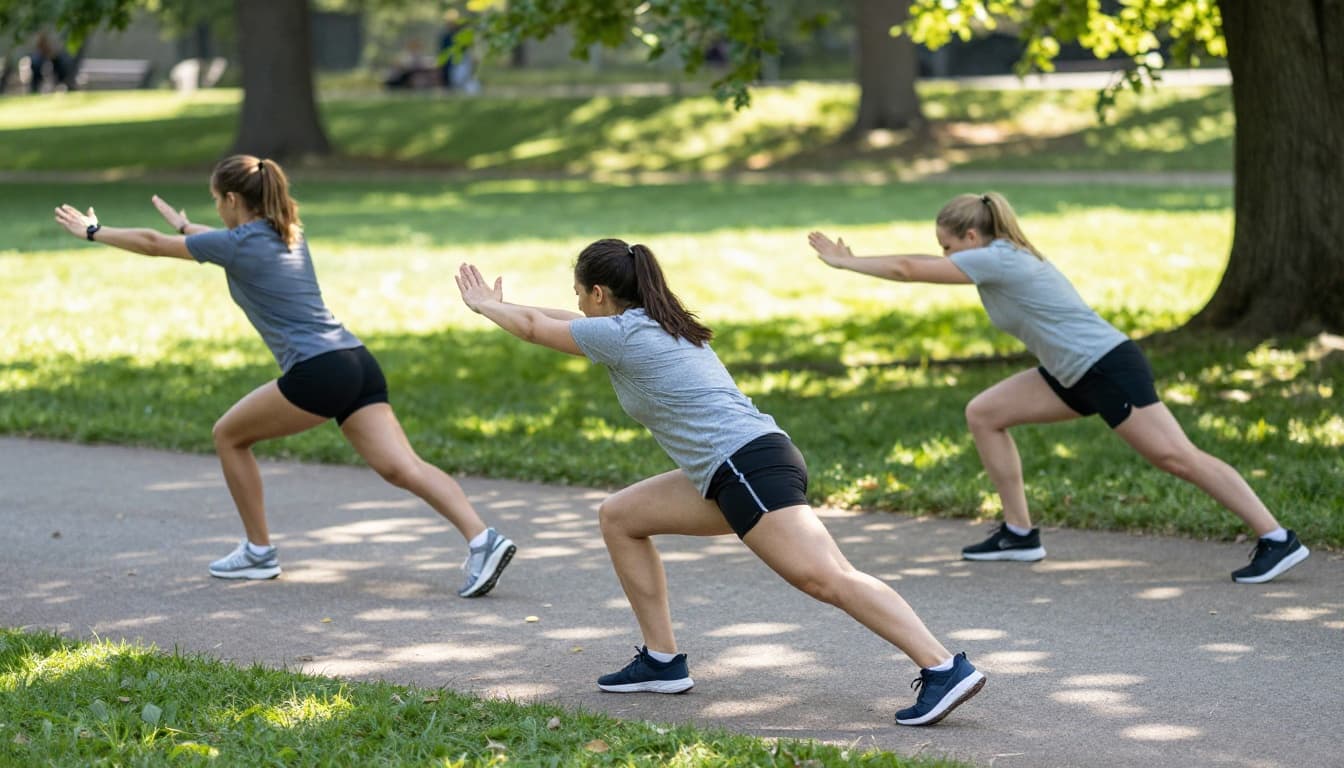
My go-to warm-up is simple:
- Forward leg swings for hip motion and hamstring prep
- Side-to-side leg swings to wake up the outer hips
- Arm circles to loosen the upper body
- Walking leg swings or high knees to connect the whole body
I keep each drill light and controlled, about 8 to 10 reps per side. A dynamic warm-up should feel like a rehearsal, not a workout. If I hold a stretch too long before a run, my legs feel sluggish. If I move through it, I feel ready to roll.
For a longer run day, I often pair this with how I prepare for a long run, because the warm-up sets the tone before the miles even start.
Post-Run Static Holds for Deep Muscle Release
After the run, I switch again. This is where static stretching belongs, because my muscles are warm and more willing to relax. I hold each stretch for 30 to 60 seconds, breathe slowly, and let the tension drop instead of forcing it away.
That simple change makes a big difference. The holds I use most often are hamstring stretches, quad stretches, calf stretches, and hip flexor work. I keep the pace slow, and I stay relaxed through the nose or with long exhales, because the breath helps the body release.
A short cool-down walk before stretching also helps me settle in. If I skip that step, my legs stay too jumpy to get much out of the holds. When I do it right, I finish feeling looser and less beat up.
For more targeted post-run work, I often rotate in hamstring stretches for runners and quadriceps stretching exercises. Those two areas take a lot of the load in my runs, so they stay high on my list.
End the Day with an Easy Evening Reset
At night, I keep it short and calm. I use this as a reset after sitting, driving, or standing around all day, especially if I have another run the next morning. A few gentle holds help my body wind down and keep the next day from starting tight.
I don’t chase a deep stretch here. I choose the positions that feel best, hold them longer, and breathe until my body softens. Consistency matters more than perfect timing, so even a short evening routine helps me stay ahead of stiffness instead of reacting to it the next morning.
Your Go-To Daily Stretching Routine: 10 Key Moves Illustrated
This is the part of my stretching routine for runners that I use almost every day. I keep it simple, start with the lower legs, and move up the body so nothing gets skipped. The whole session takes about 15 to 20 minutes, depending on how long I hold each stretch and whether I repeat a few sides.
Here’s my usual time split:
- Calves and Achilles, 3 to 4 minutes
- Hamstrings, 3 minutes
- Quads, 2 minutes
- Hip flexors, 3 minutes
- IT band and outer hip, 2 minutes
- Glutes, back, and shoulders, 3 to 4 minutes
I like this order because it follows how runners actually load the body. My lower legs take the first hit, then my stride depends on the hips, and the upper body still matters for posture and arm swing. If one area gets ignored, the whole chain feels off.
For more context on how these areas connect, I also like the breakdown in my injury prevention mobility drills. It lines up with the way I build this routine after runs or on easy days.
Calf and Achilles Stretch to End Heel Pain
I start with the calves because tight lower legs pull hard on the Achilles. That tension shows up fast on hills, speedwork, and especially downhill running. I use two moves here, a wall push and a runner’s lunge, and I hold each one for 30 seconds per side, 3 rounds.
For the wall push, I place both hands on a wall, step one leg back, and keep that back heel flat. My back knee stays straight for the upper calf, then I bend it slightly to hit the lower calf and Achilles more directly. I lean in until I feel a clear stretch, but I keep it calm. No bouncing, no forcing.
For the runner’s lunge, I keep one foot forward and one leg back, then drop my hips straight down. This version opens the ankle and calf together, which helps when my stride feels choppy late in a run. The main mistake I watch for is lifting the back heel or twisting the foot outward.
If my heel starts barking after downhill runs, this is the first stretch I keep in place.
Beginners can keep the stance shorter and the lean lighter. Advanced runners can sink a little deeper, as long as the heel stays planted and the breath stays smooth. For a fuller calf focus, I often pair this with my best calf stretches for runners.
Hamstring Reach for Powerful Strides
Hamstrings do a lot of work when I run tall and drive off the ground. When they tighten up, my stride gets shorter and my turnover feels stuck. I use a seated forward bend and a standing toe touch, and I hold each stretch for 30 to 45 seconds without bouncing.
In the seated version, I sit with both legs straight and reach forward from my hips, not my back. I think about lengthening my spine first, then folding forward slowly. If I round hard right away, I usually feel the pull in my lower back instead of my legs.
The standing toe touch is my easier option on busy days. I stand tall, soften my knees just enough to protect them, and hinge at the hips until my hands slide toward my shins or feet. I don’t lock my legs straight like boards, because that usually makes the stretch feel sharp.
I keep the motion slow and smooth. Bouncing is the biggest mistake here, because it makes the muscle tighten back up. I also avoid forcing my hands to my toes if my body isn’t ready.
Beginners should bend the knees slightly and stop when they feel tension, not pain. More advanced runners can straighten the legs more fully, but I still keep a small soft bend if I ran hard that day. A calm hamstring stretch helps me keep the back of the legs loose enough for longer runs and cleaner mechanics.
Quad Pull to Balance Leg Strength
My quads take a beating on climbs, faster efforts, and hard downhills. When they tighten, my knees usually feel it next. For this stretch, I use a standing heel-to-butt grab and hold it for 30 seconds per side, usually for 2 rounds.
I stand tall, shift my weight onto one leg, and grab the ankle of the other foot. Then I gently pull the heel toward the glute while keeping my knees close together. The standing leg stays soft, not locked, so I don’t wobble.
Balance matters here. I like to keep one hand on a wall, a rail, or a sturdy bench when I’m tired or right after a workout. That support keeps me from arching my lower back or yanking the heel too hard. If I can’t hold the ankle comfortably, I loop a strap or just hold the stretch with a lighter pull.
The common error is flaring the knee out to the side. That turns the stretch into a sloppy tug instead of a clean quad pull. I also avoid leaning forward, because that shifts the stretch away from the front of the thigh.
Beginners should use support and keep the knees close together. Advanced runners can add a slight posterior pelvic tilt to feel the front of the thigh open more fully. This stretch helps me keep leg strength balanced, so one side doesn’t overpower the other.
Hip Flexor Lunge for Open Stride
If I sit a lot, my hip flexors get short and stubborn fast. That shows up in my stride as less knee drive and a tighter front side. I use a low lunge variation here, and I hold it for 30 to 45 seconds per side, usually for 2 rounds.
I step one foot forward, lower the back knee, and keep my front knee stacked over the ankle. Then I gently tuck my pelvis under and shift my hips forward a few inches. That small pelvic tilt matters more than forcing the lunge deeper.
The stretch should land in the front of the hip and upper thigh of the back leg. If I feel it in my lower back, I reset and lift my chest a little less. I also keep my ribs down, because a flared rib cage usually means I’m cheating the stretch.
This move matters most for speedwork. Fast running asks for quick hip extension, and tight hip flexors can make that feel blocked. I notice the difference on track days and tempo sessions, when my legs need to open up fast.
I keep the back leg relaxed and the glute lightly engaged. Beginners can stay high in the lunge and hold onto a wall for balance. More advanced runners can sink lower, as long as the front knee stays stable and the stretch stays honest.
IT Band Side Bend to Stop Knee Woes
The IT band itself doesn’t stretch much, but the muscles around it do. That is why I use a standing cross-leg bend to ease the outer thigh and the hip that feeds into it. I hold this one for 30 seconds per side, then repeat it once if my knees feel cranky.
I stand with one leg crossed behind the other, reach the arm on the side I’m stretching overhead, and lean away from that side. The outside of my hip and thigh should feel long, not pinched. I keep both feet flat and avoid twisting my torso.
This stretch pairs well with foam rolling, especially after a hard run. A few slow passes on the outer thigh and upper hip can help the area relax before I hold the stretch. I don’t roll directly into pain, and I don’t spend forever on it either. A short combo works better than a long grind.
The biggest mistake is leaning forward instead of sideways. That turns the move into a back bend and misses the area I want. I also stay away from aggressive pulling, because the outer thigh can get irritated if I chase a big sensation.
Beginners should keep the cross-over small and the lean light. Advanced runners can deepen the side bend a bit, but the motion should still feel controlled. If the outside of my knee tends to flare up, I keep this one high on the list.
Full-Body Extras: Glutes, Back, and Shoulders
Once the legs are done, I finish with a few full-body moves so my posture stays open too. These are quick, but they matter more than people think. I usually spend 3 to 4 minutes here, moving through pigeon pose, cat-cow, and arm across chest.
For pigeon pose, I bring one shin forward on the floor and extend the other leg back. I keep my hips square and fold forward only as far as feels smooth. This opens the glutes and outer hip, which helps when my stride feels blocked by tight hips.
For cat-cow, I get on all fours and round my back on one breath, then arch gently on the next. I repeat that for 6 to 8 slow cycles. It loosens my spine and helps me reset after holding a running posture for too long.
The arm across chest stretch is simple. I pull one arm across my body, keep my shoulder down, and hold for 20 to 30 seconds per side. It helps my upper back and shoulders relax, which supports better arm swing and less tension up top.
I like finishing with these because running isn’t just a leg sport. My hips, spine, and shoulders all need to move well if I want an easy stride. A balanced stretching routine for runners should end with the whole body, not just the legs.
Steer Clear of These Stretching Traps That Hurt Runners
I used to treat stretching like a quick fix for every tight spot. That approach backfired more than once, because a bad stretch can leave me stiffer, weaker, or more irritated than before. The goal is simple, I want my stretching routine for runners to help my stride, not fight it.
Stretching cold muscles before I move
One of the biggest mistakes I made was jumping into long holds before my body was ready. Cold tissue resists more, so the stretch feels harder and can make the muscles tighten up instead of relax.
I fix that by warming up first with a few minutes of easy movement, then using dynamic drills. A short walk, leg swings, or a light jog prepares my body far better than forcing a hamstring hold right out of bed. If I want a fuller warm-up plan, I use my pre-jog warm-up tips.
Holding my breath through the stretch
When I tense up, I forget to breathe, and the whole stretch feels sharper. Breath-holding keeps my nervous system on guard, so my legs do not loosen the way I want them to.
Now I use slow exhales and keep my jaw and shoulders soft. For example, during a hip flexor lunge, I breathe out as I sink a little deeper, then pause there. That small change helps the stretch feel smoother and less like a tug-of-war.
Pushing past discomfort
I used to think more tension meant more progress. It usually meant I was overdoing it. A stretch should feel like pressure, not pain, because pain makes me brace and can irritate an already tired muscle.
A better rule is to stop at the first clear pull and hold there. If I feel sharp pain, pinching, or a burning sensation, I back off right away. One useful reminder from Runner’s World on common stretching mistakes is that stretching through pain only makes the habit harder to trust.
Bouncing instead of holding steady
Bouncing used to feel productive to me, but it just turned my stretch into a mini shock load. That can make tight muscles guard even more, especially in the calves and hamstrings.
I keep my reps smooth and controlled. If I want a hamstring stretch, I hold still for 30 to 45 seconds instead of bobbing in and out of the end range. That slower style gives me better release and less irritation.
Stretching only the spot that feels tight
A tight calf often points to a hip, ankle, or glute issue. If I only stretch the sore spot, I miss the real cause and keep the pattern alive.
I look at the whole chain instead. For example, if my knee feels cranky, I check my calves, quads, hips, and glutes, then stretch the support areas too. That approach keeps my routine honest and gives my body a better chance to move well on the next run.
Turning every stretch into a marathon
More time is not always better. I used to hold everything longer just because I thought that would speed up results, but too much static work can leave my legs flat before a workout.
I save long holds for after runs or easy evenings, and I keep pre-run work short and active. That balance matters because a runner needs both mobility and snap. A good stretch should leave me ready to run, not soft and sleepy.
Level Up Your Routine with Pro Runner Hacks
I keep my stretching routine for runners simple, but I also treat it like part of training. Small upgrades make it work better, save time, and help me recover faster. When I stack a few smart habits together, the routine feels less like a chore and more like a tool that keeps me running well.
Pair Stretching with Foam Rolling
Foam rolling helps me soften the tissue before I hold a stretch. When my calves, quads, or glutes feel glued up, I spend one to two minutes on the tight area first, then move into the stretch. That combo works better than stretching cold, especially after hard runs or long sits.
I focus on the muscles around the sore spot, not on pressing hard into pain. For example, if my outer thigh feels tight, I roll my glutes and quads before I work on hip mobility. If my calves are loaded up, I roll them slowly, then finish with a wall calf stretch.
Track What Changes in a Simple Journal
I write down what I feel after each run, because memory gets fuzzy fast. A few short notes tell me more than guesswork ever could.
I keep it basic:
- where I feel tightness
- which stretches helped most
- how I felt on the next run
- whether soreness faded faster
After a couple of weeks, patterns show up. I can see which areas need more work and which stretches I can stop overdoing. That makes my stretching routine more personal and a lot more effective.
Adjust the Routine During Race Week
Race week is not the time for aggressive stretching. I keep the routine light, clean, and familiar so my legs stay fresh. I still move every day, but I cut long holds and avoid anything that leaves me sleepy or flat.
Short dynamic drills before easy runs work well here, and gentle static holds after runs are enough to stay loose. I also avoid trying new stretches late in the week, because my body responds best to what it already knows. If I want race-week focus, I keep the work calm and use race day pacing strategy ideas to keep my head clear too.
Use Breathing and Recovery Fuel to Get More Out of It
Breathing changes how I stretch. Slow exhales help my muscles let go, and steady nose breathing keeps me from tensing up. When I breathe well, I can sink into a stretch without forcing it.
Recovery also matters. After a run, I pair stretching with a drink or snack that gives me carbs and protein, because loose muscles still need fuel to repair. A good snack after running helps me recover faster, and that shows up in how I feel the next morning.
I also use phone reminders on busy days, because consistency beats motivation. A five-minute nudge in the evening keeps the habit alive, and that has made a real difference in how my legs feel week after week.
The runners I know who stay healthiest usually do the small things well, not the fancy things once in a while.
Conclusion
A good stretching routine for runners does not need to be long or complicated. It just needs to be steady, match the right time of day, and support the way I run. When I keep it simple, I recover better, move easier, and stay ahead of the tight spots that usually slow me down.
That is the main point I keep coming back to. The routine works because it fits real training life, so I can use it after easy miles, hard workouts, or long runs without overthinking it. The more consistent I am, the more my body responds. I want to keep running for a long time, and that starts with the small habits I repeat every day.