How to Fix Muscle Imbalances from Running
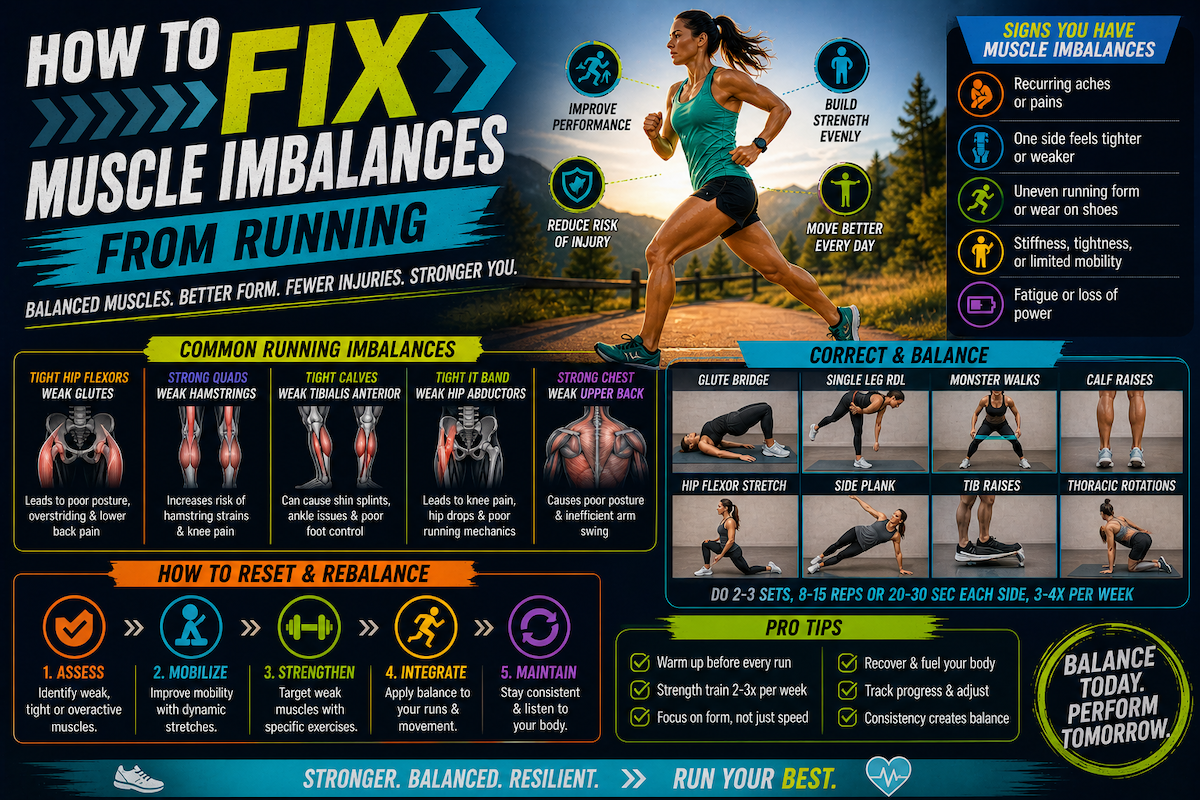
Wondering how to fix muscle imbalances from running? Muscle imbalances hit nearly every runner at some point. That nagging hip pain or uneven stride? It’s your body’s weak links crying out, leading to injuries, sloppy form, and stalled speed if you ignore them.
You don’t have to quit running to fix them. Instead, train smarter by spotting issues early and strengthening the right spots. I’ll walk you through my simple system to balance your muscles and run stronger.
Why muscle imbalances happen in runners
Muscle imbalances sneak up on runners like me. They build over months or years from small habits, not one bad run. You feel fine at first, but then pain hits during a long race or speed workout. Spot the causes early, and you avoid the fix later.
One side gets more work than the other
Roads slope to one side for water drainage. That camber forces your outer leg to stabilize more with each step. After hundreds of miles, your right hip or ankle tires first if you always run the same route.
Tracks curve left in standard races. Your inside leg, usually the left, turns sharper and absorbs extra force. I notice this after track season; my left glute feels beat up.
Your stride might favor one leg too. Do you push off harder with your right? Over time, that side grows stronger while the left lags. Daily life adds to it. I carry my gym bag on the right shoulder and sit with weight on my right hip at my desk. These patterns stack up, so one side always works overtime.
Running alone does not build balanced strength
Pounding out miles boosts your heart and lungs. However, it misses full-body strength. Running stays in one plane: forward motion over and over.
Your glutes often sleep through runs. They should fire to extend your hips, but many runners rely on quads instead. Hips tighten from the same stride angle each time. Calves might underuse if your form shortens steps for speed.
I logged 50 miles a week for years. Endurance soared, yet my single-leg squats showed weak stabilizers. Repetition builds patterns, not balance. Add strength work, or weak spots stay hidden until they snap.
Old injuries and weak movement patterns can linger
A twisted ankle changes everything. Even after it heals, you land softer on that side. Your knee or hip picks up the slack to protect it.
Knee pain from IT band issues? You might shift weight forward. That loads your back unevenly. I had a hip tweak two years ago. Pain left, but I still lean slightly right during strides.
The body remembers. It adapts with limp-like patterns that stick. Old back strains make you brace one side more. These shifts compound over runs, creating chains of weakness. Check your form in a mirror; you might spot the clues.
How I know my body is out of balance
I spot muscle imbalances before they turn into full injuries. Simple clues pop up during runs or recovery. Pay attention to these signs, and you catch problems early. They show one side works harder than the other.
Uneven pain, tightness, or fatigue
My left hamstring tightens after 10 miles, but the right stays loose. One hip aches more on downhills. These differences scream imbalance.
Fatigue hits unevenly too. My right calf burns first in speed work, while the left feels fresh. I used to ignore it. Now I know recurring soreness means one muscle pulls extra weight.
Tight spots repeat in the same place. That overworked glute or foot screams for balance. Check after every long run. Does one side lag? Act on it.
Form changes when I get tired
Fatigue reveals hidden weaknesses. My hips drop on the right side late in runs. I cross the midline with my left foot, twisting my torso.
Overstriding happens when one leg tires. I lean forward too much on weaker strides. Favoring my strong side shortens the weak one’s range. Watch a mirror or video your form.
These shifts build fast. They strain joints and slow you down. I film my runs weekly. Small changes show up clear as day.
One shoe wears out faster or one side feels different
Shoes tell the truth. My right one scuffs the outer heel twice as fast. Blisters form only on my left toes from uneven pressure.
One side feels wobbly on single-leg stands. My left ankle rolls easier during trails. These hints mean movement isn’t even.
Inspect your gear monthly. Uneven wear points to form flaws. Feel stability daily. If one side shakes, strengthen it now.
The best way I check for weak links before I start fixing them
Spotting imbalances starts with targeted checks. I always identify what’s weak, tight, or inactive first. That way, my fixes hit the right spots. These tests reveal differences between sides without fancy gear. They guide me on how to fix muscle imbalances from running right.
Simple single-leg checks I can do at home
Single-leg moves expose weaknesses fast. I do them barefoot in my living room. Start with balance: stand on one leg for 30 seconds. The weak side shakes or your hip drops. That’s poor glute control.
Next, try step-downs. Use a sturdy box or stair about knee height. Lower slowly until the free foot taps the floor. Watch for knee wobble, quick drops, or pain. The shaky leg needs stability work.
Bodyweight single-leg squats come after. Squat down until your thigh parallels the floor. Keep the knee tracking over toes. If you lean or collapse inward, stabilizers lag on that side.
Finish with single-leg bridges. Lie on your back, one foot planted. Lift hips high. Hold five seconds. Notice if the pelvis dips or the leg trembles. Pain or quick fatigue signals a glute issue.
Do three sets per leg. Compare sides side-by-side. Shaking, dropping, or discomfort shows the weak link. These checks take five minutes but save weeks of guesswork.
What running form can tell me
Your stride hides clues. I film myself from the side and behind with my phone. Slow-motion playback shows imbalances clearly.
Look for hip drop first. The opposite hip sags when your foot hits the ground. That means the standing glute can’t hold steady. Everyday runners spot this easily; no fancy analysis needed.
Foot strike differs too. One heel slams harder, or toes drag on the weak side. That creates uneven load and extra stress.
Arm swing asymmetry appears next. The right arm pumps high while the left stays low. It mirrors leg issues because your core connects them.
Run 30 seconds at easy pace. Review the video weekly. Small differences grow into big problems. Film on a treadmill or flat path for best views. This habit keeps my form even.
When I should get a professional assessment
Simple checks work for mild issues. But red flags mean call in help. Sharp pain during tests stops me cold. Numbness or tingling points to nerve trouble.
Repeated injuries scream for a pro. If the same hip tweaks every season, patterns run deep. Problems that keep coming back need expert eyes.
A running coach spots form flaws live. Physical therapists test range and strength precisely. Sports medicine docs rule out structural causes.
I see one after my second hamstring pull. They used gait analysis and pinpointed a tight hip flexor. Don’t wait; pros narrow the cause fast. Book early to run pain-free sooner.
The strength moves that help me fix imbalances
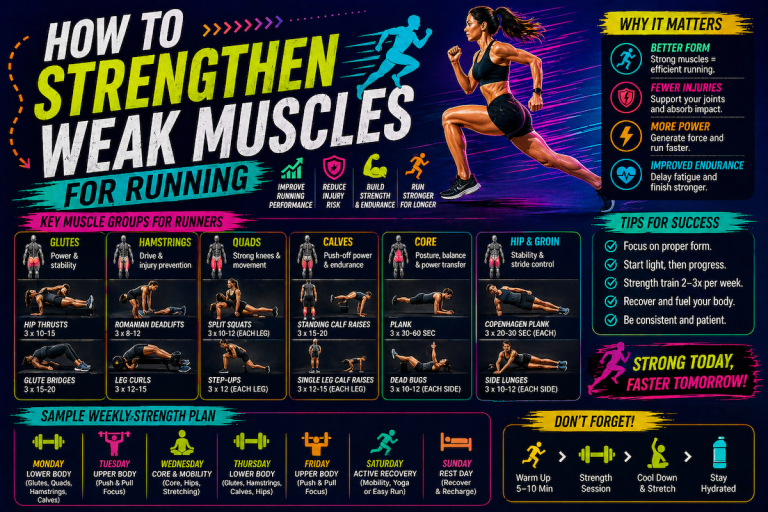
Strength training fixes my muscle imbalances from running. I pick moves that target weak spots directly. They build control, even out sides, and boost my stride efficiency. Do them two or three times a week after easy runs. Start light; focus on form. These patterns protect my joints and cut injury risk.
Glute work that helps my hips stay level
Strong glutes keep my pelvis steady during each stride. Weak ones let hips drop, so one side overworks. I use bridges, clamshells, hip hikes, monster walks, and split squats to wake them up. Good form matters most; sloppy reps build bad habits.
Glute bridges start simple. Lie on your back, feet flat, knees bent. Lift hips until your body forms a straight line from knees to shoulders. Squeeze at the top for two seconds. Do 10-15 per side. They fire the main glute without quad help.
Clamshells hit the side glutes. Lie on your side, knees bent, feet together. Lift the top knee like a clamshell opening, keep hips stacked. 15 reps each side. They stabilize hips against road camber.
Hip hikes fix drops. Stand on a step, one foot off the edge. Drop the free hip, then hike it up high with the standing glute. 12 reps per leg. Monster walks add resistance; put a band around knees and step side to side in a squat. They build outer hip strength for even strides.
Split squats round it out. Front foot forward, back knee drops straight down. Keep torso upright. 8-10 per leg. These control pelvis on the move, just like running. After weeks, my hips stay level in videos.
Single-leg strength for better control
Running is a one-leg sport at speed. Each stride lands on one foot, so single-leg work builds real balance. I do step-ups, lunges, single-leg deadlifts, and rear-foot elevated split squats. They even out sides and improve power.
Step-ups mimic trail work. Use a knee-high box. Step up, drive through the heel, bring the back knee high. Lower slow. 10 reps per leg. They strengthen the whole chain without momentum.
Lunges come next. Step forward, drop until both knees bend 90 degrees. Push back to start. Alternate legs. Keep the front knee over toes. 12 per side. Walking versions add flow.
Single-leg deadlifts challenge balance. Hinge at hips, one leg back, reach toward floor with weights optional. Keep back flat. 8 reps each. They hit hamstrings and glutes deep.
Rear-foot elevated split squats amp it up. Back foot on a bench, front lunges down. 8-10 per leg. This version loads the front leg hard, like mid-stride. My weaker side catches up fast, so fatigue hits even.
Calf, foot, and ankle strength for a stable push-off
Calves, feet, and ankles handle shock and toe-off. Weak ones cause wobbles or early fatigue. I strengthen with calf raises, bent-knee versions, toe control, and foot work. They improve balance and efficiency.
Calf raises stand tall. Rise onto toes, hold, lower slow. 15-20 reps. Do single-leg for balance. Bent-knee ones target soleus; sit with knees bent, heels on floor, lift.
Toe control builds arches. Spread toes wide, then scrunch a towel underfoot. 20 reps. It strengthens intrinsics for better push-off.
Foot strengthening uses short-foot drills. Stand, pull arch up without curling toes. Hold 10 seconds, 10 reps per foot. These absorb impact evenly.
After a month, my push-off feels solid. No more ankle rolls on uneven paths. Stable bases let glutes and hips work right, so I run smoother longer.
How I use mobility work without overdoing it
Strength builds the base to fix muscle imbalances from running. Mobility adds the polish. It frees up stiff spots so your new strength works right. I add it when tightness limits my stride, but I never let it replace strength training. Stretch too much, and you just mask the real issue. Keep sessions short, or you lose run time.
Where I usually feel tight in runners
Runners like me feel tightness in key spots. Hips lock up first from repetitive strides. Hip flexors shorten because they pull your legs forward nonstop. Calves harden after long miles; they absorb every impact.
Hamstrings tug at the back of your thighs, especially on hills. Ankles stiffen from poor landing control. Tightness works two ways. It causes imbalances by limiting full range, so one side compensates. It also results from those uneven loads; the overworked side clamps down to protect itself.
I check these daily. A tight hip flexor on my left pulls my pelvis forward. That strains my right glute more. Spot the cycle, and you break it with targeted moves.
The difference between mobility and stretching
Mobility means active control through your range. You move joints with intention, like swinging a leg or circling an ankle. It builds awareness and strength in motion.
Stretching holds a passive position, like a long hamstring pull. It lengthens tissue but does not teach control. I prefer mobility because it fixes stiffness without weakening muscles. Long stretches can over-relax stabilizers, which hurts runners.
Active work fits my runs better. A quick hip circle wakes the joint. Passive holds bore me and sap energy. Use mobility for daily stiffness; save deep stretches for cool-downs.
A short warm-up that helps me move better before I run
I warm up in five minutes flat. It loosens hips and activates glutes without fatigue. Do these dynamic moves before every run.
Start with leg swings. Hold a wall, swing one leg front to back 10 times. Switch sides. They free hip flexors gently.
Ankle rocks follow. Kneel with toes tucked, rock back over heels. 8 reps per foot. This opens ankles for better push-off.
Walking lunges come next. Step forward, drop into a lunge, then push up. 5 per leg. Keep it slow to hit glutes.
Finish with glute activation. Side-lying leg lifts, 10 per side. Fire those hips before you pound pavement.
This routine evens my stride right away. No more stiff starts. Pair it with strength, and imbalances fade fast.
How I change my running so the imbalance does not come back
Gym work fixes muscle imbalances from running, but it only goes so far. The real win comes when I tweak my actual runs. These changes cut overload on the strong side and stop old patterns from creeping back. Small shifts in training and form make a big difference. They let balanced strength stick around.
I build mileage and speed more carefully
Sudden jumps in mileage or speed wreck my form. I push too hard, and my weaker side fatigues first. That leads to uneven loading, where the strong leg takes over again.
I cap weekly increases at 10 percent now. After a 30-mile week, I add no more than three miles next time. Speed sessions follow the same rule. I build intervals over four weeks instead of two.
Recovery matters just as much as the hard days. I add easy runs or rest days between tough workouts. For example, after a long run, I walk the next day. This lets both sides rebuild evenly. No more breakdowns from rushed progress.
I watch for overstriding and side-to-side drift
Overstriding loads my front leg too much, especially the weaker one. Side-to-side drift twists my hips. Both pull my body out of balance fast.
I use simple cues to stay on track. Shorter steps keep my feet under my hips. I think “quick feet” during easy runs. Stable hips mean no dropping or swaying; I imagine a level bucket on my pelvis.
Relaxed arms help too. They swing naturally from the shoulders, not tense or crossing my body. These fixes take no extra time. I check them mid-run, and my stride evens out. No need for a full form redo; just consistent reminders work.
I rotate shoes, routes, and surfaces smartly
Same shoes and routes hammer the same muscles. That repeated stress builds imbalances over time.
I swap shoes every few runs. A cushioned pair one day, a lighter racer next. It changes my foot strike slightly and spreads the load.
Routes alternate too. Clockwise track days balance left turns. I run roads both ways or hit trails for variety. Surfaces mix it up: grass softens impacts, pavement builds toughness.
Variety supports recovery, so I don’t pile on extra miles. One change per week keeps it simple. My legs adapt evenly now, and old weaknesses stay gone.
A simple weekly plan to keep my body more balanced
I stick to a basic weekly routine that blends my runs with strength work, mobility, and rest. This setup helps me fix muscle imbalances from running without extra hassle. It fits around a normal schedule, so you can tweak it for yours. Consistency makes it work, not perfection. Most weeks look like this: three to five runs, two strength days, daily mobility bits, and full rest.
What I do before runs, after runs, and on strength days
Before every run, I spend five minutes on a quick warm-up. Leg swings loosen my hips, ankle rocks free up my feet, and a few walking lunges wake my glutes. This gets blood flowing and evens my stride from the start.
After runs, I cool down with light mobility. I walk the last five minutes, then do short-foot drills and calf stretches. Foam rolling hits tight spots like hips or calves for two minutes each side. It speeds recovery and prevents tightness buildup.
Strength days follow easy runs twice a week. I pick three moves from my list: glute bridges, single-leg deadlifts, and calf raises. Each gets three sets of 10-12 reps per side. I finish with hip hikes or clamshells. Total time stays under 20 minutes. Rest or easy jog the next day.
How often I should train strength to see change
Two strength sessions per week do the job for me. They target weak spots without wearing me out. More than that risks fatigue, especially with runs.
Progress builds from steady reps, not random blasts. I hit glutes and single-leg work on Monday and Thursday. After four weeks, my form holds better. Skip weeks, and gains fade. Track it in a notebook; small notes show the shift.
Runners with heavy mileage stick here too. Add a third if you’re fresh, but two keeps balance without burnout. Results stack up because you repeat quality efforts.
How I know the plan is working
Clear signs tell me the routine clicks. Soreness drops first; both sides recover even after long runs. No more one-hip ache.
Form stays stable when tired. Videos show level hips and even strides, no drops or drifts. Single-leg stands last longer without wobble.
Flare-ups vanish too. Old ankle tweaks or hamstring pulls stay quiet. Push-off feels strong on both feet during speed work. Test weekly with those home checks. Better control means the plan sticks. Keep going, and running feels effortless.
Conclusion
I’ve fixed my muscle imbalances from running with awareness, targeted strength, smart mobility, and tweaks to my training. These steps even out my stride and cut injury risk without skipping runs.
You don’t need perfect symmetry. Just plug the weak spots, and you’ll run stronger and longer. Stick to the plan. Your body balances out faster than you think.