

How to Lessen Shoulder Pain While Running?
Ever felt a sharp twinge in your shoulders halfway through your run? Running seems like a lower-body workout, but shoulder pain while running sneaks up on many of us. It happens because your upper body plays a bigger role than you think; poor posture and arm swing throw everything off balance.
Fatigue hits first. Then tension builds in your neck and shoulders. They creep up toward your ears, arms start crossing your body, and breathing turns shallow. This common pattern stresses your rotator cuff and upper back muscles, leading to pain that can sideline you.
The good news? You don’t need complex fixes. In this post, you’ll get a simple plan to ease it: quick form checks you can do mid-run, a short warm-up routine, a basic strength and mobility workout, plus red flags that tell you to stop and see a pro.
Most runners overlook these tweaks, but they make a huge difference. You’ll run smoother, stay pain-free longer, and enjoy every mile. Let’s fix your form and get back to what you love.
Back to RunDreamAchieve Training Plans
First, figure out what kind of shoulder pain you are feeling
Shoulder pain while running often stems from fixable habits, but not always. You need to spot the difference between simple muscle tension and something more serious first. That way, you pick the right steps and avoid making it worse. Start with a quick check to sort it out.
Tension pain vs sharp pain: a quick self-check in 60 seconds
Tight, achy pain feels dull and spread out. It hits your upper traps, neck, or between your shoulder blades. You notice it builds during long runs, then lingers as soreness.
Sharp pain differs. It pinches or catches, often in the front or top of your shoulder. This type stabs with certain moves.
Test it now. Stand tall. Raise both arms overhead slowly. Does it ache evenly, or catch sharply? Next, reach one hand behind your back, elbow bent. Switch sides. Smooth motion points to tension; pinching suggests joint issues.
Stop right away if sharp pain hits. Rest and skip self-fixes until you check with a pro.
Tension responds to form tweaks and stretches. Sharp pain needs caution, because it could signal rotator cuff strain or impingement.
Common reasons runners get sore shoulders
Runners develop sore shoulders from everyday slip-ups. Poor form takes the main blame. For example, you slouch or lean forward from the waist. This forces your shoulders to overwork just to stay balanced.
Fatigue makes it worse. As miles add up, your shoulders hunch toward your ears. Arms swing across your chest instead of at your sides. Clenched fists add tension.
Desk jobs contribute too. Tight chest muscles pull your shoulders forward all day. Then running amplifies it.
Weak spots play a role. A soft upper back and core mean your shoulders compensate nonstop. Shallow chest breathing recruits them even more, since your diaphragm stays idle.
These habits build over time. However, small changes prevent most shoulder pain while running.
When shoulder pain is a warning sign, not a form problem
Some pain signals real trouble. Watch for these red flags:
- Numbness or tingling down your arm.
- Weak grip or trouble lifting objects.
- Lost range of motion that sticks around.
- Pain at rest or waking you at night.
- Swelling, redness, or warmth.
- Clicking or popping with discomfort.
- Injury after a fall or crash.
- Sudden, intense pain without reason.
Chest pressure, shortness of breath, jaw ache, left arm radiation, or dizziness scream cardiac issue. Call emergency services fast.
If shoulder pain while running lasts over two to four weeks, or gets worse despite rest, book a physical therapist or doctor. They diagnose issues like tears or nerve compression. Self-treatment works for form glitches only. Play it safe, because ignoring warnings leads to longer downtime.
Fix your running form so your shoulders can relax
Shoulder pain while running often starts with subtle form slips. Tension creeps in as you fatigue, but you can reset it on the fly. Focus on these tweaks during your runs. They keep your shoulders loose and pain at bay. Start with a simple mental checklist every five minutes: head tall, arms pump straight, shoulders down, breathe deep. Repeat it like a mantra, especially late in long runs. You’ll notice less strain right away.
Run tall: alignment that takes stress off your neck and shoulders
Picture a string pulling the top of your head upward. That image helps you run tall. Stack your head directly over your shoulders. Keep eyes forward, chin level with the ground. Avoid looking down at your feet.
Lean slightly from the ankles, not the waist. This natural forward tilt uses gravity to propel you. Bending at the waist forces your upper body to fight for balance. As a result, your shoulders hike up and tighten.
Hunching rounds your back. It closes your chest and restricts air flow. Breathing gets shallow, so your shoulders lift to help. Over time, this builds shoulder pain while running. Stay tall instead. Open your chest wide. Tension melts away because your neck and shoulders carry less load.
Check it mid-run. Glance at your shadow if the sun shines. Does your head align over your torso? Adjust on the spot. Good posture supports everything else.
Arm swing that does not tug on your shoulder joint
Your arms drive rhythm, but bad swings pull on your shoulders. Bend elbows to about 90 degrees. Keep them close to your sides. Hands move straight forward and back, like pistons.
Avoid crossing your midline. Imagine a zipper down the front of your body. Hands stay on their own side of that line. Crossing yanks your shoulders inward. It strains the joint over miles.
Relax your hands too. Pretend you hold a potato chip. You don’t want to crush it, so keep grip light. Tense fists travel up to your shoulders. Loose hands mean loose arms, and relaxed shoulders follow.
Practice this cue on easy runs first. Pump elbows back as you drive forward. Feel the power without shoulder tug. Fatigue hits, arms often cross more. Catch it early with your checklist.

Micro-resets you can do mid-run when you feel tension building
Tension sneaks up around mile three or ten. Don’t wait. Use these quick resets to shake it off. They take seconds, but pay off big.
Shrug your shoulders up high for one second. Then drop them fully. Feel the release down your neck. Do this every few minutes.
Shake out your arms loosely for five to ten steps. Let hands flop. It breaks the clench cycle fast.
Roll shoulders back in small circles, twice each way. Keep it gentle; no big winds. This opens your chest again.
Open and close your hands a few times. Pair it with a deep breath. Tension drains from your fingers upward.
If needed, slow your pace for 20 steps. Re-stack your posture tall. Then ease back into rhythm.
Scan your form every five to ten minutes. Ask: shoulders down? Arms straight? Breathing easy? These habits prevent shoulder pain while running from building.
Breathe from your belly to stop recruiting your shoulders
Shallow chest breaths pull your shoulders into the work. Your diaphragm sits idle. Switch to belly breathing for relief. It lets your shoulders drop naturally.
Chest breathing lifts your ribs high. Shoulders rise with each inhale. Belly breathing expands your midsection instead. Air fills deep, so upper body stays quiet.
Try this drill in your warm-up walk. Place one hand on your belly. Inhale slow. Feel it push out against your palm. Exhale fully. Practice for two minutes.
On the run, use the cue: soft shoulders, wide ribs, slow exhale. Inhale for two steps, out for three. Oxygen flows better. Tension fades because shoulders don’t lift.
Combine it with tall posture. You’ll breathe easier, run longer, and dodge pain. Make it automatic with your form checklist.
Warm up and cool down with a short routine that targets tight spots
Shoulder pain while running often starts cold. Your muscles tighten fast without prep. A quick warm-up gets blood flowing to tight chest, traps, and shoulder blades. It preps them for arm swing.
After runs, cool down releases built-up tension. These routines take 5 to 10 minutes total. Busy runners love them because they fit anywhere. Do them daily to stay loose and pain-free
5 minute pre-run warm-up for shoulders and upper back
Start every run with this. It wakes up your upper body without strain. Focus on smooth moves. No pain allowed; just feel the warmth spread.
Begin with a brisk walk or easy jog for 2 minutes. Swing arms naturally. This raises your heart rate and loosens joints.
Next, do shoulder rolls. Lift shoulders to ears, roll them back and down. Repeat 10 times forward, then 10 backward. Breathe deep each time.
Follow with arm circles. Extend arms to sides. Start small circles forward for 10 reps, then grow them big for 10 more. Switch directions. Keep shoulders relaxed.
Add gentle scap squeezes. Pull shoulder blades together like you hold a pencil between them. Hold 3 seconds, release. Do 10 reps. This stabilizes your upper back.
Finish with light shrugs. Shrug up high, hold 2 seconds, drop fully. Repeat 10 times. Tension melts as blood flows.
Do this sequence before every run. Your shoulders handle miles better. Tension builds slower because tissues stay pliable.
Post-run stretches that open the chest and calm the neck
Fatigue rounds your shoulders post-run. These stretches counter it fast. Hold each 15 to 30 seconds. Repeat 2 to 3 rounds per side. Breathe steady. Never yank or bounce. Stop at sharp pain.
Try the across-the-chest stretch first. Bring one arm across your body at chest height. Use the other arm to hug it close at the elbow. Feel the upper back open.
Then, doorway chest stretch. Place forearms on a door frame or tree at shoulder height, elbows bent. Step forward gently. Chest expands as shoulders pull back.
Use a chest expansion with towel or strap. Hold ends behind you, arms straight. Lift arms slightly while squeezing shoulder blades. Keep neck long.
End with upper trap stretch. Tilt head to one side, ear to shoulder. Use hand for gentle pull if needed. Switch sides.
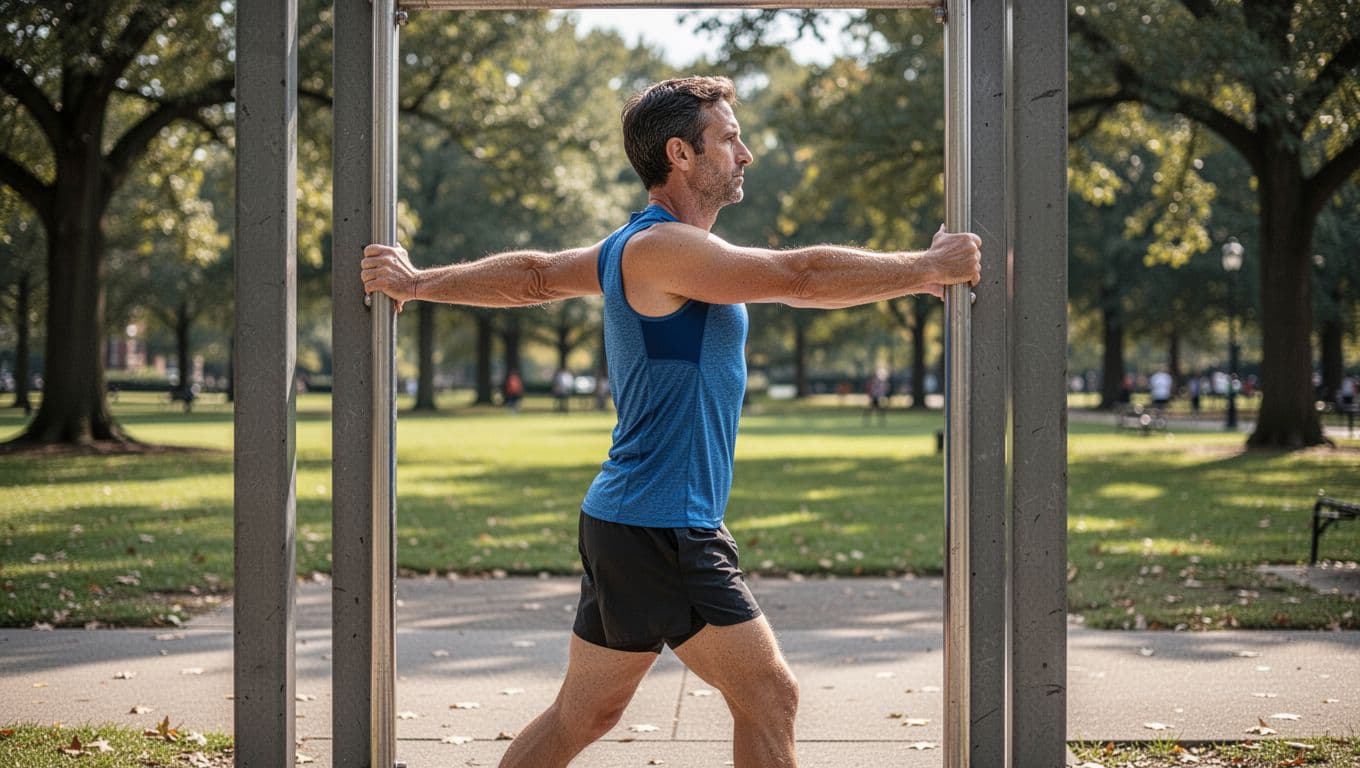
These calm your neck and traps quick. Recovery speeds up, so soreness fades overnight. Add them right after slowing to a walk.
If you sit a lot, undo “desk shoulders” before you run
Sitting all day hunches you forward. Chest tightens, shoulders roll in. Runs amplify this pull, sparking shoulder pain while running sooner. Undo it with this 60-second mini routine at home or work.
Stand tall first. Feet hip-width, knees soft.
Do a chin tuck. Pull chin straight back like a double chin forms. Hold 5 seconds, repeat 5 times. Neck aligns over shoulders.
Set shoulder blades back and down. Squeeze them together and drop. Hold 5 seconds, 5 reps. Upper back wakes up.
Finish with doorway stretch. Forearms on frame, step forward 20 seconds. Chest opens wide.
Repeat before runs or hourly at work. Shoulders stay neutral. You run taller, with less pain buildup. Simple fix, big payoff.
Build strength where runners actually need it, so pain does not keep coming back
Form fixes help right away, but shoulder pain while running returns if muscles stay weak. Your upper back pulls shoulder blades into place for smooth arm swing. The rotator cuff keeps your joint stable mile after mile. A solid core stops slumping, so shoulders don’t overwork.
Add this 15-minute plan two to three times a week. Use a resistance band, light weights, or bodyweight. It targets those spots directly. Consistency builds resilience. Pain fades for good because you strengthen what running demands.
A simple 15 minute strength plan for shoulder blades and rotator cuff
Grab a resistance band or light dumbbells. Do this routine after easy runs or on off days. Focus on control. Keep reps slow, about two seconds up and down. Avoid shrugging your shoulders. Stop if pain spikes sharply.
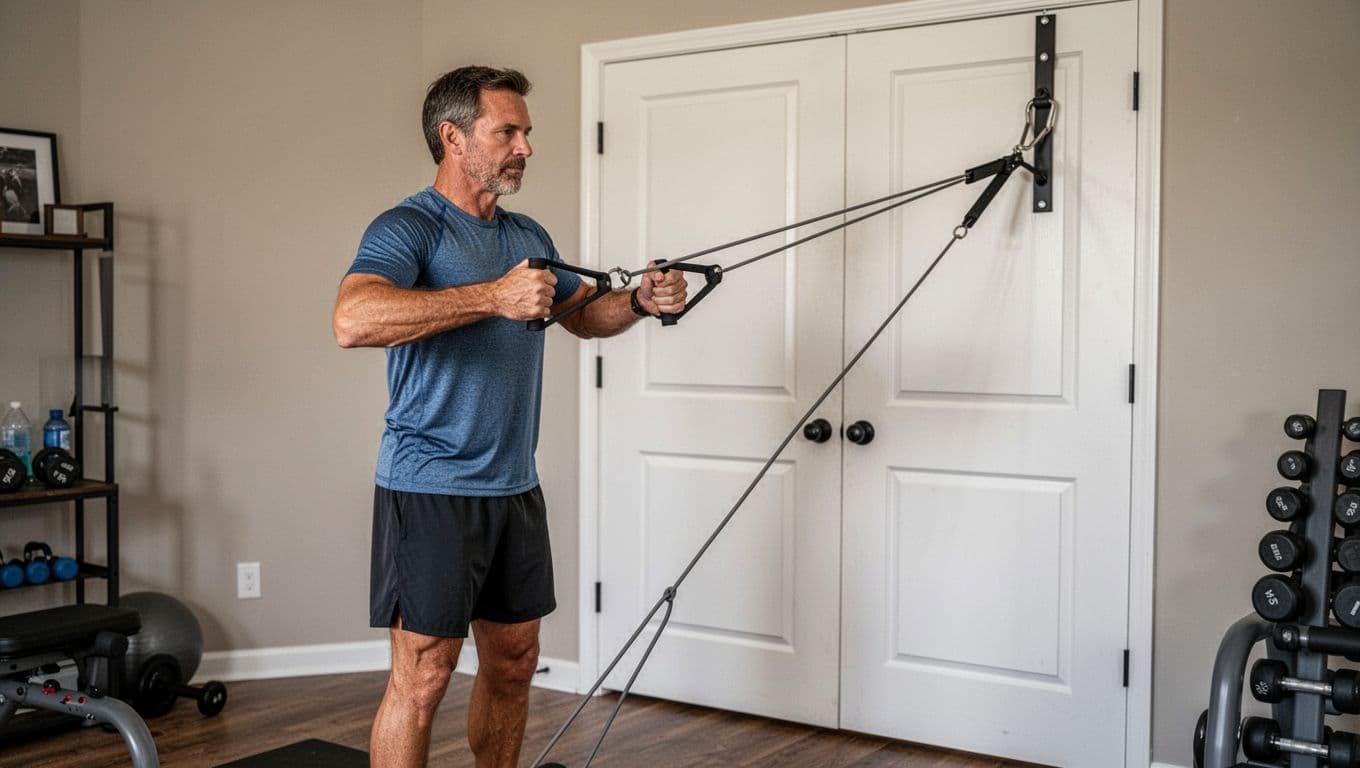
Start with band rows or standing rows. Anchor the band at chest height, like to a door. Stand tall, elbows bent. Pull handles to your sides, squeeze shoulder blades together. Do 3 sets of 10 to 12 reps. This wakes up your upper back fast.
Next, try band pull-aparts or reverse flies. Hold the band at shoulder width, arms straight. Pull it apart until your shoulder blades pinch. Slowly release. Complete 2 sets of 12 reps. It strengthens the muscles between your blades.
Add external rotation with band. Anchor the band at waist height. Elbow at your side, bent 90 degrees. Rotate your hand outward, away from your body. Do 2 sets of 10 reps each side. This protects your rotator cuff from strain.
Follow with wall slides. Face a wall, forearms against it, elbows bent. Slide arms up overhead, keeping contact. Lower slowly. Aim for 2 sets of 8 reps. It improves blade control without gear.
Finish with push-up plus or scap push-ups. In push-up position or on knees, round your upper back by pushing shoulder blades apart at the top. Do 2 sets of 8 to 10 reps. Your shoulders gain stability.
Rest 30 to 60 seconds between sets. You’ll feel stronger arm swings soon.
Do not skip core work, it keeps your shoulders from doing your torso’s job
Weak core forces bad posture. You slump forward. Shoulders then hike up to compensate. This extra effort sparks shoulder pain while running, especially late in runs. Strong abs and back keep you tall. Your torso handles its load. Shoulders relax as a result.
Keep it simple and runner-friendly. No gym needed. Do these two to three times a week with your shoulder work.
First, dead bug. Lie on your back, knees bent 90 degrees, arms up. Extend opposite arm and leg slow, keep low back flat. Alternate sides. Do 2 sets of 10 reps each side. It builds control without strain.
Next, side plank from knees. Lie on your side, prop on forearm and knees. Lift hips straight. Hold 20 to 30 seconds each side, 2 sets. Your obliques fire to steady you.
Add bird dog. On all fours, extend right arm forward and left leg back. Hold two seconds, hips level. Switch. Do 2 sets of 8 to 10 per side. It links core to shoulders perfectly.
These take under five minutes. Your runs stay upright. Tension drops because core takes over.
How to progress safely and know you are on the right track
Start light. Master form first. Add reps before you up resistance. Soreness feels normal after workouts. Sharp pain does not. Rest if it lingers over 24 hours. Aim for six to eight weeks of steady work, two to three sessions weekly.
Progress like this. Week one, hit the minimum reps. Week two, add two reps per set. Once easy, grab a thicker band or five-pound weight. Always prioritize control over speed.
Track success with this checklist:
- Shoulders stay down during easy runs.
- Less neck tightness right after you finish.
- Arm swing feels smoother, less tug.
You’ll notice changes in two weeks. Form holds longer on long runs. Pain from shoulder pain while running fades because strength supports you. Stick with it. Your body adapts, and miles get easier. If progress stalls, check form or add rest days.
Conclusion
You now have a clear plan to tackle shoulder pain while running. First, check if it’s tension or something sharper. Then fix your posture to run tall and swing arms straight at 90 degrees. Use mid-run resets like shrugs and shakes when tension builds. Breathe from your belly to keep shoulders soft. Add a quick 5-minute warm-up with rolls and circles before you start. Build strength in your upper back, rotator cuff, and core two to three times a week.
Start small. Pick one change, like better arm swing, and test it for a week on your easy runs. Notice how your form holds longer and pain fades. In addition, track what works best for you. As a result, you’ll run smoother and stay on the trails more.
Most runners see big improvements fast because these tweaks target the real causes. However, listen to your body. If red flags show up, like numbness, weakness, or pain at rest, stop and see a doctor or physical therapist right away. Also, get checked if soreness lasts over a few weeks despite your efforts.
Back to Running Form Technique


