

Protein Powder After Running A Runner’s Recovery Guide
Using protein powder after running is a smart, science-backed move. It helps your body recover faster. It also builds strength for your next outing. Especially after those long, tough efforts, getting protein in quickly gives your muscles the tools they need. Your muscles use these tools to repair and rebuild.
How Protein Actually Transforms Your Post-Run Recovery

Every single run creates tiny, microscopic tears in your muscle fibers. Don't worry, this is a good thing! It’s the natural signal your body uses to adapt and get stronger. But for that rebuilding to happen, your body needs the right materials.
Think of your muscles like a weathered brick wall after your workout. Afterward, it’s time for the repair crew to show up. They don't just patch things up. They make the wall even stronger than before. In this scenario, protein is the essential material. Its building blocks, amino acids, are the individual bricks and mortar. Without enough protein, the repair job is slow and shoddy. This is exactly where a post-run protein shake can be a game-changer.
Seizing the "Anabolic Window"
You've probably heard of the "anabolic window." This is the prime time right after your run. During this period, your muscles are incredibly receptive to nutrients. They are like a dry sponge ready to soak up water. Your body is set to absorb amino acids. It's ready to kickstart muscle protein synthesis. This is the technical term for the muscle repair process.
Getting protein in during this window means your repair crew has all its supplies. They can get straight to work. This rapid response helps you:
- Feel less sore: Starting repairs immediately can take the edge off muscle soreness (DOMS).
- Recover faster: Quick repairs mean you’ll feel fresh and ready for your next run sooner.
- Build more strength: Rebuilding muscle tissue efficiently is how you get stronger over the long haul.
The goal isn’t just to recover, but to recover better. Supplying your body with high-quality protein right after a workout helps flip the switch from a state of breakdown (catabolic) to a state of rebuilding (anabolic) much faster.
The Science Backing Post-Run Protein
The running community has known for ages that recovery is key. Science now clearly shows how big a role protein plays. Study after study confirms that runners who supplement with protein see better performance gains. They also experience less muscle damage.
For instance, one study followed elite marathoners. It found that those who consumed 33.5 grams of whey protein just 30 minutes after their runs had lower markers of muscle damage. This was compared to a group that only had carbs. It drives home how critical timely protein intake is for handling stress. You can dig into more details about the benefits of post-run protein supplementation to see just how impactful it can be.
Quick Guide to Post-Run Protein Timing and Amount
I've put together this simple table to take the guesswork out of it. It'll help you figure out how much protein to aim for and when. This is based on the type of run you just crushed. This is a great starting point to help you dial in your personal nutrition strategy.
| Run Type / Goal | Ideal Timing After Run | Recommended Protein Intake |
|---|---|---|
| Easy Run (< 60 min) | Within 90 minutes | 15-20 grams |
| Long Run (> 90 min) | Within 30-60 minutes | 20-30 grams |
| High-Intensity Interval Run | Within 30 minutes | 25-30 grams |
| Strength Training for Runners | Within 60 minutes | 25-30 grams |
Remember, consistency is key. Making a post-run shake a regular part of your routine will pay off. You will see benefits in your recovery and performance down the road.
How Much Protein Do You Actually Need?
Figuring out the right amount of protein powder after running isn't a one-size-fits-all deal. It's about matching your intake to your specific training load, intensity, and goals. What works for a casual jogger is worlds away from what a marathoner needs.
You've probably heard the standard Recommended Dietary Allowance (RDA) for protein. It is 0.8 grams per kilogram of body weight. The catch? That number is for sedentary adults. For runners who are constantly breaking down and rebuilding muscle, that baseline is simply not enough. To truly level up your performance, you must look beyond the basics.
The Runner's Protein Standard
Let's get straight to it: endurance athletes need a lot more protein. This isn't just a trend. It's a physiological necessity to counteract muscle breakdown. While the average person gets by on 0.8 g/kg, the science for runners is much higher. Experts recommend 1.6 to 1.8 g/kg on training days for serious runners.
Essentially, runners often need about double the protein of their non-running friends. This fuels proper recovery and adaptation. This number isn't static, either. During a tough training block, like prepping for a marathon, your needs can climb higher. They can potentially reach 1.6 to 2.4 g/kg. This helps you preserve hard-earned lean muscle mass.
The most important thing to remember is that your protein needs are dynamic. As your training volume and intensity go up, so should your protein intake. This ensures your body always has the raw materials it needs to repair and come back stronger.
For a deeper dive into the numbers for different fitness goals, this guide on how to calculate your daily protein needs is a great resource.
Let's Do the Math: A Real-World Example
Okay, let's make this practical. We'll use a marathoner who weighs 150 pounds (about 68 kg) as our example.
First, we need to convert their weight to kilograms:
- 150 lbs ÷ 2.2 = 68.2 kg (we'll round down to 68 kg for simplicity)
Next, we pick a protein factor. This runner is in a high-mileage training phase. We'll aim for the higher end of the range, 1.8 g/kg.
Now, we calculate their daily protein target:
- 68 kg (body weight) × 1.8 g/kg (protein factor) = 122.4 grams of protein per day
So, our marathoner's daily goal is about 122 grams of protein. A post-run shake containing 25-30 grams of protein is a perfect way to make a serious dent in that target. It also kicks off the recovery process right when it's most effective.
Why Your Running Style Changes the Game
The type of running you do has a massive impact on your protein needs. Your body's needs shift dramatically between a long, slow day and a tough interval session.
- Marathon and Ultra Training: These endurance efforts cause muscle breakdown for hours. A higher daily protein intake (1.6-2.4 g/kg) is non-negotiable for repairing that damage.
- Speed Work and Intervals: These short, explosive workouts create a ton of muscle fiber damage quickly. Getting protein in soon after is crucial to jumpstart the repair process.
- General Fitness Running: If you're running shorter distances a few times a week, a more moderate intake (1.2-1.6 g/kg) will be plenty. This supports your recovery and maintains muscle.
By understanding these nuances, you can fine-tune your protein intake. This personalized approach to runner nutrition is what separates good recovery from great recovery. It helps you adapt and get stronger with every mile you log.
Choosing The Right Protein Powder For Runners
Walking into a supplement shop can feel like a pop quiz. Tubs of powders line the shelves, all promising better recovery. So, where do you even start? The good news is that picking the right protein powder after running is pretty simple once you understand the key players.
It all comes down to matching the protein type to your specific needs. Are you looking for a lightning-fast repair crew for your muscles? Or maybe something to support recovery over time? Each type has a distinct job. This is defined by how quickly it's absorbed and its amino acid makeup.
Whey Protein: Your Fast-Acting Repair Crew
There’s a reason whey protein is the go-to for most athletes. It's the champion of fast absorption. Derived from milk, whey is a complete protein. It packs all nine essential amino acids your body can't make on its own. These are the building blocks needed to repair muscle micro-tears after a run.
Think of it as the emergency response team for your muscles. It gets to the scene fast to kickstart the healing process. You'll typically see two main forms on the label:
- Whey Concentrate: This is a fantastic, all-around option that’s usually easier on the wallet. It’s mostly protein but contains a little lactose and fat.
- Whey Isolate: This is a more refined version. It goes through extra filtration that strips out most lactose and fat. It leaves behind a purer protein that’s over 90% concentrated. This makes it absorb even faster and is a lifesaver for runners sensitive to dairy.
This pyramid shows how much a runner's protein needs differ from someone less active. It's a clear visual of why dialing in your protein intake is so critical.
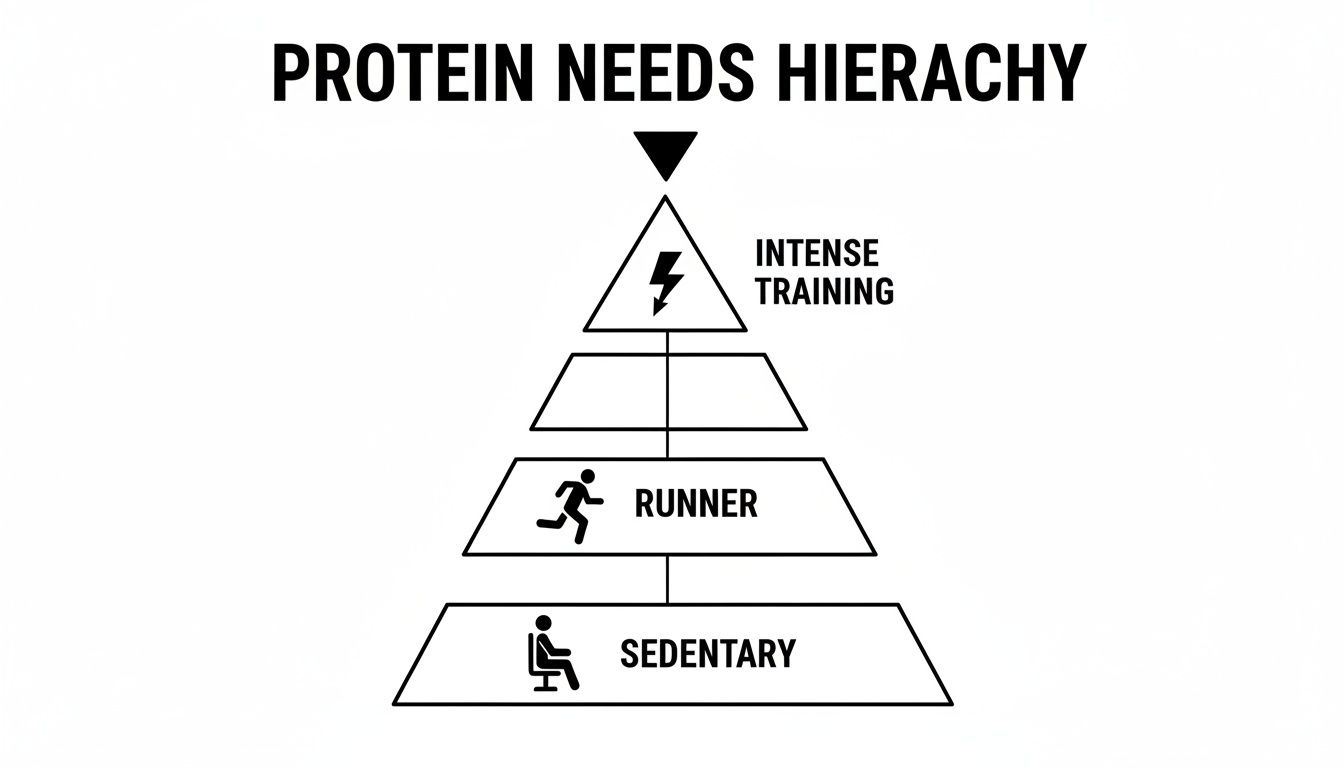
As you can see, the moment you start training seriously, your body’s demand for protein shoots up. During peak training cycles, it becomes a non-negotiable part of your recovery toolkit.
Casein And Plant-Based Alternatives
While whey wins the race for speed, it isn't the only option. Other proteins offer different advantages. They might be a better fit for your body or training schedule.
Casein is whey’s slow-and-steady cousin. It’s also from milk, but it digests slowly. It releases a steady stream of amino acids over several hours. This makes it perfect for a pre-bedtime shake, fueling muscle repair as you sleep.
For plant-based runners, the options have never been better. Gone are the days of gritty, single-source powders. Modern blends cleverly combine proteins from pea, soy, hemp, or rice. They create a complete amino acid profile that rivals whey. If you're avoiding dairy, these are your ticket. For a deeper dive, checking out a comparison of whey protein vs plant protein can help you decide what's right.
The secret isn't finding the single "best" protein powder. It's about finding the one that works best for you. Pay attention to your digestion, your dietary needs, and when you plan to drink it.
Comparing Protein Powder Types For Runners
I've put together this simple table to help you cut through the noise. It breaks down the most common protein powders. You can quickly see which one aligns with your running goals.
| Protein Type | Key Benefit | Best For | Considerations |
|---|---|---|---|
| Whey Isolate | Very fast absorption | Immediate post-run recovery (within 30-60 minutes) | Higher cost; ideal for lactose sensitivity. |
| Whey Concentrate | Balanced and cost-effective | General post-run recovery and daily protein supplement | Contains some lactose, which may affect some runners. |
| Casein | Slow and sustained digestion | Overnight recovery or between-meal protein source | Not ideal for immediate post-run needs due to slow absorption. |
| Plant-Based Blends | Dairy-free and vegan-friendly | Runners with dietary restrictions or lactose intolerance | Choose blends (pea/rice) for a complete amino acid profile. |
Of course, powders aren't the only way to get your protein fix. Many runners also lean on bars for convenience. If you're curious, you can find great info on the best protein bars for weight loss and how they fit into a training plan. By understanding all your options, you can build a recovery strategy that truly supports every mile.
Mastering Your Post-Run Nutrition Timing
When you have your protein powder after running is just as critical as what kind you choose. The idea of timing your post-run fuel can feel over the top. But the principles are actually straightforward. It all boils down to giving your body the right building blocks when it needs them most.
For years, the running world was obsessed with the "anabolic window." This was a tight 30-to-60-minute slot right after a workout. The wisdom was that if you missed it, you'd squandered your recovery. It’s true that your muscles are primed to soak up nutrients right after a run. But we now know that window is much wider than we thought.
Think of it less like a flight you are about to miss. Think of it more like a priority boarding lane. Getting protein in during that first hour is a great move. But your body’s ability to repair muscle stays elevated for hours. You haven't missed the boat.
The Unbeatable Team: Protein and Carbs
Here’s the thing, though: protein alone is only half the story. For a runner, pairing it with carbohydrates is non-negotiable. This is if you want to get the most out of your recovery.
Imagine your muscles are a construction site after your run.
- Protein provides the bricks—the amino acids—to rebuild muscle fibers.
- Carbohydrates are the energy that powers the construction crew. Carbs also restock your muscle glycogen, which is the fuel you just burned.
Without that energy from carbs, your body might eye the protein for fuel. It would not use it for its real job: repair. That’s why a post-run shake with both protein and a quick-acting carb is perfect. A banana or some fruit juice is a great source. It gives the crew everything they need to start rebuilding immediately.
Smart Timing Strategies for Any Runner
The secret to nailing your post-run nutrition is making it an effortless habit. The easier it is, the more consistently you’ll do it.
A few simple tricks can make all the difference:
- Prep Before You Go: Scoop your dry protein powder into a shaker bottle before you lace up. When you get back, all you have to do is add water or milk.
- Keep a Stash on Hand: Have single-serving packets of protein powder in your gym bag, car, or desk. That way, you’re never caught unprepared.
- Plan Your Finish Line: On longer runs, try ending your route near home or a local spot. Find a place where you can grab a recovery drink quickly.
The real aim is to make your recovery shake as automatic as your post-run stretch. It’s that consistency that truly fuels long-term progress.
This isn't just anecdotal advice; the science backs it up. The rise in protein powder use among runners is tied to research. It shows clear benefits over just carbs. One study followed experienced marathoners. It found that those who had whey protein after training runs showed fewer signs of fatigue. They had less muscle damage after the race compared to those who only had carbs. You can dig deeper into how protein supplementation enhances endurance recovery and boosts performance.
Simple and Effective Post-Run Shake Recipes

Knowing the science behind using protein powder after running is great. But putting it to use is what makes the real difference. A good shake is the fastest way to get vital nutrients into your system. This is right when your muscles are screaming for them. The trick is to keep it simple, tasty, and matched to your running goals.
These recipes are designed to be thrown together in minutes. So you never have to miss that prime recovery window. They're built around the perfect partnership: protein and carbs. Protein handles muscle repair. Carbs restock your energy stores. It's a powerful one-two punch that helps you feel less sore.
The Rapid Repair Shake
This is your go-to after a hard workout, like an interval session. It’s all about speed. It uses fast-acting whey protein and simple carbs. This gets the muscle repair process going immediately.
- 1 scoop (25g) vanilla or unflavored whey protein isolate
- 1 medium ripe banana (for quick-digesting carbs)
- 8-10 oz cold water or skim milk
- 1 tsp of honey (optional, for an extra carb boost)
- A few ice cubes
Why it works: The whey isolate is like an express delivery service for amino acids. The banana gives you about 25 grams of easy-to-digest carbs. This starts refilling those empty glycogen tanks, fueling the entire repair operation.
The Endurance Rebuild Smoothie
When you’ve just finished a long run, your body needs more. This smoothie is built for sustained recovery. It combines a steady-release plant protein with antioxidants. It also has healthy fats to help fight inflammation and support your muscles.
- 1 scoop (30g) plant-based protein powder (a pea/rice blend is great)
- 1 cup frozen mixed berries (like blueberries and raspberries)
- 1 tbsp chia seeds or ground flaxseed
- 10-12 oz unsweetened almond milk
- Handful of fresh spinach (I promise you won't taste it!)
Why it works: The plant-based protein releases amino acids more slowly. This gives you longer-term support. Berries are loaded with antioxidants to combat stress. Chia seeds bring in anti-inflammatory omega-3s and fiber.
Your post-run shake is the first step in a larger recovery process. It’s a convenient tool, but should complement a diet rich in whole foods. Exploring other ideas for healthy snacks for runners can help you build a complete nutrition strategy.
The Lean Muscle Maintainer
For runners focused on body composition, this shake is perfect. It packs a big protein punch without all the extras. It's great after a moderate run or a strength session.
- 1.5 scoops (30-35g) unflavored casein or whey protein
- 8 oz cold water
- 1/2 cup plain low-fat Greek yogurt
- 1/2 tsp cinnamon (which can help with blood sugar)
- A few drops of liquid stevia or monk fruit sweetener (optional)
Why it works: This recipe is all about maximizing protein. It keeps carbs and fats in check. The Greek yogurt adds even more protein and gives it a creamy texture. This approach supports your muscles and helps you feel full. That is a huge plus when you're managing your overall energy intake.
Fitting Protein Into Your Total Recovery System
A post-run protein shake is an incredibly effective tool. But it's just one piece of the puzzle. Think of it as the first responder on the scene. It gets the recovery process started. But the real work happens over the next 24 hours. True, lasting improvement comes from a complete recovery system. Supplements should support, but not replace, the fundamentals.
That immediate post-run shake is crucial for kickstarting muscle repair. But your job doesn't end there. To keep your body in a muscle-building (anabolic) state, you need to spread your protein intake out. Do this consistently throughout the day. This prevents your body from slipping back into a muscle-breakdown state.
Beyond The Shake: What Really Matters
Let's be clear: no protein shake can make up for bad sleep or dehydration. For any runner serious about getting better, the pillars of recovery are non-negotiable. I like to think of recovery as a three-legged stool.
- Nutrition: This is your post-run shake, yes. But it’s also the balanced, whole-food meals you eat all day long.
- Sleep: Deep sleep is prime time for your body to release growth hormone. This is critical for muscle repair. Aiming for 7-9 hours a night is non-negotiable.
- Hydration: Water is the transport system. It carries nutrients to your muscles. It also flushes out waste products from your workout.
When all three legs of that stool are solid, your performance is stable. If you neglect one, the whole system becomes wobbly.
Smart recovery is all about synergy. It's how timely nutrition, quality rest, and active practices all work together. This unlocks long-term, injury-free running. A protein shake is a valuable player, but it can't win the game on its own.
Building a Complete Recovery Routine
The key is to integrate your protein powder after running into a broader routine. This means looking beyond just what you eat and drink. Simple practices like gentle stretching or foam rolling after a run can do wonders. They increase blood flow to tired muscles. This helps deliver nutrients you just consumed and reduces soreness.
Likewise, don't underestimate the power of active recovery days. A light walk or a swim can often be more beneficial than sitting on the couch. It keeps your muscles moving without adding more stress. A broader view of nutrition supplements for runners can show you how all these pieces fit together.
Ultimately, that post-run shake is the first step in a continuous cycle. It’s that cycle, day in and day out, that will make you a stronger runner.
Common Questions Runners Ask About Protein
Stepping into the world of supplements can feel a little overwhelming. When it comes to something like protein powder, a lot of questions pop up. Let's clear the air and tackle some of the most common ones runners have.
Is Protein Powder Really Necessary, or Can I Just Eat Food?
Whole foods should absolutely be the cornerstone of your nutrition plan. Think of them as the foundation of your house. But protein powder has two key advantages: convenience and speed.
After a long run, the last thing you might want to do is cook a full meal. A protein shake is quick, easy, and gets to work fast. It delivers a concentrated dose of amino acids right when your muscles are primed. This is typically within that crucial 30-to-60-minute post-run window. For runners juggling busy schedules, a shake is often the most practical way to hit recovery goals.
Will Protein Shakes Make Me Bulky?
This is probably the biggest myth out there, and I hear it all the time. The simple answer is no.
Gaining significant muscle mass requires a very specific formula. It needs heavy, progressive weightlifting and a major calorie surplus. Most running programs are the opposite of that. Running is a catabolic activity. It breaks down muscle tissue for fuel. The amount of protein we recommend for runners is designed to repair that breakdown. It helps you build lean, powerful muscles that can handle the road.
Think of post-run protein as a repair crew for your muscles, not a construction crew building a skyscraper. It’s all about becoming a more durable and efficient runner, not a bigger one.
Are There Any Side Effects I Should Be Aware Of?
For most healthy people, protein powder is very safe. This is true when you stick to the recommended amounts. The most common complaint is minor digestive upset. This happens especially with whey concentrate if you're sensitive to lactose.
The good news is that this is usually an easy fix. Switching to whey isolate or a plant-based blend often solves the issue. Whey isolate has nearly all the lactose filtered out. I always recommend choosing a reputable brand that uses third-party testing. This guarantees you're getting a clean, safe product. If you have any health issues, it's smart to chat with your doctor first.
Should I Have a Protein Shake Before I Run?
I generally advise against chugging a full protein shake right before you head out. Your pre-run fuel should focus on one thing: topping off your carbohydrate stores. This gives you immediate energy.
Protein takes longer to digest than carbs. Having a belly full of it can lead to bloating or cramping. It can also cause that heavy feeling nobody wants on a run. The real magic of protein happens after the workout. It works once you’ve created muscle damage that needs repairing. A little protein with your pre-run carbs is fine. But save the main dose for your recovery shake.


