

Your Ultimate Guide to the Perfect Pre Run Snack
Finding the perfect pre run snack is a runner's secret weapon. It is the simple habit that unlocks better performance. A good snack makes every run feel stronger. It tops off your muscle's primary fuel tank. This keeps fatigue at bay and helps you hold your pace. Think of it as giving your body a crucial head start.
Why Your Pre Run Snack Is a Performance Game Changer
Ever tried to drive a long distance with little gas? You won't get very far before you sputter out. Starting a run on empty is pretty much the same thing. A well-timed snack ensures your fuel tank is full. It delivers readily available energy when your muscles need it most.
This is not just about avoiding hunger pangs. It is about protecting your muscle glycogen. Glycogen is your body's go-to fuel for high-intensity effort. When you start with low glycogen stores, your performance suffers. You will hit the wall sooner. You will struggle to maintain your target pace. You might even experience more muscle breakdown.
Topping Off Your Glycogen Stores
Your body stores carbohydrates as glycogen in your liver and muscles. These reserves are limited. Running depletes them quickly. A pre-run snack acts as a top-off. It makes sure these stores are as full as possible. This is a big deal for a few reasons.
- Sustained Energy: It provides a steady stream of glucose. This prevents frustrating energy dips that can ruin a good run.
- Improved Performance: You can run harder for longer with full glycogen stores. This is true for speed workouts or long, steady efforts.
- Reduced Muscle Breakdown: Your body might break down muscle protein for energy if you run low on glycogen. You want to avoid this catabolic process.
The Science of Fueling
For runners, this is not just theory; it is proven science. Sports nutrition guidelines recommend athletes consume 5–12 grams of carbohydrate per kilogram of body weight each day. This keeps glycogen stores full. Your pre-run snack is a key piece of that puzzle. We know that running with low pre-exercise glycogen is linked to impaired muscle contraction. It also reduces training intensity.
A 70 kg (154 lb) runner might need a snack with 70 grams of carbs. This could be two bananas and a slice of toast before a tough session. For a deeper dive, you can read the full research on athlete nutrition.
Fueling is not just for marathoners. Even a 2–3% performance drop over a 5K from poor fueling can be significant. It can be the difference between hitting a qualifying standard and missing it.
More Than Just Carbs
Carbohydrates are the star of the show. But the rest of your snack's composition matters, too. The real goal is to get energy without causing digestive drama. This means choosing foods that are easy to digest. They should not sit like a rock in your stomach.
It is worth understanding the science behind the benefits of pre-workout supplements. A well-timed snack offers a real performance boost. This simple habit is a non-negotiable part of effective training. It separates runners who hit their goals from those who fall short.
Mastering the Art of Pre-Run Snack Timing
You can pick the perfect pre-run snack. But eating it at the wrong time wastes your effort. Nailing the when is as critical as the what.
Think of your digestive system as a busy factory. Eating too close to your run is like dumping a massive order on the line. It creates a traffic jam, leading to chaos. For a runner, that chaos means stomach cramps and side stitches. It also creates that awful, sluggish feeling.
The trick is to give your body enough time to convert food into fuel. But not so much time that you feel empty again. Simple carbs are like small items that zip right through. Fats and proteins are like large orders that need more time.
The Ideal Fueling Windows
There is no single magic number for pre-run timing. It is about matching the snack to the time you have. A bigger snack needs a longer lead time. A small, simple one can be eaten closer to go-time.
Here are the two main fueling windows every runner should know:
- 2-3 Hours Before a Run: This is your sweet spot for a larger, more balanced meal. This is the time to eat for a long run or race day. It gives your body plenty of time to digest complex carbs, protein, and fat.
- 30-60 Minutes Before a Run: When you're short on time, the game changes. This window is for small, easily digestible snacks. They should be almost all simple carbs. The mission is a quick energy boost. It avoids asking your stomach to multitask.
To make things even simpler, here is a quick decision tree. It helps you match your snack to your running goals.
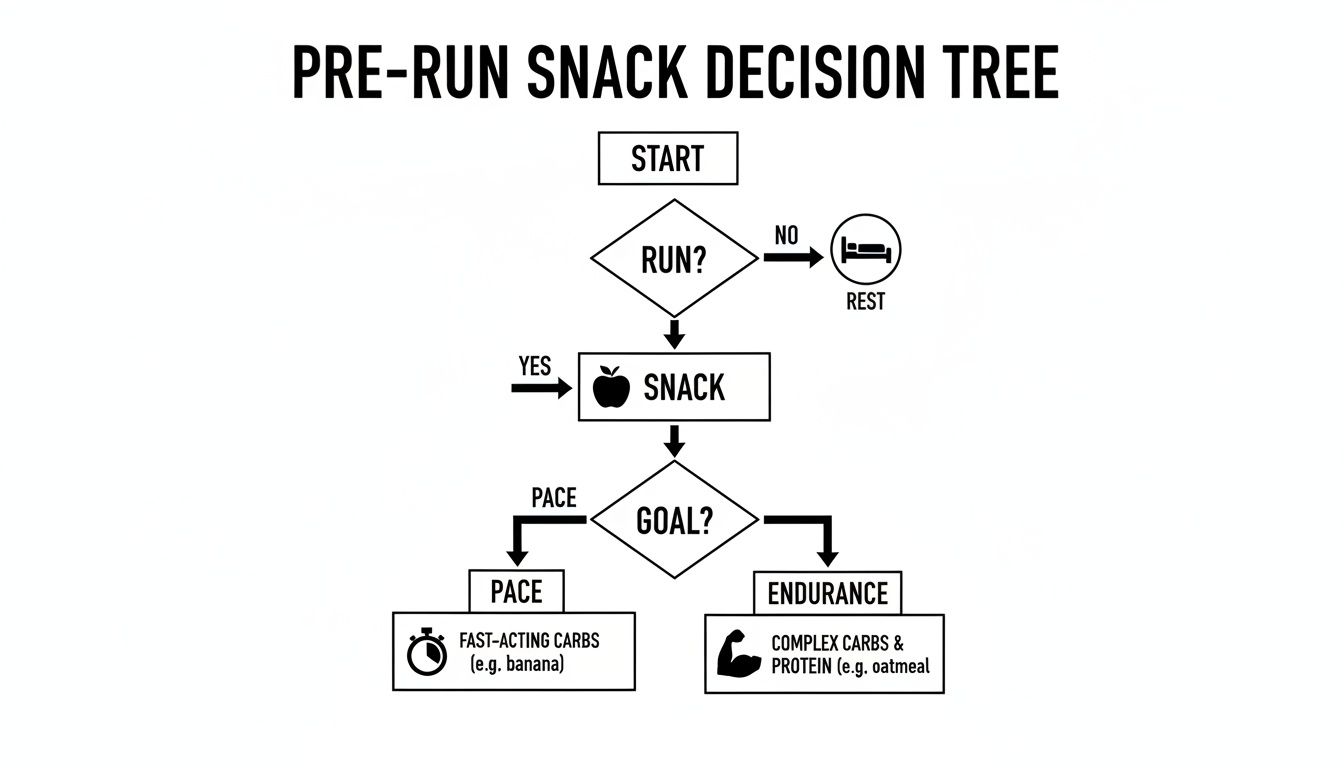
The takeaway is simple. Your snack should support whether you're chasing endurance or power.
Fueling with Precision
We have moved beyond just "eating something before a run." Science gives us clear targets. A great rule of thumb is to aim for 1 gram of carbohydrate per kilogram of body weight. This is if you have about an hour before you run.
So, for a 59 kg (130 lb) runner, that is about 59 grams of carbs.
We also know that what kind of carb matters. Studies found athletes who ate a low-glycemic index meal performed better. They ate oats and performed better than those who ate white bread. Why? They avoided the mid-run sugar crash.
This is a game-changer for longer distances. Steady, reliable energy is everything. If you are looking for specific fueling plans, see our guide. Our guide on what to eat before running a 10K dives deep into race-day strategy.
For shorter, easier morning runs, you do not need to overthink it. A small snack with at least 20 grams of easily digested carbs is usually enough. It tops off your energy stores. It makes the run feel a lot better.
Building Your Ideal Pre-Run Snack
Figuring out the perfect pre-run snack is not complicated. It comes down to knowing the jobs of three key players. These are carbohydrates, protein, and fat. Think of them as a team where carbs are the star quarterback. Carbs drive the action and provide quick, accessible energy.
Your body literally runs on carbohydrates. When you eat them, your body converts them into glycogen. It stores glycogen in your muscles and liver. Think of it as high-octane fuel ready to go. This is why carbs are the undisputed king of pre-run nutrition. If you skimp on them, you'll feel like you're running through wet cement.
The King of Fuel: Carbohydrates
When it comes to timing your snack, not all carbs are equal. The difference is how quickly your body can use them for energy.
- Simple Carbohydrates: These are your fast-acting fuels. This means natural sugars in fruit, a bit of honey, or a sports drink. They digest quickly. They are perfect for that quick energy spike 30-60 minutes before you run.
- Complex Carbohydrates: These are found in foods like oatmeal or whole-wheat toast. They take longer to break down. They offer a more sustained, slow-release energy. This is what you want for a snack eaten 2-3 hours before a long run.
A good rule of thumb is to aim for 30-60 grams of easily digestible carbohydrates before your run. That is usually the sweet spot. It tops off your energy stores without upsetting your stomach.
Supporting Roles: Protein and Fat
While carbs get all the glory, protein plays a vital supporting role. Include a small amount of protein—around 5-10 grams. This can help fend off muscle breakdown. It also keeps hunger at bay, especially on longer runs. A spoonful of peanut butter or a hard-boiled egg does the trick.
Fat, on the other hand, is the player you want on the sidelines. Foods high in fat and fiber slow digestion way down. That is great for keeping you full after a normal meal. But before a run, it is a recipe for cramping and bloating. Your body ends up fighting a war on two fronts. It tries to digest food while powering your legs.
The winning formula is simple. Build a snack that is mostly carbohydrates. Add a touch of protein. Keep fat and fiber very low. This combination gives you fast fuel without the digestive drama.
Putting It All Together
So, what does this look like in practice? Picture your pre-run snack on a plate. The biggest part should be your carbohydrate source. This could be a banana, a piece of toast, or pretzels. Then, add a small, complementary protein. A thin smear of almond butter on toast is a good example.
This balanced approach is a cornerstone of effective runner nutrition. It sets you up with energy to perform without gut-related setbacks. Focus on easily digestible carbs. Keep fat and fiber to a minimum. You're creating a snack that works with your body. It is a simple strategy that gives you confidence.
Practical Pre-Run Snack Ideas for Every Scenario
Alright, let's move from the why to the what. Knowing the theory is great. But having a go-to list of simple snacks is what matters. The best choice depends on the run you have planned. Consider its length, intensity, and how much time you have.
Here is a breakdown of practical ideas for every running scenario.
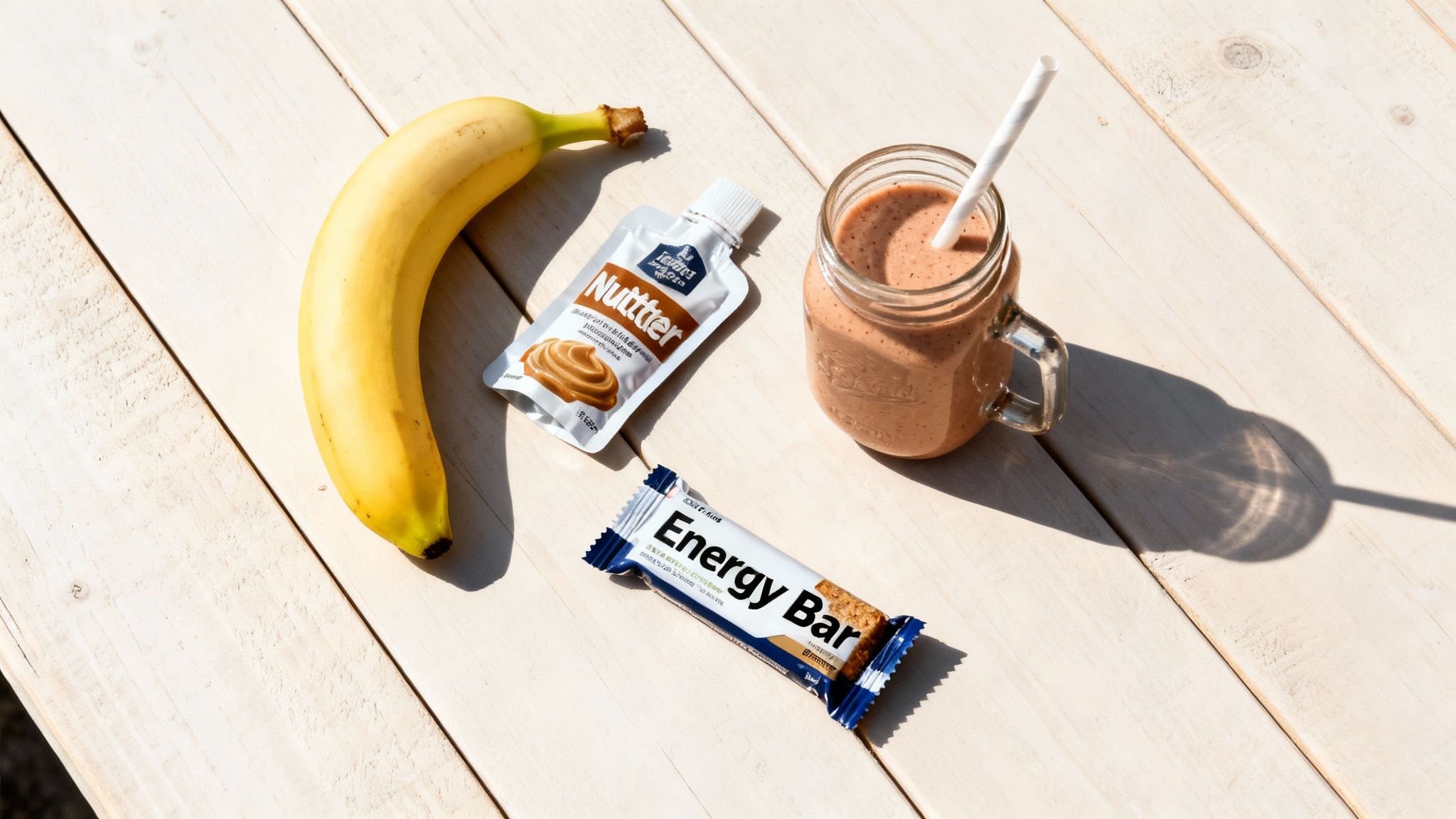
Quick Grab-and-Go Options
We have all been there. The alarm goes off late. Or you are squeezing in a run between meetings. For those times, these are your best friends.
- A Medium Banana: It is a classic for a reason. Bananas are loaded with easy-to-digest carbs and potassium.
- A Handful of Pretzels: They give you a quick hit of simple carbs and sodium. Sodium helps with hydration.
- Applesauce Pouch: Super easy on the stomach. It delivers fast-acting sugar without any mess.
- A Small Granola Bar: Grab one that is low in fiber and fat. This helps sidestep mid-run gut issues.
- Rice Cakes: They are light, simple, and a great vehicle for jam.
Fuel for Short and Easy Runs
When you head out for less than an hour at a relaxed pace, your goal is to top off the tank. You want something light that will not weigh you down.
- Half a Bagel with Honey: This is a fantastic source of simple carbs.
- A Small Bowl of Instant Oatmeal: This offers a slightly more sustained energy release.
- A Piece of Toast with Jam: Go for white or sourdough toast. It is lower in fiber.
- A Small Glass of Fruit Juice: An easy way to get carbs in liquid form.
- A Handful of Dried Fruit: Raisins or dates are powerhouses of natural sugar.
Powering Long or Hard Workouts
Once you are running for over an hour, your snack needs to work harder. These options provide a more substantial fuel source.
Just adding a simple pre-run snack of 30–60 grams of carbs can close a huge calorie gap. A granola bar and juice is a good example. For a runner training five days a week, a 200-calorie snack adds up. That is 1,000 extra calories of fuel per week.
It is surprising how many athletes miss this chance. One study found that while many university athletes snacked, only 8.6% did it every day. The athletes who did snack consistently had a much higher daily energy intake. This proves how critical these small meals are.
Here are some solid choices for those bigger efforts:
- Oatmeal with a Sliced Banana: This combo gives you both complex and simple carbs.
- A Smoothie with Fruit and Greek Yogurt: Blend a banana, berries, and Greek yogurt.
- Two Scrambled Eggs with a Slice of Toast: This is perfect if you have 2-3 hours before a long run.
- A Bagel with Peanut Butter: It is a classic for a reason. It has carbs, protein, and fat for long-lasting fuel. An air-fried bagel can be a quick option.
Your Race Day Morning Menu
Race day is about sticking to what's tried and true. Never try something new on race morning. Your goal is to max out your carbohydrate stores without risks.
- A Large Bowl of Oatmeal with Honey: It is reliable and easy to digest.
- White Rice with a Little Salt: This is plain and gut-friendly.
- A Bagel with a Thin Layer of Cream Cheese or Jam: A pre-race ritual for many runners.
- A Sports Drink and an Energy Bar: This combo is a controlled way to get in carbs.
Simple Homemade Snack Recipes
Making your own snacks is a great way to control ingredients. Here are a couple of simple recipes to get you started.
Easy Energy Smoothie
This is perfect for a pre-run boost about 60-90 minutes before you head out.
- Ingredients: 1 ripe banana, ½ cup frozen berries, ½ cup low-fat Greek yogurt, and a splash of milk.
- Instructions: Toss everything in a blender and blend until smooth.
No-Bake Energy Bites
These are fantastic to make on a Sunday and have ready all week.
- Ingredients: 1 cup rolled oats, ½ cup peanut butter, ⅓ cup honey, and ¼ cup mini chocolate chips.
- Instructions: Mix all ingredients in a bowl. Roll the mixture into small, bite-sized balls. Pop them in the fridge for at least 30 minutes.
Sample Snack Ideas by Run Type and Timing
Here is a quick-reference table to help you make a fast decision. Think of it as your pre-run fueling cheat sheet.
| Time Before Run | Short/Easy Run (<60 min) | Long/Hard Run (>60 min) | Race Morning |
|---|---|---|---|
| 30-60 min | Small Banana, Handful of Pretzels, Applesauce Pouch | Toast with Jam, Small Granola Bar, Sports Drink | Energy Gel, Handful of Gummy Chews, Half an Energy Bar |
| 1-2 hours | Half a Bagel with Honey, Small Bowl of Oatmeal, Rice Cakes | Oatmeal with Banana, Smoothie with Yogurt, Bagel with Peanut Butter | Oatmeal with Honey, Large Bagel with Jam, White Rice |
| 2-3 hours | Full Meal Not Needed | Scrambled Eggs with Toast, Small Bowl of Pasta, Yogurt with Granola | A larger, carb-focused meal you've practiced with extensively |
Choosing the right fuel does not need to be complicated. Once you have a few trusted options, you will be able to perform your best. For even more ideas, check out our complete guide to healthy snacks for runners.
Hydration: The Unsung Hero of Pre-Run Fueling
Nailing your pre-run snack is only half the battle. You have to think about hydration, too. It is the other critical piece of the performance puzzle.
Think of your body as a high-performance engine. Your snack is the fuel, but water is the coolant. When you start a run even slightly dehydrated, your performance can plummet. Every mile feels like a struggle.
Your muscles are made up of about 75% water. When fluid levels dip, their ability to contract does too. Dehydration also makes your blood thicker. This forces your heart to work overtime. This sends your heart rate soaring. That is why a solid hydration plan is non-negotiable.
Sip Your Way to Success
The goal is to show up to your run perfectly hydrated. But not so full that water is sloshing in your stomach. We have all made that mistake. Chugging a huge bottle of water right before a run can cause cramps.
A much better approach is to sip consistently.
As a general rule, aim to drink about 15-20 ounces (500-600 mL) of water two to three hours before you start. This gives your body time to absorb what it needs. Then, top off your tank by drinking another 7-10 ounces (200-300 mL) about 20 minutes before you lace up.
A quick and easy way to check your hydration status is the urine test. You are looking for a pale, light-yellow color. If it is dark, you need to drink more. If it is clear, you might be overdoing it.
This slow-and-steady sipping strategy ensures your cells are primed. It is all about creating a complete system. Your fuel and fluids work in harmony.
The Role of Electrolytes
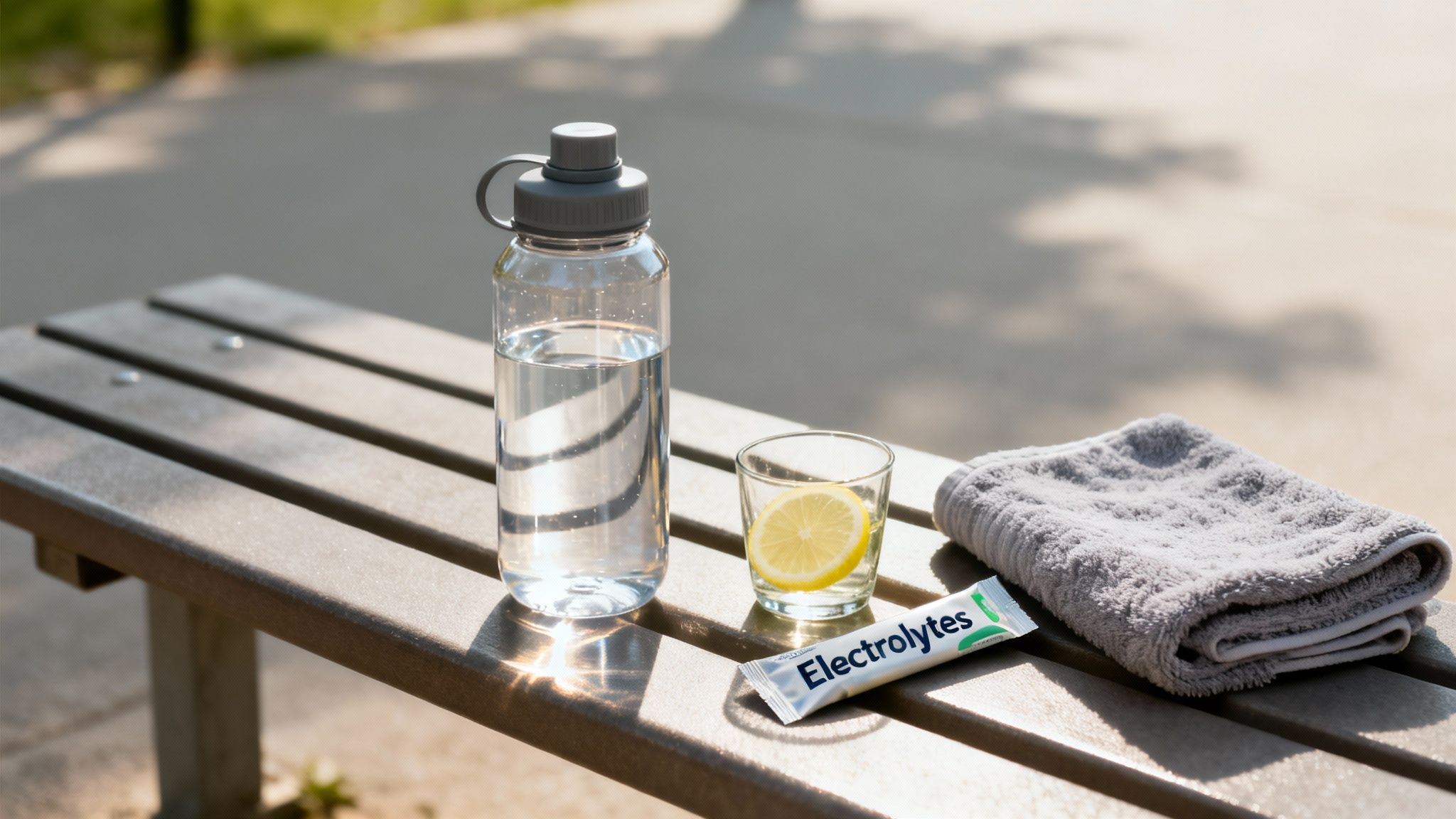
For most runs under an hour, plain water will do the trick. But once you start running longer or in the heat, you sweat out electrolytes. These minerals are the spark plugs of your body. They are essential for fluid balance and preventing muscle cramps.
This is where sports drinks and electrolyte supplements shine. They help replenish the sodium and minerals you lose through sweat. This helps your body absorb and hold onto water more effectively.
Consider adding electrolytes in these situations:
- For runs over 60-90 minutes: A sports drink with carbs and sodium is a great choice.
- For hot and humid conditions: An electrolyte drink can give you a major advantage.
- For "salty sweaters": If you finish runs with white streaks on your skin, you need extra electrolytes.
Finding what works for you can be a game-changer. For a deeper dive, check out our guide on the best electrolyte tablets for runners. When you pair a smart snack with a smart hydration plan, you are giving your body everything it needs.
What If Pre-Run Snacks Upset My Stomach?
Let’s be honest. The fear of cramps is why many runners skip eating. It is a valid concern. But running on empty often does more harm to your performance. If you have a sensitive stomach, the goal is to find what works.
Most gut issues on a run boil down to one of three things. Eating too much. Eating too close to your run. Or eating the wrong kinds of food.
There is a classic saying in running: "nothing new on race day." This is true for your everyday training. Think of your long runs as a perfect testing ground. Figure out your go-to snacks and timing. It is all about gathering data on your own body. You can turn pre-run anxiety into a rock-solid fueling plan.
Finding Your Trigger Foods
For most runners, trouble foods are high in fat, fiber, or protein. These are great for overall health. But they take longer to digest. That is the last thing you want during a run.
A few common culprits to watch include:
- High-Fiber Foods: Whole-grain breads, beans, and some raw veggies can cause gas.
- High-Fat Foods: Nuts, greasy foods, or full-fat dairy can feel like a brick in your stomach.
- Too Much Protein: A huge protein shake right before a run is a bad idea. Protein is not what your muscles need for quick energy anyway.
If you think a certain food is the problem, try cutting it out. Pivot to simple, low-fiber carbs that your body can absorb quickly. Think white rice, a ripe banana, or a little applesauce. They are incredibly easy on the gut.
Your Step-by-Step Guide to Figuring It Out
The key to dialing in your fueling is to be methodical. Stop guessing and start testing.
- Start Small & Simple: Begin with something basic. Half a banana or a handful of pretzels is a good start. Eat it about 60 minutes before a short, easy run.
- Keep a Fueling Log: Jot down what you ate, what time you ate it, and how you felt. Did you have cramps? Did you feel sluggish or energized?
- Change One Thing at a Time: For your next run, only adjust one variable. Maybe you eat the same snack 90 minutes before. Or try a different snack at the same 60-minute mark.
- Test on Your Long Runs: Your long weekend runs are the dress rehearsal. Practice with your race-day snack. Pay close attention to how your body responds.
The ultimate goal here is to identify 2-3 "safe" snacks. These are snacks that you know will work for you. This process takes the guesswork out of fueling. It gives you confidence before every big workout. Your stomach can be trained just like your legs.
Got Questions? Let's Talk Pre-Run Fuel
Navigating the world of pre-run snacks can feel like a maze. Let's clear up some of the most common questions runners have. This will help you build a fueling routine that works for you.
Should I Really Eat Before an Early Morning Run?
For most runs, the answer is a definite yes. Your body has been fasting all night. The fuel stored in your liver is running low.
Even something small, like half a banana, can top off those stores. It is a simple move that can make your run feel worlds better. It gives you the energy to perform.
But What if I'm Just Not Hungry?
I hear this all the time, especially from early risers. The trick is to reframe your thinking. This is not a meal; it is fuel. You are not eating because you are hungry. You are eating to power your run.
If solid food feels like too much, try a liquid option. A few gulps of a sports drink can do the job. A small, simple smoothie works too. You would be surprised how quickly your body adjusts.
Is It Okay to Drink Coffee Before I Run?
Absolutely, provided your stomach is on board. In fact, caffeine is a well-researched performance enhancer. It can help reduce how hard the effort feels. It makes tough miles a little more manageable.
The golden rule here is to test it out during training first. The last thing you want is to discover that coffee sends you running. You do not want that surprise on race day.
How Can I Tell if I Ate Too Much or Too Little?
Your body is constantly giving you feedback. You just have to learn its language.
Listen to what your body is telling you mid-run. Feeling sluggish, bloated, or getting a side stitch? You probably ate too much or too close to your run. On the other hand, if you feel weak or dizzy, you likely did not eat enough.
The best way to dial this in is to keep a simple log. Jot down what you ate and when you ate it. Note how your run felt. Over time, you will see patterns emerge. This will help you crack your own personal fueling code.


