

Insta360 Titan Price: Is It Worth the Investment?
A standard action camera fits in your hand, while the Insta360 Titan is a large-format professional camera built to capture cinematic 360-degree and virtual reality footage. That difference in size, capability, and intended use is why the Insta360 Titan price sits far beyond typical consumer camera costs.
However, the base sticker price only tells part of the story. You’ll also need to account for included accessories, storage, processing and editing requirements, taxes, shipping, and the workflow costs tied to producing high-resolution VR content. Pricing can change by region, seller, promotions, and availability, so check the current official listing before placing an order.
This guide breaks down the camera’s purchase price, expected ownership costs, suitable alternatives, and practical buying considerations. First, we’ll look at what the listed price includes and where extra expenses can affect your total budget.
What Is the Insta360 Titan, and Why Does It Cost So Much?
The Insta360 Titan is a professional 360-degree camera designed for high-end virtual reality, film production, and immersive commercial media. It sits far above consumer models such as the Insta360 X series because it captures more image data, handles difficult lighting better, and requires a more demanding production workflow.
That difference explains why the Insta 360 Titan price can seem surprising beside a typical action camera. You are paying for a large imaging system built for professional crews, not a compact camera designed for casual travel clips or sports highlights.
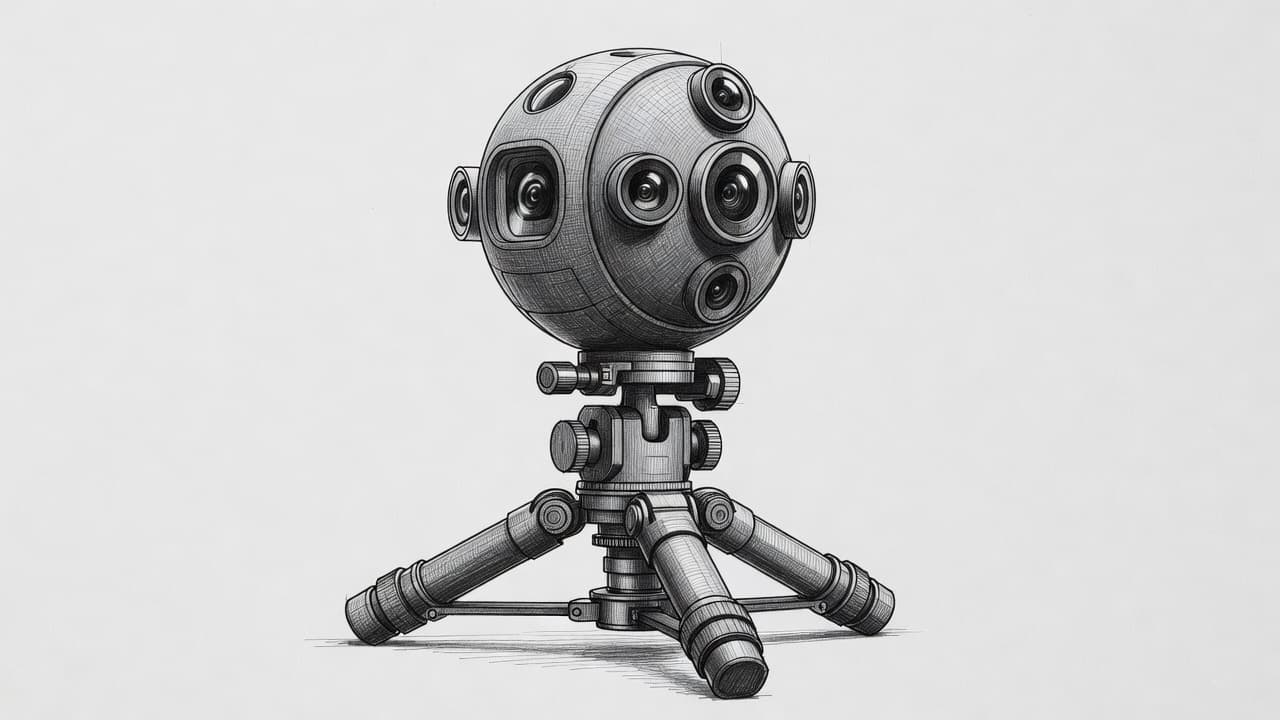
Eight large sensors create a different class of image
The Titan uses eight Micro Four Thirds sensors, with each lens and sensor covering part of the surrounding scene. Micro Four Thirds sensors are much larger than the small sensors found in consumer 360 cameras. That extra surface area helps the camera collect more light, preserve detail, and produce cleaner footage in dim interiors, evening scenes, and controlled film sets.
The camera can record up to 11K 2D 360-degree video and high-resolution 3D 360-degree footage, commonly listed at up to 10K 3D. Those files give filmmakers more room for reframing, cropping, stabilization, and headset playback. A consumer camera may produce impressive footage in good daylight, but the Titan offers a wider margin when image quality cannot be compromised.
Its interchangeable lenses also matter. Professional users can replace or service lenses instead of treating the entire camera as a sealed consumer device. Lens quality, sensor alignment, and accurate stitching all affect whether a viewer notices seams between camera angles.
For a technical breakdown of its sensor and recording capabilities, this Insta360 Titan specification overview provides useful background.
The price reflects a production system, not a sports camera
The Titan must synchronize eight camera modules while recording enormous amounts of data. That process demands precise timing, substantial internal processing, fast storage, and a computer capable of editing large 8K, 10K, or 11K files. Storage drives, backups, stitching software, workstation upgrades, and skilled post-production can add significantly to the ownership cost.
Professional buyers may use the camera for:
- Virtual reality films and location-based entertainment.
- Tourism experiences that let viewers preview destinations.
- Safety, medical, or workplace training simulations.
- Immersive advertising and branded athlete stories.
- Film projects that need detailed 2D or stereoscopic 3D footage.
For runners and performance brands, the Titan could record an immersive race preview, a virtual course experience, or coaching footage that lets athletes study positioning and movement from multiple angles. A brand could also place viewers inside an event and tell an athlete’s story with far more presence than a standard front-facing video.
Most individual runners don’t need this equipment. A phone, action camera, or consumer 360 camera is easier to carry and far less expensive. The Titan makes financial sense when a production team needs premium VR footage, low-light performance, replaceable optics, and a workflow built for commercial distribution.
Insta360 Titan Price: Base Cost, Regional Pricing, and What Is Included
The official Insta360 Store currently lists the Titan from $14,999 in the United States. Treat that figure as a starting listed price, not a guaranteed final checkout total. The camera is an older, specialized product with limited availability, so inventory, bundle contents, taxes, and reseller terms can change the amount you actually pay.
Why the Same Titan Can Have Different Prices
A low Insta360 Titan price may reflect a genuine difference in condition or support rather than a bargain. Official stock usually carries the clearest warranty terms, while used, refurbished, discontinued, or ex-rental units can appear at sharply lower prices. Before comparing listings, confirm whether each seller is offering the same camera condition and package.
Regional pricing adds another layer. A US buyer may see a price before sales tax, shipping, or insurance. Buyers elsewhere may also pay VAT, import duties, customs fees, currency-conversion charges, and a reseller markup. Regional warranty coverage can differ as well, especially when a seller imports equipment from another market.
The lens set deserves close attention. One listing may include the complete factory lens package, while another may omit a lens, charger, battery, cable, carrying case, or power accessory. Professional resellers sometimes charge more because they provide inspection, setup help, equipment history, financing, repair coordination, or post-purchase support.
A suspiciously low listing should slow you down. Check these details before sending payment:
- The seller should provide a clear serial number and explain whether it can be verified.
- Product photos should show the actual camera, lenses, ports, accessories, and case.
- The listing should include a written return policy and clear condition details.
- Claims should match the official Insta360 Titan specifications, including its professional 360-degree and VR recording capabilities.
- Payment should use a method that gives you buyer protection.
If the seller refuses serial-number questions, uses only stock photos, or promises specifications that the manufacturer never lists, the discount may hide missing equipment or a defective unit.
What You Get in the Box and What May Cost Extra
A standard Titan package may include the camera body, its required lenses, a battery or power accessory, charger, carrying case, and connection cables. However, package contents vary by seller, market, and inventory age. The official Insta360 Store listing is the best place to compare the current advertised bundle with a reseller’s description.
You may still need a large storage setup, fast card readers, spare batteries, suitable power supplies, lens protection, and a stable tripod or monopod. High-resolution footage also demands a capable computer, additional backup drives, compatible stitching software, and time for post-production. Professional support can cost extra but may reduce setup errors on a paid production.
A simple US planning budget could look like this:
| Cost item | Example amount |
|---|---|
| Titan listed camera price | $14,999 |
| Sales tax at 8% | $1,200 |
| Storage and backup media | $500+ |
| Media workflow and software | $500+ |
| Insurance | Quoted separately |
| Delivery and handling | Quoted separately |
The final total depends on your location and workflow. Confirm every accessory, software requirement, warranty term, and compatibility detail before you compare the Insta 360 Titan price across sellers.
The Hidden Cost of Owning an Insta360 Titan
The Insta360 Titan price is only the first line in a much larger production budget. Its 11K and 3D footage can improve an immersive race preview, but the files demand fast storage, powerful hardware, careful transport, and skilled post-production. Before buying, compare the complete workflow with the cost of hiring a specialist for each project.
Storage, Computer Power, and Editing Costs for 11K Footage
Titan files can overwhelm an ordinary laptop and a small memory card. Eight camera views must be recorded, transferred, stitched, reviewed, edited, rendered, and delivered. A single project can occupy far more space than a typical action-camera shoot, especially when you keep original camera files, stitched masters, editing files, exports, and backup copies.
Plan for fast media with generous capacity, not just the cheapest available drive. High-speed cards, a fast card reader, and a solid-state working drive can reduce transfer and playback problems. You should also keep multiple backups on separate drives, with at least one copy stored away from the editing computer. Never treat the camera card as your archive.
Your workstation needs strong processing power, ample memory, a modern graphics card, and plenty of free drive space. Editing with a nearly full drive can slow the system and leave too little room for temporary render files. A high-end desktop may be a better long-term choice than upgrading an undersized laptop.
The workflow also includes software, stitching, color correction, stabilization, rendering, and delivery time. Before purchasing, confirm current Insta360 workflow support, supported operating systems, export options, and recommended hardware. Software compatibility can change, and an older camera may not receive the same support as a current model. This 360-degree production guide offers useful context on the equipment and planning involved.
Insurance, Maintenance, and Professional Support
Transporting a large, expensive camera to a race course creates real risks. Crowds can knock over a support system, rain can reach exposed equipment, and trail dust can settle on lenses or connectors. A camera case, weather protection, lens covers, and a secure support system should be part of the operating budget.
Equipment insurance may cover theft, accidental damage, and transport, but policies differ. Ask whether coverage applies at races, on trails, in vehicles, and during paid productions. Also check deductibles, international use, rental equipment, and exclusions for water or impact damage.
Routine care includes cleaning every lens with proper materials, inspecting mounts and cables, charging and replacing batteries, updating firmware, and storing the camera in a dry, protected case. Warranty coverage may exclude accidental damage, misuse, or unauthorized repairs. Confirm where repairs are handled and whether you must pay shipping, calibration, or inspection fees.
Schedule a test shoot before a major event. Record the full setup, transfer the files, stitch the footage, and export a short final clip. That rehearsal can reveal a weak battery, missing cable, storage bottleneck, lens issue, or unsupported software before race day.
A small immersive sports project might require the following estimated budget:
| Cost category | Estimated amount |
|---|---|
| Working drive and backup storage | $800 to $2,000 |
| Workstation upgrades | $1,500 to $4,000 |
| Batteries, case, and lens care | $300 to $1,000 |
| Insurance and repair shipping | $500 to $1,500 annually |
| Camera operator and editing support | $1,000 to $3,000 |
These figures are planning estimates, so update them with current local prices. For RunDreamAchieve, filming several race previews may cost less than owning the Titan, especially when a specialist already has the camera, crew, lighting, audio equipment, and technical support.
Is the Insta360 Titan Worth the Price for Runners and Content Creators?
The Insta360 Titan is worth the price only when immersive footage supports a clear business or training purpose. For most runners, the camera is excessive for ordinary race videos, coaching clips, and social posts. For production teams creating premium VR experiences or recurring client work, its image quality can justify the investment.
Best Uses for Immersive Training, Race Coverage, and VR Content
A race organizer could record a full marathon route with the Titan, allowing runners to preview climbs, turns, aid stations, and crowded sections before race day. A trail-running brand could produce a virtual course tour that helps athletes understand terrain and visualize pacing. Viewers can look around instead of following a fixed camera angle, which gives the content stronger training value.
The Titan also fits premium sponsor activations. A shoe company might place viewers beside an athlete during a mountain effort, then repurpose the footage for a headset experience, event display, website feature, and selected social clips.
Its large sensors and high-resolution capture provide more detail for polished edits, especially when the project includes difficult lighting or large viewing screens. Sports organizations can review 360-degree video uses in training and marketing before planning a similar production.
Athlete interviews gain a different sense of presence in 360 degrees. A runner could answer questions inside a track facility, at a marathon start line, or beside a trailhead while viewers choose where to look. Facility walkthroughs work well for training centers, sports clinics, and race expos because prospective athletes can inspect the space before visiting.
Coaches and educators can also create immersive pacing or visualization content. A runner might rehearse a final-mile push, study a technical descent, or practice staying calm through a noisy finish area. Still, the footage must support a defined program. A reliable training plan, accurate GPS data, skilled coaching, and consistent execution will produce more value for most athletes than an expensive camera.
When a Smaller 360 Camera Is the Smarter Choice
A consumer or prosumer 360 camera is usually better for solo creators, local coaches, and runners who publish often. Smaller cameras cost far less, fit in a travel bag, mount quickly, and let you share a training clip while the workout is still fresh. Editing is simpler, and mobile-friendly exports work better for Instagram, YouTube Shorts, and TikTok.
That convenience matters during a race weekend. You can carry a compact camera through an airport, film a start-line update, capture a trail segment, and publish without a dedicated operator or workstation. A consumer model also makes more sense for simple form reviews, course snippets, and weekly coaching content.
The lower price brings tradeoffs. Smaller cameras generally offer less sensor area, weaker low-light performance, lower maximum resolution, fewer 3D options, and a less demanding professional workflow. Those limits may become obvious in night races, indoor facilities, wide reframing, or paid VR delivery.
Before buying the Titan, ask: How many paid projects or client contracts would recover the camera, storage, computer upgrades, insurance, and editing labor? If your answer depends on occasional social clips, outsource the rare premium shoot instead. If you already have recurring commercial contracts and a defined audience for immersive content, the Insta 360 Titan price can fit a measurable return rather than an expensive experiment.
How the Insta360 Titan Compares With Lower-Cost Alternatives
The Insta360 Titan price reflects a professional capture system, not simply a larger 360 camera. Lower-cost options can produce excellent content, but they change the balance between image quality, production time, portability, and total ownership cost.
Your best choice depends on the finished product. A weekly training clip needs speed and convenience, while a paid VR film may justify larger sensors, stereoscopic capture, and a more demanding workflow.
Titan Versus Consumer Insta360 Cameras
Consumer Insta360 cameras are compact, stabilized, and easy to carry. They suit runners who record course previews, workout clips, travel footage, and social content without a camera operator. Most can be mounted in minutes, run from small batteries, and transfer footage through a mobile-friendly workflow.
The Titan takes a different approach. Its eight Micro Four Thirds sensors capture far more image data than the small sensors in consumer models. That advantage appears in low light, fine texture, wide reframing, and large-screen playback. The Titan also supports high-resolution 3D 360 capture, while many compact cameras focus on 2D 360 video.
The tradeoff is time. Titan footage requires larger storage, faster media management, a capable workstation, and longer stitching and export sessions. Battery planning, tripod support, lens care, and transport also add work. A small camera may be ready before a Titan crew has finished checking every lens.
A useful comparison is available in this Titan and consumer camera test, especially for understanding how sensor size affects difficult lighting.
| Option | Likely buyer | Major strength | Main tradeoff | Cost level |
|---|---|---|---|---|
| Titan | VR filmmakers and commercial teams | High-resolution 2D and 3D capture | Heavy workflow and large files | Very high |
| Consumer Insta360 camera | Solo runners and creators | Portability and quick publishing | Smaller sensors and limited 3D capability | Low |
| Prosumer 360 camera | Independent VR producers | Better quality without Titan-scale size | Less low-light performance and depth | Medium to high |
For weekly RunDreamAchieve content, a consumer camera often creates more business value. You can film, edit, and publish while the training session remains timely. Choose the Titan when premium VR delivery, low-light detail, or commercial client requirements matter more than speed.
Titan Versus Professional 360 Cameras and Multi-Camera Rigs
Professional systems from brands such as Kandao can offer a middle path, depending on the model’s current specifications, availability, and support in July 2026. Compare sensor size, resolution, stereoscopic capture, stabilization, recording format, stitching software, and warranty terms before treating any camera as a direct Titan replacement.
A multi-camera rig can cost less and offer greater flexibility. You might select mirrorless cameras with interchangeable lenses, use different focal lengths, or replace one failed body without losing the entire system. However, every camera must align correctly and record synchronized footage. Operators then face matching exposure, color, focus, lens position, and movement across all views.
The software workflow can become the real expense. Stitching several camera feeds requires careful calibration, seam correction, synchronization, and testing. A dedicated crew may also need to monitor batteries, cards, overheating, and camera drift during a long shoot.
The Titan reduces that coordination burden through an integrated design, although it still demands trained operators and substantial post-production. For a fixed VR production with strict image requirements, that consistency can justify the higher Insta 360 Titan price. For experimental projects, varied lenses, or smaller budgets, a rig may offer more creative control and a lower entry cost.
What to Check Before Buying a Used or New Insta360 Titan
The Insta 360 Titan price can look attractive on the used market, but a discount disappears quickly when a lens, sensor, battery, or proprietary accessory needs replacement. Treat the purchase like a production equipment inspection, not a casual camera sale.
A Pre-Purchase Inspection Checklist for Used Units
Ask the seller for the exact model, serial number, shutter or recording history, and a clear explanation of previous use. Ex-rental units may have traveled frequently, while a camera stored in a studio may show less wear. Use a detailed used camera inspection checklist as a second reference.
Check the following before sending payment:
- Exterior: Inspect the body, mounts, seams, ports, screws, tripod connection, cooling openings, and case. Look for impact marks, corrosion, loose panels, bent connectors, or signs of moisture.
- Lenses and sensors: Examine every lens under bright, angled light. Scratches, chips, haze, fungus, and coating damage can affect stitching and may require expensive replacement. Ask for sample images from every lens, not only polished marketing footage.
- Recording test: Request a full-resolution recording with all lenses active. Review the original files and the stitched output for dead pixels, exposure differences, missing views, stitching errors, focus problems, dropped frames, and unusual noise. A short phone clip proves very little.
- Battery and power: Check battery health, charging behavior, runtime, included charger, power adapter, and cable condition. Ask whether the camera shuts down during long recordings or becomes unusually hot.
- Accessories: Confirm every lens, battery, charger, cable, card reader, case insert, mount, and proprietary component included in the listing. Check memory-card support and whether the supplied media meets the camera’s requirements.
- Software: Verify firmware compatibility, current control software, stitching tools, computer requirements, and access to required updates. Ask whether any software license, service plan, or support benefit can legally transfer to you.
- Paperwork: Request the original invoice, serial-number documentation, warranty details, repair records, and return terms. Confirm where repairs are handled and who pays shipping or calibration costs.
Ask the seller, “Can you provide untouched files from every lens?” and “Can I test a full-resolution recording before purchase?” Refusal, vague answers, stock photos, missing serial information, pressure to pay quickly, or a price far below comparable listings justify walking away.
Buying Direct, Through a Dealer, or From a Private Seller
Your seller affects more than the purchase price. An official store usually offers the clearest warranty, current package details, payment security, and manufacturer support. However, inventory may be limited, and the price is often highest.
An authorized professional dealer can provide setup help, financing, inspection, and repair coordination. A specialist used-equipment dealer may offer a tested unit, a written condition grade, and a defined return window. Read the warranty carefully because coverage may exclude batteries, lens damage, accidental drops, or international repairs.
A private marketplace can offer the lowest Insta360 Titan price, but you carry more risk. Returns may be difficult, equipment may be incomplete, and payment protection may disappear after an informal transfer. Use a protected payment method, verify the seller’s identity, and never rely on screenshots as proof of ownership.
Before buying, compare each offer by total equipment, warranty, return period, support, and repair access, not by camera price alone. A slightly higher dealer quote may cost less than replacing one missing lens or proprietary power component.
A Simple Decision Guide for the Right 360 Camera Budget
Deciding whether to own a camera or depend on rentals depends on how often you capture high-resolution VR content. A clear budget for an Insta 360 Titan price includes not only the body but also storage, insurance, and professional help.
You can choose one of three paths based on your business model: buying the Titan for frequent commercial work, renting for high-end occasional projects, or using a smaller, compact camera for everyday social media and simple course previews.
When Renting the Titan Beats Buying It
Renting is often the smarter choice for a one-off race film, event activation, or pilot VR project where the camera won’t see regular use. Buying expensive equipment that sits on a shelf is a drain on your resources. Instead, renting allows you to access premium gear for specific deadlines without the long-term liability of depreciation and maintenance.
Before you reserve a unit, calculate the total cost for the rental window. This includes insurance premiums, round-trip shipping, security deposits, and the daily rate for an experienced operator if your project is complex. Confirm what accessories are included, such as extra batteries, memory cards, and protective cases.
Ask about damage terms, technical support availability, and what happens if a unit fails mid-shoot. Because these cameras are specialized, verify availability with vendors weeks in advance to ensure the equipment arrives before your event. As The Gearblog notes, the right path depends heavily on how often the gear will actually work for you.
A Practical Budget Test Before You Commit
Before you put money toward a major purchase, run a short pilot project to test your workflow. Use rented equipment or hire an experienced production partner who already owns the gear.
This rehearsal stage reveals hidden costs in your production chain that a spec sheet cannot show. Measure actual audience engagement, client demand, and the hours required for setup and post-production. You also need to verify your storage capacity, as 11K footage consumes drives quickly.
Use a simple scoring method to evaluate your needs:
- Image Quality: Does your audience demand professional-grade stereoscopic 3D, or is standard 360 acceptable?
- Portability: Does your race day require rapid movement, or are you shooting in a controlled studio?
- Workflow Speed: How fast must you turn around a final edit?
- Reliability: Can you handle potential troubleshooting, or do you need a partner with a backup plan?
- Expected Revenue: How many paid contracts does it take to cover the total investment?
If you cannot find a path to recurring revenue, stay with a smaller, more portable camera for your daily content. A camera that serves a repeatable, sustainable system is a better investment than one that simply carries the highest resolution.
Conclusion
The Insta360 Titan is a specialized professional imaging system rather than a standard action camera. Because it serves high-end production needs, the insta360 titan price fluctuates based on the specific bundle, regional taxes, and hardware support. Always verify the current listing, accessory kit, and warranty terms before committing to a purchase.
Your budget must account for more than the camera body. Include the cost of high-speed storage, computer hardware upgrades, insurance, and the labor for specialized operators or editors.
Professionals with recurring contracts for immersive content may find the investment justified. However, most runners and solo content creators gain better value from a portable camera or by partnering with an experienced production team. The best tool is the one that captures your vision without creating unnecessary financial strain.


