

How Many Gels During Marathon Should You Take?
The marathon wall shows up when your legs feel empty and every mile gets harder. That’s where gels can help, because they give you fast carbs when your stored energy starts to dip.
The big question is how many gels during marathon running should you take? For most runners, the answer depends on race time, pace, body size, and how well your stomach handles fuel, so the right number is personal.
Get it right, and you’re more likely to hold steady effort, stay sharp, and avoid the late-race crash that ruins so many good runs. Runners who practice their fueling in training usually have a much better race day because their bodies already know what to expect.
A smart plan also fits the basics of marathon fueling tips, since gels work best when they match your pace and overall carb needs. First, it helps to understand why gels matter at all.
Why Energy Gels Fuel Your Marathon Success
Energy gels work because they deliver a fast dose of carbs when your legs need it most. As the miles build, your stored glycogen drops, your pace feels harder, and even simple surges start to sting. Gels help fill that gap quickly, which is why so many marathon runners keep them close.
They also fit race day better than bulky foods. You can carry them in shorts, a belt, or a singlet pocket, and take one without slowing down much. That makes them especially useful when your effort is high and your stomach wants something simple.
What Makes Gels Different from Other Race Fuels
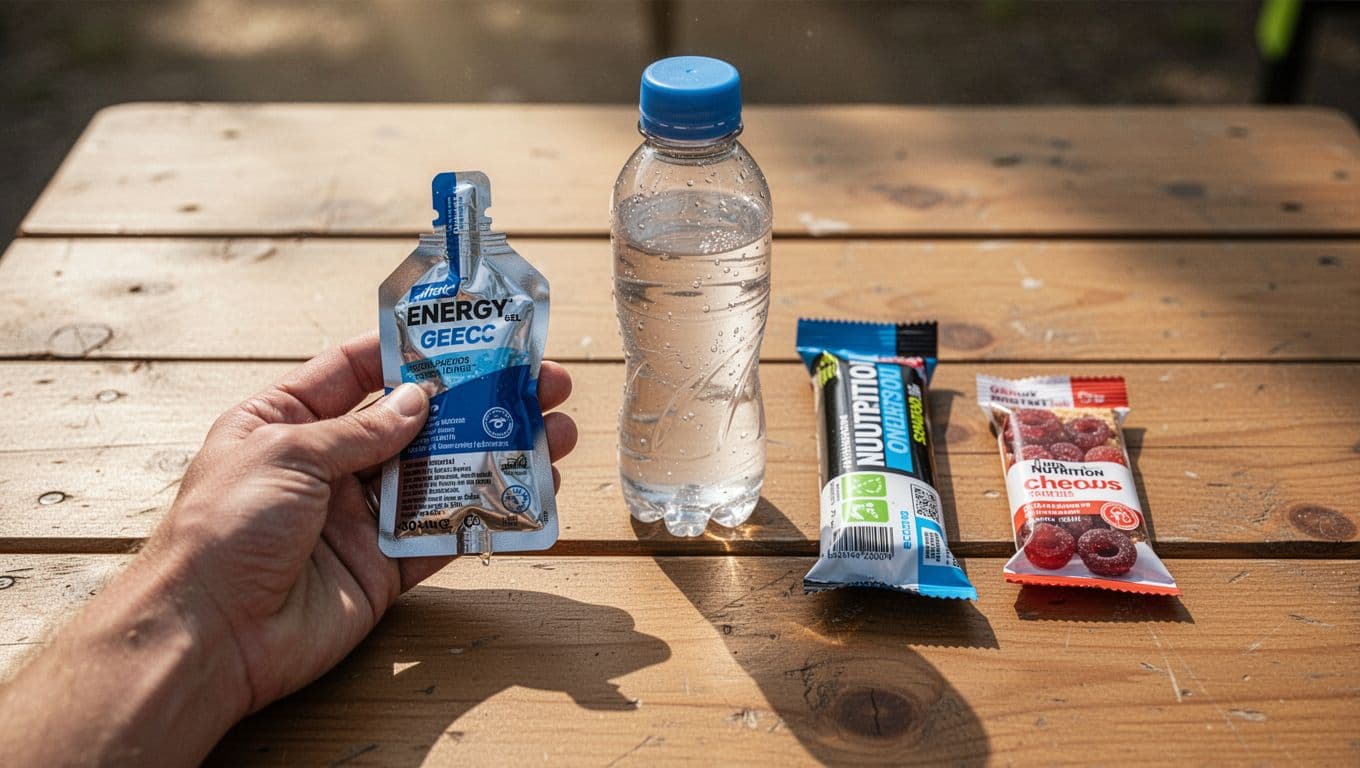
Energy gels are built for speed and ease. Most contain simple carbs, often maltodextrin, glucose, fructose, or a mix of both. Some also include caffeine, which can sharpen focus late in the race. Compared with bars, gels are easier to chew, swallow, and carry when your breathing is heavy.
Sports drinks help too, but they can force you to depend on aid stations and fluid volume. Bars work better before or after a run, because they take more chewing and digest more slowly. Chews sit somewhere in the middle, yet they still take more time and effort than a gel.
During a marathon, that difference matters. A gel gives you quick energy with very little fuss, which is why many runners use them right before a climb, at the halfway point, or when fatigue starts to creep in. For a deeper look at product options, see recommended gels for long runs.
The Science Behind Gels and Your Body’s Energy Needs
Your body relies on glycogen for marathon pace, and those stores start to fall hard after about 90 minutes of steady effort. Once glycogen drops, your pace can fade and the effort feels much tougher. That is where gels help, because they supply carbs your body can use while you keep running.
Sports nutrition guidance from the American College of Sports Medicine points endurance athletes toward about 30 to 60 grams of carbs per hour during longer efforts. That range helps keep blood sugar steady and delays the bonk. In practice, this usually means taking a gel every 30 to 45 minutes, depending on the carb amount in each packet.
A smart plan also depends on your race time and gut tolerance. Faster runners often need to stay closer to the higher end of the range, while others do better with a steadier, lower intake. If you want to map that out more precisely, a marathon fueling calculator can help you estimate how many gels during marathon pace makes sense for your goal.
The best gel plan is the one your stomach already knows.
That is why training matters. Practice the timing, the flavor, and the water you take with each gel before race day. If you want to connect this with your bigger fueling plan, marathon running fuel strategies can give you the next step.
Factors That Determine Your Ideal Gel Count
The right gel plan changes from runner to runner. Pace, body size, fitness, and race conditions all shape how much fuel you need, so how many gels during marathon running depends on more than distance alone.
A runner who finishes in under 3 hours usually needs fewer total gels than someone out there for 4.5 or 5 hours. However, a faster runner may still take gels more often per hour, because the race is shorter and effort stays high. That balance matters more than chasing a fixed number.
How Your Pace and Race Time Affect Gel Intake
Your marathon pace sets the tone for fuel use. Faster runners burn through carbs quickly because their effort is higher, but they also spend less total time on the course. Slower runners have more time to fuel, which usually means more gels overall, even if their hourly intake stays moderate.
For example, elite runners often take in about 3 gels per hour when their plan supports it, especially if they tolerate carbs well and use gels with enough grams per packet. Recreational runners may need a steadier pattern, such as one gel every 30 to 40 minutes, because they are on their feet longer and need to keep energy coming in.
A simple pace check helps. If you are running near 7:00 pace, your gel count may land around 4 to 5 total. If you are closer to 10:30 or 11:00 pace, that number can climb to 6 or more. That is why marathon race pace strategy matters so much when you plan your fuel.
For more on matching fuel to effort, marathon pacing tips for race day can help you connect speed with your gel plan.
Body Weight, Fitness Level, and Personal Tolerance
Body size changes energy demand. Heavier runners often need more carbs because they use more fuel to cover the same distance, especially when the pace picks up or the course turns hilly. Fitter runners may use fuel more efficiently, but they still need enough carbs to protect late-race pace.
Gut tolerance matters just as much. Some runners can handle 6 or 7 gels with water. Others feel better stopping at 4 or 5 total, even if that means they pair gels with sports drink. Your stomach is the final judge, not a race calculator.
Start low in training and build up only if your gut stays calm. That gives you a safer path than overloading on race day and hoping for the best. If you still want a starting point, use your long-run practice to test one gel every 35 to 45 minutes, then adjust based on how you feel.
A fuel plan only works if your stomach can follow it.
If you need help timing your meals before long runs, what to eat before a run fits well with this planning.
| Runner Profile | Typical Gel Need | What Shapes It |
|---|---|---|
| Faster marathoner, under 3 hours | Lower total count, often 4 to 6 | Shorter race time, higher hourly demand |
| Mid-pack recreational runner | Moderate to higher count, often 5 to 7 | More time on course, steady carb drip |
| Heavier runner | Often toward the higher end | Greater energy cost per mile |
| Sensitive stomach | Lower total count, tested in training | Tolerance limits intake |
This table gives you a starting point, not a rule. Your long runs should confirm the right number before race day.
Hot Weather and Hills: Extra Challenges for Fueling
Heat and hills both raise the cost of marathon running. In warm weather, your body works harder to cool itself, and that can push carb use up. On steep or rolling courses, each climb adds stress and raises effort, which can make you burn through fuel faster.
A practical move is to increase intake by 10 to 20 percent on hot or hilly race days. That might mean one extra gel for the marathon, or one more gel early enough to stay ahead of fatigue. Real races show this pattern often, especially on courses like Boston, where hills and weather can change the plan fast. For broader fueling context, what to eat before a marathon can help you build the full picture.
The key is simple: match your fueling to the day in front of you, then test that plan in training long runs before race day.
General Guidelines: Gels Per Hour and Per Mile
For most marathon runners, the simplest fuel plan is 1 gel every 45 minutes or about every 5 to 7 miles. That usually lands you in the right range without overthinking every split. If you wait too long, energy drops fast, so steady timing matters more than chasing a perfect number.
A good marathon target is 6 to 10 gels total for 26.2 miles, depending on finish time and gel size. That range fits most runners who are taking in carbs from gels and water, and it works well for the common 4-hour marathon average. If you also drink sports drink, your gel count can stay a little lower because those carbs count too.
Caffeine gels can help late in the race, but use them carefully. Most runners do best with one caffeine gel in the second half, then plain gels earlier. That keeps the buzz when you need it most without loading caffeine too soon.
A simple way to plan is to match gels to mile markers instead of waiting for hunger. Your legs often feel fine long after glycogen starts to fall, so early fuel is smarter than rescue fuel. For more fuel timing context, the gel timing plan for marathons can help you line this up with race day prep.
Fuel early, then keep the rhythm. Late gels help less than steady gels.
Sample Gel Plans for Different Finishes
These sample plans show how many gels during marathon racing often makes sense by finish time. Use them as a starting point, then test the timing in long runs before race day.
| Finish Time | Gel Timing by Mile | Total Gels |
|---|---|---|
| Sub-4 hours | Start, mile 6, 11, 16, 21, 24 | 6 |
| 4 to 5 hours | Start, mile 5, 10, 15, 20, 23, 25 | 7 |
| Over 5 hours | Start, mile 4, 8, 12, 16, 20, 23, 25 | 8 |
For a sub-4 runner, the race is shorter, so six well-timed gels often work well. For the 4 to 5 hour group, seven gels gives you a steadier drip of carbs through the second half. Runners going over 5 hours usually need more total fuel, since they spend longer on the course and face more late-race fade.
If you want a quick backup reference, marathon fueling checklist guide pairs well with these plans. And if you want to compare gel timing with broader race nutrition, the ultimate guide to marathon gels is a useful outside read.
Smart Timing and Strategies to Maximize Every Gel
The answer to how many gels during marathon running matters, but timing matters just as much. Take them too late, and you spend miles trying to catch up. Space them well, and each gel works like a small refill before the tank runs low.
When to Take Your First and Last Gels
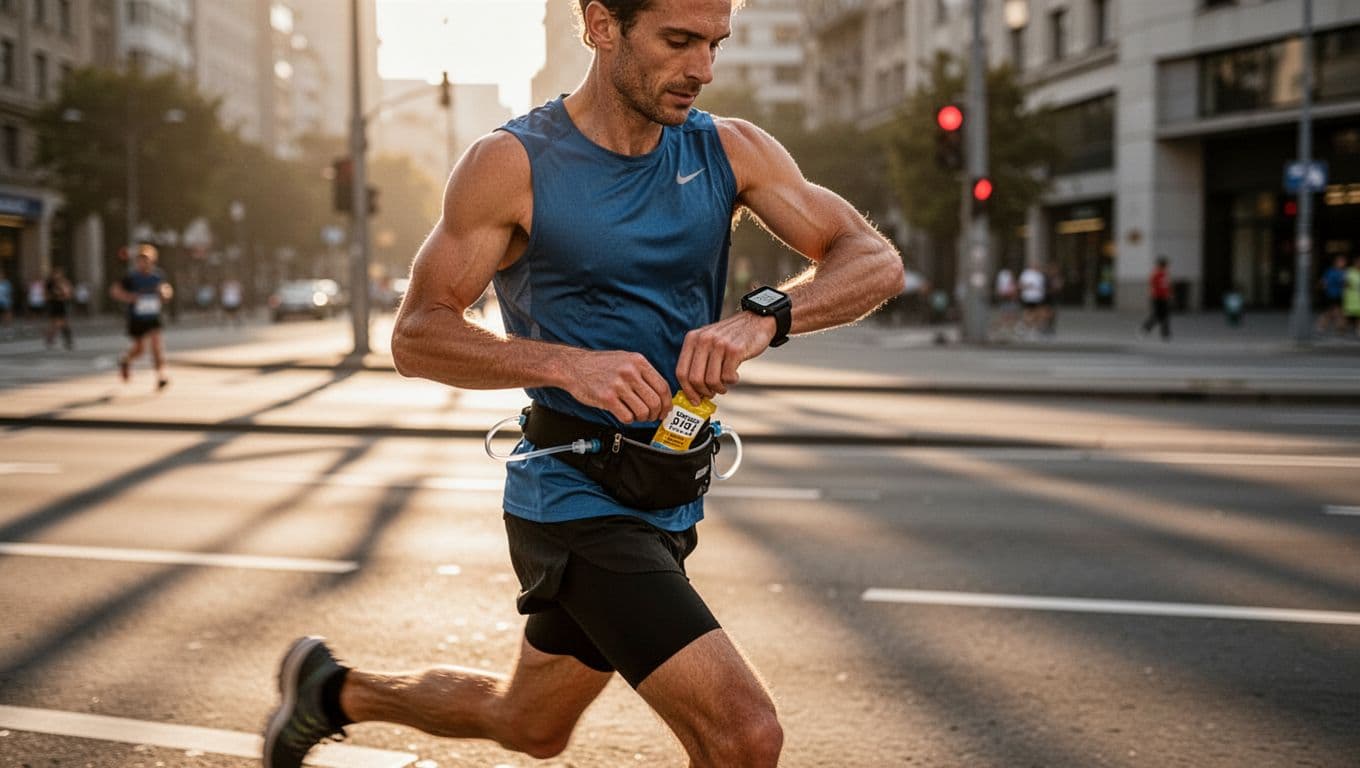
Start your first gel at about 45 minutes, or sooner if your pace is hard and your stomach already feels ready. That early hit helps keep blood sugar steady before fatigue starts to build, which is why waiting until mile 10 often backfires. If you fuel before you feel empty, you stay ahead of the drop instead of chasing it.
From there, keep the rhythm going every 30 to 45 minutes. Many runners do well with a final gel before the 20-mile mark, because that is when the race often starts to bite. A late gel can still help, but only if you have already built a steady intake pattern.
Early fuel protects the second half. Late fuel often just reacts to damage already done.
The smartest plan looks simple on race day: take the first gel on schedule, keep the next ones spaced out, and finish the last one before the wall shows up. If you want a deeper race-day framework, this marathon fueling strategy lays out a strong carb rhythm for long efforts.
Pairing Gels with Water and Other Aids
Gels work best when you sip water right after each one. Water helps the gel move through your stomach and lowers the chance of cramping, sloshing, or a sticky throat. Without it, even a well-timed gel can sit heavy and feel harder to digest.
Aid stations make this easier. Take the gel just before you reach one, then grab water as you run through. That keeps your hands free and turns race support into part of your fuel plan. Sports drink can also count toward your carbs, so if a course gives you reliable drink stations, you may not need as many gels overall.
A few habits make the process smoother:
- Chase every gel with water to support absorption.
- Use aid stations as timing markers so you stay on schedule.
- Rotate flavors during the race, because sweet fatigue is real.
- Practice the exact routine in long runs, including tearing, squeezing, and drinking.
Flavor rotation matters more than most runners think. A gel that tastes fine at mile 6 can feel cloying at mile 22, so testing a few options in training helps a lot. For a broader look at carb timing and hydration, nutrition for long-distance runners is a useful next step.
Common Gel Mistakes and How to Fix Them
Energy gels can help a marathon, but only if you use them with a plan. Many runners run into the same three problems: too many gels, too few gels, or poor timing. Each one can wreck a good race, yet each one is easy to fix with a little practice.
Taking too many gels at once
More fuel does not always mean better performance. If you stack gels too close together, your gut may slow down, and that can trigger bloating, nausea, or cramping. A fast stomach turn in mile 18 can cost you far more time than a missed gel ever would.
The fix is simple, keep your intake steady and realistic. Most runners do better with one gel every 30 to 45 minutes, plus water. If you know your stomach is sensitive, start on the lower end and practice your avoiding stomach issues from gels in long runs before race day.
Taking too few gels and waiting too long
Underfueling is just as risky. If you wait until you feel empty, you are already late, because glycogen drops before hunger shows up. That is when pace fades, focus slips, and the marathon wall starts to build.
The fix is to fuel early and stay on schedule. A first gel around 30 to 45 minutes, then regular spacing, gives your body a better chance to stay ahead of the dip. If you need a broader plan, marathon training nutrition essentials can help you build a smarter base.
Ignoring how your body responds
Some runners copy a plan that works for someone else, then wonder why it fails. Your stomach, pace, sweat rate, and heat tolerance all change the answer. One runner may need five gels, while another feels better with seven and sports drink.
The fix is to test, adjust, and pay attention. Use long runs to train your gut, note what sits well, and keep backup fuel ready if gels stop working. Sports drink, chews, or a small carb drink mix can save the day when your stomach starts to rebel.
Conclusion
For most runners, the best answer to how many gels during marathon race day comes down to a steady rhythm, not a perfect number. A gel every 45 minutes, or about 6 to 10 total for many runners, is a strong starting point. From there, pace, weather, body size, and stomach comfort should shape the final plan.
The runners who handle the marathon well usually do one thing before race day, they practice their fueling in long runs. That is the safest way to learn what your stomach can take and how your body responds under fatigue. A tested plan always beats guesswork when the miles start to stack up.
If you want a simple next step, build your race plan around the carbs you can absorb and the timing you can repeat. This marathon fueling plan can help you put that together with more confidence.


