

Where to Stay for the Niagara Falls International Marathon
Choosing where to stay for the Niagara Falls International Marathon takes more planning than booking a room near the finish. Depending on the race-year course, your weekend may include a Buffalo start, a route across the U.S.-Canada border, and a finish in Niagara Falls, so the wrong hotel location can add stress before the starting gun.
Pick your stay around your race-day transportation, border-crossing plans, and how you want to recover after the finish. Course logistics can change each year, so confirm the latest details before you book; next, compare the best hotel areas and what each one means for your race morning. Looking for the best hotels for the Niagara Falls International Marathon? Make sure you are booking early to save on costs.
Key Takeaways
- Choose lodging based on your race distance and the current year’s start and finish locations, not simply the closest hotel to Niagara Falls.
- Marathon runners should plan for the Buffalo start, Peace Bridge crossing, and Falls-area finish; staying near the finish can make post-race recovery easier.
- Before booking near the start, confirm race-day transportation and shuttle details so you know how you’ll reach the starting line.
- Check the official course and event details before reserving, since routes and logistics can change.
- Leave time for border-crossing requirements, packet pickup, parking, and race-day traffic.
Where to Stay for the Niagara Falls International Marathon
For most runners who want an easy finish-day recovery, the Ontario side of Niagara Falls is the strongest first choice. You’ll be close to restaurants and the Falls, and you can get back to your room without building the whole afternoon around a cross-border trip. However, the best base depends on the current year’s start, finish, shuttle, and packet pickup locations. Check the official race location and shuttle details before you book.
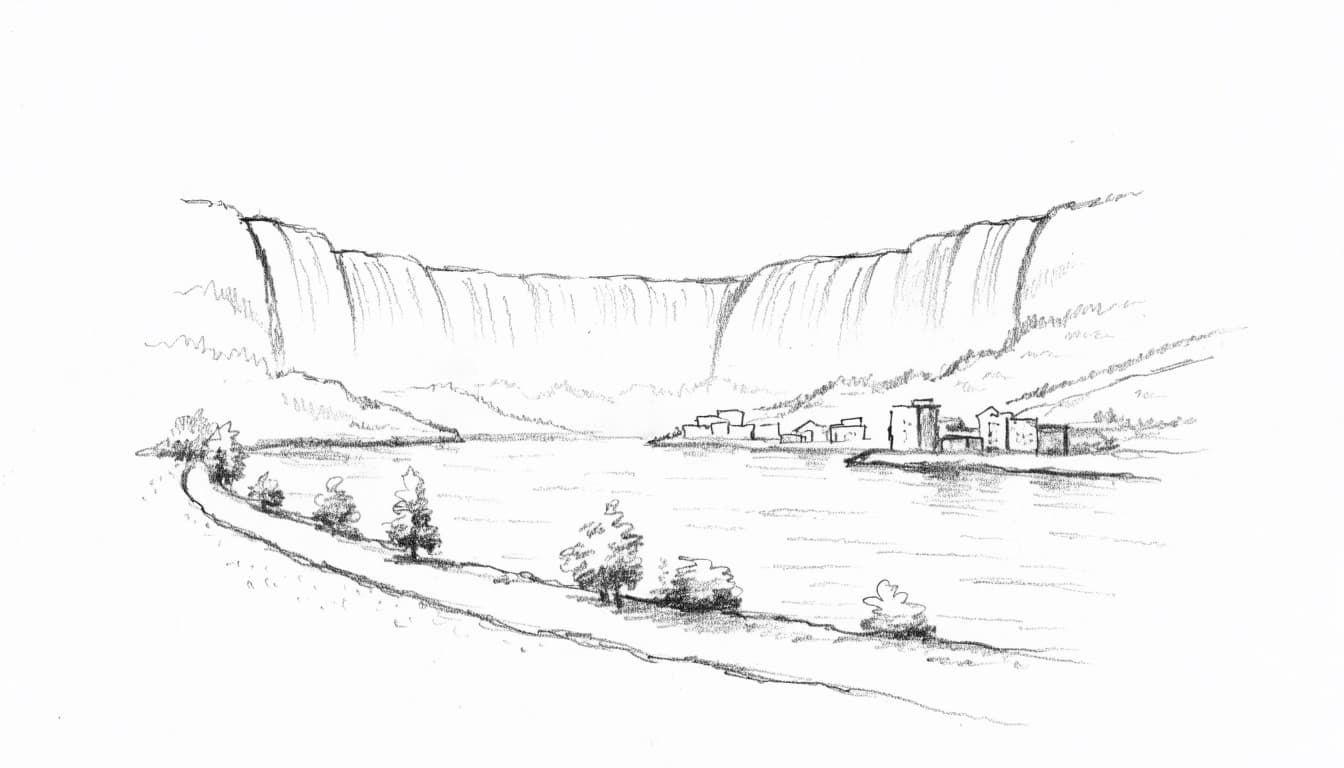
Stay near the Niagara Falls finish for the easiest post-race recovery
A room near the finish can make the hours after a marathon simpler. Once you’ve collected your gear, a short walk or ride back to the hotel means less time standing around, especially if your legs are sore. You’ll also have restaurants nearby and the Falls within reach when you’re ready to explore.
Fallsview is a natural fit if you want a hotel close to the main attractions. The Niagara Falls Marriott Fallsview Hotel & Spa and Sheraton Fallsview Hotel are examples to compare. Clifton Hill puts you near a busy stretch of restaurants and attractions, which can be convenient but lively. For a quieter feel, look at Lundy’s Lane or properties such as Sterling Inn & Spa.
Choose by race-day access, not the view. A scenic room won’t help if you need a long ride to the shuttle or packet pickup. Before reserving, confirm how you’ll reach the start, where the race finishes that year, and whether the hotel’s current amenities suit your recovery plans.
Choose Buffalo if your priority is the race start or a U.S. stay
Downtown Buffalo can work well if you’re traveling from within the United States or want to stay near the start. Canalside is another appealing base, with waterfront paths and dining options nearby. Downtown examples include the Hyatt Regency Buffalo and Hampton Inn & Suites Buffalo Downtown.
The trade-off comes after the race. Depending on that year’s course and transportation plan, you may need to arrange a return trip from Niagara Falls to Buffalo, then account for border procedures and travel time. A hotel near the start can simplify race morning, but it doesn’t automatically solve the logistics after you cross the finish line.
Before booking, check whether the event offers a shuttle that matches your plan, where it departs, and whether you need to reserve a seat. If you’re driving, confirm where you can leave the car and how you’ll get back to it. Race transportation details can change, so don’t base your plans on last year’s arrangements.
Consider quieter areas only if you have a reliable ride
Niagara-on-the-Lake, Chippawa, and other areas outside the main tourist districts offer a calmer place to sleep. They may suit runners who want a slower evening before race day, or who are traveling with family and plan to stay beyond the event.
Still, a quieter setting usually means more travel planning. The extra distance can feel significant before an early start, particularly if roads are busy or you need to reach a shuttle departure point. Don’t assume local transit or rideshare will be readily available at the time you need it.
Book farther out only after you’ve mapped the full race morning: hotel to shuttle or start, packet pickup, parking, and your post-race return. Confirm current rates and amenities directly with the property, then choose the location that makes your actual race itinerary easiest.
Plan Your Hotel Around the Start, Finish, and Race-Day Transport
A hotel can look close on a map and still leave you with a complicated race morning. For the Niagara Falls International Marathon, compare your lodging with the start, finish, packet pickup, parking, and every official shuttle stop. The course and transportation plan may change by year, so use the event’s guide for your race date rather than relying on an old schedule.
Check where buses, packet pickup, and race-day parking will be
Before booking, pin the hotel and each race location on one map. Then check the official race location and expo details for the current year’s start, finish, packet pickup, shuttle stops, and parking instructions. Confirm which locations apply to your distance, since shorter races may follow different arrangements.
A short hotel-to-shuttle trip can matter more than staying beside a scenic landmark. On race morning, a nearby pickup point may save you from a long drive, uncertain traffic, or a rushed search for parking. Check the departure time, whether you need to reserve a seat, and how early the shuttle runs. Also confirm whether packet pickup happens before race day or has a separate schedule.
Parking can be limited, restricted, or located away from the start. Don’t assume your hotel will have a space you can leave all day, or that you can park near both ends of the course. Driving between race locations may also mean dealing with road closures, crowded lots, and a return trip after the finish. If you’re considering a car, work out where it will stay and how you’ll retrieve it before race day.
A hotel near the finish is useful only if you can reach the start on time. Map the entire trip, including the walk to the shuttle and the ride back after the race.
Build extra time into the international crossing
If your race plan takes you from the United States into Canada, bring the travel documents required for your situation and check them before leaving home. The Canada Border Services Agency’s entry document guidance explains accepted identification for entering Canada. U.S. citizens can also review U.S. Customs and Border Protection travel guidance for information about returning to the United States.
Allow extra time for border procedures, especially if you need to cross on race morning or travel between your hotel and the start. Border conditions can vary, so no schedule can guarantee a particular crossing time. Check the event’s current instructions for where and when runners cross, and decide whether staying on the same side of the border as your early-morning departure would simplify your plans.
Keep your documents accessible, and don’t leave the crossing until the last possible moment. If you’re traveling with family or friends, make sure everyone understands the route and meeting plan. A small buffer can prevent a border delay from turning into a missed shuttle or a stressful rush to the start.
Choose a room that supports rest and race-day routines
A convenient location helps, but the room itself should make it easier to sleep and prepare. Request a quiet room away from elevators or busy common areas, and ask whether the hotel has a mini-fridge if you plan to store familiar snacks or breakfast items. Bring a reliable alarm and set a backup on your phone, particularly if you need to wake before sunrise.
Room space matters when you’re laying out shoes, clothing, gels, bib supplies, and layers for changing weather. Before arrival, ask the hotel about early check-in, late checkout, and race-morning food. These services may not be available or included, so confirm rather than building your plan around an assumption.
Finally, keep your pre-race routine simple. Set out your gear the night before, check the shuttle departure time once more, and choose breakfast you know sits well. A room that supports sleep and preparation can make a long race morning feel far more manageable.
Compare Hotel Types, Costs, and Booking Trade-Offs
The best place to stay for the Niagara Falls International Marathon depends on more than how close a hotel sits to the Falls. Compare comfort, race-day access, and flexibility against the total cost of your stay. October weekends and major local events can affect both availability and rates, and prices vary by date and booking terms.
Balance Falls views and resort comforts against the price
Fallsview hotels can make a race weekend feel easier. Many put you near restaurants and attractions, while on-site amenities can help you relax after the finish. That convenience often comes at a higher nightly rate, though, and parking or resort fees can add substantially to the bill.
Compare the full terms at each property. For example, the DoubleTree Fallsview Resort & Spa by Hilton lists self-parking at C$35 per day. The Wyndham Garden Niagara Falls Fallsview lists parking at $25 per night, plus taxes and fees. Rates and policies can change, so confirm the current charges before booking.
Mid-range hotels and inns may offer a better balance if you mainly need a clean, comfortable room and a practical route to race transportation. You may give up a dramatic view or some resort amenities, but the savings can go toward meals, parking, or an extra recovery night. Compare the entire stay, including taxes, parking, fees, and any costs tied to getting to the start.
Look for value without sacrificing sleep or convenience
A basic chain hotel, a small inn, or a room with a kitchenette can fit well if your priority is rest and a predictable race routine. A kitchenette may help you prepare familiar food or store snacks, while a simpler property can keep lodging costs manageable. Before reserving, check what the room actually includes rather than assuming a service is standard.
Recent guest reviews can reveal practical details that a room description may skip. Look for comments about noise at night, cleanliness, parking availability, and breakfast hours. For runners with an early start, breakfast timing matters: a hotel may offer breakfast, but it might not be available before you leave.
Also weigh location against price. A cheaper room farther from the shuttle, start, or finish may require a car or paid ride, which can erase the savings. Check the route and race logistics for your year, then decide whether the lower rate still works for your schedule.
Book early, then protect yourself with flexible terms
Once the race dates and your travel plans are firm, start comparing rooms, especially near the Falls. Popular weekends can fill up, and a limited choice may leave you paying more or staying farther from the places you need to reach. Early booking gives you more options, but the lowest price is not always the safest choice.
Compare refundable and nonrefundable rates side by side. A nonrefundable booking may cost less, but you could lose the payment if your plans change. For a refundable rate, check the exact cancellation deadline and whether the policy allows changes without a penalty.
Before you book, confirm these details:
- The total price, including taxes, parking, and any property fees.
- The cancellation deadline and rules for modifying your reservation.
- Any minimum-stay requirement for the race weekend.
- Whether parking is available for your dates and what it costs.
Finally, call the hotel to confirm race-week details, including parking arrangements and any early-morning services you plan to use. Keep a copy of the booking terms and confirmation so you can check the details later. A clear reservation gives you a firmer plan, while flexible terms leave room to adjust if race logistics or travel plans change.
Frequently Asked Questions
A few practical details can make your hotel choice easier once you’ve narrowed down the area. Confirm race-weekend arrangements directly, since course plans, transportation, and property policies can change.
How far ahead should I book a hotel for race weekend?
Book as soon as your travel dates and likely race plans are clear. Reserving a few months ahead gives you more choice, but availability and prices depend on the race date, local events, and hotel demand. If your plans aren’t final, favor a flexible rate and check its cancellation deadline before paying.
Can spectators watch the marathon and meet me at the finish?
Spectators may be able to watch along the course and meet you near the finish, but access depends on the official route and race-day road closures. Ask your supporters to choose a specific viewing spot and a separate meeting point, then check the event’s current spectator guidance. Following you by car can be difficult when roads close or traffic builds.
Is a vacation rental a good option for marathon weekend?
A vacation rental can give you more room to spread out and a kitchen for familiar pre-race meals. Before booking, confirm its location, parking, cancellation terms, and whether the rental complies with local requirements. Also calculate travel time to the official race transportation, since a lower nightly rate may come with a less convenient trip.
Should I stay an extra night after the marathon?
An extra night lets you shower, eat, and rest before traveling, rather than rushing out after the finish. It’s especially useful if you face a long drive, a border crossing, or a late departure. Check the added room cost against your travel schedule and how much recovery time you want.
What should I confirm with the hotel before I arrive?
Contact the property directly to verify parking costs and availability, breakfast hours, and whether it can store your luggage. Ask about early checkout, quiet-room requests, and any extra fees, too. Current confirmation is more reliable than an old listing or review, especially during a busy race weekend.
Conclusion
Where to stay for the Niagara Falls International Marathon comes down to the race plan you can actually follow. Choose a base that fits the current shuttle and course logistics, your budget, and the kind of recovery you want after the finish. For many runners, staying near the Falls makes post-race rest easier, while Buffalo may suit those prioritizing the start or a U.S. hotel.
Before you reserve, verify the official details for your race year. Then book a flexible room early, so you have options if your plans change. Leave some breathing room in your schedule, too. With the logistics settled, you can focus on the race and enjoy Niagara Falls afterward.


