

Where to Stay for the Montreal Marathon: Best Areas Near the Start & Finish
Arriving in Montreal with race morning approaching can feel exciting until you realize your hotel may shape the entire experience. The right location can protect your sleep, reduce pre-race stress, make breakfast easier, simplify transportation, and help you reach the starting line with energy left for the course.
When deciding where to stay for the Montreal Marathon, you’ll want more than a comfortable room. This guide compares the best areas for runners, hotel types, transit options, typical prices, and booking strategies for marathon weekend, so you can choose a base that fits your race plan and budget.
Because official start and finish areas, road closures, and race schedules can change, confirm the latest details on the event website before booking. First, let’s look at the Montreal neighborhoods that make race morning easier.
Key Takeaways
- Choose Montreal Marathon hotels near the race area, Metro, or a reliable transit connection to reduce race-morning stress.
- Prioritize quiet rooms, late checkout, breakfast access, and space for recovery after long training days.
- Downtown offers restaurants and transportation, while Plateau-Mont-Royal and Hochelaga-Maisonneuve can provide a more local feel.
- Check walking distances, Metro schedules, parking rules, and road closures before booking your stay.
- Confirm start times, meeting points, and finish details in the official Montreal Marathon runner’s guide before finalizing your race-weekend plans.
Where to Stay for the Montreal Marathon: Pick the Right Area
The best place to stay depends on your race plan. Consider how close you want to be to the start or finish, how much quiet you need, your restaurant and sightseeing plans, and your budget. Downtown Montreal and areas near major Metro stations usually make race transportation easiest. Old Montreal offers more atmosphere, while the Quartier des Spectacles and Plateau-Mont-Royal bring stronger neighborhood character. Griffintown can provide newer rooms and more space.
Before booking, compare the exact hotel address with the current course map. The closest neighborhood isn’t always the most practical choice if the hotel sits far from a station, grocery store, or race-day route.
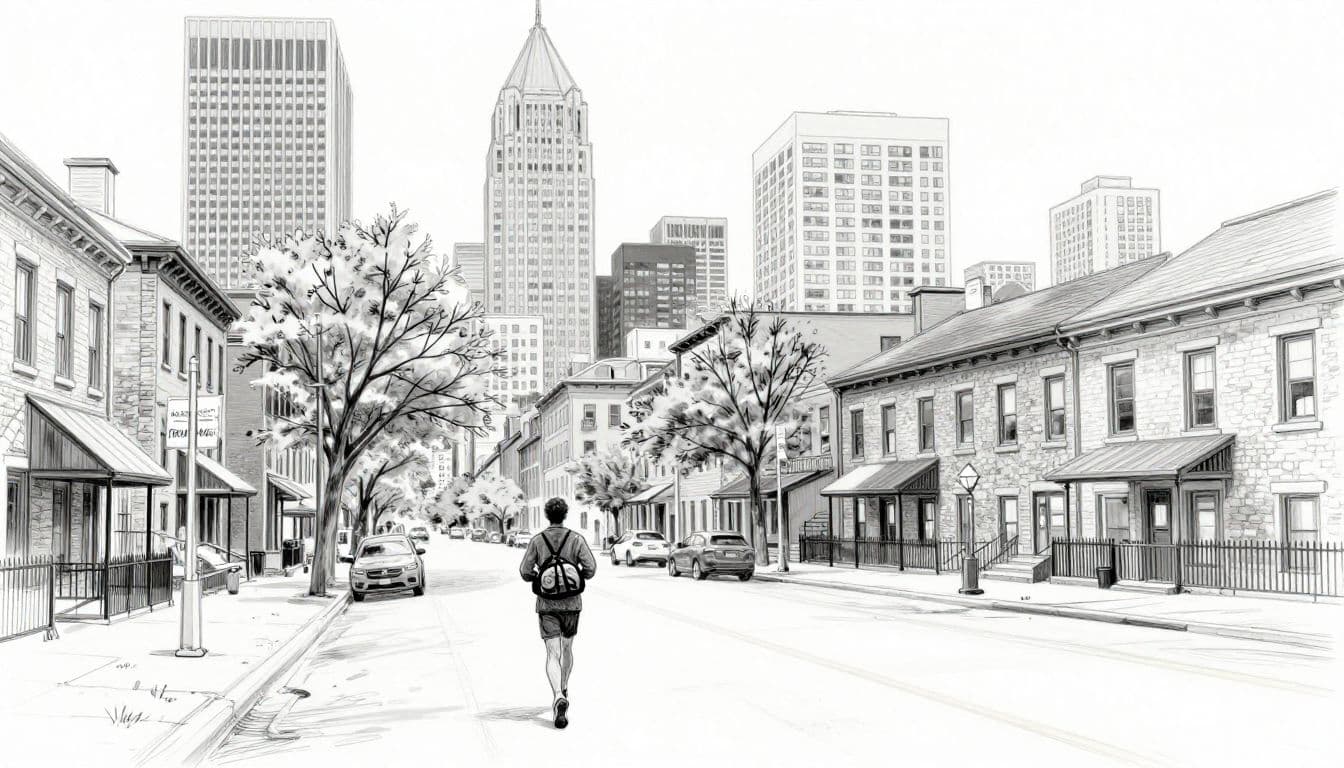
Downtown Montreal offers the easiest mix of race access and convenience
Downtown is a strong all-around base for first-time visitors and runners who want fewer logistical problems. You’ll find hotels at many price points, restaurants, pharmacies, coffee shops, and several Metro connections within a short walk.
A room near a station can save your legs and reduce race-morning guesswork. Still, check whether trains begin early enough for your start time, and review the STM Metro information before relying on public transportation.
The tradeoff is noise. Busy streets, nightlife, traffic, and other runners can disturb light sleepers, especially in lower-floor rooms. Request a higher floor and a room away from the main street if possible. Downtown suits first-time visitors, solo runners, couples, and anyone who values convenience over neighborhood quiet.
Old Montreal is scenic, memorable, and sometimes less practical on race morning
Old Montreal surrounds you with stone buildings, historic streets, restaurants, and waterfront views. It makes a marathon weekend feel like a real trip, especially when family members want to sightsee while you prepare.
However, cobblestones can make walking uncomfortable before or after the race. Tourist traffic may slow short trips, and grocery options are less convenient than in Downtown. Your hotel may also sit farther from the start than the neighborhood name suggests.
Old Montreal works best for runners bringing family or extending their stay. Confirm the exact walking distance, course location, and transportation plan before reserving a room.
The Plateau and Quartier des Spectacles suit runners who want local energy
Plateau-Mont-Royal and the Quartier des Spectacles offer more cafes, casual restaurants, parks, nightlife, and local character than the downtown core. These areas suit runners who want Montreal culture close at hand, not just a convenient place to sleep.
The downside is a longer race-morning commute and possible late-night noise. Choose lodging near a Metro stop, or budget for a short taxi ride if your start time is early. This option fits runners who care as much about exploring Montreal as simplifying race access.
Griffintown and transit-connected areas can provide more space and value
Griffintown and other areas near reliable transit links often have newer accommodations, larger rooms, and apartment-style stays. Families and running groups may appreciate kitchens, extra beds, and more space for gear.
Check grocery access, restaurant hours, sidewalks, and the exact travel time to race activities. A lower nightly rate only saves money if transportation remains simple on race morning. If the route requires multiple connections or an early taxi, Downtown may offer better value overall.
Choose a Montreal Marathon Hotel by Race-Day Distance and Transit
Hotel distance matters most when you measure the full door-to-corrals journey, not just the line between your room and the start. Add the walk to the station, waiting time, transfers, security restrictions, and street closures before deciding where to stay. Course logistics can change each year, so use the official race map and schedule as your final reference before booking.
Walking distance is valuable, but only when the route is simple
Walking to the expo, race activities, or starting area reduces waiting and removes transportation surprises. After the finish, it also gives you a reliable way back when trains are crowded or roads remain closed.
However, a short route on a map can feel much longer in practice. Hills, construction, cobblestones, blocked sidewalks, and closed streets may force detours. Old Montreal, for example, can look close to a destination while its uneven streets make pre-race and post-race walking less comfortable.
Walk the route in daylight before race morning if you can. Check the actual hotel entrance, sidewalk conditions, street crossings, and any hills. Unless you’re comfortable walking on tired legs, avoid a hotel that requires a long trek after the marathon.
Use the Metro and taxis with a backup plan for early starts
Montreal’s Metro and bus network can expand your hotel choices, especially if you stay near a direct line to the race area. Still, weekend schedules, station entrances, service changes, and race-day road closures can alter the plan. Review the STM service updates shortly before the event, rather than assuming normal weekend service.
Allow extra time and identify the nearest open station entrance before leaving your room. Save your hotel’s address, the start area, and the finish area offline in case mobile service becomes unreliable. Keep a taxi or rideshare option available, but don’t assume every vehicle can reach a closed street or pick-up zone.
Use this simple framework:
- Walkers should choose the simplest route, not merely the shortest distance.
- Transit users should prioritize one direct connection and an early operating schedule.
- Taxi users should confirm possible drop-off points outside road closures.
- Families should favor easy meeting points, restaurants, and a dependable return route.
Book around the expo, bag drop, finish area, and family meeting plans
The start line isn’t the only location that shapes your weekend. Bib pickup, the expo, gear storage, family viewing areas, post-race food, and your return trip all deserve space on the map.
A hotel near the start may work poorly if the finish area sits elsewhere. Likewise, lodging beside the expo may leave you facing a long post-race journey with sore legs. Mark each location, then compare walking time, transit connections, and taxi access before you reserve.
Choose a clear family meeting point away from the finish-line crowds. A cafe, hotel lobby, or named Metro entrance is easier to find than a broad plaza. Once you plot the weekend, the best place for where to stay for the Montreal Marathon becomes the hotel with the fewest difficult trips, not necessarily the one closest to the starting line.
Find Runner-Friendly Hotels for Every Budget
The best hotel for the Montreal Marathon protects your sleep, simplifies race morning, and leaves enough room in your budget for transportation and meals. Compare the full stay, not just the nightly rate, because a cheap room can become expensive when it adds long transit times or poor recovery conditions.
What to look for in a marathon-weekend hotel
Use this checklist when comparing rooms and policies:
- Choose a quiet room away from elevators, bars, busy streets, and hotel event spaces.
- Confirm that the room has blackout curtains and a comfortable bed.
- Check whether the elevators are reliable, especially if your room is on a higher floor.
- Look for a mini-fridge, microwave, or kitchenette if you plan to store breakfast or recovery food.
- Ask about coffee, drinking water, and early breakfast availability.
- Confirm luggage storage if you arrive before check-in or need somewhere to leave bags after checkout.
- Request late checkout when possible, particularly if you expect to finish later in the day.
- Read the cancellation terms carefully before paying a nonrefundable rate.
- Make sure the front desk opens early enough for questions, transportation help, or an unexpected problem.
A hotel doesn’t need every feature. Sleep quality and a simple pre-race morning come first. A microwave may be helpful, but it can’t compensate for loud hallways or a poor mattress.
Luxury and mid-range hotels can reduce race-weekend friction
Paying more may be worthwhile when the property gives you a quieter room, dependable breakfast, a fitness area, a recovery pool, easy transit access, or staff who understand early race schedules. Those details can remove small problems that feel much larger before a marathon.
Mid-range hotels often provide the essentials at a lower rate. You may get a clean room, a solid bed, coffee, Wi-Fi, and a convenient location without paying for premium amenities. Compare the total price after taxes, parking, facility fees, breakfast, and transit costs.
Recent reviews tell you more than a star rating. Search for comments about street noise, cleanliness, bed comfort, elevator delays, and actual staff service. A polished lobby won’t help if runners regularly report sleepless nights.
Budget hotels, hostels, and rentals need closer inspection
Lower rates can come with shared bathrooms, thin walls, stairs, limited breakfast, strict check-in times, cleaning fees, or a longer trip to the start. Calculate the added cost of taxis, Metro fares, and extra meals before choosing the cheapest listing.
A hostel can suit solo runners who want a social stay, while an apartment-style rental may work well for a group or a longer visit. Kitchens also help runners control breakfast and post-race meals. For a first marathon, however, a standard hotel may offer a simpler check-in process and more predictable support.
Before booking a rental, verify the exact location, cancellation policy, food options on race morning, and access instructions. Montreal requires short-term tourist accommodations to follow municipal and provincial rules, so review the city’s short-term accommodation guidance. Compare every fee and confirm the listing’s legal status where relevant.
Plan the Cost of Staying in Montreal for Race Weekend
Marathon weekend can push up hotel rates and shrink availability, especially near Downtown, Old Montreal, the Quartier des Spectacles, and other event locations. Once your race plans are firm, compare the full cost of the trip rather than judging hotels by their nightly rates alone. Check live prices and the current Marathon Beneva event schedule before you book.
When to book your room and how to protect the reservation
Book as soon as your race plans are firm. Early booking gives you more control over neighborhood, bed setup, room type, and transit access. It matters even more when you’re traveling with family or a larger running group because several suitable rooms can disappear quickly.
Choose a refundable rate when the price difference is reasonable. Race dates, injuries, travel plans, and room needs can change. Read the cancellation deadline carefully, including the exact time zone and whether the hotel charges one night after the deadline.
Booking directly with the hotel may provide clearer communication, loyalty credit, easier requests, or a price match if the property offers one. A reputable third-party site may show useful comparisons and provide centralized booking support. However, changes and cancellations usually go through that company, which can add another layer when you need help.
After booking, save the confirmation email and contact the property directly. Ask the hotel to confirm these details in writing:
- Your reservation dates and total room count.
- The room type, number of beds, and sofa-bed setup.
- Check-in time, early arrival options, and luggage storage.
- Breakfast hours and whether race-morning service is available.
- The cancellation deadline and any added fees.
Compare the real price of central and farther-out neighborhoods
A cheaper room outside the central race area can lose its advantage through daily taxis, parking, longer travel, missed breakfast, or extra meals. Travel time also has a cost when you need to protect sleep and recover after the race.
Use this formula for every hotel:
Total stay cost = room nights + taxes and fees + parking + breakfast and groceries + transit or taxis + luggage storage + extra recovery night + the value of your time and energy.
A central hotel may cost more per night but reduce transportation and simplify race morning. A farther-out room can make sense when it offers a quieter setting, family space, a kitchen, or dependable access to a direct Metro route.
Add every expected expense to a simple spreadsheet. Then compare the final totals, not the advertised rate. If the farther hotel requires two taxis and a long return trip after the marathon, its lower price may buy more stress than savings. Conversely, a transit-connected room with grocery access and a comfortable recovery space may deliver better value than a smaller central room.
Reserve the option that protects your sleep, schedule, and recovery, while still fitting the complete weekend budget.
Make Your Hotel Work for Training, Sleep, and Marathon Recovery
Your hotel should protect the routine that got you to the starting line. Sleep, meal timing, hydration, walking volume, and post-race comfort can all affect how you feel over 26.2 miles. When deciding where to stay for the Montreal Marathon, choose a room that makes good habits easy.
Protect the night before the race
Request a quiet room away from elevators, bars, event spaces, busy roads, and ice machines. If you’re sharing the room, confirm the needed bed arrangement before arrival. A rollaway bed or uncomfortable sofa can damage sleep when you need every hour.
Pack breakfast, race clothing, bib supplies, shoes, and fuel before bed. Then check the room temperature, shower, alarm, outlets, and phone-charging setup early enough to fix problems. Set a backup alarm if your race morning depends on an early wake-up.
Limit unnecessary sightseeing on Saturday. Montreal will still be there after the race, while extra walking can leave your legs flat before the start. Stick with familiar foods and your normal evening routine instead of testing a rich local meal, unfamiliar supplement, or new recovery product.
Runners arriving from another time zone should shift bedtime and wake time gradually when possible. During a multi-night stay, keep breakfast, fluids, and light movement close to your usual schedule. Families can help by agreeing on quiet hours and keeping race gear in one place.
Build a simple food and hydration plan near the hotel
Nearby grocery stores, dependable restaurants, and early-opening cafes give you options when race-weekend schedules change. Bring familiar snacks, such as the bars, bagels, sports drinks, or gels you’ve already tested in training.
Before booking, ask whether the room includes a refrigerator. Confirm access to hot water, a microwave, or an early breakfast option if those details matter to your plan. Avoid experimenting with rich meals or unfamiliar supplements before the race. Research published through the National Library of Medicine discusses carbohydrate timing for marathon athletes, but race weekend is the wrong time to test a new strategy.
After the finish, arrange easy access to protein, carbohydrates, fluids, and a comfortable place to rest. A grocery store near the hotel can be more reliable than hoping a crowded restaurant has an open table.
Plan recovery after the finish, not just the start
A scenic hotel across the city may feel very different after a marathon. Choose a short, uncomplicated return trip with easy elevator access, a comfortable bed, and a usable shower. Nearby food matters even more when your legs are stiff and public transportation is crowded.
Ask about late checkout, luggage storage, and access to the lobby after checkout. If your budget allows, staying an extra night can give you time to eat, sleep, walk lightly, and travel home without rushing. Recovery belongs in the booking decision, alongside the start-line distance.
Choose Your Distance, Duration and Goal Time
Make three quick selections and open the exact plan built for your race target.
Looking for a Fully Personalized Training Plan?
The training plans above are an excellent choice if they match your goal. However, if you’d rather train with a plan built specifically around your current fitness, goal race, preferred training days, weekly mileage, and target finish time, our RDA Custom Training Plans provide a personalized solution. We also have running courses available for runners seeking to run faster from the mile to the marathon.
Why Choose a Custom Training Plan?
| Standard Training Plan | RDA Custom Training Plan |
|---|---|
| Follows a fixed schedule | Built around your schedule |
| Standard weekly mileage | Peak mileage customized for you |
| Fixed workout days | Train on the days you choose |
| Same structure for everyone | Designed around your current fitness |
| Static plan | Updated as your fitness improves |
| One-time purchase | Ongoing personalized coaching and support |
What You’ll Receive
- A training plan built specifically for your goal
- Personalized training paces
- Long runs, tempo runs, threshold workouts, interval sessions, recovery runs, and easy runs
- Peak weekly mileage matched to your experience level
- Flexible training schedule that fits your life
- Ongoing plan adjustments as your fitness improves
Ready to Train Smarter?
Stop guessing and start following a plan built specifically for you, your schedule, and your racing goals.
Use This Montreal Marathon Hotel Checklist Before You Book
The right answer to where to stay for the Montreal Marathon depends on more than neighborhood or nightly price. Before confirming a room, test the hotel against your race schedule, sleep needs, transportation plan, and recovery plans.
Questions to ask the hotel before confirming
Send these questions by phone or email before you pay:
- Can I request early check-in, late checkout, or both?
- Can the hotel store my bags before check-in or after checkout?
- Is breakfast available before race time, and can the kitchen prepare takeaway food?
- Does the room include a refrigerator, microwave, coffee maker, or kitchenette?
- Can I request a quiet room away from elevators, streets, bars, and event spaces?
- Are construction projects, weddings, conferences, or nightlife venues likely to create noise?
- What is the easiest way to reach the race area during road closures?
- Is parking available, and can guests enter and leave during race weekend?
- Is there a grocery store, pharmacy, or early-opening restaurant nearby?
- What are the cancellation rules, deadlines, taxes, and added fees?
Confirm the official race date, start and finish locations, and expo schedule before asking these questions. The Marathon Beneva event information can change, so compare the hotel plan with the latest race details.
Ask the hotel to answer in writing. That record helps when several runners share one reservation, especially when you need to confirm bed arrangements, luggage storage, breakfast, or checkout times. Save the message with your booking confirmation.
A final 10-minute location test prevents race-morning surprises
Open the current race map and test the complete route in your maps app. Start at your room, then trace the trip to the starting area, including the walk to transit, transfers, waiting time, and the final walk to the corrals.
Next, map the journey from the finish back to the hotel. Check these details before you commit:
- Walking time and sidewalk conditions.
- Transit transfers and first service times.
- Alternate routes if streets close or trains run late.
- Grocery stores, cafes, and pharmacies along the way.
- A clear family meeting point.
- Taxi or rideshare pickup areas outside restricted streets.
Save screenshots, hotel addresses, station names, and meeting points offline. Then make a backup plan for rain, cold weather, service delays, and the possibility of a tired runner needing a shorter trip after the finish. Review the official runner’s guide again close to race weekend for updated maps and closure information.
For a quick decision, choose central convenience if this is your first Montreal visit. Pick quiet lodging near reliable transit when sleep matters most. Families and running groups should prioritize extra space, grocery access, and an easy post-race return over a slightly lower room rate.
Frequently Asked Questions
Choosing where to stay for the Montreal Marathon becomes easier when you match your hotel to the race plan, not just the neighborhood name. These answers cover the practical details that can affect your sleep, schedule, and recovery.
What is the best area to stay for the Montreal Marathon?
Downtown is often the easiest all-around choice because it offers a wide range of hotels, restaurants, pharmacies, coffee shops, and transit connections. However, your best option depends on the year’s start and finish locations, your budget, and how much quiet you need at night.
Before making a final decision, check the current Montreal Marathon course information and compare the exact hotel address with the race map. A room that appears central may still require a long walk or several transit connections.
How many nights should I book for the Montreal Marathon?
Arriving at least one night before the race gives you time to collect your bib, settle into the room, organize your gear, and follow your normal evening routine. It also protects you from flight delays, traffic problems, and other travel issues that could turn race morning into a scramble.
An extra night after the race can help your recovery, especially if you have a long trip home. Families may also appreciate the slower departure, since nobody has to rush a tired runner through checkout and transportation.
Is it better to stay near the marathon start or finish?
Staying near the start can simplify the early morning and reduce the risk of arriving late to your corral. On the other hand, a hotel near the finish makes it easier to return, shower, eat, and rest when your legs are sore.
Compare the start, finish, expo, transportation routes, and family meeting plans before choosing. A slightly longer trip before the race may be worthwhile if it gives you a much simpler return afterward.
Can I rely on Montreal public transit on race morning?
Public transit can be useful, but early service hours, station access, event crowds, and road closures may change your trip. Check current STM information and the race instructions close to race weekend, then allow more time than the normal journey requires.
Keep a walking route and taxi or rideshare option available as backups. Also confirm where vehicles can drop you off, since closed streets may prevent direct access to the starting area.
Should I book a hotel with breakfast included?
Breakfast included helps only when the food matches your usual race-morning routine and the dining room opens early enough. Ask the hotel about serving times, takeaway options, and available foods before relying on the package.
Keep familiar items in your room as a backup, such as a bagel, oatmeal, banana, or sports drink. Your pre-race meal should feel predictable, not like a last-minute experiment.
What should I do if hotels near the race are too expensive?
Compare nearby neighborhoods with dependable transit, and book a refundable room early while you continue watching prices. Sharing a larger room with a training partner or family member, or choosing an apartment-style stay, can also reduce the total cost.
Calculate parking, fares, taxis, and travel time before choosing a distant hotel. A small headline discount isn’t useful if it costs sleep and creates a complicated race-morning commute.
Conclusion
Choosing where to stay for the Montreal Marathon comes down to how you want race weekend to feel. Downtown is the safest choice for convenience, with broad hotel selection, restaurants, and transit nearby. Old Montreal offers atmosphere and sightseeing, while the Plateau and Quartier des Spectacles provide cafes, nightlife, and local character. Transit-connected areas outside the core can deliver better value, larger rooms, and useful space for families or running groups.
The strongest choice is the hotel that protects your sleep, keeps race logistics simple, and fits your complete budget. A lower room rate loses its appeal when it adds long transfers, expensive taxis, or a difficult trip back after the finish.
Before booking, verify the current course, start and finish points, expo details, transit schedule, road closures, and hotel cancellation policy. Then organize your race gear, food, transportation, and recovery plans so you can arrive rested and ready to run.


