

Where to Stay for the Lausanne Marathon: Best Areas Near the Start & Finish
Running beside Lake Geneva gives the Lausanne Marathon a setting few races can match, but your hotel choice can shape the entire race morning. A long walk to the start, a difficult breakfast plan, or uncertain transportation can drain energy before you reach the course, while the right base helps you sleep well, eat on schedule, arrive calm, and recover comfortably after the finish.
If you’re deciding where to stay for the Lausanne Marathon, this Lausanne Marathon hotels guide compares the best options for runners, including Ouchy and the lakeside, central Lausanne, the train station area, Pully, and nearby towns. You’ll also find practical hotel choices for different budgets, so you can match your accommodation to your race plan, travel needs, and recovery priorities.
Race routes, start times, road closures, and public transportation details can change, so confirm the latest information on the official Lausanne Marathon website before booking. Start by comparing the areas closest to the course and the easiest routes to the start.
Key Takeaways
- Ouchy and the lakeside offer the simplest race-morning routine, especially for runners who value proximity and easy recovery access.
- Central Lausanne provides more restaurants, shops, and hotel choices, but hills and race-day transport require careful planning.
- The train station area suits travelers arriving by rail, although you may need extra time to reach the start.
- Pully and nearby towns can offer quieter stays, but check transport schedules and course closures before booking.
- Confirm the latest start details, route information, and race-day updates on the official Lausanne Marathon website before finalizing your hotel.
Where to Stay for the Lausanne Marathon: Start With the Race-Day Map
Before comparing hotels, locate the current start, finish, race village, bag drop, and transport restrictions. Lausanne rises sharply from Lake Geneva, so a hotel that looks nearby on a map may still require a tiring climb or a complicated transfer before the gun.
Check the official course map, start waves, restroom locations, bag-drop rules, and road closure notices for your race year. The Lausanne Marathon event details can help you confirm current departure information, but always match those details with the organizer’s latest race instructions.
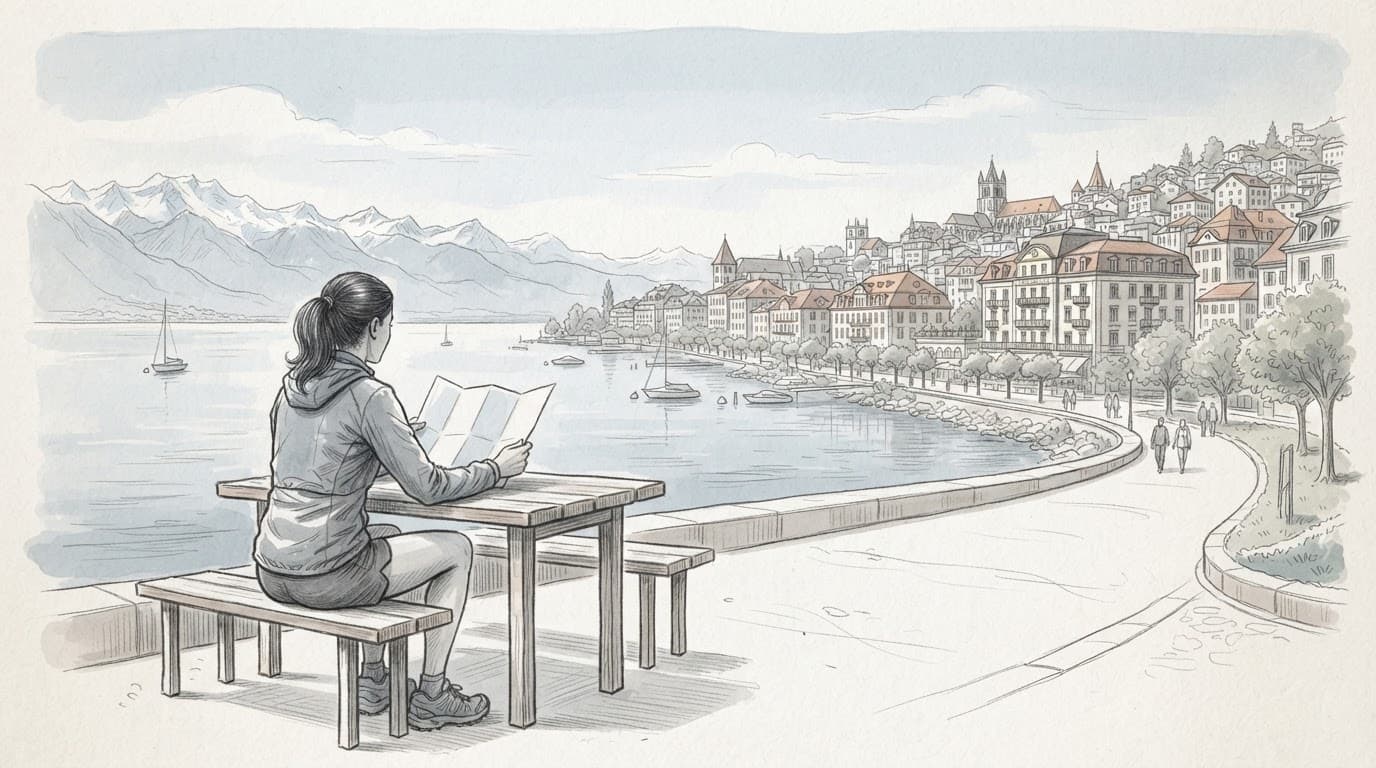
Why Ouchy and the Lakeside Are Often the Easiest Choice
Ouchy is a strong option for runners who want Lake Geneva outside the door. The waterfront gives you flatter walking and running paths, plenty of restaurants, and a scenic place to loosen your legs after the marathon. A short recovery walk beside the water can feel far better than climbing Lausanne’s steep streets to reach your room.
Staying near the lakeside may also simplify breakfast and race-morning timing. You can choose a nearby cafe, prepare food in your room, or return quickly after collecting your bag. That convenience matters when your legs are tired and your schedule depends on an early start.
The tradeoff is price. Hotels in Ouchy and along the waterfront often cost more, especially when marathon weekend increases demand. Availability can also disappear early, so compare cancellation terms before committing.
The exact advantage depends on the current start and finish layout. A lakeside hotel may be ideal for one year’s route but less convenient if runners must reach a different assembly area. Compare the full hotel address with the official race map, not just the neighborhood name.
What Changes When You Stay in Central Lausanne
Central Lausanne gives you more choice. The Flon district, old town, and Lausanne train station place shops, cafes, restaurants, and different hotel categories within easier reach. The station area can work well if you’re arriving by rail or planning to explore the city after the race.
However, central Lausanne sits uphill from the lake. Streets around the old town can be steep, and busy sidewalks may add stress after 26.2 miles. A route that looks short on a map could include stairs, a sharp climb, or a crowded transfer.
The metro and local buses can reduce that burden, but don’t assume they will solve every race-morning problem. Confirm early service, planned closures, walking connections, and the time needed to reach your start wave. Build a backup route in case a road closure affects your usual stop.
Before booking, check five practical details:
- Can you get breakfast before leaving?
- Will your hotel provide restroom access without a long wait?
- How long is the walk to the start?
- How long will the transit connection take?
- What is your backup route if buses or roads change?
For many runners, central Lausanne works best when the hotel offers a simple downhill walk or a reliable early transit connection. Otherwise, Ouchy may save more energy than its higher nightly rate costs.
The Best Lausanne Neighborhoods for Different Types of Runners
The best place to stay for the Lausanne Marathon depends on how you want race morning to feel. Ouchy favors easy lakeside access, the station area simplifies travel, central districts add restaurants and culture, while towns east of Lausanne offer quieter nights. Each option has a cost, whether that means higher rates, extra hills, noise, or a longer trip to the start.
Ouchy and Port d’Ouchy for Lakeside Access and Recovery
Ouchy is the strongest choice for runners who want a gentle warm-up and an easy recovery walk. The waterfront paths around Port d’Ouchy and the nearby parks are flatter than Lausanne’s uphill streets, so you can loosen your legs without spending energy on repeated climbs. The Olympic Museum and Olympic Park also give the area a clear landmark and an attractive place to walk before or after the race. Lausanne Tourism’s guide to Ouchy provides useful background on the district.
Restaurants and cafes line the area, although early race breakfasts still require planning. You may prefer a hotel with a kitchen, an in-room breakfast option, or a nearby grocery store. The waterfront can also help families and traveling partners who want scenic walking without tackling Lausanne’s steepest streets.
However, Ouchy hotels often command premium rates, and marathon weekend availability can disappear early. Event-day barriers may close sections of the waterfront or change normal walking routes. Check the current race map before assuming that a hotel near the lake is close to your start area.
Lausanne Train Station and Sous-Gare for Simple Connections
The train station and Sous-Gare area suit visitors arriving by rail or planning to use public transportation. You can avoid arranging a taxi from another town, reach shops and cafes on foot, and ask your hotel about luggage storage before check-in or after checkout. The station also connects with Lausanne’s metro network, including the route toward Ouchy.
A station address doesn’t automatically mean a short walk to the race start. Lausanne remains hilly, and some hotels near the station sit above busy roads or require stairs. Confirm the exact walking route, early transit times, and any race-day closures. Check the Lausanne metro route information alongside the organizer’s current instructions.
Flon and the Old Town for Food, Culture, and City Energy
Flon and the Old Town work well for visitors who want restaurants, museums, bars, and an active evening scene. These central districts give you more ways to spend a non-race day, especially if family members or friends aren’t running.
The tradeoff is sleep and terrain. Late-night activity can create noise, while cobbled streets, stairs, and steep routes may make walking uncomfortable after the marathon. Before booking, ask about room location and soundproofing. Elevator access matters too, particularly if you’re staying above the lower streets or carrying race luggage.
Pully, Lutry, and Nearby Lake Geneva Towns for a Quieter Stay
Pully, Lutry, and nearby communities east of Lausanne offer calmer waterfront settings when central hotels sell out. They can provide more space, scenic lake views, and quieter nights, which may suit families or runners who prioritize sleep.
The extra distance demands careful planning. Check train and bus schedules, first departures, and race-day disruptions before paying a deposit. Road closures may affect both public transportation and taxi routes, so allow extra time to reach the start. These towns are beautiful, but they are less convenient when your race morning begins before sunrise.
The Best Hotels Near the Lausanne Marathon for Every Budget
The best place to stay for the Lausanne Marathon depends on more than the nightly rate. A quiet room, early breakfast, luggage storage, and a short route to the start can protect your sleep and race-day routine. Prices may rise sharply during marathon weekend, so compare the full booking cost before choosing a room with a better view.
Luxury Hotels for Maximum Comfort Before and After the Race
Luxury properties near Ouchy and the lake can make race weekend feel calmer. The Beau-Rivage Palace, for example, offers a lakeside setting, high-end dining, and spa facilities. Its official site confirms the hotel’s location on Lake Geneva and its Guerlain Spa, but you should still ask whether treatments and facilities match your race-weekend schedule.
The Royal Savoy Hotel & Spa and Hotel d’Angleterre et Résidence are other examples of the type of stay to consider. Look for features that support recovery and sleep:
- Quiet rooms away from elevators, bars, and busy streets.
- Strong blackout curtains and reliable climate control.
- Elevators, especially if your room is on an upper floor.
- Breakfast service that starts early enough for your race plan.
- A restaurant or nearby food option for your post-race meal.
- Wellness facilities, such as a sauna, pool, or massage service.
- Late checkout or secure luggage storage after you leave the room.
A luxury hotel only helps your race if its schedule matches yours. Confirm breakfast hours, spa access, restaurant service, and late checkout directly.
Verify current prices, availability, renovation status, parking arrangements, and marathon-weekend policies before paying a premium. The Beau-Rivage Palace is a useful example of the luxury category, but each runner should judge whether the extra comfort justifies the total cost.
Midrange Hotels With the Best Balance of Location and Value
Midrange hotels near Ouchy, Lausanne station, and central transit links often provide the strongest balance for runners. Possible choices include Mövenpick Hotel Lausanne, Hotel Continental, Agora Swiss Night, and Hotel Mirabeau. Their value depends on the exact room rate and what the booking includes.
Compare the final price instead of the headline rate. Add breakfast, city taxes, parking, local transportation, and the cost of reaching the start area. A cheaper station hotel may cost more after parking and a race-morning taxi, while a slightly pricier Ouchy room could reduce walking and transit stress.
Ask each property about early breakfast, coffee availability, luggage storage, elevator access, and cancellation deadlines. Also check whether the room faces a main road or nightlife area. These practical details often matter more than a lake view when you need uninterrupted sleep.
Budget Hotels, Hostels, and Apartment Stays
Budget accommodation makes sense for solo runners who spend most of the day outside the room. It can also suit groups that prefer shared costs or travelers staying several nights. The Lausanne Youth Hostel and simpler independent hotels near the station or city center are worth comparing with private apartments.
Before booking, confirm whether the property has shared bathrooms, quiet hours, limited check-in times, or firm departure rules. Check bedding quality as well, since a low price loses its appeal when you can’t sleep. Apartments may add a kitchen, refrigerator, and laundry access, which helps during a longer stay or when you follow a familiar meal plan.
Distance still matters. A low-cost room far from the race area may require an early taxi, a long walk, or several transit changes. Calculate that time and expense before deciding that the cheapest listing is the best deal.
Family-Friendly Rooms and Group Accommodation
Families and running clubs can often save money with connecting rooms, apartment-style lodging, or suites with sofa beds. A kitchen helps reduce restaurant costs, while flexible cancellation gives groups more control if injury or travel problems change the plan.
Confirm occupancy limits before booking. Ask about elevator access, race-gear storage, children’s breakfast options, and the number of bathrooms available for everyone sharing the property. A room that fits on paper can feel crowded when several runners need showers and recovery time.
Book early if your group needs multiple rooms in the same hotel. Marathon demand can remove the connecting-room options first, leaving only expensive or scattered rooms. Compare the total group cost, then choose the property that keeps race-morning travel simple.
How to Choose a Marathon-Friendly Hotel in Lausanne
The best hotel for the Lausanne Marathon is the one that protects your routine. Before paying, rank each option by race-day location, sleep quality, food access, transport, cancellation flexibility, and recovery comfort. A lakeside view is appealing, but it cannot compensate for a noisy room, no breakfast, or stairs that make race morning harder.
Check Breakfast, Coffee, and Dinner Around Your Race Schedule
Ask whether breakfast starts early enough for your start time. If it doesn’t, check for an in-room kettle, early coffee, or a breakfast bag you can collect before leaving. A nearby grocery store gives you another reliable option for familiar foods, drinks, and race-morning snacks.
Race-weekend restaurants can fill quickly, especially near Ouchy and the lakeside. Make a dinner reservation in advance, then choose food that matches your normal training routine. The night before a marathon is a poor time to test an unfamiliar local meal, rich sauce, or large portion.
A refrigerator helps you store yogurt, fruit, recovery drinks, and other foods you already tolerate. If you have specific nutrition needs, a kitchenette can be more useful than an expensive restaurant. Confirm these features directly because a listed “kitchen” may only mean a shared space.
Prioritize Quiet Sleep, Climate Control, and Easy Recovery
Sleep quality can outweigh a lake view. Request a room away from bars, elevators, busy roads, stairwells, and hotel event spaces. Ask for a higher floor if street noise is a concern, but remember that a request is not a guarantee.
Check whether the room has reliable air conditioning or heating, blackout curtains, a comfortable mattress, and a quiet closing door. A room near the lift may save a few steps, yet constant footsteps and voices can disturb the night. Read recent reviews for repeated complaints about noise rather than relying only on the hotel’s rating.
After the race, you will want a practical shower and somewhere to sit with your legs raised. A chair, sofa, or extra bed can help with recovery. Confirm elevator access if the hotel has difficult stairs, particularly when your room is above the main floor.
Understand Transport, Parking, and Race-Day Road Closures
Verify the exact metro or train stop, the first departures, walking time, and taxi availability. Use the current organizer information and local transit details, then walk your planned route the day before. Save a backup route in case a station, bus stop, or road becomes restricted.
Driving may be less useful than expected. Course closures can restrict streets, hotel access, and nearby parking areas, while a taxi may face the same delays. Ask about parking rules, but don’t assume a reserved space guarantees easy race-morning access.
Read the Booking Terms Before You Commit
Compare the free-cancellation deadline with your training and travel plans. Race-weekend rates may be nonrefundable, require a deposit, or impose a minimum stay. Also check tourist taxes, check-in hours, luggage storage, and whether the hotel can hold bags after checkout.
Ask what happens if an injury forces you to change dates or cancel. Save the confirmation email and contact the hotel directly about marathon-specific needs, such as early departure or late luggage collection. Flexible terms have real value when your health, flights, or race plans change.
Use this quick comparison before booking:
- First-time marathoner: Choose the hotel with the simplest start route, dependable breakfast, quiet rooms, and easy post-race access, even if it costs slightly more.
- Budget-conscious runner: Compare the full price, including breakfast, transport, parking, and taxes. A farther room only saves money if the race-day logistics remain manageable.
- Family or group: Prioritize room capacity, kitchen access, multiple bathrooms, luggage storage, and flexible cancellation over a scenic address.
The closest hotel wins only when it also supports sleep, nutrition, movement, and an early departure.
Book the Right Lausanne Marathon Base Without Overspending
The best place to stay for the Lausanne Marathon balances race-day convenience with the full cost of your trip. Reserve a cancellable room when you know the race date and your travel plans, then keep checking rates as the weekend approaches. If a better deal appears, you can often switch without giving up your preferred location.
A Simple Booking Timeline for Marathon Weekend
Popular waterfront and central properties can sell out early because runners want short walks, easy meals, and fewer transport decisions. Start by checking Ouchy, the lakeside, Lausanne station, and nearby districts before expanding your search to Pully, Lutry, or towns one or two transit stops away.
A practical booking plan looks like this:
- Reserve a room with free cancellation as soon as your dates are clear.
- Compare the hotel’s direct rate with major booking platforms, including breakfast, taxes, and cancellation terms.
- Recheck prices several weeks before the race, then keep the original room if the replacement rate has stricter conditions.
- Confirm the final route, event village, bib collection arrangements, transport schedule, and hotel policies before race week.
A flexible rate may cost slightly more at first, but it protects you against injury, flight changes, or a better deal later. If the most popular hotels are sold out, search apartments with shared costs, smaller properties near transit, and rooms outside the center. A short train or metro ride can cut the price without creating a difficult commute.
For current event timing and bib collection details, check the available Lausanne Marathon event information, then verify all final instructions with the organizer.
How to Compare the Real Cost of Each Location
Nightly price alone can make a distant room look cheaper. Calculate the complete stay before you decide. Include:
- Room rate and local taxes.
- Breakfast, groceries, and race-weekend meals.
- Train, metro, bus, or taxi fares.
- Parking fees and fuel if you drive.
- Extra nights caused by inconvenient flight or train times.
A hotel near the race area may cost more but save money on taxis, parking, and rushed meals. It can also protect your sleep by removing a long transfer before the start. Meanwhile, traveling by train and choosing a hotel near a station may eliminate parking entirely.
Map distances need careful reading. A listing that appears close to the lake may sit uphill, behind a major road, or far from the correct starting zone. Check the walking route, elevation, stairs, transit changes, and likely race-day barriers. Use the exact street address rather than trusting a neighborhood label.
What to Do the Day Before and the Morning of the Race
Arrive with time to spare. Collect your bib if required, buy familiar breakfast food, and walk the route to your starting zone. Then lay out your shoes, clothing, bib, and nutrition before dinner. Charge your phone and watch, check the weather, and confirm how you’ll return to the hotel after finishing.
On race morning, leave more time than the map suggests. Crowds, toilets, security, transit changes, and walking to the correct starting zone can each add delays. Carry only what you need, follow the organizer’s instructions, and keep your return plan saved offline in case your phone battery runs low.
Choose Your Distance, Duration and Goal Time
Make three quick selections and open the exact plan built for your race target.
Looking for a Fully Personalized Training Plan?
The training plans above are an excellent choice if they match your goal. However, if you’d rather train with a plan built specifically around your current fitness, goal race, preferred training days, weekly mileage, and target finish time, our RDA Custom Training Plans provide a personalized solution. We also have running courses available for runners seeking to run faster from the mile to the marathon.
Why Choose a Custom Training Plan?
| Standard Training Plan | RDA Custom Training Plan |
|---|---|
| Follows a fixed schedule | Built around your schedule |
| Standard weekly mileage | Peak mileage customized for you |
| Fixed workout days | Train on the days you choose |
| Same structure for everyone | Designed around your current fitness |
| Static plan | Updated as your fitness improves |
| One-time purchase | Ongoing personalized coaching and support |
What You’ll Receive
- A training plan built specifically for your goal
- Personalized training paces
- Long runs, tempo runs, threshold workouts, interval sessions, recovery runs, and easy runs
- Peak weekly mileage matched to your experience level
- Flexible training schedule that fits your life
- Ongoing plan adjustments as your fitness improves
Ready to Train Smarter?
Stop guessing and start following a plan built specifically for you, your schedule, and your racing goals.
Frequently Asked Questions
Choosing where to stay for the Lausanne Marathon becomes easier once you separate location from race-day logistics. These answers cover the practical details that can still affect your decision after comparing Ouchy, central Lausanne, the station area, and nearby towns.
How early should I arrive in Lausanne before the marathon?
Arrive at least one day before the race if your budget and schedule allow it. That gives you time to collect your bib, locate the start area, buy familiar food, and adjust your morning plan without rushing.
If you travel from outside Switzerland, arriving earlier can also protect you from train delays or flight problems. Use the extra time for a short walk, not a long sightseeing day that leaves your legs tired.
Can I check in early or leave my bags after checkout?
Ask the hotel about early check-in, luggage storage, and access to a changing area before booking. You may arrive before the room is ready, and you will likely want somewhere secure to leave your bags after the race.
Don’t assume the hotel will let you shower after checkout. Confirm that service directly, particularly if you have a late departure and want to spend several hours in Lausanne after finishing.
Is a hotel outside Lausanne practical for race weekend?
Yes, but only when the transport plan is reliable on race morning. A hotel in Pully, Lutry, or another nearby town can provide better value and quieter sleep, yet the first train or bus may not match your start time.
Check the return schedule too. Road closures and event traffic can affect taxis, buses, and walking routes, so save a backup plan before race day.
Should I book a hotel with parking?
Book parking only if you truly need to drive. Lausanne’s hills, limited spaces, and marathon road closures can make a car less useful once you arrive, especially if your hotel sits near the course.
Ask whether the parking space is reserved, indoors, and accessible during the event. A hotel near a dependable train or metro connection may be easier than driving directly to the start.
What should I ask the hotel before confirming my room?
Send a short list of race-specific questions before paying a nonrefundable rate. Ask about:
- Early breakfast, coffee, or a takeaway meal.
- A quiet room away from traffic and nightlife.
- Elevator access and post-race luggage storage.
- A refrigerator or kitchenette for familiar food.
- Late checkout or shower access.
Also confirm whether the property can explain the simplest route to your starting zone. The answer often reveals more than a hotel listing.
Do I need to arrange bag transport through my hotel?
No, your hotel doesn’t normally handle race bag transport. Follow the organizer’s instructions for bib collection, bag drop, labels, and pickup, since procedures can change between race editions.
Read the event’s current runner information and pack only what you need at the start. Keep valuables, medication, and essential travel documents with you rather than placing them in a race bag.
Conclusion
The best place to stay for the Lausanne Marathon depends on your race-day priorities, not your hotel’s rating or room view. Ouchy offers lakeside convenience and easier recovery, central Lausanne provides more dining and transport choices, the station area simplifies travel connections, and nearby lake towns offer a quieter base.
Before booking, compare the current race map with your hotel’s exact address. Check early transportation, sleep quality, breakfast options, cancellation terms, and the total cost of the stay, including meals and race-day travel.
A well-chosen base protects your sleep, conserves energy, and removes unnecessary decisions before the start. Choose the location that supports your race plan, and you’ll arrive ready to run with confidence.


