

What to Eat Prior to Half Marathon
Race morning food can make the miles feel steady, or it can turn into cramps, bathroom stops, and a late race crash. The goal is simple, show up fueled, comfortable, and confident.
So, what to eat prior to half marathon comes down to three things: carbs for energy, low fiber and low fat for easier digestion, plus a small amount of protein to take the edge off hunger. Most runners do best with familiar, easy carbs like a bagel, toast with jam, rice, or a banana, then water (or a sports drink if that’s what you’ve trained with).
Timing matters too. A larger meal usually sits best 2 to 4 hours before the start, then a small carb snack can work 30 to 60 minutes before if you need it. Go heavy on fiber, greasy foods, or a “healthy” high-fat breakfast, and your stomach may complain at the worst time.
Most importantly, don’t try something new on race day. The best plan is the one you’ve practiced on long runs, because your gut needs training just like your legs.
Build Your Complete Race-Day Setup
The right shoe helps, but faster racing comes from better training, pacing, recovery, fueling, and execution.
More Guides for This Shoe
Back to RunDreamAchieve Training Plans
Build your pre-race plan around the clock, not just the menu
When you’re figuring out what to eat prior to half marathon, timing does as much work as the food itself. Eat too close and you risk gut slosh, cramps, or a bathroom emergency. Eat too early and hunger shows up at mile 6 like an uninvited guest.
Think of race fueling like catching a train, you want to arrive early enough to be ready, not so early that you’re cold and starving. Use these windows to top off glycogen, settle your stomach, and keep energy steady.
If your start time changes, don’t change the foods first. Shift the same plan earlier or later.
The night before: a normal carb-forward dinner that will not upset your stomach
Most runners don’t need extreme carb-loading for a half marathon. Instead, aim for a normal dinner that’s a little more carb-forward than usual, with foods you already digest well.
Good, low-drama options include pasta or rice with a light sauce, potatoes with a bit of salt, or bread with a simple topping. Add lean protein (chicken, turkey, fish, tofu) to stay satisfied, but keep it modest so the meal digests easily.
If your stomach is sensitive, skip the usual troublemakers: very spicy meals, heavy cream sauces, lots of veggies, big salads, and fried foods. Keep portions comfortable. You want to finish dinner feeling fueled, not stuffed.
3 to 4 hours before start: your main meal to top off energy stores
This is the anchor meal because it gives your body time to digest and store energy. Go carb-focused, low fat, low fiber, with a small amount of protein. Most runners do well with a carb-heavy meal here, enough to feel steady for a couple hours.
A few simple breakfasts that tend to sit well:
- Oatmeal cooked with water, topped with a banana and a drizzle of honey.
- A bagel with jam, plus a small yogurt on the side.
- Pancakes with syrup, plus a side of fruit.
- Toast with honey or jelly, plus a few sips of a low-fat latte (only if coffee is already your routine).
- Rice or cream of wheat with banana slices and a little maple syrup.
If you wake up very early, eat this meal when you can, then use a small snack closer to the start. If your race starts later, wait and keep the same spacing.
1 to 2 hours before start: a small snack to stop hunger without feeling heavy
This snack is about comfort. It should quiet hunger and keep your energy smooth, without sitting like a brick.
Use this simple rule: mostly carbs, low fiber, low fat, small portion. Good choices include a banana, applesauce, toast with honey, pretzels, or a few sports chews. Keep it familiar and easy to chew when you’re moving around.
Feeling nervous and not hungry? That’s normal. Try a few bites or sips anyway, even half a banana or a small applesauce can help. On the other hand, if you feel too full, stop eating early, sip water, and take an easy walk until the start.
See the full guide here:
What to Eat Before and After a Run
15 to 30 minutes before start: last tiny top-off if you know it works for you
This step is optional, and it only belongs in your plan if you’ve practiced it on long runs. The goal is a tiny carb boost, not a mini-meal.
A few reliable options:
- Half a gel with a few swallows of water.
- A few chews plus water.
- A small sip of sports drink.
Pair concentrated carbs with water, so it doesn’t sit heavy. Also, race morning is not the time to test new gels, caffeine shots, or supplements. Stick with what your stomach already trusts.
Choose the right foods: carbs first, then a little protein, and go easy on fat and fiber
When you’re deciding what to eat prior to half marathon, think like you’re building a fire. Carbs are the dry kindling that lights fast and keeps you moving. Protein is a small log that helps you feel steady. Fat and fiber are the damp wood, they burn slow, and they can smoke up your stomach when you need things calm.
A simple rule works for most runners: carbs first, then a little protein, then keep fat and fiber low as the start gets closer. You don’t need a perfect meal plan, you just need foods you trust.
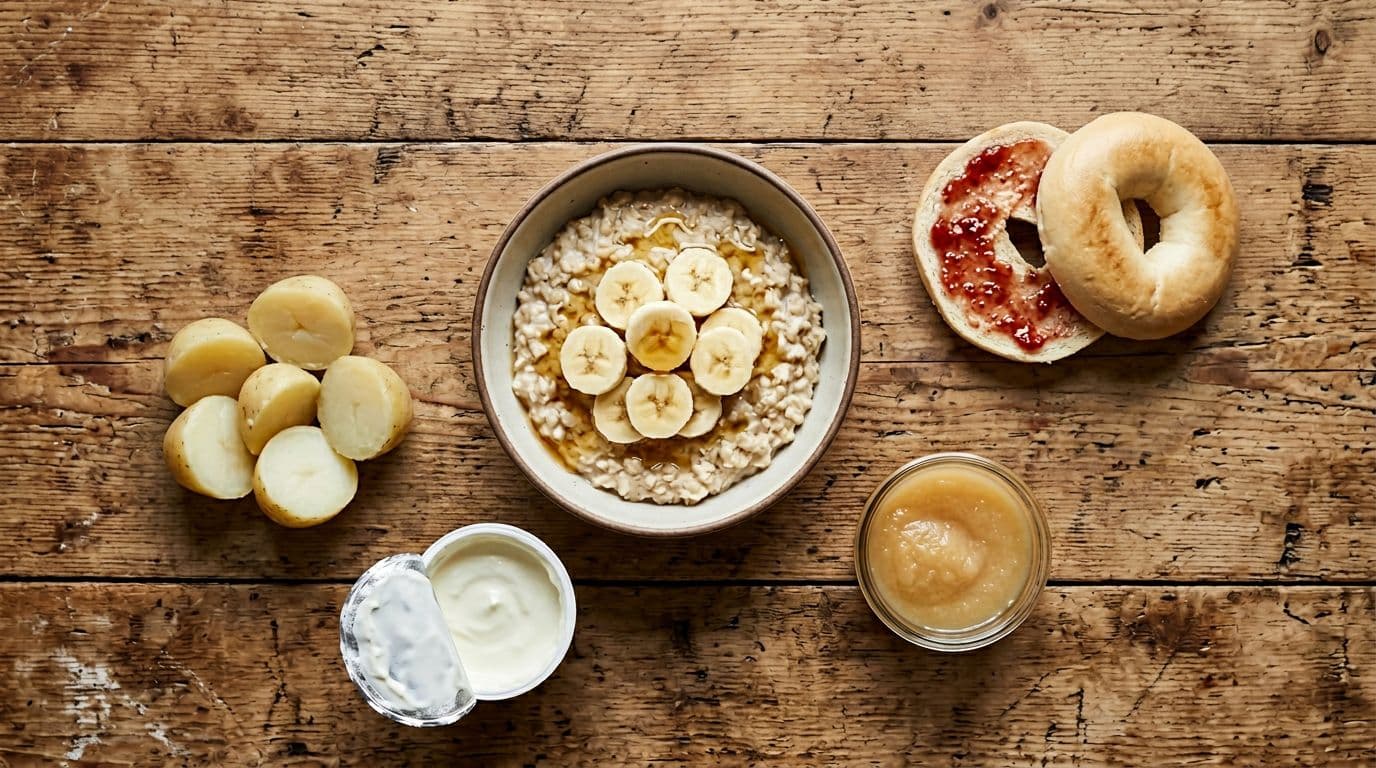
Carbs that usually sit well and give steady energy
Carbs refill glycogen, which is the stored fuel your muscles burn when the pace picks up. That’s why your pre-race meal and snack should be built around carbs that digest smoothly.
These options tend to be easy on most stomachs:
- Oatmeal (especially cooked well, not dry and chunky)
- White rice
- Potatoes (boiled or baked, lightly salted)
- Pasta
- Bread or toast
- Bagels
- Low-fiber cereal
- Bananas
- Applesauce
As race time gets closer, simpler and lower-fiber carbs usually win. In other words, pick white rice over brown rice, plain toast over seeded bread, and applesauce over a raw apple with the skin. You’re not choosing “better” or “worse” foods, you’re choosing foods that move through your gut with less drama.
If whole grains treat you well day to day, keep them in your regular diet. Still, right before the race, be cautious because even “normal” fiber can feel like a rock once you start running.
Protein in small amounts: enough to feel steady, not enough to feel heavy
A little protein can take the edge off hunger, which helps you start relaxed instead of ravenous. The key is portion size because big protein servings can slow digestion for some runners.
Keep it simple with small pairings like:
- Oatmeal plus a small yogurt
- Toast plus one egg
- A bagel with a thin layer of peanut butter
Think “supporting actor,” not the main event. If you finish eating and feel weighed down, the protein portion was probably too large.
Foods that commonly cause trouble before a race (and smart swaps)
Some foods are healthy, they’re just not friendly right before a long run. Fat and fiber slow stomach emptying, which can mean cramping, side stitches, or urgent pit stops.
Here are common troublemakers, plus swaps that usually sit better:
- High-fat foods (fried foods, big servings of nuts, creamy sauces): swap for baked or boiled potatoes, a small amount of nut butter, or tomato sauce instead of Alfredo.
- High-fiber foods (beans, bran cereal, big salads, broccoli and other cruciferous veggies): swap for a plain bagel instead of a bran muffin, applesauce instead of a raw apple, or a small serving of ripe banana.
- Sugar alcohols (often in “sugar-free” gum, candy, and protein bars): swap for regular carb sources like toast, rice, or a simple granola bar you’ve tested.
Lactose can also cause problems under stress. If dairy sometimes bothers you, choose lactose-free milk or yogurt, or skip dairy on race morning.
Do: prioritize familiar carbs, keep fiber and fat low, add a small protein boost if it helps.
Don’t: experiment with heavy, greasy, high-fiber meals, or “sugar-free” products right before the start.
Hydration and electrolytes: what to drink the day before and the morning of the race
When runners think about what to eat prior to half marathon, they often forget the other half of the comfort equation, fluids and sodium. The goal is simple, steady sipping, not chugging. A good day-before and race-morning plan helps you start with pale yellow urine, a calm stomach, and fewer surprise bathroom stops.
The day before: steady water intake and a plan for electrolytes
Treat hydration like topping off a gas tank. Small amounts all day work better than a big gulp at night. Sip water regularly, and include fluids with meals, especially lunch and dinner. If your urine is consistently dark, you are playing catch-up.
Electrolytes matter most when sweat losses are higher. If it’s hot, humid, windy, or you tend to sweat a lot, add an electrolyte drink once or twice during the day (with food often feels best). You’re not trying to “load” your body with salt, you’re trying to show up balanced so water stays where you need it.
One common mistake is overdoing plain water late at night. It can leave you running to the bathroom at 2 a.m., which steals sleep and adds stress. After dinner, keep it simple: small sips as needed, then stop trying to “win” hydration before bed.
A helpful checkpoint: pale yellow urine and a normal thirst level beats forcing extra water.
Race morning: how to avoid both dehydration and the “sloshing” feeling
Think of race morning fluids like watering a plant. You want the soil damp, not flooded. Start by drinking with breakfast, then taper to small sips as the start gets closer.
A simple timing approach:
- With breakfast (about 2 to 3 hours before start): have a normal drink, water or an electrolyte mix, and keep it comfortable, not a challenge.
- On the way to the start: take small sips if your mouth feels dry.
- Close to the gun: avoid big drinks if you’re prone to side stitches, “sloshing,” or last-minute bathroom stops.
Coffee can still fit if it’s already part of your long-run routine. Keep the amount normal, and pair it with water so it doesn’t feel harsh on your stomach. Also, build in time for a bathroom visit before you head to the corral, because nerves plus fluids can hit fast.
If it is hot, humid, or you are a heavy sweater: adjust before you pay for it later
Some runners need more sodium because they lose more in sweat. Clues show up in plain sight, for example salty-tasting sweat, white salt stains on clothes, or a history of frequent cramps in warm races. Longer finish times can also mean more total time sweating, so electrolytes tend to matter more.
In those cases, use a sports drink or electrolyte mix you’ve tested in training. Keep it boring on race week. If you try a new product on race morning, you might trade sodium help for stomach trouble.
Most importantly, don’t chase hydration with plain water alone in tough conditions. A little sodium often improves comfort because it helps you hold onto the fluids you drink, instead of feeling washed out and still thirsty.
Put it all together with sample pre-half marathon menus (and how to customize yours)
At this point, you know the big rocks of what and when to eat before a half marathon: simple carbs, low fiber and low fat, and foods you have already tested. Now you just need templates you can copy, then tweak based on start time, nerves, and your stomach.
Use these as plug-and-play menus. Keep portions “comfortably full,” not stuffed. If you want to customize, change one thing at a time in training, not three things on race morning.
Sample menus for early starts vs mid-morning starts
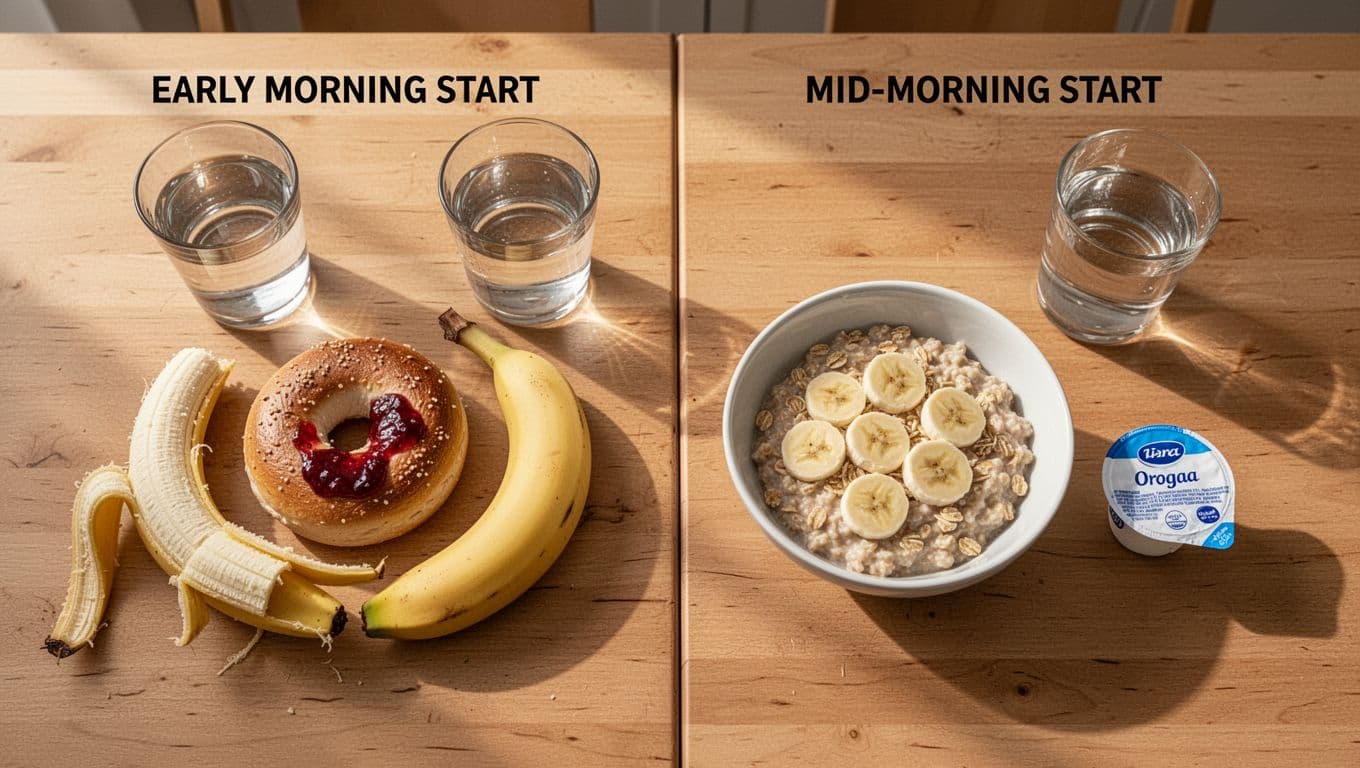
Example 1: Early start (7:00 AM), 2-hour window
- 5:00 AM (2 hours before): Plain bagel with jam, 1 banana, water.
- 6:30 AM (30 minutes before, optional): A few sips of water (or a few sips of sports drink if you trained with it).
This is the “hotel lobby” option. You can find a bagel, banana, and water almost anywhere.
Example 2: Mid-morning start (10:00 AM), 3 to 4-hour window
- 6:15 AM (3 hours 45 minutes before): Oatmeal made with water, topped with banana and a drizzle of honey. Add a small yogurt if dairy sits well.
- 8:45 AM (75 minutes before, optional): Applesauce cup or half a bagel, water.
With extra time, you can handle a slightly bigger meal. Still, keep it plain and low fiber.
Example 3: Mid-morning start (9:30 AM), “no kitchen” version
- 6:00 AM (3 hours 30 minutes before): Low-fiber cereal (like plain corn flakes or rice cereal) with milk or a dairy-free milk, plus a banana, water.
- 8:45 AM (45 minutes before, optional): Pretzels or a few chews, water.
This one works when your hotel breakfast is limited and you do not want to gamble on greasy buffet foods.
How to customize without getting fancy
- Gluten-free swaps: Use gluten-free oatmeal, rice cakes with honey, corn tortillas, or plain white rice.
- Dairy-free swaps: Make oats with water or oat milk, skip yogurt, or choose applesauce instead.
- Need more calories: Add another banana, a second slice of toast, or a bit more jam, not extra nuts or extra fiber.
If you have a sensitive stomach: the “bland and proven” approach
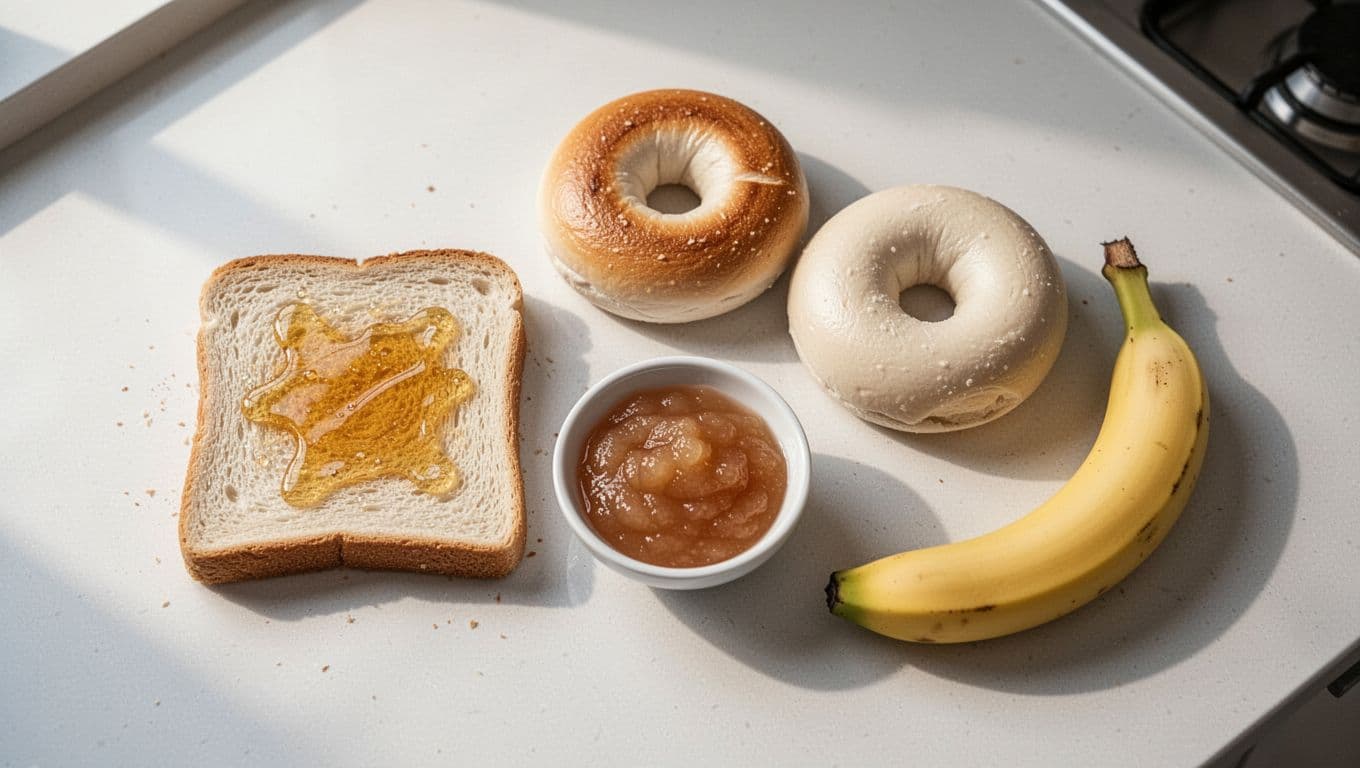
If your gut gets jumpy on race mornings, think “white and boring.” The goal is calm digestion, not perfect nutrition.
Start with these gentle options:
- White toast with honey or jam
- Plain bagel with jam
- White rice with a little salt or honey
- Bananas
- Applesauce
On the other hand, skip the usual triggers close to the start: new spices, high-fiber foods (bran, beans, big salads), and big servings of fat (fried foods, heavy nut butter, creamy sauces). Those can sit like a rock once you start moving.
Most importantly, practice this plan on long runs. Keep a simple food log in your phone with three quick notes: what you ate, when you ate, and how your stomach felt. After a few weeks, patterns get obvious.
When your stomach is sensitive, “bland and proven” beats “healthy and new” every time.
Common questions: running on an empty stomach, energy drinks, and supplements
Can I run fasted?
For most half marathon efforts, fasted is not ideal. You might survive it, but you risk an early energy dip. If you truly cannot eat, try a small carb option you tolerate, like applesauce, a banana, or a few sips of sports drink.
Are energy drinks a good idea before the start?
Only if you have tested them in training. Watch the caffeine, since it can trigger bathroom stops or a jittery pace. If you use caffeine, keep the dose consistent with your long-run routine.
Should I try new gels, beet products, or supplements on race day?
No. Race morning is for familiar fuel only. Test gels, chews, beet products, and any supplement during long runs first, then repeat what worked.
Quick pre-race checklist you can follow in the final 12 hours
Use this as a simple, screenshot-friendly plan for race night and race morning:
- Dinner (night before): Eat a normal carb-forward meal you know sits well (rice, pasta, potatoes, bread), keep heavy fat and spice low.
- Hydration (night before): Sip fluids through the evening, stop chugging close to bed.
- Breakfast timing: Plan your main meal 2 to 4 hours before the start.
- Breakfast foods: Choose mostly carbs, low fiber, low fat. Keep protein small.
- Optional snack: If you get hungry, have a small carb snack 30 to 60 minutes before (banana, applesauce, half bagel, pretzels).
- Morning drinks: Drink with breakfast, then take small sips closer to the start.
- Pack backups: Bring 2 to 3 “safe” items (bagel, jam packet, banana, applesauce, chews or a gel you trust).
- Final rule: Nothing new on race day, no new foods, drinks, gels, or supplements.
Conclusion
You now have a clear plan for what to eat prior to half marathon. Focus on carbs for steady energy, smart timing to avoid gut issues, low fat and low fiber as the start nears, plus steady hydration with electrolytes if you sweat heavily. Most importantly, stick to familiar foods because your stomach needs practice just like your legs do.
Test this setup on your next few long runs. Eat the same meals at the same times, note how you feel during and after, then tweak portions or swaps based on your gut’s feedback. For example, if oatmeal sits well three hours out, make it your anchor. If a banana works closer in, keep it handy.
Back to Beginner Running Tips


