

What to Eat Before a Marathon Race
Race day can feel like a fitness test, but it’s also a food test. Get what to eat before a marathon race wrong and you can end up with low energy, cramps, or too many bathroom stops when every minute counts.
The good news is there’s a simple answer: focus on carbs you digest well, keep fiber and fat lower as the race gets close, and time your meals so your stomach stays calm. And “before a marathon” doesn’t just mean breakfast, it covers race week carb loading, the day-before meals, and your race-morning plan.
In this post, you’ll get practical timing, runner-friendly food lists, and sample menus for each window, plus quick fixes for common mistakes. You’ll also learn how to top off glycogen without feeling heavy, and how to choose a breakfast that fuels you without surprises.
Most importantly, practice your plan on long runs, not on race day. Your gut needs training too, and the finish line is a lot more fun when your stomach is on your side.
Build Your Complete Race-Day Setup
The right shoe helps, but faster racing comes from better training, pacing, recovery, fueling, and execution.
More Guides for This Shoe
Back to RunDreamAchieve Courses
Start with the goal, top off carbs, keep your stomach calm
When you’re deciding what to eat before a marathon race, the goal is simple: fill your tank and avoid stomach drama. Your body can only store so much quick energy, so you want to show up with full stores, not a heavy gut.
Think of it like packing for a long road trip. Carbs are the gas, a little protein is a helpful snack, and the wrong foods can feel like driving with the parking brake on. As race day gets close, aim for green light foods you already tolerate, treat yellow light foods with caution, and put red light foods on pause until after the finish.
Carbs are your main fuel, here is what that means in real food
Carbs matter because they turn into glycogen, which is basically stored energy in your muscles. When people talk about “hitting the wall,” they’re often talking about running low on that stored energy. Top it off, and you give yourself a better shot at steady pace and steadier mood.
In real food terms, this usually means carb-forward, low-fuss basics that your stomach recognizes. Many runners do well with:
- Rice or rice bowls (often white rice is easiest late in the week)
- Pasta (go light on the sauce)
- Oats or instant oatmeal
- Cereal with milk
- Bagels, toast, or English muffins
- Potatoes (baked, boiled, or mashed)
- Bananas and applesauce
- Sports drink (also helps with fluids and sodium)
Here’s the key: in the last 24 hours, a lot of people feel better with more refined carbs and fewer “healthy extras.” Whole grains, heavy bran cereals, and big veggie loads can be great normally, but they can turn into extra bathroom stops when you least want them.
If you want a simple rule, carbs are the green light as race day gets close, especially the ones you’ve already tested on long runs.
Protein is a helper, not the star, before the start line
Protein still has a job, it can help you feel steady and satisfied so you’re not hungry an hour later. The trick is portion size. A little protein is helpful; a big protein-heavy meal right before a race often feels heavy and slow.
Keep it familiar and simple, especially at dinner the night before and breakfast race morning. Good options include:
- Yogurt
- Eggs
- Lean turkey
- Tofu
- Milk (or soy milk) with cereal or oatmeal
Easy pairings that work well for many runners include:
- Bagel plus yogurt, with jam or honey if you want more carbs
- Rice plus eggs, with salt and maybe a small amount of soy sauce
- Oatmeal plus milk, topped with banana or applesauce
If you’re choosing between more carbs or more protein right before the start, pick carbs. Let protein stay in the “supporting actor” role so your stomach stays calm.
See the full guide here:
What to Eat Before and After a Run
Why fiber, heavy fats, and spicy foods often backfire close to race day
Fiber is healthy, and you should eat it most days. Still, right before a marathon, it can act like a fast-forward button for your gut. Heavy fats can also slow digestion, which leaves food sitting in your stomach when you want it empty. Spicy food adds another risk, it can irritate your gut and make race morning unpredictable.
Common troublemakers for many runners include:
- Big salads and raw veggie bowls
- Beans and lentils
- Lots of nuts and nut-heavy snacks
- Fried foods
- Creamy sauces (like Alfredo)
- Extra hot salsa or very spicy meals
Use the stoplight idea to keep it practical. Green light: low-fiber carbs you know you handle well. Yellow light: moderate fiber or fat in smaller portions earlier in the day. Red light: big salads, fried foods, creamy meals, and spicy plates in the final day or so. Save those for the post-race meal, when the only “urgent stop” you want is for a medal photo.
Carb loading made easy for the final 48 hours
The last 1 to 2 days before your race are about one thing: top off glycogen without stirring up your gut. For many runners, a straightforward carb load hits the sweet spot when you aim for roughly 10 to 12 g of carbs per kg of body weight per day. That number sounds intense, so translate it into something you can do: add extra carb servings at each meal, then add a carb-heavy snack every 2 to 3 hours.
Keep protein in the mix, just don’t let it crowd out carbs. Also, go with foods you’ve already handled on long runs. This part of what to eat before a marathon race should feel familiar, not like a new diet experiment.
How to increase carbs without feeling stuffed
If you try to cram all your carbs into two huge meals, you’ll feel like you swallowed a brick. Instead, spread carbs through the day like drip irrigation. You stay comfortable, and the total adds up fast.
Start by swapping in lower-fiber carbs for the final 48 hours, because fiber takes up space and can speed up digestion. White rice, plain pasta, regular bagels, flour tortillas, and lower-fiber cereal are boring for a reason, they usually behave.
A few tactics that work well:
- Go smaller, more often: Eat a normal breakfast, lunch, and dinner, then add snacks every 2 to 3 hours (pretzels, rice cakes, applesauce cups, fig bars).
- Use “carb boosters”: Add jam, honey, syrup, or a drizzle of maple to toast, pancakes, or oatmeal.
- Drink some of your carbs: A sports drink, juice cut with water, or a simple smoothie can raise carbs without filling your stomach with bulk.
- Pick soft, easy sides: Applesauce, instant oatmeal, pancakes, or a warm tortilla with a little peanut butter can go down easier than a giant bowl of whole grains.
- Build simple bowls: A rice bowl with a small portion of chicken or tofu and a little sauce can be a high-carb anchor meal.
One more helpful truth: for some runners, carb loading means slightly increasing total calories, not just swapping foods. If you try to keep calories identical while cutting fat and keeping protein steady, you might run out of room for the carbs. Add a snack or two on purpose and call it the plan.
A good carb load feels “light but frequent”, not “stuffed but proud”.
Best dinner the night before a marathon (keep it boring on purpose)
Dinner is not the time to get creative. Choose a meal that’s high-carb, low-fiber, moderate protein, and lower fat, with mild seasoning. Think plain, warm, and predictable.
Here are reliable dinner ideas you can keep on repeat:
- White pasta + light tomato sauce + chicken (add bread if you need more carbs).
- White rice + scrambled eggs (season with salt, keep butter and oil modest).
- Potatoes (baked or mashed) + fish (for example, cod or salmon, go easy on heavy sauces).
- Bagel sandwich with turkey (add a little mustard, skip piles of raw veggies).
- Rice noodles + small portion of tofu or chicken (keep it mild, avoid spicy broth).
For portion size, aim to eat until comfortably full, not stuffed. If pre-race nerves mess with your appetite, eat dinner a bit earlier than usual. Then, if you get hungry later, add a simple carb snack (pretzels, toast with jam, or applesauce) instead of forcing a huge plate at 9 pm.
Foods that are healthy but risky the day before (for many runners)
Some foods are “good for you” on normal days, yet they can cause surprises when your nerves are high and your fiber is up. The day before a marathon, boring beats brave.
Common troublemakers include:
- Big salads and large amounts of raw veggies (lots of bulk, lots of fiber).
- Cruciferous veggies like broccoli, cauliflower, Brussels sprouts, and cabbage (gas for many people).
- Beans and lentils (great nutrition, often not great timing).
- Heavy dairy if you’re lactose sensitive (milkshakes, extra cheese, creamy sauces).
- Sugar alcohols like sorbitol and xylitol (often found in “sugar-free” gum, candy, and some protein bars).
- New energy bars or gels you haven’t tested in training.
- Super spicy meals (they can irritate your gut fast).
- A lot more coffee than usual (stick to your normal routine, don’t chase “extra energy” with extra caffeine).
Save the high-fiber “perfect” plate for after the finish. Right now, your job is simple: fill the tank, keep the stomach calm, and show up ready to run.
Race morning breakfast timing, amounts, and go-to meals
Race morning food should feel boring, on purpose. Your job is to start topped off, not stuffed, with a stomach that stays quiet through the first miles. That usually means a carb-heavy breakfast you digest well, low fiber and low fat, plus an optional small top-off close to the start.
If you remember one rule from this whole guide on what to eat before a marathon race, make it this: nothing new on race day. Same foods, same brands, same portions you practiced in long runs.
The 3 to 4 hour breakfast rule (and what to do if you cannot eat that early)
A 3 to 4 hour pre-race breakfast is the sweet spot because it gives your stomach time to empty, while your muscles still get the carbs. Eat too close, and food can sit heavy, bounce around, and trigger bathroom stops. Eat too early with nothing after, and you can start the race feeling flat.
As a simple target, aim for a breakfast that is mostly carbs, with a little protein if you want it. Keep fat and fiber low. Many runners land well around 400 to 600 calories in this window, but the “right” amount is the one you’ve tested without GI issues.
Early start and you cannot choke down a full meal at 4:00 a.m.? Use a fallback plan that still respects digestion:
- 2 to 3 hours before: Eat a smaller breakfast (often 300 to 400 calories) that’s lighter and lower volume.
- 60 to 15 minutes before: Add a small carb top-off if you feel hungry or nervous about energy (more on this below).
If solids feel impossible early, go more liquid. For example, a sports drink plus a banana can be easier than a big bowl of oats.
Here’s a quick way to think about it: breakfast is the log on the fire, then your top-off is kindling. Both matter, but you don’t want to dump a whole log on the flames right before the gun.
Practice your exact timing during long runs, ideally at the same time of day as the race. Your gut learns routines.
Travel also changes things. Hotel breakfasts can be hit or miss, so pack a backup you already know works (bagels, instant oats, applesauce pouches, or your usual cereal).
Easy-to-digest breakfast ideas that work for many runners
The best race breakfast is not the “healthiest” breakfast. It’s the one that digests clean, keeps energy steady, and doesn’t surprise you. In the final hours, refined carbs often work better than heavy whole grains and big fruit-and-nut bowls.
Use these as templates, then adjust portions to match your appetite and timing:
- Bagel with jam (add a banana if you need more carbs).
- Oatmeal with banana (stir in honey or maple syrup for extra carbs).
- Low-fiber cereal with milk (or a milk you tolerate well).
- White toast with honey (simple, fast, and usually calm on the stomach).
- Plain pancakes with syrup (skip buttery add-ons and heavy toppings).
- Rice porridge (congee-style), lightly salted, with a little soy sauce if you like it.
- Yogurt plus granola, only if dairy and crunch sit well for you.
A small protein add-on can help you feel steady, especially if you get hungry fast. Keep it modest so it doesn’t slow digestion:
- A few spoonfuls of yogurt with your bagel
- A small glass of milk with cereal
- One egg alongside toast (if you’ve tested it)
Try to keep fats low race morning. Nut butters, cheese, and oils can be fine in small amounts, but big servings often feel like they “hang around” in your stomach. The same goes for high-fiber add-ons like chia, flax, bran cereal, and large berries. Save them for a normal training day.
If you’re staying in a hotel or traveling to the start, portable “known safe” breakfasts help a lot:
- A plain bagel plus jam packets
- Instant oatmeal cups (bring your preferred brand)
- Your usual cereal in a zip bag, plus a shelf-stable milk box if needed
Last 60 to 15 minutes before the start, small top-off options
This window is for a calm, small top-off, not a second breakfast. It’s most useful if you ate early, your wave start is delayed, or nerves dulled your appetite. Keep it simple, quick to digest, and something you’ve used in training.
Good options that work for many runners include:
- Banana
- Applesauce pouch
- Pretzels
- Sports drink (easy carbs without chewing)
- One gel with water
- A small granola bar, only if you’ve tested it (and it’s not high fiber)
Fluids matter here too, but don’t chug. Instead, sip steadily, then taper in the final minutes so you’re not hunting for a bathroom in the corrals. If you use caffeine, race morning isn’t the time to increase your dose. Stick to your normal coffee or caffeine gel routine.
A good gut check is this: if you’re calm and hungry, top off. If you’re already full or slightly nauseous, keep it to small sips of sports drink or water, then let your on-course fueling plan do the work.
Hydration and electrolytes before the gun goes off
If carbs are the fuel, hydration is the oil in the engine. Get it right and everything runs smoother. Overdo it and you can feel sloshy, bloated, and stuck in bathroom lines.
The goal is simple: show up well hydrated without forcing fluids. Use practical cues, take regular sips, and keep an eye on pale yellow urine (think lemonade). If it’s dark, drink more. If it’s totally clear all day, you might be overdoing it.
The day-before hydration plan that avoids extra bathroom trips
Start early and keep it steady. Sipping through the day works better than trying to “make up” fluids at night, which usually backfires with poor sleep and extra bathroom trips.
A simple day-before rhythm looks like this:
- Drink water consistently from morning through late afternoon.
- Add electrolytes with meals or with one bottle during the day, especially if you tend to sweat salty.
- Choose hydrating foods so you’re not relying on chugging alone, for example fruit (watermelon, oranges), broth-based soups, yogurt, and smoothies.
In the evening, taper a bit. Have fluids with dinner, then keep late-night drinking light. Think of it like topping off a gas tank earlier in the day instead of pulling into the station at midnight with the needle on empty.
Electrolytes and sodium, when they matter most
Sodium is the electrolyte that usually matters most before and during a marathon because it helps you hold on to the fluid you drink. It also supports normal muscle function. Not everyone needs a high-sodium plan, but some runners do better with extra sodium on race weekend.
You may need more sodium if you’re a:
- Heavy sweater (your shirt is soaked on runs).
- Salty sweater (white salt marks on your hat or clothes).
- Runner racing in hot or humid conditions.
- Runner who often cramps late, especially when it’s warm (not always sodium, but it’s a common clue).
Easy, practical ways to get sodium include sports drinks, electrolyte tablets, and salty snacks (pretzels, salted crackers). A helpful target for many runners is choosing a drink mix that provides roughly 450 to 700 mg sodium per liter. If you know you’re a salty sweater, you might do better with more, but keep it within what you’ve practiced.
One caution that matters: overdrinking plain water can dilute blood sodium. That can cause nausea and headaches, and it can feel like “mystery” GI trouble. So if you’re drinking a lot, add electrolytes and don’t force water beyond thirst and comfort.
If you regularly see salt crust on your gear, electrolytes are part of what to eat before a marathon race, because they help your fluids actually do their job.
Coffee before a marathon, helpful or risky?
Coffee can help, but it can also send you sprinting for a porta potty. Caffeine improves performance for some runners, yet it can also increase urgency, especially when nerves are high.
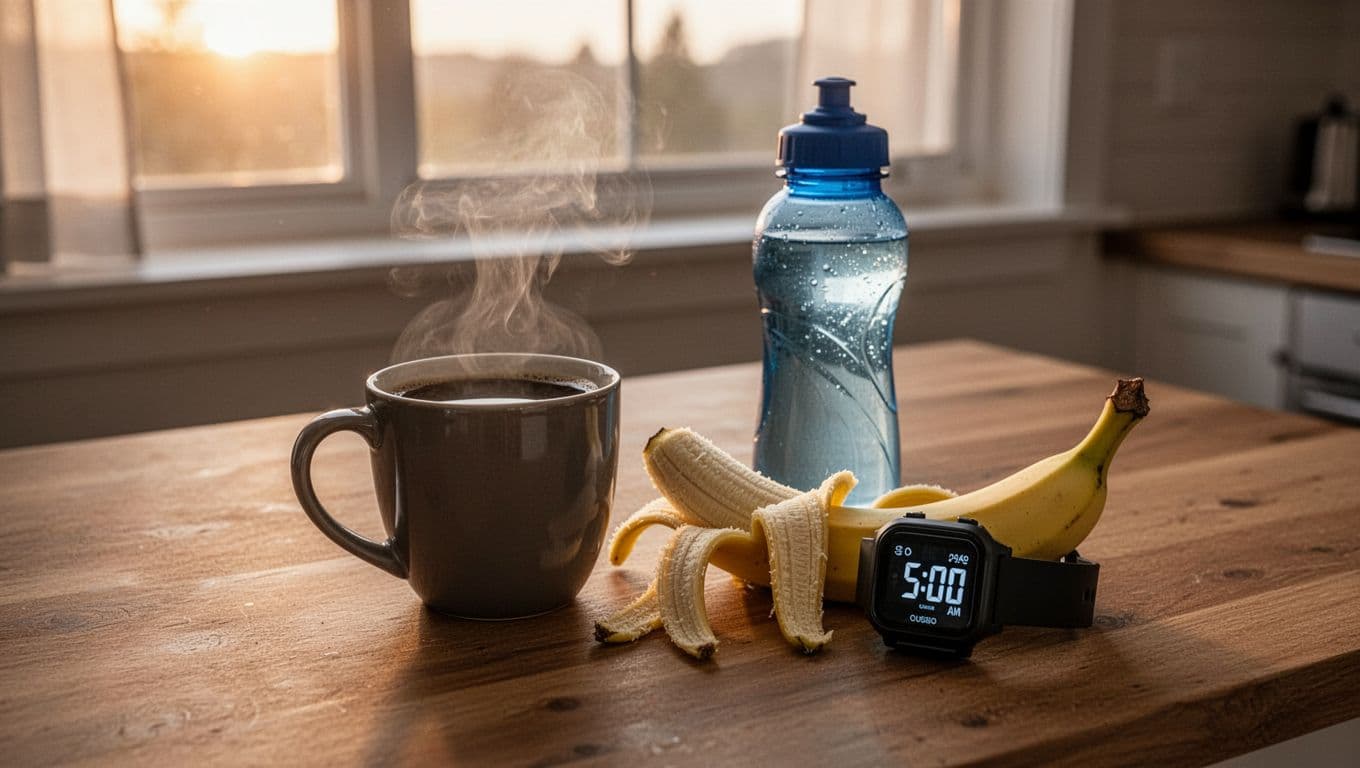
The safest move is boring: stick to your normal routine. If you usually drink coffee daily, keep the same amount and have it early enough to allow time for a bathroom stop before corrals get crowded. If you don’t usually drink caffeine, race morning isn’t the time to start.
Before you commit, test it on long runs. Practice the whole combo, coffee timing, bathroom timing, and your pre-race fluids. That way, you’ll know if caffeine helps you feel sharp, or if it turns race morning into a gamble.
Common pre-marathon eating mistakes (and easy fixes)
Even the best plans for what to eat before a marathon race can hit snags. Nerves kick in, travel throws off routines, or old habits sneak back. The fix? Spot these slip-ups early and swap in simple tweaks. You stay fueled, light, and ready to roll.
Trying new foods, gels, or supplements on race weekend
Your gut acts like an untrained muscle if you spring surprises on it. New gels, bars, or supplements can cause bloating, cramps, or nausea because digestion shifts blood flow away from your legs. Runners often grab a “better” energy product at the expo, only to regret it mid-race.
Stick to this rule: if you haven’t used it on at least two long runs, it’s not race-day food. Test everything in training at race pace. That way, your stomach knows the drill. For example, if a gel sat fine during 20-milers, pack extras. Otherwise, skip it and rely on bananas or sports drinks you already trust.
Accidentally underfueling because of nerves or travel
Nerves can kill your appetite, and airport food rarely helps. You wake up shaky, low on energy, because you skipped carbs the night before or grabbed a skimpy breakfast. Travel makes it worse; hotel options might lack your go-tos, leaving you flat from the gun.
Pack a race morning kit with travel-friendly carbs: bagels, instant oatmeal cups, rice cakes, bananas, pretzels, applesauce pouches, or sports drink powder. These pack light and digest fast. Scout a nearby store or convenience spot the day before, so you grab backups if needed. Eat small bites steadily, even if nerves say no. A banana plus pretzels mid-morning keeps glycogen topped without overwhelming you.
Eating too much, too late, and feeling heavy at the start
You load up late, thinking more fuel means better performance. Instead, you feel bloated, sluggish, with food sloshing as you line up. Signs include a full gut, burping, or side stitches early on. High fiber or fats from big salads, nuts, or fried extras slow everything down.
Shift to earlier breakfasts 3-4 hours pre-race, smaller portions overall, and frequent mini-meals. Cut fats; pick jam on toast over peanut butter piles. For the final snack 15-60 minutes out, keep it tiny, like half a banana or a few pretzels. Spread carbs through the day before too, so you avoid that stuffed sensation. Your body digests better when you give it time and space.
Sample menus for different start times and diets
Race start times vary, so your what to eat before a marathon race plan needs to fit. You also want options that match your diet. These sample plans cover the final 36 hours, plus race morning and a last-hour top-off.
They focus on simple, carb-heavy foods with low fiber. Pick one, practice it on long runs, and adjust portions to your needs. For a 150-pound runner, aim for extra carbs spread out, around 500 to 700 grams over two days.
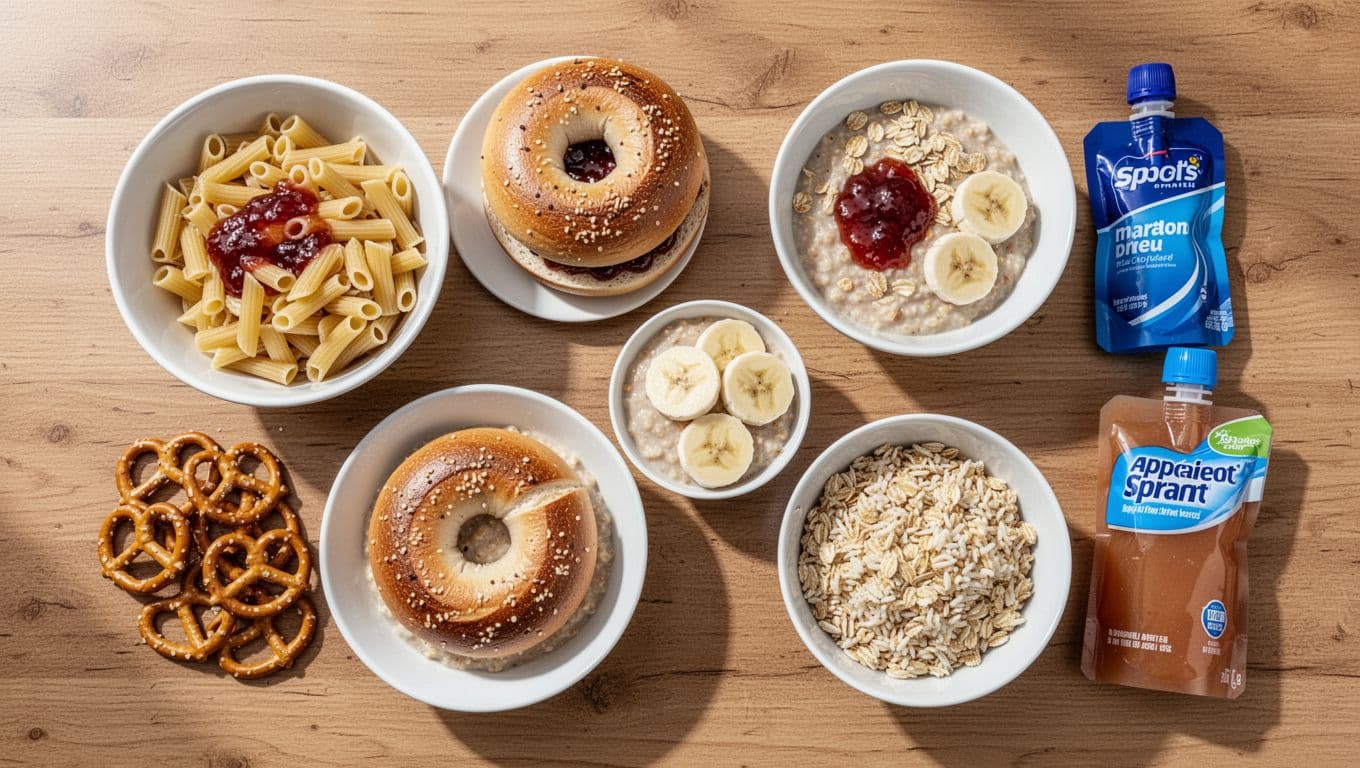
Sample plan for a mid-morning start (race at 8 a.m.)
Most races kick off around 8 a.m., so you eat breakfast at 4 a.m. This gives your gut time to settle. In the 36 hours before, add carb snacks every few hours. Keep meals familiar and light.
Two days out, start steady. Breakfast: oatmeal with banana and honey. Lunch: white rice bowl with eggs. Dinner: pasta with chicken and light sauce. Snacks: pretzels, applesauce, sports drink.
One day out, ramp it up. Breakfast: bagel with jam and yogurt. Lunch: mashed potatoes with turkey. Dinner: plain pasta and bread roll. Snacks: rice cakes, banana, juice.
Race morning at 4 a.m.: small oatmeal bowl with banana slices and a splash of milk (about 400 calories). Sip sports drink after. At 7:30 a.m., top off with half a bagel or pretzels. This keeps energy steady without a full stomach.
Runners love this because it tops glycogen while staying calm. Test the 4 a.m. wake-up on a training run.
Sample plan for a very early start (race at 6 a.m.)
Early starts mean you shift more carbs to dinner and bedtime. Your main breakfast shrinks, and you add a quick top-off near the line. Practice this full schedule so your body adapts.
Two days out, same base as above: oatmeal breakfast, rice lunch, pasta dinner, plus pretzels and fruit snacks.
One day out, make dinner bigger. Pasta with chicken (double portion), side of bread, light tomato sauce. Bedtime snack at 9 p.m.: toast with jam or pretzels (easy on the gut before sleep).
Race morning at 2 a.m.: smaller meal, like half a bagel with honey and banana (300 calories). At 5:15 a.m., sip sports drink or take one gel with water. This fuels you light and fast.
Emphasize practice here. Run a long training session at 6 a.m. with this exact timing. Your sleep and stomach will thank you.
Vegetarian and vegan-friendly swaps that still keep fiber in check
Vegetarian or vegan? No problem. Swap in tofu, eggs, or plant proteins. Stick to low-fiber picks like white rice, pasta, potatoes, and peeled low-fiber fruits (bananas, applesauce). Watch beans and high-fiber veggies like broccoli the day before; they add gas.
Two days out example: Breakfast, oatmeal with plant milk and banana. Lunch, white rice with tofu. Dinner, pasta with tomato sauce. Snacks, pretzels, soy yogurt.
One day out: Bagel with soy yogurt and jam for breakfast. Potato mash with tofu for lunch. Rice pasta dinner. Bedtime pretzels.
Race morning (8 a.m. start): Oatmeal with banana and maple syrup at 4 a.m. Top off with applesauce pouch.
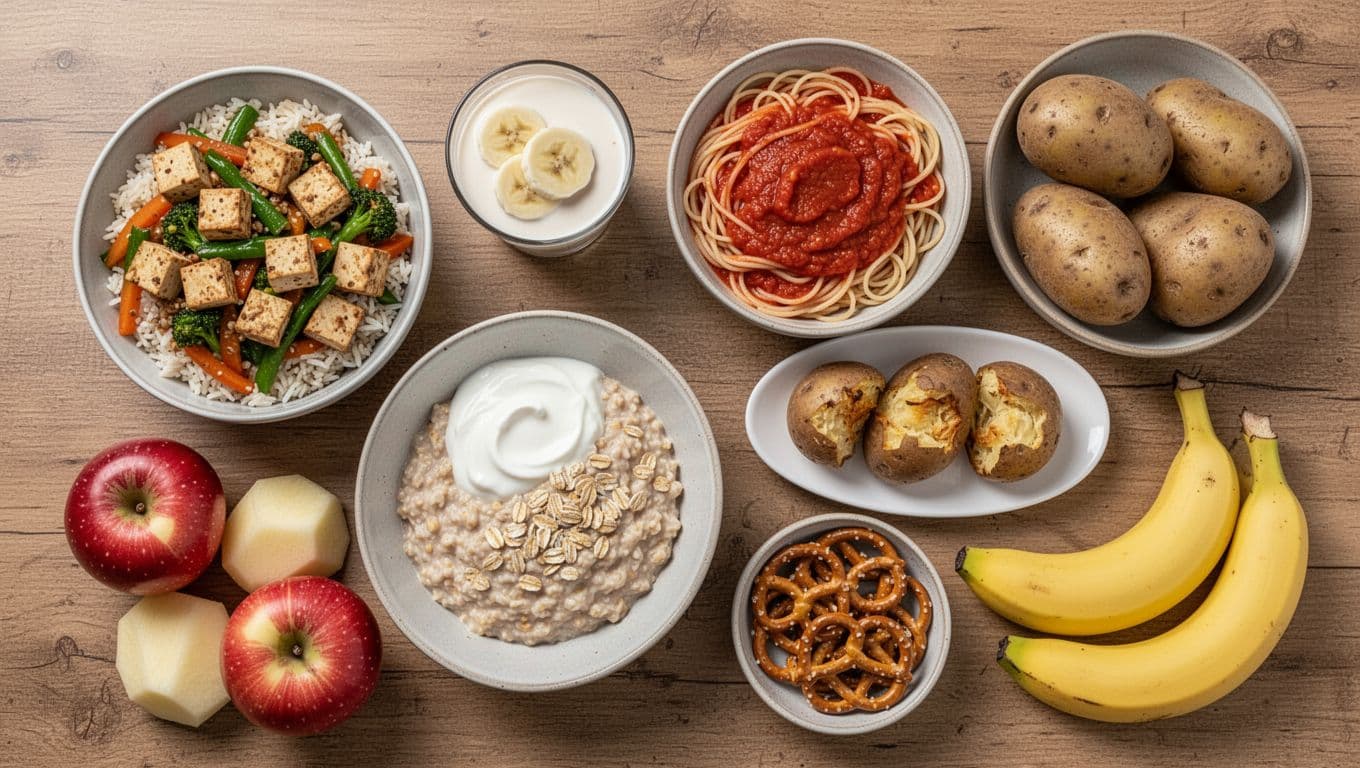
These swaps keep carbs high. Tofu adds protein without bulk. Soy yogurt or plant milks pair well with oats. You stay fueled, light, and plant-based.
Gluten-free and dairy-free options that travel well
Gluten-free or dairy-free runners need portable picks. Go for gluten-free bagels or bread, rice cakes, labeled gluten-free oats, potatoes, corn tortillas. Lactose-free milk, almond milk boxes, or dairy-free yogurt work too. Read labels on bars and gels; cross-contamination hides.
Pack these for travel: rice cakes with jam, corn tortilla roll-ups, instant gluten-free oats, applesauce pouches.
Sample for 8 a.m. start, two days out: Rice cereal with banana. Lunch, potatoes and corn tortillas. Dinner, rice with lean protein.
One day out: Gluten-free bagel breakfast. Rice lunch. Pasta alternative dinner (rice noodles).
Race morning: Gluten-free oats with banana at 4 a.m. Final top-off, rice cake or gel.
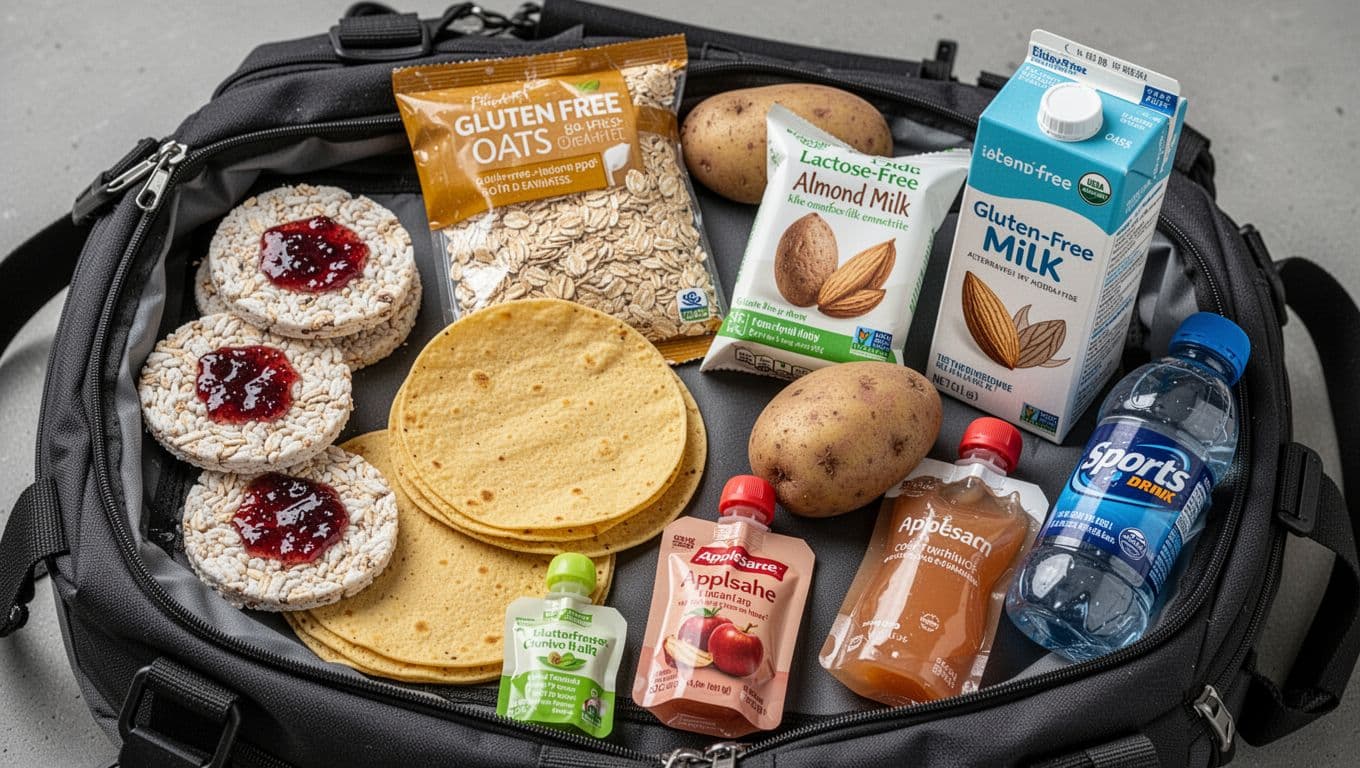
These options pack small and digest fast. Always check labels, especially on sports foods. Your gut stays happy on the go.
Conclusion
You now have a clear plan for what to eat before a marathon race. Focus on carbs to top off energy stores, then keep your gut calm with smart choices and timing. Most runners finish stronger when they stick to familiar foods.
Here’s a quick checklist to nail your race fuel:
- Ramp up carbs in the last 48 hours with rice, pasta, and snacks like pretzels.
- Cut fiber and fat the final day; pick white bread, jam, and plain oats instead.
- Eat breakfast 3 to 4 hours before the start, around 400 to 600 calories of easy carbs.
- Add a small top-off 15 to 60 minutes out if you feel flat, like a banana or sports drink.
- Sip water steadily with electrolytes; aim for pale yellow urine without overdoing it.
- Skip all new foods, gels, or routines; your stomach hates surprises.
Test this exact setup on your next long run. Pay attention to how your body reacts, then tweak portions or swaps. For example, if oats sit heavy, switch to a bagel. Practice builds confidence, so nerves won’t throw you off.
Back to Beginner Running Tips


