

What is a Good Time for 10K?
Have you ever crossed a 10k finish line, chest heaving, and wondered if your time truly counts as solid?
I chased my first sub-40 10k personal best back in 2015. Rain poured down during the race. Still, I held pace and shaved three minutes off my old mark. That rush showed me progress beats perfection every time.
So, what is a good time for 10k? It depends on your experience, age, and goals. Beginners typically land between 60 and 70 minutes. Solid runners dip under 50. Elites crush sub-30 for men or sub-32 for women. These ballpark figures give you a starting point.
For example, a new runner in their 20s might celebrate 65 minutes. However, a veteran over 40 could aim for 45. Age slows us a bit, but smart training closes the gap. In addition, your fitness base matters most.
This post breaks it down clearly. First, we’ll cover benchmarks by skill level: beginner, intermediate, advanced, and elite. Next, age-group standards for men and women pull from real race data. Then, factors like terrain and weather come into play.
You’ll also get tips to shave minutes off your time. Because consistency wins races. For instance, mix speed work with easy miles. As a result, you’ll sustain pace longer.
Stick around. You’ll leave with clear targets and a plan to beat them. Imagine crossing that line next time, knowing you’ve leveled up. Let’s turn “good enough” into your new personal best.
Back to RunDreamAchieve Courses
Benchmarks for Beginner Runners
New runners often ask what is a good time for 10k. You might aim for 60 to 70 minutes at first. This range lets you finish strong without burnout. Because you build confidence early, those times motivate you to keep going. In addition, realistic goals prevent injury and set you up for faster races later.
Beginner runner celebrates her first 10K finish, arms raised in joy on a sunny morning, created with AI.
Your First 10k: Realistic Expectations
My first 10K felt endless, yet pure joy hit when I crossed the line. Legs burned around mile 5. Still, I grinned ear to ear because I proved I could do it. That rush pushed me to train harder next time.
Walk-run strategies work best for beginners. You alternate running and walking to build endurance safely. For example, start with 1 minute run, 2 minutes walk. Repeat for 40 to 50 minutes total. Gradually shift to 4 minutes run, 1 minute walk. This method leads to a 70-minute finish on race day.
Pacing basics keep you steady. Aim for a conversational pace where you chat without gasping. Check your watch every mile. If you start too fast, you crash late. Instead, hold back early. Save energy for the final push. Because even pacing shaves minutes off your total time.
Milestones to Hit Under 60 Minutes
Once you finish your first 10K, target sub-60. You need steady progress. Follow these steps to get there.
First, build base mileage. Run three times a week. Start at 10 to 12 miles total. Increase by 10% each week. This strengthens your legs and heart.
Next, add one speed session weekly. Do 4x400m repeats at a quick pace. Recover with jogs. Speed work boosts your race pace.
Then, include a long run. Hit 6 to 7 miles on weekends. Keep it easy. Long runs teach your body to handle distance.
Strength train twice a week too. Squats and planks build power. Strong muscles mean better form and fewer injuries.
Track our 8-week 10K training plan for beginners for structure. Runners using it often drop under 60 minutes. Consistency pays off here. As a result, you’ll race with more control and speed.
See the full guide here:
10K Plan
Solid Intermediate Times to Target
Intermediate runners often wonder what is a good time for 10k. You land in the solid zone with 45 to 50 minutes. This range shows consistent training pays off. Because you balance speed and endurance well, these times open doors to faster races ahead. I hit 46 minutes once after months of steady work. That effort felt rewarding, yet left room to grow.

Fit runner powers through the 10K finish line in about 47 minutes, created with AI.
What 45-50 Minutes Looks Like on Race Day
A 45 to 50-minute 10K demands focused effort from start to finish. You push at about 7:15 per mile splits, give or take. Early miles feel controlled; you breathe steadily but deep. By mile 4, legs burn a bit, yet you hold form.
Picture this: crowds line the course. Your watch beeps steady paces. Heart rate climbs to 85% max, sustainable with practice. The last mile surges as adrenaline kicks in. You cross strong, not spent. Because even pacing wins here, many intermediates fade without it.
In my races, I locked 7:12 early, eased to 7:20 late. Total: 47:30. Wind or hills test you, but smart fueling keeps energy up. This pace beats beginner times while building toward sub-45.
Training Tweaks for That Next Level Drop
You shave time with targeted workouts. Add intervals once a week, like 6x800m at faster than race pace. Recover easy between. They boost speed without overload.
Tempo runs fit next. Hold a hard effort for 20 to 30 minutes, around 7:30 pace. This builds your ability to sustain discomfort. Because quality sessions matter, pair them with easy miles.
Check our 6-week intermediate 10K training plan for structure. Runners drop 2 to 3 minutes using it. Strength work, like squats, adds power too. Recover fully; rest unlocks gains. Small changes yield big results.
Age-Graded Benchmarks for Fair Comparison
Age-grading levels the field. It adjusts your time for age and gender using standard tables. A 48-minute 10K at 45 years old might score like a 42-minute run at 25. This lets you compare apples to apples.
For example, 80% age-grade means national-class performance. Beginners hit 50-60%; intermediates push 70-80%.
I recalculated old races this way. Suddenly, my 46-minute 10K at 38 ranked higher. Because it reveals true fitness, track progress over years. Fair benchmarks motivate across ages.
Advanced and Elite 10k Standards
Advanced runners push past intermediate marks. You target sub-45 times consistently. Because smart training builds the base, these levels demand precision.
Elites go further, often under 30 minutes for men or 32 for women. I dropped to 31:09 after years of focused work. So, what is a good time for 10k here? It means elite fitness and race-day execution.
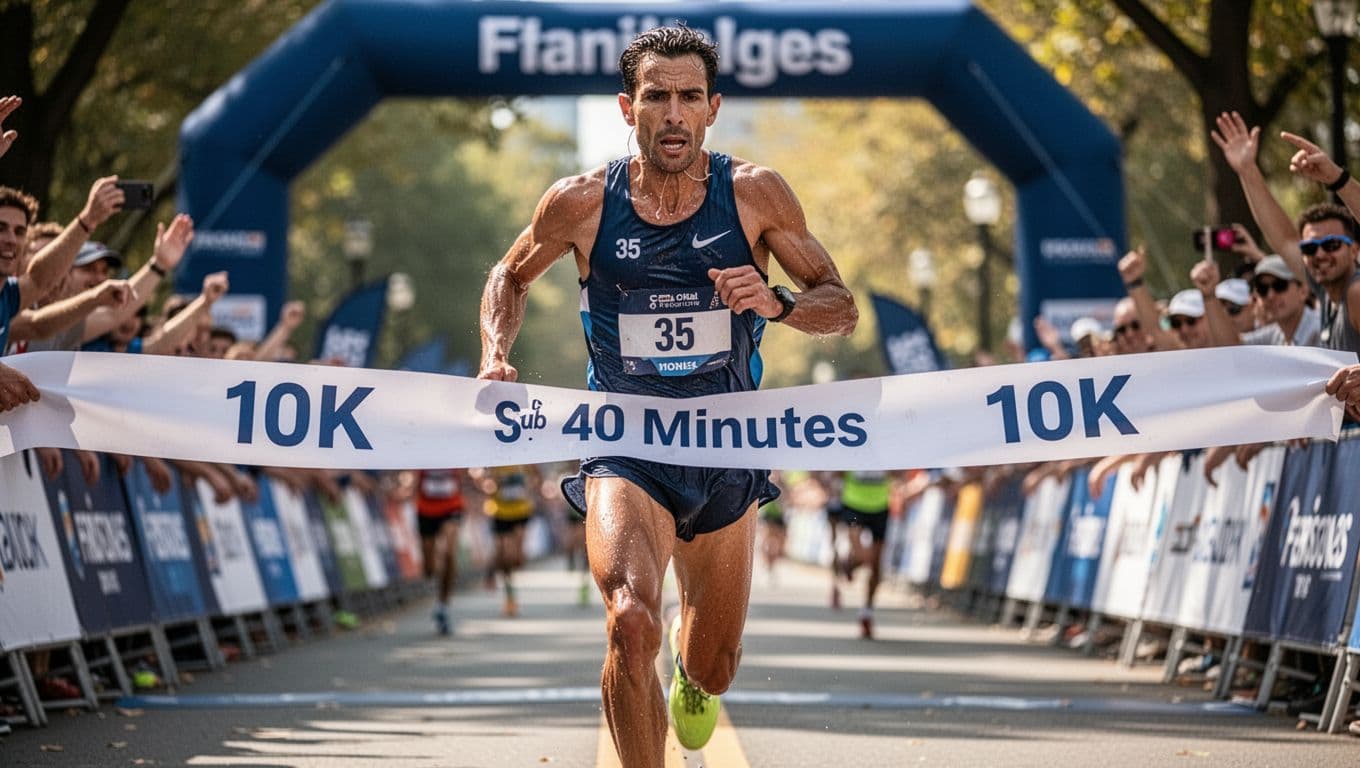
Sub-40 Minutes: The Serious Runner Mark
Sub-40 marks you as a serious competitor. You hold about 6:26 per mile for 6.2 miles. That pace feels controlled yet demanding. Because your body clears lactic acid efficiently, you avoid the late fade many face.
This requires top fitness. Your VO2 max, or max oxygen use, hits 55-65 ml/kg/min for men, slightly lower for women. Think of it as your engine’s power. Higher VO2 max lets you sustain fast paces longer. I built mine through intervals and tempo runs.
Key elements include 50-70 weekly miles, mostly easy. Add one VO2 max session weekly, like 5x1K at 5K effort. Tempo runs at 6:45 pace for 30 minutes sharpen threshold. Strength work, such as hill repeats, boosts power. Recovery matters too; easy days rebuild you.
Runners using my sub 40 minute 10K training plan often hit this mark. They focus on quality over junk miles. As a result, race pace feels smooth. Track progress with even splits. You will own the distance.
Elite Territory Under 30 Minutes
Under 30 minutes enters elite territory. Men average 4:50 per mile; women near 5:10. Crowds roar as you surge past. Because pros own these times, top amateurs reach them too with dedication.
Take Emily Sisson, who ran 31:35 at the B.A.A. 10K. She leads U.S. women often. Or Elvin Kibet with a 32:45 road 10K. These athletes train 80-120 miles weekly. Yet, dedicated amateurs like me hit 31:09 on similar principles.
You need VO2 max over 70, plus speed from track work. Do 10x400m at mile pace weekly. Long tempo efforts near 5:30 pace build stamina. Races sharpen you; enter 5Ks monthly. Nutrition fuels it all, with carbs timed right.
Top amateurs succeed here. They prioritize sleep and double runs. Genetics help, but work ethic wins. I raced elites and learned their focus. Therefore, aim high. Your breakthrough waits.
How Age and Gender Shape Your Good Time
Age and gender shift what is a good time for 10k. Your peak hits in the 20s and 30s because VO2 max stays high and recovery bounces back fast.
Men often run 10 to 12 percent quicker than women due to muscle mass and hormones. However, smart training narrows that gap. As you age, times slow a bit, yet masters runners prove you can still crush goals. I raced strong into my 40s by adjusting paces. Therefore, set targets that fit your profile. You’ll stay motivated and injury-free.
Good Times in Your 20s and 30s
Your 20s and 30s mark peak running years. Hormones support muscle repair, and joints handle high mileage well. Because endurance peaks around age 27 for men and 29 for women, you sustain fast paces longest here. For example, a solid male intermediate hits 44 to 46 minutes. Women target 48 to 50. Elites drop under 30 for men or 32 for women.
I ran my best 10K at 32: 38:15 on a hilly course. Training felt easy then; legs recovered overnight. Beginners in this group celebrate sub-55 for men or sub-60 for women. Intermediates push 42 to 48 minutes based on weekly miles. Advanced runners lock sub-40 consistently.
Gender plays a role too. Men average faster splits because of higher hemoglobin. Still, women excel with efficient form. Check average 10K run times by age for specifics. In short, use these years to build speed. Because habits now pay dividends later.
Adjusting Benchmarks for 40+ Runners
Runners over 40 adjust goals smartly, yet stay competitive. VO2 max drops 5 to 10 percent per decade, so add 1 to 2 minutes per decade to open-age standards. However, masters shine with experience. A fit 50-year-old man aims for 48 to 52 minutes at intermediate level. Women target 52 to 56. Because consistency trumps youth, many outperform younger novices.
I coached a 48-year-old who shaved five minutes off his 10K in six months. He focused on strength and recovery. Age-grading helps too; it scores your time against peak potential. For instance, a 50-minute 10K at 55 equals a 42-minute open-age run. Try a free age-grading calculator to see yours.
Masters thrive on low-impact cross-training and nutrition. Swim or bike twice weekly. Fuel with protein post-run. Therefore, enter age-group races. You’ll podium often. As a result, running stays fun and rewarding past 40.
Factors Beyond Training That Affect Your 10k
Training sets the base for your 10k, but other elements decide your actual finish time. Course layout and weather swing paces by minutes. Mindset and recovery fill gaps that workouts miss. Because these factors vary race to race, they shape what is a good time for 10k more than you think. I learned this after a windy 10k cost me two minutes despite sharp training.
Course and Conditions You Can’t Ignore
Hills demand extra power and slow your splits. A single steep climb adds 20 to 30 seconds per mile uphill. Downhills help, yet tight quads pay later. I once lost a minute on a roller course because I powered too hard early. Flat races suit speed best; expect 2 to 3 percent slower times on hills overall.
Wind hits harder than you expect. Headwinds raise effort by 5 to 10 percent, like running into a wall. Tailwinds save energy, so position matters. Check running in windy conditions for tips like drafting smarter. Gusts over 10 mph steal up to two minutes from a 45-minute goal.
Course turns and surfaces factor in too. Sharp corners kill momentum. Rough pavement tires legs faster than smooth roads. Study the map pre-race. Because conditions shift what is a good time for 10k, adjust goals by 1 to 5 percent based on elevation and forecast.
Mindset and Recovery Secrets
Mental walls hit around mile 5, when doubt creeps in. Your brain flags fatigue to protect you, yet pushing through unlocks reserves. I broke a plateau by repeating “steady now” during tough stretches. Visualize splits early; it cuts negative thoughts by half.
Recovery rebuilds what training breaks. Skimp on sleep, and paces lag 3 percent. Fuel right post-run with carbs and protein within 30 minutes. Active rest like walking aids blood flow. Strong recovery means fresher legs, so what is a good time for 10k improves across races.

Train your mind weekly with short meditations. Pair it with full rest days. Because mindset trumps fatigue late in races, masters use it to hold pace. In short, blend recovery habits with mental drills. Results follow.
Build Your Path to a Better 10k Time
You know your benchmarks now. So, how do you turn those targets into reality? Start by assessing where you stand today. Because honest feedback guides your training, you’ll shave minutes off your next race. I built my sub-40 10K this way; you can too. Next, add workouts that boost speed and stamina. They make what is a good time for 10k within reach. Let’s map your path forward.
Test Your Current Level Fairly
Run a time trial to gauge your fitness. Pick a flat course, like a park path or track. Because elevation cheats your data, stick to even ground. Warm up with 10 minutes easy jogging plus strides. Then, start your watch and go hard for 6.2 miles.
Hold even splits if possible. Check pace every mile. Push the last mile, but avoid early blowups. Cool down after. Record your time and average pace. For example, my first trial clocked 42 minutes; it set my baseline.
Use this to set training paces. A 48-minute trial means intermediates aim lower next race. Repeat every 4-6 weeks. Track gains over time. Because consistent tests reveal progress, you’ll know when what is a good time for 10k shifts for you. See our sub-45 10K training plan for time trial tips that fit your level.
Key Workouts to Shave Minutes Off
Targeted sessions build race pace power. Do one hard workout weekly, after easy days. Recover fully between. Because quality trumps quantity, focus on form and effort.
Start with 400m repeats. Run 8x400m at 5K pace, jog 400m recovery. They sharpen speed without overload. I dropped two minutes after weeks of these. Next, try 6x800m at 10K effort. Jog 400m between. These boost lactate tolerance.
Add tempo runs too. Hold 20-30 minutes at comfortably hard pace. For a 50-minute goal, aim 7:30 per mile. Finish strong. Vary workouts weekly. Because mixed efforts prevent plateaus, your body adapts faster.
Hill repeats work wonders. Find a short hill; sprint up 8-10 times, jog down. They add leg power. Pair with our 12-week 10K training plan that includes repeats like these. In short, these cut times reliably. Stay consistent; results stack up.
Conclusion
You now know what is a good time for 10k hinges on your starting point. Beginners celebrate 60 to 70 minutes. Intermediates lock in 45 to 50. Advanced runners chase sub-40, while elites own sub-30 for men or sub-32 for women. Age and gender tweak those marks too.
For instance, a 50-year-old crushing 50 minutes often outpaces a young novice. No universal benchmark exists. Because personal progress defines success, track your gains over time.
I chased benchmarks across decades. Rain soaked my sub-40 breakthrough in 2015. Yet, my fastest 31:09 came from persistence. Consistent workouts, smart recovery, and mental grit built it. Hills, wind, or fatigue tested me. Still, steady effort turned targets into reality. You hold that power too.
Factors like terrain and mindset seal the deal. Even pacing and fueled recovery make races smoother. Test your level with a time trial. Then, layer in intervals, tempos, and long runs. Age-grading tools, like the ones shared earlier, keep comparisons fair.
Ready to claim your next best? Grab a tailored plan from rundreamachieve.com. Our 12-week sub-41 minute 10K training plan sharpens intermediates for breakthroughs. Advanced? Try the sub-39 minute 10K pace program. Beginners, start with structured miles to build confidence.


