

Victoria BC Marathon Route Review
Ocean views and quiet residential streets give the Victoria BC Marathon route its coastal appeal, but knowing how the course unfolds can help you prepare for race day. If you’re looking up the route, you likely want to know where it goes, what the terrain feels like, and how to pace your effort.
The full marathon is part of the Royal Victoria Marathon, and the course can change from year to year. Check the official map for your race year before planning your training or logistics; next, take a closer look at what runners can expect along the route.
Key Takeaways
- The Victoria BC Marathon route winds through coastal Victoria, with waterfront views and quiet city streets shaping the course experience.
- The Royal Victoria Marathon describes its full marathon course as gently undulating, with elevations ranging from 3 to 25 meters.
- Review the official marathon course map for your race year, since route details can change.
- Prepare for rolling terrain by practicing steady pacing on gentle rises and keeping your effort controlled early in the race.
- Check race-day logistics in advance, including road closures, start details, and aid station locations, so you can focus on running.
Victoria BC Marathon Route: The Course at a Glance
The Victoria BC Marathon covers approximately 26.2 miles (42.2 kilometers) through coastal Victoria and nearby neighborhoods. Expect a route shaped by ocean views and residential streets, with the full marathon sharing the downtown race-day hub with other events. Since organizers can update course details, use the latest official map to confirm the route before you plan your race.
Where the Full Marathon Starts and Finishes
The current Royal Victoria Marathon course information places the full marathon start and finish at the Legislative Grounds in downtown Victoria. The area near the British Columbia Parliament Buildings is the key landmark to use when orienting yourself. The event FAQ also identifies the Legislative Buildings as the downtown start and finish area for the marathon, half marathon, and 8K.
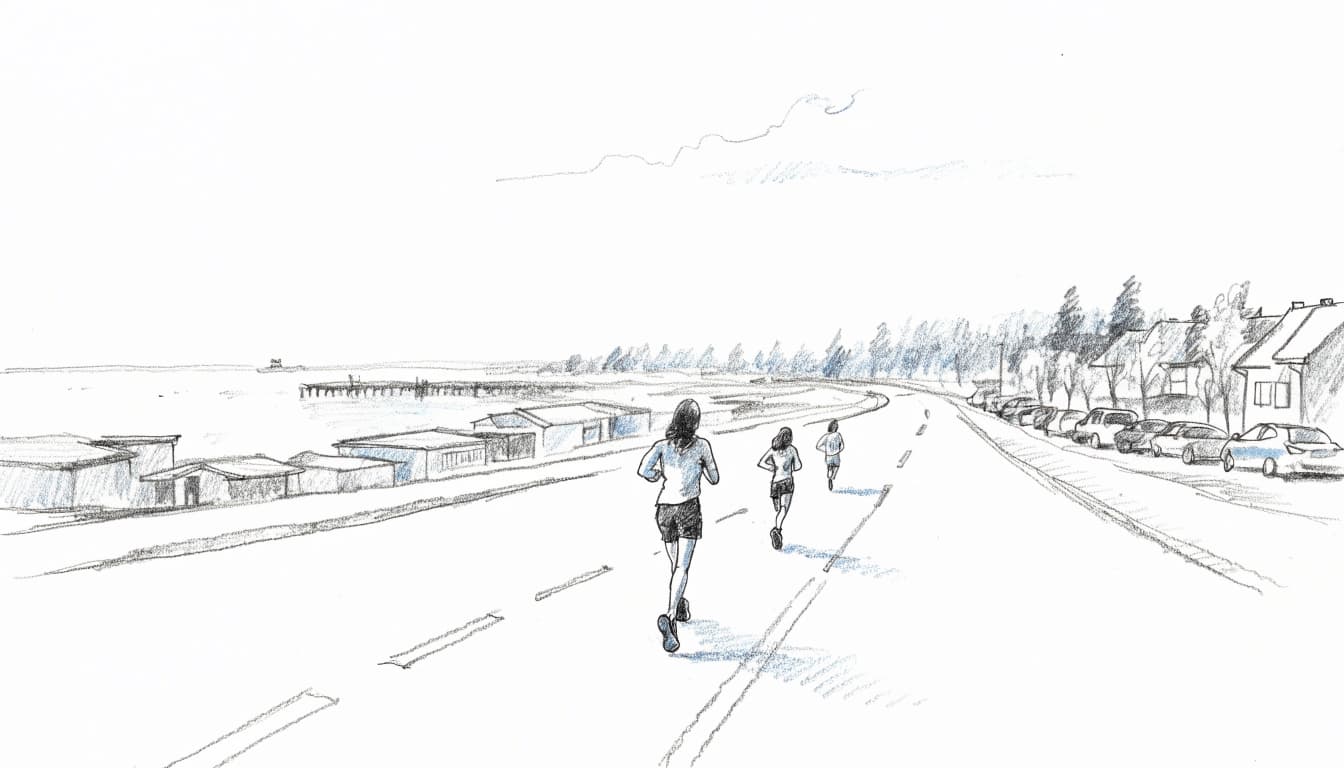
On race morning, follow event signs toward the start corrals, then check your assigned corral and entry point before settling in. The start and finish share the same general downtown area, but their access points and foot traffic may differ. Allow time to locate the finish zone if you’re meeting family or arranging a pickup, and check race-day notices for any changes to access or road closures.
Beyond downtown, the course passes through Victoria and Oak Bay. That coastal, neighborhood character gives the route a distinctly local feel, but don’t rely on a broad description to identify a specific turn or spectator location. Use the course map for your race year to match landmarks with the route.
How the Marathon Route Differs From the Half Marathon
The marathon and half marathon share downtown event infrastructure, including the general start and finish area. However, they are separate courses. Runners may follow different roads or take different turns, so a map for one distance won’t reliably show the other’s route. The 8K also starts and finishes downtown, while the 5K and Kids Run use a different event location.
Before you choose a training route, plan a spectator spot, or arrange a meeting point, open the map labeled for your exact distance. Check it again close to race day, since course details and logistics can change. The official map is the best guide for precise route sections; use the broader coastal and neighborhood overview as context, not a substitute.
Follow the Victoria Marathon Route From the Coast to the Finish
The Victoria BC Marathon route changes character as it moves through the city: open coastal scenery gives way to residential streets, then the focus shifts to reaching the downtown finish. The sequence below follows the 2025 course information. Check the official 2025 race guide and map before race day, since organizers may revise the route.
Settle Into the Early Miles and Enjoy the Waterfront
The start at the Legislative Grounds can feel electric, with runners, spectators, and other race events adding to the noise. Let the excitement carry you, but keep your pace controlled. The first miles should feel comfortable, not like a test of how fast you can leave the crowd behind.
As the route reaches the coastal stretches shown on the map, take in the ocean views without letting them pull you off your rhythm. Exposed waterfront roads can feel different from sheltered city streets, so pay attention to wind and temperature as well as pace. Keep your shoulders relaxed, take short steps if the road rises, and stay focused on effort.
Prepare for Residential Roads and Midrace Turns
The official route moves through Victoria and Oak Bay, where quiet residential streets bring a different feel from the open waterfront. Crowd support may come in pockets rather than as a continuous wall of noise. Use those changes as cues to check your breathing and form, not as a reason to surge.
The 2025 course guide names streets including Brighton and Cowichan, with Cowichan reaching Richardson at about the 13-kilometer point. Study the map so those turns feel familiar, then stay alert for course markings and volunteers on race day. At aid stations, approach deliberately, take what you need, and move clear of other runners before settling back into pace.
Save Energy for the Final Miles
Later in the marathon, even familiar roads can feel longer as fatigue builds. Break the remaining distance into small targets: the next aid station, a turn shown on the map, or a stretch of spectators. A short goal gives your attention somewhere useful to go when your legs start asking for a slowdown.
Crowd energy can help you hold steady, but keep your effort yours. Take fluids and fuel according to your plan, and avoid chasing runners who surge past. The course returns to the Legislative Grounds for the downtown finish, so use that destination as a clear final marker. When you review the map, note the last approach and finish access separately from the route itself; they can affect where you meet family after you cross the line.
Choose Your Distance, Duration and Goal Time
Make three quick selections and open the exact plan built for your race target.
Looking for a Fully Personalized Training Plan?
The training plans above are an excellent choice if they match your goal. However, if you’d rather train with a plan built specifically around your current fitness, goal race, preferred training days, weekly mileage, and target finish time, our RDA Custom Training Plans provide a personalized solution. We also have running courses available for runners seeking to run faster from the mile to the marathon.
Why Choose a Custom Training Plan?
| Standard Training Plan | RDA Custom Training Plan |
|---|---|
| Follows a fixed schedule | Built around your schedule |
| Standard weekly mileage | Peak mileage customized for you |
| Fixed workout days | Train on the days you choose |
| Same structure for everyone | Designed around your current fitness |
| Static plan | Updated as your fitness improves |
| One-time purchase | Ongoing personalized coaching and support |
What You’ll Receive
- A training plan built specifically for your goal
- Personalized training paces
- Long runs, tempo runs, threshold workouts, interval sessions, recovery runs, and easy runs
- Peak weekly mileage matched to your experience level
- Flexible training schedule that fits your life
- Ongoing plan adjustments as your fitness improves
Ready to Train Smarter?
Stop guessing and start following a plan built specifically for you, your schedule, and your racing goals.
Understand the Course Terrain, Weather, and Pacing
The Victoria BC Marathon route rewards runners who manage effort instead of treating every mile as a pace test. Gentle elevation changes, paved roads, turns, and coastal weather can all affect how a target pace feels. Use the official course profile to prepare, then adjust on race day to the conditions you actually encounter.
Use the Elevation Profile to Set a Realistic Pace
The official Royal Victoria Marathon course page describes the route as gently undulating, with elevations ranging from 3 to 25 meters. Those figures show the course’s elevation range, not its total climbing. Check the profile and map for your race year, since organizers can change the route.
When you read the profile, look for where the course rises, falls, or stays level for longer stretches. A modest climb can raise your effort even when the road appears nearly flat, while a descent may invite you to speed up before your legs are ready. Treat each change as a cue to adjust effort, not a command to hit a precise split.
Turns also affect rhythm. Ease into corners, follow the marked course, and give yourself a few steps to settle afterward. On rolling sections, shorten your stride slightly on the rise and let pace vary naturally; pushing to preserve an exact split can cost more energy than the hill itself.
Plan for Cool Air, Wind, and Changing Conditions
The marathon takes place in early fall, when Victoria can feel cool or wet, though race-day conditions vary. Waterfront stretches may also feel more exposed to wind than sheltered residential roads. Check the forecast close to race day, and use the Canadian Climate Normals for seasonal context, not as a prediction for your event.
Practice in the clothing you expect to wear, especially if you train in warmer conditions. A light layer that feels comfortable before the start may become too warm once you settle into marathon effort, while rain or wind can make a thin kit feel inadequate. Test your race-day setup on a run that includes similar temperatures, and avoid trying new gear on event morning.
Finally, let breathing and perceived effort guide your pace when weather or terrain shifts. If wind slows you on an exposed stretch, hold a controlled effort rather than forcing your usual pace. When the course turns or the wind eases, return gradually to your planned rhythm.
Plan Race-Day Travel, Aid Stations, and Spectator Stops
A little planning can keep travel and logistics from draining energy you need for the Victoria BC Marathon route. Check the event’s current updates for schedules, services, road closures, and access details; these can change each year.
Get to the Start Without Adding Race-Day Stress
Read the official race FAQ and travel details before race weekend. Follow the event’s instructions for bib pickup, including the stated location and hours, and don’t assume race-morning pickup is available. Once you have your bib, confirm your assigned start area and how to reach it.
Plan your trip around road closures, not just the distance from your hotel or home. Check current parking and BC Transit information, then leave extra time for traffic changes and walking to the start. If gear drop is offered, confirm its location, cutoff time, and bag rules. Build in time for the restroom, a warm-up, and finding your corral without rushing.
Choose Spectator Spots That Work With Road Closures
Friends and family should use the official spectator information and course map to choose a small number of reachable viewing points. Pick locations based on the runner’s expected pace and the time needed to get there, rather than trying to follow the course from one end to the other.
Road closures can make nearby streets difficult to cross, and driving between close-together spots may not be possible. Spectators should arrive early, park outside restricted areas or use transit where practical, and agree on a backup meeting point. Runners can share an approximate arrival time, but should allow for pace changes and crowded viewing areas.
Know What to Expect at Aid Stations and the Finish
Before race day, review the official marathon course and event details for aid station locations and current offerings. The event information lists water and Xact electrolyte at aid stations, but check the details for your race year. If you rely on a particular gel, chew, or drink, carry your familiar fuel rather than counting on the course to provide it.
Also locate toilets near the start and along the route on the current event map. After the finish, check what services are available, including post-race refreshments and gear retrieval if offered. Set a clear meeting spot with loved ones away from the busiest exit flow, and make sure everyone knows what to do if phone service or crowd noise makes contact difficult.
Train for the Victoria Course With a Smart Race Plan
A strong Victoria BC Marathon plan prepares you for the course’s rolling stretches and coastal exposure without requiring you to run every street in training. Build fitness gradually, practice controlled effort, and rehearse the decisions you’ll make when the weather or terrain changes. That is the coaching approach RunDreamAchieve emphasizes: match training to your current fitness, then arrive rested enough to use it.
Practice Long Runs and Race-Pace Effort
Use long runs to learn what an even effort feels like over time. On a route with gentle rises, recoveries, and flat stretches, keep your breathing steady instead of forcing the same pace on every section. The Victoria course has its own turns and landmarks, but your training route does not need to copy each street. The goal is to prepare your body to handle changing scenery and terrain without wasting energy.
During selected long runs, add controlled blocks near your planned marathon effort, with easier running before and after. Keep these sessions appropriate to your training level, and increase distance or intensity gradually rather than adding both at once. Recovery runs and rest days matter too; they give your body time to absorb the work. If fatigue lingers or your form breaks down, ease back instead of treating every workout as a test.
Rehearse Fuel, Hydration, and Race-Day Gear
Long runs are also your chance to practice the nutrition plan you expect to use on race day. Test when and how you take gels or other familiar fuel, and notice whether your stomach tolerates the timing during sustained effort. Practice drinking in a way that feels comfortable for you, rather than trying to catch up late in a run. The American College of Sports Medicine’s endurance nutrition guidance offers useful context, but your plan should reflect your needs and training experience.
Wear the shoes, socks, and clothing you already know. A long run can reveal rubbing, pressure points, or layers that feel too warm once you settle into pace. Don’t wait until race week to solve those problems, and avoid last-minute gear or nutrition changes. Before the event, check the current Royal Victoria Marathon aid-station details so you know what the course provides and what you need to carry.
Adjust Your Goal to Fitness and Race-Day Conditions
Set your target from recent training, not from an old personal best or an ideal-weather prediction. Consider how consistently you’ve completed your long runs and marathon-pace sessions, and whether you’ve recovered well between them. A realistic goal gives you room to run the course well; an aggressive target can turn normal coastal wind or a mild climb into an early struggle.
Start conservatively, especially while the field is settling and your legs feel fresh. Use effort as your guide on exposed stretches or in poor weather, since pace can shift even when your work level stays steady. If conditions improve and you still feel controlled later in the race, gradually increase your effort. Make that decision from how you’re running, not from the time you hoped to see.
Frequently Asked Questions
A few practical details can make your Victoria BC Marathon route plan easier to use on race day. Confirm the current event information before you travel, especially if you’re following an older race report or coordinating with spectators.
How long is the Victoria BC Marathon route?
The full marathon covers the standard distance of 26.2 miles, or 42.2 kilometers. Use the official course map for your race year to confirm the exact layout, turns, and start and finish access points.
Where can I find the official Victoria Marathon course map?
Check the Royal Victoria Marathon website and event updates for the current year’s map. Third-party route images and past race reports can help you get a general feel for the course, but they may show outdated roads or turns.
Is the Victoria Marathon route flat?
The course is gently undulating, with the official elevation profile listing elevations from 3 to 25 meters. That range describes the course’s elevations, not its total climbing. Even modest changes can affect effort, especially when turns interrupt your rhythm, wind slows an exposed stretch, or fatigue builds late in the race.
Can spectators watch runners at more than one location?
Yes, spectators may be able to reach more than one viewing spot if they choose locations and travel routes in advance. However, road closures, limited crossings, and travel time can make it hard to move between points quickly. Check the official spectator and event FAQ and choose realistic stops rather than trying to follow the entire course.
When should I arrive at the marathon start?
Follow the event’s current schedule and allow enough time to reach the start area without rushing. Factor in transportation, any access or security checks, gear drop if available, restroom lines, and your warm-up. The right arrival time depends on the published schedule and your own race-morning routine, so avoid relying on a time from a previous year.
Does the marathon route change from year to year?
Routes and race-day operations can change, so check the current year’s official map and runner guide before making plans. An old race report may describe a different course, start setup, or spectator arrangement. Use past accounts for general context, then confirm every route detail with the event’s latest updates.
Conclusion
A successful Victoria BC Marathon route plan starts with the current course map and a clear sense of what the day may bring. Prepare for the rolling terrain and coastal conditions, then pace the early miles with patience so you have strength for the finish.
On race day, use the ocean views and familiar city streets as landmarks, not distractions. When you know what comes next and stay in control of your effort, the course becomes easier to read, one stretch at a time.


