

Tucson Marathon Review
Picture yourself running beneath a wide Arizona sky, with desert mountains rising in the distance and dry air sharpening every breath. The race offers a memorable setting, but scenery alone doesn’t determine whether an event belongs on your calendar.
This review will help you decide if the race matches your goal, experience level, budget, and travel plans. We’ll examine the course, typical weather, organization, aid stations, race-day logistics, training demands, strengths, drawbacks, and the type of runner most likely to enjoy it. You’ll also get a practical sense of what the event may require from your pacing, preparation, and recovery.
Race dates, entry fees, course details, aid-station locations, cutoff times, and event policies can change. Before booking travel, completing race registration, or making a training plan, check Aravaipa Running’s official event information, including whether an official host hotel or lodging partnership is currently available. With those details in mind, let’s look first at the course and the conditions that can shape your experience.
Looking for the best hotels near the Tucson Marathon? Make sure to reserve early to save on costs later.
Build Your Complete Race-Day Setup
The right shoe helps, but faster racing comes from better training, pacing, recovery, fueling, and execution.
More Guides for This Shoe
Key Takeaways
- The Tucson Marathon offers a scenic Arizona course, with desert views, mountain backdrops, and conditions that reward steady pacing.
- Dry air and possible temperature changes make hydration, layers, sunscreen, and early-morning preparation important.
- Build your budget around tiered entry fees, travel, lodging, meals, and optional race extras. Check the official registration details before committing.
- Race day success starts with arriving early, following transportation instructions, conserving energy, and adjusting effort to the course.
- This race suits runners who enjoy scenic routes and measured pacing, but it still demands focused marathon preparation.
Tucson Marathon Course, Setting, and Race Feel
The course offers a striking desert setting, but the scenery only tells part of the story. It starts near Biosphere 2 outside Oracle and finishes at Pima Community College Northwest Campus near Oro Valley. Confirm these landmarks and the point-to-point format using the current official course information before race weekend, since route details can change. Review the course map for surface details, turns, aid stations, station spacing, and on-course support.
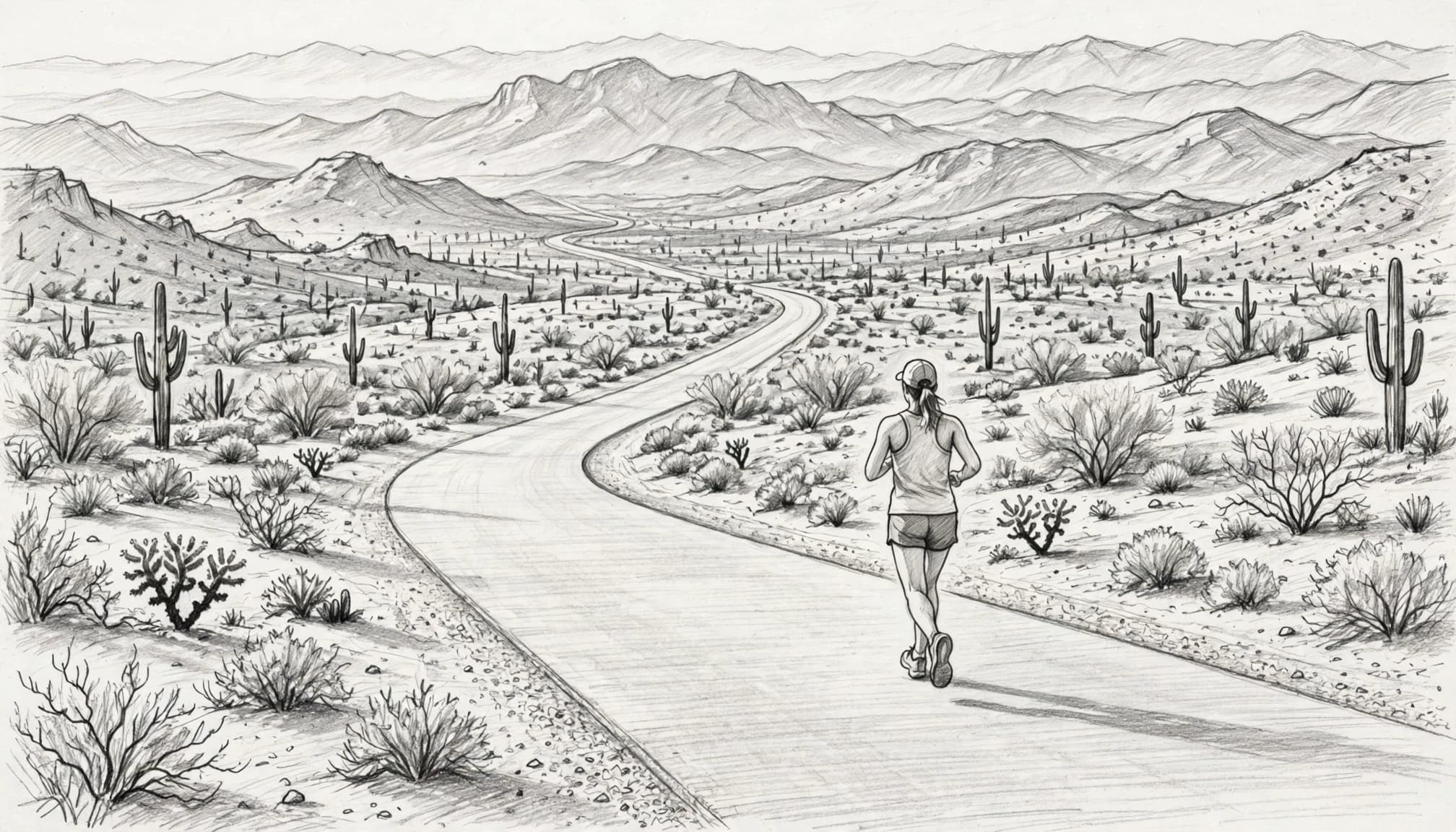
Mountain views, broad desert horizons, and long stretches of open road give the event a quieter feel than a dense urban marathon. That atmosphere can help runners settle into a rhythm. However, exposed pavement can leave you more vulnerable to sun and wind. Road surfaces and crowd support may vary across the route, so don’t rely on an old race report.
How the Tucson route affects pacing and marathon goals
A course can look fast on paper and still punish runners who force their pace too early. Gradual climbs raise effort before your watch shows the cost. Downhill sections can tempt you to spend too much energy. Turns interrupt rhythm, while open desert stretches offer little shade or shelter.
Don’t assume a point-to-point course is automatically net downhill. Check the current elevation profile and use it to shape your pacing decisions. Start by pacing by effort, especially through the opening miles. Keep your breathing controlled on early rises, shorten your stride slightly on climbs, and let the pace fluctuate without chasing every second.
Once the course settles and your effort feels stable, you can move closer to goal pace. That usually means waiting until the terrain and conditions match your plan. A full marathon also demands different pacing and fueling than a half marathon.
First-time marathoners should protect their legs and treat the first half as controlled work. Boston-qualifying hopefuls need a detailed plan, including course verification, realistic split targets, and a margin for hills, turns, and weather. Before treating the event as eligible for a qualifying goal, confirm that the current course is USATF certified. Check the latest race information before assuming it meets a particular qualifying standard.
Runners using the event as a training race can gain more by practicing execution than by forcing a finish time. Use the course to rehearse fueling, even pacing, and calm responses when the route feels slower than expected.
The desert weather is both an advantage and a test
Cool desert conditions can make marathon effort feel manageable, especially compared with a warm, humid race. However, Tucson’s dry air, strong sun, wind, and temperature swings can change the race within a few hours. Higher-elevation surroundings may also feel unfamiliar if you train near sea level.
Review the forecast throughout race week rather than planning around average temperatures. Current conditions should guide your clothing, sunscreen, warm-up, hydration, and pacing choices. Bring layers for the start, protect exposed skin, and drink consistently without waiting for intense thirst. If wind or rising temperatures appear, hold back early and save your strongest effort for the final miles.
Tucson Marathon Logistics and Runner Experience
The race feels much easier when you treat race morning as a sequence of small decisions. Registration, transportation, restroom access, aid stations, and finish-area flow can affect your experience as much as the course itself. Because policies and locations may change, separate verified information from personal impressions before you travel.
What runners should expect from support
Aid stations deserve more attention than a quick glance at the course map. Confirm how often they appear, whether they offer water, electrolyte drink, or both, and whether gels or other fuel are provided. Also check cup placement, course markings, volunteer coverage, and medical support locations. A station can be well supplied yet difficult to use if you approach too quickly or miss the correct table.
Don’t build your nutrition plan around an assumption. Runners with sensitive stomachs, allergies, or strong brand preferences should carry familiar fuel and confirm exactly what the course provides. Practice opening packets, drinking from cups, and taking fuel at your planned effort during long runs.
Your race-morning reminder should match your training: take fluids and fuel at the intervals you have rehearsed. Adjust for weather and effort, and avoid trying an unfamiliar product because it’s available on the course. Volunteers can point you toward supplies or medical help, but they can’t replace a personal plan.
Treat every station as a planned decision, not an emergency stop. Know what you want before you reach the table.
Where to stay and what to do before and after the race
Out-of-town runners should first identify the current start and finish locations, then choose lodging that makes the morning route simple. Accommodation near Oro Valley or the finish area may still require transportation to the start. If the course begins near Biosphere 2, verify that transportation from your lodging is available and clearly explained. Before booking, confirm parking instructions, expo location, transportation options, wave timing, and whether bag check is available.
Check whether the race lists an officially designated host hotel, but don’t assume a hotel partnership exists. Build extra time for registration questions, packet pickup, and bib collection. Expos can become crowded, while restroom lines and start access often take longer than expected. If the event uses assigned waves, arrive early enough to reach the correct corral without rushing.
If the current lineup includes a marathon relay, relay entrants should verify team check-in, transportation, and exchange-point instructions. Never assume an official shuttle, hotel transfer, or team service exists unless the current race instructions confirm it.
The night before, protect sleep, hydration, and familiar meals. Tucson offers plenty to do, including desert scenery, museums, and local restaurants, but save extensive sightseeing for a recovery day. After the marathon, prioritize fluids, carbohydrates, mobility, and a warm layer before exploring.
At the finish area, check how runners move through medal pickup, timing confirmation, food, medical care, and gear retrieval. If the current finish area is at Pima Community College, review access and post-race transportation details before traveling. Those arrangements can change, so read the final race email and event instructions before leaving home. A calm morning usually begins with fewer unknowns, not a more complicated schedule.
Choose Your Distance, Duration and Goal Time
Make three quick selections and open the exact plan built for your race target.
Looking for a Fully Personalized Training Plan?
The training plans above are an excellent choice if they match your goal. However, if you’d rather train with a plan built specifically around your current fitness, goal race, preferred training days, weekly mileage, and target finish time, our RDA Custom Training Plans provide a personalized solution. We also have running courses available for runners seeking to run faster from the mile to the marathon.
Why Choose a Custom Training Plan?
| Standard Training Plan | RDA Custom Training Plan |
|---|---|
| Follows a fixed schedule | Built around your schedule |
| Standard weekly mileage | Peak mileage customized for you |
| Fixed workout days | Train on the days you choose |
| Same structure for everyone | Designed around your current fitness |
| Static plan | Updated as your fitness improves |
| One-time purchase | Ongoing personalized coaching and support |
What You’ll Receive
- A training plan built specifically for your goal
- Personalized training paces
- Long runs, tempo runs, threshold workouts, interval sessions, recovery runs, and easy runs
- Peak weekly mileage matched to your experience level
- Flexible training schedule that fits your life
- Ongoing plan adjustments as your fitness improves
Ready to Train Smarter?
Stop guessing and start following a plan built specifically for you, your schedule, and your racing goals.
Is the Tucson Marathon Fast, Fair, and Worth the Entry Fee?
The race offers solid value for runners who want an open-road course, mountain scenery, and a quieter atmosphere. It may suit a personal best attempt, but results depend on weather, wind, course certification, and pacing. The full cost also depends heavily on travel, lodging, and your need for crowd energy.
The strongest reasons to choose this Arizona marathon
The desert setting gives the event a clear identity. Long views, dry air, and mountain backdrops create a memorable setting for runners who prefer open country over a dense downtown grid. The course may also reward athletes who pace by effort and manage gradual changes without wasting energy early.
Winter weather can work in the race’s favor. Cool mornings often feel more comfortable than warm, humid marathon conditions, especially for runners who struggle when heat builds later. Still, check the forecast closely because sun, wind, and temperature changes can alter the experience.
A manageable field benefits runners who dislike crowded corrals and constant weaving. The tradeoff is less noise, but that quieter atmosphere helps athletes focus on breathing, splits, and fueling. Mountain views also provide a visual target when the road feels isolated.
The event fits well into a broader Tucson visit. Local runners can avoid major travel costs, while visitors can add museums, desert trails, restaurants, and recovery time. The finish near pima community college may affect transportation planning and the total cost of getting around.
Larger destination marathons usually offer denser crowds and more spectacle. They can also bring higher prices, crowded streets, and more complicated logistics. Runners comparing a full marathon with a half marathon may value travel, support, and recovery demands differently. If a marathon relay is officially offered in a given year, teams could also divide the event experience and some travel costs.
Entry fee fact box
- The official registration page lists pricing in tiers, beginning at $129 and rising to $179 as the race approaches.
- Registration tiers can change, and fees may not include taxes or processing charges.
- Check the official Tucson Marathon registration page before booking travel or treating the listed amount as your final cost.
The drawbacks runners should consider before registering
Open desert roads provide scenery, but they also expose you to sun and wind. Shade may be limited, so sunscreen, sunglasses, a cap, and practiced hydration matter. If you train near sea level, Tucson’s elevation and dry conditions may require a cautious opening pace.
Travelers must budget beyond registration. Lodging, a host hotel, transportation to a point-to-point start, meals, parking, and an extra recovery night can raise the total considerably. Availability and pricing should be verified before booking. For a local runner, that may be fair value. For a visitor comparing races, a larger event could offer more spectator support for a similar weekend cost.
A smaller field can also mean fewer spectators and a quieter finish-line experience. Individual runner feedback may mention limited crowd density or a low-key production, but one review cannot prove a repeated event problem. Confirm current shuttle, packet-pickup, start, and finish procedures before registering.
Preparation solves most concerns, including pacing, layers, fueling, and transportation. The real deal breakers are different: runners who need constant crowd energy, extensive aid support, or a major-city atmosphere may prefer a larger event. This race is best value for athletes who prize scenery and controlled racing over spectacle.
How to Train and Race the Tucson Marathon Well
The race rewards runners who prepare for more than mileage. Your training plan should cover dry conditions, exposed roads, gradual climbs, and changing temperatures. Build your approach around race day, then rehearse your pacing, fueling, clothing, and recovery habits.
A simple pacing plan for the first half and second half
Begin the first few miles at a controlled effort, even if your goal pace feels easy. Early excitement can hide the cost of climbs, wind, and dry air. Your breathing should remain smooth, and you should feel able to speak in short phrases.
Goal pace is a planning tool, not a command. Effort tells you how hard the course and weather are making you work. Heart rate offers another warning system when conditions change. If a climb pushes your heart rate above its normal range or your breathing becomes sharp, ease back instead of forcing your watch to display a fixed pace.
After halfway, gradually increase your effort only if your legs feel responsive, your breathing remains controlled, and you have stayed on top of fueling. Experienced runners can use a modest negative-split approach. Newer marathoners should focus on holding steady through 20 miles before considering a faster finish.
Slow down promptly if you notice overheating, unusual dizziness, cramping, or a sharp change in breathing. Those symptoms require attention, not mental toughness. Course conditions can’t promise a specific finish time, so let your body and the day determine your final pace.
Fueling, hydration, and heat preparation for the desert
Practice carbohydrate intake during long runs before race week. Many endurance guidelines support roughly 30 to 60 grams of carbohydrate per hour for exercise lasting more than an hour. Higher amounts require careful training and tolerance. The consensus recommendations for endurance competition provide useful background, but your stomach should guide the plan you take to Tucson.
Carry trusted gels or other familiar products, and use on-course support according to the weather and your personal needs. Don’t wait until you feel depleted to drink, yet avoid forcing excessive fluid. Rehearse the full routine during long runs, including product choice, timing, water intake, sunscreen, sunglasses, and a cap.
Light layers can help during a cool start, while wind protection may matter on exposed sections. Never test a new gel, drink mix, supplement, or clothing setup on race morning. Your long runs should function as dress rehearsals, not just mileage sessions.
A race-week checklist for local and traveling runners
Use this short checklist during the final days:
- Review the current course map, start and finish locations, aid stations, cutoff rules, and transportation instructions.
- Complete packet pickup on time, then check your bib, race number, and timing chip before leaving.
- Monitor the forecast and prepare sunscreen, sunglasses, a cap, light layers, and wind protection.
- Plan breakfast, fluids, fuel, shoes, socks, and race clothing the night before.
- Keep the final days easy, protect your sleep, and avoid adding hard workouts.
- Travelers should arrive early enough to adjust to the dry air, temperature, elevation, and race schedule.
- If you’re staying at a host hotel, confirm lodging, parking, and transportation details before race week.
- Pack trusted nutrition and essential equipment instead of assuming local stores will carry your preferred products.
- After finishing, replace fluids and carbohydrates, add gentle mobility, and arrange a warm layer and recovery meal.
A sound race plan includes easy mileage, one weekly quality session, long runs, strength work, and scheduled recovery. Reduce training when fatigue lingers, because arriving healthy matters more than squeezing in one final hard workout.
Who Should Run the Tucson Marathon, and Who May Want Another Race?
The race fits runners who value open scenery, controlled pacing, and a focused weekend more than constant noise. Your best choice depends on five factors: course preference, weather tolerance, travel budget, support needs, and performance goals.
Why it can work well for first-time marathoners
A first marathon can feel less overwhelming when the event has a clear identity. Tucson offers scenic desert roads, distant mountain views, and a quieter setting that may help you focus on breathing, fueling, and steady effort. A focused weekend can also feel easier to manage than a huge city event with crowded streets, busy expos, and complicated start areas.
The course may suit beginners who can follow a measured pacing plan. Start conservatively, protect your energy through exposed sections, and treat the first half as controlled work. That approach gives you a better chance of staying composed when fatigue builds after 20 miles.
If you’re not ready for a full marathon, a half marathon may offer a better balance of preparation time and race-day experience. Choose the shorter distance if you want to test the setting without committing to the full training load.
Still, the race is a serious distance. Dry air can increase fluid loss, open roads may offer limited shade, and travel can disrupt sleep, meals, and your normal routine. Beginners should confirm the current official Tucson Marathon course and race details before deciding that the event matches their comfort level.
Choose the race if you can prepare for the conditions and prefer a calm, scenic course. A larger event may be wiser if you need frequent crowd encouragement, extensive entertainment, or a highly structured support system.
When experienced runners may find better value elsewhere
Experienced runners may prefer another marathon when a specific feature matters more than desert scenery. For example, someone chasing a qualifying standard could favor a course with the exact profile, certification, pacing groups, and field dynamics that support that goal. Recent course changes have been promoted in relation to Boston qualification, but confirm the current course and eligibility details before building your season around it. Recent Tucson course information for Boston qualifying can provide useful context.
A different race may also offer better value if you want guaranteed pacers, dense spectator support, a very large field, or entertainment at nearly every mile. Those features can help runners hold focus when the final miles become difficult. They can also make a destination trip feel more social for couples, training partners, or groups.
Experienced trail runners may prefer a 50k ultra elsewhere, especially if they want technical terrain or a stronger trail-focused atmosphere. Groups should also check whether the current lineup includes a marathon relay, since that format can make participation easier without requiring everyone to complete the full distance.
Use this simple decision test:
- Choose the race if you want open roads, mountain views, and a measured atmosphere.
- Choose it as a first marathon only if dry air, travel logistics, and limited crowd energy fit your preparation.
- Consider it for a personal best when its current course and weather match your pacing strategy.
- Pick another race if your larger goal requires a precise course profile or guaranteed pacing support.
- Choose a major city marathon if spectators, entertainment, and group energy matter most.
For couples or groups planning a destination weekend, confirm whether an official host hotel exists rather than assuming one is provided. Also check how the finish location at Pima Community College affects group transportation, meeting points, meals, and post-race plans. Tucson works best when everyone enjoys a quieter trip with outdoor scenery. If the race itself must provide the main entertainment, another event may deliver more for the same travel budget.
Frequently Asked Questions
The Tucson Marathon raises practical questions beyond its scenery and entry fee. Use these answers to refine your expectations, then confirm current race policies before making final plans.
Is this race a good choice for beginners?
The race can suit first-time marathoners who prepare for a point-to-point route, dry conditions, possible exposure, and early-morning logistics. Its quieter atmosphere may help you focus, but limited crowd energy means your pacing and fueling plan must carry you through the final miles. Build enough training to handle the distance, then review current route and transportation details before choosing it as your first marathon.
Is the course difficult?
Difficulty depends on more than the route’s elevation profile. Hills, exposed roads, wind, rising temperatures, pacing mistakes, and limited shade can all increase the effort. Check the current course map and official race information for exact climbs, turns, station locations, cutoffs, and surface details because those specifics can change.
What is the best time of year to run this race?
The event’s cooler-season appeal makes Tucson attractive to runners who prefer dry air and mild mornings over heat and humidity. Even so, desert temperatures can shift during the day, and sun or wind may affect the second half. Confirm the current event calendar and race-week forecast before booking flights, lodging, or a training peak around the race.
Can this race be a boston qualifier?
A result may count toward Boston qualification only when the current route is certified, the race records official timing, and the runner meets the applicable age and gender standard. The Boston Athletic Association’s qualifying rules state that qualifying times must come from a certified full marathon, so don’t rely on an old race report or promotional claim. Verify the event’s current certification and review the BAA rules for your target Boston year before making the result central to your training plan.
What should runners bring to the race?
Pack tested shoes, race-day clothing, familiar fuel, and whatever hydration support your plan requires. Sunscreen, sunglasses, a cap, light layers, identification, and warm recovery clothing can make the exposed route and cool start easier to manage. Required and permitted items vary by event policy, so check the final race instructions before bringing hydration packs, bags, headphones, or other equipment.
How early should visitors arrive in Tucson for the race?
Arrive with enough time for registration materials, travel recovery, route review, and a calm race morning rather than rushing through each task. Runners traveling from humid climates, sea level, or very different temperatures may benefit from extra adjustment time, particularly if the race schedule disrupts normal sleep. Review the event calendar and final instructions first, then choose an arrival plan that leaves room for transportation changes and rest.
What is the policy on deferrals or refunds for the Tucson Marathon?
Policies vary by registration tier and event year. Check the official terms for cancellation deadlines, transfer rules, deferral eligibility, processing fees, and emergency cancellation procedures. Don’t assume entry fees are refundable or transferable unless the current official policy says so.
Conclusion
This race suits runners who want wide desert views, mountain backdrops, and a quieter setting where disciplined pacing matters. Cooler conditions can support a strong result, but you’ll still need to manage exposed roads, dry air, changing temperatures, gradual elevation, and point-to-point travel.
That balance defines the race experience. Tucson rewards runners who arrive with tested fueling, suitable layers, sun protection, realistic effort targets, and enough time for packet pickup and transportation. First-time marathoners can enjoy the focused atmosphere. Experienced athletes may appreciate steady racing without the crowds of a major city event. Runners who depend on constant spectator energy, guaranteed pacers, or extensive support may find better value elsewhere.
Choose this race if its scenery and calmer atmosphere match your goals. Prepare for desert conditions rather than relying on the forecast alone. Before registering, verify the latest official information on fees, transportation, support, cutoffs, certification, and event policies. With those details confirmed, the race offers a memorable test of preparation, patience, and controlled effort.


