

Tucson Marathon Results: Rankings and Race Records
After miles under the desert sun, steady pacing, and one final push toward the finish line, checking your Tucson Marathon results can feel almost as intense as the race itself. You want to know whether your finish time matches your goal, but the numbers can tell you much more.
Runners often search for official times, age-group rankings, overall placement, qualifying information, or a way to compare performances across different years. Finding reliable results also helps you spot pacing patterns, measure progress, and set a smarter target for your next marathon.
This guide explains where to find accurate Tucson Marathon results, how to read the key numbers, and how to use them when planning your next race. First, we’ll look at the best places to check official results. Looking for where to stay for the Tucson Marathon? Be sure to reserve early and save money.
Key Takeaways
- Find current Tucson Marathon results through the official race results page or its linked timing platform.
- Check your finish time, pace, overall place, gender ranking, and age-group position before comparing performances.
- Use ChronoTrack race results to review competitor times and confirm official placements.
- Compare results across race years carefully, since weather, course changes, field strength, and pacing can affect rankings.
- Treat course records and personal bests as separate benchmarks, then use both to set a realistic next-race goal.
Tucson Marathon Results: Where to Find the Official Race Times
The official Tucson Marathon website should be your first stop after the race. Look for its results or race-results page, then confirm the event name, race distance, and year before trusting the numbers. Organizers sometimes keep several race editions online, and a search result can lead to a similar event or an older results page.
Build Your Running Performance System
Move from research to action with training, recovery, nutrition, pacing, and performance tools built for runners.
More Guides for This Runner Goal
Start with the official race website
Visit the Tucson Marathon organizer website and follow its results links. The organizer’s page is the best source for official finish times, race divisions, course details, and post-race updates.
Depending on the year, the results page may open a timing partner’s platform instead of displaying the list directly. That is normal, but check that the linked page names the Tucson Marathon and shows the correct race date. A similar event title, half marathon listing, or wrong year can put you in the wrong results set.
Keep these details nearby before searching:
- Your name, including the spelling used during registration.
- Your bib number, if you still have it.
- The race distance, such as marathon, half marathon, or another event.
- The year and approximate finish time.
A searchable result list is usually the fastest option. Enter your name or bib number, then compare the listed time with your watch or finish-line photo. Some organizers also publish downloadable PDF files. PDFs can help when you need a permanent record, but they may list hundreds of runners, so use your browser’s find function to search your name or bib.
Check timing platforms and past race records
Race organizers may use established timing services for live results, final rankings, and runner notifications. For example, the ChronoTrack results platform may show searchable times, placements, and event divisions. Treat these pages as event-specific records, not as a general database. Confirm the Tucson Marathon name and race year before saving or sharing a result.
Past performances may also appear in a Tucson Marathon results database. These services can make older races easier to find, especially when the original event page has changed. However, third-party records can contain incomplete names, duplicate entries, or missing age-group data. Compare them with the race organizer’s information whenever possible.
Live race-day tracking is useful before final results appear. It can show split times, estimated progress, and early placements, while email links from the organizer may direct you to a runner’s page or later result update. Still, live data is provisional.
Unofficial times can change after course reviews, timing corrections, missing mat checks, or disqualifications.
Wait for the final results before judging a personal best or celebrating an official ranking. If your name is missing or the time looks wrong, contact the race organizer through the email address listed on its official website. Include your bib number, distance, finish time, and any proof you have, such as a timing screenshot or finish-line photo.
How to Read Your Tucson Marathon Finish Time and Ranking
Your Tucson Marathon results may show several times and placements, and each number answers a different question. Finish time tells you how long the race took, while ranking shows how your performance compared with other runners in your division.
Before judging the result, confirm that you are viewing the final results for the correct race year and distance. Then review each field carefully, especially if you started far behind the front of the pack.
Gun time and chip time
Gun time begins when the race officially starts. It continues running while runners move through the starting area, so a crowded start can add several minutes before you cross the line.
Chip time, also called net time, begins when your timing chip crosses the start mat and ends when it crosses the finish mat. The difference between gun time and chip time matters when you want to measure your personal performance.
For example, suppose the gun sounds at 7:00 a.m., but you cross the starting mat at 7:04. If you finish at 11:04, your gun time is 4:04:00, while your chip time is 4:00:00. The chip time usually gives you the fairest measure of your effort because it excludes those four minutes spent waiting to start.
However, gun time may control award results or qualifying standards. Race rules differ, so check the Tucson Marathon regulations when your placement or qualification depends on a narrow time margin.
Pace and ranking fields
Average pace per mile shows your overall marathon speed. To calculate it, convert your finish time into total minutes, then divide by 26.2.
For a 4:00:00 marathon, divide 240 minutes by 26.2. The result is about 9:09 per mile. Your official result may show a slightly different pace because timing systems use the certified course distance and round the final figure.
The remaining placement fields help you compare your result fairly:
- Overall place compares you with every finisher in that race.
- Gender place compares you with finishers listed in the same gender category.
- Age-group place compares you with runners in your assigned age division.
- Finish status confirms whether you completed the course officially.
A lower number means a stronger ranking, but field size matters. Finishing 40th overall in a field of 500 is different from finishing 40th in a field of 5,000.
DNS, DNF, disqualifications, and missing splits
A DNS means “did not start.” A DNF means “did not finish,” even if the runner crossed some timing points. A disqualification means race officials removed the result because of a rule violation, course shortcut, unauthorized assistance, or another issue.
A missing split means the timing system did not record your passage at one checkpoint. It does not always prove that you left the course, since a missed mat, damaged chip, or timing error can cause the gap. Compare the suspicious result with split points, finish-line photos, and your own watch data.
If the numbers still look wrong, use the organizer’s correction process promptly. Send your bib number, listed time, expected time, split evidence, and relevant photos. The gun-time and chip-time explanation can also help you identify which number needs correction before you challenge the result.
What Makes the Tucson Marathon Course and Conditions Important?
A Tucson Marathon finish time only tells part of the story. The course profile, desert climate, elevation, wind, and race-day strategy can all shape how quickly you reach the finish line. Before judging a result, match it with the conditions from that specific edition.
Tucson’s course is known for a primarily downhill route, but the exact profile can change. Even small route adjustments may alter how much elevation runners lose across the race. For example, the 2025 course was reported to have a different net downhill than earlier editions, so avoid comparing course records without checking the year and route details.
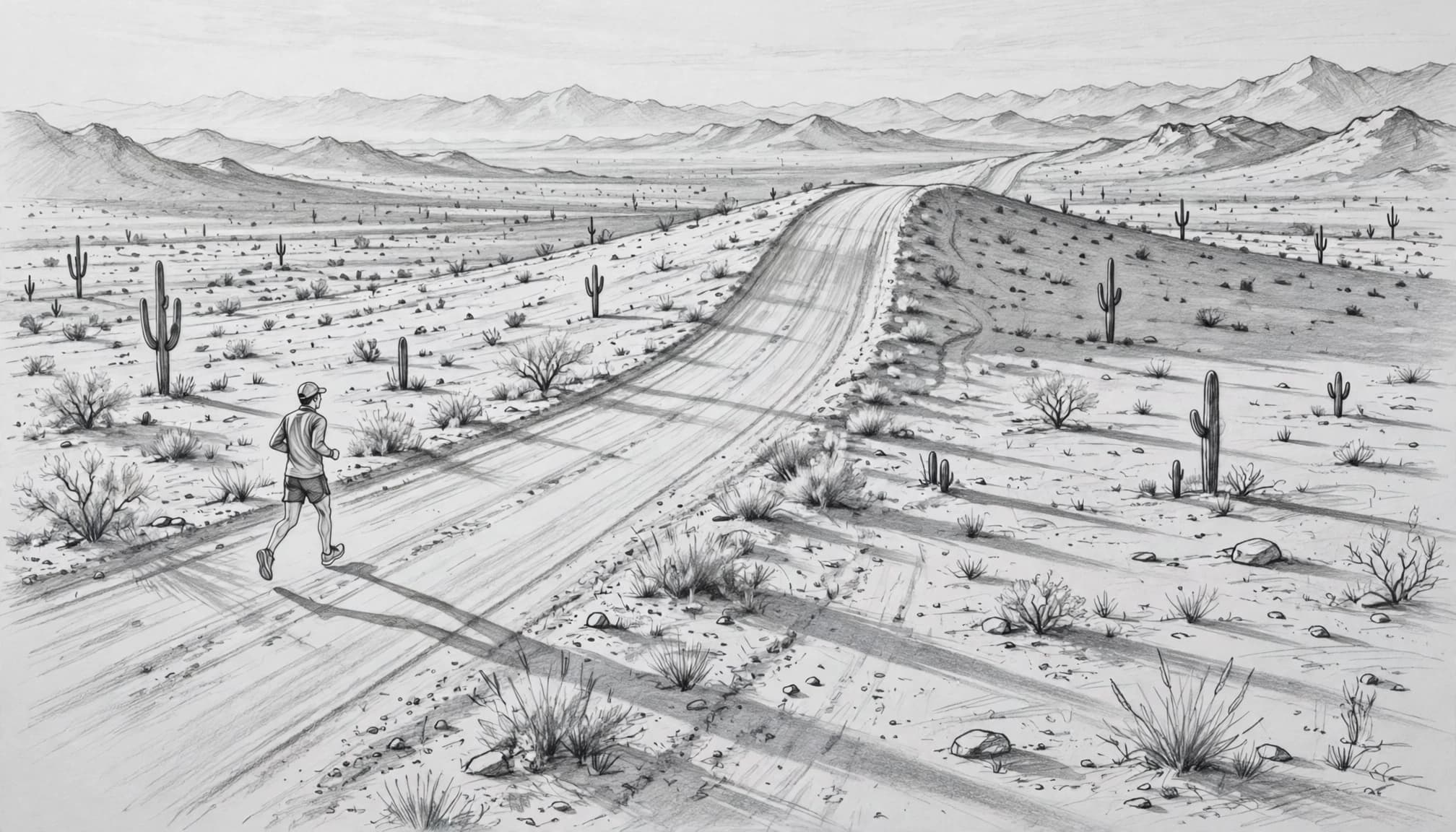
Tucson’s high-desert setting affects pacing
Tucson’s elevation and dry air can change how a marathon feels, even when the temperature seems comfortable. Dry conditions increase moisture loss through breathing and sweat, while cool morning temperatures can hide how much fluid you are losing.
The desert sun also becomes more demanding as the race progresses. A runner who feels comfortable during the early miles may face greater heat and glare later, especially with limited shade. Wind adds another variable. A steady headwind can raise effort without dramatically changing pace, while a tailwind may encourage runners to spend energy too early.
The course profile matters just as much. Downhill miles can make the opening half feel easy, but repeated downhill loading places extra stress on the quadriceps. If you run faster than planned early, muscle fatigue may appear after mile 20, even when your breathing still feels controlled.
Check the race edition before comparing results
Routes, start times, aid stations, and certification status can change between Tucson Marathon editions. Review the official race guide for the year you ran, then confirm whether your result came from the marathon course rather than another event distance. The current Tucson Marathon course information can help you identify the published route and race details.
Weather records provide useful context, but they cannot recreate your exact race. Historical listings show that Tucson marathon mornings can begin cool before temperatures rise later in the day, so compare the forecast, wind, and sun exposure with your pacing data. Tucson race weather averages offer a starting point, not a substitute for race-year conditions.
Use this practical framework when judging your performance:
- A personal best requires a faster official time than your previous certified marathon, with course and timing details confirmed.
- A strong effort may include a slower time on a warmer, windier, or more demanding day, especially when your pacing stayed controlled.
- A valuable endurance result can reveal progress through even pacing, reliable fueling, or a strong final 10K.
Compare Tucson with another marathon only after checking course difficulty, weather, elevation, and pacing strategy. A finish time is a measurement, but the conditions explain what that measurement actually means.
Choose Your Distance, Duration and Goal Time
Make three quick selections and open the exact plan built for your race target.
Looking for a Fully Personalized Training Plan?
The training plans above are an excellent choice if they match your goal. However, if you’d rather train with a plan built specifically around your current fitness, goal race, preferred training days, weekly mileage, and target finish time, our RDA Custom Training Plans provide a personalized solution. We also have running courses available for runners seeking to run faster from the mile to the marathon.
Why Choose a Custom Training Plan?
| Standard Training Plan | RDA Custom Training Plan |
|---|---|
| Follows a fixed schedule | Built around your schedule |
| Standard weekly mileage | Peak mileage customized for you |
| Fixed workout days | Train on the days you choose |
| Same structure for everyone | Designed around your current fitness |
| Static plan | Updated as your fitness improves |
| One-time purchase | Ongoing personalized coaching and support |
What You’ll Receive
- A training plan built specifically for your goal
- Personalized training paces
- Long runs, tempo runs, threshold workouts, interval sessions, recovery runs, and easy runs
- Peak weekly mileage matched to your experience level
- Flexible training schedule that fits your life
- Ongoing plan adjustments as your fitness improves
Ready to Train Smarter?
Stop guessing and start following a plan built specifically for you, your schedule, and your racing goals.
Standout Performances, Age Groups, and Race Records
Tucson Marathon results tell more than one story. The overall winner shows who reached the finish line first, while age-group rankings reveal how runners performed within their own divisions. A first marathoner chasing a personal milestone deserves the same respect as an elite contender racing for the podium.
How to identify winners and standout performances
Start with the overall results for the correct distance and race year. The first listed finisher usually wins the open division, but award categories can vary. Some races separate results by gender, while others include additional divisions or use different award rules.
Next, check the podium positions. Second- and third-place finishers may appear immediately below the winner, yet their official awards can depend on gun time, chip time, or race regulations. The Garmin Marathon Tucson results provide a useful example of how names, bib numbers, places, and finish times can appear in a searchable results list.
Masters athletes are commonly runners aged 40 and older, but the exact age threshold and award structure depend on the event. Look for a masters category in the official results rather than assuming that every race uses the same standard. Age-group leaders may appear under divisions such as 40-44, 45-49, or 60-64, with separate rankings for each category.
Readers who want to find a particular performance should search by:
- Bib number, which is often the quickest way to isolate one runner.
- Age group or gender, when the timing platform includes filters.
- Hometown or running club, if those fields appear in the published file.
- Last name, first name, or partial name when spelling may vary.
Local performances can add useful context, especially when a Tucson-area runner finishes near the front or improves sharply over a previous race. Verify the hometown, club, and time through the official entry or results record before describing someone as a local standout.
Course records are different from race results
A single-year winner is the fastest finisher in one edition. A course record is the fastest verified time on that course under the event’s accepted standards. An event record may cover the race’s full history, even if organizers changed the route. A personal best belongs to one runner and may occur at any certified marathon.
Those distinctions matter when comparing names and times. A faster result from another year may not qualify as a course record if the route, timing process, or certification status changed. Weather and elevation also affect comparisons, although they don’t automatically invalidate a result.
Before publishing a record or standout claim, check the official result document and any organizer announcement. The 2025 Tucson Marathon results can confirm that year’s rankings, but historical records require evidence from the race organizer or official archive. Use the race year, distance, recorded time, and record category together so readers know exactly what the claim means.
Use Your Marathon Results to Train for a Faster Next Race
Your Tucson Marathon results are more useful when you treat them as a performance review, not just a finishing time. Look at your splits, fueling, hydration, weather, and effort together. The goal is to identify what limited your race and choose one or two changes for your next training cycle.
Compare your opening and closing splits
Start by comparing your first half with your second half. Subtract the halfway split from your final time to find your closing-half time, then compare both halves directly.
A small slowdown can be normal, especially on a challenging course. A large positive split, such as a first half that is 10 or more minutes faster than the second, often points to an aggressive opening pace. It may also reveal insufficient long-run preparation, low carbohydrate intake, poor heat management, or mental fatigue after mile 20.
A negative split, where you run the second half faster, usually shows controlled pacing. However, don’t chase a dramatic negative split if you spent too much energy holding back early. Consistency is the better target for most runners.
Review your mile or 5K splits for a clearer pattern:
- A fast opening followed by steady slowing often indicates early overpacing.
- Even splits with a late drop may point to fueling, hydration, or endurance limits.
- A strong final 10K suggests your fitness exceeded your opening strategy.
- Uneven splits may reflect hills, aid-station delays, heat, or poor pacing judgment.
Review fueling, hydration, and race-day mistakes
Write down when you took carbohydrates, how much fluid you drank, and whether you skipped aid stations. Most runners need to begin fueling before they feel empty. The Korey Stringer Institute’s marathon fueling guidance recommends practicing a plan during training rather than testing it on race day.
Compare your notes with the point where your pace changed. A sharp slowdown after halfway, combined with missed gels or increasing thirst, suggests a race-day nutrition problem. If you fueled consistently but faded despite controlled pacing, your long runs or marathon-pace work may need attention.
Separate fitness limits from avoidable mistakes. A first-time marathoner may need more aerobic development, while an experienced runner may have simply started too fast or struggled with Tucson’s sun and dry air. Neither conclusion should come from finish time alone.
Age-group ranking and overall place can motivate you, but personal progress remains the better measure. A slower race with stronger pacing and better recovery can be a major step forward.
Set the next goal after recovery
Give your body time to recover before judging the race or restarting hard training. Begin with rest, easy running, and normal sleep. Then rebuild with consistent easy mileage, one quality workout each week, and long runs that include controlled marathon-pace segments.
Beginner runners should first improve pacing consistency and complete their training plan without missed long runs. Intermediate runners can refine carbohydrate timing, hydration, and race-pace control. Competitive runners may compare smaller split differences and adjust threshold work, recovery days, or long-run intensity.
Choose a realistic next goal based on your evidence. A modest time improvement built on steadier pacing is often more achievable than an ambitious target based only on motivation. Use your Tucson Marathon results as a map: fix the largest weakness first, then let consistent training earn the next breakthrough.
Frequently Asked Questions
Tucson Marathon results can raise practical questions even after you find your finish time. These answers help you confirm the record, challenge errors, and judge what your performance means beyond one number.
When are Tucson Marathon results usually posted?
Preliminary results may appear during the race or shortly after the final runners finish. Live timing pages can update quickly, but those numbers may change after officials review timing mats, course records, age groups, and disqualifications.
Look first at the official Tucson Marathon website, the linked timing platform, and any email sent by the race organizer. Check again after a day or two if your time or placement looks unusual, because verified results can take longer than race-day results.
What should I do if my name or finish time is missing?
Start with the simple checks. Search alternate spellings of your name, your bib number, the correct race distance, and the correct race year. Also confirm that you aren’t viewing a half marathon or another event held during the same weekend.
Next, review your timing-mat records, finish-line photos, watch data, and registration confirmation. If the problem remains, contact the race organizer or timing company through the official support address. Include your bib number, expected finish time, distance, and proof of participation. The event’s team must review the evidence before changing the published Tucson Marathon results.
Is chip time or gun time used for Tucson Marathon awards?
There isn’t one universal policy. Chip time usually provides the fairest measure of your personal effort because it starts when you cross the starting mat. Gun time begins when the race starts and may include time spent waiting in the starting area.
Awards, qualifying standards, and overall placements may follow gun time, chip time, or separate rules for different categories. Read the official Tucson Marathon rules before judging an award or qualification. For a useful explanation of how race time and watch time can differ, see this guide to official race and chip times.
How can I compare my Tucson time with another marathon?
Begin with the course profile. Compare elevation change, downhill sections, turns, road surface, and aid-station layout before deciding that one course was faster. Weather matters as well, especially temperature, wind, sun exposure, and humidity.
Race size can affect pacing too. A crowded start may slow your opening miles, while a small field may leave you running alone for long stretches. Your raw finish time is useful, but it doesn’t tell the whole performance story without those conditions.
Can Tucson Marathon results help predict my next marathon time?
Yes, your result can provide a useful starting point when you combine it with half-marathon splits, training history, recovery, and race conditions. Review how evenly you paced the course, where your speed changed, and whether fueling or fatigue affected the final miles.
Avoid treating one result as an exact forecast. A conservative goal range gives you room for weather, course difficulty, and normal race-day variation. Use your Tucson performance to set a target you can support with consistent training, rather than forcing every workout toward one rigid finishing time.
Conclusion
Your official Tucson Marathon result is more than a number on a leaderboard. It records the choices that shaped your race, including training consistency, pacing decisions, fueling, hydration, and the difficult final miles. It also shows where your preparation worked and what needs attention before your next marathon.
First, verify the official result for the correct race year and distance. Then read every field, including chip time, gun time, pace, splits, and rankings. Consider Tucson’s downhill course, dry air, rising temperatures, wind, and other race-day conditions before judging the performance.
Finally, turn those lessons into a focused training plan. Use your Tucson Marathon results as clear evidence of progress, then build your next goal around the changes that matter most. Every finish gives you a stronger starting point for pursuing your next personal best.


