

Triathlons in Wisconsin: Where Lake Swims Meet Epic Finishes
Wisconsin offers triathlons for many kinds of athletes, with lake swims, small-town race weekends, and the well-known IRONMAN Wisconsin in Madison. Whether you’re lining up for your first sprint or training for a longer race, you can find an event that fits your experience and goals.
Choosing a race means looking beyond the distance. Course terrain, open-water conditions, weather, travel, and race-day logistics can all shape your experience, so check current event details before you register.
This triathlon guide will help you compare triathlons in Wisconsin, choose a suitable distance, prepare for local conditions, and plan a smoother race day. Be sure to check out the RunDreamAchieve YouTube channel for weekly running tips.
Key Takeaways
- Triathlons in Wisconsin range from first-race options to long-course events, with lake swims and small-town race weekends among the local draws.
- Choose a distance that matches your current fitness, then compare course terrain, open-water conditions, weather, and travel needs.
- Check current dates, race formats, and registration details through USA Triathlon’s event calendar before committing.
- Prepare for race day with consistent swim, bike, and run training, plus a plan for transitions, equipment, and changing conditions.
Triathlons in Wisconsin: Race Formats, Distances, and Events
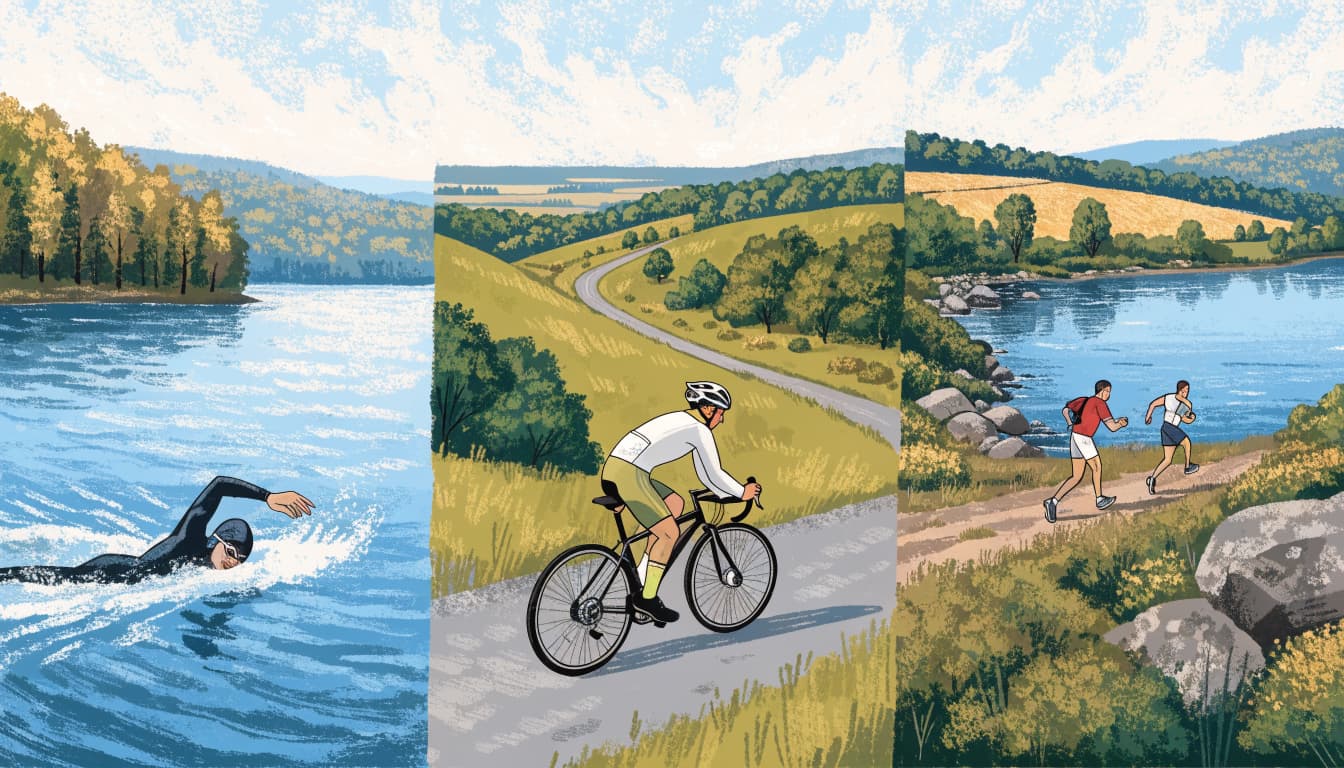
Every triathlon follows the same basic order: swim, bike, then run. In Wisconsin, race options range from short events for newer athletes to full-distance challenges, with courses that may use lakes, city streets, and rural roads. Distances, course details, event names, and schedules can change, so check the official race page before you register or make travel plans.
Choose a distance that fits your experience
Common distances offer a useful starting point, though individual courses can vary. USA Triathlon outlines the standard multisport formats and distances, which can help you compare race demands.
- Sprint: Often about a 750-meter swim, 20-kilometer bike, and 5-kilometer run. It’s a manageable first goal, but still calls for practice in all three sports and transitions.
- Olympic: Typically a 1.5-kilometer swim, 40-kilometer bike, and 10-kilometer run. Expect more training time and sustained effort than a sprint requires.
- Half-distance: Usually a 1.9-kilometer swim, 90-kilometer bike, and half-marathon run. This 70.3-mile format requires longer workouts, careful pacing, and practice with race-day nutrition.
- Full-distance: Commonly a 2.4-mile swim, 112-mile bike, and 26.2-mile run. Training takes a substantial commitment, often including long weekend sessions and a detailed recovery plan.
Pick a distance based on the training time you can consistently protect, not only the distance you hope to finish.
What to expect at Wisconsin’s best-known races
IRONMAN Wisconsin brings a full-distance race to Madison, where athletes swim, bike, and run around the state capital and nearby countryside. The official course overview provides current course maps and race details, useful for understanding the event’s demands before committing.
The Door County Triathlon offers a different setting, with races in the Egg Harbor area near Green Bay’s shoreline and bluffs. Its official event page is the best place to confirm current formats and logistics. The site lists a sprint option, but event offerings can change, so verify the details for the year you plan to race.
Find a race by region and season
Search event calendars and race-director pages by the place you can reach easily. Around Madison, look for events in the capital area and nearby communities. Milwaukee, Green Bay, and the Fox Valley each offer regional search areas, while Door County appeals to athletes planning a race weekend farther north.
Many Wisconsin triathlons take place during warmer months, when open-water events are more practical. However, dates and race formats vary each year. Confirm the location, swim conditions, distances, registration status, and schedule on the current event page before booking travel or building your training plan.
How to Pick the Right Wisconsin Triathlon for You
The best Wisconsin triathlon for you is the one that fits your current training, race-day goals, and practical limits. Compare events using the same criteria instead of choosing by reputation alone.
Match the race to your goals and comfort level
If this is your first triathlon, look for a shorter distance, clear instructions, and a welcoming setup. A well-organized beginner event should explain packet pickup, transition entry, swim starts, and where spectators can watch. Check whether the race offers a pre-race briefing or practice swim, and ask how volunteers guide athletes through transitions.
Experienced athletes may prefer a longer course, a fast route, or an event that supports a specific goal, such as practicing pacing before a major race. Consider what you want from the day: a personal best, a confidence-building open-water swim, or a low-pressure event with friends. The biggest race may bring more spectators, but a smaller local event could suit your goals and comfort level better.
Compare courses, swim rules, and cutoffs
Course descriptions can reveal how a race will feel. Review elevation changes and road surfaces, since rolling terrain or rough pavement may affect your pace and equipment choices. For the swim, check the lake or other venue, start format, expected conditions, and whether the organizer has a backup plan if weather affects the water.
Rules and cutoffs also vary. Read the event’s time limits and wetsuit policy before registering, especially if you are new to open-water swimming or expect to finish near a cutoff. USA Triathlon publishes its multisport rules, but each race page should spell out the rules and procedures that apply to that event. Also review the transition layout, bike support, aid stations, and course marshals. These details help you gauge how supported you’ll feel if you need directions or mechanical help.
Choose Your Distance, Duration and Goal Time
Make three quick selections and open the exact plan built for your race target.
Looking for a Fully Personalized Training Plan?
The training plans above are an excellent choice if they match your goal. However, if you’d rather train with a plan built specifically around your current fitness, goal race, preferred training days, weekly mileage, and target finish time, our RDA Custom Training Plans provide a personalized solution. We also have running courses available for runners seeking to run faster from the mile to the marathon.
Why Choose a Custom Training Plan?
| Standard Training Plan | RDA Custom Training Plan |
|---|---|
| Follows a fixed schedule | Built around your schedule |
| Standard weekly mileage | Peak mileage customized for you |
| Fixed workout days | Train on the days you choose |
| Same structure for everyone | Designed around your current fitness |
| Static plan | Updated as your fitness improves |
| One-time purchase | Ongoing personalized coaching and support |
What You’ll Receive
- A training plan built specifically for your goal
- Personalized training paces
- Long runs, tempo runs, threshold workouts, interval sessions, recovery runs, and easy runs
- Peak weekly mileage matched to your experience level
- Flexible training schedule that fits your life
- Ongoing plan adjustments as your fitness improves
Ready to Train Smarter?
Stop guessing and start following a plan built specifically for you, your schedule, and your racing goals.
Weigh travel, lodging, and registration costs
The entry fee is only one part of a race budget. Add transportation, lodging, meals, parking, and any equipment you still need. A nearby event may cost less overall than a race with a lower entry fee that requires a hotel stay and a long drive.
For popular events, book lodging early, especially if rooms near the start are limited. Before you pay, read the race’s refund, deferral, and transfer policies; they differ among organizers. For example, the Wisconsin Triathlon Series policies spell out restrictions on refunds and deferrals. Check the current policy for the specific event and year, then compare the total cost and support on race day. A manageable trip and clear logistics can make a local race the better fit, even if another event has a bigger name.
Train for Wisconsin’s Lakes, Roads, and Changing Weather
Preparation for triathlons in Wisconsin should reflect the specific course, not just the race distance. Lake conditions, rolling roads, wind, and temperature can vary, so check the event’s rules and train for the demands you’re likely to face.
Build fitness for all three sports and transitions
A steady weekly routine helps you improve without cramming every workout into a few days. Include swim, bike, and run sessions, along with at least one rest or recovery day. Beginners should build duration gradually, adding training time in small steps rather than making sudden jumps.
Practice the transition from cycling to running with a brick workout. For example, ride at a controlled effort, then run briefly at an easy pace. This teaches your legs to adjust to running after cycling and gives you a chance to test your shoes, clothing, and pacing. As race day gets closer, include workouts that resemble the course, while leaving enough time to recover. A coach or local training group can help you set a realistic schedule if you’re unsure how to balance the three sports.
Practice open-water swimming safely
Pool fitness alone may not prepare you for sighting, waves, or swimming near other athletes. When conditions allow, practice looking forward briefly to spot a landmark, then return your face to the water without losing your rhythm. Also rehearse entering and exiting the water, since the shore, lake bottom, and start setup can feel different from one venue to another.
Never swim alone. Choose a buddy or supervised group, stay clear of boat traffic, and use a brightly colored swim buoy when appropriate. USA Triathlon offers open-water swimming safety guidance. Lake temperature and visibility change with conditions, so check local safety rules and the race organizer’s swim instructions before heading out. For public beaches, Wisconsin’s beach advisories and closings map can provide current information where available.
Prepare for hills, wind, heat, and cool mornings
Some Wisconsin courses include rolling terrain, exposed roads, or stretches where wind affects effort. Train on hills when you can, but focus on steady effort instead of chasing the same pace you’d hold on flat ground. On windy rides, practice staying controlled and shifting as needed. Review the event course map so your training reflects its actual terrain.
Race-day weather can differ from the forecast you saw while training. Practice with the clothing you plan to wear, including layers for a cool start, and test your hydration and pacing choices in warm conditions. Check the National Weather Service forecast as race day approaches, then follow any event updates or safety instructions. If conditions change, adjust your effort rather than trying to force a planned pace. Build training load gradually, too, so a single tough workout in heat or wind doesn’t leave you worn down for the next one.
Plan Race-Day Gear, Transitions, and Safety
A smooth race morning starts before you reach the venue. Pack the night before, then follow the event’s athlete guide for check-in times, transition access, course markings, and any rules that differ from standard practice.
Pack the essentials for swim, bike, and run
Use a checklist so key gear doesn’t get left behind. Your setup should include:
- A wetsuit, if the race permits one and it suits the water temperature, plus goggles.
- A roadworthy bike with working brakes and properly inflated tires, and a helmet that fits securely.
- Running shoes you’ve already worn in training, along with weather-appropriate clothing.
- Familiar nutrition, fluids, and basic repair supplies, such as a spare tube, tire levers, and a pump or CO2 inflator.
Test your gear during training, including the wetsuit, shoes, bike setup, and nutrition. New equipment can rub, shift, or feel different under race conditions, so race morning isn’t the time to find out.
Know how transition areas and race rules work
After check-in, athletes typically rack their bikes in an assigned spot and lay out gear for the bike and run legs. Keep your space compact, and note a landmark near your rack so you can find it quickly after the swim. Before the start, walk the route from swim exit to your bike, then from the bike dismount line to the run exit. Follow marked paths and volunteers’ directions rather than cutting across transition.
Read the athlete guide closely and attend any required briefing. It explains where to check in, when transition closes, how the swim starts, and how athletes enter and leave each leg. Rules can also cover helmet use, drafting, and outside assistance. USA Triathlon’s officials’ race-day reminders highlight a simple safety point: buckle your helmet before taking your bike out of transition, and don’t unfasten it until you’ve racked the bike after the ride.
Keep fueling, hydration, and pacing simple
Use a fueling plan you’ve practiced at the distance and effort you expect to race. Avoid unfamiliar foods or supplements on race day, and check the athlete guide for aid-station locations and what they provide. Carry fluids if the course spacing, weather, or your needs call for them.
Start at a controlled effort, then adjust as the day unfolds. Heat can raise the effort of a familiar pace, while wind can make the bike leg harder than expected. If fatigue builds, ease off and focus on steady movement. After crossing the finish, keep moving through the designated chute, collect any recovery items, and follow staff instructions before leaving the athlete area.
Make the Most of Race Weekend in Wisconsin
A little planning can make a Wisconsin triathlon weekend feel manageable, especially when you’re traveling with family or visiting an unfamiliar town. Sort out race requirements, transportation, and spectator plans before you leave, then keep your schedule flexible enough for weather or event updates.
Arrive early and map out the race site
Build extra time into your arrival day for packet pickup, bike checks, transition setup, and any required athlete briefing. Some events schedule packet pickup before race morning, so check the athlete guide and note the exact hours. USA Triathlon’s pre-race checklist can help you organize the final details.
Before leaving home, review the race map, parking instructions, road closures, start time, and spectator areas. Save the venue address and key event details on your phone, and download the map if cell service may be unreliable. Once you arrive, walk the route between the swim exit, transition area, and bike and run exits. Knowing where to go can reduce race-morning stress.
Plan lodging, transport, and spectator support
For popular race weekends, book lodging early, especially if you want to stay near the venue. If you’re traveling with family, look for a place that makes race-morning transport simple and gives everyone a comfortable spot to rest. Check the event’s parking rules before choosing a hotel, since road closures may affect access near the start.
Athletes bringing bikes should confirm how they’ll get to the venue. Local transit may not allow bikes on every route, or it may have restrictions, so check directly with the transit provider. A car can offer more flexibility, but confirm parking locations and arrival windows first. For current traffic conditions, Wisconsin 511 traffic updates can help you plan your drive.
Spectators should review course access rules and choose viewing spots in advance. A point near transition may be convenient, while a spot along the run course could give family more time to watch. Share meeting locations and backup plans, since crowds, closures, or limited phone service can make last-minute coordination difficult.
Use local groups and race organizers as resources
The race organizer is the best source for current event details, including check-in times, course maps, parking, and changes caused by weather. Check official event channels in the days before the race, then save important updates where you can find them quickly.
For local advice, contact a triathlon club, bike shop, or beginner clinic in the area. These groups may offer training support and practical tips about riding nearby roads or preparing for open-water swimming. When you have a specific question, ask the organizer or local group directly rather than relying on outdated posts. If family is joining you, Travel Wisconsin’s trip-planning resources can help you find nearby activities and plan time outside the race.
Frequently Asked Questions
A few practical details can affect your race choice as much as distance and course layout. Check the organizer’s current information before registering, since schedules, rules, and available services can change from year to year.
When is triathlon season in Wisconsin?
Many triathlons in Wisconsin take place during the warmer months, when outdoor swimming and cycling are more practical. Exact dates vary by organizer and year, so check current event calendars and the race website before making plans.
Can I enter a Wisconsin triathlon as a beginner?
Yes. Beginners can find shorter events, but review the race distance, swim requirements, cutoff times, and safety rules before you register. Choose a distance that fits your current fitness and open-water experience, rather than relying on how far you hope to progress before race day.
Do I need a wetsuit for a Wisconsin triathlon?
Whether you need or may wear a wetsuit depends on water temperature, event rules, and your comfort in open water. Don’t assume a wetsuit is allowed or required; check the current athlete guide for the race’s policy and any temperature-based restrictions.
How much does it cost to race?
Entry fees vary by event, distance, and registration timing. Travel, lodging, meals, and gear can add substantially to the total, so review the event’s current fee schedule and refund or transfer policies before paying. Also check whether the race requires a USA Triathlon membership or offers a one-day option through USA Triathlon membership information.
Can I rent a bike for a Wisconsin triathlon?
Bike rentals may be available near some events, but options depend on the race location and how early you arrange one. Contact local rental providers well in advance, confirm the bike fits properly, and schedule time to practice riding it before race day.
Conclusion
Triathlons in Wisconsin offer options for different goals and experience levels, from a first sprint to a full-distance race. The best fit depends on your current fitness, comfort with open-water swimming, and the time you can devote to training.
Before you register, compare current event details, including the course, rules, schedule, and travel needs. Choose a sensible distance, then begin preparing with a steady plan that builds fitness across all three sports. With the right race and consistent preparation, you can approach race day ready for Wisconsin’s lakes, roads, and changing conditions.


