

Triathlons in New Jersey: Fast Courses, Big Finishes
New Jersey offers triathletes a range of race settings, from oceanfront courses along the Jersey Shore to calmer swims in inland lakes and bike and run routes through parks. That variety gives you options, but each event has its own course, distance, and race-day demands.
Use this triathlon racing guide to find an event that fits your goals, compare race formats, prepare for local conditions, and plan for costs before you register. Start by exploring the kinds of triathlons you may find across the state, then confirm current details with each race organizer. Be sure to check out the RunDreamAchieve YouTube channel for weekly running tips.
Key Takeaways
- Triathlons in New Jersey include coastal and inland settings, so compare swim conditions and course terrain before choosing a race.
- Distances and formats vary. Match the event to your experience, training time, and goals.
- Check the organizer’s current course map, schedule, cutoff times, and equipment rules before race day.
- Train for all three legs and practice transitions. Prepare for open-water swimming and terrain similar to the race course.
- Browse USA Triathlon’s event listings for sanctioned races, then confirm fees and logistics with the organizer.
Triathlons in New Jersey: Find a Race That Fits Your Goals
New Jersey triathlons offer very different race-day experiences, even when distances look similar on paper. A shore event may test your comfort in open water, while an inland race can offer a more sheltered swim and a park course may simplify logistics. Use these settings and event names as starting points, not guarantees: locations, organizers, and race offerings can change by year.
Compare shore, lake, and park settings
Along the Jersey Shore, an ocean swim can bring waves, current, and changing conditions. A Cape May-area race, for example, may appeal to athletes who want a coastal setting, but check the organizer’s latest swim plan and water-condition policy before registering. Ocean races also call for open-water practice, since pool fitness alone won’t prepare you for sighting or swimming near other competitors.
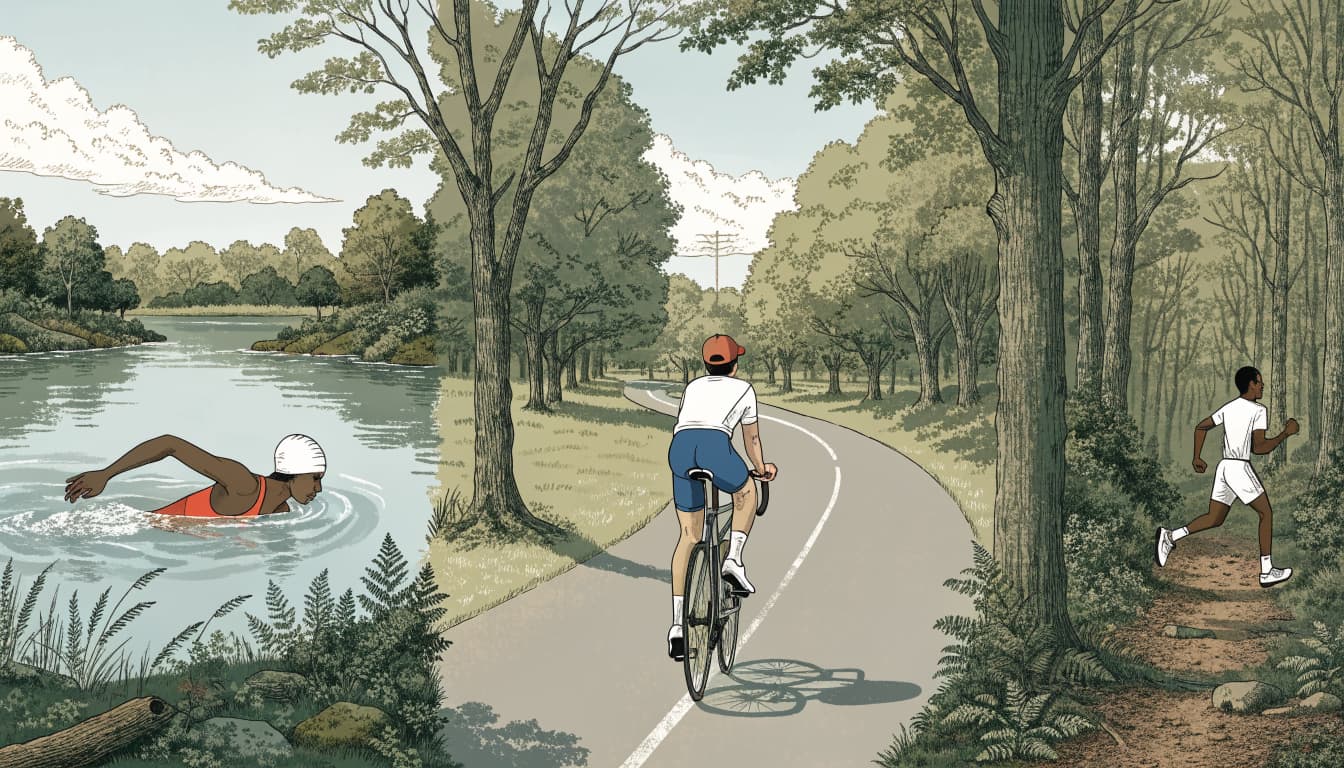
Inland lake swims, such as those associated with Mercer County Park, often feel more sheltered. Still, wind, water temperature, and visibility can vary, so review the current course map and any required equipment. Park-based races can make transitions and spectator access easier to manage, while bike and run routes may use park roads or nearby streets. Check the elevation profile and surface details to see how well the course matches your training.
Look for established events and check the current calendar
Start with local triathlon clubs and race organizers. Clubs can point you toward nearby events and share practical insight about course conditions, while organizers publish the details that affect your decision. USA Triathlon’s event listings are another way to find sanctioned races, but verify dates and registration directly with the event.
Recognizable races to investigate include Escape the Cape and the New Jersey State Triathlon, which has been associated with Mercer County Park. Supertri New Jersey is another event to check; its current event page lists race options and location information. These examples are not a promise that an event will run in a particular year, or that its format will stay the same.
Before you commit, confirm the latest schedule, course, distance, registration status, cutoff times, and equipment rules on the official event site. Compare the swim start and transition setup as well as the bike and run routes. That extra check helps you choose a race that fits your experience, goals, and training plan.
Choose a New Jersey Triathlon Distance You Can Train For
The right triathlon distance depends on more than your current fitness. Consider how much time you can set aside for training, how comfortable you feel in open water, and what you want from race day. In New Jersey, event distances and formats vary, so check the race’s athlete guide before you register.
Start with a sprint or super-sprint race
A super-sprint or sprint can be a practical entry point if you’re new to triathlons, returning after time away, or testing how you handle transitions. These shorter formats also suit experienced athletes who want a fast effort or a lower-key race within a busy season.
Still, “sprint” doesn’t guarantee the same course at every event. One race may include a pool swim, while another uses open water. Swim, bike, and run distances can also differ, so compare the event’s details with USA Triathlon’s format and distance guide.
A short course still deserves preparation. Build fitness for all three legs, practice moving from the swim to the bike, and learn to manage your pace across the full race. If the swim is in a lake or ocean, include supervised open-water practice when possible. You’ll need to get used to sighting, sharing space with other swimmers, and entering the water in race conditions. Pool workouts help build swim fitness, but they don’t fully recreate those demands.
Build up to Olympic, half-distance, or longer events
Longer races require more training time and careful recovery. An Olympic-distance event typically adds substantial time to each leg compared with a sprint, while half-distance and full-distance races demand much greater endurance. Use the exact distances in the athlete guide rather than relying on a race label, since local organizers may offer different formats.
Before choosing a longer New Jersey triathlon, be realistic about your weekly schedule. Training must prepare you to swim, bike, and run for longer periods, and your plan should leave room for rest and recovery. Work, family commitments, travel to training routes, and access to open water can all affect what’s sustainable. Experienced athletes should also weigh their recent training base, not just past race results.
Then compare the course and race-day requirements. Check the elevation profile, road surfaces, swim conditions, aid stations, and cutoff times. A hilly bike route or strict cutoff can change the demands of a race, even when its distance looks familiar. Also confirm what support the organizer provides and whether the event’s course matches the kind of training you can do.
Not every event in New Jersey offers every distance, and a race’s format can change between years. Read the current athlete guide for the final details, then choose a course you can prepare for consistently.
Choose Your Distance, Duration and Goal Time
Make three quick selections and open the exact plan built for your race target.
Looking for a Fully Personalized Training Plan?
The training plans above are an excellent choice if they match your goal. However, if you’d rather train with a plan built specifically around your current fitness, goal race, preferred training days, weekly mileage, and target finish time, our RDA Custom Training Plans provide a personalized solution. We also have running courses available for runners seeking to run faster from the mile to the marathon.
Why Choose a Custom Training Plan?
| Standard Training Plan | RDA Custom Training Plan |
|---|---|
| Follows a fixed schedule | Built around your schedule |
| Standard weekly mileage | Peak mileage customized for you |
| Fixed workout days | Train on the days you choose |
| Same structure for everyone | Designed around your current fitness |
| Static plan | Updated as your fitness improves |
| One-time purchase | Ongoing personalized coaching and support |
What You’ll Receive
- A training plan built specifically for your goal
- Personalized training paces
- Long runs, tempo runs, threshold workouts, interval sessions, recovery runs, and easy runs
- Peak weekly mileage matched to your experience level
- Flexible training schedule that fits your life
- Ongoing plan adjustments as your fitness improves
Ready to Train Smarter?
Stop guessing and start following a plan built specifically for you, your schedule, and your racing goals.
Know What New Jersey Courses and Weather Can Throw at You
New Jersey triathlons can bring very different conditions depending on the venue and date. A shore swim, a sheltered lake, and an inland bike course each call for different preparation, so check the race’s current athlete guide and course details before you train for race day.
Prepare for open-water swims and changing conditions
In open water, practice lifting your eyes to sight buoys without stopping your stroke. During group sessions, get comfortable swimming near other athletes while leaving room to avoid contact. Choose a supervised practice with lifeguard coverage, and don’t swim alone.
Water temperature can feel very different from the air, especially early in the season. Get used to cooler water gradually, and follow the event’s guidance on warm-up and equipment. A wetsuit is allowed only when the race rules and conditions permit it. Check the current USA Triathlon rules and the race’s athlete guide rather than assuming a wetsuit is legal.
At the shore, waves and currents can affect your line and effort. Practice sighting in choppy water only with qualified supervision, and follow lifeguard or race-staff directions. Before traveling, check for water-quality notices as well. New Jersey’s beach status and water-quality updates list advisories and closures; the race organizer may also issue event-specific updates.
Train for flat roads, rolling routes, wind, and summer heat
Bike and run courses vary across the state. Some routes are flat and exposed, while others include rolling terrain or a mix of park roads and open stretches. Wind can make a flat course more demanding, so review the race map and elevation profile, then ride on roads with similar terrain and exposure when possible.
Weather also changes how a familiar course feels. Summer sun and humidity can raise the effort of both the bike and run. Practice drinking at regular intervals during training, use sun protection that suits your event rules, and adjust your pace when heat makes your usual effort feel harder. The National Weather Service offers heat safety guidance, but follow the event’s instructions on hydration and aid stations on race day.
Finally, check the forecast and organizer updates as the event approaches. Pack for the conditions you may face, but make decisions based on the actual course, weather, and race guidance rather than assumptions about New Jersey as a whole.
Train for Your First New Jersey Triathlon Without Overcomplicating It
A workable beginner plan gives each sport regular attention and leaves room for recovery. Start with your current fitness, health, schedule, and the race distance, then build toward the event gradually. You don’t need a complicated plan; you need a routine you can repeat.
Build a weekly routine across all three sports
Begin with a manageable week, such as two swims, two bike sessions, and two runs, with one full rest day. One session can be short and easy, while another focuses on steady endurance. For example, swim Tuesday and Thursday, bike Wednesday and Saturday, and run Thursday and Sunday. Pairing a short run after Saturday’s ride helps you get used to changing sports without adding another training day.
Adjust the schedule to your experience and available time. If you’re returning from an injury or managing a health condition, get guidance from a qualified health professional before increasing training. Keep most sessions comfortable at first, and add time or distance in small steps only when you recover well. If fatigue or soreness lingers, scale back instead of forcing the next workout.
Consistency matters more than occasional hard efforts. Give extra attention to the sport that feels least comfortable, whether that’s swimming continuously, riding outdoors, or running after a bike session. For swim-specific guidance, USA Triathlon’s beginner swimming tips cover ways to build confidence and prepare for race conditions.
Practice transitions and race-day skills
Transitions feel less rushed when you’ve rehearsed them. After an easy bike ride, add a short, relaxed run to get used to the change in leg effort. You can also practice moving from swim gear to cycling gear at home, then review the event’s transition layout and instructions before race day.
Use the equipment you plan to race with, including your helmet, shoes, and clothing. Lay everything out in the order you’ll need it, and practice handling small tasks without rushing. At the event, follow the organizer’s transition-area rules. These may cover where to rack your bike, when you can mount or dismount, and how to move through the area.
Use local clubs, pools, and safe training routes
A New Jersey triathlon club or coached group can offer beginner-friendly workouts and practical advice about local courses. Pools provide a controlled place to build swim fitness; supervised open-water sessions can help you practice sighting and swimming near others. Find options through local recreation programs, clubs, and USA Triathlon’s getting-started guide.
Choose bike routes that match your skills, and follow traffic laws every time you ride. Wear visible clothing, use lights when conditions call for them, and avoid roads that feel beyond your experience. For open-water practice, use a supervised location and follow lifeguard instructions. A safe, repeatable routine will prepare you better than a demanding plan you can’t maintain.
Plan Your Race Entry, Budget, and Race-Day Logistics
Choosing among triathlons in New Jersey takes more than finding a date that works. Compare the full cost, event rules, and travel plan before you register, then use the organizer’s latest information to prepare for race morning.
Budget for registration, gear, travel, and extras
Registration is only one part of your race budget. Entry fees can rise as a field fills or a registration deadline passes, so check the event’s current pricing and refund or transfer policy before signing up. Add likely costs for travel, parking, meals, and lodging if the start is too far away for a comfortable drive that morning.
Gear needs vary by race, but start with safety and basic function. You’ll need a roadworthy bike and a properly fitting helmet, plus swimwear, goggles, and running shoes suited to your training. Budget for nutrition you’ve tested in practice, since race day isn’t the time to try a new product. A wetsuit, upgraded bike components, race wheels, or a new watch may be useful for some athletes, but they’re optional upgrades, not automatic requirements. Check the race rules before buying anything specific.
Read the athlete guide before you register
The athlete guide can reveal whether a race fits your experience and logistics. Review the exact distance, course surface, swim rules, cutoff times, aid stations, parking, and packet pickup schedule. Also check whether the event is USA Triathlon sanctioned and what its refund, deferral, or transfer terms allow.
Sanctioning can affect which rules and participant benefits apply, but details vary by event and membership status. Read the organizer’s information alongside USA Triathlon’s sanctioning details, and confirm any insurance or membership coverage directly with the event and USA Triathlon’s membership information. Don’t assume one race’s policies carry over to another.
Make a simple race-week and race-morning plan
Work backward from the start time. Check drive time and parking instructions, then confirm when packet pickup and transition access open. If the schedule requires an early arrival or the venue is far from home, consider staying nearby. Follow the current event schedule rather than relying on what happened at a different race or in a previous year.
A few days before the event, check the forecast and organizer updates. Pack your race clothing, required gear, nutrition, water, and a change of clothes; include any documents or items the event specifically requires. On race morning, arrive early enough to check in, set up transition, and reach the start without rushing. Use the official athlete guide for final instructions, since parking locations, check-in times, and transition rules can change.
Frequently Asked Questions
New Jersey triathlon details can vary by venue and year, so use the current race information rather than relying on past seasons. These answers cover common planning questions, but the organizer’s athlete guide is the final reference for your event.
When is triathlon season in New Jersey?
Most outdoor triathlons in New Jersey take place during the warmer months, often from late spring through early fall. However, exact dates depend on each event’s calendar, venue, and format. Check the current year’s schedule before making travel or training plans, since organizers can change dates or race offerings.
Can beginners do a triathlon in New Jersey?
Yes. A shorter race can be a manageable first event if you choose a distance that fits your current fitness and prepare steadily. Before registering, review the course and rules, then practice the swim format you’ll face, whether that’s in a pool, lake, or ocean. For open-water events, supervised practice helps you get comfortable with sighting and swimming near other athletes.
Do I need a wetsuit for a New Jersey triathlon?
That depends on the water temperature, the event’s rules, and your comfort in a wetsuit. Some races restrict or prohibit wetsuits under certain conditions, so don’t assume you can wear one based on the season alone. Check the current athlete guide and USA Triathlon’s multisport rules, then practice in the same wetsuit and other gear you plan to race in.
Can I use a regular road bike?
A standard road bike is commonly suitable if it’s in safe working order and meets the event’s equipment rules. Before race day, have the brakes, tires, gears, and chain checked, and make sure your helmet fits securely. Wait to buy specialized equipment until you’ve reviewed the course and confirmed what the event allows.
How do I find current race dates and registration details?
Check the event’s official website and the organizer’s updates first. You can also search USA Triathlon’s Find a Race listings and ask local triathlon clubs about nearby events. Before registering, confirm the date, location, distance, registration status, and latest athlete guide directly with the organizer.
Conclusion
Triathlons in New Jersey offer a range of settings, from oceanfront courses to inland lakes and park routes. Choose a race that fits your goals and experience, then verify its current course, schedule, rules, and registration details with the organizer.
Once you’ve picked an event, begin training with a steady plan that prepares you for its specific swim, bike, and run demands. Course-specific practice matters more than buying extra gear, especially when you’re building fitness and confidence across all three disciplines.


