

Triathlons in Missouri: Ozark Lakes, Gritty Finishes
A quiet Missouri lake catches the first light as bikes line the shore and athletes prepare to swim, ride, and run. Triathlons in Missouri welcome first-timers and experienced racers alike, with events shaped by distance, setting, and season.
Choosing a race means weighing more than mileage. You’ll want an event that fits your current fitness, schedule, and comfort in the water, then a training plan that prepares you for the course and race-day conditions.
Use this triathlon guide to find an event, choose a distance and setting that suit your goals, and get ready for the start line. Be sure to check out the RunDreamAchieve YouTube channel for weekly running tips.
Key Takeaways
- Triathlons in Missouri offer options for first-time racers and seasoned athletes, so choose an event that matches your experience and current fitness.
- Compare race distances, swim conditions, course terrain, and timing before registering; each can shape the training and equipment you’ll need.
- Use USA Triathlon’s race finder to search events by location, distance, and format.
- Build a plan that prepares you for all three disciplines, including transitions between swimming, cycling, and running.
- Check the event’s schedule and race-day requirements early, then arrive ready for the course and conditions.
Triathlons in Missouri offer races for every kind of athlete
Missouri’s triathlon scene includes races near lakes, city parks, and communities across the state. That variety gives first-timers and experienced athletes room to compare course settings, travel needs, and race-day atmosphere before choosing an event. Schedules and course details can change each year, so treat named races as starting points and confirm current information before making plans.
Where Missouri triathlons take place
Around the Lake of the Ozarks, races may use lakeside parks and roads that rise and fall through wooded terrain. The setting can make for a scenic swim, but hills on the bike or run may call for different preparation than a flatter course. Lodging and driving time also matter, especially if the start is outside a major town.
The St. Louis and Kansas City areas offer another kind of race morning. Athletes may find more urban access, nearby services, and a larger pool of local participants, though road closures and event logistics can shape how they get to the start. Columbia, Springfield, and Branson give athletes more regional options; their courses and travel demands depend on the venue and route.
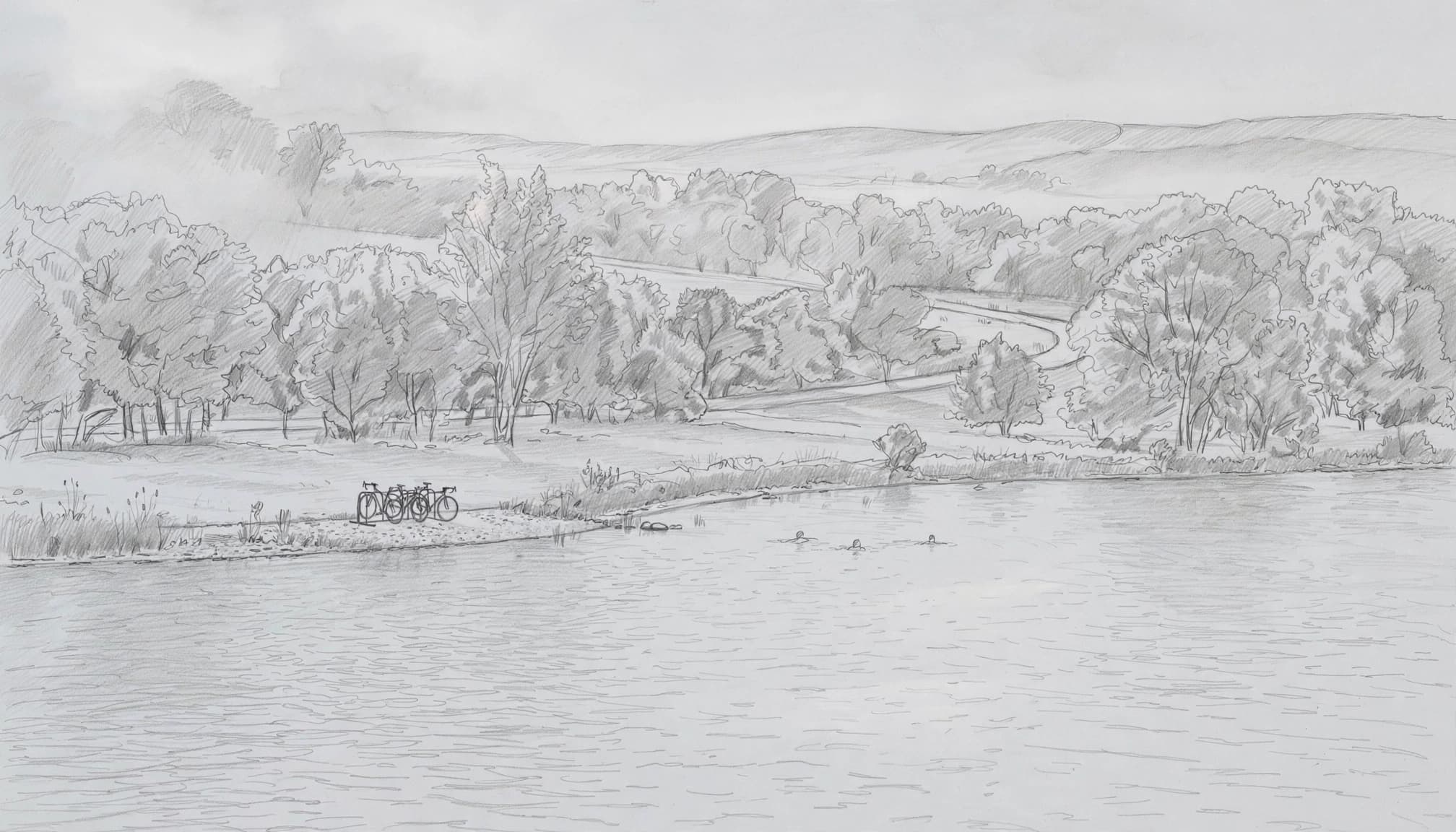
Before registering, compare the course map with your training needs. A hilly bike route, open-water swim, or early start can affect pacing, equipment, and where you stay the night before.
Local events and race calendars to explore
The Show-Me State Games triathlon in Columbia is one concrete event to check. Its organizer’s listing currently gives a date and location at Philips Lake Park, but event details can change, so confirm the latest Show-Me State Games triathlon information before planning around it.
Events around major cities and lake communities may also appear on regional calendars. Search USA Triathlon’s race listings and directories such as TriFind’s race calendar to find possible options, then use the organizer’s own page as the final source for registration and race-day details.
Check four items before committing: the current event date, whether registration remains open, the latest course map, and the race rules. Confirm swim format and distance, transition requirements, bike restrictions, and any cutoff times. If a listing lacks a current-year update, contact the organizer rather than assuming the race will return on the same schedule. That quick check helps you choose a Missouri race that fits your goals and gives you a reliable basis for travel and training.
Choose a Missouri triathlon distance that matches your goals
The right distance depends on what you want from race day and what you can prepare for consistently. Missouri triathlons include short, approachable formats and longer endurance events, but the race name alone won’t tell you how demanding a course feels. Check the event’s official guide for exact distances, terrain, swim conditions, and format before you register.
Sprint, Olympic, and longer race formats
A sprint triathlon is a shorter race that typically includes a 750-meter swim, a 20-kilometer bike ride, and a 5-kilometer run. It can be a practical first event because the distances are manageable for many athletes, though an open-water swim or hilly route may add difficulty.
An Olympic-distance triathlon usually doubles the sprint’s swim and bike distances, with a 1.5-kilometer swim, a 40-kilometer ride, and a 10-kilometer run. It takes more training time and endurance, especially if you’re still building comfort across all three disciplines. USA Triathlon outlines common formats and distances in its multisport distance guide.
Some events also offer longer races, such as half-distance or full-distance triathlons, along with relay options. In a relay, teammates divide the swim, bike, and run legs. Since organizers may adjust distances or offer different formats, use the official race guide as your final reference.
How to pick your first race or next challenge
Start with your comfort in the water. If open-water swimming feels unfamiliar, look for a beginner-friendly event with clear swim instructions and strong on-course support. A pool swim can also reduce uncertainty for a first race, if one is available.
Next, assess your current cycling and running fitness, plus the hours you can realistically train each week. A sprint may fit better when your schedule is tight or you’re new to multisport training. An Olympic or longer race calls for more sustained preparation and recovery time, especially as weekly training volume increases.
For a first triathlon, choose a well-supported event and set a goal you can control, such as completing each leg steadily. You don’t need to race at a particular pace to make the experience worthwhile. Allow time to practice transitions and get used to moving from the bike to the run.
Experienced athletes can select a bigger endurance goal, but compare course demands rather than distance alone. A rolling bike route, exposed roads, or a long open-water swim can change the preparation required. Review the course map and race-day rules, then choose the distance that challenges you without crowding out the recovery your training needs.
Choose Your Distance, Duration and Goal Time
Make three quick selections and open the exact plan built for your race target.
Looking for a Fully Personalized Training Plan?
The training plans above are an excellent choice if they match your goal. However, if you’d rather train with a plan built specifically around your current fitness, goal race, preferred training days, weekly mileage, and target finish time, our RDA Custom Training Plans provide a personalized solution. We also have running courses available for runners seeking to run faster from the mile to the marathon.
Why Choose a Custom Training Plan?
| Standard Training Plan | RDA Custom Training Plan |
|---|---|
| Follows a fixed schedule | Built around your schedule |
| Standard weekly mileage | Peak mileage customized for you |
| Fixed workout days | Train on the days you choose |
| Same structure for everyone | Designed around your current fitness |
| Static plan | Updated as your fitness improves |
| One-time purchase | Ongoing personalized coaching and support |
What You’ll Receive
- A training plan built specifically for your goal
- Personalized training paces
- Long runs, tempo runs, threshold workouts, interval sessions, recovery runs, and easy runs
- Peak weekly mileage matched to your experience level
- Flexible training schedule that fits your life
- Ongoing plan adjustments as your fitness improves
Ready to Train Smarter?
Stop guessing and start following a plan built specifically for you, your schedule, and your racing goals.
Find the right Missouri triathlon for your season and skill level
A good race fits your training, calendar, and comfort level, not just your preferred distance. Compare a few Missouri triathlons side by side, then choose the event whose course, timing, travel, and support make race day manageable.
Compare swim, bike, and run course conditions
Start with the course map and athlete guide. A lake swim can feel different from a pool swim because wind, water temperature, visibility, and other swimmers affect your pace and comfort. Check whether the swim uses a wave or mass start, whether the course has sighting buoys, and what rules apply to wetsuits and water conditions.
On the bike, hills change how you pace and which gears you use. Road surfaces and sharp turns also matter, especially if you’re new to riding in a group or handling a bike at speed. For the run, look for shade, elevation changes, and the surface underfoot. A sunny, exposed route can feel harder than a shaded park path, particularly during a warm Missouri race day.
Read the latest guide rather than relying on an old course description. Then ask the organizer about swim rules, road closures, and recent or planned course changes. If the event is sanctioned by USA Triathlon, check the applicable multisport rules as well. These details can help you judge whether the course suits your current skills and training.
Balance race dates with travel and registration costs
First, map the race date against your training schedule and other commitments. A spring event may leave less time for open-water practice, while a late-season race could conflict with work, school, or family plans. Pick a date that gives you enough time to prepare without forcing rushed training.
Next, estimate the full cost, not only the registration fee. Include driving or airfare, lodging, parking, meals, gear you still need, and any extra expense for a relay or family trip. Prices vary by event and year, so check current details before comparing totals. Popular events may fill early, which can also affect your choice of travel dates and lodging.
Finally, consider field size and race-day support. A larger field may bring more energy at the start, but a first-time athlete might prefer a smaller event with clear directions and easy access to the transition area. Ask what support is available on the course, how aid stations work, and where spectators can watch. A simple comparison of date, course, travel, cost, field size, and support will reveal which race fits your season best.
Build a training plan for Missouri’s swim-bike-run demands
A useful triathlon plan builds fitness across all three sports while leaving room for recovery. Start with training you can repeat each week, then make some sessions resemble the swim, terrain, and weather you expect on race day. Beginners can focus on steady completion; experienced runners should give the bike and swim enough attention to support their run fitness.
Train for open-water swimming and changing conditions
Build swim fitness gradually with regular pool sessions. Begin at a pace that lets you maintain good form, then extend your swimming time or distance in small steps. If you’re new to swimming, prioritize comfort and steady breathing before adding speed.
Open water adds unfamiliar sights, movement, and starts. Practice sighting by briefly looking forward during a stroke, then returning to your normal breathing pattern. If the race uses a mass or wave start, rehearse swimming near others in a supervised setting. Swim in open water only where it’s permitted and safe, and go with a group or a swim partner. USA Triathlon’s open-water training guide offers more guidance for preparing outside the pool.
Before race week, check the water temperature and the event’s swim rules, including wetsuit guidance and any start procedures. When open-water practice isn’t available, use a pool or supervised swim session to build fitness and rehearse sighting.
Prepare for the bike course and Missouri weather
Increase cycling time steadily, keeping most rides comfortable enough to finish without draining your energy for the rest of the week. Add handling practice in a safe area, including controlled turns, braking, and shifting. Then choose some rides on terrain similar to your event. Rolling roads call for different pacing and gearing than a flat route.
Missouri weather can bring heat, humidity, wind, or rain. Practice with the hydration setup and clothing you plan to use on race day, and adjust training when conditions make a hard session unsafe. For vigorous outdoor exercise in full sun, the National Weather Service’s guidance on using WBGT can help you assess heat stress. In wet or windy conditions, keep visibility and bike control in mind, and don’t practice on roads that feel unsafe.
Practice running off the bike and fueling well
A short run after a ride, often called a brick workout, helps your legs adjust to the change in pace and movement. Start with an easy jog after a comfortable bike session. The goal is to learn how the transition feels, not to race every workout. As your fitness grows, add these sessions gradually and keep recovery days in your plan.
Runners with a strong base can use that fitness, but shouldn’t let run volume crowd out swim and bike practice. Keep most runs controlled, and add harder efforts only when you’re recovering well. If soreness lingers or your usual pace feels unusually difficult, reduce the load and rest.
Use training to test food and fluids, especially during longer rides and brick sessions. Note what sits well and when you need it, then follow a familiar approach on race day. Skip new products on race morning; an event is a poor time to discover that a drink or gel doesn’t agree with you.
Make race morning smoother with a simple race-day plan
A calm start begins before race morning. In the final days, check the event website and email for schedule changes, parking details, course updates, and rules. Then plan your arrival time, travel route, and breakfast so you aren’t making decisions in a hurry.
Pack your gear and learn the transition area
Use the event’s permitted-gear list as your guide, since rules can vary by race. Lay everything out the night before, then pack it in the order you’ll need it. A basic setup includes:
- Swimwear, goggles, and a swim cap if the event provides one or requires one.
- A road bike, a properly fitting helmet, and cycling shoes if you use them.
- Race clothing and running shoes, plus socks if you plan to wear them.
- Familiar nutrition and fluids that you’ve already tested in training.
- A small repair kit with essentials such as a spare tube, tire levers, and a pump or CO2 inflator.
At check-in, take a moment to learn how athletes enter and exit transition for each leg. Find your bike rack and note a nearby landmark, then walk the route from the swim-in area to your bike and from the bike-out area toward the run. A quick rehearsal can prevent confusion when the transition area feels busy. USA Triathlon’s transition tips explain how preparation helps athletes move through these changes calmly. Remember, your helmet must be securely fastened whenever you’re in possession of your bike, as stated in USA Triathlon’s multisport rules.
Pace each leg, stay safe, and enjoy the finish
When the start gets close, focus on the next step instead of the whole race. Follow the event staff’s instructions, listen for course updates, and give yourself enough time to reach the swim start without rushing. A few slow breaths can help settle nerves while you check your goggles and confirm your start group.
Begin the swim at a controlled effort. Leave room to find your rhythm, then build only if you feel comfortable and can maintain good form. On the bike, ride steadily rather than chasing the fastest riders early; save enough energy for the run. Once you reach the final leg, choose a pace you can sustain to the finish, adjusting for hills, heat, or how your body feels.
Throughout the course, follow signs, course marshals, and safety rules. Drink according to your own needs and the conditions, using the approach you’ve practiced in training rather than forcing a fixed amount. If you race as part of a relay, communicate clearly with teammates about where and how each handoff happens.
Whether you race solo or complete one leg for a team, take pride in finishing. A steady effort and a safe day on course are accomplishments worth celebrating.
Frequently Asked Questions
A few practical details can make it easier to move from browsing triathlons in Missouri to choosing a race. Check current event information before setting your training plan or travel dates, since schedules and race formats can change.
When is triathlon season in Missouri?
Many outdoor races take place during the warmer months, when conditions are more suitable for swimming and cycling. However, dates vary by organizer and year, so don’t assume a race will return on the same weekend. Check a Missouri triathlon calendar for options, then confirm the date on the event’s official page.
Can a beginner do a triathlon in Missouri?
Yes. Some races offer shorter distances or relay divisions, which can make a first event feel more manageable. Choose a course and format that match your current fitness, then build your swim, bike, and run training gradually. If you’re unsure about distance, ask the organizer what support and cutoff times the event provides.
Do I need open-water swimming experience?
Race swim formats vary, and some events may use a pool rather than a lake or other open-water venue. Before you register, check the swim location, start format, rules, and any requirements for wetsuits or safety gear. If your race includes open water, practice in a safe, supervised setting so you can get comfortable with visibility, water temperature, and swimming near others.
Can I enter a Missouri triathlon as part of a relay?
Some events offer relay divisions, but each organizer sets its own team rules. Registration details should explain how many athletes can join, whether each person completes one leg, and how the handoff works. Check how fees are charged and whether every teammate must register separately before you form a team.
How do I find current race dates and registration details?
Start with the organizer’s official event page, then compare it with a regional or national race calendar. Confirm the current year’s date, venue, course, fees, and registration status directly with the organizer. If a calendar listing conflicts with the event page, contact the race staff before booking travel or building your training schedule around it.
Conclusion
Triathlons in Missouri give athletes plenty of ways to take on a first race or set a new endurance goal. The right event is the one that fits your goals, schedule, and current fitness, with a course and distance you can prepare for steadily.
Start by comparing events, then read the athlete guide for course details, rules, and race-day logistics. Use what you learn to build a consistent training plan that covers swimming, cycling, running, and transitions. With a suitable race on your calendar, the first step toward the start line is within reach.


