

Triathlons in Michigan: Great Lakes Swims, Fast Finishes
At dawn, a Michigan lake can lie smooth as glass while athletes gather at the shore; minutes later, the first turn on a country road sends them into the bike leg. That shift from quiet shoreline to open road captures the appeal of triathlons in Michigan, where race options suit first-timers, families, and experienced athletes.
The right event depends on more than distance. Season, location, swim setting, and travel plans all shape the experience, so it helps to compare races before committing.
This triathlon race guide looks at where events take place, what formats to expect, how to choose and prepare for a race, and what to plan for on race day. Whether you’re eyeing a short local event or a longer challenge, you’ll find practical details to help you choose a race that fits your goals and feel ready when the starting horn sounds. Be sure to check out the RunDreamAchieve YouTube channel for weekly running tips.
Key Takeaways
- Triathlons in Michigan range across distances and settings, so choose a race that matches your fitness, experience, and open-water comfort.
- Compare swim conditions, bike routes, run terrain, season, and travel needs before registering; each shapes your race-day experience.
- Train for your event’s specific demands, practice transitions, and test your gear and nutrition before race day.
- Check the USA Triathlon event calendar for races and sanctioning details, then review the organizer’s latest athlete information.
What to Expect from Triathlons in Michigan
Michigan’s race scene brings together inland lakes, parks, and open roads, with each location shaping the swim, bike, and run. Because conditions and event details can vary widely, compare the course and check current organizer information before making plans.
A race season shaped by lake water and changing weather
Most Michigan triathlons take place between spring and fall. Early-season races can bring cool water and chilly mornings, while summer events often start on warm days. Wind can affect exposed swim areas and bike routes, and rain may change footing on roads or park trails. Conditions vary by location and date, so don’t assume one race will feel like another.
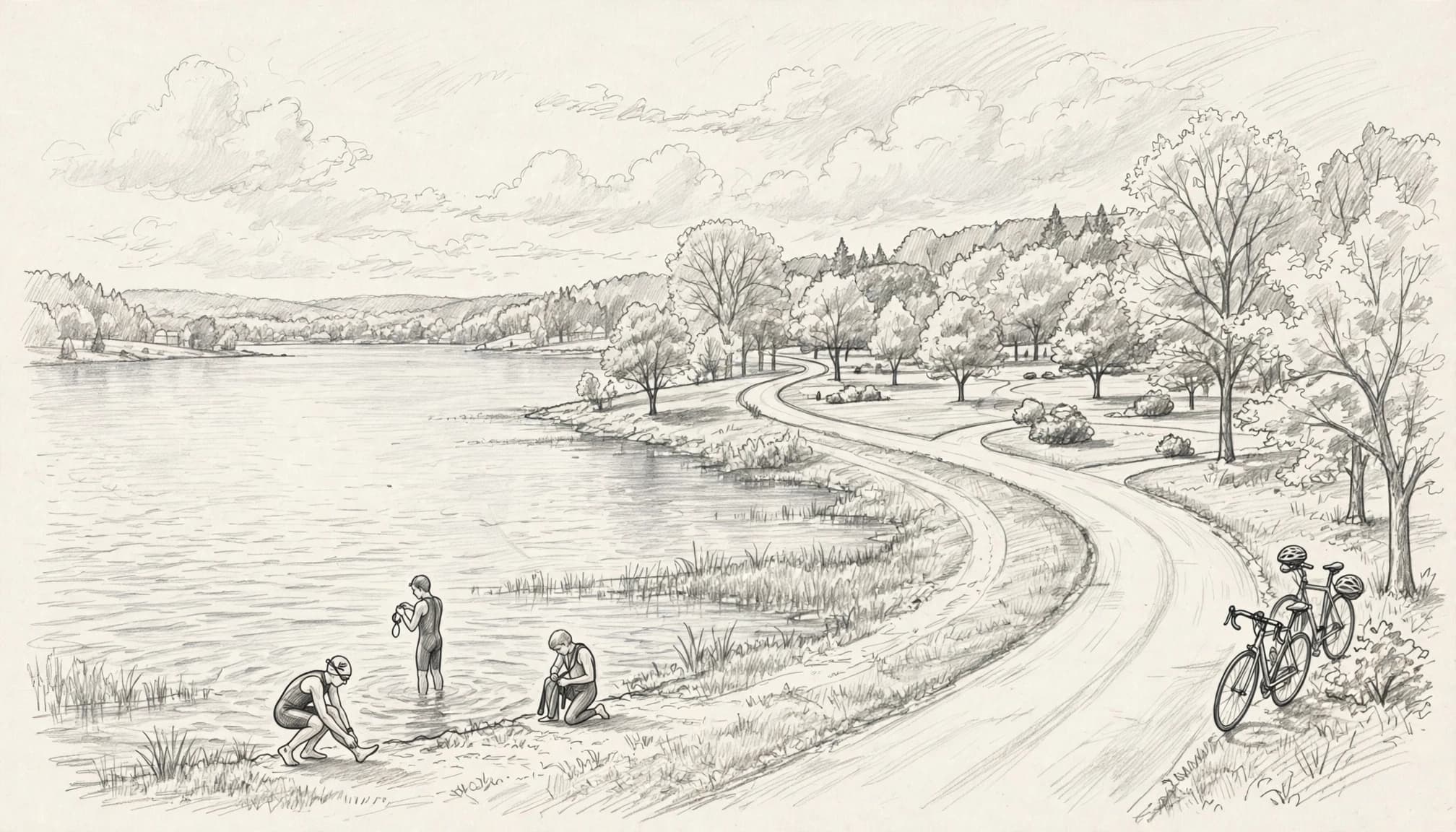
Some swims take place in inland lakes, while others use larger bodies of water. Rural roads may offer long stretches with little shade, and park courses can include grass, paths, or turns that differ from a paved road race. Michigan’s four seasons also shape training: winter often shifts outdoor riding and swimming indoors, while spring brings a gradual return to longer sessions outside.
Before choosing a date, look for the organizer’s latest details on water conditions, course surfaces, start times, and weather policies. Those specifics help you prepare for the actual event, not just the season on the calendar.
From local park events to major race weekends
Smaller community races often center on a local lake or park. Their fields may feel more compact, with a neighborhood atmosphere and straightforward travel, though the level of on-course support varies by organizer. The Rhoades McKee Reeds Lake Triathlon / Duathlon in East Grand Rapids is one example of a community event tied to a local lake setting.
Larger race weekends can draw more athletes and visitors, with additional distance options, event activities, or road closures. They may also require more planning for lodging, parking, packet pickup, and travel on race morning. The Huntington Bank Grand Rapids Triathlon offers several race formats, while IRONMAN 70.3 Michigan uses a Betsie Bay swim and a countryside bike course. These examples show how much the experience can differ across the state.
Race calendars, course layouts, and event status can change from year to year. Review the current Grand Rapids Triathlon race information or IRONMAN 70.3 Michigan details before booking travel or building your training schedule. A race’s distance matters, but so do its setting, support, and logistics.
Where Michigan Triathlons Take You, from Lakeshores to City Parks
Michigan’s triathlon locations shape more than the scenery. They affect travel time, lodging, course conditions, and how easily family or friends can reach the start. Compare the event’s exact venue and course with your race goals, then plan around the location rather than relying on a city or region name alone.
West Michigan races and the Michigan Titanium example
West Michigan offers access to Lake Michigan communities, inland lakes, and the Grand Rapids area. A lakeshore event may bring open-water conditions and a destination feel, while a race closer to Grand Rapids can make travel simpler for athletes staying in or near the city.
The Michigan Titanium race information is a recognizable example associated with the Grand Rapids area. Its current event details describe race options and identify the venue and course, but those specifics can change. Confirm the venue, swim location, and route for your chosen year before booking lodging or building your race-day travel plan.
For a weekend event, check how far your hotel is from packet pickup and the start, not just from downtown. Also review parking instructions and road access. A nearby room can reduce morning stress, but the race’s shuttle or parking plan may determine the most practical place to stay.
Southeast Michigan and northern race destinations
Detroit and Ann Arbor-area events can suit athletes who want a metro-area race and easier access to lodging, restaurants, and major roads. The Ann Arbor Tri, Du, & Aquabike event details show how a race may offer several formats in one region. Even when the drive is manageable, check start times, parking, road closures, and whether packet pickup requires an extra trip.
Northern destinations around Traverse City and inland lakes can offer a more scenic getaway, but they often require more travel planning. Consider the full drive, overnight stay, and race-morning route, especially if the event starts early or sits outside town. Lodging near a popular summer destination may also book up quickly, so check availability before committing.
A race name or region doesn’t guarantee a particular course or swim location. A lakeside town may host a swim in an inland lake, and a city race may use a park or reservoir outside the urban center. Review the current athlete guide and course map, then confirm the address, travel time, and lodging options for that year’s event.
Choose Your Distance, Duration and Goal Time
Make three quick selections and open the exact plan built for your race target.
Looking for a Fully Personalized Training Plan?
The training plans above are an excellent choice if they match your goal. However, if you’d rather train with a plan built specifically around your current fitness, goal race, preferred training days, weekly mileage, and target finish time, our RDA Custom Training Plans provide a personalized solution. We also have running courses available for runners seeking to run faster from the mile to the marathon.
Why Choose a Custom Training Plan?
| Standard Training Plan | RDA Custom Training Plan |
|---|---|
| Follows a fixed schedule | Built around your schedule |
| Standard weekly mileage | Peak mileage customized for you |
| Fixed workout days | Train on the days you choose |
| Same structure for everyone | Designed around your current fitness |
| Static plan | Updated as your fitness improves |
| One-time purchase | Ongoing personalized coaching and support |
What You’ll Receive
- A training plan built specifically for your goal
- Personalized training paces
- Long runs, tempo runs, threshold workouts, interval sessions, recovery runs, and easy runs
- Peak weekly mileage matched to your experience level
- Flexible training schedule that fits your life
- Ongoing plan adjustments as your fitness improves
Ready to Train Smarter?
Stop guessing and start following a plan built specifically for you, your schedule, and your racing goals.
Choose the Right Triathlon Distance for Your Experience
The best triathlon distance is one you can prepare for consistently while building confidence in all three sports. In Michigan, also weigh your comfort with open water, the time you can devote to training, and the specific course conditions.
Sprint and super sprint races make a friendly first step
A super sprint is often the shortest option, while a sprint commonly includes a 750-meter swim, 20-kilometer bike ride, and 5-kilometer run. These distances can vary by event, and some races offer shorter pool swims or modified courses. Check USA Triathlon’s multisport formats and distances for common race formats.
Shorter events let you learn how transitions work, how to set up your gear, and how your body responds when you swim, bike, and run in sequence. The training load is more manageable than for a long-course race, but preparation still matters. Practice each sport regularly, include sessions that combine two disciplines, and rehearse moving from the swim to the bike and from the bike to the run.
For a first race, consider more than your running fitness. If open water feels unfamiliar, a pool-based swim or a race with a calm, sheltered course may be a better fit. Choose a distance that gives you enough time to train without crowding out work, family, or recovery.
Olympic, half-distance, and full-distance goals
An Olympic-distance triathlon typically includes a 1.5-kilometer swim, 40-kilometer bike ride, and 10-kilometer run. A half-distance race, often called a 70.3, covers 1.2 miles of swimming, 56 miles on the bike, and a half marathon. IRONMAN’s 70.3 distance guide lists those standard measurements. A full-distance event commonly doubles each leg of the 70.3.
Longer races demand more than additional endurance. They require more weekly training time, a reliable fueling plan, and enough recovery between demanding sessions. Open-water skills also become more important when you spend longer in the water. Build experience gradually, especially if you have not practiced sighting, swimming near other athletes, or handling changing lake conditions.
Race names and measurements can vary, and some organizers adjust distances to fit a course or event format. Before registering, confirm the listed swim, bike, and run distances in the current race guide. Match those details to your fitness, swim confidence, available training time, and goal, whether that is finishing comfortably or pursuing a faster result.
How to Pick a Michigan Race and Plan Your Entry
Once you have a distance in mind, compare the details that shape the day itself. Triathlons in Michigan can differ sharply in swim conditions, course surfaces, athlete support, and travel demands, even when they offer the same format.
Compare the course, swim setup, and athlete support
Start with the current course map and athlete guide. Check elevation changes, road surfaces, sharp turns, traffic controls, and whether the run follows pavement, trails, or grass. A flat route may suit a first race, while rolling roads or exposed stretches can make pacing more demanding.
Next, learn how the swim starts. Find out whether athletes enter the water from shore, use a dock, or start in waves. Ask whether the course sits in a sheltered inland lake or a more exposed area, and review the organizer’s guidance on water conditions and wetsuits. For beginners, a calm swim, clear sighting landmarks, and a smaller field can make open water feel more manageable.
Support matters, too. Review aid-station locations, what volunteers provide, medical coverage, course cutoffs, and rules for outside assistance. If you have accessibility needs, contact the organizer about transition layout, terrain, parking, and available accommodations before registering. These practical details can matter as much as the scenery.
Budget for registration, travel, and race-day needs
Build a realistic budget before choosing an event. Entry fees vary by race and registration period, and may rise as a race fills or an early-registration window closes. Check the event’s current fee schedule, then read its refund, deferral, and transfer rules. Some events limit changes or set firm deadlines, so don’t assume you can move your entry if plans change.
Add transportation, lodging, meals, and parking to the estimate. A nearby race may avoid an overnight stay, while a destination event can require hotel nights and extra meals. Include any gear you still need, such as goggles, a wetsuit, or a bike helmet, plus race-day supplies and possible equipment rental.
Finally, check whether the event requires a USA Triathlon membership or another license. Requirements vary by race and can change, so review the event’s current registration page and the USA Triathlon membership options. Register early when the date and policies fit your plans, but confirm travel arrangements only after checking the organizer’s latest schedule and course information.
Build a Training Plan for Michigan Race Conditions
A useful triathlon plan prepares you for your chosen course, not just the distance on paper. Build around your current experience, available training time, and the event’s swim setting, terrain, and season. Then increase training gradually, leaving room for rest and adjustments when life or weather disrupts the week.
Practice open-water swimming before race day
Pool fitness alone may not prepare you for limited visibility, waves, or nearby swimmers. When conditions and local rules allow, practice sighting by lifting your eyes briefly to locate a landmark, then returning to your normal stroke. Start near other swimmers during practice so race-day contact feels less surprising.
If your event permits wetsuits, try yours in open water before race morning. Check the fit and practice swimming in it, since the sensation differs from a pool swim. Always swim with a partner or supervised group, choose a safe approved location, and follow local conditions and event guidance. USA Triathlon shares practical open-water swimming tips.
Train for the bike course, run course, and transitions
Use the course map to guide your preparation. A flat route calls for steady pacing, while rolling terrain rewards comfort shifting gears and managing effort on climbs. If the course includes tight turns or rough pavement, practice bike handling in a safe area before race day.
Running after cycling can feel awkward at first, so include occasional bike-to-run sessions that help your legs adjust. Rehearse short transitions, too: set out your gear, practice moving through each step, and learn where everything belongs. During longer sessions, test the foods and fluids you plan to use. Race day is a poor time to discover that a fueling choice doesn’t agree with you.
Adjust for weather, recovery, and a busy schedule
Michigan weather can shift within a training block. On hot days, choose a cooler time or move indoors, and follow National Weather Service heat-safety guidance. In cold or rainy conditions, use indoor options when roads or paths feel unsafe. As daylight shortens, plan routes and start times that keep you visible and safe.
Consistency matters more than forcing every planned session into a crowded week. Keep easy days easy, take rest when fatigue builds, and add training load gradually. Match the plan to your race distance and experience; a first sprint athlete needs a different build than someone preparing for a long-course event. If you want more individual guidance, a coach can help adapt training to your goals, schedule, and current fitness.
Make Race Weekend Smoother with a Simple Checklist
A little preparation in the final days frees your attention for the race itself. For triathlons in Michigan, changing weather and event-specific procedures make the current athlete guide your most useful planning tool. Read it before packing, then keep it handy through race morning.
Pack for a swim-bike-run day in changing weather
Lay out your gear a day or two ahead, and check each item against the race’s requirements. A practical list includes:
- Goggles and a swim cap, if the event requires or provides one.
- Your bike and approved helmet, with tires, brakes, and shifting checked.
- Run shoes, socks, and clothing suited to the forecast, including a light layer for a cool morning.
- Familiar nutrition and hydration supplies for the course and your own plan.
- Sunscreen, plus any event-mandated items such as a timing chip, race belt, or visible race number.
Test your equipment during training, especially goggles, clothing, shoes, and anything you plan to eat or drink. Race morning is a poor time to find out that a strap rubs or a snack upsets your stomach. Also confirm what the organizer provides, such as swim caps, timing chips, aid-station drinks, or race numbers, so you don’t pack duplicates or leave required gear behind.
Know the course rules, cutoffs, and transition flow
In the final days, note packet pickup hours, check-in deadlines, transition opening and closing times, and where athletes can enter the transition area. Study the course map for road closures, aid stations, turnarounds, and any sections where spectators or support crews cannot meet you. These details help you plan travel and avoid arriving after access closes.
On race morning, leave a generous travel buffer for parking, traffic, walking to check-in, and setting up your transition space. Listen to the course briefing, even if you’ve raced before; organizers may update water conditions, route markings, safety instructions, or cutoff times. Review the event’s drafting and equipment rules, and consult USA Triathlon’s multisport rules if you need clarification. For transition setup, USA Triathlon’s transition tips can help you rehearse the flow.
Eat familiar food and drink according to your tested plan, rather than trying new products before the start. After finishing, keep moving gently, drink to thirst, and have a recovery snack or meal you tolerate well. Then collect your gear and follow the organizer’s instructions for athlete check-out and any post-race medical support.
Frequently Asked Questions
A few practical details can make it easier to choose among triathlons in Michigan and plan your race day. Because dates, rules, and logistics vary by event, use the organizer’s current information as your final guide.
When is triathlon season in Michigan?
Many outdoor events take place during the warmer months, when conditions are more suitable for open-water swimming and outdoor riding. However, race dates vary by event and year, so check the organizer’s current calendar before you set your training schedule or book travel. Early-season and late-season races may also bring cooler water and air temperatures.
Can beginners enter a triathlon in Michigan?
Yes. Beginners can start with a short-distance event, then build fitness and practice swimming, biking, and running before race day. Spend extra time preparing for open water if your race includes a lake swim, since pool experience alone may not cover sighting or swimming near other athletes. Before registering, check the event rules, cutoff times, and available swim support.
Do Michigan triathlons require a wetsuit?
Wetsuit requirements depend on water temperature, the event’s policy, and the governing rules that apply to the race. A wetsuit may be allowed, required, or restricted, so don’t assume it will be permitted or necessary. Review the athlete guide and race briefing, and consult USA Triathlon’s multisport rules for applicable guidance.
Are there indoor triathlons in Michigan?
Local gyms, clubs, or recreation facilities may offer indoor triathlons, but the format and schedule vary. Some events use a pool, stationary bike, and indoor track or treadmill, while others set different distances or time limits. Check nearby facilities and event calendars for current options, then confirm the format before signing up.
How early should I arrive for a Michigan triathlon?
Your arrival time depends on packet pickup, transition hours, parking, and the race briefing. Follow the event’s schedule and plan backward from the required check-in or transition deadline, allowing extra time for traffic, parking, and getting your gear ready. If the organizer offers packet pickup the day before, using it can reduce the number of tasks on race morning.
Conclusion
Triathlons in Michigan offer a range of race settings and distances, but the best event is the one that fits your goals, experience, and life. Start by comparing current races, then choose a realistic distance and review the venue, course, and expected conditions.
With a suitable event in mind, build a consistent swim-bike-run routine and practice for the demands of your specific course. Thoughtful preparation can help you reach the start line ready to enjoy the race, whether this is your first triathlon or a new personal challenge.
Take the first step that fits your plans: register for a race or begin training for all three disciplines. A good Michigan triathlon journey starts with a goal you can prepare for.


