

Triathlons in Hawaii: Island Swims, Legendary Finishes
An ocean swim at sunrise, a bike ride past volcanic terrain, and a run beneath the Hawaiian sun make racing here unforgettable. The same island conditions that create those views can also test your pacing, with heat, wind, and exposed roads adding real demands on race day.
Triathlons in Hawaii include a range of distances and formats, so you don’t have to be an elite athlete to find a race that fits. This triathlon race guide covers notable events, how to choose an island and course, and what to consider as you train and plan your trip. Start by understanding what makes racing in Hawaii different. Be sure to check out the RunDreamAchieve YouTube channel for weekly running tips.
Key Takeaways
- Triathlons in Hawaii range from beginner-friendly events to long-course races, so match the distance to your experience, training time, and goals.
- Choose an island and course based on its swim conditions, bike terrain, elevation, and travel logistics, not scenery alone.
- Heat, sun exposure, wind, and ocean conditions can affect pacing, so prepare for the conditions you may face on race day.
- Review the race’s official course maps and aid-station details, such as those for IRONMAN 70.3 Hawai’i, before planning training and nutrition.
- Book travel early, check event-week schedules, and give yourself time to adjust to local conditions before your race.
Triathlons in Hawaii: What Makes Racing Here Different?
Hawaii’s scenery is part of the appeal, but it also shapes how you train and race. Conditions vary by island, season, and course, so prepare for the specific event rather than assuming every Hawaiian triathlon feels like Kona.
Heat, humidity, wind, and ocean conditions
Warm temperatures and strong sun can raise your effort level, especially on exposed roads with little shade. Humidity may make it harder to cool down, while trade winds can help or hinder depending on the course direction and time of day. Practice pacing and hydration in warm conditions, and use the event’s guidance to plan your race-day approach.
Ocean swims bring their own variables. Swell, currents, and visibility can change, even when the water looks calm from shore. Check the race’s swim briefing and local conditions, then avoid treating a previous year’s conditions as a forecast for your event.
Volcanic roads and island landscapes
Some courses cross open lava fields, where dark rock and direct sun leave few places to escape the heat. Rolling roads and elevation changes can also make bike pacing more demanding than a course profile alone suggests. On the Kona IRONMAN course, athletes ride the exposed Queen Kaʻahumanu Highway toward Hawi and back. Review the official Kona course overview for the current route details.
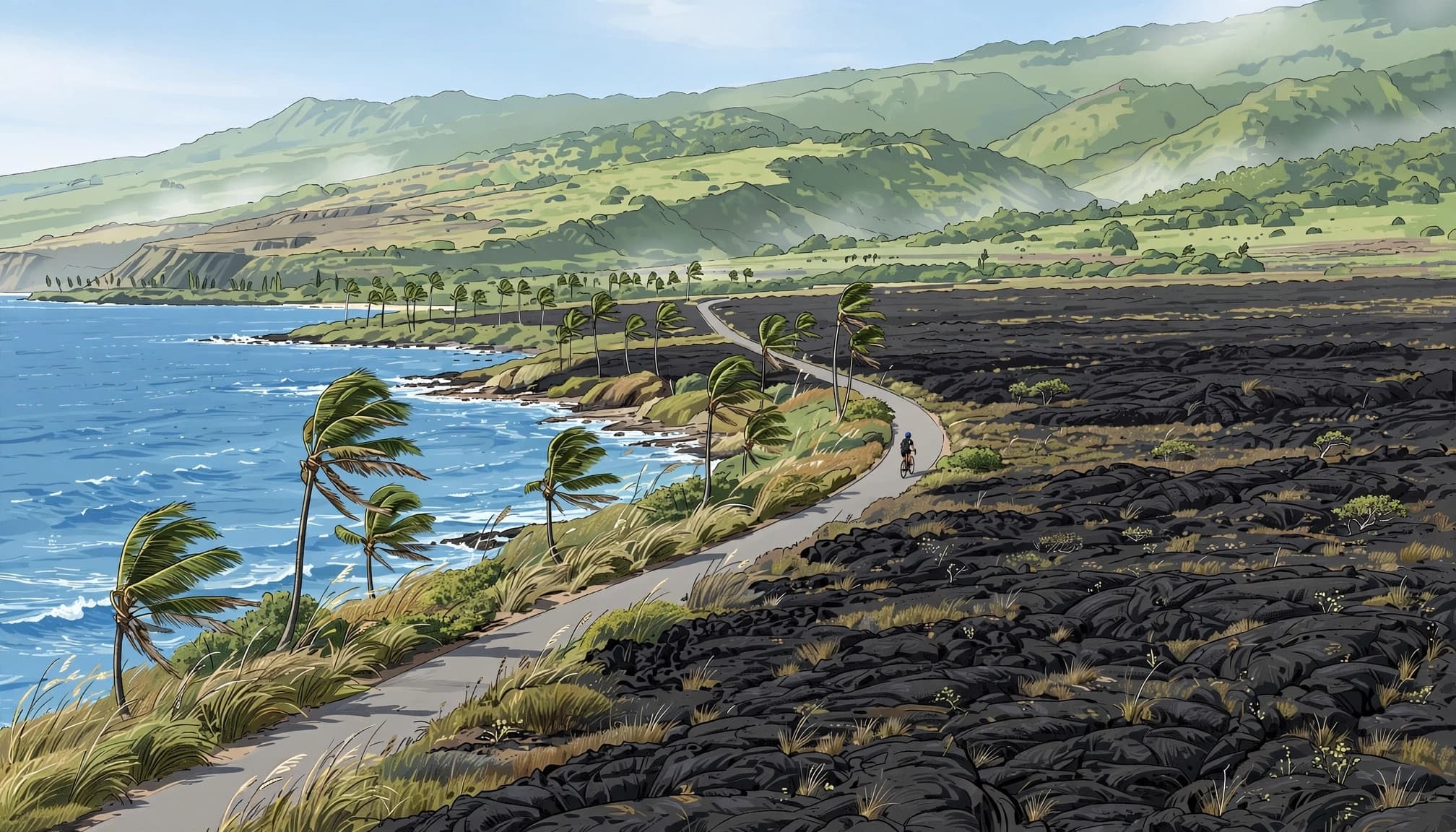
Other Hawaiian races may follow greener, hillier, or more sheltered routes, so Kona isn’t a template for every island. Study the course map and elevation, and build long rides or runs on terrain that resembles your race.
Local respect and mālama ʻāina
Racing in Hawaii also means sharing roads and places that matter to local communities. Mālama ʻāina expresses care and responsibility toward the land. Athletes can put that principle into practice by keeping all wrappers and bottles out of the environment, following course and access rules, and respecting cultural and sacred sites. The Hawaiʻi County guidance on mālama ʻāina offers helpful context for visitors.
Support locally owned businesses when practical, and follow event instructions about where athletes and spectators can go. These small choices help keep the race experience respectful for residents, visitors, and the places that host the course.
Which Hawaiian triathlon should you put on your calendar?
The right race depends on more than the island. Consider the distance you can train for, whether you prefer paved roads or trails, and how much time you can spend traveling. Event dates, formats, and entry rules can change, so confirm details with the official organizer before booking.
Ironman World Championship in Kona
The IRONMAN World Championship in Kailua-Kona has a global profile and a demanding full-distance format: a 2.4-mile swim, 112-mile bike ride, and 26.2-mile run. Its Big Island course is known for open, sun-exposed roads through lava terrain, with the swim and run centered near Kona’s coast.
This race suits experienced athletes who want to prepare for a major endurance challenge. Entry is not generally open to anyone who wants to register; qualification and other entry pathways depend on current rules. Check the IRONMAN World Championship qualification information rather than relying on past requirements.
Choose Your Distance, Duration and Goal Time
Make three quick selections and open the exact plan built for your race target.
Looking for a Fully Personalized Training Plan?
The training plans above are an excellent choice if they match your goal. However, if you’d rather train with a plan built specifically around your current fitness, goal race, preferred training days, weekly mileage, and target finish time, our RDA Custom Training Plans provide a personalized solution. We also have running courses available for runners seeking to run faster from the mile to the marathon.
Why Choose a Custom Training Plan?
| Standard Training Plan | RDA Custom Training Plan |
|---|---|
| Follows a fixed schedule | Built around your schedule |
| Standard weekly mileage | Peak mileage customized for you |
| Fixed workout days | Train on the days you choose |
| Same structure for everyone | Designed around your current fitness |
| Static plan | Updated as your fitness improves |
| One-time purchase | Ongoing personalized coaching and support |
What You’ll Receive
- A training plan built specifically for your goal
- Personalized training paces
- Long runs, tempo runs, threshold workouts, interval sessions, recovery runs, and easy runs
- Peak weekly mileage matched to your experience level
- Flexible training schedule that fits your life
- Ongoing plan adjustments as your fitness improves
Ready to Train Smarter?
Stop guessing and start following a plan built specifically for you, your schedule, and your racing goals.
Ironman 70.3 Hawaiʻi and other Big Island races
IRONMAN 70.3 Hawaiʻi, often called Honu, offers half the full-distance mileage: a 1.2-mile swim, 56-mile bike, and 13.1-mile run. Its course brings athletes through the Big Island’s coastal and lava-field scenery, but the shorter distance still calls for focused endurance training. Review the official 70.3 Hawaiʻi course details to understand the current route and support on course.
Honu can fit athletes seeking a long-course test without committing to a full IRONMAN. Other local Big Island races may offer shorter distances or different formats, though availability and schedules vary by year. Confirm current options before building your season around a particular event.
Honolulu, Maui, and off-road race options
The Honolulu Triathlon gives athletes a city-based option, with an urban setting and access to Oʻahu’s visitor amenities. Check the Honolulu Triathlon event information for current distances, dates, and registration details.
On Maui, XTERRA events may appeal to athletes who prefer off-road racing. Cross-triathlon courses typically replace the paved bike and road run with mountain biking and trail running, so they call for different equipment and terrain-specific preparation. However, Maui event schedules and formats can change; browse the XTERRA event calendar for current listings.
Compare each race’s distance, travel needs, and surface before choosing. Road events may suit athletes focused on speed or long-course preparation, while a trail race can be a better match for riders and runners who enjoy uneven terrain.
How to choose the right island, distance, and course
The best Hawaiian triathlon fits your current fitness, race goals, and travel plans. Before you choose an island for its scenery or a race for its name, check whether the course and trip work for you.
Match the race distance to your experience
Sprint races are the shortest common format, while Olympic-distance events require more time and endurance. A typical sprint includes a 750-meter swim, 20-kilometer bike, and 5-kilometer run; an Olympic race often doubles those distances. A 70.3, also called a half IRONMAN, includes a 1.2-mile swim, 56-mile ride, and 13.1-mile run. Full-distance races require a 2.4-mile swim, 112-mile ride, and 26.2-mile run. Check USA Triathlon’s distance guide and each event’s rules, since race labels and formats can vary.
If you’re new to triathlon, a sprint or Olympic-distance event may be a more manageable first goal. Consider the hours you can train each week and how many months you have before race day. Choose a longer event only if you can prepare consistently, recover well, and build endurance without sacrificing work or family responsibilities. Your goal may be to finish comfortably, race for a time, or gain experience before attempting a longer course.
Compare course demands and travel logistics
Once you have a distance in mind, compare the actual courses. Review the map and elevation profile, then look for exposed climbs, steep descents, and long stretches without shade. For the swim, check whether the course is in open ocean and what the event says about expected conditions. Also learn how far transition sits from the swim exit, bike course, and finish.
Travel can narrow the choice further. Compare airport access, lodging near the start, rental-car needs, and race-week transportation. Add flights, accommodation, bike transport, meals, and extra nights to your budget before committing. If heat or open-water swimming makes you uneasy, favor a distance and course you can prepare for, then train in similar conditions where possible.
A famous event may be a poor fit if its course, cost, or travel demands exceed your goals. Pick the race you can train for and reach without turning the trip into a source of stress.
What to expect on race day in Hawaii
Race day often begins before sunrise, when athletes arrive at transition, set up their gear, and listen for course updates. Give yourself time to find your rack, confirm where you enter and exit transition, and check how organizers handle last-minute changes. Conditions can feel different from training, especially when the ocean is unsettled or the sun heats exposed roads.
Open-water swim starts and safety
Hawaiian ocean swims can feel unfamiliar even to confident pool swimmers. Waves may disrupt your rhythm, currents can affect your line, and visibility may make it harder to spot buoys or nearby athletes. A crowded start can add contact and make it difficult to settle into your pace.
Practice in open water when possible, and learn the course layout before race morning. Follow lifeguard and organizer instructions, including any changes to the start or swim route. Use only safety gear the event permits, and don’t assume equipment allowed at one race will be allowed at another.
Pacing and fueling through the bike and run
The bike and run may expose you to strong sun, warmth, and wind, so start conservatively instead of chasing an early pace. Keep hydration steady and follow a fueling plan you’ve practiced during training. If you wait until you feel depleted, it can be harder to maintain your effort later.
Aid stations vary by event and course. Review the published locations and available supplies, then plan which items you’ll carry and which you’ll take on course. Avoid unfamiliar foods, drinks, or supplements on race day; test them in training first.
Race rules, cutoffs, and weather changes
Before traveling, read the athlete guide for transition procedures, drafting rules, discipline cutoffs, and emergency instructions. Rules differ by event, so don’t rely on what you remember from another race. The IRONMAN 70.3 Hawaiʻi athlete guide shows the type of event-specific details organizers publish; check for the latest guide before race week.
Weather or ocean conditions can prompt organizers to delay, change, shorten, or cancel part of an event for safety. Follow official announcements at athlete check-in and on race morning, and know where to get updates if plans change. A flexible plan helps you respond calmly while keeping safety ahead of your original race strategy.
How to train for a Hawaii triathlon
Build your plan around the race distance, your current fitness, and the time you can train each week. Triathlons in Hawaii can expose athletes to heat, wind, open water, and challenging terrain, so prepare for your specific course rather than relying on general fitness alone.
Build endurance and practice race-specific skills
Increase training gradually, especially if you’re new to endurance sports or returning after a break. Build consistent swimming, cycling, and running sessions before adding longer workouts or harder efforts. Your weekly volume should reflect both your starting fitness and race distance. A sprint race calls for less preparation than a 70.3 or full-distance event.
Practice transitions during selected workouts, including changing from the bike to the run. Also choose routes that resemble your course: ride exposed or rolling roads if the race includes them, and run on similar surfaces when possible. Add strength work that supports your training, such as controlled exercises for the legs, hips, and core, and schedule recovery days so your body can adapt. If you want more structure, consider a qualified triathlon coach or an established training plan, particularly for a longer race. USA Triathlon’s beginner guidance can help you understand the demands of training across all three disciplines.
Prepare safely for heat and open water
Heat adaptation takes time, so increase warm-weather training gradually rather than forcing hard workouts in peak heat. Choose cooler hours when possible, take rest breaks in shade, and drink according to a plan you’ve practiced. Stop exercising and seek help if you feel confused, faint, unusually weak, or seriously unwell.
Practice open-water swimming only in a permitted, safe location, and swim with appropriate supervision or a group. Work on sighting and settling into a steady rhythm, but avoid swimming alone or entering water when conditions seem unsafe. USA Triathlon explains practical preparation in its guide to open-water swim training. Follow local rules and the race organizer’s safety instructions.
Taper, recover, and arrive ready
Reduce your training load before race day so fatigue can ease while you maintain light movement. The timing depends on your race distance and plan, but avoid last-minute hard workouts that leave you sore or depleted. Protect sleep, keep meals familiar, and give yourself time to recover from travel.
Arrive early enough to learn the course and settle into the local climate without rushing. Then follow the event’s schedule for check-in, transition access, and gear inspection. Confirm any required equipment and race-morning instructions with the latest athlete guide.
Plan your Hawaii race trip without last-minute surprises
Once you choose a race, plan travel around its registration deadlines, event schedule, and course location. Policies and prices vary by airline, event, and island, so confirm details before you book.
Budget for entry, flights, lodging, and bike transport
Build a trip budget before you commit to a race. Include the entry fee, airfare, bike fees or shipping, accommodations, local transportation, meals, and any gear rental you may need. If you’re traveling with family, account for additional seats, lodging space, food, and activities, too.
Bike policies differ by airline, and costs can depend on the carrier’s size, weight, and handling rules. Compare flying with your bike against shipping it, and check both options before purchasing tickets. If you plan to rent equipment, confirm availability and fit well in advance.
Register as soon as your plans are firm, then read the event’s current athlete guide for check-in dates, required gear, and race-week schedules. Book flights and lodging early when possible, but review cancellation terms in case travel or event plans change. A simple spreadsheet can help you compare the full trip cost, not just airfare.
Choose where to stay and how to get around
Before booking a room, check its distance from transition, packet pickup, and the race start. Those locations may be separate, and a convenient hotel can save time on a packed race-week schedule. If you’re bringing a bike, ask about secure storage and whether your room has enough space for its case.
Transportation options vary across islands. Rental cars, event shuttles, buses, and other local services may fit different race plans, so compare them against your schedule and where your family wants to go. The Island of Hawaiʻi transportation guide outlines options for the Big Island. Also check event notices for road closures and restricted access, which can affect race-morning plans.
Protect the islands while you visit
Follow posted beach and trail rules, use reef-safe products where appropriate, and pack out wrappers, bottles, and other waste. Keep your distance from wildlife rather than approaching animals for photos. NOAA’s Hawaiʻi marine wildlife viewing guidance explains how to observe marine animals responsibly.
Local guidance can differ by site, so check signs and follow instructions from event staff and land managers. A little preparation helps you care for the places that make racing in Hawaii special.
Frequently Asked Questions
A few practical details can make race planning easier, especially if this is your first trip to Hawaii for a triathlon. Check each organizer’s latest information before booking or packing.
Can beginners race a triathlon in Hawaii?
Yes. Beginners can choose a shorter event, provided they train safely and meet the race’s age, equipment, and registration requirements. Pick a distance that fits your experience, then practice swimming, cycling, and running before race day.
When is the best time of year to race in Hawaii?
The best timing depends on the event calendar, island, course conditions, and your tolerance for heat. Check the race organizer’s current dates and local forecasts as your event approaches; no single month is best for every race. The Honolulu Triathlon’s event information is one example of an official page to check for updated scheduling.
Do you need to qualify for the Ironman World Championship in Kona?
Entry routes and qualification rules can change by year and athlete category. Review the current IRONMAN age-group slot allocation rules, and don’t assume that registering for another race guarantees a Kona start.
Can you rent a triathlon bike on the islands?
Bike rentals may be available near some events, but selection, fit, and availability vary. Contact the rental provider well before travel to confirm the bike’s fit and included components, pickup and return windows, and whether race-day support is available.
What should you pack for a Hawaii triathlon?
Pack your race gear, sun protection, familiar nutrition, and transition supplies, such as a towel and any items you need to organize your area. Also bring travel documents and any equipment required by the event. Check the athlete guide and your airline’s current sports equipment rules before you leave.
Conclusion
Triathlons in Hawaii offer a wide range of experiences, from approachable local events to demanding championship racing. The strongest choice is a race that fits your experience, goals, training time, and travel plans, rather than one chosen for its reputation alone.
Prepare for the course you’ll actually race, including its heat, wind, terrain, and open-water conditions. Before you book, verify current event dates, entry rules, course details, and athlete instructions with the organizer. Above all, treat the islands and their communities with care. With thoughtful planning and respect for the places that host each event, you can focus on racing well and enjoy the experience beyond the finish line.


