

Triathlons in Georgia: Peach State Swims, Fast Finishes
Georgia’s lakes, shaded state parks, and coastal roads give triathlon race days a distinct sense of place. The state has events for first-timers building confidence and experienced athletes chasing a stronger performance, though race calendars, formats, and course details can change each year.
Choosing the right triathlons means looking beyond the scenery. Distance, terrain, open-water conditions, and summer heat can all shape your experience, so check current race information before you register. This guide covers common race distances, notable Georgia venues, how to choose an event, training for local conditions, and practical race-day planning. Be sure to check out the RunDreamAchieve YouTube channel for weekly running tips.
Key Takeaways
- Triathlons in Georgia take place at lakes, state parks, and coastal venues, with course terrain and conditions varying by location.
- Race distances range from short beginner-friendly events to longer challenges; compare USA Triathlon’s format and distance guide with each event’s current course details.
- Choose a race based on your swimming experience, cycling comfort, fitness, and travel plans, not scenery alone.
- Prepare for open-water swimming, hills, and Georgia’s summer heat by matching training sessions to the conditions you’ll face.
- Before registering, confirm the race date, course, cutoff times, water rules, and equipment requirements with the event organizer.
What Triathlons in Georgia Offer, From Sprint Races to 70.3
Triathlons in Georgia range from short events that introduce the sport to half-distance races that demand months of focused preparation. Every triathlon follows the same basic order: swim, bike, then run. However, race distances, course conditions, and beginner options vary by event, so compare the listing and athlete guide before you sign up.
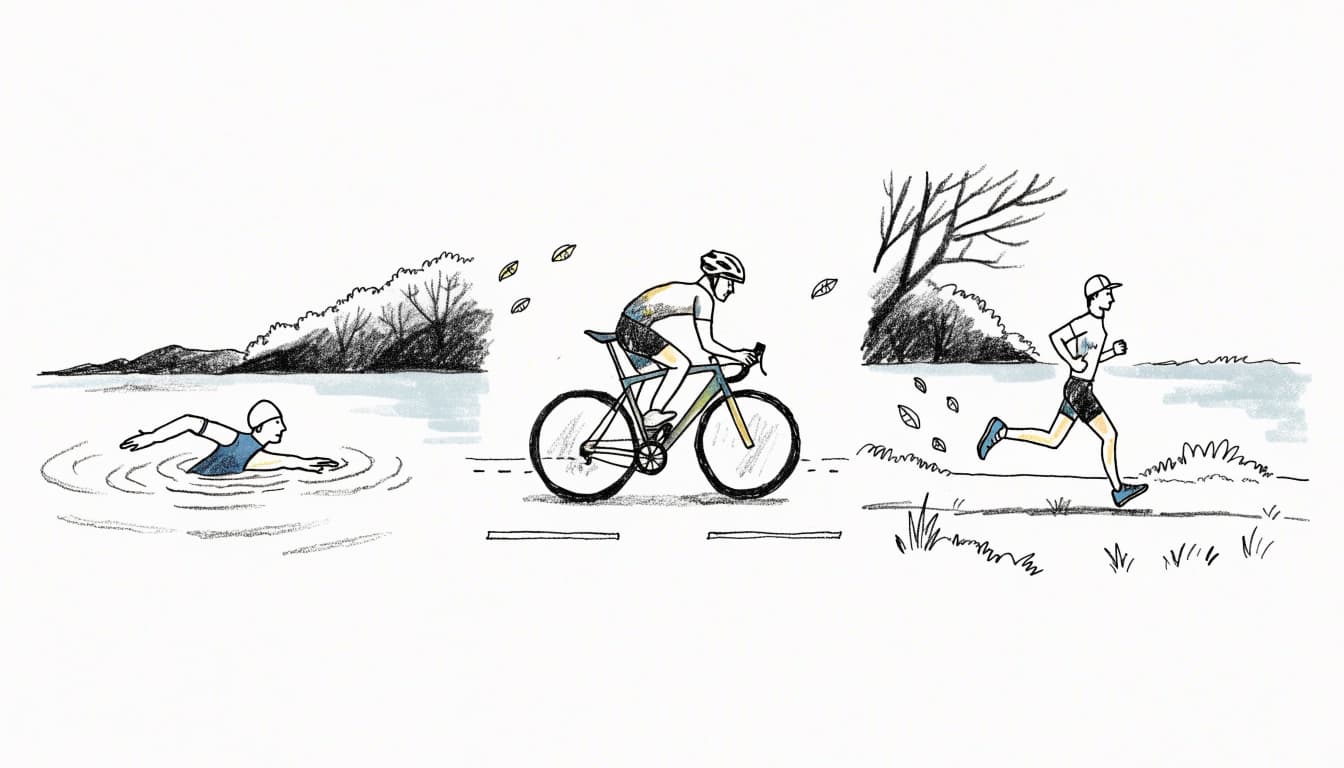
Choose a race distance that fits your experience
Distances are useful for comparing events, but treat them as general guides. Organizers may adjust courses to fit the venue, and some races use pool swims instead of open water. Common triathlon distance guides can help you understand the usual formats before checking a specific Georgia race.
- Super sprint: Often includes a 400-meter swim, 10-kilometer bike ride, and 2.5-kilometer run. Its short format can make it a practical first event, though an open-water start or unfamiliar transitions may still feel demanding.
- Sprint: Typically covers a 750-meter swim, 20-kilometer bike, and 5-kilometer run. It’s a popular entry point, but the swim and quick pace can challenge athletes who are new to racing.
- Olympic distance: Commonly consists of a 1.5-kilometer swim, 40-kilometer bike, and 10-kilometer run. This format calls for stronger endurance and pacing than a sprint.
- Half-distance, or 70.3: Adds up to 70.3 miles: a 1.2-mile swim, 56-mile bike, and 13.1-mile run. Expect a greater training commitment and careful planning for fueling and pacing.
A short course can still feel tough, especially if you’re new to open-water swimming, cycling in a group, or moving quickly through transitions. Choose a distance that matches your current fitness and experience, not only your long-term goal.
Try a relay or beginner-friendly event
A relay lets teammates split the three legs. One person swims, another rides, and a third runs, so each participant prepares for a single discipline rather than completing the entire course. That format can make a first race more manageable and gives friends with different strengths a way to take part together.
Some Georgia race listings may also mention novice waves, clinics, or shorter events. These options aren’t available at every race, so check the event details before building plans around them. If you’re unsure about the swim, look for a race with a format and setting that suit your current comfort level.
Know what a triathlon weekend includes
After registration, athletes usually pick up a race packet and prepare their gear. Many events also require participants to set up their bikes and other equipment in a transition area, where they move between the swim, bike, and run. A race briefing may cover the course, timing, safety procedures, and rules.
Schedules and requirements differ among organizers. Read the athlete guide for your event to confirm packet pickup hours, transition access, start times, course details, and equipment rules. That guide is the best source for final race-weekend instructions.
Where to Race: Georgia Lakes, Parks, and the Coast
Georgia triathlons take place in settings that shape each leg of race day. A calm-looking lake, a shaded park road, or a breezy island course can each bring different demands, so compare the venue with your experience and training. Race names, calendars, and routes change, which makes the current event listing and athlete guide essential reading.
Lake Lanier and other inland-water venues
Lake swims offer an open-water experience without the surf and saltwater associated with the coast. At Lake Lanier, athletes have raced at venues such as Lake Lanier Rowing Park. The lake has also hosted major competitions, including the 2022 USA Triathlon Collegiate Club National Championships. Those examples show the range of events held there, but they don’t guarantee a particular race will return on the same course.
Nearby roads and paths can add variety to training, with rolling terrain and stretches near the water. However, each race sets its own swim layout, bike route, and transition area. Water temperature, visibility, currents, and the distance from shore can vary by date and venue. Before registering, review the latest course map and event guide. A past route or a familiar lakeside view cannot tell you exactly what this year’s swim or ride will involve.
Choose Your Distance, Duration and Goal Time
Make three quick selections and open the exact plan built for your race target.
Looking for a Fully Personalized Training Plan?
The training plans above are an excellent choice if they match your goal. However, if you’d rather train with a plan built specifically around your current fitness, goal race, preferred training days, weekly mileage, and target finish time, our RDA Custom Training Plans provide a personalized solution. We also have running courses available for runners seeking to run faster from the mile to the marathon.
Why Choose a Custom Training Plan?
| Standard Training Plan | RDA Custom Training Plan |
|---|---|
| Follows a fixed schedule | Built around your schedule |
| Standard weekly mileage | Peak mileage customized for you |
| Fixed workout days | Train on the days you choose |
| Same structure for everyone | Designed around your current fitness |
| Static plan | Updated as your fitness improves |
| One-time purchase | Ongoing personalized coaching and support |
What You’ll Receive
- A training plan built specifically for your goal
- Personalized training paces
- Long runs, tempo runs, threshold workouts, interval sessions, recovery runs, and easy runs
- Peak weekly mileage matched to your experience level
- Flexible training schedule that fits your life
- Ongoing plan adjustments as your fitness improves
Ready to Train Smarter?
Stop guessing and start following a plan built specifically for you, your schedule, and your racing goals.
Jekyll Island and coastal race settings
The Turtle Crawl Triathlon is a familiar example of a race connected with Jekyll Island. The island’s coastal setting can bring a different race-day feel, with sea breezes, high humidity, and exposed roads that may feel warmer than shaded inland routes. The Jekyll Island Turtle Crawl event page provides current information when a race is scheduled.
Don’t assume that a coastal event swims in the ocean. Organizers may use different bodies of water or course layouts, and conditions can change from year to year. If the event involves saltwater or tidal influence, check the athlete guide for swim location, tide timing, and any water-specific instructions. Wind also matters on the bike, especially on open stretches where there is little shelter. Training in warm, humid weather and practicing steady effort into a headwind can help you prepare for those demands.
State parks, Callaway Gardens, and scenic courses
Georgia state parks and resort venues such as Callaway Gardens appeal to athletes who want a race surrounded by trees, lakes, or landscaped grounds. A wooded course can offer welcome shade, while quiet roads and scenic views make the day feel distinct from an urban race. Events have been held at or near Lake Lanier, Callaway Gardens, and Georgia state parks, though venues and schedules vary.
Scenery doesn’t tell you how difficult a course will feel. Park routes may include hills, tight turns, uneven pavement, or roads shared with other visitors. Access rules can also affect where athletes may warm up or ride before race day. Check the current elevation profile, surface details, transition location, and park rules before you register. A course with steady climbs calls for different bike preparation than a flat loop, even when both look short on a map.
How to Choose the Right Georgia Triathlon for You
The right Georgia triathlon fits your current ability, race goals, and travel plans. A scenic venue may catch your eye, but the course details and event support will shape your race-day experience.
Match the course to your strengths and goals
Compare the swim, bike, and run as separate challenges. Check the total distance, elevation profile, number of turns, road surface, swim type, and cutoff times in the current athlete guide. A short race can still test your skills if the swim is open water or the bike route has sharp turns.
A flat course may suit athletes who want steady pacing or a personal-best attempt, although exposed roads and wind can make it demanding. A hilly route rewards measured effort and climbing practice, while frequent turns or rough pavement can interrupt your rhythm. Open-water swimming adds variables such as sighting, visibility, and contact with other swimmers. None of these features makes a course best for everyone; choose the one that fits your experience and preparation.
If you’re new to triathlons in Georgia, prioritize a distance and swim setting you can handle confidently. Athletes chasing a time goal should compare elevation and surface conditions with their strengths, then check that the cutoff times allow room for a controlled race.
Check safety, support, and accessibility details
Before you register, look for clear information about lifeguards, course marshals, aid stations, traffic controls, and emergency support. The athlete guide should explain where support is available and what happens if weather or water conditions change. If the details are missing, ask the organizer rather than assuming every race offers the same coverage.
Also review parking, transition access, road closures, and any restrictions that could affect your arrival or race-day routine. Athletes who need adaptive equipment or assistance can consult USA Triathlon’s adaptive division guidance, then contact the event team to confirm how its policies apply at that race.
Send specific questions before paying the entry fee. Ask whether the swim has lifeguards along the course, how often aid stations appear, whether roads remain open to traffic, and what accessibility options the event can provide.
Compare timing, travel, and race-day fit
A good course can still be a poor fit if the weekend strains your schedule. Check the event date against work, family plans, and your training cycle. Then estimate drive time, lodging costs, and whether you can arrive early enough for packet pickup and a relaxed race morning.
Start time matters, too. An early wave may require an overnight stay, while a longer drive can leave you tired before the swim begins. Review the schedule for transition opening, warm-up access, and packet pickup, especially if the venue is far from home.
Finally, confirm the current race date, course details, and registration status directly with the organizer. Event calendars and routes can change, and a listing from a previous year may no longer reflect this season’s plans.
Train for Georgia’s Heat, Humidity, and Open Water
Training for a Georgia triathlon means preparing for more than the listed distances. Lake conditions, hills, pavement, and summer weather vary by season and location, so use your race’s current course details to shape a flexible plan. Build steady fitness first, then add practice that resembles your event.
Build steady fitness across all three sports
Set a weekly rhythm with regular swim, bike, and run sessions, adjusted to your experience, schedule, and race distance. Beginners should first become comfortable covering manageable distances in each sport. Once that feels routine, gradually increase training time or distance rather than making big jumps in several workouts at once.
Keep most sessions at an easy aerobic effort, where you can speak in short sentences. That steady work builds endurance without making every workout a test. Later, if your fitness and recovery allow, add a small amount of faster or hill-focused work suited to your race. A sprint plan and a 70.3 plan require different workloads, so choose one that fits the event and your current ability.
Rest is part of the plan, not a missed workout. Schedule lighter days, pay attention to persistent fatigue or pain, and reduce training when your body needs recovery. Practicing a brief bike-to-run session can help you adjust to the leg change, but it shouldn’t replace consistent training in each sport.
Practice open-water swimming and transitions
Pool sessions build technique and endurance, but they don’t fully prepare you for open water. Practice in a supervised, permitted area with a training partner or organized group. Never swim alone. Start near shore, settle into a controlled pace, and practice lifting your eyes to sight landmarks without stopping your stroke. Getting used to swimming near others can also make a crowded race start less startling.
USA Triathlon recommends safety steps such as wearing a brightly colored swim buoy and avoiding areas with motorized boats. Its open-water swimming guidance offers more practical preparation tips. Follow local rules and event-specific instructions, since swim conditions and safety arrangements differ by venue.
Rehearse transitions before race day. After a swim, practice exiting the water, removing your cap and goggles, and moving calmly to your bike. Then try a short run after cycling so your legs recognize the change in effort. Use the gear you’ll race in, including your wetsuit if permitted and expected, and make sure it fits comfortably.
Prepare for heat, humidity, and course terrain
Hot, humid weather can make a familiar pace feel harder because your body must manage both effort and heat. Build heat exposure gradually, and avoid suddenly adding long, hard workouts in high temperatures. The CDC’s guidance for athletes in hot weather recommends pacing activity and scheduling exercise during cooler parts of the day.
On warm sessions, start conservatively, use shaded routes when possible, and carry or access fluids according to your needs and the workout. Check the forecast, but remember that sun, humidity, and shade can vary along a course. If you have a medical condition or concerns about exercising in heat, ask a healthcare professional for guidance. Follow the race’s heat-safety instructions, including any changes to start times or course procedures.
Finally, match some rides and runs to the terrain you expect. If your course includes rolling roads, practice controlled climbing and descending; if it follows park paths or rough pavement, train on similar surfaces when practical. Keep the effort appropriate for your fitness, and adjust for weather rather than forcing a target pace.
Plan Your Race Budget and Georgia Race-Day Logistics
A well-planned race weekend protects your budget and gives you more time to focus on the swim, bike, and run. Costs vary with event distance, registration timing, the equipment you already own, and how far you need to travel. Before you commit, review the organizer’s current fee schedule and race-weekend information.
Budget for entry fees, gear, and travel
Start with the registration fee, then consider what you need to buy, borrow, or service. A tri suit or other race clothing, a properly fitted helmet, and basic swim gear can add to the cost if you don’t already own them. Your bike may also need routine maintenance, such as a safety check, tire replacement, or drivetrain service.
Travel adds another layer. Estimate fuel, parking, lodging, and meals, especially if packet pickup or an early start means staying overnight. If you’re driving a long distance, account for bike transport too. A rack, travel case, or professional bike shipping can affect both cost and timing. Check the event’s current registration fees and deadlines before making plans, since entry costs and included services can change.
A simple budget can prevent last-minute spending. List registration, any gear purchases, bike service, fuel, lodging, and food, then add a small buffer for unexpected travel needs.
Use the athlete guide to prepare for race weekend
Once registered, read the athlete guide and save the latest version on your phone. Confirm packet pickup hours, parking locations, road closures, transition access, required equipment, check-in steps, and your start time. Also note where you can leave a vehicle and whether you need to move it before roads close.
Race rules vary by organizer and event format. Review the guide alongside USA Triathlon’s current multisport rules, especially for equipment and race-number requirements. If something is unclear, contact the race team before traveling.
Arrive with enough time to pick up your packet, find transition, and learn the route between the swim exit, bike area, and run course. When possible, travel the day before. That gives you room to handle check-in and parking without rushing on race morning. USA Triathlon’s transition tips for race day can also help you keep your setup simple and organized.
Pack for a smooth and safe race morning
Pack the night before and use this checklist as a starting point:
- Swim cap and goggles, plus a wetsuit if the event permits or requires one.
- Bike, helmet, and any tools or spare equipment you know how to use.
- Running shoes, race clothing, and socks if you plan to wear them.
- Familiar nutrition and water for before, during, and after the race.
- Weather-appropriate extras, such as sunscreen, a light layer, or a change of clothes.
Follow the event’s equipment rules, including any restrictions on wetsuits, helmets, or transition items. Test your gear and fueling choices during training rather than trying something new on race morning. Before bed, set out your kit, check the start time and weather, and confirm your route to the venue.
Frequently Asked Questions
Planning a triathlon in Georgia often comes down to details that change by event, including the date, swim setup, and race rules. These answers can help you narrow your options and prepare with fewer surprises.
When is triathlon season in Georgia?
Many Georgia triathlons take place during warmer months, but there is no fixed season that applies to every race. Organizers set their own schedules, and dates can shift from year to year. Check a current Georgia triathlon calendar and review the local forecast and event updates before making travel plans.
Can I do a Georgia triathlon if I cannot swim well?
You need to meet the swim requirements for the event you choose, so build confidence before you register. Lessons and supervised open-water practice can help you assess your comfort with distance, sighting, and swimming near others. Also ask the organizer whether the race offers a beginner option or a different swim format.
Do I need an expensive bike to enter a triathlon?
For many beginner events, a safe, well-maintained bike matters more than a high-end model. Before race day, have a bike shop or qualified mechanic check the brakes, tires, gears, and overall fit. Review the event’s equipment rules and USA Triathlon’s multisport rules, since requirements can differ by race.
Are there triathlons in Georgia for beginners?
Shorter races and relays can be approachable ways to try the sport, but the distance alone doesn’t determine whether an event is right for you. Check the swim format, course conditions, cutoff times, and available support, then choose a race you can prepare for safely. Look for novice guidance or beginner clinics if you want help with race-day procedures.
How do I find current Georgia triathlon dates?
Start with the race organizer’s official website, then compare its details with a current event calendar or the USA Triathlon event listings. Confirm the date, registration status, course map, and updates directly with the organizer before booking travel. A past listing doesn’t guarantee that the race will return.
Conclusion
Triathlons in Georgia offer a range of settings and distances, but the best race is one that fits your experience and gives you time to prepare. There’s no single right way to start: choose a suitable distance, confirm the event’s current details, and train steadily for its course and expected weather.
With a clear plan, the lake swim, park roads, or coastal route can feel far more manageable on race day. Select an event that matches your goals, then build a training plan around its demands. Your first step can be a short race or a longer-term challenge; what matters is choosing a course you can prepare for safely.


