

Trail Races in Oregon: Misty Forests and Volcanic Ridgelines
Misty forest paths, volcanic ridgelines, and rugged coastal trails give Oregon runners a striking range of places to race. Across the state, you’ll find events with shorter options for first-timers as well as demanding courses suited to experienced ultrarunners.
The right race depends on more than mileage. Terrain, elevation, weather, and race-day logistics can all shape your experience, so it pays to choose a course that fits your training and goals.
Events such as Gorge Waterfalls, Peterson Ridge Rumble, and Mt. Hood 50 offer a taste of Oregon’s variety. Read on for trail race ideas and practical advice to help you pick your course and prepare for race day. Be sure to check out the RunDreamAchieve YouTube channel for weekly running tips.
Key Takeaways
- Trail races in Oregon range across forest paths, volcanic ridgelines, and rugged coastal terrain, so match the course to your experience and goals.
- Events such as Gorge Waterfalls, Peterson Ridge Rumble, and Mt. Hood 50 offer varied distances and settings; Travel Oregon’s running-event guide highlights several.
- Compare elevation, surface conditions, and total distance before registering, since mileage alone won’t show how demanding a course may feel.
- Check race-day logistics and current event details early, including start times, transportation, aid stations, and any required gear.
- Build training around the terrain you’ll face, adding hills, trail time, and long runs that reflect your chosen race.
Trail Races in Oregon Show Off Forests, Mountains, and More
Oregon trail races can feel like different sports depending on where you toe the line. A shaded forest course may demand steady attention to roots and mud, while an exposed mountain route tests climbing legs and weather readiness. Before choosing an event, look beyond the distance to the surface, elevation profile, and likely conditions.
Run beneath old-growth trees or climb into the Cascades
In western Oregon, forest singletrack often winds beneath dense tree cover, where damp soil, roots, and rocks can make footing uneven. Farther east, high-desert trails tend to offer more open skies and drier ground, but loose dirt and sun exposure can add their own demands. Coastal routes may mix forest paths with sandy or wind-exposed stretches.
The Cascades bring another challenge: sustained climbs, rocky volcanic terrain, and elevation that can change the effort required at a given pace. A course with significant gain may slow even strong runners, especially if climbs arrive late in the race. For a sense of the range, Mt. Hood 50’s course options include mountain views and several distances.
Expect changing weather and trail conditions
Rain can turn soil slick and streams higher, while a dry spell may leave dusty, loose footing. On exposed routes, summer heat can make water and sun protection more important. Wildfire smoke can also affect air quality, and mountain events may face cold, snow, or early-season mud even when lower elevations feel mild.
Conditions depend on the course and date, so check the race organizer’s latest updates before traveling and again close to race day. Review any required gear, aid-station details, and course changes. For smoke-related planning, the Oregon DEQ air quality map reports readings from monitoring stations around the state.
Choose from a short trail race to an ultramarathon
A 5K or 10K can be a manageable introduction to uneven surfaces and trail pacing, though hills and technical footing may make it slower than a road race. Half marathons and marathons usually call for more time on trails and longer training runs that match the course’s climbing and descents.
At 50K and beyond, preparation also needs to account for extended time on your feet, fueling, and aid-station logistics. Longer ultras may require runners to manage changing conditions over many hours, with some events calling for additional gear. Distances vary by race, so check the current event lineup rather than assuming every option will be offered. For example, Mt. Hood 50 lists its available distances on the event page.
Oregon Trail Races Worth Adding to Your List
Oregon offers trail races for runners who want waterfall views, pine-forest miles, or demanding mountain routes. Treat these events as starting points rather than a definitive ranking. Race formats and course details can change, so check each event’s current information before you register.
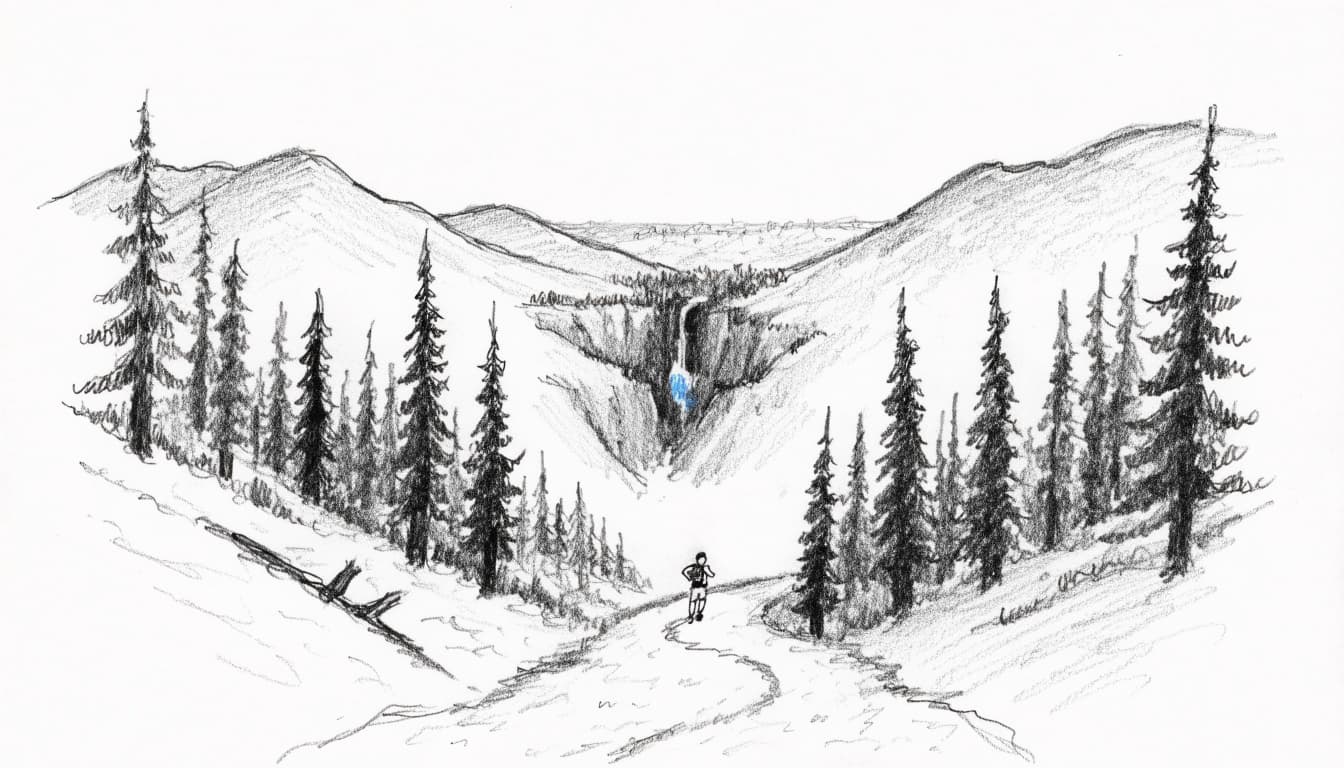
Gorge Waterfalls brings runners to dramatic Columbia River trails
Gorge Waterfalls draws runners to the Columbia River Gorge, where steep terrain, forested trails, and waterfalls shape the experience. The scenery is a major part of the appeal, but the route also suits runners who enjoy technical footing and trails that demand attention.
Course options and trail conditions vary by year. Before planning travel or training around a particular distance, review the latest event information and any course updates.
Peterson Ridge Rumble offers a Central Oregon forest race
Near Sisters, Peterson Ridge Rumble takes runners through Central Oregon pine forest and rolling trail terrain. The setting offers a different feel from the Gorge: open stretches and forested paths replace dramatic river cliffs, while steady ups and downs keep the route engaging.
The event can appeal to runners looking for a choice of race distances, from a first trail challenge to a longer effort. Since the current lineup can change, check the event’s latest race details and registration information before committing.
McKenzie River Trail Run follows a lush river corridor
The McKenzie River Trail Run gives runners a chance to experience one of Oregon’s memorable forest-and-river corridors. Lush surroundings and the presence of the river create a scenic backdrop, with a route that feels distinct from the drier trails east of the Cascades.
The setting alone makes this race worth considering if you want a forested outing. Still, don’t assume the course surface, conditions, or distance will be the same each year. Use the current event page to confirm what runners can expect.
Mt. Hood 50 and Wy’east Wonder bring mountain challenges
Mt. Hood-area races offer mountain scenery and a stronger emphasis on climbing and endurance. Mt. Hood 50 is one option to explore, while Wy’east Wonder offers another way to take on the region’s mountain terrain. Weather can shift with elevation and season, so runners should prepare for more than a single set of conditions.
These races reward patient pacing and the stamina to keep moving over sustained climbs. Before choosing one, compare the current course and distance details. The organizer’s Wy’east Trailfest race information can help clarify the event’s present format.
Choose Your Distance, Duration and Goal Time
Make three quick selections and open the exact plan built for your race target.
Looking for a Fully Personalized Training Plan?
The training plans above are an excellent choice if they match your goal. However, if you’d rather train with a plan built specifically around your current fitness, goal race, preferred training days, weekly mileage, and target finish time, our RDA Custom Training Plans provide a personalized solution. We also have running courses available for runners seeking to run faster from the mile to the marathon.
Why Choose a Custom Training Plan?
| Standard Training Plan | RDA Custom Training Plan |
|---|---|
| Follows a fixed schedule | Built around your schedule |
| Standard weekly mileage | Peak mileage customized for you |
| Fixed workout days | Train on the days you choose |
| Same structure for everyone | Designed around your current fitness |
| Static plan | Updated as your fitness improves |
| One-time purchase | Ongoing personalized coaching and support |
What You’ll Receive
- A training plan built specifically for your goal
- Personalized training paces
- Long runs, tempo runs, threshold workouts, interval sessions, recovery runs, and easy runs
- Peak weekly mileage matched to your experience level
- Flexible training schedule that fits your life
- Ongoing plan adjustments as your fitness improves
Ready to Train Smarter?
Stop guessing and start following a plan built specifically for you, your schedule, and your racing goals.
Pine to Palm and SOB test runners in Southern Oregon
Pine to Palm and Siskiyou Out Back (SOB) are Southern Oregon options for runners drawn to longer, rugged mountain events. Both offer a different regional setting from the Columbia Gorge and Mt. Hood, with courses that call for endurance and comfort on challenging trails.
Longer mountain races require more than a strong finish to weekly runs. Build experience on hills and uneven ground, and plan for the time you’ll spend on course. Check the current Siskiyou Out Back event information and Pine to Palm’s event page for routes, cutoffs, race formats, and registration details.
Find the Right Oregon Race for Your Goals and Experience
A good race choice gives you room to grow without asking your training to do more than it can support. Compare distance, terrain, timing, and event logistics, then choose the challenge that fits your current base and the time you have to prepare.
Match the distance to your current training
For a first trail race, a 5K or 10K can introduce uneven footing and trail pacing without requiring a major jump in weekly mileage. If you already race on roads, consider a shorter trail distance before choosing a technical half marathon. The same mileage can take much longer when the course climbs or the surface slows your stride.
Ultras call for more than ambition. Build consistent running first, then add long runs, climbing, and time on trails gradually. Choose a distance you can prepare for with a realistic schedule, and leave enough weeks to adapt. A finish line is more satisfying when the training plan supports it.
Choose terrain that fits your strengths
Course descriptions and elevation profiles help reveal what mileage alone can hide. Smooth forest paths may suit runners who prefer steady effort, while rocky, root-filled singletrack rewards careful footing and patience. Sustained climbs test strength and pacing, and exposed routes can add sun, wind, or heat to the effort.
Consider what you enjoy, but also train for the course’s hardest features. A rolling route may feel manageable on paper yet challenge runners unaccustomed to repeated climbs. Look for total elevation gain, the steepness and length of major ascents, and whether technical sections appear late in the race.
Pick a season and location that work for you
Oregon’s seasonal patterns vary by region and elevation, and they’re never a guarantee of race-day conditions. Spring can bring wet, muddy trails; summer often means drier footing, though exposed courses may feel hot. Mountain events can stay cold or see lingering snow, while fall weather can shift quickly.
Travel plans matter, too. Check how far the start is from lodging, whether you’ll need to arrive the day before, and how early you must leave for the start. Before heading to a mountain race, review a location-specific National Weather Service forecast. Also check local trail access and closures, such as the Columbia River Gorge alerts.
Look beyond the finish line when comparing events
Race atmosphere can shape your day as much as the course. A small event may feel quiet and community-focused, while a larger field can bring more energy at the start and along shared sections. Choose the setting that motivates you, then read the practical details before registering.
Check aid-station spacing and cutoff times, especially for longer races. Confirm required gear, drop-bag rules, and whether the course provides enough support for your experience level. Finally, review field size and refund or transfer policies. These details affect how you prepare and what happens if your plans change.
Prepare for Oregon Trails Before Race Day
A strong race-day plan starts with training that reflects the course, gear you have already tested, and logistics settled before you leave home. Oregon’s trails can shift from smooth forest paths to steep, rocky climbs, so use your event’s current guide to shape the details.
Build strength for climbs, descents, and uneven ground
Add hills gradually rather than turning every run into a hard climb. Start with short, controlled uphill repeats or rolling routes, then increase the time or elevation as your fitness develops. Include easy trail runs so your feet and ankles adapt to roots, rocks, mud, and changing footing.
Downhills deserve practice, too. Running them at a controlled effort helps your legs adjust to the braking and impact that descents demand. Add strength work, such as step-ups, split squats, and calf raises, and build the workload over time. If possible, train on surfaces similar to your race course.
Practice fueling, hydration, and gear choices
Test your shoes, socks, layers, pack, food, and fluids during long training runs. A pack that rubs after an hour or a snack that upsets your stomach can become a bigger problem over several hours. Use practice runs to learn what you can carry comfortably and how often you need to eat or drink.
Your setup depends on the distance, weather, and aid-station access. A shorter race with frequent support may require less carried food and water than a remote course with longer gaps between stations. Check the event’s required-gear list, then use training to confirm each item works. For longer or exposed routes, review the Ten Essentials for outdoor trips.
Plan travel, lodging, and the race morning
Register before the event’s deadline, then map the drive and check where runners can park. Some starts require a shuttle or have limited parking, so confirm the plan before booking nearby lodging. If bib pickup happens the day before, account for that stop and any required check-in.
Race mornings can start early, especially when the start is far from town or runners need time to reach a shuttle. Read the current event guide for pickup hours, start time, parking instructions, cutoff rules, and course updates. These details can change by race and year, so rely on the latest organizer information rather than an old schedule.
Protect yourself and the trails
Start at a pace you can sustain, especially on climbs where a fast opening effort can drain energy early. Carry every safety item the race requires, follow course markings, and tell event staff if you feel unwell or see another runner who needs help. If you lose the route, stop and check for markings instead of taking a shortcut.
Trail rules vary by land manager and event. Stay on the marked course, respect closures and right-of-way instructions, and pack out wrappers and other trash. The National Park Service’s Leave No Trace principles also recommend leaving natural areas as you found them. Avoid cutting switchbacks or running along fragile trail edges, which can damage vegetation and widen the path.
Frequently Asked Questions
Choosing among trail races in Oregon often raises practical questions beyond distance and terrain. Use these answers to compare event timing, course demands, gear, and registration details before making plans.
When is the best time of year for trail races in Oregon?
There isn’t one best season for every runner because race dates and conditions vary by region, elevation, and event. Spring often brings wet ground and muddy sections, while summer can mean drier trails and more heat on exposed routes. Fall may offer cooler running weather, but conditions can shift quickly, especially in the mountains. Check current race calendars and organizer updates before choosing a date, then look for recent notes about trail conditions and weather.
Are there beginner-friendly trail races in Oregon?
Yes. Many events offer shorter distances or less demanding course options, so first-time trail runners can find a manageable starting point. Still, a short race can feel tough if it includes steep climbs, rocky footing, or extended technical sections. Before registering, study the elevation profile and course description, and consider whether the terrain matches what you have practiced. If the event lists several distances, compare their climbing and surfaces as well as their mileage.
What should I bring to an Oregon trail race?
Start with trail shoes that suit the course surface, plus weather layers you have tested during training. Bring hydration and fuel that fit the race length and aid-station spacing, and pack every item on the organizer’s mandatory gear list. Required equipment varies by event, so don’t assume one race’s checklist applies to another. Check the latest race guide for rules about packs, lights, and other required items.
How do I find current race dates and registration details?
Use the official event website or the organizer’s latest announcements to confirm dates, fees, registration status, course changes, and race rules. A calendar can help you discover options, but it may not reflect the newest updates or registration limits. For example, Oregon Trail Runs’ event listings show upcoming races, while Go Beyond Racing’s website provides information about its events. Before booking travel, confirm the details directly with the organizer rather than relying on an old listing.
Can I run an Oregon trail race without ultramarathon experience?
Absolutely. Many Oregon events include shorter distances, and you don’t need ultra experience to enter a race that fits your current fitness and trail skills. Choose a course with a reasonable distance and elevation profile, then train consistently on similar surfaces when possible. Build mileage gradually, adding hills and longer outings over time instead of making a sudden jump to a demanding course.
Conclusion
Trail races in Oregon offer a course for nearly every goal, from a first wooded 5K to a demanding mountain ultra. The strongest choice is one that fits your experience and gives you time to prepare for its terrain and likely conditions.
Choose your course, build your training around its demands, and take the next step toward the starting line. Oregon’s trails are ready to meet you where you are.


