

Trail Races in Nevada: Desert Peaks and Sierra Singletrack
Nevada offers trail runners a striking range of terrain, from open high-desert paths to rugged mountain routes above Lake Tahoe. That variety also means conditions can change sharply between races, with altitude, exposure, footing, and weather all shaping the day.
Finding the right event takes more than choosing a distance. This trail race guide highlights notable trail races in Nevada, explains how mountain, foothill, and desert courses differ, and covers when to race and how to prepare. Start by comparing a few established events and the kind of challenge each one offers.
Key Takeaways
- Trail races in Nevada range across alpine singletrack, Reno-area foothills, and exposed desert terrain, so course conditions matter as much as distance.
- Tahoe events can include demanding mountain routes; check the Tahoe Rim Trail’s permitted events for current race listings.
- Reno-area options vary by route and surface, so confirm whether a specific event follows dirt trails, paved roads, or both.
- Red Rock Canyon races bring desert exposure and rocky footing, making season, shade, and water access important planning factors.
- Before registering, verify the event date, elevation profile, aid stations, cutoff times, and current course rules with organizers.
Trail Races in Nevada: Events Worth Putting on Your Calendar
Nevada’s trail calendar includes high-country ultras, Reno-area foothill races, and desert events near Las Vegas. Terrain and race offerings can change, so use official event pages to confirm dates, courses, distances, and registration details before making plans.
Tahoe Rim Trail Endurance Runs near Lake Tahoe
The Tahoe Rim Trail Endurance Runs take place in the high country around Lake Tahoe and the Carson Range. The area near Incline Village gives runners a sense of the demanding alpine terrain, though event start locations and course routes can vary by year.
Past race lineups have included 50K, 50-mile, and 100-mile options. The current organizer’s lineup may differ, so check the Tahoe Rim Trail Endurance Runs website for the year you plan to race. Some editions have used Carson City as an event base, rather than starting in Incline Village.
At altitude, long climbs and extended hours on technical trails raise the demands well beyond distance alone. These races suit experienced runners who can manage mountain conditions and prepare for a full day or night on the course.
Silver State 50/50 in the Reno foothills
The Silver State 50/50 starts in the Reno area and heads into the foothills on dirt trails and roads. When offered, its 50K and 50-mile races give runners a choice between a demanding ultra and a longer day on exposed terrain.
The open foothills offer little shade, and dry conditions can make hydration and sun protection important parts of race planning. Climbs add another challenge, especially for runners who are more familiar with shaded forest routes. The Silver State 50/50 race page lists event details, but check the current course, aid stations, and race lineup before registering.
Red Rock Canyon trail racing near Las Vegas
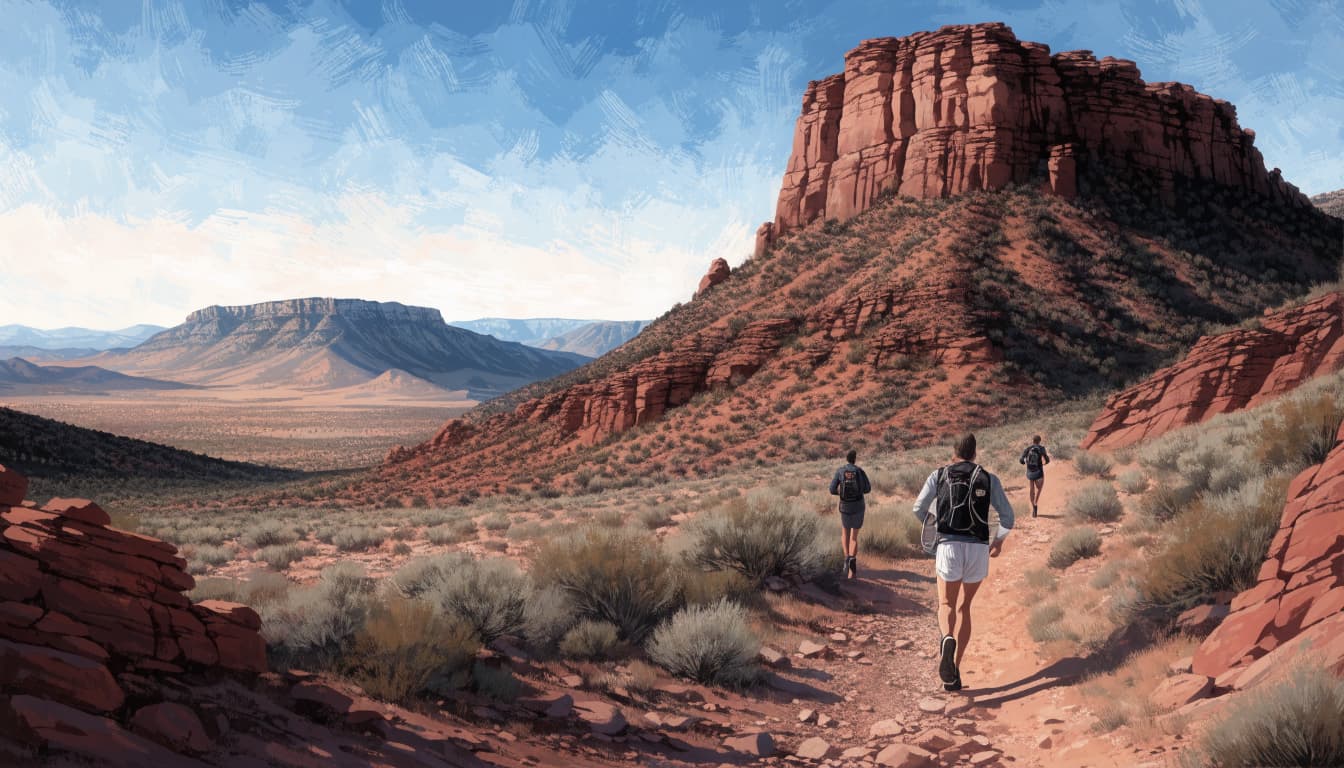
Red Rock Canyon’s sandstone cliffs and rugged desert trails make a memorable setting for a race outside Las Vegas. The Red Rock Canyon 50K is one event to look for, though its schedule and lineup can change. Review the organizer’s Red Rock Canyon race page to confirm whether the event is being held and to check the current course and registration details.
Rocky, exposed terrain can slow runners and increase the effects of heat. Seasonal weather matters: cooler months may offer more manageable conditions, while sun exposure and limited shade still call for careful preparation. Also check the Bureau of Land Management’s Red Rock Canyon information for current area notices and access information, including permit-related updates.
How to find other Nevada trail events
For current listings, start with official race calendars and event-organizer pages. Local running clubs can also share regional announcements, while land-management agencies post access restrictions and notices that may affect events on public lands.
Check the race format before you commit. A Nevada listing may be a road ultra or a relay rather than a trail race, even when it takes place near popular trails. Confirm the surface, route, distance, and aid-station plan with the organizer so the event matches your goals and your expectations.
Choose Your Distance, Duration and Goal Time
Make three quick selections and open the exact plan built for your race target.
Looking for a Fully Personalized Training Plan?
The training plans above are an excellent choice if they match your goal. However, if you’d rather train with a plan built specifically around your current fitness, goal race, preferred training days, weekly mileage, and target finish time, our RDA Custom Training Plans provide a personalized solution. We also have running courses available for runners seeking to run faster from the mile to the marathon.
Why Choose a Custom Training Plan?
| Standard Training Plan | RDA Custom Training Plan |
|---|---|
| Follows a fixed schedule | Built around your schedule |
| Standard weekly mileage | Peak mileage customized for you |
| Fixed workout days | Train on the days you choose |
| Same structure for everyone | Designed around your current fitness |
| Static plan | Updated as your fitness improves |
| One-time purchase | Ongoing personalized coaching and support |
What You’ll Receive
- A training plan built specifically for your goal
- Personalized training paces
- Long runs, tempo runs, threshold workouts, interval sessions, recovery runs, and easy runs
- Peak weekly mileage matched to your experience level
- Flexible training schedule that fits your life
- Ongoing plan adjustments as your fitness improves
Ready to Train Smarter?
Stop guessing and start following a plan built specifically for you, your schedule, and your racing goals.
Choose a Nevada race by terrain, distance, and experience
The right Nevada race depends on more than its mileage. Tahoe mountain routes, Reno foothills, and southern desert trails each demand different preparation, so compare the course with your recent training and the kind of challenge you want.
Mountain trails bring altitude and long climbs
Lake Tahoe-area races can pair high elevation with sustained climbs, technical footing, and weather that shifts during the day. Even a distance you’ve completed elsewhere may feel harder when the course climbs, the air is thinner, or the trail demands constant attention.
If you haven’t trained at altitude, consider a shorter event before attempting a long ultra. You can also arrive early to give yourself time to adjust, rather than treating the race as your first hard effort at elevation. The CDC’s high-altitude travel guidance explains why gradual acclimatization matters.
Desert courses demand heat and footing awareness
Desert routes often expose runners to direct sun, limited shade, and loose or rocky ground. Temperatures can also swing widely between day and night, especially on longer events that keep runners out after dark. Those conditions affect pacing and gear choices, even when the mileage looks familiar.
However, desert courses aren’t all alike. Season, start time, elevation, and route design can change the demands considerably. Review the organizer’s current course map, aid-station plan, and weather guidance instead of assuming every trail near Las Vegas has the same conditions. For Red Rock Canyon, check the BLM’s area information for recreation and access updates.
Match the distance to your training and goals
Shorter trail races can be a sensible way to learn how you handle uneven ground, climbs, and exposed conditions. A 50K asks for more time on your feet and stronger fueling skills. A 50-miler or 100-mile event adds hours of fatigue, more complex pacing, and greater demands on preparation.
Before choosing, look beyond the distance:
- Review your recent weekly mileage and longest training outings.
- Compare the race’s total elevation gain with routes you’ve trained on.
- Consider how much time you can commit to training and recovery.
- Check whether you’re comfortable navigating remote terrain and managing long stretches between aid stations.
Foothill courses near Reno may offer a middle ground, though they can still bring exposed climbs and rugged footing. Above all, choose a distance that fits your current experience, not one that sounds impressive on a race calendar. A safe, well-prepared finish is a better goal than reaching a start line undertrained.
Choose Your Distance, Duration and Goal Time
Make three quick selections and open the exact plan built for your race target.
Looking for a Fully Personalized Training Plan?
The training plans above are an excellent choice if they match your goal. However, if you’d rather train with a plan built specifically around your current fitness, goal race, preferred training days, weekly mileage, and target finish time, our RDA Custom Training Plans provide a personalized solution. We also have running courses available for runners seeking to run faster from the mile to the marathon.
Why Choose a Custom Training Plan?
| Standard Training Plan | RDA Custom Training Plan |
|---|---|
| Follows a fixed schedule | Built around your schedule |
| Standard weekly mileage | Peak mileage customized for you |
| Fixed workout days | Train on the days you choose |
| Same structure for everyone | Designed around your current fitness |
| Static plan | Updated as your fitness improves |
| One-time purchase | Ongoing personalized coaching and support |
What You’ll Receive
- A training plan built specifically for your goal
- Personalized training paces
- Long runs, tempo runs, threshold workouts, interval sessions, recovery runs, and easy runs
- Peak weekly mileage matched to your experience level
- Flexible training schedule that fits your life
- Ongoing plan adjustments as your fitness improves
Ready to Train Smarter?
Stop guessing and start following a plan built specifically for you, your schedule, and your racing goals.
Pick the right season and plan for Nevada weather
Timing a Nevada trail race depends on where the course sits. A mild day in Reno or Las Vegas can coincide with cold, windy conditions at higher elevations, while a comfortable mountain start may give way to exposed heat in the desert. No single month works best statewide, so match the race date to its terrain and elevation.
Plan around desert heat and cool nights
Summer heat and strong sun can make exposed desert and Reno-area foothill routes especially demanding. Limited shade adds to the strain, and a long race may carry runners through much cooler conditions after sunset. Las Vegas temperatures also vary between the valley and higher elevations, as the National Weather Service explains in its Las Vegas climate summary.
Before traveling, check the expected conditions for both the race start and finish. An early start can still mean hours of sun exposure, while an overnight finish may call for a warm layer. Practice with the clothing, sun protection, hydration system, and other gear you plan to use on race day. Follow the organizer’s rules for water capacity, aid stations, and safety equipment, since those requirements reflect the specific course and conditions.
Expect snow or storms in the mountains
Mountain weather can change quickly, even when nearby towns feel warm. Tahoe-area courses may bring cold rain, strong wind, or lingering snow, depending on the season and elevation. In warmer months, thunderstorms and lightning can also affect exposed ridgelines and open trails. The National Weather Service’s Reno forecast and safety information provides local forecasts and hazard updates.
Spring and fall can bring mixed conditions, while winter races may face snow or icy sections. Summer doesn’t guarantee clear skies at higher elevations, either. Check the race forecast close to event day, then keep monitoring organizer updates for course changes, delays, or cancellations. Review the mandatory gear list before packing, and don’t assume a lower-elevation forecast describes conditions along the full route.
Because trail races in Nevada span desert, valley, and alpine environments, the event’s location matters as much as its calendar date. Plan travel with room for weather-related changes, and use the organizer’s latest notices as your guide to race-day decisions.
Prepare for race day, from training to travel
A strong race-day plan starts well before you reach the trailhead. Build fitness for the course, test your food and gear, and sort out travel details early. Since Trail Races in Nevada vary widely, use each event’s handbook and organizer updates as the final authority.
Build training around climbing and trail time
Increase your time on your feet gradually, especially if your race includes long climbs or a course that keeps you moving for several hours. Add uphill hiking and running to your training, then practice descending with control. On rocky or uneven ground, shorter steps and steady attention can help you avoid burning out your legs early.
Whenever possible, train on surfaces and elevation similar to the race. Tahoe routes may call for sustained climbing and rocky mountain trails, while Reno foothills and desert courses can mean exposed dirt, loose footing, and little shade. A road-running plan alone may build endurance, but it won’t fully prepare you for uneven trails or extended climbs. Schedule easier days and rest after demanding workouts so your body can adapt.
Practice hydration, food, and required gear
Use long training outings to test how you’ll carry water, what fuel you tolerate, and how often you need to drink and eat. Try your planned footwear, socks, sun protection, and layers under conditions similar to the event. Adjust early if a pack rubs, shoes feel unstable, or a food choice upsets your stomach.
Aid-station spacing and required equipment differ by race, so read the current handbook rather than relying on a past year’s setup. Some courses may require specific safety gear or enough water to cover a long gap between stations. Pack according to the organizer’s list, and don’t try new food, shoes, or equipment on race day.
Plan permits, lodging, transport, and backup options
Some Nevada trails cross protected or managed areas, where permits, access rules, or event restrictions may apply. For example, the BLM lists special recreation permits for certain organized activities at Red Rock Canyon. Tahoe-area event requirements can also depend on the land manager, so review the Tahoe National Forest’s recreation event permit information when it applies to your route.
Popular race weekends can strain nearby lodging and transportation, so book early and confirm where you need to park or check in. Before traveling, review the event’s rules for crew access and drop bags. Cell service may be limited on remote routes, so save maps and key race details offline, and agree on meeting points with anyone supporting you.
Finally, leave room in your plans for weather delays or course changes. Check organizer messages before departure and again before the start, then follow the latest instructions on access, parking, and race procedures.
Frequently Asked Questions
A few details can make a big difference when choosing among Trail Races in Nevada. Check the current race information before you register, especially if the course crosses high elevations, exposed desert, or managed public land.
What is a good first trail race in Nevada?
The best first event depends on your fitness, experience with elevation, and the course conditions you’re ready to handle. Look for a shorter distance with clear aid-station support, then review the elevation profile, surface, and cutoff times before registering. A modest mileage can still feel demanding if the route climbs steeply or runs at high elevation, so compare the course with trails you’ve trained on.
Do Nevada trail races require a qualifying time?
Entry rules vary by race and distance. Some events have open registration, while longer or more competitive distances may require a qualifying result or prior experience. For example, the Tahoe Rim Trail Endurance Runs list qualification standards for the 100-mile race, so review the current registration details and check each event’s official page for requirements, deadlines, and lottery information.
How much does it cost to enter a Nevada trail race?
Entry fees depend on distance, included event services, and when you register; organizers may also change prices from year to year. Check the current registration page for the fee and what it covers, such as aid stations or post-race services. Then budget separately for travel, lodging, required gear, and any park or permit costs that apply to your route.
Can I bring a crew or a pacer?
Crew and pacer access depends on the event, distance, and course rules. Some races limit where crews can meet runners, while others restrict vehicle access or allow pacers only on certain distances or sections. Before making plans, read the race’s current guidance for crew locations, pacer eligibility, parking, and other restrictions, then share those rules with anyone supporting you.
What should I do if a race is canceled or its course changes?
Monitor official race emails and event channels before traveling and again close to race day. Weather, permit decisions, and safety needs can prompt a course change, delay, or cancellation, so review the organizer’s current policies for refunds, deferrals, and route changes. The Tahoe Rim Trail Endurance Runs logistics page is one example of an organizer’s event-specific guidance; policies differ, so check the page for your race and year.
Conclusion
Trail Races in Nevada span exposed desert routes, Reno-area foothills, and demanding mountain trails near Lake Tahoe. That range gives runners plenty of options, but the best race is one that matches your experience, training, and goals. Choose distance with the course profile in mind, since elevation, footing, and exposure can make familiar mileage feel very different.
Before registering, confirm the current event details with the organizer and prepare for the conditions specific to that route. Start by comparing race calendars or reviewing a course profile for an event that interests you. With a realistic match between your goals and the terrain, Nevada’s varied trails can make for a rewarding race day.


