Trail Races in Missouri: Ozark Ridges and River Bluff Runs
Missouri’s wooded trails, rocky hills, and creek crossings give trail races here a character that’s hard to find on the road. Whether you’re lining up for your first trail run, building experience as a racer, or preparing for an ultramarathon, you’ll find events to match a range of goals.
Choosing well takes more than picking a distance. Terrain, elevation, weather, aid station support, and travel plans can all shape your race day, so check current details with each organizer before registering.
Use this trail races guide to compare Trail Races in Missouri, find a setting and distance that suit your experience, and prepare for the conditions you’re likely to meet on course. Be sure to check out the RunDreamAchieve YouTube channel for weekly running tips.
Key Takeaways
- Choose a trail race distance that matches your current training, then build up gradually if you’re new to off-road running.
- Compare course surfaces and elevation, since Missouri routes can include rocky hills, wooded paths, and creek crossings.
- Check the race’s current course map, cutoff times, aid station details, and required gear before registering.
- Use official trail descriptions, such as Roaring River State Park’s trail listings, to understand the terrain you may encounter.
- Factor in season, weather, travel, and recovery time when deciding which Trail Races in Missouri fit your schedule and goals.
Trail Races in Missouri: Find an Event That Fits Your Goals
Missouri trail races range from local park events to demanding ultramarathons, with courses that can feel very different even at similar distances. Start by comparing the setting, terrain, and race format, then check the organizer’s current listing before making plans. Event names, courses, distances, and schedules can change from year to year.
Missouri races to put on your shortlist
The Ozark Trail 100 is a natural starting point for runners interested in a long-distance challenge on one of the state’s best-known trail systems. The Ozark Trail passes through rugged forest and varied terrain, but race details and course configurations can change. Review the Ozark Trail system overview for a sense of the broader route network, then confirm the current event format with its organizer.
The Berryman Trail Epic appeals to runners drawn to forested singletrack in Mark Twain National Forest. The Berryman Trail winds through oak, pine, and bottomland hardwood forest, with a loop route that gives the event a distinctly Ozark feel. Check the Berryman Trail race listing for current race information, and consult the U.S. Forest Service trail page for details about the trail itself.
Rock Bridge Revenge offers another name to investigate if you want a race connected to a Missouri state park setting. Rock Bridge Memorial State Park is known for wooded trails and striking natural features, so course footing and elevation deserve a close look before you choose a distance. Runners can also check out Hawn State Park trail events for a different park experience, with routes through forest and rugged terrain.
For all four options, look beyond the event name. Compare the latest course map, distance choices, cutoff times, aid station locations, and any required gear. A familiar trail name doesn’t guarantee the same route or setup each year.
Choose a distance that matches your experience
Shorter trail events can help road runners learn how uneven footing, turns, and hills affect pace. A 25K or 50K may suit runners ready for more time on the trail, while longer ultras require sustained training and a clear plan for food, hydration, and fatigue.
Trail miles often take longer than road miles. Rocky or root-covered footing can slow your stride, steep climbs add effort, and wet conditions may make descents slippery. Weather also matters: heat and humidity can raise the effort level, while cold rain can make a long outing harder to manage.
Aid station spacing affects how much you need to carry and how you plan your effort. Before registering, confirm what each station provides, how far apart they are, and whether you must carry water or other supplies between them. Also check cutoff times, since a challenging course can make a familiar distance feel less predictable.
If you’re new to trail racing, choose a manageable first event that fits your current training. You’ll have room to learn how your pace changes off-road without taking on an ultra before you’re ready. Afterward, use the experience to decide whether your next race should add distance, elevation, or time on technical trails.
Explore Missouri’s Ozarks, Forests, and Other Trail Settings
Location shapes more than the scenery at a Missouri trail race. It affects footing, climbing, shade, and how steadily you can move. Even courses in the same region can differ sharply, so compare the current course map and elevation profile before choosing an event.
Run rocky climbs and creek crossings in the Ozarks
Ozark courses often trade long, gradual grades for short, steep climbs that demand quick changes in effort. Roots and loose rocks can interrupt your stride, while creek crossings may add wet stones or muddy banks. Forest shade offers relief from direct sun, though dense tree cover can also make footing harder to read.
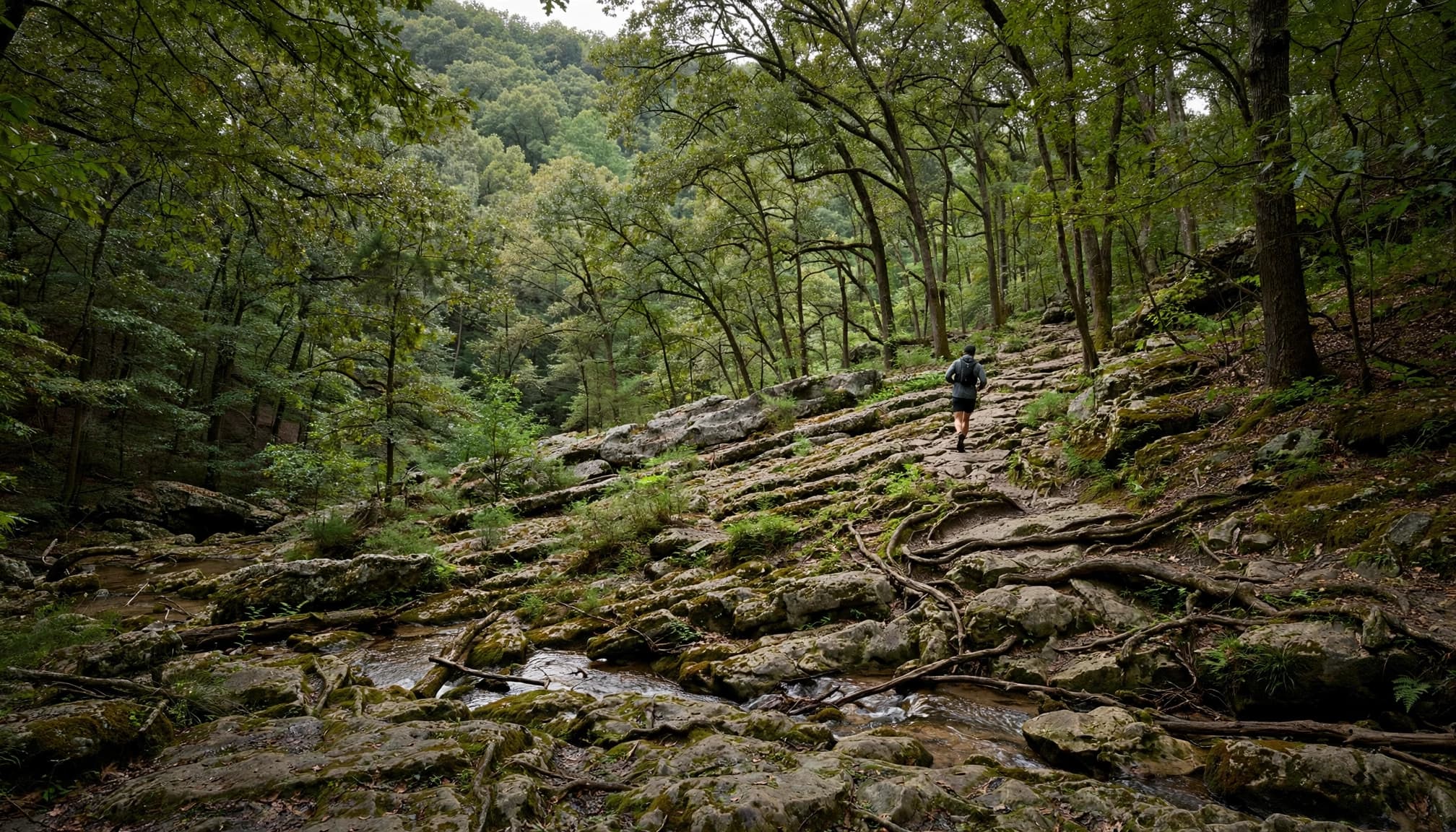
On this terrain, a road pace rarely tells the whole story. Runners often shorten their stride on climbs, pick careful lines over rocks, and ease off on descents where roots or loose dirt can cause a fall. As a result, steady effort and sound foot placement matter more than holding a fast pace. Check whether the race route includes technical sections, repeated climbs, or water crossings, and train on similar footing when possible.
Choose Your Distance, Duration and Goal Time
Make three quick selections and open the exact plan built for your race target.
Looking for a Fully Personalized Training Plan?
The training plans above are an excellent choice if they match your goal. However, if you’d rather train with a plan built specifically around your current fitness, goal race, preferred training days, weekly mileage, and target finish time, our RDA Custom Training Plans provide a personalized solution. We also have running courses available for runners seeking to run faster from the mile to the marathon.
Why Choose a Custom Training Plan?
| Standard Training Plan | RDA Custom Training Plan |
|---|---|
| Follows a fixed schedule | Built around your schedule |
| Standard weekly mileage | Peak mileage customized for you |
| Fixed workout days | Train on the days you choose |
| Same structure for everyone | Designed around your current fitness |
| Static plan | Updated as your fitness improves |
| One-time purchase | Ongoing personalized coaching and support |
What You’ll Receive
- A training plan built specifically for your goal
- Personalized training paces
- Long runs, tempo runs, threshold workouts, interval sessions, recovery runs, and easy runs
- Peak weekly mileage matched to your experience level
- Flexible training schedule that fits your life
- Ongoing plan adjustments as your fitness improves
Ready to Train Smarter?
Stop guessing and start following a plan built specifically for you, your schedule, and your racing goals.
Look beyond the Ozarks for a different race day
Central and eastern Missouri offer wooded parks and trail networks that can deliver a different mix of surfaces and elevation. Around Rock Bridge Memorial State Park, routes may pass through forest and varied natural features. Hawn State Park offers another setting to consider, with trails through rugged woodland. The Missouri State Parks trail listings can help you explore park trail maps and descriptions as you compare areas.
A park name alone won’t tell you what a race feels like. One course may use smooth, rolling paths, while another in the same general region may include narrow singletrack, rocky sections, or sharp elevation changes. Race organizers can also alter routes between editions, so check the latest map and elevation profile rather than relying on old race reports.
Before registering, look at how the climbs are distributed, where the technical sections occur, and whether the route crosses streams. Those details help you judge whether a shorter distance will still feel demanding or whether a longer race matches your experience. Confirm current event locations and course details with the organizer, since park trails and race schedules don’t necessarily line up.
How to Choose the Right Missouri Trail Race
Distance alone won’t tell you whether a race fits. Compare the course, support, and travel demands with your experience and goals, then confirm the latest details with the organizer before you register.
Compare elevation, surface, and course markings
Elevation gain helps explain how much climbing a course includes, but the layout matters too. A route with repeated short climbs can feel harder than one with a similar gain spread across longer grades. Technical footing, such as loose rock, roots, mud, and uneven descents, also affects pace and concentration.
Check whether the course is a loop, an out-and-back, or point-to-point. Loops make it easier to revisit a start or aid area, while point-to-point courses may require more planning for transportation and pickup. Course markings matter as well: turns through dense woods can be easy to miss, especially when you’re tired or running in low light.
Review the current map and elevation profile, then look for recent runner reports that describe footing and navigation. Compare cutoff times with your expected pace on trails, not roads. Before race day, read the rules for navigation and required gear, including whether you need to carry a headlamp, phone, or specific safety equipment.
Check aid stations, travel, and race-day logistics
Aid station spacing determines how much water, food, and other supplies you may need to carry. Confirm each station’s location and offerings with the race organizer. Don’t assume every event provides the same food, fluids, or equipment support. For example, the Ozark Trail 100 race guidelines list 13 aid stations, with distances between them that vary.
Also check whether crew members can meet you on course and whether the race allows drop bags. Rules can limit which stations accept bags or crew, so plan around the published locations rather than relying on a general race description. If you’re racing without crew, make sure the event’s support matches what you need between stations.
Travel details can affect the whole weekend. Confirm parking locations, road access, lodging options, and any park permits or entry requirements. Some trailheads sit far from nearby towns, so check drive times and whether the event recommends arriving the day before. Finally, verify packet pickup and start times, parking instructions, and any last-minute course updates. A race that fits your goals should also fit your travel plans and the support you need on race day.
Train for Missouri Trail Conditions and Race-Day Weather
Trail Races in Missouri can test your footing, climbing, and ability to adjust when the weather shifts. Train for the course you expect, build effort gradually, and check the event’s latest safety guidance before race day.
Build hill strength and practice on uneven trails
Start with easy runs on dirt paths, then add short hills as your legs adapt. Choose gradual climbs at first, and walk back down if the descent feels unstable. Over time, increase the number or length of climbs rather than raising every part of your training at once.
Practice on terrain that resembles your race, including roots, rocks, loose dirt, and creek banks when accessible. On technical sections, shorten your stride and look a few steps ahead to choose stable footing. Basic strength work, such as step-ups, calf raises, and split squats, can help prepare your legs for climbs and descents.
Walking steep climbs is a smart pacing choice, especially when running them would push your effort too high. Keep your weekly volume increases modest, and allow recovery between harder sessions. Long-distance racers should also practice a detailed pacing and fueling plan on extended training runs, rather than waiting until race day to test it.
Prepare for heat, rain, mud, and changing temperatures
Missouri weather varies by season, and warm months can bring both heat and humidity. The National Weather Service notes that summer conditions around St. Louis are often warm and humid, so a pace that feels comfortable in cool weather may demand more effort. Check the St. Louis area climate overview for seasonal context, then use the race-week forecast to guide your plans.
Humidity and heat can make it harder to maintain your usual effort. Practice drinking during training, and use longer runs to learn what fluids and foods sit well with you. The National Athletic Trainers’ Association offers guidance on preventing exertional heat illness. If race officials change the start time, course, or safety plan because of weather, follow their instructions.
Rain can turn roots, rocks, and slopes slick, while muddy sections may slow you down and tire your legs. Cool starts can also give way to warmer conditions later, so check temperatures for the full race window. Adjust your pace to the footing and conditions instead of trying to hold a road-running split.
Pack shoes, layers, and essentials for the course
Choose trail shoes with grip suited to the course surface. A deeply lugged sole may help on soft, muddy ground, while a less aggressive tread can feel more comfortable on packed paths. Wear familiar socks, and test your shoes on wet and uneven terrain before race day.
Layer for the forecast, especially when the start is cool or rain is possible. A light outer layer can help in wind or showers, but avoid wearing gear you have not tested during a run. Carry your phone and any race-required equipment, such as a headlamp or emergency supplies, and confirm current rules with the organizer.
Use training runs to check for rubbing, bouncing, or gear that gets in your way. Practice with the same pack, bottles, and fuel you plan to carry. Don’t try new shoes, socks, or fuel on race day; familiar equipment makes it easier to focus on the trail and your pacing.
Frequently Asked Questions
Choosing among Trail Races in Missouri gets easier when you know what to verify before registration. Course details, schedules, and policies can change between race editions, so use current event information rather than relying on an old race report.
Are there beginner-friendly trail races in Missouri?
Yes. Start by looking for a shorter distance, a generous cutoff, clear course markings, and reliable support along the route. A less technical course can also make it easier to adjust to uneven footing without taking on steep climbs or frequent obstacles right away.
Before signing up, review the race’s current map, elevation profile, and event rules. Choose a first race that matches the training you have completed, not the distance you hope to reach later in the season. If you can, run on similar terrain beforehand to see how your pace and effort compare with road running.
When is trail race season in Missouri?
Missouri races take place throughout the year, but no season guarantees comfortable conditions. Temperatures, rain, humidity, and trail footing can vary sharply by month, and conditions may differ between regions or even between race weekends.
Check a current Missouri trail race calendar to find events near your preferred dates, then confirm the schedule with the organizer. In the week before the race, check for updates about weather, course changes, and any revised start or safety plans.
How much does it cost to enter a trail race?
Entry fees vary with distance, event services, and when you register. Longer races may have different support needs than short events, while early and late registration periods can carry different prices. Use the current registration page for the exact fee, deadlines, and any listed add-ons.
The entry fee is only part of your budget. Travel, lodging, meals, parking, and race-specific gear can raise the total, especially if the start is far from home or the event requires an overnight stay. Add those costs before committing so the race fits your plans as well as your training.
Do Missouri trail races allow hiking?
Yes. Hiking is common in trail races, especially on steep climbs, rocky sections, or technical terrain where running would waste energy or compromise footing. Many runners also use planned walk breaks to manage effort over a long course.
You still need to reach checkpoints within the event’s cutoff times and follow the organizer’s safety and passing rules. Read the race instructions before the start, and move aside when another runner needs to pass on a narrow section. Hike at a pace that keeps you moving safely and on schedule.
What should I check before registering for an ultra?
Review the full distance and elevation profile, then compare the cutoff times with a realistic estimate of your pace on that terrain. Check aid station spacing and available support, required equipment, and whether the rules allow crew members or drop bags. The Berryman Trail race registration page, for example, publishes aid station information for its listed event.
Also read the refund or transfer policy before you pay, since options vary by event. Be honest about your ultra experience and preparation, including your training volume and familiarity with long hours on technical trails. If the course demands more than you can safely prepare for, choose a shorter distance or a later race.
Conclusion
Trail Races in Missouri offer options for a wide range of skills and goals, from short events for newer trail runners to demanding ultras. The strongest choice is the race that fits your current training and gives you a course you can handle safely.
Before registering, check the organizer’s latest information on distance, terrain, aid stations, cutoffs, and required gear. Then prepare for the conditions you can expect and adjust your pace to the trail. With a suitable race and thoughtful preparation, you can enjoy Missouri’s wooded paths and rugged routes while taking care of yourself and the trails.