

Trail Races in Michigan: Lakeshore Dunes and Northwoods Trails
Pine shade cools the trail, sandy climbs test your legs, and lake weather can shift before you reach the next quiet stretch of woods. Trail races in Michigan suit first-time trail runners as well as experienced ultrarunners, with events that range from short courses to demanding 100-mile challenges.
Choosing a race means looking beyond the mileage. Northern forests, lakeshore routes, and Lower Peninsula trails each bring different terrain and seasonal conditions, so your training and race-day plans should match the course.
I will look at trail races such as the Marquette Trail 50, Run Woodstock, and Yankee Springs, then cover what to expect on the trails and how to choose and prepare for a race that fits your goals. Be sure to check out the RunDreamAchieve YouTube channel for weekly running tips.
Key Takeaways
- Trail races in Michigan range from short runs to ultramarathons, with courses in northern forests, state parks, and lakeshore areas.
- Expect roots, sand, rolling climbs, and shifting weather; footing and conditions can change throughout a race.
- Compare distance and terrain before choosing an event. The Marquette Trail 50 race details offer a look at a challenging Upper Peninsula option.
- Train on similar surfaces, build climbing strength and time on your feet, then practice pacing, fueling, and footwear before race day.
Trail Races in Michigan Offer Forest Miles, Sand, and Serious Challenges
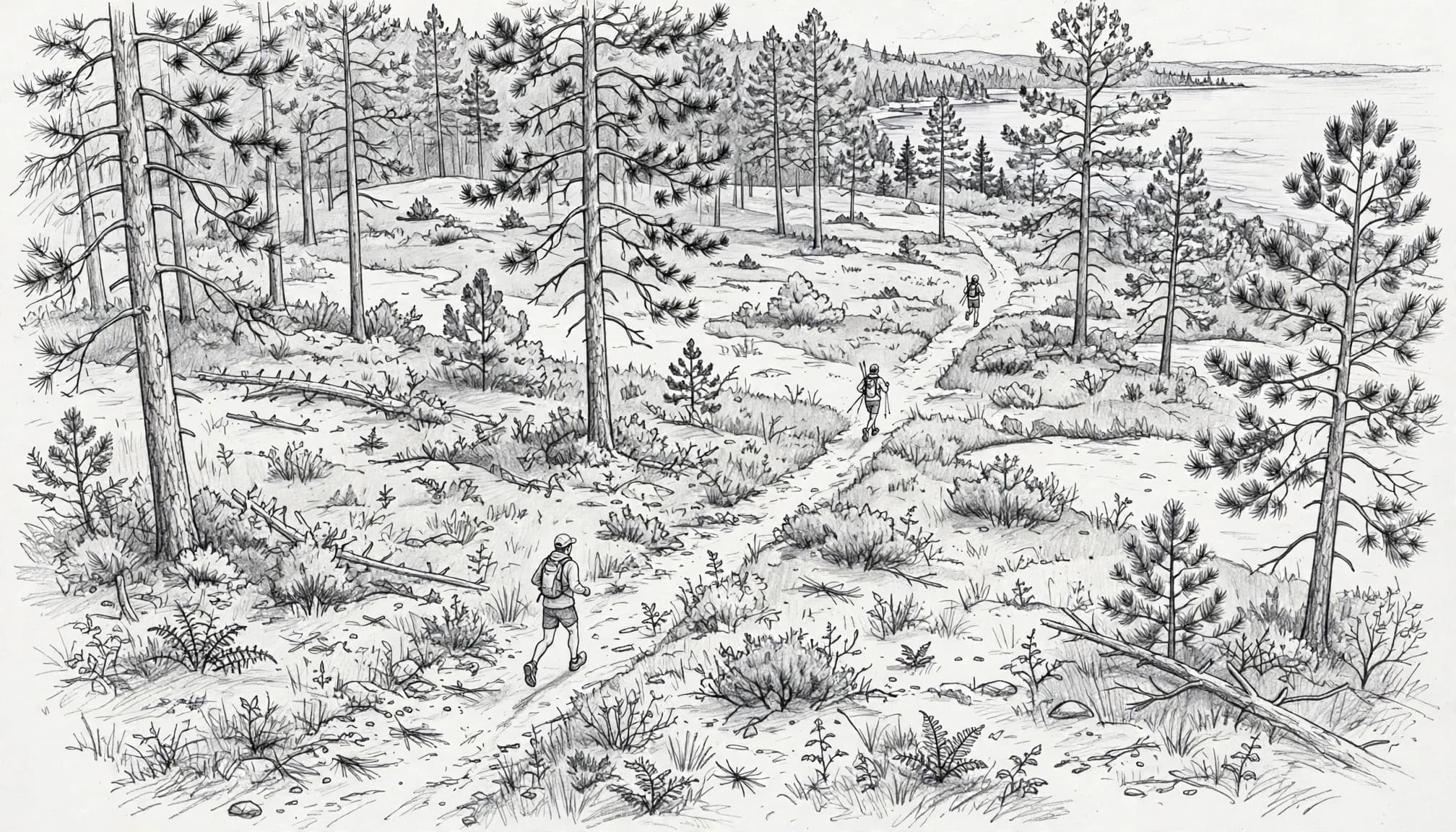
Michigan’s trail calendar spans Great Lakes shorelines, northern forests, and rolling Lower Peninsula woods. Course character depends on the location and year, so compare terrain and race format alongside mileage when choosing an event.
Find a race that matches your kind of trail adventure
A scenic day race may suit runners who want a memorable outing without committing to an ultramarathon. Lakeshore routes can bring open views and sandy footing, while forest courses offer shade, roots, and quieter stretches away from paved roads. Still, no single description fits every race or edition.
For a tougher test, look for events known for technical footing, repeated climbs, or longer distances. Ultramarathons add another layer: runners must manage effort and fueling over many hours, often as conditions shift. Before signing up, consider your recent trail experience, the course profile, and how much time you can devote to training.
Explore northern Michigan and Upper Peninsula race favorites
The Marquette Trail 50 draws runners to the Upper Peninsula, where Lake Superior country and wooded trails create a distinctly northern setting. Its longer-distance focus can appeal to experienced trail runners building toward an ultra, while the surrounding region rewards anyone who enjoys rugged, remote-feeling miles.
Near Pictured Rocks, trail events offer another way to run among the Upper Peninsula’s forests and lakeshore scenery. Routes and formats vary, so check the current event details rather than assuming a race follows the same shoreline or includes the same distances each year. For a different northern Michigan outing, the North Country Trail Run near Manistee brings runners to a wooded stretch of the long-distance North Country Trail. It can attract runners looking for a forest race, with options that may suit different experience levels.
Use a current Michigan trail ultramarathon calendar to find events, then consult each organizer’s course map, distances, and rules. Those details matter, especially if you need to plan travel, gear, or a first ultra.
Look to Lower Peninsula events for woods, hills, and variety
Lower Peninsula trail races range from shorter outings to demanding endurance events. Run Woodstock in the Pinckney area offers a festival-style setting for runners who want a choice of race formats. Yankee Springs Trail Run is another event to explore if you prefer wooded park trails and a more rugged day on foot. The course can vary by edition, so review the current map before deciding how well it fits your training.
Dances with Dirt Hell, near Hell, is known for an adventurous race atmosphere and longer trail challenges. Its event listing describes options such as a 30K, 50K, and 50-mile race, though runners should confirm the current lineup on the Dances with Dirt Hell event page. Near Wellston, the Lumberjack 100 appeals to ultrarunners seeking a major time-on-feet challenge in a forest setting.
Across these events, formats and terrain details can change. Check the latest organizer information before building your race plan, then choose a distance that fits both your current fitness and the kind of trail day you want.
Choose Your Distance, Duration and Goal Time
Make three quick selections and open the exact plan built for your race target.
Looking for a Fully Personalized Training Plan?
The training plans above are an excellent choice if they match your goal. However, if you’d rather train with a plan built specifically around your current fitness, goal race, preferred training days, weekly mileage, and target finish time, our RDA Custom Training Plans provide a personalized solution. We also have running courses available for runners seeking to run faster from the mile to the marathon.
Why Choose a Custom Training Plan?
| Standard Training Plan | RDA Custom Training Plan |
|---|---|
| Follows a fixed schedule | Built around your schedule |
| Standard weekly mileage | Peak mileage customized for you |
| Fixed workout days | Train on the days you choose |
| Same structure for everyone | Designed around your current fitness |
| Static plan | Updated as your fitness improves |
| One-time purchase | Ongoing personalized coaching and support |
What You’ll Receive
- A training plan built specifically for your goal
- Personalized training paces
- Long runs, tempo runs, threshold workouts, interval sessions, recovery runs, and easy runs
- Peak weekly mileage matched to your experience level
- Flexible training schedule that fits your life
- Ongoing plan adjustments as your fitness improves
Ready to Train Smarter?
Stop guessing and start following a plan built specifically for you, your schedule, and your racing goals.
Know What Michigan Trails Feel Like Before Race Day
A trail race can feel harder than a road race of the same distance because the surface keeps changing. Roots, sand, mud, and short climbs demand attention and effort, so pace alone won’t tell you how the day is going. Course terrain and weather also vary across Michigan, making local preparation more useful than a generic race plan.
Expect roots, rocks, mud, sand, and changing elevation
On wooded singletrack, exposed roots and rocks can turn a smooth stride into a series of careful steps. Narrow paths may force runners into single file, while soft sand takes more energy than firm ground and can slow even a strong runner. After rain, low spots may hold water or become slick, so footing can change within a few miles.
Michigan courses also include rolling terrain where short climbs repeat rather than one long ascent. Each rise may seem manageable, but the effort accumulates over a long race. Study the event’s course profile and map, and check for descriptions of technical sections, sandy stretches, and aid station locations. The Michigan DNR trail maps can help you explore public trail networks, while race organizers remain the best source for event-specific route details.
During training, practice reading effort instead of chasing your usual road pace. On rough or hilly ground, shorten your stride, stay relaxed, and let pace slow when the surface demands it. A steady breathing pattern and controlled effort are better guides than a road split when you meet roots, a sandy climb, or a muddy turn.
Plan for seasonal weather and daylight
Spring races can bring cool rain and muddy trails, especially where snowmelt or recent showers leave the ground wet. Summer often adds heat and humidity, which can raise the effort of exposed sections and make hydration more important. By fall, cooler temperatures and changing leaves can create comfortable running conditions, but damp leaves may hide roots and stones.
Conditions also differ by region. A lakeshore course may feel cooler or windier than an inland route, while northern Michigan can have different conditions from the southern Lower Peninsula on the same day. NOAA’s U.S. Climate Normals offer historical averages by location, but averages cannot predict race-day weather. Check the local forecast as the event approaches, then follow the organizer’s guidance on gear and course conditions.
Daylight matters for long efforts, particularly during fall and early spring. If your training run or race could extend into dusk, confirm the event’s cutoff times and lighting rules before packing. A headlamp may be necessary for some events, but organizers set their own requirements.
As race day gets closer, adjust your plan to the actual forecast. Pack a layer for cool rain, prepare for heat when temperatures climb, and choose shoes that grip the course without relying on road-race assumptions. That flexibility helps you meet Michigan trails on their terms.
Choose a Michigan Trail Race That Fits Your Goals
The right race gives you a clear challenge without forcing your training, recovery, or travel plans out of balance. Compare distance, location, course demands, and event support before you register. A race’s name or mileage alone won’t tell you how hard it will feel on the trail.
Match race distance to your experience and training time
If you’re new to trail racing, start with a shorter event or a trail half marathon. That distance gives you room to learn how roots, sand, and hills affect your effort without requiring the long training hours of an ultra. You can build confidence with time on similar trails, then decide whether you want a longer challenge.
With a solid running base and consistent trail experience, a marathon or 50K may fit your next goal. Longer races call for more than adding miles: you’ll need to practice fueling, manage fatigue, and recover well after demanding long runs. Build distance gradually, and allow easier weeks so your body can adapt.
Your available training time matters as much as your current fitness. A race that requires long weekend runs may not fit a packed schedule, even if the distance sounds appealing. Choose a goal you can prepare for consistently, rather than chasing mileage for its own sake.
Compare course difficulty, aid, and travel needs
Before settling on an event, look past the distance and study the course details. Elevation gain, technical footing, soft sand, and repeated short climbs can make a modest mileage feel demanding. For a concrete example of surface descriptions, the Hurt the Dirt race details describe Luton Park’s flowing dirt singletrack through hardwood forest and meadow.
Check the current course map and elevation profile, then review cutoff times, aid-station spacing, and required gear. Those details help you judge whether the race matches your experience and what you’ll need to carry. In addition, confirm what aid stations provide, since you may need to bring specific food or hydration between them.
Travel can shape race week as much as training. Check parking and lodging options, and find out whether the start is easy to reach or requires a long drive on race morning. If the event begins in a remote area, plan your arrival, meals, and gear drop-off ahead of time. Finally, confirm current routes, rules, and logistics with the race organizer, since details can change between editions.
Train for Michigan Trails and Make Race Day Smoother
A good race plan prepares you for more than the mileage. Build fitness for the course, test what you’ll wear and carry, and sort out the practical details before race week. That preparation helps new runners feel more settled and gives experienced runners a chance to refine their routines.
Build trail strength and practice effort-based running
Start with consistent easy runs, then increase your long-run time gradually. Regular running builds the aerobic base you need, while longer outings help your legs handle hours of uneven footing. Add hills or stairs when you can, and include strength work for your legs and core to support balance and control on rolling trails.
When the course gets steep, hiking can be the smart choice, especially in a longer race. A purposeful hike saves energy for runnable sections and helps keep effort under control. Trail pace naturally shifts with elevation, roots, sand, and mud, so use breathing and perceived effort instead of trying to hold road-race splits.
Whenever possible, train on surfaces that resemble your target course. If the race includes sandy stretches or technical singletrack, seek out similar trails and practice looking ahead, shortening your stride, and staying relaxed over uneven ground.
Test shoes, layers, hydration, and required gear
Choose trail shoes with grip suited to the course surface. A comfortable fit matters just as much, since hot spots can become painful over long distances. Wear the socks you plan to race in, and test the full setup during training runs rather than saving it for race morning.
Michigan weather can change quickly, so prepare layers for the season and forecast. A light shell may help in rain or wind, while warm-weather races call for breathable clothing. Check the race’s rules for required items such as a phone, headlamp, or emergency supplies, and practice carrying them in your vest or pack.
Hydration needs vary with weather, effort, and personal experience. Try your planned bottles or pack on long runs, and notice how much you drink in different conditions. Use those outings to adjust your setup without making sudden changes on race day.
Practice fueling and learn how to use aid stations
Long runs are the right place to test the food and drink you expect to use in a race. Practice the timing and portions that feel manageable, and avoid trying unfamiliar products on race day. If you have dietary needs, check the organizer’s aid-station menu and plan what you’ll carry between stops.
Before the event, note aid-station locations, spacing, and available support. Carry a backup when the distance between stations or the offerings leave a gap in your plan. At each stop, follow a calm routine: refill, take the food you need, check your next stretch, and move on without rushing. The American Trail Running Association’s race guidance also recommends carrying a reusable bottle and refilling it at aid stations to reduce cup use.
Prepare for race-week logistics and trail etiquette
Confirm your registration, then arrange travel and lodging early if the event is far from home. Check parking instructions, packet pickup hours, and the start time. Build in enough time for travel, check-in, and a warm-up, and review the organizer’s latest updates for changes to the course, weather plan, or required gear.
On the trail, follow course markings and pass or yield with courtesy. Pack out wrappers and other trash, and respect hikers, other runners, and the natural area. The Leave No Trace principles offer practical guidance on planning ahead and reducing your impact outdoors.
Frequently Asked Questions
Race details can shape your experience as much as the miles themselves. These answers cover practical questions to settle before you commit to a Michigan trail race.
What happens if severe weather affects a Michigan trail race?
Race organizers may delay, shorten, or cancel an event if severe weather or trail conditions create a safety concern. For example, Hurt the Dirt notes that extended severe weather or very muddy trails may lead to a cancellation or shorter distances. Check the event’s policy before race day, then watch for updates from the organizer as the forecast develops.
Do Michigan trail races limit the number of runners?
Some races cap registration, while others may keep entries open longer. A cap can affect whether you get into your preferred distance, so check the event page early rather than assuming you can register close to race day. The North Country Trail Run FAQ addresses runner limits, course maps, and other event-specific details.
Can I switch to a different distance after registering?
That depends on the race’s registration rules, available space, and timing. Some events allow changes before a deadline, while others may not offer transfers between distances. Contact the organizer before making plans around a switch, and register for the distance you can train for if the policy is unclear.
Are headphones allowed on Michigan trail courses?
Rules vary by event, and some organizers may restrict headphones for safety or course-awareness reasons. Check the race rules before packing them, especially if the route crosses roads or shared-use trails. Even when headphones are allowed, keep the volume low enough to hear other runners, course marshals, and approaching hazards.
Can I bring my dog to a trail race?
Don’t assume dogs are allowed, even if the race takes place on a public trail. Organizers may prohibit pets on the course or at the start area, and park rules can apply as well. Check both the race policy and the venue’s regulations before bringing a dog, and never leave a pet in a vehicle during warm weather.
Should I download the course map before race day?
Yes, if the organizer provides a map or GPS file, save it to your phone or watch before you travel. Cell service can be limited on wooded or remote routes, and an offline copy gives you a backup if you miss a marker. Still, follow the race’s markings and instructions first, since organizers may change the course or route you around hazards.
Conclusion
Trail races in Michigan offer a goal for nearly every runner, from a first wooded 5K to a demanding ultramarathon. The strongest choice is a course that fits your experience and gives you time to prepare for its footing, hills, and distance.
Train on similar terrain, plan for changing conditions, and leave room to enjoy the forests, rolling trails, and lakeside views along the way. Pick a race that matches your goals, then take the next step toward the starting line.


