

Trail Races in Massachusetts: Berkshire Climbs and Wooded Singletrack
Roots catch at your shoes, rocks steepen the climbs, and familiar woods can feel different with every season. Trail races in Massachusetts put you on that varied ground, with options for first-timers and experienced runners alike.
You’ll find short local events as well as rugged mountain races and ultras. The right choice on trail racing depends on more than mileage, so check the terrain, elevation, and race-day support before you sign up. Start with the courses and events that can help you find a race that fits, then build your distance and training from there.
Key Takeaways
- Trail races in Massachusetts span short local events and longer mountain courses, so choose a distance that matches your current training and experience.
- Check each course’s surface, elevation, and race-day support before registering; mileage alone won’t show how demanding the route may feel.
- Race calendars and series can help you compare options, including the North Shore Trail Series, which features events across eight months.
- Prepare on trails with similar climbs and footing, then build mileage gradually and practice pacing, hydration, and fueling for your target distance.
Trail Races in Massachusetts: What to Expect on the Course
Massachusetts trail races reward steady footing and flexible pacing. Rocky New England paths, exposed roots, rolling hills, and changing weather can make a familiar distance feel very different from a road race.
From rocky ridgelines to quiet woodland paths
The ground changes with the region. Around the Holyoke Range, the Seven Sisters route climbs and drops across a rugged ridgeline, with rocky footing and uneven steps that demand attention. The Mount Holyoke Range State Park trail information describes the Seven Sisters as a route across a series of summits and lookouts. Races in this area can feel demanding even when the mileage looks modest.
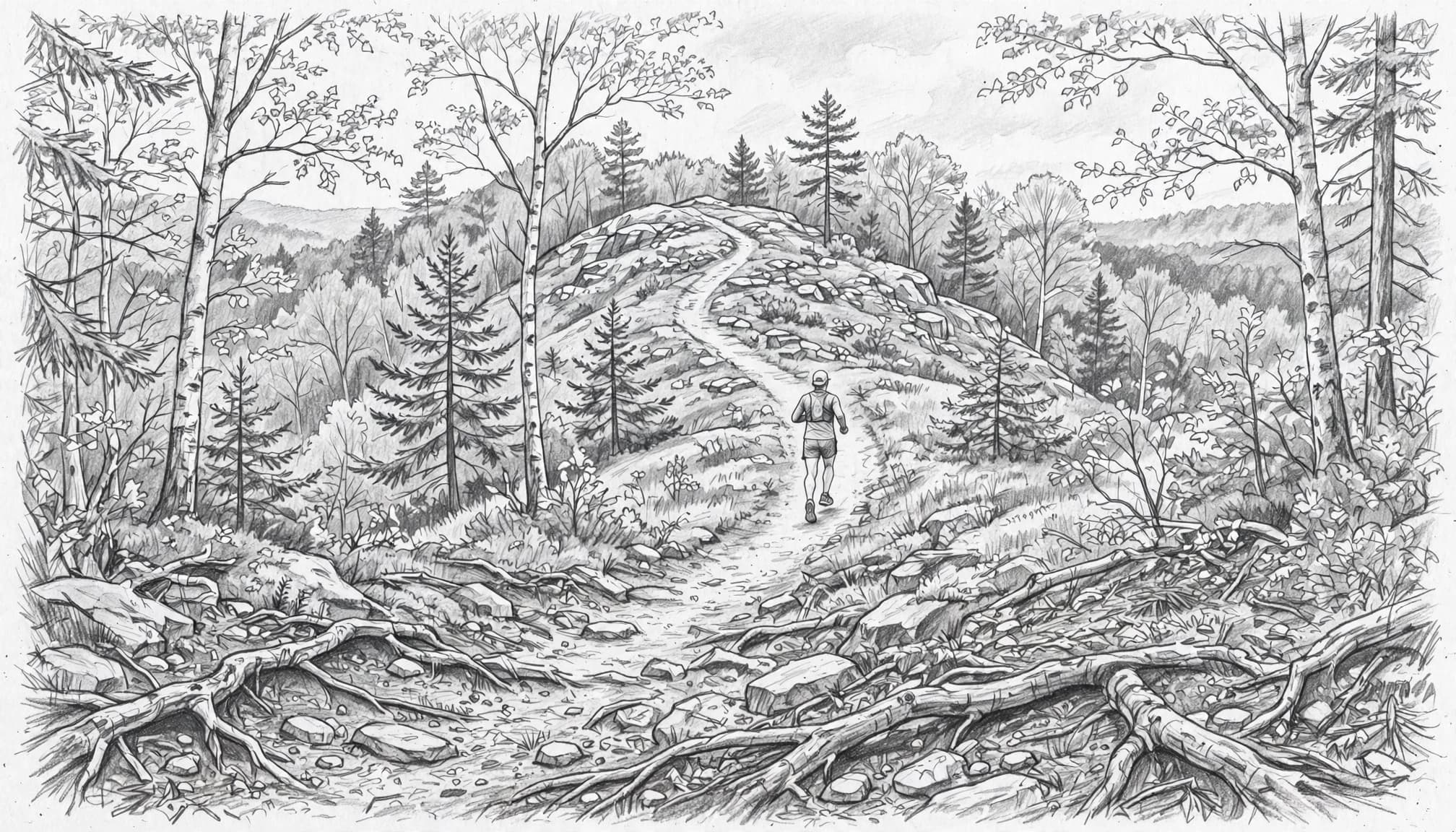
Elsewhere, wooded paths such as those in the Middlesex Fells Reservation offer a different test. Roots and stones interrupt the trail, while short rises can break up an otherwise runnable stretch. Not every Massachusetts course is mountainous, but even gentle terrain can slow a runner when the footing is rough or slick.
Because of those changes, trail pace is often slower than road pace. You may shorten your stride on a rocky descent, hike a steep climb, or ease off through muddy sections. Rain, humidity, and temperature shifts can also change how the trail feels, so pace by effort rather than expecting your usual road split.
How race distance and trail conditions change the challenge
A short trail race can feel intense when it packs steep climbs and technical footing into a few miles. A longer race adds time on your feet, sustained effort, and the need to manage food and fluids. However, mileage alone won’t tell you how hard the course will feel.
Elevation gain, mud, heat, and rocky descents all affect effort. So do course rules: cutoffs may limit how long runners can take, while aid stations determine where water and food are available. Markings and surface conditions vary by event, too.
Before race day, read the organizer’s current course details. Check the elevation profile, surface notes, aid station locations, cutoff times, and marking instructions. That information helps you choose a realistic pace and decide what to carry. On the trail, a controlled start leaves room to handle rough ground and changing conditions later in the race.
Notable Massachusetts Trail Races to Put on Your List
Massachusetts has established trail races for runners who want a rugged ridgeline, a wooded loop, or a longer event with several distance options. Start with these names, then confirm the current course and registration details before making plans.
Seven Sisters brings steep, rocky miles in western Massachusetts
The Seven Sisters Trail Race crosses the Holyoke Range near Sunderland and Amherst, where rocky singletrack and sharp climbs make each mile count. Its route over the range appeals to runners who enjoy a demanding day of hiking steep ascents and picking careful lines on technical descents.
The race is a strong fit for experienced trail runners seeking a serious test, but newer racers should study the current course map and rules before entering. Check the official Seven Sisters race details for the latest route, distance, entry requirements, and registration information. Formats and logistics can change, so use the current listing rather than relying on an old race report.
Choose Your Distance, Duration and Goal Time
Make three quick selections and open the exact plan built for your race target.
Looking for a Fully Personalized Training Plan?
The training plans above are an excellent choice if they match your goal. However, if you’d rather train with a plan built specifically around your current fitness, goal race, preferred training days, weekly mileage, and target finish time, our RDA Custom Training Plans provide a personalized solution. We also have running courses available for runners seeking to run faster from the mile to the marathon.
Why Choose a Custom Training Plan?
| Standard Training Plan | RDA Custom Training Plan |
|---|---|
| Follows a fixed schedule | Built around your schedule |
| Standard weekly mileage | Peak mileage customized for you |
| Fixed workout days | Train on the days you choose |
| Same structure for everyone | Designed around your current fitness |
| Static plan | Updated as your fitness improves |
| One-time purchase | Ongoing personalized coaching and support |
What You’ll Receive
- A training plan built specifically for your goal
- Personalized training paces
- Long runs, tempo runs, threshold workouts, interval sessions, recovery runs, and easy runs
- Peak weekly mileage matched to your experience level
- Flexible training schedule that fits your life
- Ongoing plan adjustments as your fitness improves
Ready to Train Smarter?
Stop guessing and start following a plan built specifically for you, your schedule, and your racing goals.
TARC races offer a range of New England trail experiences
The Trail Animals Running Club, or TARC, organizes races and ultras on Massachusetts trails throughout the year. Its event calendar is a practical place to find options, including races at Middlesex Fells and seasonal events such as the TARC Spring Classic, TARC Fall Classic, and TARCtic Frozen Yeti.
Those events can offer very different experiences. A race at the Fells puts runners on wooded, rocky trails near Boston, while seasonal TARC events may feature multiple distances or formats. For example, the club lists its TARC Winter Classic at Middlesex Fells, and its Spring Classic event page provides current details for that race.
TARC’s calendar changes over time, and an event’s location, distances, and format may shift between editions. Check the current TARC events calendar for this year’s listings before choosing a race or arranging travel.
Look beyond a race name when comparing events
A familiar race name gives you a starting point, but the current course details tell you whether the event suits your experience and training. Compare the map and elevation profile, then check the distance, trail surface, aid support, cutoff times, and location. A short route with steep climbs and rocky descents may demand more than a longer course on smoother paths.
Local running clubs and race calendars can also reveal smaller events that attract less attention, especially shorter races. Look for recent organizer updates, since details from past editions may no longer apply. Once you find a promising option, match its terrain and elevation to the routes you can train on, and make sure the race-day logistics work for you.
Choose a Massachusetts Trail Race That Fits Your Goals
The best trail race in Massachusetts is one that excites you and matches the training you can do now. Look beyond the race name and mileage: your experience, course conditions, schedule, and preferred level of support all shape race day.
Match the distance to your current training
For a first trail race, choose a distance that lets you learn how uneven footing changes your pace without adding hours on the course. A short-distance event can still be a serious challenge if it includes steep climbs or technical descents, but it usually requires less time-on-feet training than an ultra.
If you’re considering a longer race, build toward it gradually. Longer distances call for sustained endurance, pacing practice, and a plan for fueling and hydration. An ultra also means spending many hours on your feet, often through changing terrain and conditions. Rather than jumping straight to an ultra, use shorter races to gain trail experience and see how your body responds.
Your current weekly training matters more than an ambitious race goal. Pick a manageable event, prepare for its terrain, and increase distance as your fitness and experience grow.
Check elevation, technical footing, and cutoff times
A course profile can reveal why two races with similar mileage may feel very different. Look for total elevation gain, steep climbs, and repeated ups and downs. Then check the organizer’s description of the surface. Rocky paths, roots, mud, and narrow singletrack can slow you down, even when the distance looks modest.
Cutoff times matter, too. They set the latest time runners can reach the finish or pass certain checkpoints. Compare them with your realistic pace on trails, not your road pace, and check whether the race lists separate cutoffs at aid stations. This helps you assess whether the event allows enough time for your planned effort and whether you can meet its safety rules.
For training routes, the Massachusetts state parks hiking guide provides trail maps and location information. Use it to find nearby paths where you can practice on surfaces and climbs similar to your race course.
Consider the season, location, and race-day support
A nearby event can simplify race morning: less travel means fewer logistics and more time to rest. A destination race may offer a course or setting that appeals to you, but account for lodging, transportation, and the chance that unfamiliar terrain will require extra preparation.
Season also affects your plans. Check typical conditions for the race date, the event’s guidance on weather, and how much daylight the course offers. A spring trail may be muddy, while a summer start can bring heat and humidity. Pack according to the race’s required gear list, not just the forecast.
Finally, review aid station locations, available water and food, and any rules for carrying supplies. Some runners prefer frequent course support; others are comfortable carrying more between stations. Compare those details with the distance and your experience, then choose an event whose demands feel challenging but manageable.
Train for Hills, Uneven Ground, and Race-Day Effort
A strong training approach for trail races in Massachusetts builds regular running, hill strength, sure footing, and enough recovery to absorb the work. The goal is to develop durable legs and confidence on varied ground, not to chase road pace on every run.
Build trail time gradually and practice changing pace
Run regularly on safe, varied trails, even if some outings are short. Familiar paths help you learn how roots, rocks, mud, and slopes affect your rhythm. As you gain experience, add time or distance in small steps, then give your body time to adapt before making the route harder.
On uneven ground, shorten your stride and keep your steps controlled. This can help you stay balanced without forcing a fast pace. Hike a steep climb when running would push your effort too high, and slow down on technical descents so you can choose each foot placement. A hike is a pacing tool, not a sign that your race is going poorly.
Vary your effort with the terrain rather than trying to hold one pace throughout a run. A rolling trail may invite an easy jog, while a rocky stretch calls for patience. For more guidance on moving from roads to trails, see TrainingPeaks’ beginner trail running guide.
Use hill repeats and strength work to prepare for climbs
Hill sessions build climbing power and teach you to manage effort. Choose a slope you can run safely, then do several controlled uphill efforts at a pace you can repeat. Walk or jog back down and recover before the next repetition. Beginners can start with a few short climbs; experienced runners can add repetitions or extend the uphill effort over time.
Downhill practice matters, too. Start on a mild grade and focus on relaxed posture, quick steps, and looking ahead. Increase the technical challenge gradually, since steep descents can load the legs heavily even when they feel easy aerobically. The hill-training guide from Vert offers options for building climbing strength when nearby routes are flat.
Add basic strength work for your legs, hips, and core. Squats, step-ups, calf raises, and simple single-leg balance exercises can support control on uneven ground. Keep the movements manageable and consistent; the American College of Sports Medicine’s activity guidance recommends strength-focused activity at least two days per week for adults. Place harder sessions apart when possible, and ease off if soreness or fatigue affects your running.
Practice gear, fueling, and navigation before race day
Use training runs to test the shoes and socks you plan to race in. Check for rubbing, slipping, or grit that collects inside your shoes. Try your hydration setup and any snacks you expect to carry, especially on longer outings. New gear or unfamiliar fuel can create avoidable problems when the course gets rough.
Also learn how the race marks its route. Review the organizer’s map and instructions, and notice whether the course uses signs, flags, or trail intersections. Carry a phone or navigation aid when race rules and conditions call for one, but don’t assume it replaces course markings or event guidance.
Before race day, build one or more runs that resemble the event’s terrain and expected time on your feet. Keep the effort controlled, recover afterward, and arrive ready to adjust your pace when the trail demands it.
Plan the Practical Details Before You Head to the Start
Race-day preparation starts before you load the car. For trail races in Massachusetts, a few minutes spent reviewing logistics can prevent a missed start, an unexpected gear issue, or confusion at the trailhead. Each event and park may have different rules, so follow the race’s latest instructions as your final guide.
Read the race guide and check for updates
Before you travel, confirm the current race date, start time, and course map. Review the parking plan, aid station locations, cutoff rules, and any required gear. Check the event’s cancellation and weather policies, too, so you know how organizers will communicate a change.
Conditions can shift after rain or storms, and seasonal changes may bring mud, fallen branches, or slick leaves. Check the organizer’s updates close to race day, then look at the National Weather Service forecast and alerts before you leave. If the race starts early or uses remote parking, plan your arrival with enough time to park, collect your bib, and reach the start without rushing.
Pack for New England weather and uneven trails
Choose shoes with grip that suit the course surface. A rocky route may call for a different tread than a smooth woodland path, while mud and rain can make both climbs and descents more demanding. Bring layers that match the forecast, and account for wind, cold mornings, summer heat, or a possible downpour.
Your kit should reflect the race’s distance and support. For a short event with frequent aid, you may need less than you would for a longer course with wide gaps between stations. Still, don’t assume the same setup works for every event. Follow the race’s gear rules, including any required clothing or safety equipment, and test your shoes and layers during training rather than on race morning.
Respect shared trails and recover after the finish
Follow course markings, especially at intersections, and yield when appropriate to other trail users. Keep to the event route and respect local access rules, since a race may cross land with restrictions that differ from another park’s. Carry out wrappers and other trash; Massachusetts DCR’s trail etiquette guidance asks visitors to carry out belongings and waste.
After the finish, change into dry clothes before you cool down. Drink fluids and eat a familiar snack or meal, then take an easy walk if it feels comfortable. A relaxed cooldown helps you move after the race without adding another hard effort, and dry layers make the trip home more comfortable.
Frequently Asked Questions
A few practical details can make choosing and preparing for trail races in Massachusetts easier. Use these answers to compare events and make a race-day plan that fits the course, not just the mileage.
Are there beginner-friendly trail races in Massachusetts?
Yes. Shorter events and courses with smoother, less technical trails can be good places to start, especially if you already run regularly on roads or paths. However, difficulty varies widely, so read the course description and check elevation gain, footing, and time limits before registering. A modest distance can still feel demanding if the route includes steep climbs or rocky sections.
When is trail race season in Massachusetts?
Massachusetts trail races take place in different seasons, but weather and trail conditions change throughout the year. Spring courses may be muddy, while summer heat and fall leaves can affect footing; winter events may bring cold or icy conditions. Check current race calendars and organizer updates rather than assuming a race runs on the same date or course every year.
Do I need special shoes for a trail race?
Trail shoes usually have deeper or more aggressive tread for grip, plus features that help protect the foot from rocks and roots. Road shoes often have smoother outsoles and less protection, though they may work on a short, dry course with firm footing. Choose based on the route and conditions, then test your shoes on similar terrain during training to check for slipping, rubbing, or discomfort.
Can I use my road-running pace to plan a trail race?
Treat road pace as a loose fitness reference, not a trail-race prediction. Climbs, uneven footing, mud, and weather can change your pace from one section to the next, even when your effort stays steady. Instead, review the course profile and plan around effort and time on your feet, with room to hike steep climbs or slow down on technical ground.
How do I find current race dates and registration details?
Start with the official race page, since organizers post the latest information about dates, distances, fees, course changes, and available entries. Local running clubs and race calendars can help you discover events, including the American Trail Running Association race calendar and New England Runner’s event calendar. Because schedules and registration availability can change, confirm details with the organizer before making travel plans.
Conclusion
Trail races in Massachusetts offer plenty of ways to test your legs, from local woodland courses to rugged routes in the hills. Choose an event that fits your current fitness, interests, and appetite for challenge, then prepare for its actual terrain rather than relying on mileage alone.
With a thoughtful course choice, steady training, and respect for the trails, race day can be rewarding at any distance. Whether you’re lining up for your first local event or taking on a rocky hill course, a well-matched race gives you room to enjoy the miles and meet the challenge on your own terms.


