

Trail Races in Maine: Coastal Cliffs and Pine Forest Miles
Maine’s trails reward runners with striking variety: shaded singletrack, open fields, and rocky climbs can all shape a race. That variety also means a short course may feel demanding when the footing gets rough or the hills steepen.
This guide to trail races in Maine will help you find an event that fits, choose a distance you can prepare for, and train for the terrain. You’ll also find practical ways to plan a safe race day, from checking course details to preparing for changing conditions.
Start with what Maine’s trails are like, then use that picture to find a trail race that suits your experience and goals.
Key Takeaways
- Trail races in Maine range across wooded singletrack, rocky climbs, and open sections, so course length alone doesn’t show how challenging a race will feel.
- Expect uneven footing and elevation changes; practice adjusting your pace and placing your feet on terrain similar to the course.
- Choose a distance that matches your current fitness, then build training gradually with trail runs and hill work.
- Compare dates and event details using the Maine trail-running calendar, then confirm course conditions and race-day requirements with organizers.
- Prepare for changing weather with appropriate layers, fluids, and footwear, and review the course before race day.
Trail Races in Maine: What to Expect on the Course
Maine trail races often trade predictable footing for varied, natural terrain. A course can move between smooth dirt, narrow forest singletrack, and rocky or muddy stretches, sometimes within the same mile. That variety affects pace and effort, so runners should review more than the distance before choosing an event.
Roots, rocks, and changing footing
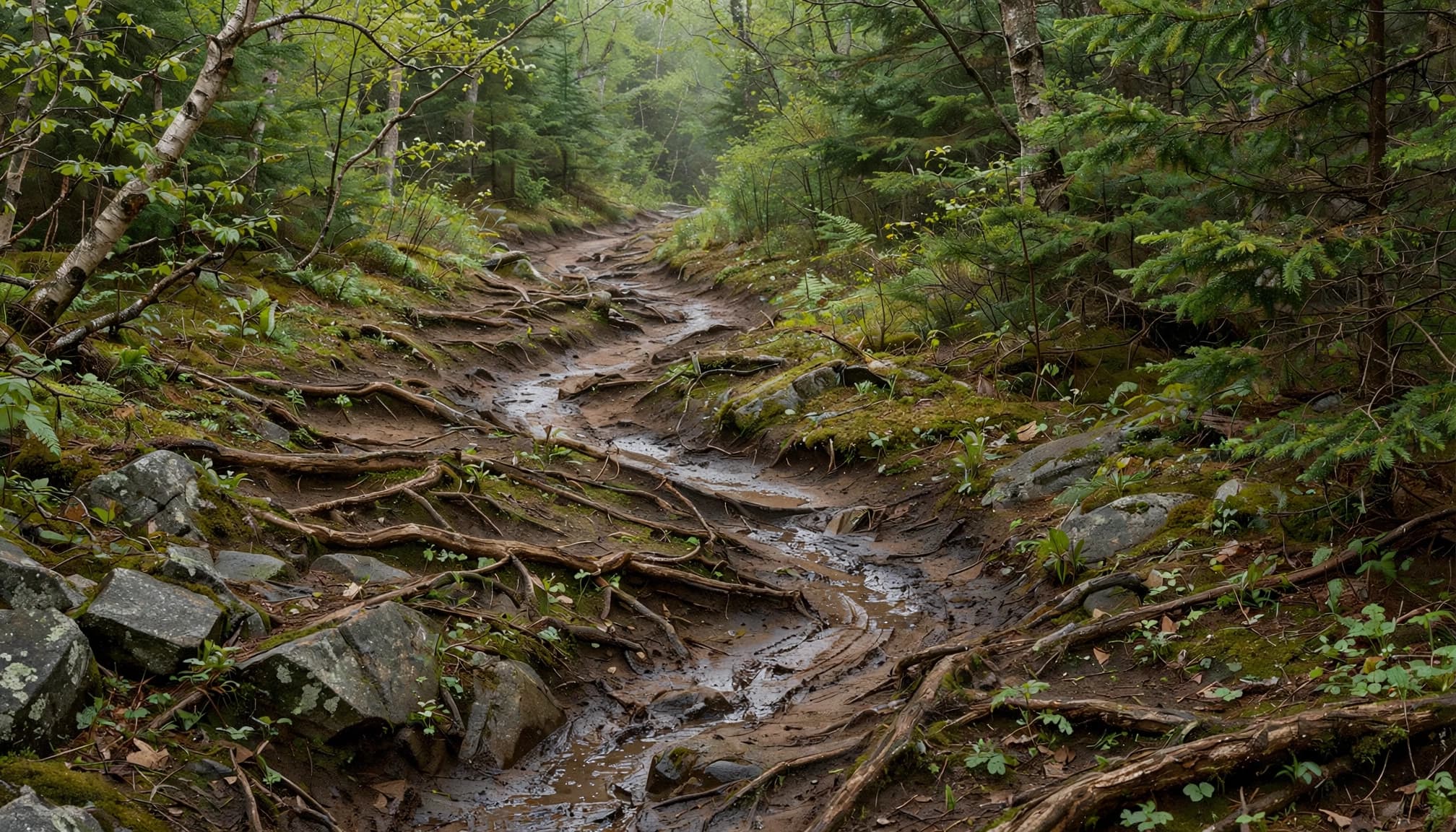
In wooded sections, exposed roots can cross the trail at awkward angles, while rocks and ledges demand careful foot placement. Some courses follow forest roads or wider dirt paths, which allow a steadier stride. Others use narrow singletrack, where passing can be difficult and runners may need to slow down.
After rain or during spring thaw, dirt and forest-floor trails can turn soft, slick, or muddy. Maine Trail Finder describes how trail surfaces vary, including dirt, gravel, rock, and seasonal wet ground. Its trail-surface guide can help runners recognize the kinds of footing they may encounter on local routes.
Rolling hills also shape the effort. Even without a long, steep climb, repeated rises and descents can tire the legs. On technical ground, a controlled pace and steady footing usually matter more than matching road-race speed.
Conditions vary by region and season
Maine’s large geographic range means trail character differs by location. Coastal routes may include softer ground and exposed sections, while inland and northern courses can pass through extensive forest and uneven terrain. Individual events vary, so check the course map and description instead of assuming that a race will match another nearby trail.
Season matters, too. Spring trails may be wet or muddy, while summer courses can feel warm and humid under a forest canopy. Fall often brings cooler running weather, but leaves can hide roots and rocks. Weather can also shift quickly, so check the forecast and event updates before heading out.
A familiar trail can feel very different after rain or when leaves cover the ground.
Check the current course details
Race organizers may change routes, distances, start procedures, or formats between years. Before race day, confirm the latest information directly with the event, including elevation, surface type, aid stations, cutoffs, and any required gear. For extra context, Maine Trail Finder explains its trail difficulty ratings, which account for factors such as hills and uneven footing.
Knowing what lies underfoot helps you choose shoes and set a realistic pace. If the course includes rocks, roots, or mud, practice on similar terrain before race day rather than relying only on road miles.
Choose Your Distance, Duration and Goal Time
Make three quick selections and open the exact plan built for your race target.
Looking for a Fully Personalized Training Plan?
The training plans above are an excellent choice if they match your goal. However, if you’d rather train with a plan built specifically around your current fitness, goal race, preferred training days, weekly mileage, and target finish time, our RDA Custom Training Plans provide a personalized solution. We also have running courses available for runners seeking to run faster from the mile to the marathon.
Why Choose a Custom Training Plan?
| Standard Training Plan | RDA Custom Training Plan |
|---|---|
| Follows a fixed schedule | Built around your schedule |
| Standard weekly mileage | Peak mileage customized for you |
| Fixed workout days | Train on the days you choose |
| Same structure for everyone | Designed around your current fitness |
| Static plan | Updated as your fitness improves |
| One-time purchase | Ongoing personalized coaching and support |
What You’ll Receive
- A training plan built specifically for your goal
- Personalized training paces
- Long runs, tempo runs, threshold workouts, interval sessions, recovery runs, and easy runs
- Peak weekly mileage matched to your experience level
- Flexible training schedule that fits your life
- Ongoing plan adjustments as your fitness improves
Ready to Train Smarter?
Stop guessing and start following a plan built specifically for you, your schedule, and your racing goals.
Maine Trail Races to Put on Your List
Maine has trail events for runners seeking a short first race, a challenging day on technical ground, or a longer effort on repeat loops. These events are useful starting points, but race dates, distances, and routes can change. Check each organizer’s current information before making plans.
Pineland Farms Trail Running Festival
In New Gloucester, the Trail Festival at Pineland Farms pairs a busy event atmosphere with a network of rolling trails and farm roads. Its appeal is the range of experiences: recent listings have included shorter races, longer distances, and timed formats, so newer trail runners and ultrarunners can find different ways to take part.
The course setting is less rugged than a steep mountain route, though repeated loops and changing surfaces still add up over longer distances. The festival may suit runners who want a well-attended event, a choice of race length, or the energy of seeing other participants on course. Check the current Pineland Farms race listing for this year’s formats, dates, and course information.
Bradbury Mountain races
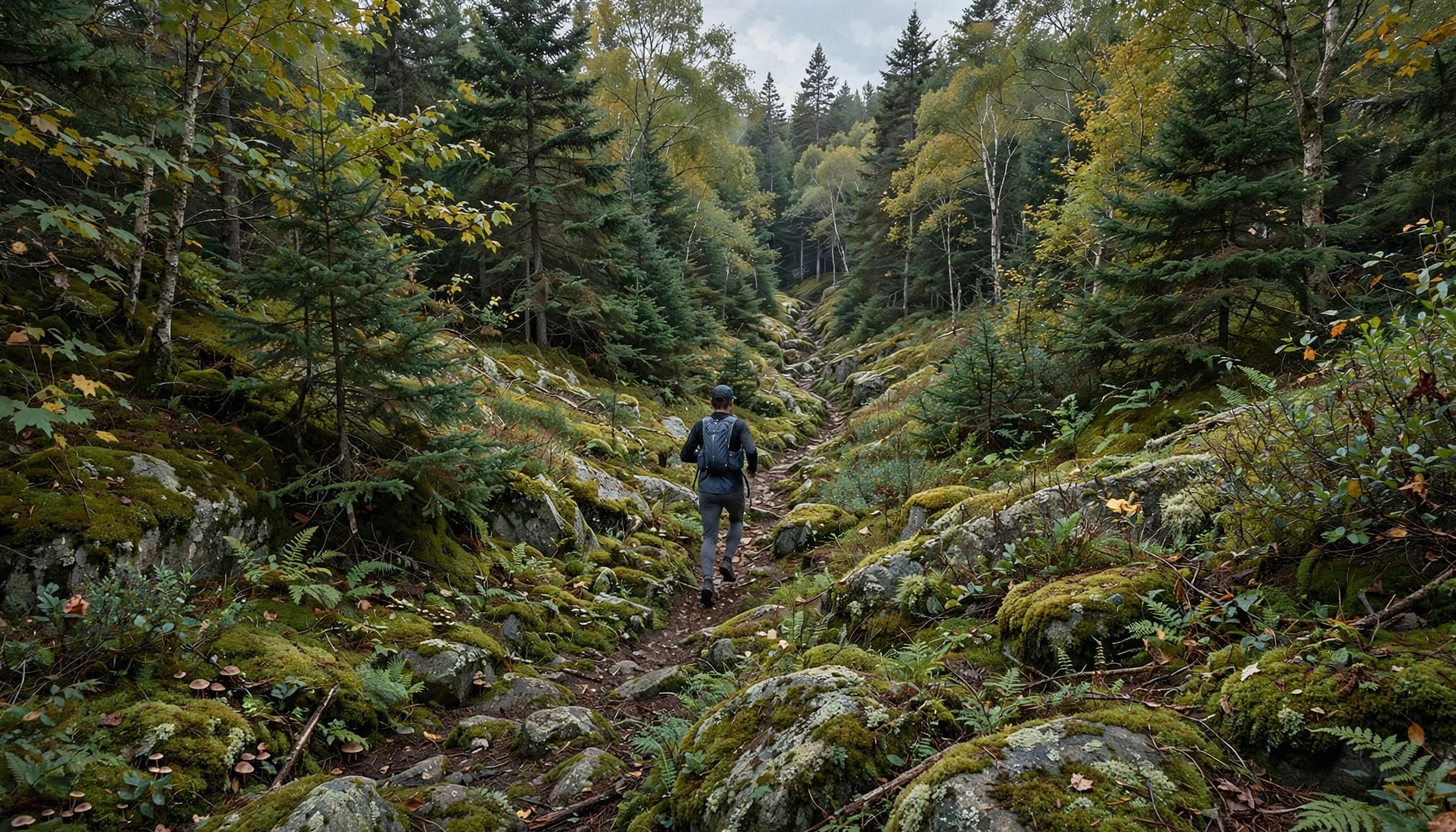
Bradbury Mountain State Park in Pownal offers a wooded, hillier setting, with rocky and uneven trails that reward careful pacing. Climbs and descents can make even a relatively short race feel demanding, especially for runners used to flatter paths or roads. Technical footing also calls for attention when the trail narrows or becomes slick.
Events at the park can appeal to runners who enjoy a more rugged course and want to practice handling hills under race conditions. Options vary by event and year, so review the organizer’s current details for distances, elevation, and route changes. The Bradbury Scuffle race page includes event and trail-etiquette information; also check Bradbury Mountain State Park conditions and applicable park rules before you go.
Finding smaller races across the state
Smaller trail races can make a friendly first start, with a local feel and manageable distances. Look for announcements from race organizers and running clubs, then check park calendars and regional listings for events near your preferred location or season.
Maine Trail Runners’ race calendar and the Lakes Environmental Association trail race series are useful places to begin. Listings may not include every detail or reflect the latest changes, however. Before registering, contact the organizer to confirm the date, permit status, course, aid-station setup, and registration requirements. For a first race, ask about expected terrain and whether the course has cutoffs or required gear, too.
Choose a Race That Fits Your Distance and Experience
The best trail race in Maine is one that fits your current training, comfort on uneven ground, and reason for racing. Compare distance and time goals alongside elevation, footing, and how remote the course feels. A shorter event can still be demanding when steep climbs and rocky trails slow your pace.
Start with a distance you can train for
Short races, such as a 5K or 10K, can be a practical first step. They give you a chance to learn how trail footing affects your pace without requiring the long training buildup of an ultra. Still, distance alone doesn’t reveal difficulty. A short race with steep climbs, roots, and loose rocks may feel harder than a longer event on smoother, rolling trails.
Mid-distance races, often around a half marathon or 25K, call for more time on your feet and steady preparation. Ultras, which exceed the standard marathon distance, add greater demands on pacing, fueling, and managing fatigue. Choose a first event that leaves room to enjoy the course, rather than one that depends on ideal conditions or a stretch goal.
Check elevation, footing, and course rules
Before you register, review the elevation profile and course surface. Repeated climbs can take a toll even when no single hill looks severe, while mud, rocks, and narrow singletrack can slow you down. Match those conditions to the terrain you’ve practiced on, especially if you’re still building confidence on technical trails.
Also check cutoff times, required gear, and the aid-station plan. Cutoffs matter if you expect to hike steep sections or take a conservative pace. Required gear can affect what you carry, while aid-station spacing helps you plan food and water. Since event details can change, confirm the current rules with the organizer instead of relying on a past race report.
Match the event to your goals
Your reason for entering can help narrow the choices. For a first trail finish, look for a manageable distance and a course you can train for consistently. If you want a personal challenge, consider more elevation or a longer distance, then build your training around the specific demands. For a scenic run, course setting may matter more than a fast time. Competitive runners may prefer events with a clear course, timing, and a field suited to their goals.
Practical details matter, too. A race close to home may leave more time for rest, while a distant event can turn race day into a longer trip. Check whether registration has an entry limit, and sign up early if spaces are restricted. If friends or family plan to join you, find out whether they can reach the start, finish, or aid stations. For example, Pineland Farms event information can help you check venue details when considering organized races there.
Train for Maine’s Roots, Rocks, and Hills
Training for trail races in Maine means preparing for uneven footing and changing effort, not just adding miles. Build fitness gradually, practice on trails that resemble your course, and adjust the details to the distance and terrain you plan to race.
Build trail strength and steady endurance
Keep most runs easy enough to hold a conversation. These outings build endurance without making every session a hard effort. Increase weekly mileage in small steps, and add a rest day or lighter week when fatigue lingers. A steady buildup gives your legs time to adapt to trail running.
For your weekly long outing, choose a route with terrain like the race. A shorter run on rocks and roots can be more useful than a longer run on smooth pavement. In addition, hill repeats build climbing strength: run or hike uphill at a controlled effort, then recover on the way down. REI’s trail-running endurance guidance also recommends hills as a way to develop strength for longer runs.
Add basic strength work once or twice a week, as your schedule allows. Squats, step-ups, lunges, calf raises, and planks target muscles that help stabilize your legs and trunk on uneven ground. Start with a manageable number of repetitions and use controlled movement. Rest matters, too. If pain changes your stride or persists between runs, pause training and seek advice from a qualified health professional.
Practice running by effort, not just pace
Trail pace can change sharply within a race. Rocks and roots call for shorter strides and careful foot placement, while mud or narrow paths may slow you even when your effort stays steady. Climbs can push your breathing higher, so use your effort and breathing as guides instead of trying to match your road pace.
Practice on uneven ground before race day. Start with familiar, forgiving trails, then add more technical sections as your confidence improves. Look a few steps ahead, stay relaxed, and let your pace respond to the footing. On steep climbs, hiking is a useful skill, not a failure to run. Try brisk hiking during training and learn how quickly you can recover when the grade eases.
Test shoes, layers, and race-day gear
Use training runs to check that your trail shoes grip the surfaces you expect and feel comfortable over several hours. Test socks for rubbing, and carry the hydration gear you plan to use in the race. Small adjustments, such as changing how a vest sits or how much water you carry, are easier to make before race day.
Weather and event rules should shape your kit. Check the forecast close to the event, review the organizer’s required-gear list, and try any layers or equipment on a training run. A light rain shell may be useful in wet conditions, while warm weather may call for a different hydration plan. Avoid debuting untested gear on race day. Tailor the amount of training and equipment to your event’s distance, terrain, and rules; a coach or clinician can help if you’re unsure how to adapt your plan.
Plan Your Race Weekend and Run Responsibly
Good planning makes Maine trail races easier to enjoy, especially when the start is far from a larger town or the course crosses public and private land. Confirm details with the organizer and venue before you leave, since logistics, conditions, and access rules can change.
Register early and prepare for travel
Popular races may cap entries or sell out, so check registration deadlines before booking a trip. Read the latest race instructions for packet pickup times, parking locations, start times, and any required gear. Some events offer packet pickup the day before, while others schedule it on race morning. Plan around the organizer’s exact schedule rather than assuming you can collect your bib at the start.
For races outside larger towns, reserve lodging early and check what services are nearby. A small community may have limited rooms, restaurants, fuel, or grocery options. Find out whether the parking area is close to the start, whether roads close during the event, and whether spectators can reach the finish. Save the course location and race contact details before traveling, since cell service may be limited in some areas.
Prepare for changing weather and trail conditions
Maine race mornings can feel cool, even when the afternoon forecast calls for heat. Rain can make roots, rocks, and slopes slick, while warm weather may increase your need for fluids. Check the forecast shortly before the event, then review organizer updates for course changes or weather-related instructions.
Pack the supplies required by the race, along with clothing suited to the forecast. Carry water or use the event’s aid-station plan to decide how much fluid to bring. If the route is unfamiliar, study the map and course markings before the start. A charged phone or other navigation aid can help, but it shouldn’t replace following marked routes and race directions. Adjust your pace when footing or temperature changes; conditions can vary across one course.
Follow trail etiquette and protect the landscape
Race courses may use park trails, conservation land, or private property, and each venue can set different access rules. Stay on the marked route, follow posted park guidance, and leave gates or barriers as you find them. When passing is safe, let other runners know you’re coming; yield when the course or event instructions call for it. Above all, follow directions from race staff and volunteers, who may respond to changing conditions.
Carry out wrappers, cups, and other waste unless the organizer provides a clearly marked disposal point. The National Park Service’s Leave No Trace guidance recommends packing out trash and leftover food. Respect private land, wildlife, and other trail users, and keep the course clean for the people who live near and care for it.
Frequently Asked Questions
Race details can change between seasons, and conditions on Maine trails can shift with the weather. Before registering, confirm the current information with the event organizer and venue.
When is trail race season in Maine?
Trail races take place in Maine at different times of year, and some events run outside the main spring-to-fall season. Dates vary by race and can change from one year to the next, so don’t rely on last year’s schedule when planning. Check current race calendars, then confirm the date on the organizer’s event page before booking travel or lodging.
Are there beginner-friendly trail races in Maine?
Many Maine trail events offer shorter distances that can suit runners new to racing on trails. However, a short course can still feel challenging if it includes steep climbs, slippery ground, or rocky footing. Before registering, review the elevation profile, terrain description, and race rules, including cutoffs and required gear, so the event matches your experience and preparation.
What should I wear for a trail race in Maine?
Choose comfortable trail footwear with traction suited to the course, and wear layers that match the forecast. A light shell may help in wet weather, while a breathable layer can make a cool start more comfortable. Check the event’s gear rules and the forecast close to race day, then test your shoes, socks, and clothing on a training run.
Do Maine trail races provide aid stations?
Aid varies by event and distance. Some races provide several staffed stations, while others have limited support or longer stretches between stops. Review the current course map and race instructions to see where aid is available and what the event provides. Then plan for any gaps, including how much water or food to carry between stations.
Can I bring my dog to a Maine trail race?
Dog policies differ by race and venue, and some events may prohibit dogs on the course or at the start area. Before bringing a dog, confirm the policy with both the race organizer and the park or land manager. Even when dogs are allowed, check leash rules and spectator guidance so your plans don’t conflict with event or venue requirements.
How do I find current race dates and registration details?
Start with the official event page or contact the organizer, since those sources can confirm registration status, course details, and schedule changes. Regional listings such as the Maine trail-running calendar can help you compare events by date. Before making travel plans, verify the race date, start location, registration deadline, and any updated participant instructions directly with the event.
Conclusion
Trail races in Maine offer a wide range of terrain and challenges, so the best choice is the event that fits your experience and training. Before signing up, review the distance, elevation, footing, and race requirements, then prepare for conditions that can shift with the weather and season.
With a suitable race and realistic preparation, you can focus on running well and enjoying the course. Verify the latest details with the organizer before making plans, and give yourself time to train on terrain similar to what you’ll face.


