

Trail Races in Indiana: Hoosier Hills and Wooded Singletrack
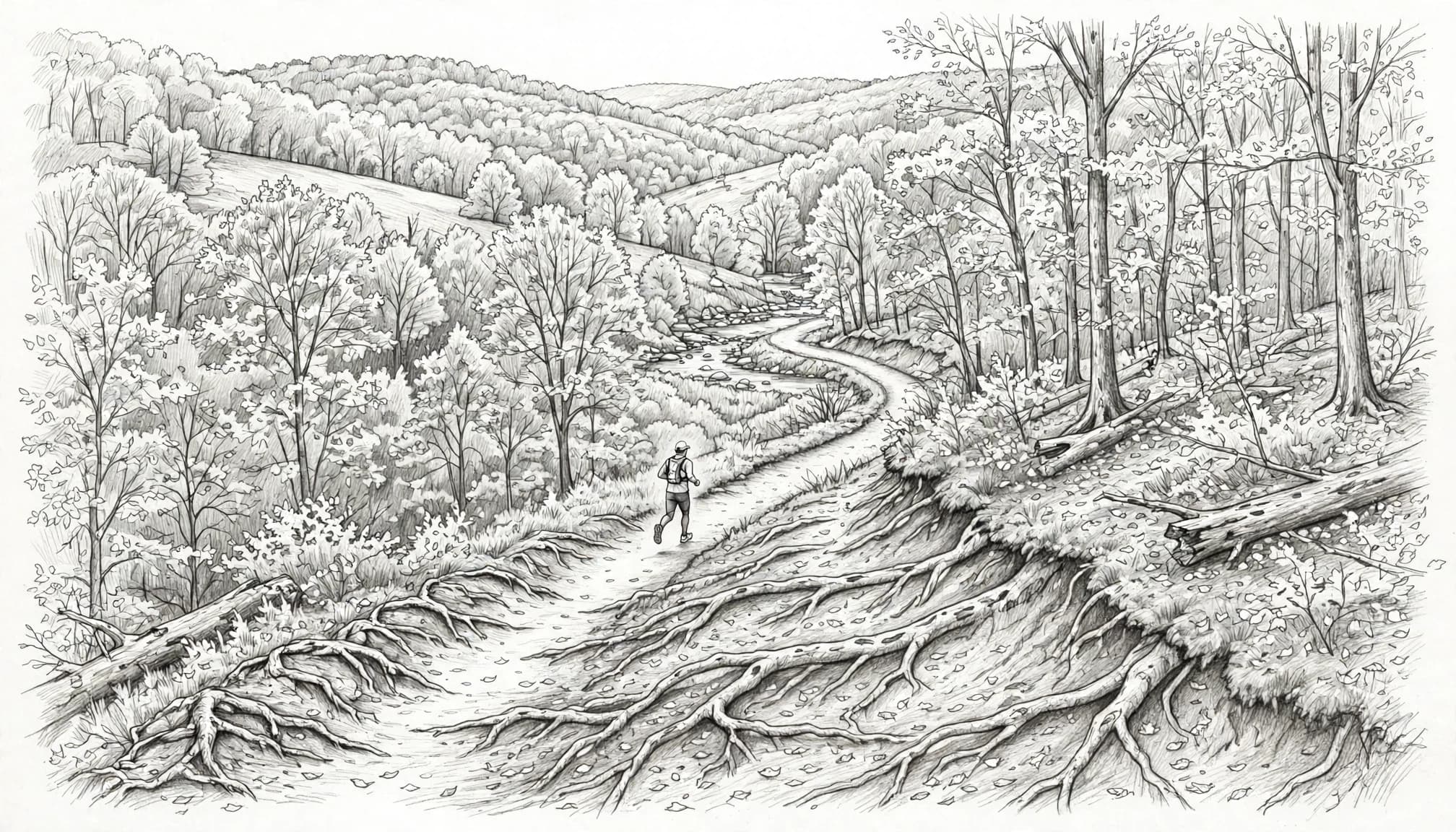
On Indiana singletrack, a shaded forest path can give way to rolling hills, tangled roots, and a muddy creek crossing in just a few miles. That variety makes trail races in Indiana a fit for first-time off-road runners, experienced racers, and ultrarunners looking for a long day in the woods.
Choosing the right event means looking beyond the distance. Terrain, weather, and course conditions can shape your effort, so it helps to know what to expect before you register. This trail race guide highlights notable races and explains how to choose a distance, train for the trails, and plan for race day.
Key Takeaways
- Trail races in Indiana range from short outings to ultradistance events, so choose a distance that fits your experience and current training.
- Expect rolling hills, roots, mud, and creek crossings on some courses. Practice adjusting your pace to changing terrain.

- Compare dates, distances, and locations on the DINO Trail Run Series calendar, then check each race page for course details.
- Build fitness on uneven trails and hills, and practice fueling during longer runs. Before race day, check the forecast and prepare for wet or muddy conditions.
Trail Races in Indiana: Find a race that fits your goals
Indiana’s trail calendar includes local series, forest ultras, and winter races with very different demands. Compare the terrain and event format with your current fitness, then confirm dates, distances, and course details on the organizer’s current race page.
DINO trail races offer a range of local options
The DINO Trail Run Series makes it easier to find races at Indiana parks and forests. Its events can suit runners who want a first trail-race experience as well as those ready for a tougher course. Routes and distances vary by event and season, so look at the current calendar before choosing.
Brown County State Park, Eagle Creek Park, and Morgan-Monroe State Forest are examples of venues to check for the current season, not a guarantee of this year’s schedule. The Indiana trail running events calendar is another useful way to spot nearby races. Before registering, review the organizer’s course description for elevation, surface, and any creek crossings.
Big challenges include the Indiana Trail 100 and Tecumseh Trail Challenge
For a long day in the woods, the Indiana Trail 100 and Tecumseh Trail Challenge draw runners seeking sustained endurance efforts. The Indiana Trail 100 has been associated with Brown County State Park’s forested hills, though its location can change. The organizer’s current Indiana Trail 100 details list the latest venue and event information, so check them before planning travel.
The Tecumseh Trail Challenge takes runners through the rugged forest country around Morgan-Monroe State Forest. Its wooded setting and extended trail mileage appeal to experienced runners who want a demanding outing, whether they choose a shorter or longer option available that season. The Tecumseh Trail Challenge race page provides current event details. In either case, train for uneven ground and sustained climbs, and match your chosen distance to the time you have spent on trails.
The HUFF 50K brings runners to Chain O’Lakes State Park
The HUFF is known for its winter setting at Chain O’Lakes State Park, where December weather can make the course feel very different from a dry fall trail. Cold temperatures, rain, and muddy ground can affect footing and pace, so build flexibility into your race-day plan. Shoes with dependable traction and clothing suited to changing conditions can help.
The HUFF’s race format, course, and available distances may change by year. Check the organizer’s HUFF course maps and current event page before booking travel or planning your preparation. A course map can also help you judge whether the event matches your experience with winter trail conditions and longer efforts.
What Indiana trail terrain feels like underfoot
Indiana trail surfaces change quickly, sometimes within the same race. A smooth park path can turn rocky or root-covered, then drop toward a creek or climb through leaf-covered woods. That variety affects footing and effort, so runners should expect each course to have its own character.
Southern Indiana brings hills, roots, and longer climbs
In southern Indiana, forest routes can feel rugged and constantly rolling. The trail may rise and fall repeatedly rather than offering one long climb followed by easy ground. Brown County State Park and Morgan-Monroe State Forest are examples of wooded settings where runners should prepare for changing elevation and uneven footing. Indiana’s DNR trail plan describes Brown County State Park’s single-track trails, though each race course follows its own route and conditions.
Roots and rocks can interrupt a steady stride, while leaves may hide what lies beneath them. Some routes also include creek crossings, where wet stones or soft banks call for careful footing. On these trails, effort and control matter more than holding a road pace. Shorten your stride on descents, stay relaxed over rough ground, and judge the climb by how hard you’re working rather than how fast you’re moving.
Choose Your Distance, Duration and Goal Time
Make three quick selections and open the exact plan built for your race target.
Looking for a Fully Personalized Training Plan?
The training plans above are an excellent choice if they match your goal. However, if you’d rather train with a plan built specifically around your current fitness, goal race, preferred training days, weekly mileage, and target finish time, our RDA Custom Training Plans provide a personalized solution. We also have running courses available for runners seeking to run faster from the mile to the marathon.
Why Choose a Custom Training Plan?
| Standard Training Plan | RDA Custom Training Plan |
|---|---|
| Follows a fixed schedule | Built around your schedule |
| Standard weekly mileage | Peak mileage customized for you |
| Fixed workout days | Train on the days you choose |
| Same structure for everyone | Designed around your current fitness |
| Static plan | Updated as your fitness improves |
| One-time purchase | Ongoing personalized coaching and support |
What You’ll Receive
- A training plan built specifically for your goal
- Personalized training paces
- Long runs, tempo runs, threshold workouts, interval sessions, recovery runs, and easy runs
- Peak weekly mileage matched to your experience level
- Flexible training schedule that fits your life
- Ongoing plan adjustments as your fitness improves
Ready to Train Smarter?
Stop guessing and start following a plan built specifically for you, your schedule, and your racing goals.
Central and northern Indiana trails offer a different rhythm
Many central and northern routes include wooded park paths, flatter stretches, or gentler rolling terrain. Those sections can let runners settle into a more even rhythm than hillier southern trails. However, a park’s location doesn’t tell the whole story. Course designers may link flat paths with steep sections, roots, or narrow singletrack, and recent weather can change the surface.
Chain O’Lakes State Park, for example, offers a wooded setting, but the feel of a race there depends on its route and the conditions that day. Check the event’s course description and elevation details before you assume a race will be easy or fast. Even a relatively gentle route can demand attention when the surface turns uneven.
Weather can turn a familiar course into a new challenge
Rain can soften the trail and reduce traction, especially on slopes, roots, and creek banks. Seasonal mud may cling to shoes and slow each step. In dry weather, packed dirt can feel firm, while loose rocks and exposed roots still require focus. Meanwhile, fallen leaves can obscure rocks, ruts, and roots, making familiar paths harder to read.
Heat raises the need for hydration and can make climbs feel tougher. Cold weather may stiffen muscles and bring slick patches, while wet conditions can chill runners even when temperatures seem manageable. Before race day, check the forecast and ask the organizer about current trail conditions. Adjust your pace, footwear, and water plan to match what the course is likely to serve up.
Choose a trail race distance you can enjoy
The right distance should fit your current running, your available training time, and what you want from race day. Trail races in Indiana can feel tougher than road events of the same length because roots, mud, elevation changes, and narrow paths interrupt your rhythm. Choose a race that lets you meet those demands without turning every training week into a strain.
Start with a short trail race to learn the basics
If you mostly run roads or are new to racing, a short event gives you room to learn how trails change your stride. Roots and loose ground call for shorter steps and more attention, while narrow singletrack can affect when and how you pass. You can practice these skills over a manageable distance, then finish with energy to reflect on what worked.
A short race also helps you find a relaxed effort. Your usual road pace may not translate to a rolling or muddy course, so focus on breathing and control instead of chasing familiar splits. Choose an event that fits your current weekly routine, especially if you have limited time to add trail runs. That first finish can help you decide whether you want more distance, steeper terrain, or simply another chance to feel comfortable off-road.
Build toward a half marathon or marathon on trails
For a trail half marathon or marathon, steady training matters more than forcing a strict mileage target. Run consistently, add trail time when you can, and practice on terrain that resembles the event. If the course includes sustained hills or technical sections, include those conditions in training so race day feels less unfamiliar.
Also account for the extra recovery that rough footing and long climbs may require. A run that feels moderate on pavement can leave your legs tired after hours of uneven steps, so avoid stacking hard efforts before you’re ready. Use your schedule, running background, and recovery to guide how quickly you build. The goal is to arrive prepared to keep moving comfortably, not to copy a plan designed for someone else’s training history.
Know what an ultra asks of you
An ultra adds more than mileage. Longer time on your feet increases the need to manage fatigue, keep a sustainable pace, and take in fluids and calories before you feel depleted. Practice your fueling and hydration during long training outings, since race day is a poor time to discover that a food or drink doesn’t sit well.
For a first ultra, pick an event that matches your current base and the time you can devote to gradual preparation. The first-ultramarathon training guide recommends choosing a race that fits your starting point and allowing time to build. A realistic goal might be to finish steadily rather than race every mile. Trail conditions, elevation, and aid-station spacing also matter, so compare the course with your experience before registering. During preparation, Trail Runner’s ultramarathon guide offers additional perspective on training and race-day demands.
Train for Indiana singletrack without chasing road pace
Trail training calls for a different measure of progress than road running. Roots, hills, mud, and tight turns can slow your pace even when your effort stays steady. For trail races in Indiana, build comfort on uneven ground and learn to adjust your effort as the terrain changes.
Practice on hills and trails like the ones in your race
Run on trails regularly when you can, especially routes with hills and footing similar to your event. A nearby park loop can help you practice stepping over roots, choosing a line through rocks, and settling back into a comfortable rhythm after a climb. Check the race course description, too, so your training reflects its surface and elevation.
When steep climbs push your effort too high, hiking is a smart race skill, not a failure to run. A brisk, controlled hike can save energy for later miles, particularly in longer events with repeated climbs. Practice switching from running to hiking before you need to do it under pressure.
Build trail time gradually. Add a little more time or distance at a time, and give your legs room to recover before another demanding outing. Uneven ground can make a familiar duration feel harder than a road run.
Build strength and balance for uneven ground
Strength training can help you stay steady as the trail rises, drops, and tilts beneath your feet. Focus on the legs and hips, along with calves and ankles, using simple movements such as step-ups, calf raises, and controlled single-leg balance. Keep the work manageable and consistent rather than adding a demanding routine all at once.
Balance also improves through attentive trail running. Look several steps ahead, keep your stride compact on technical sections, and avoid forcing speed when footing gets uncertain. After a harder run or strength session, allow enough recovery to return fresh. If pain or a health concern affects your training, seek guidance from a qualified medical professional rather than treating exercises as a substitute for care.
Practice fueling, hydration, and effort control
Longer training runs are the place to test what you plan to eat and drink on race day. Try your chosen foods, fluids, pack, and other gear during training, so you can spot problems before the event. Trail-running nutrition basics can help you think through fueling during longer outings.
Aid-station support varies by race, including what organizers provide and how far apart stations are. Check the current race information and plan to carry what you need between stops. In training, practice taking small sips and eating at a steady interval that works for you.
On rolling terrain, use breathing and perceived effort rather than trying to hold a road pace. Ease up on climbs, stay controlled on descents, and let flatter sections become chances to settle in. A steady effort helps you keep moving when the trail changes underfoot.
Plan race day, from registration to the finish
A smooth race day starts with a few practical decisions made before you leave home. Confirm your entry, learn the venue, and pack for the course you’ll actually run, not a generic trail race.
Check the course, cutoff times, and race rules early
After registering, save the confirmation and review the organizer’s latest race instructions. Check the current course map, elevation profile if available, cutoff times, aid-station locations, parking plan, and required gear. These details help you estimate how long you’ll be on the trail and what you need to carry between aid stations.
Race information can change from year to year. A familiar event may use a different route, start location, or set of rules in a new season, so don’t rely on an old map or a friend’s past experience. For DINO events, use the current trail series information and follow the instructions for your specific race. If you have a question about mandatory equipment or a cutoff, contact the organizer before race morning.
Pack shoes and layers for Indiana trail conditions
Choose trail shoes that feel comfortable and grip the surfaces you expect. A muddy course may call for more traction than a firm park path, but aggressive lugs won’t suit every route. No single shoe or gear list works for all trail races in Indiana, so consider the course, forecast, and distance.
Pack weather-ready layers you can wear or remove as conditions shift. Bring a charged phone, and carry any safety items the race requires, such as a headlamp or emergency layer. If you’ll use a hydration vest, poles, or nutrition, test them during training rather than introducing them on race day. Keep your bib and gear where you can reach them easily during check-in.
Arrive ready to protect the trails and other runners
Plan to arrive with time for parking, check-in, a bathroom stop, and a calm warm-up. Traffic, crowded lots, or a last-minute bib pickup can make a rushed start more stressful. Leave valuables secure, bring what you need from the car, and listen for any final announcements about course conditions.
On narrow trail, let other runners know when you’re passing and give them room to respond. Follow course markings rather than taking shortcuts, even when the route becomes muddy or crowded. Carry wrappers and gel packets until you reach a trash bin, and follow posted park rules. Leave No Trace’s trail-running guidance offers practical ways to keep trails clean and share them respectfully.
Before heading to the start, run through a short final check: bib attached, phone charged, required gear packed, and travel plan confirmed. Then settle into an effort you can sustain, watch the trail ahead, and leave the course as you found it.
Frequently Asked Questions
Choosing a race often comes down to details that a distance chart can’t show: footing, weather, and how the course fits your training. These answers can help you make a more informed choice before registering for trail races in Indiana.
Are there beginner-friendly trail races in Indiana?
Yes. A shorter race on a less technical course can be a good first event, especially if you haven’t raced on singletrack before. However, distance alone won’t tell you how challenging a course will feel. Read the course description and elevation details before registering, and look for notes about roots, mud, narrow paths, or creek crossings.
When is trail race season in Indiana?
Indiana races take place in different seasons, including winter, so you can find events beyond the traditional spring and fall calendars. Dates and locations vary by organizer and year, and weather can change the feel of a course. Check current listings as you plan, then confirm the date on the race organizer’s own page.
Do I need trail shoes for an Indiana trail race?
Your shoe choice depends on the course surface, weather, and what feels comfortable on your feet. A firm park path may not need the same traction as a muddy route with roots or steep slopes. Check the organizer’s course notes, then test your shoes on similar terrain during training. Avoid wearing a new pair for the first time on race day.
How should I pace hills during a trail race?
Manage your effort instead of forcing a road pace onto uneven ground. On climbs, shorten your stride and ease up before your breathing becomes strained; planned hiking can help you conserve energy when a hill is steep or long. Terrain and race distance both affect what a sensible pace looks like, so adjust as the course changes.
Can I use a road marathon plan for a trail race?
Road training can build useful endurance, but a road plan may not prepare you for uneven footing, repeated climbs, or long descents. Add trail practice, and rehearse fueling and effort-based pacing on terrain that resembles your event. Adapt the plan to the course and your experience rather than following it unchanged.
How do I find current Indiana trail race dates?
Use race calendars to discover events, then confirm details on the organizer’s official website or registration page. The American Trail Running Association race calendar is one place to search; the organizer’s page should provide confirmed dates, course options, fees, and event rules. Check again before traveling because schedules can change.
Conclusion
Trail races in Indiana offer a course for nearly every goal, whether you’re aiming for your first off-road finish or preparing for a long forest ultra. The strongest choice is a race that fits your experience and training time, with terrain you’re ready to handle.
Before you register, check the current course details and plan your training around the hills, roots, and conditions you can expect. With steady preparation and a realistic effort, Indiana’s woods can make race day rewarding at any distance. Choose your course, get comfortable on the trails, and take the next step by reviewing the organizer’s latest race information.


