

Trail Races in Illinois: Bluffs, Ravines and Prairie Paths
Illinois trail running can take you from quiet woods and prairie paths to rolling hills and long, flat rail trails. That range gives first-time trail runners room to find a manageable starting point, while experienced ultrarunners can test themselves over longer distances.
Choosing well means looking beyond a race name or mileage. Course surface, elevation, weather, and race-day support all affect how an event feels, so compare those details with your experience and goals before you register. Here’s how to find a trail race that fits your plans and prepare for the trail ahead.
Key Takeaways
- Trail races in Illinois range across prairie paths, wooded singletrack, rolling park trails, and flatter rail-trail routes, so course terrain can vary as much as distance.
- Choose a race by matching its mileage, elevation, surface, and aid-station support to your current training and trail experience.
- Illinois includes long trail corridors such as the Hennepin Canal Parkway, Illinois and Michigan Canal, and Rock Island Trail, according to the Illinois Department of Natural Resources hiking guide.
- Before race day, review the course details and prepare for changing weather, uneven footing, and the specific gear or fluids your event requires.
Trail Races in Illinois: Find the Right Race for Your Goals
Illinois trail races range from short outings on crushed limestone to wooded singletrack, prairie paths, marathons, and ultras. That variety makes it easier to choose a goal that suits your current training, but course conditions can change the effort behind a familiar distance. Race calendars and event formats also shift, so check the current race page before you register.
Start with a distance that matches your experience
A 5K or 10K is a practical first step if you’re new to trails. You can learn how roots, mud, gravel, and turns affect your pace without committing to a full day on your feet. For example, the Naperville Trails Half Marathon and 10K listing describes a course on crushed-limestone paths. Check the event’s current distance options and course details, since formats can change.
A half marathon adds time and fueling demands, even when the mileage matches a road race you’ve completed. For a first trail event, base your decision on time on feet and terrain, not just your road-race pace. A rolling or technical course can take much longer than a flat route at the same distance.
A 50K and longer ultras require more planning for nutrition, hydration, pacing, and fatigue. Before choosing one, consider whether your training includes long runs on similar surfaces and whether you can handle the event’s cutoff times. Those limits, along with rules for required gear and aid-station support, vary by race. The American Trail Running Association race calendar is one place to search for events and compare options.
Think about the kind of challenge you want
If your goal is a first trail-race finish, look for a shorter course with terrain you can practice on. Runners seeking a technical test may prefer narrow, uneven trails, while those after a long endurance day should study elevation and the distance between aid stations. A personal-record attempt usually suits a smoother, more predictable course, though trail conditions still affect pace.
In Illinois, surface and elevation can differ across routes, even at the same distance. Weather matters too: rain can turn dirt into slick footing, while heat can raise the effort of an exposed course. Compare the course map, surface notes, elevation profile, aid-station plan, and cutoff rules before picking a race. Choose the challenge that fits your training now, rather than relying on mileage alone.
Choose Your Distance, Duration and Goal Time
Make three quick selections and open the exact plan built for your race target.
Looking for a Fully Personalized Training Plan?
The training plans above are an excellent choice if they match your goal. However, if you’d rather train with a plan built specifically around your current fitness, goal race, preferred training days, weekly mileage, and target finish time, our RDA Custom Training Plans provide a personalized solution. We also have running courses available for runners seeking to run faster from the mile to the marathon.
Why Choose a Custom Training Plan?
| Standard Training Plan | RDA Custom Training Plan |
|---|---|
| Follows a fixed schedule | Built around your schedule |
| Standard weekly mileage | Peak mileage customized for you |
| Fixed workout days | Train on the days you choose |
| Same structure for everyone | Designed around your current fitness |
| Static plan | Updated as your fitness improves |
| One-time purchase | Ongoing personalized coaching and support |
What You’ll Receive
- A training plan built specifically for your goal
- Personalized training paces
- Long runs, tempo runs, threshold workouts, interval sessions, recovery runs, and easy runs
- Peak weekly mileage matched to your experience level
- Flexible training schedule that fits your life
- Ongoing plan adjustments as your fitness improves
Ready to Train Smarter?
Stop guessing and start following a plan built specifically for you, your schedule, and your racing goals.
Notable Illinois Trail Races, From Forest Paths to Long Rail Trails
Illinois trail races offer very different experiences, even when the distances look similar on paper. A smooth rail trail rewards steady pacing, while wooded singletrack asks for quick adjustments and careful footing. Use these events as starting points, then check each organizer’s current page for dates, course details, registration, and event status.
Try a classic ultramarathon at Tunnel Hill
In southern Illinois, Tunnel Hill is a well-known ultra on the Tunnel Hill State Trail, a former rail corridor with a relatively flat, crushed-limestone surface. The open grade can make it easier to settle into a rhythm than on a winding forest trail, though long miles still demand patient pacing and consistent fueling.
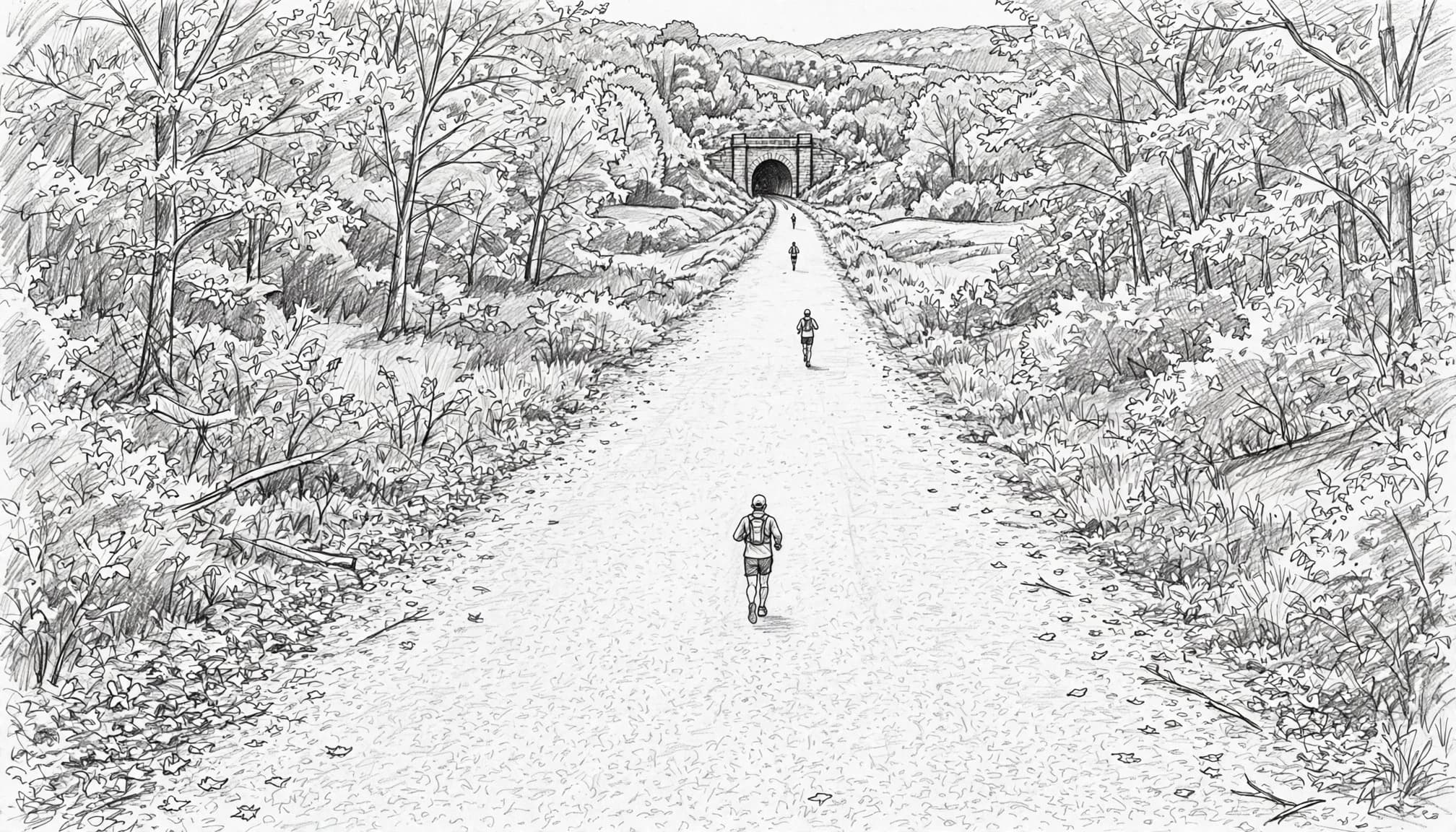
The event has featured long-distance options such as a marathon, 50-miler, and 100-miler. However, distances and formats can change, so review the current Tunnel Hill runner instructions before planning a training cycle around a particular race. The relatively level profile is useful context, but it doesn’t remove the need to prepare for hours on your feet.
Explore wooded singletrack at Farmdale and Clinton Lake
Farmdale Trail Run near Peoria and Clinton Lake Ultra near Clinton offer a different kind of challenge. These wooded routes feature the close, twisting feel of singletrack, where roots, turns, and uneven footing can slow your pace compared with roads. You may cover less ground per minute while working harder to stay balanced and choose a safe line.
Because course layouts and event offerings can change, check the current race details before registering. Look for loop length, surface notes, elevation, aid-station locations, and cutoff times. A short technical loop can feel more demanding than a longer, smoother path, especially when rain softens the trail.
Consider Potawatomi and the trails of southern Illinois
The Potawatomi Trail Runs in the Parklands area are another example of a wooded trail event. The event listing describes a loop with mostly dirt singletrack and some prairie sections, though runners should confirm the current course and distances through the Potawatomi race listing.
For a more rugged regional setting, runners can also explore the Shawnee area of southern Illinois. Its hills and forested terrain appeal to those seeking a wilder trail experience. Still, the region’s character doesn’t guarantee a particular race course or schedule; check event details before making travel plans.
Look for local races close to home
Smaller events can make trail racing accessible without a long drive or an ultramarathon commitment. Search park district and forest preserve calendars, local running club schedules, and race-organizer listings around Chicago, central Illinois, and other parts of the state.
These races often provide approachable distances and a low-pressure first step onto trails. Before signing up, compare the route surface and elevation with trails you can train on nearby. That simple check helps you arrive ready for the terrain, not just the mileage.
What Illinois Trail Courses Feel Like Underfoot
Trail races in Illinois can feel very different underfoot, even when the distance is similar. A smooth crushed-limestone path rewards steady running, while wooded singletrack calls for shorter steps and more attention to each footfall. Check the race’s course description before choosing shoes or setting a pace, then ask the organizers about recent rain, trail work, or other changes.
Expect limestone, dirt, roots, and changing footing
Crushed limestone often feels firm and predictable, much like a gravel path. It can suit road runners moving onto trails, though loose stones may shift underfoot and make sharp turns less secure. Dirt singletrack feels softer and narrower. In wooded sections, roots, ruts, and fallen leaves can hide uneven spots, so look a few steps ahead and adjust your stride rather than trying to hold road pace.
Illinois routes can also include packed dirt, prairie grass, or muddy stretches. After rain, dirt may become slick or cling to shoes; leaf cover can conceal roots and small holes. Trail work may reroute a section or alter its surface, too. For a concrete example of how much singletrack can vary, the Illinois Department of Natural Resources trail description notes hard-packed dirt alongside climbs, dips, and other features.
Footwear should match the course, not just the race distance. A road shoe may work well on a firm limestone route, while a trail shoe with more grip can offer better security on wet dirt and roots. Whatever you wear, avoid sudden changes on race morning. Ask the organizer about current conditions, since a course described as smooth or moderate can feel different after rain.
Plan for hills, weather, and seasonal changes
Elevation varies across Illinois courses. A rail trail may stay relatively level, while wooded park routes can climb and dip repeatedly. Check the elevation profile and map before race day, then practice on terrain with similar changes. Hills affect pace and effort, especially when the surface is loose or uneven, so use effort rather than road-race splits to guide your running.
Weather adds another layer. Summer races can bring heat and humidity, while cold-season events may expose runners to wind on open paths. Spring and fall rain can leave trails muddy, and fallen leaves may cover rough patches. Conditions can shift quickly, so check the forecast and ask organizers what the course looks like close to race day. Some trail systems close when wet conditions could damage the ground, as the Touch of Nature trail guidance explains.
Carry footwear and clothing choices into training, not just race planning. If rain is likely, practice in shoes with suitable traction and take care on descents. In warm weather, plan fluids around the course and aid-station details. A recent course update, combined with the profile and forecast, gives you a more useful picture than the race name or mileage alone.
How to Choose an Illinois Trail Race That Fits
The right Illinois trail race fits your training, schedule, and reason for running. Compare the official race details before you register, since distance alone won’t tell you how demanding the day will feel.
Compare the course, cutoffs, and aid stations
Start with the total distance, then review the elevation profile and course format. A loop course passes the same landmarks or aid stations repeatedly, which can simplify resupply. A point-to-point route may require different transportation and pickup plans. Meanwhile, elevation gain and surface shape the effort: a short, root-filled singletrack course can feel more demanding than a longer, firm limestone trail.
Cutoff times matter most when you’re considering a long race or your first ultra. Check whether each cutoff applies to reaching an aid station or leaving it, and compare the required pace with your realistic race-day effort. Ultra rules may also require station check-ins; the Western States participant guide illustrates how station cutoffs and check-ins can affect a runner’s plan.
Next, note aid-station locations, what supplies the event provides, and whether you must carry fluids or nutrition between stops. Required gear can change your packing list and training needs. These details help you judge both the challenge and the logistics before committing.
Check travel, registration, and race-day logistics
Map the drive from home and decide whether you need lodging the night before. A distant start or early gun time can make same-day travel stressful, especially if roads or parking add uncertainty. Check packet pickup hours, parking instructions, and whether someone can drop you near the start.
Also confirm whether the event allows crew or pacers, and where they may meet you. Those rules can shape your plan for a long race, but they vary by event. Registration can fill, dates and course formats can change, and organizers may update race-day instructions. Use the event’s current official page for final plans, then check it again as race day approaches.
Match the race to your reason for running
Choose a first trail event with a distance and surface you can prepare for on familiar local trails. If you want a scenic day, look for a course whose setting appeals to you and whose schedule leaves room to enjoy it. Runners building ultra experience should prioritize manageable cutoffs, practical aid-station spacing, and a distance that fits their long-run training.
For a performance test, compare the course profile and surface with the kind of running you want to measure. A smoother route may support steadier pacing, while technical trails test footing and control as much as speed. In either case, match the race to the training you can complete before the start.
A smaller event closer to home may suit you better than a famous race if its course, timing, and support fit your needs. Choose the event you’ll be prepared to run, not simply the one with the biggest name.
Train for Illinois Trails and Arrive Ready
Preparation for Illinois trail races starts with consistent running, then adds practice that reflects the course. Build from your current fitness rather than following a fixed mileage formula. A familiar distance can feel very different on limestone, grass, or root-covered singletrack.
Build steady endurance and practice on trails
Increase your weekly running gradually, with most outings at an easy effort. Consistency helps you build endurance without making every run a hard workout. If you’re preparing for a longer event, extend your time on your feet in manageable steps and allow recovery when fatigue builds.
Whenever possible, train on terrain similar to your race course. A few outings on dirt, gravel, hills, or narrow paths can help you adjust your stride and learn where to place your feet. You don’t need a trail system nearby: parks, grass, gentle hills, and uneven paths can all help develop balance and confidence. Choose safe routes, especially when practicing on unfamiliar or slick ground.
Practice pacing, hydration, and fueling
Trail pace is often slower and less steady than road pace. Roots, turns, hills, mud, and loose gravel can interrupt your rhythm, so use effort as your guide instead of chasing a road split. On climbs, shorten your stride or hike when that keeps your effort controlled. For more on adjusting to uneven terrain and effort-based pacing, see this guide to transitioning from road to trail running.
Use training runs to test how much fluid and food you need, along with how you carry them. Try your planned gels, chews, or other familiar options during longer efforts, and note what feels comfortable. Then compare your plan with the race’s aid-station locations and available supplies. Race day is the wrong time to test unfamiliar food or gear.
Choose shoes and gear for the actual course
Let the surface, distance, forecast, and race rules guide your choices. Road shoes may suit a firm crushed-limestone path, while trail shoes can offer more grip on muddy ground or uneven singletrack. Wear socks you’ve tested on longer runs, since a small fit issue can become distracting over many miles.
Layers should match the forecast and the time you’ll spend outside. A headlamp may be useful for a race that starts before sunrise or could continue after dark, but required equipment varies by event. Check the organizer’s gear list and course updates, then test each item during training. A comfortable setup you know how to use is more dependable than a last-minute purchase.
Frequently Asked Questions
These answers cover a few practical details that can affect your choice of an Illinois trail race, especially when course conditions or event information change.
Are there beginner-friendly trail races in Illinois?
Shorter events and local races can be good places to start, but a short distance doesn’t guarantee an easy course. Mud, roots, hills, and narrow trails can make a few miles feel demanding, especially after rain. Read the route description, and choose a distance that fits the training you’re doing now. If you’re unsure, contact the organizer to ask about the terrain and typical conditions.
When is the best time of year to run a trail race in Illinois?
Spring and fall are common seasons for outdoor racing, but each race calendar is different, and Illinois weather can shift from year to year. Check the event date and prepare for conditions typical of that time, such as muddy spring trails or cool, windy fall mornings. In addition, review the forecast close to race day and follow any course updates from the organizer.
Are Illinois trail races mostly flat?
Some routes, including rail trails, have relatively gentle grades, while woodland courses can roll, climb, and dip. The terrain can change within a single race, so the event’s location alone won’t tell you how challenging the course feels. Check the elevation profile and course map, then compare them with trails you’ve trained on. A modest amount of climbing can feel harder on uneven or slick ground.
Do I need trail-running shoes for my first race?
It depends on the surface, weather, and what feels comfortable to you. Road shoes may be suitable on firm, smooth paths, while trail shoes can provide more grip on soft or uneven terrain. Practice in whichever pair you plan to race in, including on a run similar to the course. Also check whether the organizer recommends or requires specific gear.
How do I find current race dates and registration details?
Start with the official race website and the organizer’s announcements, then check local running-club and park calendars for nearby events. The Illinois trail-running calendar can help you find races to investigate, while the Illinois DNR events calendar lists state-park activities. Dates, distances, registration windows, and course details can change each year, so confirm them on the event’s own page before making plans.
Conclusion
Trail races in Illinois suit a wide range of goals, from an easy first outing on a firm path to a demanding ultra on wooded trails. The best choice depends on your experience and the terrain you’re ready to run.
Train for the course, not just the race distance. When you find an event that fits, check its official listing for current dates, route details, and registration information. With the right preparation, Illinois trails offer a rewarding next step at every level.


