

Trail Races in Georgia: Top Picks Ranked by Runners
Cool mountain air fills your lungs as red clay presses underfoot and runners set out beneath Georgia’s trees. The state’s trail races range from short, wooded events to rugged mountain ultras, so you can find a course that fits your experience and goals.
Choosing well takes more than comparing mileage. Elevation, footing, weather, and time on the trail all shape how a race feels, especially if you’re moving from roads to singletrack or building toward an ultra.
This trail racing guide highlights notable events, helps you choose a distance that matches your fitness, and offers practical ways to prepare for Georgia’s varied trails. First, explore the races and the terrain they offer. Be sure to check out the RunDreamAchieve YouTube channel for weekly running tips.
Key Takeaways
- Trail races in Georgia range from shorter wooded runs to demanding mountain ultras, with terrain and race formats varying across the state.
- Distance alone doesn’t tell you how hard a course will feel. Check elevation, footing, weather, and how much time you’ll spend on singletrack.
- Choose a race that fits your current training and experience, then build toward longer or more technical courses as your preparation improves.
- Before registering, review the course map, cutoff times, aid-station details, and current race information, since dates and routes can change.
- For an Atlanta-area option, Ragnar Trail Atlanta features forest singletrack and stream crossings.
Trail Races in Georgia: Standout Events Across the State
Trail races in Georgia cover a wide range of terrain, from steep North Georgia climbs to rolling forest paths closer to Atlanta. The events below offer useful starting points, but they are examples rather than a complete or guaranteed current calendar. Race names, distances, dates, and routes can change, so check each event’s current registration details before making plans.
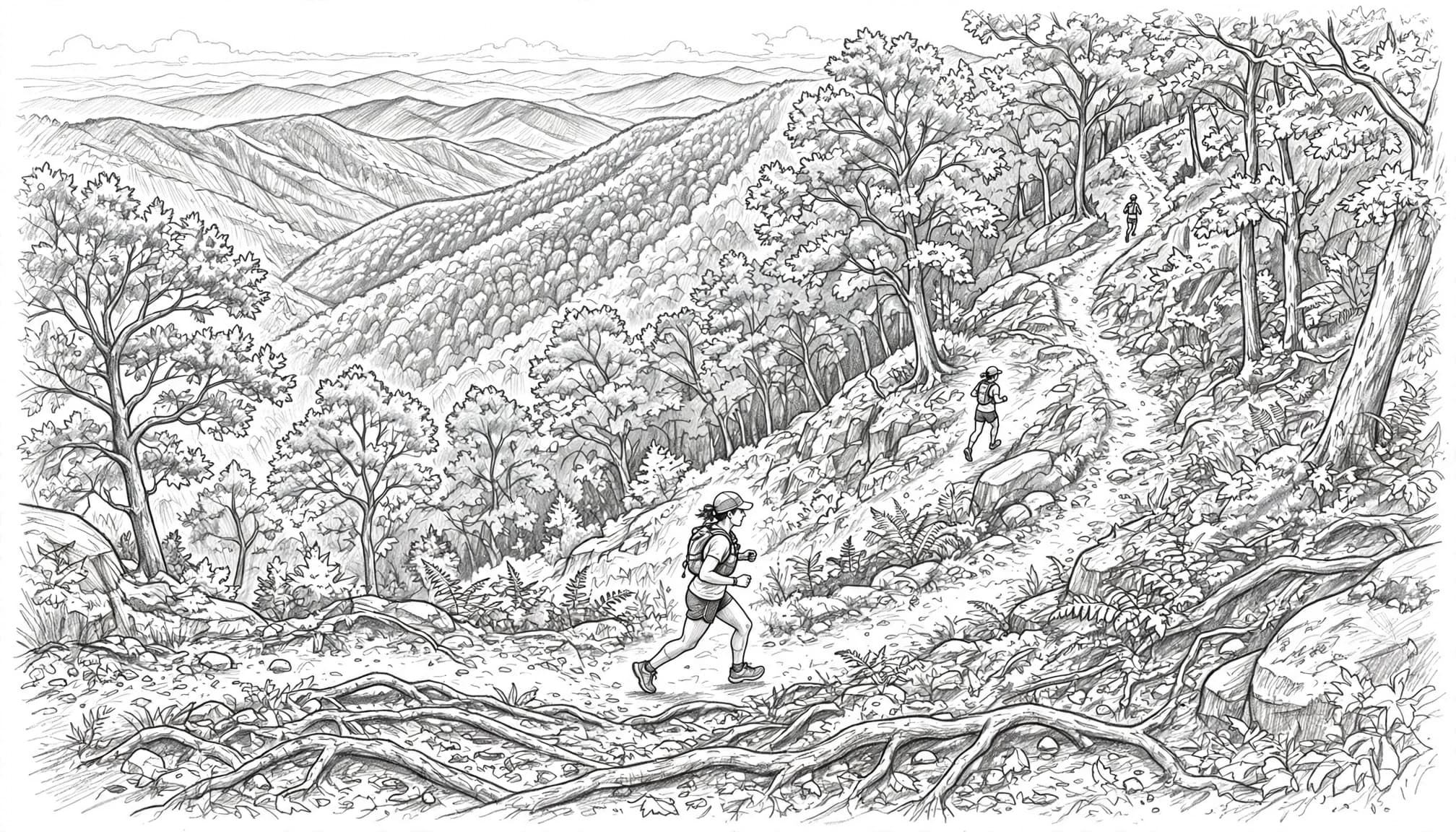
Find mountain challenge at the Georgia Death Race
The Georgia Death Race is a demanding ultramarathon in the North Georgia mountains. It is commonly associated with a roughly 74-mile point-to-point course between Vogel State Park and Amicalola Falls, though runners should expect route details to vary between editions. Check the current Georgia Death Race registration details for the latest course information.
Long climbs and technical footing make this a serious test of endurance, not simply a long-distance run. Roots, rocks, and sustained elevation gain can slow progress, so training needs to account for time on uneven trails as well as mileage. A race of this scale calls for a full-day commitment, careful pacing, and experience managing food and fluids over many hours.
Try a longer-distance adventure at the Georgia Jewel
The Georgia Jewel is another North Georgia ultrarunning event, with multiple distance options in past editions. That range can appeal to runners building toward an ultra: a shorter event lets you experience the race setting, while a longer option can provide a bigger test when your training supports it.
Because offerings and routes can change, review the current lineup before choosing a distance. Consider your recent long runs, climbing practice, and comfort on technical trails, then select a course that challenges you without asking for more than your preparation can support.
Explore wooded singletrack at SweetH2O or Red Top Rumble
For runners looking around the Atlanta region and northwest Georgia, SweetH2O Trail Runs and Red Top Rumble offer examples of wooded-course events. Forest paths and rolling terrain bring a different rhythm than the mountain ultras, while still giving runners plenty of time on natural surfaces.
Red Top Rumble, held in the Red Top Mountain area, can be a practical option for metro Atlanta runners seeking a trail event without a long drive. Its course details and distances may change, so check the Red Top Rumble event page before registering. SweetH2O is another name to look for when comparing local trail races.
Look beyond the best-known races
Georgia’s calendar also includes Pine Mountain Trail races at F.D. Roosevelt State Park, Sky to Summit in the North Georgia mountains, and smaller events near state parks. These races may suit runners looking for a welcoming first start or a less crowded course.
Search by region and distance, then compare elevation, surface, cutoff times, and travel requirements. A shorter local race can be a smart way to learn how your pace changes on singletrack before taking on a longer mountain event.
Choose a Georgia Trail Race That Fits Your Distance and Experience
The right race should challenge your current fitness without asking you to guess your way through unfamiliar terrain. Mileage is only part of the picture: elevation gain, technical footing, cutoff times, and total time on your feet can make two races of the same distance feel very different.
Start with a short race or trail 5K
If you mostly run roads, a trail 5K can introduce uneven ground without requiring a major change to your training. Roots, rocks, tight turns, and soft patches call for shorter steps and frequent pace adjustments. You may cover the same distance more slowly than on pavement, especially on a hilly or technical course.
For a first race, look for a route that feels challenging but manageable. A rolling wooded course can teach you how to read the trail and maintain effort without the demands of a steep mountain route. Practice on local trails beforehand, and let effort guide your pace rather than chasing your usual road 5K time. TrainingPeaks’ trail-running guide covers common adjustments for runners moving off pavement.
Choose Your Distance, Duration and Goal Time
Make three quick selections and open the exact plan built for your race target.
Looking for a Fully Personalized Training Plan?
The training plans above are an excellent choice if they match your goal. However, if you’d rather train with a plan built specifically around your current fitness, goal race, preferred training days, weekly mileage, and target finish time, our RDA Custom Training Plans provide a personalized solution. We also have running courses available for runners seeking to run faster from the mile to the marathon.
Why Choose a Custom Training Plan?
| Standard Training Plan | RDA Custom Training Plan |
|---|---|
| Follows a fixed schedule | Built around your schedule |
| Standard weekly mileage | Peak mileage customized for you |
| Fixed workout days | Train on the days you choose |
| Same structure for everyone | Designed around your current fitness |
| Static plan | Updated as your fitness improves |
| One-time purchase | Ongoing personalized coaching and support |
What You’ll Receive
- A training plan built specifically for your goal
- Personalized training paces
- Long runs, tempo runs, threshold workouts, interval sessions, recovery runs, and easy runs
- Peak weekly mileage matched to your experience level
- Flexible training schedule that fits your life
- Ongoing plan adjustments as your fitness improves
Ready to Train Smarter?
Stop guessing and start following a plan built specifically for you, your schedule, and your racing goals.
Build toward a 10K, half marathon, or 50K
Longer races require more training time and more comfort on trails. A 10K adds distance while giving you room to practice hills and uneven footing. A half marathon calls for longer runs and more sustained time on your feet, while a 50K often requires an ultramarathon plan with back-to-back long efforts, climbing practice, and tested fueling.
Progress gradually instead of jumping several distances at once. Add trail mileage as your body adapts, and include terrain that resembles the race course. The Western States training guidance also emphasizes running on trails when possible, especially hilly and rough routes. A 50K may be a sensible next step after shorter trail events, but only when your training supports the added hours and elevation.
Know what a 50-mile or 100-mile race asks of you
A 50-mile or 100-mile race demands more than endurance. Long-run preparation helps you learn how your body responds over many hours, while planned recovery allows you to absorb training without arriving at the start worn down. Practice fueling and hydration during long outings, since race day is a poor time to discover that a food or drink does not sit well.
Night running can be part of the event, so train with your lighting setup if the distance or expected pace makes darkness likely. The mental strain also grows as fatigue builds and progress slows. Before registering, check the cutoff times and aid-station limits, then compare them with your realistic pace and support needs. Those rules should shape both your race choice and your training plan.
What Georgia Trails Feel Like: Terrain, Weather, and Seasons
Georgia trail races can feel very different depending on where and when you run. A North Georgia mountain course may demand sustained climbing and careful footing, while a wooded route elsewhere can trade steep grades for rolling hills, roots, and warmer, more humid air. Distance matters, but the ground and conditions often shape your pace just as much.
Prepare for climbs, roots, rocks, and red clay
On a steep grade, your pace may slow even when your effort rises. Shorter steps and a steady rhythm help you manage the climb, while uneven ground can demand constant attention. Roots, rocks, fallen leaves, and red clay all affect footing. After rain, clay can become slick, and leaves may hide rocks or roots beneath them.
That changing surface makes a familiar road pace a poor guide to trail effort. Practice on local routes with similar hills and footing when you can. Even a short run on rough ground helps you learn when to shorten your stride, ease off, or hike a steep section. On race day, focus on effort and safe footing rather than trying to hold a fixed pace.
Plan for heat, humidity, rain, and cooler mountain air
Season, elevation, and time of day all affect how a Georgia race feels. Summer afternoons in North and Central Georgia are typically warm and humid, according to the National Weather Service’s Georgia climate summary. A wooded course may offer shade, but humidity can still make sustained effort feel harder. Higher mountain routes can feel cooler, especially early in the morning or after sunset.
Spring and fall often bring more moderate temperatures, though rain can change trail conditions in any season. Before choosing an event, look at its usual race-season weather and the start time. Prepare for heat or rain when conditions call for it, and adjust your effort as the day unfolds. A pace that feels manageable on a cool, dry road may be too aggressive on a humid, muddy trail.
Use elevation gain to judge the real challenge
Two races with the same advertised distance can place very different demands on your legs. Compare total climbing, how steeply the course gains elevation, and whether descents are smooth or rocky. A long descent can tax your quads and require concentration, even when the climbing is over.
Review the course map and elevation profile before registering. Then practice hiking uphill at a purposeful effort and running downhill with control, rather than charging down every slope. Those skills help you manage effort across the course and arrive at later miles with more strength.
Train for Georgia’s Climbs Without Losing Your Race-Day Energy
Georgia’s trail races reward runners who can manage effort, not just maintain a fast pace. Build fitness steadily, practice on terrain like your race course, and protect recovery so you reach the start line ready to run.
Build endurance with easy runs and time on feet
Keep most weekly running easy enough to speak in full sentences. A balanced routine can include easy runs, a gradually lengthened outing, and occasional hill or trail practice. Add strength work when it fits, with exercises such as step-ups, calf raises, and controlled single-leg movements.
For longer races, time on your feet matters because trail pace slows on climbs and rough ground. Extend your long outing in small steps, and cut back if fatigue lingers or discomfort changes your stride. The American College of Sports Medicine’s running guidance recommends introducing training habits gradually so the body has time to adapt.
Practice hiking uphill and running downhill with control
Power hiking is a useful race skill, even for strong runners. On steep grades, a purposeful hike can keep effort steady and save energy for runnable sections. Practice switching between running and hiking before fatigue sets in, so the choice feels natural on race day.
Downhill practice builds coordination and confidence, but choose safe terrain with reliable footing. Start at a controlled pace, keep your steps light, and look ahead for roots and rocks. Increase speed only as your balance and trail awareness improve.
Train with the shoes, gear, and food you plan to use
Choose trail shoes with grip suited to the course surface, then test them on similar trails. Practice carrying water in the bottle, vest, or pack you expect to use. If the race requires specific safety equipment, get comfortable with it during training rather than unpacking it for the first time at check-in.
Use long runs to test familiar foods, gels, and fluids at realistic intervals. Weather layers matter too, especially when a mountain start feels cool but conditions may change later. Before race day, read the event’s mandatory-gear list and aid-station rules; your plan should match what the race actually provides.
Taper, recover, and arrive ready to race
Reduce training before the event so accumulated fatigue can ease while you maintain a little movement. The right taper depends on race distance, training load, and experience. A newer runner may need more recovery after a demanding long run than someone accustomed to high weekly mileage.
In the final days, prioritize sleep and keep runs comfortable. Avoid last-minute hard workouts, major mileage increases, or unfamiliar shoes and nutrition. Arriving rested gives you a better chance of managing Georgia’s climbs with steady effort and energy left for the later miles.
Plan Registration, Travel, and Race-Day Logistics
A race choice becomes a real plan once you know how to register, reach the start, and manage support on the course. For trail races in Georgia, check the current event guide before booking travel or building your race-day schedule. Policies and logistics can change between editions.
Register early and read the event details closely
Popular races may fill, especially when an event offers limited spots or attracts runners from outside the region. Registration fees and deadlines vary, so review the current event page before you commit. Check whether the race allows transfers, offers refunds, maintains a waitlist, or requires qualifying results. These policies differ, and you shouldn’t assume you can change plans later.
Before paying, confirm the available distances and make sure the course suits your experience. Read the cutoff times, study the course map, and check any required gear. A headlamp, for example, may be mandatory for some events or distances, while others may have different equipment rules. Use the latest race guide rather than information from an older edition.
Plan the drive, lodging, parking, and start-line timing
Some mountain and state-park venues require an early drive on narrow or winding roads. Parking may be limited, and a nearby overnight stay can make the morning less rushed. Check the event’s instructions for parking locations, road closures, and whether the start area is separate from packet pickup.
Build extra time into your schedule. You may need to collect your bib, use a restroom, organize your gear, and walk from the parking area to the start. If you’re staying nearby, confirm your route and departure time the day before. That way, a slow road or a long line won’t force a hurried warm-up.
Understand aid stations, crews, and course etiquette
Aid stations vary in location, supplies, and access rules. Some races allow crew members at designated points; others limit support to certain areas or prohibit it. Study the event map and rules so you know what the race provides, what you must carry, and where friends or family can meet you.
On shared trails, follow the event’s passing guidance and yield when appropriate. Call out before passing, give other runners and park users room, and avoid blocking narrow sections. Carry out wrappers and other trash, including food scraps. The Leave No Trace principles offer clear guidance for protecting trails and outdoor spaces.
Frequently Asked Questions
Even after comparing Georgia trail races, a few practical questions can help narrow your choices. Use your current experience, the course details, and the event’s latest information to make a confident decision.
What is a good first trail race in Georgia?
A short race with a clear course and modest elevation is often a comfortable first step. Choose based on your current fitness and how you feel on trails, rather than a race’s reputation or popularity. If you have little experience on uneven ground, try a local trail before race day and look for a route with straightforward footing.
Are there beginner-friendly trail races near Atlanta?
Yes. Runners can find wooded events within driving distance of metro Atlanta, including SweetH2O and races near regional parks. The lineup changes, so browse a current Georgia trail race calendar, then confirm the exact location, distance, and terrain for that year’s event. For example, the Yeti event at Sweetwater Creek State Park takes place near Lithia Springs, though its format may not suit every beginner.
When is the best time of year to run a trail race in Georgia?
The best season depends on your heat tolerance, the race location, and the conditions you prefer. A higher-elevation mountain event may feel different from a wooded course closer to Atlanta, even on the same date. Compare the event date and elevation with typical local weather, and prepare for the specific conditions rather than assuming Georgia has one uniform race season.
Do I need special shoes for a Georgia trail race?
Road shoes can work on smooth, dry paths, especially for a short race with little technical terrain. Trail shoes usually offer more grip and protection on rough, rocky, or muddy ground. Check the course description, then test your chosen shoes on similar trails during training so you know how they feel before race day.
How can I find current race dates and registration details?
Start with the race organizer’s current event page for dates, distances, course updates, fees, and policies. Race calendars are useful for discovering events and comparing schedules, but details can change between editions. Before registering or booking travel, use the organizer’s page as the final source for the race you plan to run.
Conclusion
Georgia’s trail races offer a place for many kinds of runners, whether you’re lining up for your first short event or preparing for a demanding mountain ultra. Choose a course that matches your current experience, then train for its actual terrain, elevation, and expected conditions. That preparation will help you make a sound choice and enjoy more of the miles.
When you’re ready to compare dates and locations, browse the American Trail Running Association race calendar, then confirm details with the event organizer. Pick a race that gives you a clear next goal, build your training around the course, and take the next step toward the start line.


