

Trail Races in Delaware: Small State, Big Trail Runs
Delaware’s wooded paths, coastal trails, and state parkland give trail races a distinct sense of place. The state may be small, but its race options and scenery vary, with shaded forest routes inland and sandy, open stretches near the coast.
Dates, distances, and event offerings can change from year to year, so check current details before making plans. This guide highlights where to run, how to find active events, and how to choose a trail race that fits your experience and goals. Be sure to check out the RunDreamAchieve YouTube channel for weekly running tips.
Key Takeaways
- Trail races in Delaware offer varied settings, including shaded inland woods, sandy coastal paths, and open parkland.
- Choose a race by matching its distance, terrain, and elevation profile to your experience and training.
- Check current event listings before planning, since race dates, distances, and offerings can change each year.
- Review Delaware State Parks trails and park maps to understand local routes and surfaces.
- Before registering, confirm course conditions, cutoff times, aid-station details, and any park access requirements.
Trail Races in Delaware: Where to Run and What the Trails Are Like
Trail races in Delaware make use of several distinct settings, from wooded, rolling paths in the north to sandy coastal routes and pond-side trails farther south. Shade, footing, and exposure can change within a single course, so check the event map and current conditions before choosing a race.
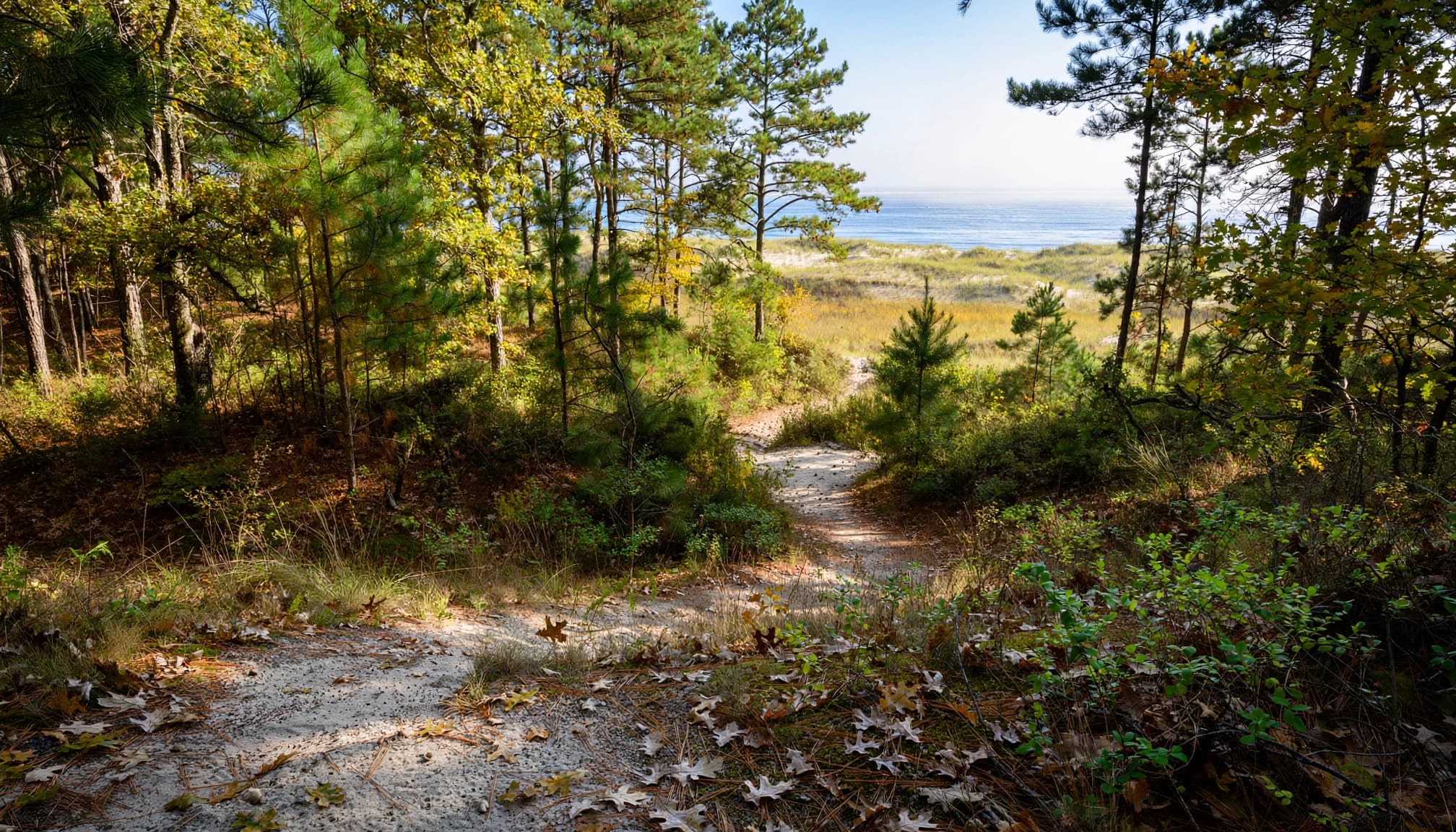
White Clay Creek and Brandywine Creek offer wooded paths near northern Delaware
In northern Delaware, White Clay Creek and Brandywine Creek offer a more shaded, inland feel. Runners may find natural-surface trails beneath tree cover, with rolling terrain that brings more changes in effort than a flat paved path. White Clay Creek has an extensive trail network, but a park trail map won’t necessarily match a race route. Check the White Clay Creek State Park trail information alongside the organizer’s course map.
Brandywine Creek also offers a wooded setting with open parkland nearby. However, the exact mix of surfaces and elevation depends on the event’s chosen route and park permits. Before registering, look for the course distance, elevation profile, and surface descriptions. A short race can still feel demanding if it includes uneven ground or repeated climbs.
Cape Henlopen brings coastal scenery and sandy footing
At Cape Henlopen, dunes and maritime forest create a different running experience. Tree-covered sections can offer shade, while sandy stretches require more effort than firm dirt or packed gravel. Coastal views add appeal, but open sections can leave runners exposed to sun and wind.
Conditions may shift with weather and season, so check the forecast and ask the race organizer about recent course changes. Also review Cape Henlopen park information for park-specific access and rules. Confirm whether the race follows established trails, uses beach areas, or includes sections where sand is the main surface.
Lums Pond and Trap Pond add state-park options farther south
Lums Pond and Trap Pond broaden the options with routes near water and through forest. Lums Pond offers a park setting where a course may combine pond-side scenery with wooded stretches; the Lums Pond State Park page provides a starting point for checking park details. At Trap Pond, forest and pond views give races a quieter, more shaded character than exposed coastal routes.
Race calendars and course layouts can change, so don’t assume a past event will return on the same date or route. Check the organizer’s current listing for confirmation, then compare its map with Delaware State Parks maps and resources. Pay attention to trail surface, shade, and access details, since conditions vary by season and event.
How to Find Current Delaware Trail Races and Event Details
Race calendars can help you spot trail events across Delaware, but listings may be incomplete or out of date. Use them to find possibilities, then confirm every detail with the organizer before you register or travel.
Check race calendars, running clubs, and organizer pages
Start with local running-club calendars, race-timing companies, and registration platforms. Directories such as Find a Race’s Delaware listings and the Road Runners Club of America’s event search can help you find races to investigate. They are useful starting points, not a guarantee that registration is open or that an event is still scheduled.
Next, check the race organizer’s own website or registration page. That is where you’ll usually find the latest updates about registration status, course maps, start times, and changes caused by weather, permits, or trail conditions. If the course uses state parkland, review Delaware State Parks’ events and programs for park announcements, then contact the organizer if anything conflicts.
Running clubs and local race organizers may also share updates through newsletters or social media. However, treat a reposted event listing as a lead, not final confirmation. The organizer’s current page should be your source of truth, especially when registration is limited or a route has changed.
Choose Your Distance, Duration and Goal Time
Make three quick selections and open the exact plan built for your race target.
Looking for a Fully Personalized Training Plan?
The training plans above are an excellent choice if they match your goal. However, if you’d rather train with a plan built specifically around your current fitness, goal race, preferred training days, weekly mileage, and target finish time, our RDA Custom Training Plans provide a personalized solution. We also have running courses available for runners seeking to run faster from the mile to the marathon.
Why Choose a Custom Training Plan?
| Standard Training Plan | RDA Custom Training Plan |
|---|---|
| Follows a fixed schedule | Built around your schedule |
| Standard weekly mileage | Peak mileage customized for you |
| Fixed workout days | Train on the days you choose |
| Same structure for everyone | Designed around your current fitness |
| Static plan | Updated as your fitness improves |
| One-time purchase | Ongoing personalized coaching and support |
What You’ll Receive
- A training plan built specifically for your goal
- Personalized training paces
- Long runs, tempo runs, threshold workouts, interval sessions, recovery runs, and easy runs
- Peak weekly mileage matched to your experience level
- Flexible training schedule that fits your life
- Ongoing plan adjustments as your fitness improves
Ready to Train Smarter?
Stop guessing and start following a plan built specifically for you, your schedule, and your racing goals.
Confirm the date, distance, course, and entry cost before signing up
Before paying, compare the event listing with the organizer’s current information. Confirm the race date and start time, available distances, entry fee, and whether the course is a true trail route or a mixed-surface run with pavement, gravel, or road sections. Fees and event details vary, so check the current registration page rather than relying on an older listing.
Also review aid-station locations, cutoff times, and the refund or transfer policy. These details can affect whether a race suits your training and travel plans. If the route map or surface description is missing, ask the organizer before registering. A quick email can clarify whether the course includes sand, technical footing, or sections that may be difficult to navigate.
Look for recurring events, but verify each year’s schedule
A race that took place last year can be a helpful lead, but its previous listing doesn’t confirm a new edition. Smaller local events may change dates, distances, or venues as organizers manage permits, staffing, and park access. Even a familiar race name may refer to a different course this year.
Before booking lodging or arranging transportation, confirm the current year’s date and venue directly with the event organizer. Check again closer to race day for updates, particularly if the course runs through a park or depends on trail conditions.
Choose a Delaware Trail Race That Fits Your Experience
The right Delaware trail race depends on more than mileage. Surface, footing, weather, and race-day format can all change how difficult a course feels, so compare those details with your current training and comfort on trails.
Match the distance to your training, not just your road-race pace
Short trail races, often around 5K, can suit newer trail runners who want to learn how uneven ground affects their stride. A 10K or similar middle-distance course gives you more time on the trail, while longer options such as a half marathon call for greater endurance and preparation for changing conditions.
However, road-race pace does not translate directly to trail pace. Soft sand, mud, roots, and narrow turns can slow you down or require brief walking breaks. If you’re new to trail running, start with a shorter course and allow more time than you would for the same distance on pavement. Build up after you’ve tested your shoes, hydration, and footing on local trails.
Use the course map to judge footing, elevation, and route finding
Study the elevation profile and surface notes before choosing a race. Delaware is generally low-lying, but a flat profile does not mean an easy course. Soft sand can drain energy, wet trails can become slippery, and roots or rocky sections demand closer attention. For a local example of how terrain can vary, the Brandywine Creek State Park map describes rocky terrain and packed earth.
Also trace the full route, including turns, loops, and any road crossings. Check whether the organizer marks intersections, provides course volunteers, or expects runners to follow signs independently. If the map is unclear, ask about navigation before registering. A short race can still feel demanding when the footing is technical or the route is hard to follow.
Consider the season, weather, and your preferred race atmosphere
Shaded forest routes can offer relief from direct sun, while exposed coastal sections may feel warmer or windier depending on race-day conditions. Seasons affect both settings: rain can soften forest trails, while dry stretches may leave sandy paths loose underfoot. Check the forecast close to race day, but also ask the organizer about typical course conditions and recent changes.
Finally, choose an event format that feels comfortable. A small community race may offer a friendly, low-key setting; a timed challenge may suit runners focused on pace or personal goals. For a first trail race, a relaxed event with a clearly marked course and manageable distance can make it easier to focus on footing and enjoy the route.
Prepare for Trail Running Conditions in Delaware
Trail races in Delaware can include packed dirt, exposed roots, loose sand, and stretches of rolling terrain. Prepare for the surfaces on your chosen course, then adjust your effort and gear for the weather and race organizer’s requirements.
Train on dirt, roots, sand, and rolling terrain
Add trail time gradually rather than replacing all your road miles at once. Begin with short runs on packed dirt, then introduce roots, uneven ground, or sandy sections as you get comfortable. When possible, train on surfaces similar to the race course. Sand can take more effort than firm soil, while roots call for attention and steady footing.
On uneven ground, shorten your steps and keep your eyes a few feet ahead. This helps you react to obstacles without constantly staring at your shoes. Strength and balance work, such as step-ups and single-leg exercises, can also help you stay controlled on changing terrain. Practice only on open trails, follow posted park rules, and stay on marked paths. Delaware State Parks trail guidance offers reminders for responsible trail use.
Choose shoes, clothing, and essentials for the course
Match your shoes to the course surface. Deeper, more aggressive tread can help on loose or wet ground, while a less pronounced tread often works well on smooth, packed paths. If you’re unsure, check the organizer’s course notes and consider the REI trail-running shoe guide for help comparing shoe features.
Dress for the forecast and the amount of shade or exposure on the route. A light layer can help on a cool start, while breathable clothing is useful in warmer conditions. Carry water for the duration and conditions of your run, and check whether the event provides aid stations. Before race day, review the required-gear list. Some races may specify items such as a hydration system or a charged phone, so don’t rely on gear rules from a previous event.
Practice pacing, fueling, and trail etiquette
Road pace is a poor guide when footing and terrain change. Run by effort instead: ease back on loose sand or technical sections, and let your pace rise when the trail is firm and clear. On longer events, practice fueling during training so you know what you can comfortably eat and drink while moving.
Narrow trails require patience. If another runner approaches, communicate clearly and yield when it’s safe; before passing, call out and wait for enough space. Stay on the marked route, even when a shortcut looks tempting, and follow any instructions from race staff or volunteers. These habits help keep the course safe for runners and other park visitors.
Plan Your Race-Day Visit to Delaware State Parks
A smooth race morning starts with more than knowing where the trail begins. Park access, parking, facilities, and trail rules vary by location, so check both the event organizer’s updates and the park’s current information before you travel.
Check parking, park fees, facilities, and arrival time
Review the park and race pages for entrance fees, parking instructions, restroom locations, packet pickup details, and any required arrival deadline. Some parks charge an entrance fee, and the amount or payment process can depend on the park and vehicle registration. For example, White Clay Creek State Park’s visitor information lists its current access details, but check the page for the park hosting your event.
Race parking may differ from regular visitor parking. Organizers might direct runners to a separate lot, limit access to certain entrances, or ask you to arrive before roads close. Follow the event’s instructions rather than relying only on your usual park route. Arrive with enough time to park, use the restroom, pick up your bib, and reach the start area without rushing.
Follow park rules and protect shared trails
Stay on the marked course and designated trails, even when a shortcut looks clear. Pack out wrappers and other trash, give wildlife space, and share narrow paths courteously with walkers, cyclists, and other visitors. If you bring a dog or meet park users with dogs, follow the park’s leash rules and any event-specific restrictions.
Trail access rules can vary by route and user type. Check posted signs, closures, and the event’s course instructions before starting. Delaware State Parks’ White Clay Creek trail plan discusses trail use and visitor etiquette; use the current park guidance for your race location. During the event, obey closures and directions from race staff and park personnel, even if they differ from a map you saved earlier.
Build a simple backup plan for weather or course changes
Before leaving home, check race emails, the organizer’s website, and any official event updates. Rain, heat, or trail conditions may lead to delays or a revised route, so know where to find the latest information and allow flexibility in your travel plans.
If the course changes, review the updated route and any revised start time or cutoff instructions. Bring gear that fits the forecast, and plan for extra time if travel or parking becomes slower. The organizer’s current updates govern race-day decisions; don’t assume the event will proceed as scheduled when conditions raise safety concerns.
Frequently Asked Questions
Choosing a race is only part of the plan. These practical details can help you know what to expect once you arrive at a Delaware trail event.
Are Delaware trail races timed?
Many events record finish times, but the format depends on the race. Some use chip timing, while others may track results manually or run as informal, untimed events. Check the registration page to see how results work and whether the event offers age-group awards or other rankings.
Can I walk during a trail race?
Usually, runners can walk when they need to, but each event sets its own rules and cutoff times. Walking can be a sensible way to handle steep or uneven sections, conserve energy, or take a brief break. Before race day, check the event’s time limits and make sure your planned pace can meet them.
What should I do if I need to stop or withdraw?
Tell a course volunteer or race official if you need to stop, and follow the event’s instructions for leaving the course. Don’t assume that walking back along the route is safe, especially if other runners are still racing. Save the organizer’s contact number before the start so you can report an issue if staff aren’t nearby.
Can friends or family watch along the course?
Spectator access depends on the route, park rules, and the race organizer’s plan. Some courses have convenient viewing areas, while others use narrow trails or remote loops where spectators can’t safely reach runners. Check the event page for approved locations and parking directions, and ask before arranging meetups along the route.
Can my dog come along as a spectator?
Check with both the race organizer and the park before bringing a dog, even if your pet will stay away from the course. Delaware State Parks requires pets to be licensed and leashed, with a leash no longer than six feet; review the Delaware State Parks pet rules for current requirements. An event may set stricter rules or prohibit dogs near the start and finish areas.
Find Your Next Trail Race and Enjoy the Miles
Delaware packs a surprising range of trail settings into a small state. You can choose shaded woodland paths, sandy coastal routes, or park trails near ponds, each with different footing and exposure. The best fit depends on the terrain you enjoy, a distance that matches your training, and the event details for the current year.
Before you register, check the race organizer’s latest course, schedule, and participant information. If the route uses state parkland, review Delaware State Parks events and programs for park updates as well. Then choose a course that suits your goals, whether you want a relaxed first trail race or a longer day on the trails.


