

Trail Races in Connecticut: Rocky Ridges and Quiet Woods
Rocky footing gives way to quiet Connecticut woods, then a climb tests your legs and rewards a steady effort with a fresh stretch of trail. Trail races in Connecticut offer options for first-timers building confidence and experienced ultrarunners looking for a longer day outside.
Choosing the right trail races takes more than comparing mileage. The Soapstone Mountain Trail Races, NipMuck Trail Marathon, and Traprock 50K each give runners a starting point for exploring the state’s race calendar, while course demands, training, and logistics help determine what fits. Start by getting to know these events, then use practical guidance to choose and prepare for a race that matches your goals.
Key Takeaways
- Connecticut trail races vary in distance and terrain, so choose an event that fits your experience, goals, and comfort on rocky, uneven ground.
- Compare course length and elevation before registering. For example, the Soapstone Mountain Trail Races listing includes half-marathon and 6K options.
- Prepare on trails with hills and technical footing, and build endurance gradually so your training matches the demands of race day.
- Plan travel, gear, hydration, and race-day timing ahead of time. A little preparation helps you focus on pacing and enjoy the Connecticut woods.
Trail Races in Connecticut: Notable Events and What Makes Them Special
Connecticut’s trail calendar gives runners several ways to experience the state’s wooded paths, with options that range from a short trail race to a full marathon or ultramarathon. Three events worth comparing are the Soapstone Mountain Trail Races in Somers, the NipMuck Trail Marathon in Ashford, and Traprock in the West Hartford area. Each offers a different distance and race format, so consider what kind of day on the trails fits your experience and goals.
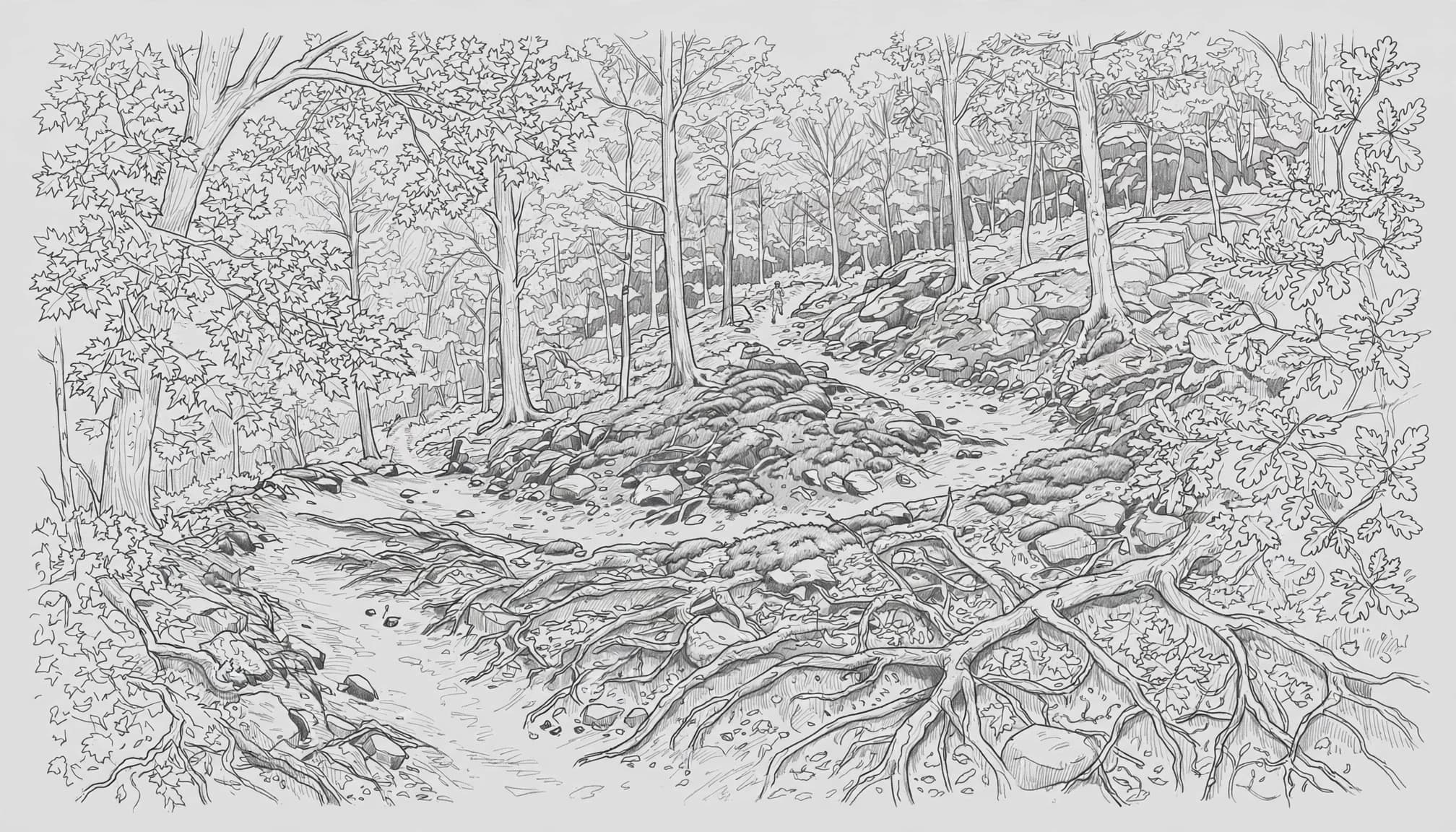
Soapstone Mountain Trail Races in Somers
Soapstone offers a shorter entry point alongside a half marathon. The event listing currently features the Soapstone Half Marathon and the Jerry Stage Sampler 6K, giving runners a choice between a longer effort and a compact introduction to trail racing. That range can suit training partners with different goals, or runners who want to build up to a longer event over time.
The name points to the mountain setting, but don’t choose based on the event name alone. Check the current Soapstone race listing for the route, distance details, and race-day information. Trail conditions and course demands matter as much as the mileage when you’re deciding whether a race fits your preparation.
NipMuck Trail Marathon near Ashford
The NipMuck Trail Marathon gives runners a full-distance option, and the event listing also includes a two-person relay. The listed marathon route is 26.4 miles on the Nipmuck Trail, with the start area on Perry Hill Road in Ashford. A relay can make the event accessible to runners who want to share the distance, while the solo marathon calls for a training plan built around sustained time on trails.
The route’s double out-and-back format can help runners understand the course structure before race day. Still, trail footing and conditions affect how the miles feel, so road-marathon pacing won’t tell the whole story. Review the NipMuck event details before committing, especially if you’re weighing the solo race against the relay.
Traprock 50K in the West Hartford area
Traprock gives ultrarunners a longer-distance choice, with 17K and 50K races listed for the event. That pairing lets runners experience the same event community at different distances, whether they’re testing themselves over a shorter trail race or planning a full day of running. For the 50K, build your decision around recent long-run experience, comfort on uneven trails, and how you manage fueling over several hours.
The Traprock 17K and 50K listing provides current event information. Use it to confirm the location, course details, and available race formats before planning travel or training around the event.
Check the current listing before you plan
Race distances, routes, dates, and formats can change from year to year. The current event listing is the best place to confirm what’s available before registering, booking a room, or setting a training schedule. Once you’ve chosen a race, prepare for its specific distance and course rather than relying on past editions or assumptions about the terrain.
Choose a Connecticut Trail Race That Fits Your Experience
The right race should challenge you without turning every mile into a survival test. Match the distance to your current training, then compare the course itself: elevation, footing, aid-station spacing, and cutoff times can change how demanding a race feels.
Match the distance to your current training
A shorter trail race can be a good first step if you’re new to uneven terrain or still building weekly mileage. It gives you a chance to practice pacing, footing, and race-day routines without committing to hours on the trail. Choose one that leaves enough energy to look around and enjoy the woods.
A trail half marathon asks for more endurance, but mileage alone doesn’t tell you whether it’s a sensible next goal. If you already run consistently and have practiced on hills and rocky paths, a half may fit. However, a highly technical course can take much longer than a road half marathon, even at the same distance.
Marathons and ultramarathons call for greater preparation, including long runs, fueling practice, and experience managing fatigue. A marathon may suit a runner who has built a reliable endurance base; an ultra requires readiness for extended time on varied terrain. Connecticut events offer different formats, but don’t assume every race has a short, half-marathon, marathon, and ultra option. Check the Blue-Blazed race calendar to see which distances each event currently lists.
Read the course beyond its mileage
Elevation gain can make a short course feel demanding, especially when climbs arrive late or repeat across the route. Rocks and roots slow your stride, while mud can make footing less predictable. Review the course description and elevation profile, and look for recent runner notes when available.
Also check where aid stations sit and what support they provide. Long gaps may mean carrying water or fuel, so plan accordingly. Cutoff times matter too, particularly for longer races; the American Trail Running Association’s event standards and cutoff guidance explains why races set time limits. Make sure your likely pace, including walking steep sections, gives you a comfortable margin.
Look for beginner-friendly signs
A race may suit newer trail runners when it offers a shorter distance, clear course information, marked routes, and aid stations placed at manageable intervals. A generous cutoff can also reduce pressure, though you should still train to finish within it. If details are missing, contact the organizer before registering.
For a first event, choose a course that aligns with trails you’ve already practiced on. A rolling route with some roots may be a better introduction than a steep, rocky course, even if both cover similar mileage. Your first trail race should leave room to settle into the effort and enjoy the route. Start with a distance you can complete confidently, then build toward a longer or more technical race as your experience grows.
Train for Connecticut trails, not just the distance
A Connecticut trail race can feel very different from a road event of the same length. Roots, rocks, short climbs, and uneven footing change your pace and ask more of your legs and attention. Build your training around those demands, and use distance as just one measure of readiness.
Build mileage gradually and add hills
Increase your weekly running in small, manageable steps, especially if you’re moving up to a longer race. Keep easier days easy, and avoid adding a large mileage jump and a demanding hill workout in the same week. If fatigue lingers or your usual runs feel unusually hard, hold steady or cut back before building again.
Hill work helps prepare you for climbs that interrupt a steady rhythm. Start with controlled uphill efforts on a moderate grade, then jog or walk back down to recover. As your fitness improves, add more repeats or time on hills, rather than racing each one. The American Trail Running Association’s cross-country training advice discusses hill-specific workouts that trail runners can adapt to their routines.
Get comfortable on uneven ground
Road runners can keep much of their usual schedule while gradually replacing some flat miles with trails. Begin on smooth, rolling paths, then add sections with roots and rocks as your footing improves. Short, relaxed outings help you learn to scan ahead and adjust your stride without forcing speed.
On technical ground, shorten your steps and keep your effort controlled. Walk steep or slippery sections when needed; that is a sound pacing choice, not a failed run. Since trails can slow you considerably, judge progress by time spent moving and how you feel, rather than expecting your road pace.
Long runs should build confidence in staying on your feet and managing effort over time. Increase their duration gradually, and practice settling into a pace you could maintain on race day. They don’t need to be fast or cover the full race distance. Finish feeling that you could have continued a little longer, instead of turning every long run into a test.
Add strength, balance, and race-day practice
A simple strength routine can support trail training. Include controlled movements such as step-ups, calf raises, and single-leg balance exercises. Start with a level that feels manageable, and focus on steady form. These sessions don’t need to leave you exhausted to be useful.
Practice in the shoes and gear you expect to wear on race day. Trail shoes may feel different from road shoes, so give yourself time to get used to their fit and grip. During longer outings, test your hydration setup and any fuel you plan to carry. Small adjustments are easier to make in training than at the starting line.
If you have a health concern, a history of injury, or are returning after a long break, talk with a qualified health professional before making major changes to your training. The best preparation is the kind you can repeat consistently, with enough trail time to meet Connecticut’s footing and hills at a controlled effort.
Plan registration, travel, and race day with confidence
Once you’ve chosen a Connecticut trail race, turn the event listing into a practical plan. Registration, transportation, lodging, and race-day logistics can affect your budget and schedule as much as the race distance does.
Confirm event details before registering
Start with the race organizer’s current event page. Check the date, distance, start time, registration deadline, entry fee, and whether the race allows race-day registration. Also review the course map, cutoff times, aid-station details, and policies for refunds, transfers, or weather changes. These details can vary by year, so don’t rely on an old race report or last season’s schedule.
For example, the Soapstone Mountain Trail Races event listing provides current information about the event’s distances and race-day plans. After registering, save the confirmation email and note any instructions about bib pickup, required gear, or parking. If a detail affects your plans and isn’t clear, contact the organizer before race week.
Budget for the full trip
The entry fee is only one part of the cost. Add likely travel expenses, such as gas, tolls, or public transportation, plus lodging if the start is too far away for an early-morning drive. You may also need to budget for meals, parking, and gear you don’t already own.
Avoid buying equipment simply because a race is approaching. First, check what the course and organizer require, then use training runs to identify genuine needs. If you do need shoes, a hydration vest, or weather layers, leave time to test them before race day. For an out-of-town event, compare the cost and convenience of staying nearby with driving in that morning. A room can reduce pre-race stress, while an early departure may keep the trip simpler and less expensive.
Make a race-week checklist
A few quick checks can prevent avoidable surprises. During race week, review the organizer’s latest updates and confirm:
- Weather and trail conditions: Check the forecast, then look for organizer updates about mud, flooding, closures, or course changes.
- Nutrition and hydration: Pack familiar food and fluids. Use the same products you’ve practiced with on long runs, and follow the event’s aid-station information.
- Directions and parking: Save the address, review parking instructions, and allow time for traffic, check-in, and a walk to the start.
- Clothing and gear: Set out shoes, layers, bib supplies, and any required equipment. Choose clothing for the forecast, not just the temperature at the starting line.
- Trail etiquette: Stay on marked routes, yield when appropriate, and carry out wrappers or other waste. The Leave No Trace principles recommend checking conditions in advance and preparing for the visit.
The night before, charge your watch and headlamp if you’ll need one, fill bottles, and lay out your race kit. In the morning, follow the organizer’s parking and check-in instructions, then give yourself enough time to settle in. With the logistics handled, you can focus on effort, footing, and enjoying the miles.
Frequently Asked Questions
Race listings cover the basics, but a few practical questions can shape your experience on the trail. These answers address conditions, course rules, and small decisions that can make race day easier.
What time of year is best for a Connecticut trail race?
The best season depends on the event and the conditions you enjoy running in. Spring trails can be muddy after rain, while fall weather may bring cool mornings and changing temperatures. Check the forecast and the race organizer’s latest updates before you travel, since conditions can shift close to race day.
Will a trail race still happen if it rains?
Rain alone doesn’t determine whether a race proceeds. Organizers may adjust a route or cancel an event because of unsafe conditions, trail damage, or land-access concerns. Watch for official updates before leaving home, and don’t assume the course will remain unchanged after heavy rain.
Can I use trekking poles during a Connecticut trail race?
Pole rules vary by event and course, so ask the organizer before bringing them. On narrow or crowded trails, poles can affect runners nearby, and some races may restrict them. If they’re allowed, practice with them during training so you know how to carry and use them safely.
Should I wear headphones during a trail race?
Check the race rules first, since some events restrict headphones. Even when they’re allowed, keep the volume low enough to hear other runners, course marshals, and instructions. The American Trail Running Association’s race guidance recommends avoiding headphones during races for safety.
Do I need a GPS watch to follow the course?
A GPS watch can help track distance, but it shouldn’t replace course markings or race instructions. Follow the marked route, pay attention at turns, and carry your phone if the organizer recommends it. If you’re practicing on public trails, Connecticut’s state park trail maps can help you understand local routes.
Can I run a race course before event day?
Only if the course is open to the public and the organizer permits pre-race access. Some routes cross private land or include sections that are marked only for race day. Ask the event team before scouting the course, and use a nearby public trail for practice if access isn’t clear.
Conclusion
Trail races in Connecticut offer a range of distances and terrain, but the best fit depends on your goals, preparation, and comfort on rocky, uneven trails. Choose an event that challenges you at the right level, then review its current course details, rules, and race-day information before making plans.
Once you’ve chosen a race, start a gradual training plan that builds endurance and time on trails. With steady preparation and a course that suits you, race day can be a chance to settle into the miles and enjoy Connecticut’s woods.


