

Trail Races in Alaska: Run Wild Where Few Dare to Race
Racing across Alaska’s mountains, forests, and open tundra offers trail runners a striking mix of terrain and challenge. Trail races in Alaska range from short, steep climbs to long wilderness routes, so the right event depends on more than distance alone.
This guide highlights races such as the Mount Marathon Race and Crow Pass Crossing, along with practical advice on seasonal conditions, terrain, training, and safety. You’ll also find tips for planning travel and choosing an event that fits your experience and support needs.
Before you commit to a course, it helps to know what Alaska’s trails can demand. Start with the terrain, weather, and features that make each trail race distinct. Be sure to check out the RunDreamAchieve YouTube channel for weekly running tips.
Key Takeaways
- Trail races in Alaska vary widely, from steep mountain sprints to remote, long-distance routes, so choose an event that matches your experience and comfort with exposure.
- The Mount Marathon Race is a short but demanding climb and descent in Seward; check the official race details for current event information.
- Crow Pass Crossing covers about 28 miles of backcountry terrain, so plan for a longer day and review the race’s course and event information.
- Weather and trail conditions can shift quickly. Train for uneven ground, carry required gear, and prepare for mud, stream crossings, and limited support.
- Before traveling, confirm race dates, transportation, lodging, and safety requirements, since logistics can be as important as your pace.
What Makes Trail Races in Alaska Different
Trail races in Alaska vary widely, so the state’s reputation for remote wilderness shouldn’t define every event. Some races follow established trails near town, while others cross exposed terrain with fewer services and longer stretches between aid stations. Check each race’s current course, support, and gear requirements before you register.
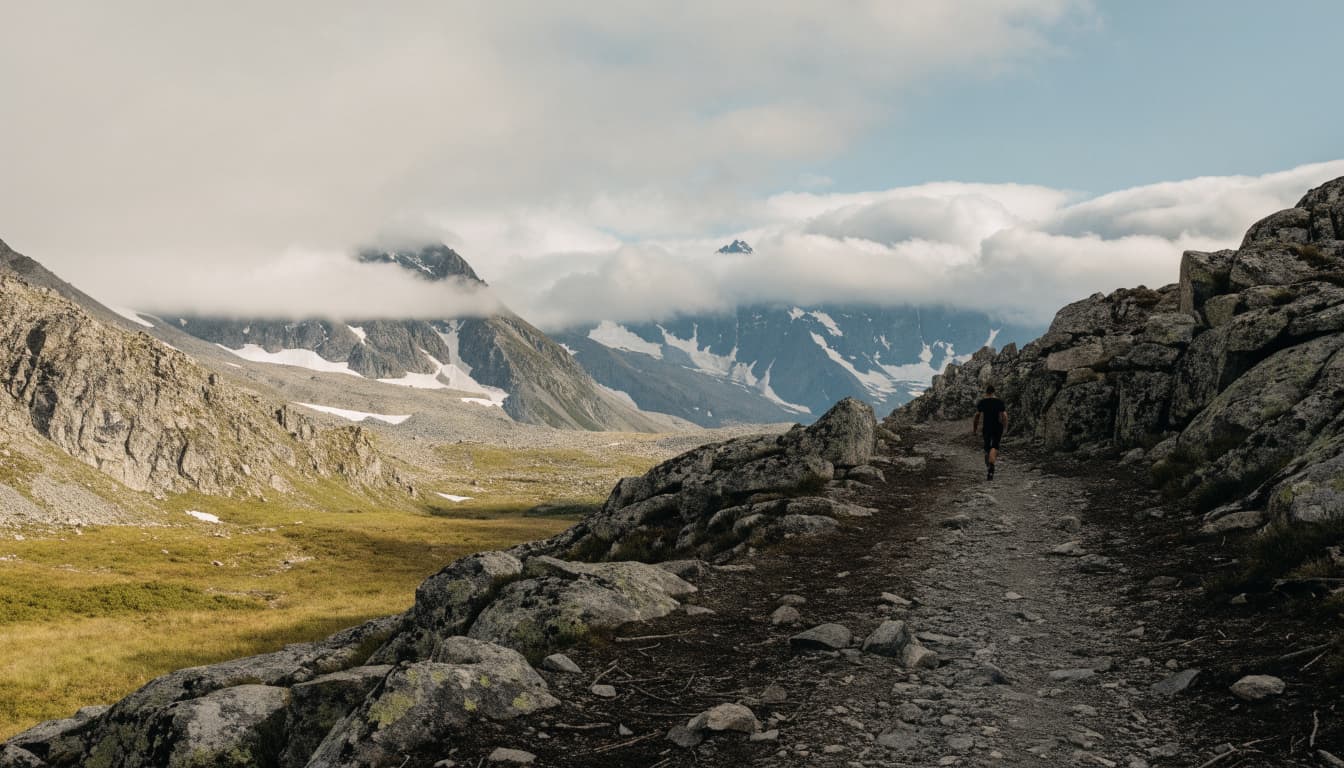
From steep mountain climbs to long wilderness routes
The terrain can change dramatically between events. A short mountain race may pack a steep climb and technical descent into a few miles. Other courses wind through forest trails, cross alpine ridges, or follow longer point-to-point routes across remote country.
Distance alone won’t tell you how demanding a race will feel. A sharp elevation gain can slow your pace, while loose rock, roots, mud, or uneven ground require careful footing. On a remote course, limited access and fewer aid stations can also affect how much water, food, and emergency gear you need to carry.
That range is part of what makes trail races in Alaska distinct. Before choosing an event, look beyond the mileage and review the elevation profile, surface, route markings, and available support. A local race with frequent aid stations calls for a different plan than a long backcountry crossing.
Why daylight, weather, and wildlife matter
Long summer days give many Alaska races generous daylight, but the amount varies by location and date. Weather can shift just as quickly. Cold rain, wind, muddy sections, and lingering snow at higher elevations may all affect comfort and footing, even when the forecast looks mild.
Because conditions change, pack layers and check local updates close to race day. Alaska’s visitor guidance recommends preparing for fast-changing weather, and current trail conditions at Kenai Fjords National Park show why recent updates matter. Course conditions can differ from one trail system to another, so confirm details with the race organizer as well.
Wildlife encounters aren’t guaranteed, but runners should know the event’s safety guidance and follow instructions on the course. Keep food secured at aid stations, stay alert in areas where wildlife may be present, and give animals space if you see them. Also check how the race handles course monitoring, communication, and aid. Support varies by event, so don’t assume every Alaska race is an unsupported wilderness ultramarathon.
Notable Alaska Trail Races to Put on Your List
Alaska’s race calendar includes steep mountain climbs, long backcountry crossings, and local events that vary in format. Two well-known examples are Mount Marathon Race and Crow Pass Crossing, but check current details before planning around either one. Dates, entry rules, course conditions, and support can change.
Mount Marathon Race brings a short, steep test
Held in Seward, the Mount Marathon Race climbs the mountain above town before sending runners back down a rugged slope. The course is famous for its demanding ascent and descent, where loose rock, uneven ground, and steep footing can slow even experienced runners.
Its short distance can make the race look beginner-friendly, but the terrain tells a different story. The climb demands strength, while the descent calls for control and comfort on unstable ground. Before entering, review the race’s current entry process and rules, especially if it’s your first time.
Choose Your Distance, Duration and Goal Time
Make three quick selections and open the exact plan built for your race target.
Looking for a Fully Personalized Training Plan?
The training plans above are an excellent choice if they match your goal. However, if you’d rather train with a plan built specifically around your current fitness, goal race, preferred training days, weekly mileage, and target finish time, our RDA Custom Training Plans provide a personalized solution. We also have running courses available for runners seeking to run faster from the mile to the marathon.
Why Choose a Custom Training Plan?
| Standard Training Plan | RDA Custom Training Plan |
|---|---|
| Follows a fixed schedule | Built around your schedule |
| Standard weekly mileage | Peak mileage customized for you |
| Fixed workout days | Train on the days you choose |
| Same structure for everyone | Designed around your current fitness |
| Static plan | Updated as your fitness improves |
| One-time purchase | Ongoing personalized coaching and support |
What You’ll Receive
- A training plan built specifically for your goal
- Personalized training paces
- Long runs, tempo runs, threshold workouts, interval sessions, recovery runs, and easy runs
- Peak weekly mileage matched to your experience level
- Flexible training schedule that fits your life
- Ongoing plan adjustments as your fitness improves
Ready to Train Smarter?
Stop guessing and start following a plan built specifically for you, your schedule, and your racing goals.
Crow Pass Crossing rewards mountain-ready runners
Crow Pass Crossing follows a challenging route between Girdwood and Eagle River, covering about 28 miles of backcountry terrain. Runners encounter remote sections and changing mountain conditions, so the course requires more than endurance. Participants need to prepare for variable footing, weather, and stretches with limited access to support.
Review the organizer’s current course, gear, and safety information before registering. The route, event format, support details, and requirements can change. A prior year’s plan may not reflect the conditions or rules for the next running.
Check local calendars for more races and changing details
For additional events, check race organizers and local running clubs, then use race calendars to spot dates and registration updates. The Alaska Mountain Runners event listings include races such as Crazy Lazy, Government Peak Climb, and the Robert Spurr Memorial Hill Climb. These names can help you find local options, but confirm each event’s current status and format directly with its organizer.
Before signing up, verify the date, distance, elevation, trail surface, and aid-station setup. Also confirm that the event is actually a trail race: a mountain climb or road race may appear in a general running calendar. Informal or self-supported wilderness challenges are different from organized races, so don’t assume they provide marked courses, aid stations, or event safety staff.
How to Choose the Right Alaska Race for Your Experience
The right Alaska trail race should fit your current training, comfort with exposure, and ability to manage the course’s support and travel demands. Since races vary widely, choose based on the whole experience, not the mileage alone.
Match distance and elevation to your current training
Compare the full elevation profile with the terrain you’ve trained on recently. Total climbing matters, but so does the descent: steep or rocky downhill sections can fatigue your legs and require more control than a road race. Technical footing, such as mud, loose rock, roots, or narrow trail, can also slow your pace.
Check the course cutoff times and consider whether your recent training supports that pace on similar terrain. A road-race finish time alone won’t show how you handle long climbs, uneven footing, or extended descents. If you haven’t trained on those conditions, choose a shorter, accessible course first. Build experience before attempting a remote mountain crossing, where fatigue and limited support can make small problems harder to manage.
Also be honest about your comfort with exposure. A narrow ridge or steep open slope may feel very different from a forest trail, even if the distance seems manageable. Pick a route that challenges you without relying on skills or confidence you haven’t developed yet.
Compare course support, access, and commitment
Before registering, read the race’s current details and confirm how often aid stations appear, what gear is mandatory, and what support is available between stations. For example, the Hatcher Pass Races listing describes aid stations and a finish cutoff, but details can change by year. Use the current organizer information to plan what you’ll carry and how much time the course allows.
Then check transport to the start and from the finish, permit requirements, entry limits, and cancellation policies. A point-to-point course may require a shuttle, a second vehicle, or lodging near a different location than your start. The Veins of Gold race details note both a cutoff and a point-to-point format, illustrating why logistics belong in your race choice.
First-time visitors to Alaska may find a well-supported event easier to plan than a remote route with limited aid or access. Consider how you’ll reach the race, where you’ll stay, and what you’ll do if weather or travel disruptions affect your plans. A suitable first event lets you focus on the course while you learn how Alaska’s terrain and race logistics feel in practice.
When to Race and What Alaska’s Conditions Can Feel Like
Summer is the main window for many outdoor trail races in Alaska, but the calendar and conditions vary by event. Check the organizer’s latest details before building travel plans, then prepare for weather and trail surfaces that may differ from one year to the next.
Plan around the summer race season and local event dates
Many trail events take place during the warmer months, when longer daylight hours make outdoor racing more practical. However, Alaska’s race season isn’t one fixed schedule. Each organizer sets its own date, start time, course, and registration process, so don’t assume an event will happen on the same weekend every year.
Check race calendars early, especially if you’re considering a popular event. Some races limit entries or use specific registration windows, qualifying standards, lotteries, or other rules. Confirm the current process directly with the organizer, and note deadlines before arranging flights, lodging, or time off.
Daylight also depends on the race’s location and date. Long summer evenings can help with visibility, but they don’t remove the need for a headlamp if the organizer requires one or your race may extend late. Review the event’s gear list and schedule rather than relying on general expectations about Alaska’s summer light.
Prepare for cold rain, mud, wind, and changing trail surfaces
Summer doesn’t guarantee warm, dry trails. Conditions depend on region, elevation, and the year. A lower trail near town may be mostly clear while a higher route still has snow patches. Recent rain can leave roots slick and muddy sections soft, while exposed ridges may feel colder and windier than the forecast suggests.
Surface conditions can shift along a single course, too. Expect wet roots, loose rock, mud, or lingering snow at higher elevations, depending on the route and recent weather. These changes affect both footing and pace, so train on similar terrain when possible. Test your layers and footwear in wet, cool conditions before race day, rather than trying unfamiliar gear on the course.
As race day approaches, check the organizer’s updates and a local forecast. The National Weather Service forecast for Anchorage is useful for that area, but conditions can differ elsewhere in the state. Follow the forecast and the race’s current gear guidance, since event requirements may change as organizers assess conditions.
Train and Stay Safe on Alaska’s Trails
Trail races in Alaska reward preparation that reflects the actual course, not just its distance. Build fitness for climbs and technical descents, then practice carrying what you’ll need if the weather or pace changes.
Build strength for climbs, descents, and uneven ground
Add hill work gradually, increasing the length or steepness of efforts as your fitness improves. On very steep grades, hike with purpose. Many trail runners hike uphill during races, so practicing helps you manage effort without wasting energy.
Downhill running takes practice, too. Use safe, familiar slopes to work on controlled steps and balance rather than chasing speed. Strength exercises such as step-ups, lunges, and single-leg balance can help prepare your legs for uneven footing. If you’re new to trail training, increase your long-run time in small steps and allow recovery between harder sessions.
As race day approaches, rehearse with the shoes and pack you plan to use. That gives you time to spot rubbing, bouncing, or discomfort before you’re far from an aid station.
Pack for weather, fueling, and course requirements
Start with the race’s current mandatory gear list, then check whether the organizer has issued updates. Pack layers and rain protection suited to the forecast and course exposure. If the event may run into low light, carry a headlamp when required or when your finish time could extend past daylight.
Plan food and water for the expected time between aid stations, not just the distance. Carry familiar fuel and enough water for the route’s demands, and check whether the course has reliable refill points. Your pack should hold required safety items without shifting as you run. Test the full setup during training, including any rain shell or extra layer you may need to wear.
Know the route and respect remote terrain
Study the course map, elevation profile, aid-station locations, and organizer updates before traveling. Carry the navigation tools the event requires, and know how to use them. On remote trails outside an organized race, tell someone your route and expected return time, then update them if plans change.
Follow organizer guidance on wildlife, river crossings, and emergency procedures. Don’t assume a crossing is safe because it looks shallow; use the event’s instructions and turn back if conditions exceed your ability. The National Park Service offers Alaska trail and river-crossing safety guidance, while its Denali wildlife safety advice explains how to reduce risk around animals. Check local guidance for the specific area, since conditions and rules vary.
Plan the Trip, Budget, and Race-Weekend Logistics
Travel planning matters as much as course choice for trail races in Alaska. A race may start near a major town or require a long drive, shuttle, or overnight stay near a remote trailhead. Check the full itinerary before booking flights or committing to an event.
Book transport and lodging with the race location in mind
Start by confirming which airport makes the most sense, then check the driving time to the race area. Alaska’s distances can make a nearby town or race shuttle important, especially for point-to-point courses with different start and finish locations. Review Alaska transportation options as you compare routes, but verify schedules and availability with the relevant provider.
Before booking lodging, ask the organizer about bib pickup, shuttle stops, and any required pre-race meeting. Confirm where you need to be, when you need to arrive, and how you’ll get back after the finish. If the race doesn’t provide transport, arrange a rental car, local ride, or other transit in advance. Staying close to the start can reduce race-morning stress, while a point-to-point event may call for lodging near a shuttle pickup instead.
Budget for more than the entry fee
Compare the total trip cost for each race before choosing one. Expenses vary with the location, season, and distance you travel, so build your estimate around the specific itinerary. Include:
- Flights or other long-distance transportation, plus a rental car, shuttle, or local rides.
- Lodging, meals, and snacks for travel and race day.
- Required gear you don’t already own, such as a pack, rain shell, or headlamp.
- Extra lodging nights in case weather or schedule changes affect travel.
Meal planning deserves attention, too. Check whether lodging has a kitchen or whether restaurants and grocery stores are available nearby. For remote starts, buy race-day food and supplies before leaving town rather than assuming you can find them near the course.
Arrive ready for race day and leave room for changes
When your schedule allows, arrive early enough to settle in and adjust to the setting. Use the time to locate the start, confirm transport, collect your bib, and attend any required race briefing. Follow the organizer’s official updates as race day approaches, since weather or course conditions can change event plans.
Keep some flexibility in your travel schedule, especially if a missed connection or delayed drive could put your race entry at risk. An extra night before the event can make pickup and race morning easier; a buffer after the race may help if travel plans shift. Pack the gear listed by the organizer, and avoid making your first meal or gear test happen on race day.
Frequently Asked Questions
Choosing a race involves more than picking a distance. These answers cover common questions about Alaska trail races, from course difficulty to where to verify current event details.
What is the most famous trail race in Alaska?
The Mount Marathon Race in Seward is one of Alaska’s best-known running events. Its steep, demanding course climbs and descends Mount Marathon, so the short distance can still be a serious challenge. Review the official Mount Marathon course details before considering an entry.
Can beginners enter an Alaska trail race?
Some events may suit newer trail runners, especially shorter races on accessible trails with regular support. Before signing up, check the distance, terrain, elevation gain, aid stations, and entry requirements. If the course includes steep or technical sections, look for a race that matches your current experience.
Do Alaska trail races require special gear?
Gear rules vary by race and can change with the course and conditions. Check the current official mandatory gear list for your event, then follow any updates from organizers as race day approaches. Don’t rely on a previous year’s list or another race’s requirements.
When is the best time of year to run trails in Alaska?
Many Alaska trail races take place in summer, but there isn’t one ideal date for every course. Conditions vary by region, elevation, and year, so a high-elevation route may have different footing and weather from a lower trail. Check recent course updates before you travel.
Are Alaska trail races safe for out-of-state visitors?
Visitors can prepare by choosing an event that fits their experience and following the organizer’s guidance. Plan for weather changes, travel time, and the possibility of remote terrain, especially if the course has limited access or support. Read the event’s safety information before booking your trip.
How do I find current Alaska trail race dates?
Check official event pages and local running calendars for upcoming dates. The Alaska Mountain Runners calendar is one place to look for regional events. Before making plans, confirm the date, registration status, course details, and race status directly with the organizer.
Conclusion
Trail races in Alaska offer challenges for a wide range of runners, from steep mountain climbs to long backcountry courses. A rewarding race starts with an honest match between your experience, the course demands, and the travel and support you can manage.
Before you commit, verify current event details and gear requirements, then prepare for changing weather and trail conditions. Choose a race that lets you meet the challenge while protecting your safety and enjoying the experience.


