

Tokyo Marathon Start Line: Gates, Corrals, Waves & How to Get There
Before sunrise in Shinjuku, thousands of runners gather around the Tokyo Metropolitan Government Building as city streets wait for the day to begin. The energy is electric, but finding the Tokyo Marathon start line means more than knowing an address.
You’ll need to understand your assigned entry gate, start wave, security checks, baggage rules, transportation options, toilets, warm-up limits, and the route to your correct corral. A small mistake can cost time and add stress before the race even begins, especially when crowds fill the area.
Whether this is your first Tokyo Marathon or you’re returning for another attempt, the right plan will help you arrive calm and ready. Start with the race-morning layout and the key logistics you need to handle before the gun goes off. Remember, be sure to reserve your Tokyo Marathon hotels early so you are not paying more than you need to.
Key Takeaways
- Check your assigned gate, wave, and corral before race morning, then follow the official Tokyo Marathon participant guidelines.
- Arrive early enough to pass security, use the toilets, drop baggage if eligible, and reach your start area without rushing.
- Your entry gate depends on your assigned corral, so entering through the wrong access point can create delays.
- Plan your train route to Shinjuku and allow extra time for crowded stations, street closures, and pedestrian controls.
- Keep essentials accessible, dress for the wait, and treat the Tokyo Marathon start line as part of your race strategy.
What to Know About the Tokyo Marathon Start Line
The Tokyo Marathon start line sits in Shinjuku, a dense urban district where race morning feels very different from an ordinary Sunday. Your route to the start depends on controlled access, assigned gates, and the location of your starting block.
Where the race begins and what surrounds it
The race begins near the Tokyo Metropolitan Government Building, a major landmark surrounded by tall office towers, busy train stations, and broad city roads. On race morning, barricades, security zones, pedestrian controls, and street closures reshape the area well before the starting gun.
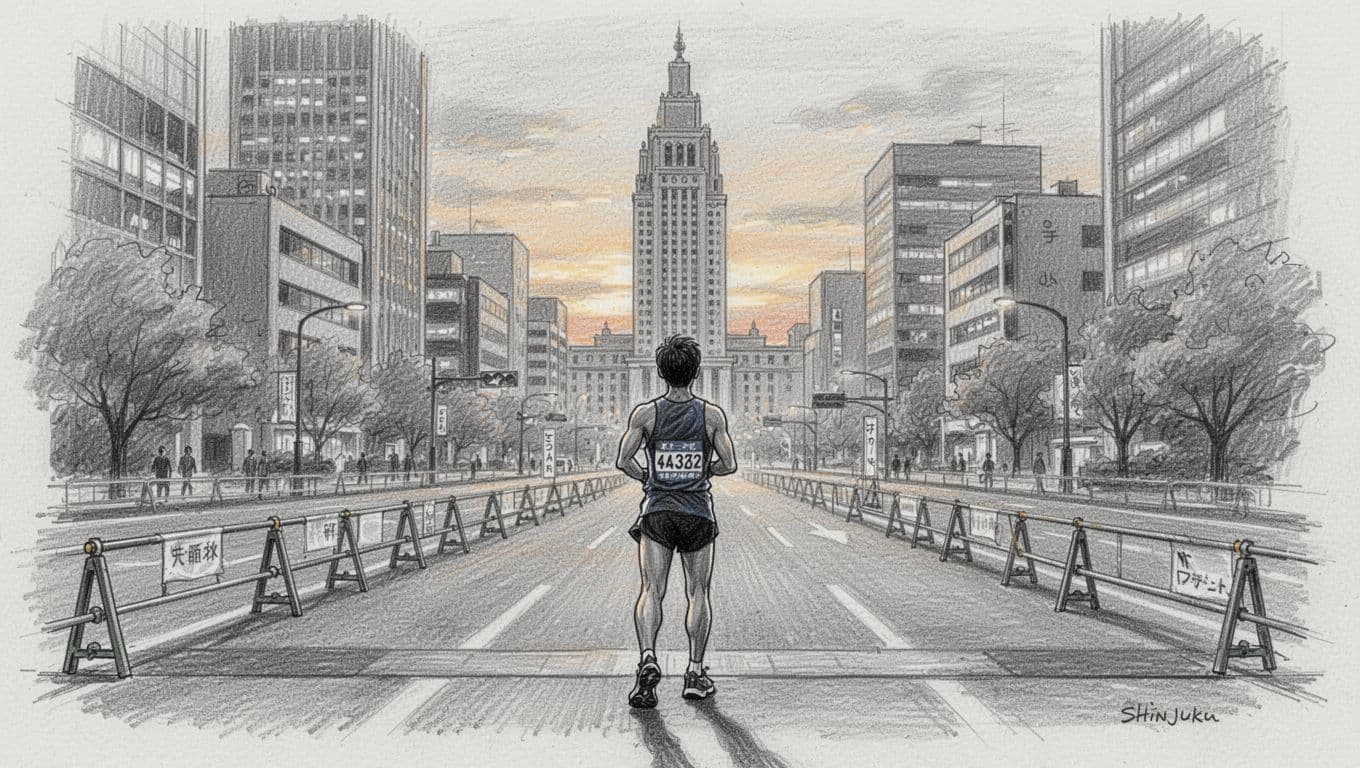
Use the building to understand the general location, but don’t rely on it as your only navigation point. Officials may restrict access several blocks away, and the most familiar approach may not lead toward your gate. Check the official Tokyo Marathon course information before race morning so you recognize the surrounding streets and starting area.
The finish is elsewhere, at Tokyo Big Sight in the waterfront district of Ariake. That difference matters when you book transportation, arrange meeting points, or decide where family members should wait. Your start and finish plans need separate routes because Shinjuku and Tokyo Big Sight are not interchangeable locations.
Why your assigned gate matters more than the landmark
Your bib and official race instructions determine where you enter and which starting block you use. The Tokyo Marathon’s participant guidelines should be your primary reference, especially for the latest gate, wave, security, and baggage details.
Study the venue map several days before the race. Then save a screenshot on your phone or carry a printed copy in case crowded streets make checking the map difficult. Volunteers may direct you according to your:
- Bib color or number.
- Assigned wave.
- Starting block or corral.
- Baggage and access instructions.
Following the wrong route can add walking time and force you to retrace your steps through dense crowds. Arrive with your gate already identified, then follow the signs and volunteer directions that match your bib. The landmark gets you to Shinjuku; your assigned gate gets you to the race.
How to Reach the Tokyo Marathon Start Line on Race Morning
Getting to the Tokyo Marathon start line requires a timed plan, not a simple trip to Shinjuku. Work backward from the official gate-closing or entry deadline listed in your current Tokyo Marathon participant guidelines, then build enough margin for every small task.
Build a race-morning travel plan from your hotel
Write down the time you need to reach your assigned gate, then add time for waking up, eating, using the bathroom, checking your bib, walking to the station, riding the train, and finding the correct entrance. A station that looks close on a map may involve long corridors, crowded platforms, or a slow walk through controlled streets.
Arrive early enough to clear security, reach your corral, and complete a relaxed warm-up. However, waiting outside for too long can leave you cold and waste energy before the race begins. Bring a simple disposable or inexpensive outer layer if the forecast calls for chilly conditions, and decide in advance when you’ll remove it.
Expect closures, crowds, and controlled access
Normal city routes may not work on marathon morning. Streets around Shinjuku can close or become reserved for runners, support vehicles, and event operations. Your usual shortcut may end at a barrier, while a nearby crossing may have temporary restrictions.
Follow official signs and volunteer directions, even when another route looks faster. Crossing barriers or forcing a shortcut can delay you and create problems at security. Spectators and runners may also use separate paths, so meeting friends inside the start area can become difficult once controlled zones open.
Set your meeting point outside the restricted area, such as your hotel or a clearly identified station exit. Don’t rely on a last-minute reunion near the Tokyo Metropolitan Government Building.
What to carry before entering the start zone
Before leaving your room, confirm the following:
- Your race bib is attached and easy to inspect.
- You have any identification required by the current race rules.
- Your timing chip instructions are clear.
- Your phone and charged transport card are accessible.
- You have only a small layer for the pre-race wait.
Avoid prohibited items, bulky bags, and anything that could slow security screening. Baggage services, plastic-bag requirements, and entry procedures can change by year, so check the latest Tokyo Marathon FAQ before packing.
Starting Blocks, Waves, and Timing at Tokyo Marathon
Once you reach the Tokyo Marathon start area, your bib determines where you go next. Your wave, entry gate, and starting block are connected, so confirm each detail before race morning rather than relying on memory or last-minute signs.
Find your wave and corral before race morning
Check your bib, race-number information, and the latest official Tokyo Marathon participant guidelines as soon as you receive them. Review both the digital instructions and any printed material included with your race packet. Race procedures can change, so an older race-day plan may not match the current event.
Next, locate your assigned block on the venue map. Trace the walking route from your planned entrance to that block, and save a screenshot or carry a printed copy. If you travel with someone, discuss the plan before entering the start zone. Once you pass through controlled access, finding each other may become difficult.
Your bib number and assigned block control where you can begin. A runner who misses the required entry time or reaches the wrong block may face strict limits on where they can start. Follow volunteer directions instead of trying to force a shortcut through another corral.
How to use the waiting time without wasting energy
Waiting can last long enough to cool your muscles and test your patience. Keep your body ready with easy movement, such as walking a few steps, gentle ankle circles, or relaxed leg shakes. If race rules allow it, wear a disposable outer layer and remove it shortly before the start.
Sip fluids when thirsty, but avoid overdrinking. Too much liquid creates unnecessary toilet stops and can leave your stomach unsettled. Use the toilets early, because lines often grow as the start approaches.
Skip long, static stretching while you wait. Keep your movements light and dynamic instead. The final minutes may feel cramped and uncomfortable compared with training, but conserving energy matters more than creating a perfect warm-up.
Crossing the mat and settling into marathon pace
The first kilometer may feel crowded and unusually slow. Protect your space, avoid abrupt weaving, and judge your effort by breathing, perceived exertion, or heart rate instead of chasing target pace immediately.
As the road opens, settle gradually into your planned rhythm. The Tokyo Marathon is long enough for small early delays to disappear, while an aggressive first kilometer can cost far more later. A controlled opening keeps your breathing steady and leaves room for the work ahead.
Baggage, Toilets, Security, and Other Start-Line Logistics
The final details around the Tokyo Marathon start line can shape your entire morning. Handle your bag, bathroom stop, clothing, fuel, and security check before the crowds reach their peak.
Baggage drop-off and clothing choices
Before leaving your hotel, attach the official baggage label exactly as instructed. Check that your race number is visible, the bag closes securely, and nothing prohibited is inside. If the event requires a specific bag or collection process, follow the current Tokyo Marathon participant guidelines rather than relying on advice from a previous race.
Only pack items you need after finishing. Confirm the baggage collection location at Tokyo Big Sight before you enter the start area, since your drop-off point and finish-day collection area may be far apart. Never leave cash, passports, electronics, jewelry, medication, or other valuables in race baggage. Keep essential items with you or leave them securely at your hotel.
Tokyo mornings can feel cold while you wait, even when race temperatures later become comfortable. Wear an inexpensive jacket, old sweatshirt, or other removable layer that can handle a long outdoor wait. If the event provides a clothing-disposal system, use it only in the marked locations. Don’t throw clothing over barriers or leave personal items on the course.
Toilets, hydration, and final fueling
Use the bathroom at your hotel before traveling, then consider another stop near the venue if the line is manageable. Portable toilets near the Tokyo Marathon start line fill quickly, so don’t wait until the final minutes. During the race, aid stations and toilets are part of your plan, not signs that something has gone wrong.
Eat the breakfast you tested during training. A familiar meal with carbohydrates usually works better than an oversized pre-race feast. If you need more energy, carry a small snack such as a banana or tested carbohydrate product.
Drink modestly according to thirst. Avoid swallowing large amounts of water, trying a new gel, or taking an unfamiliar supplement while standing in the corral. Those choices can upset your stomach before the race even begins.
Security rules and prohibited items
Review the latest official Tokyo Marathon FAQ and participant instructions before traveling to Japan. Large bags, glass containers, drones, dangerous objects, and other restricted items may be refused at screening.
Pack with security in mind. Carry only approved essentials, keep your bib accessible, and allow time for inspection. Rules can change between race editions, so the current official guidance is the final authority.
How to Prepare for the Wait at the Start Line
The Tokyo Marathon start line can feel cold and crowded before the race begins, even when the afternoon forecast looks comfortable. Use the waiting period to protect your energy, keep your muscles warm, and settle into the race plan you practiced during training.
Dress for Tokyo’s early-morning conditions
Check the forecast during race week, then review it again the night before. Pay attention to the starting temperature, wind, rain risk, and the conditions expected later in the race. A calm morning can feel manageable, while wind around the exposed start area may make the wait much colder.
Wear your race kit under a light, removable layer such as an old sweatshirt, inexpensive jacket, or large trash bag with safe openings. Add gloves or a hat if your hands and ears get cold easily. Choose items you can remove quickly without disrupting nearby runners.
However, don’t assume you can leave clothing wherever you want. Tokyo Marathon guidance may restrict discarded garments, and recent event notices have asked runners not to throw clothing away. Check the latest participant guidelines and use only approved disposal or baggage procedures. Anything you plan to keep should fit securely in your permitted bag or remain with you.
Use a short warm-up, not a full workout
Your warm-up should raise your temperature without using the energy you need later. If space and event rules allow, jog easily for a few minutes, then add gentle mobility drills, leg swings, and a few relaxed strides. Keep the effort controlled enough that your breathing stays easy.
Avoid turning the corral into a training session. Hard intervals, long static stretches, and repeated sprints can leave your legs flat before you reach the first aid station. Runners with a history of tight calves, hips, or hamstrings should repeat the routine they have tested in training rather than copy another athlete’s exercises.
Settle nerves with a clear first-five-kilometer plan
Decide your opening effort, first fueling point, and response to crowding before the gun. Use simple cues such as relaxed shoulders, quiet breathing, and a controlled cadence. If runners surround you, hold your line and let the pace develop instead of weaving for open space.
Race-day excitement can make an easy pace feel strangely slow. That sensation is often useful. Stay patient through the first five kilometers, then reassess once the crowd spreads and your breathing matches the effort.
Race Strategy After Leaving the Tokyo Marathon Start Line
Once you leave the Tokyo Marathon start line, the race may feel faster than planned. Thousands of runners move together through central Tokyo, while turns, barriers, and crowded lanes make precise pacing difficult. Stay controlled early, then let your rhythm develop as the road opens.
Let effort guide the first kilometers
Forcing an exact pace through a compressed field often creates unnecessary surges. You may slow slightly during the first kilometer, and that small delay is sensible if it helps you avoid weaving, braking, or pushing around other runners.
Use your watch as one source of information, not your only guide. Pair pace alerts with perceived effort and breathing. Your breathing should remain controlled, your shoulders relaxed, and your stride comfortable. When space opens, return smoothly to goal pace over several minutes instead of accelerating sharply to recover every lost second.
Staring at your watch through every turn can make you miss changes in the road and the runners around you. Check it at planned points, then look ahead and run the conditions in front of you.
Plan fueling before the start signal
Decide when you’ll take your first gel or carbohydrate serving before you enter the corral. Early fueling is easier because your stomach and energy levels are still settled. Waiting until fatigue appears can make it harder to eat, drink, or maintain your pace.
Carry only products you have tested during long runs. A familiar gel is a better choice than a new product offered by another runner or grabbed at the last minute. Review the official race guide to see what each aid station provides, then carry backup fuel if the offerings don’t match your plan or if you prefer a specific product.
Stay patient when the crowd feels too fast
The noise, skyscrapers, and thousands of moving runners can pull you beyond your planned effort. Return to simple cues: relaxed hands, loose shoulders, quiet breathing, and steady cadence. Let faster runners pass without treating each one as a challenge.
Early restraint protects the final 10 kilometers, when the race becomes less about excitement and more about remaining strong. A calm opening gives you more choices later, including the ability to increase effort when other runners begin to fade.
Common Tokyo Marathon Start-Line Mistakes to Avoid
The Tokyo Marathon start line rewards preparation more than improvisation. Small oversights can turn a calm morning into a series of rushed decisions, so handle the simple details before leaving your hotel.
Mistakes caused by poor timing
Leaving late creates a chain reaction. Crowded trains slow the journey, station corridors add walking time, and street controls may force you onto a longer route. Once you reach the venue, toilet lines and security checks can consume the margin you thought you had.
That pressure can make it harder to find your gate and reach the correct corral before access closes. Check the latest Tokyo Marathon participant guidelines for current entry times and procedures.
Prepare your clothes, breakfast, race bib, baggage, and transport details the night before. Save your route and gate information on your phone, then add a practical buffer for delays. Arrive early enough to walk, use the toilet, clear security, and reach your block without sprinting. However, arriving excessively early can leave you cold, tired, and uncomfortable. Aim for calm time, not hours of unnecessary waiting.
Mistakes caused by too much gear and too many plans
A heavy bag creates problems before you reach the course. Carry only familiar essentials, and avoid adding extra clothing, valuables, backup gadgets, or untested nutrition. Race morning is a poor time to change your fueling strategy because nerves can already affect your stomach.
Meeting several people inside the restricted start zone creates another source of stress. Set one meeting point outside the race area, such as your hotel or a clearly identified station exit. Then agree on one backup communication plan, such as a text message sent after the race if phone service becomes unreliable.
Mistakes caused by race-day excitement
Music, city views, crowd noise, and the starting announcement can send adrenaline through your body before you take a step. Use relaxed breathing, loose shoulders, and easy arm movement to keep that excitement under control.
Follow your planned first split instead of racing the runners around you. The opening kilometers may feel effortless, but that sensation can be misleading. A smart marathon begins with discipline before it begins with speed.
Planning the Start Line Experience for Runners and Spectators
The Tokyo Marathon start line brings runners and spectators together before access controls separate them. A simple meeting plan protects both sides from confusion, especially when barriers, crowds, and changing pedestrian routes make the area difficult to navigate.
Where to say goodbye before entering the race zone
Choose a clear public location outside the restricted area, such as your hotel entrance or a named station exit. Avoid vague landmarks near the Tokyo Metropolitan Government Building because several streets may be closed, and the nearest approach may not lead toward your assigned gate.
Agree on a backup plan before race morning. For example, decide where you will meet if the first location becomes inaccessible, then choose who will contact the others. A short text message may work better than a phone call when thousands of people use the same network.
Spectators should not assume they can follow runners to the corrals. Once the race zone opens, officials may direct athletes and supporters along separate paths. Say goodbye before the runner enters the controlled area, then let each person follow the plan without trying to reunite near the gates.
Runners should keep their phones charged and carry only items allowed under the current rules. Check the official participant guidelines before packing, since security and baggage procedures can change between events.
How to plan the finish after starting in Shinjuku
The race starts in Shinjuku but finishes at Tokyo Big Sight in Ariake. Families should plan transportation and meeting arrangements around the finish area, rather than trying to follow the course or chase the runner between viewing points.
A tired marathoner may need time to slow down, receive post-race instructions, collect baggage, and walk through crowded areas before meeting anyone. Set a meeting point outside the immediate finish flow, and give the runner a reasonable window to arrive.
Check the event’s spectator and traffic updates before race morning. Transport routes, street restrictions, and spectator access can change, so use current information instead of copying last year’s plan. The official race outline can also confirm the finish venue and event schedule.
Choose Your Distance, Duration and Goal Time
Make three quick selections and open the exact plan built for your race target.
Looking for a Fully Personalized Training Plan?
The training plans above are an excellent choice if they match your goal. However, if you’d rather train with a plan built specifically around your current fitness, goal race, preferred training days, weekly mileage, and target finish time, our RDA Custom Training Plans provide a personalized solution. We also have running courses available for runners seeking to run faster from the mile to the marathon.
Why Choose a Custom Training Plan?
| Standard Training Plan | RDA Custom Training Plan |
|---|---|
| Follows a fixed schedule | Built around your schedule |
| Standard weekly mileage | Peak mileage customized for you |
| Fixed workout days | Train on the days you choose |
| Same structure for everyone | Designed around your current fitness |
| Static plan | Updated as your fitness improves |
| One-time purchase | Ongoing personalized coaching and support |
What You’ll Receive
- A training plan built specifically for your goal
- Personalized training paces
- Long runs, tempo runs, threshold workouts, interval sessions, recovery runs, and easy runs
- Peak weekly mileage matched to your experience level
- Flexible training schedule that fits your life
- Ongoing plan adjustments as your fitness improves
Ready to Train Smarter?
Stop guessing and start following a plan built specifically for you, your schedule, and your racing goals.
Frequently Asked Questions
The Tokyo Marathon start line looks straightforward on a map, but race-day access depends on your bib, gate, and official instructions. These answers cover details runners often need after planning their route to Shinjuku.
Where does the Tokyo Marathon start?
The race traditionally starts near the Tokyo Metropolitan Government Building in Shinjuku. However, entry routes, security boundaries, and restricted zones can change between race editions, so use the current official participant guidelines and your bib instructions.
How early should I arrive at the Tokyo Marathon start line?
Your ideal arrival time depends on your gate, baggage plans, transportation route, and the official entry deadline. Build a generous buffer for security screening, toilet lines, and the walk from your gate to the assigned starting block.
Can spectators enter the Tokyo Marathon starting area?
Spectator access is limited by security and race operations. Family members may not enter runner-only zones, so say goodbye before you pass through the gate and arrange a meeting point near Tokyo Big Sight or another approved location after the race.
What should I bring to the Tokyo Marathon start area?
Carry only permitted essentials, including your bib, phone, transport card, familiar fuel, and approved clothing layers. Check the official Tokyo Marathon FAQ for current prohibited-item rules, baggage requirements, and identification instructions before race morning.
Does Tokyo Marathon use gun time or chip time?
Gun time measures from the official start signal, while net, or chip, time measures from when your timing mat records your crossing. Official results, awards, and qualifying rules may use different standards, so check the current event regulations before relying on either time.
What happens if I miss my assigned starting block?
Moving between starting blocks may be restricted, and missing a gate or reporting deadline can affect where officials allow you to start. If you expect a problem, contact race officials through the channels listed in the official runner handbook information before race morning.
Conclusion
A smooth Tokyo Marathon start begins before race morning. Confirm the official start location, your assigned gate, wave, and corral. Plan transportation to Shinjuku with extra time for crowded stations and street controls. Organize your baggage, keep prohibited items out, and arrive early enough to clear security, use the toilets, and reach your block without rushing.
The wait at the Tokyo Marathon start line can be cold and crowded, so stay warm with a permitted layer and keep your warm-up light. Once the gun goes off, protect the first kilometers with patient pacing. The opening stretch is not the place to improvise or prove your fitness. It is your first chance to execute the calm race plan you practiced.
When you stand among the runners beneath the Shinjuku towers, let preparation do its work. Stay relaxed, hold your effort, and begin the long road toward Tokyo Big Sight with control.


