

Tokyo Marathon Route: Course Map, Landmarks & Pacing Strategy
Runners pour out from the Tokyo Metropolitan Government Building, shoes striking the pavement as the Tokyo Marathon route carries them through some of the city’s most famous streets. The early miles move past Shinjuku’s high-rises and into a course where every turn, landmark, and change in road surface can affect your rhythm.
Knowing the route means more than memorizing where to turn. You need a plan for pacing, aid stations, crowd energy, and the final push toward the finish near Tokyo Big Sight, whether you’re racing for a personal best or supporting someone from the sidelines. Course details, start procedures, and event information can change, so confirm the latest official Tokyo Marathon Foundation map and race guide before race day.
This guide focuses on practical decisions for runners, spectators, and supporters, beginning with the route’s key sections and landmarks. Be sure to reserve or book your Tokyo Marathon hotels in advance to save on costs.
Key Takeaways
- The Tokyo Marathon route starts at the Tokyo Metropolitan Government Building and finishes near Tokyo Big Sight, crossing major districts along the way.
- Review the official Tokyo Marathon course map to study turns, landmarks, aid stations, and key meeting points.
- Save energy early, because the opening miles can feel effortless before fatigue builds through the middle and final sections.
- Use landmarks such as Asakusa, Nihombashi, and Tokyo Tower to divide the course into manageable pacing checkpoints.
- Arrive early, follow transport restrictions, dress for cool conditions, and confirm the latest race-day instructions before traveling.
The Tokyo Marathon Route at a Glance
The Tokyo Marathon route covers 42.195 kilometers, carrying runners east from the Tokyo Metropolitan Government Building in Shinjuku to the finish area near Tokyo Big Sight in Ariake. The course moves through western Tokyo, central districts, Asakusa, Ginza, Hibiya, Shinagawa, and the eastern waterfront.
Although the route is famously flat, that profile can fool you. Long, straight roads make the early pace feel easy, while crowded streets, repeated sections, turns, and late-race fatigue gradually test your discipline. Check the official Tokyo Marathon course map before race day because turns, detours, and operating details can change.
Where the race starts and finishes
The start area surrounds the Tokyo Metropolitan Government Building in Shinjuku, among tall office towers and packed streets. Before the race, your main task is reaching the correct wave, corral, and entry point without rushing. Your bib and race instructions determine where you need to go, so allow extra time for security, walking, and the flow of thousands of runners.
The opening atmosphere feels intense. Corrals fill early, runners stand shoulder to shoulder, and small delays can make the start feel confusing. Read your race guide carefully, then follow the signs and staff instructions on race morning. Use the latest guide for exact baggage procedures, transportation restrictions, entry details, and meeting points.
At the other end, Tokyo Big Sight feels entirely different. The finish comes after a long final approach toward the waterfront, when even a flat road can feel demanding. Once you cross the line, you may still have a substantial walk through the post-race area before collecting belongings or meeting your group. Arrange a clear meeting plan, but rely on the current race guide for the approved location and movement instructions.
The main neighborhoods runners pass through
The course progresses through Tokyo’s changing streets rather than following one simple straight line. Early sections lead through Shinjuku and toward Iidabashi, where city buildings and broad roads help settle your rhythm. Central Tokyo follows, with Nihombashi and nearby commercial districts bringing dense crowds and a sharper sense of the city’s scale.
Asakusa gives the middle portion a distinct character. The streets around the traditional temple district often feel louder and more visually striking, which can lift your focus when the opening energy has faded. Ginza and Hibiya then provide familiar urban landmarks, while the route’s out-and-back portions let you see other runners and measure your progress.
Shinagawa arrives later, when pacing matters more than excitement. Runners turn back toward the central districts before making the final push toward Ariake and the waterfront finish. Distances below are approximate, so use the current official map as your final reference:
| Approximate point | Route feature |
|---|---|
| 5 km | Iidabashi area |
| 10 km | Nihombashi area |
| 15 km | Asakusa |
| 20 km | Ginza |
| 25 km | Hibiya |
| 30 km | Shinagawa direction |
| 40 km | Final approach toward Ariake |
Break the marathon into these visual sections, but keep your effort steady. Landmarks can guide your attention, while your watch, breathing, and planned pace should control the race.
What You Will See Along the Tokyo Marathon Course
The Tokyo Marathon route moves through several versions of the city, from Shinjuku’s towers and historic Asakusa streets to Ginza’s commercial center and Ariake’s open waterfront. Use each landmark as a mental checkpoint, not as a replacement for the official course map. Closures and barricades can change what runners and spectators see.
From Shinjuku to Nihombashi, settle into your rhythm
The race begins near the Tokyo Metropolitan Government Building, where loud crowds and fast-looking runners can pull you into an aggressive opening pace. Resist that pressure. The early streets include gentle changes in direction, broad avenues, and a gradual shift toward Iidabashi and the Imperial Palace area. Let your first kilometers feel controlled.
Use your breathing, posture, and perceived effort to judge the pace. You should feel engaged, but you shouldn’t fight for speed. Tall buildings can interfere with GPS accuracy, so treat your watch as one reference rather than the final authority. If your breathing becomes strained before the race settles, back off early.
Nihombashi gives you another useful checkpoint. Reach it with relaxed shoulders and a steady stride, then continue without chasing every runner who passes.
Asakusa brings the biggest landmark moment
Asakusa often delivers the course’s strongest visual lift. Kaminarimon Gate and the Senso-ji area bring historic Tokyo into view, while spectators create a wall of sound around the route. After the quieter focus of the opening miles, this moment can refresh your attention.
Use the landmark as a mental reset. Check your effort, take fuel if your plan calls for it, and focus on the next section. Crowd noise is encouragement, not a pacing command. A sudden surge here can cost more than it gives you later.
Spectators should follow official viewing rules and arrive prepared for dense crowds near major landmarks. Barricades may limit access, and runners or supporters may view Kaminarimon Gate from a different side or at a distance.
Ginza, Shinagawa, and the final run to Ariake
Ginza and Hibiya replace historic streets with busy central avenues and familiar city buildings. The Tokyo Marathon course can feel smooth here, but fatigue becomes harder to ignore as the kilometers accumulate. Break the remaining distance into short targets, such as the next aid station, turn, or landmark.
The Shinagawa turnaround area often feels different. You may see runners heading the opposite way, yet the return can feel long when your legs are tired. Keep your effort even, fuel before you feel desperate, and protect your form.
After the final central streets, the roads toward Ariake open toward Tokyo Big Sight and the waterfront. Save your strongest push for the finish if you still have control. Patience, fueling, and even effort usually beat an early attack on the Tokyo Marathon route overview.
Tokyo Marathon Elevation and Pacing Strategy
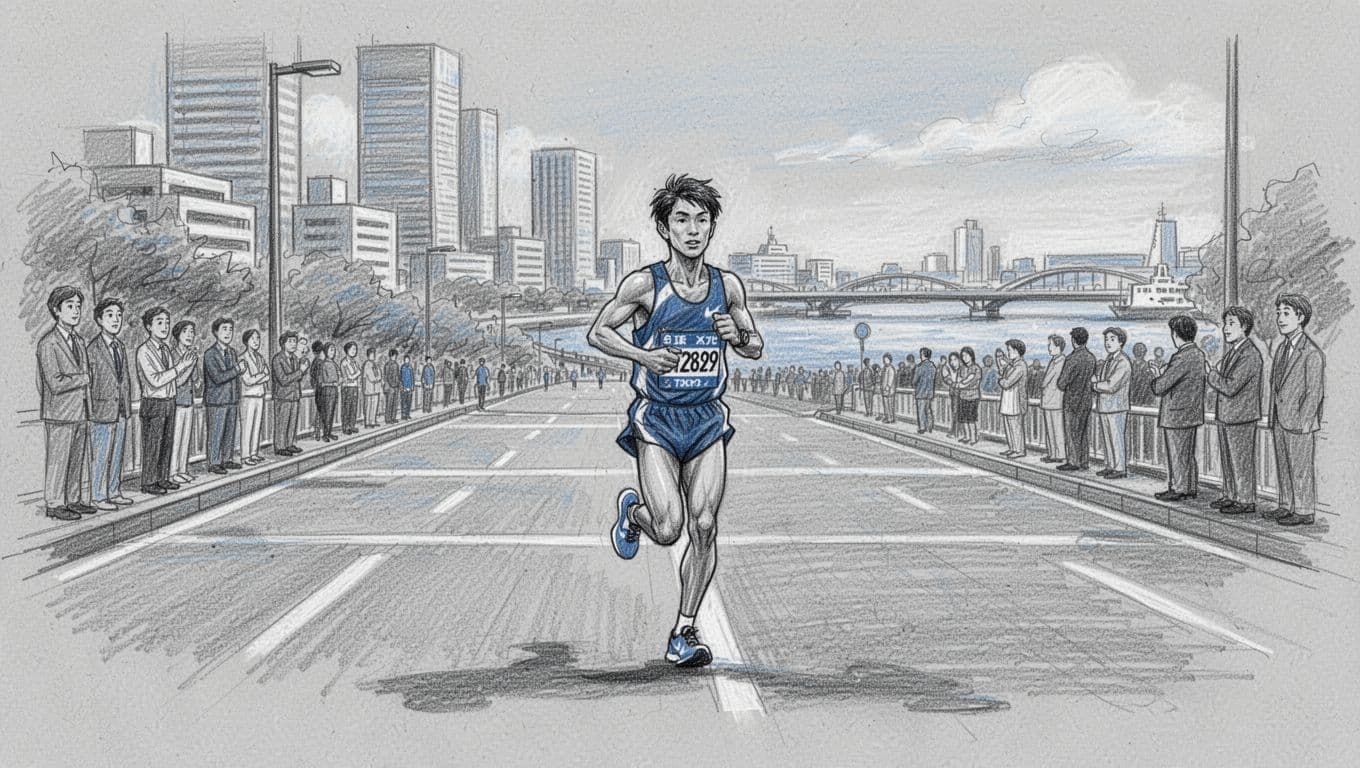
The Tokyo Marathon route is famous for being fast and mostly flat, but a low elevation profile doesn’t make 42.195 kilometers effortless. Small rises, bridges, turns, road camber, crowded streets, and wind near the waterfront can all disturb your rhythm. Your best race comes from controlling effort, not chasing every perfect split.
Why a flat course still tests marathon fitness
Flat roads keep the leg muscles working in the same patterns for hours. Constant pavement contact can create more fatigue than runners expect, especially when the route offers few natural changes in stride. Turns and crowded early kilometers add another cost because weaving, braking, and accelerating waste energy.
Small rises and bridges may barely register on an elevation chart, yet they still affect effort. Road camber can load one side of your body differently, while exposed sections near the waterfront may bring a headwind. A runner who reacts to every change can accumulate several minutes of unnecessary effort before reaching the final 10 kilometers.
Prepare with long runs on city roads, marathon-pace workouts, and strength training that supports your hips, calves, and core. Practice holding an even pace through turns and around other runners. For a personal best, efficient movement matters as much as raw fitness. First-time marathoners should focus on relaxed form and steady effort instead of treating the flat course as permission to run faster.
A flat marathon removes major climbs, but it also leaves fewer chances to recover from repeated pacing mistakes.
How to pace the opening, middle, and final kilometers
Divide the Tokyo Marathon course into three broad sections:
- Opening kilometers: Start slightly restrained. Let faster runners move ahead while you protect relaxed breathing and short, controlled steps. The opening crowds and downhill-feeling momentum can make goal pace feel too easy.
- Middle kilometers: Settle into a smooth effort through Nihombashi, Asakusa, Ginza, and the central sections. Check kilometer splits, posture, and breathing, but don’t surge after every slow split. A brief GPS error is less important than the trend across several official markers.
- Final 10 kilometers: Assess your condition before increasing effort. If your breathing remains controlled and your stride is stable, gradually press after 32 kilometers. If your form is breaking down, maintain effort and protect your finish.
A sample plan might start a few seconds per kilometer slower than goal pace, settle near goal pace through the middle, then build late. That framework must match your fitness, weather, and marathon experience. Dense buildings can distort GPS pace, so use lap splits, perceived effort, and official timing mats together.
Fueling and hydration by route section
Plan gels, fluids, and electrolytes before race morning. Take fuel at practiced intervals rather than waiting until hunger appears, and drink according to your training plan and weather conditions. Use aid stations efficiently by easing slightly, taking what you need, and returning to pace without a sharp acceleration.
Aid-station locations and available products can change. Check the latest official aid-station information and race guide before traveling, because those details have priority over older route plans.
Practice your complete fueling routine during long runs and marathon-pace sessions. Carry familiar products if permitted, and avoid an unfamiliar gel, drink, or electrolyte mix on race day. A reliable plan keeps your effort steady when the course reaches its most demanding final kilometers.
Aid Stations, Toilets, and Race-Day Rules on the Route
Small logistical choices can protect your pace on the Tokyo Marathon route. Before race morning, read the current Tokyo Marathon runner guidelines for aid stations, portable toilets, medical points, timing mats, baggage, cutoffs, and course closure rules. Older race reports may describe products or procedures that no longer apply.
How to use aid stations without losing your rhythm
Decide your aid plan before the start. You might take water at selected stations, use sports drink when needed, and take gels at practiced intervals. If your stomach feels unsettled or the station is crowded, briefly walk while drinking rather than stopping abruptly and creating a collision risk.
Approach from the side, scan for runners slowing ahead, and move toward the table only when you have space. After taking a cup, clear the station before adjusting your pace. Avoid trying unfamiliar nutrition on race day, and don’t chase a cup that forces you across several runners.
The official aid-station notice should be your final reference for station order, available fluids, food, and disposal procedures. Product availability can change, so keep the plan simple enough to adjust without losing focus. Portable toilets may also appear along the route, but crowded facilities can cost time and disrupt rhythm. Use one early if you need it, then return to your planned effort.
Cutoffs, medical support, and safety decisions
Course cutoffs and road reopening times are official race policies, not suggestions. The race guide tells you where timing mats and cutoff points are located, while staff instructions control movement when roads reopen. Read those details before race morning and keep watching for signs, volunteers, and medical personnel.
Ask for help early if something feels wrong. Chest pain, confusion, faintness, severe breathing trouble, dizziness, overheating, or unusual weakness requires attention. An injury that changes your running form also deserves a medical check, especially if continuing could worsen it.
Slow down, move to a safe position, and tell a volunteer or medical staff member what you feel. Trying to push through a serious problem can turn a difficult race into an emergency. The official race information also explains medical-station operations, so review it before you travel.
What to carry and what to leave behind
Keep race morning simple:
- Secure your bib where officials can see it, and bring only permitted items.
- Wear weather-appropriate clothing and use nutrition you have already practiced.
- Charge your watch, but use official timing mats when GPS pace becomes unreliable.
- Carry a small amount of personal emergency information if you may need it.
- Follow the current baggage procedure and label requirements exactly.
Bags, headphones, cameras, hydration devices, and other equipment must follow the rules for that race edition. Prohibited-item lists and baggage instructions can change, so don’t rely on an older runner’s advice. Arrive early enough for transportation, security, baggage drop, toilet queues, and your assigned corral. When you reach the start calm and organized, the route becomes easier to manage.
How Spectators Can Watch the Tokyo Marathon Route
A useful viewing plan begins with one decision: do you want landmark photos, or do you need the best chance of seeing a specific runner? Major locations create memorable race-day scenes, but dense crowds, barricades, and road closures can make them difficult places to meet someone.
Best viewing areas for landmark moments
Near the Shinjuku start, the atmosphere is intense and crowded as runners gather around the Tokyo Metropolitan Government Building. Spectators may feel close to the excitement, but access is often restricted, and the start area is a poor choice for meeting a runner later.
Asakusa offers one of the most recognizable views on the Tokyo Marathon route, with runners passing near Kaminarimon Gate and Senso-ji. The historic setting and loud crowds are excellent for photos. However, the area can become difficult to enter, leave, or search through once the race is underway.
Ginza brings broad streets, central-city energy, and strong spectator support. Shinagawa usually feels more spread out near the turnaround, although crowd movement still depends on the year’s barriers and closures. The Ariake finish area near Tokyo Big Sight gives supporters a powerful final-race atmosphere, but finish-zone restrictions and tired runners can make reunions confusing.
No single location is best for everyone. Choose a landmark if the setting matters most. If seeing your runner matters more, select a less crowded stretch near a station and stand at a clearly defined point behind the barriers. The official spectator cheering information explains access restrictions and reminds visitors to use underground passages instead of crossing the course.
Choose Your Distance, Duration and Goal Time
Make three quick selections and open the exact plan built for your race target.
Looking for a Fully Personalized Training Plan?
The training plans above are an excellent choice if they match your goal. However, if you’d rather train with a plan built specifically around your current fitness, goal race, preferred training days, weekly mileage, and target finish time, our RDA Custom Training Plans provide a personalized solution. We also have running courses available for runners seeking to run faster from the mile to the marathon.
Why Choose a Custom Training Plan?
| Standard Training Plan | RDA Custom Training Plan |
|---|---|
| Follows a fixed schedule | Built around your schedule |
| Standard weekly mileage | Peak mileage customized for you |
| Fixed workout days | Train on the days you choose |
| Same structure for everyone | Designed around your current fitness |
| Static plan | Updated as your fitness improves |
| One-time purchase | Ongoing personalized coaching and support |
What You’ll Receive
- A training plan built specifically for your goal
- Personalized training paces
- Long runs, tempo runs, threshold workouts, interval sessions, recovery runs, and easy runs
- Peak weekly mileage matched to your experience level
- Flexible training schedule that fits your life
- Ongoing plan adjustments as your fitness improves
Ready to Train Smarter?
Stop guessing and start following a plan built specifically for you, your schedule, and your racing goals.
How to move between viewing points
Spectators can’t realistically follow a runner on foot between every section. A short distance on a map may take much longer during race-day closures, and crowds can slow station entrances, sidewalks, and underground passageways. Build your day around one or two realistic viewing points, not a plan to chase the course repeatedly.
Rail lines are usually the practical way to move, but check station access, service changes, closures, and crowd controls before leaving. A station near Asakusa, Ginza, Shinagawa, or Ariake may be useful, yet the nearest exit may not connect to the viewing side you expect.
Share a meeting plan before race morning. Choose an exact landmark outside the restricted area, agree on a backup location, and save the plan on every phone. Bring a charged phone battery pack, weather layers, water, and patience.
The official Supporter Navigation and Flash Report service can show a runner’s location and times when available. Tracking may lag, so use it to adjust your plan rather than sprint toward the next checkpoint. Stay behind barriers, keep crossings clear, and never step suddenly into the course. A calm, fixed viewing position gives you a better chance of spotting your runner safely.
How Runners Should Prepare for the Tokyo Marathon Route
The Tokyo Marathon route rewards runners who rehearse decisions before race day. Study the official course map during race week, then connect its turns, aid stations, toilets, and timing points to your training and race plan. Visual cues may look different behind barricades, so use landmarks as reminders rather than relying on one exact building.
Turn the course map into a training plan
Practice marathon pace on flat roads that resemble Tokyo’s long urban stretches. Add controlled marathon-pace blocks to long runs, steady-state sessions that build discipline, and occasional fast-finish workouts that teach you to run well after fatigue appears.
During training, rehearse smooth turns without braking sharply. Shorten your stride slightly, keep your effort even, and accelerate only after you clear the corner. Practice moving through crowded starts by running relaxed behind others instead of weaving for open space.
Fuel at the same effort you expect during the race. Take gels or sports drink at planned intervals while maintaining rhythm, and test every product during long runs. A useful route-based plan might look like this:
- Use the opening roads toward Nihombashi to settle your breathing and ignore surges.
- Treat Asakusa as a form and fueling checkpoint, not a reason to speed up.
- Hold marathon effort through central Tokyo while checking posture and hydration.
- Stay patient around Shinagawa, where fatigue can make the return feel longer.
- Save any increase in effort for the final approach to Ariake.
First-time marathoners should prioritize even effort and a comfortable finish. Runners chasing a qualifying time or personal best can use measured splits, pace bands, and planned marathon-pace blocks, but both groups need the same restraint early.
Prepare for Tokyo weather and travel
Race-day temperature, rain, wind, and humidity can change how a flat course feels. Check the forecast again several days before the race and revisit it on race morning. The event’s official weather precautions should take priority over old race reports.
Pack flexible layers, anti-chafing protection, and clothing you have already tested. Wear the same shoes, socks, and race kit that worked in training. Nerves are a poor reason to change breakfast, footwear, or nutrition.
International runners also need to manage the travel itself. Arrive several days early when possible, shift your sleep schedule before departure, hydrate during the flight, and take a short walk after landing. Protect sleep during the taper, even if travel or excitement makes your normal routine difficult.
Build a landmark-based race plan
Use landmark groups as checkpoints rather than chasing every kilometer. Assign each section one simple goal: relaxed form in the opening, steady fueling near Asakusa, controlled effort through Ginza and Hibiya, patience around Shinagawa, and commitment toward Ariake.
Keep the plan flexible. Crowds, weather, a delayed start, or an unsettled stomach may require a small adjustment. Your effort and physical condition matter more than a visual cue that appears earlier or later than expected.
On race morning, eat your familiar breakfast, leave for transport with extra time, complete baggage and security procedures, use the toilet before entering the corral, and check your watch and fuel. Reach the starting area calm, layered, and ready to follow your first pacing cue.
Frequently Asked Questions
The Tokyo Marathon route looks straightforward on a map, yet race-day details can affect how runners and spectators experience it. Use these answers as a final planning check, then confirm all operational information in the latest official materials.
Is the Tokyo Marathon route flat?
The course is generally considered fast and mostly flat, which makes it attractive for personal-best attempts. Still, small rises, bridges, frequent turns, road surfaces, wind, and crowd congestion can change your effort even when the elevation profile looks modest.
Long stretches of pavement also place repeated stress on the same muscles. Review the official Tokyo Marathon course map and current elevation information for precise details, because course operations can affect the route shown in older guides.
Where does the Tokyo Marathon start and finish?
The race traditionally starts near the Tokyo Metropolitan Government Building in Shinjuku and finishes near Tokyo Big Sight in Ariake. That west-to-east journey carries runners through several central districts before reaching the waterfront.
Your current race guide takes priority over general route descriptions. Confirm your start block, entrance, baggage arrangements, post-race walking route, and finish-area procedures before race morning. The official runner guidelines contain the instructions that apply to your race edition.
What are the most famous landmarks on the course?
Recognizable points include the Tokyo Metropolitan Government Building, Nihombashi, Kaminarimon Gate and Senso-ji in Asakusa, Ginza, Hibiya, and the waterfront finish area near Tokyo Big Sight. These landmarks can divide the marathon into memorable mental checkpoints.
However, the precise sightline and route position may vary because of race operations, barricades, security measures, and crowd controls. Use landmarks to guide your focus, but follow official signs and staff instructions during the event.
Can spectators see the same runner at several points?
It is possible with careful planning, but repeated sightings are difficult. Road closures, restricted crossings, crowded stations, and train travel can make a short distance take much longer than expected.
Choose one or two viewing spots instead of trying to chase the course. Use official runner tracking when available, and allow extra time for station access and walking between the train exit and viewing area. A fixed meeting point outside restricted zones is safer than searching near the finish.
Does the Tokyo Marathon route change?
Organizers can adjust streets, turns, facilities, start procedures, or spectator access for safety and operational reasons. Even small changes can affect where you enter, watch, drop a bag, or meet your group.
Use the latest Tokyo Marathon Foundation course map, runner handbook, and race-day announcements. An old blog post or saved map may describe procedures that no longer apply.
What is the best way to study the route before race day?
Start with the official map, then identify major landmarks, aid stations, timing points, toilets, and transport access. A training run on similar roads or a virtual map review can help you understand the course flow without memorizing every street name.
Focus on pacing and effort cues instead. Decide where you’ll check your breathing, take fuel, settle after crowded turns, and assess your effort late in the race. That plan remains useful even when a landmark looks different behind race barriers.
Conclusion
The Tokyo Marathon route takes runners on a memorable journey through Shinjuku’s tall buildings, historic Asakusa, busy central streets, and the Tokyo waterfront near Ariake. Its mostly flat profile can invite an aggressive start, but the strongest performances come from respecting the opening miles and protecting energy for the final 10 kilometers.
Use landmarks as mental checkpoints, fuel consistently, and adjust your effort when crowds, weather, wind, or road conditions change. Your watch, breathing, posture, and planned pace should guide each section more than the excitement around famous sights. Before race day, verify the current course, cutoffs, aid-station details, transport rules, and spectator access through official Tokyo Marathon sources.
With a clear plan and disciplined execution, the route becomes easier to manage one section at a time. Prepare well, stay patient early, and trust your training as you move toward a strong, controlled finish at Tokyo Big Sight.


