

Tokyo Marathon Finish Line: Location, Meet-Up Areas & What to Expect
The final kilometers of the Tokyo Marathon demand more than tired legs. As the road carries you toward Tokyo Big Sight, crowds press against the barriers, your pace becomes harder to hold, and every familiar race plan gets tested by fatigue.
For runners, finding the Tokyo Marathon finish line is only part of the preparation. You also need to know how the closing kilometers unfold, where supporters can watch, what happens after you cross, and how to reunite with your group in a busy finish area. A clear plan can help you protect your pace, stay focused, and avoid unnecessary confusion once the race is over.
This guide covers the finish-line location, final-stretch strategy, race-day access, post-race logistics, and practical meeting plans, so you can approach Tokyo Big Sight with confidence. First, we’ll look at what to expect on the course as you make your way toward the finish. Remember, do not book your Tokyo Marathon hotels late. Reserve early and save.
Key Takeaways
- The Tokyo Marathon finish line is at Tokyo Big Sight in Ariake, not near the race start in Shinjuku.
- Save energy for the final kilometers, then follow course marshals through the crowded finish approach.
- Check the official Tokyo Marathon race information for the current course, finish details, and venue updates.
- Supporters should plan viewing points and transportation early because road closures can limit access.
- After finishing, follow the designated exit route and choose a meeting point away from the busiest gates.
The Tokyo Marathon Finish Line: Location, Layout, and What Runners Should Expect
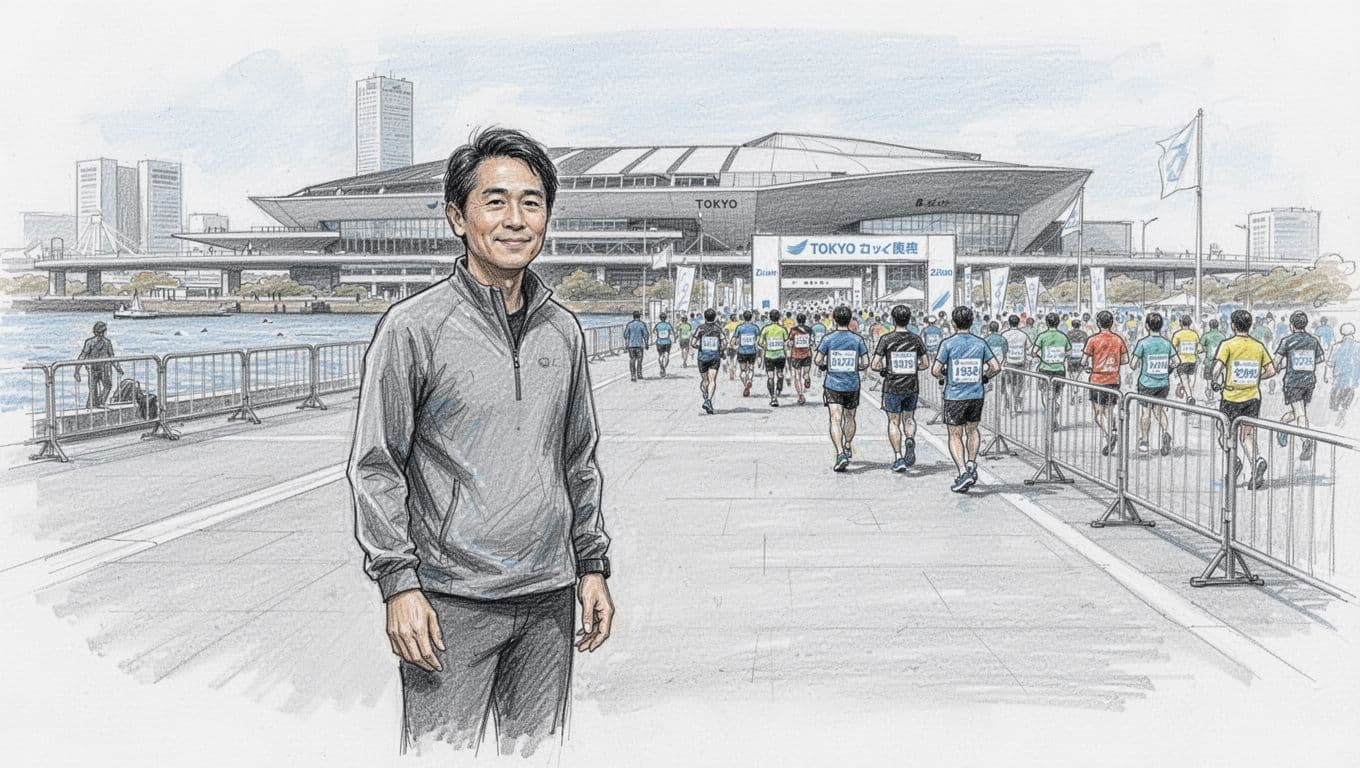
The Tokyo Marathon finish line is traditionally near Tokyo Big Sight in Ariake, on Tokyo’s waterfront. That means the final stretch feels different from the opening miles through central Tokyo. Broad roads, open space, crowd barriers, and event structures guide runners toward the convention center, but the exact route and finish setup can change each year.
Before race morning, check the official Tokyo Marathon course information and read your runner guide carefully. Access routes, participant zones, road closures, baggage procedures, and post-race movement can change with the event plan.
Where the final kilometers lead in Ariake
As you reach Ariake, the course takes on a more open waterfront character. The roads are wide, and the surrounding buildings create a different atmosphere from the dense streets earlier in the race. Event fencing, aid stations, marshals, medical staff, and spectator areas may narrow your usable path, so stay alert even when the road looks spacious.
Tokyo Big Sight becomes the visual destination as you approach the finish area. However, don’t treat every barrier, turning point, or access lane as a permanent part of the course. Organizers can adjust the final approach for safety, construction, crowd control, or venue operations.
The official runner guidelines are the best place to confirm the finish location, nearby streets, bib instructions, wave details, and venue notices for your race year. Review the map before you travel to Tokyo Big Sight, since a familiar landmark doesn’t guarantee familiar access.
What happens from the timing mat to the medal area
Crossing the timing mat is the official finish, but your race-day movement doesn’t end there. After you pass the line, keep walking through the finish chute and follow instructions from volunteers and course marshals.
The usual sequence includes:
- Moving away from the timing area without stopping.
- Receiving your finisher medal and any race-issued items.
- Collecting water or accessing recovery support when available.
- Following signs toward baggage collection, changing areas, or the exit.
- Leaving through the designated route rather than turning back into the finish flow.
Stopping immediately after the line can block other runners and create a safety problem, especially when finishers arrive in groups. Arrange your meeting point outside the restricted participant area because spectators may not stand directly beside the finish tape. Security controls and fencing can separate runners from family members, even when everyone is inside the same venue complex.
Why the finish line can feel harder than expected
The final kilometers combine physical fatigue with rising excitement. Crowd noise may push you to speed up, while turns and changing road width can disrupt your rhythm. A runner who feels strong at 40 kilometers can still lose control by sprinting too early.
Keep your effort measured until the finish is genuinely close. Use the next visible landmark, aid station, or turn as your immediate target, then increase your pace only if your legs and breathing remain under control. Above all, finish safely and strongly rather than sacrificing your form for a dramatic final burst.
How to Reach the Tokyo Marathon Finish Line With Energy Left
The final 10 kilometers reward control more than emotion. Tokyo Big Sight may be visible in your mind long before you reach Ariake, but chasing the finish too early can drain the energy you need for the actual closing stretch.
Use a simple plan: hold your effort, fuel before weakness appears, and divide the road into small targets. Check the official Tokyo Marathon runner guidelines before race day, then let your practiced strategy guide you through the final miles.
Protect your marathon pace before the final push
Early excitement can make marathon pace feel deceptively easy. If you spend too much energy before 35 kilometers, the final section may become a survival exercise instead of a strong finish. Hold your planned pace, or use a steady effort if wind, congestion, or fatigue changes your splits.
Through the middle miles, keep your breathing controlled and your stride relaxed. Runners with time goals should avoid banking minutes early. A small negative split is often more useful than an aggressive opening that forces a long slowdown later.
At roughly 35 kilometers, reassess honestly:
- If your pace feels controlled, increase effort gradually rather than sprinting.
- If you’re struggling, shorten your stride, protect your form, and focus on reaching the next aid station.
- If you feel unusually strong, wait several minutes before accelerating. Strength can disappear quickly after a sudden pace change.
Your goal is to arrive at the Tokyo Marathon finish line with enough control to respond when the final turns appear.
Fuel and hydrate before the finish becomes urgent
Don’t wait for hunger, thirst, or weakness before taking in fuel. Fatigue can make a decision feel difficult, while a practiced schedule keeps each choice simple. Continue taking carbohydrates at the intervals you rehearsed during long runs, even when the finish seems close.
Drink water in small amounts at aid stations rather than forcing a large volume at once. Electrolytes may also support your plan, especially in warm conditions or when you sweat heavily. However, race day is the wrong time to test a new gel, drink, or supplement.
Small decisions protect the final miles:
- Take your planned carbohydrate source before your energy drops.
- Sip water or electrolytes according to your training experience.
- Slow briefly at an aid station if needed, then regain rhythm without surging.
- Keep moving unless pain, dizziness, or severe symptoms require medical help.
Use short mental targets on the road to Tokyo Big Sight
The final distance feels smaller when you stop carrying all of it at once. Focus on the next aid station, a turn, or a visible landmark near Tokyo Big Sight. After reaching it, choose another target.
Check your posture every few minutes. Lift your chest, keep your arms compact, and relax your hands. If your legs tighten, shorten your stride and increase cadence slightly instead of forcing a longer step.
A short cue can keep your attention steady. Repeat, “calm and committed,” or use words that match your race plan. Count landmarks, focus on one kilometer at a time, and save the final surge for the point when you can hold it to the line.
Where Spectators Can Watch and How to Meet a Finisher
Watching the Tokyo Marathon finish requires more planning than standing near Tokyo Big Sight. Spectators may face restricted access, heavy crowds, road closures, and a separate runner-only finish zone. Choose your viewing point first, then create a reunion plan well away from the finish chute.
Choose a cheering spot based on access, not just a clear view
The best spectator location balances visibility with transportation, crowd flow, and your ability to leave. A barrier close to the Tokyo Marathon finish line may offer a dramatic view, but it can also place you behind fencing, inside a packed crowd, or far from the nearest open station route.
Before race morning, review the official spectator information and the current finish area map. Check road closures, station exits, walking routes, viewing restrictions, and any areas reserved for runners. An official viewing area or legal roadside point listed in the event guidance is usually easier to manage than an improvised position near the finish.
Accessibility matters, especially for children, older supporters, and anyone who cannot stand for long periods. Look for a route with fewer stairs, nearby restrooms, places to sit, and enough room to move safely. Also check whether the route remains practical in rain, wind, or cold weather.
Set a reunion point far from the finish chute
Don’t use the finish area as your meeting point. Thousands of runners, volunteers, medical staff, and spectators may leave at once, while fencing can separate finishers from the public. A runner may also need medical checks, baggage collection, official photos, food, and time to walk normally again.
Choose a clearly named station exit, hotel lobby, or landmark outside the restricted event zone. Write down the exact location, since “near Tokyo Big Sight” is too vague when streets are crowded. Agree on a backup point, a meeting time window, and a simple plan if either person arrives early.
Phone service can become unreliable when large crowds gather. Each supporter should carry a portable charger, and everyone should save the plan offline. If a phone battery dies, wait at the primary point until the agreed time, then move to the backup location.
A reunion plan works best when the runner can reach it without walking back through the finish crowd.
Plan for a runner who finishes later than expected
A predicted finish time is only an estimate. Cold rain, heat, cramps, crowded aid stations, stomach trouble, or a request for medical support can add significant time. Supporters should monitor official Tokyo Marathon race updates instead of assuming the runner has missed the course.
Bring warm layers, water, simple snacks, and a charged phone. Children and older adults may need extra protection from cold or wet conditions, along with regular restroom breaks. Most importantly, don’t pressure a struggling runner to hold an unrealistic pace. A safe finish matters more than meeting a forecast.
Keep the reunion window flexible, and give the runner enough time to leave the finish area under their own conditions.
Finish-Line Logistics Every Tokyo Marathon Runner Should Plan Before Race Day
The Tokyo Marathon is a point-to-point race, so crossing the finish line in Ariake is only one part of race-day planning. Your start and finish are in different parts of Tokyo, and a tired runner cannot always return quickly to a hotel near Shinjuku.
Review the official participant guide before traveling. Confirm baggage rules, pickup areas, shuttle details, venue access, and restrictions on what you may carry.
Understand the distance between the start and finish
A loop course brings you back toward familiar streets. Tokyo’s course does not. You leave belongings according to the event’s baggage procedure, then collect them near the finish area or use the designated no-baggage process if available.
Before race morning, check each item on this logistics list:
- Confirm whether you need to reserve or pay for race-day baggage service.
- Attach the correct baggage label and keep your bib secure and visible.
- Check that your timing chip is attached as instructed, since removing or damaging it can affect your official result.
- Save the finish-area address, hotel address, and meeting point in your phone.
- Write those addresses on paper as a backup.
- Download offline maps for the route between the finish area, your hotel, and your planned transportation.
Meeting family at the start is usually a poor backup plan. Once you finish, you may face controlled exits, baggage collection, medical support, crowded sidewalks, and a long walk before reaching public transit. Your family may also struggle to reach the start because of road closures and restricted race-day access.
Pack for the walk after the Tokyo Marathon finish line
Fatigue changes the distance between the timing mat and your next destination. Even a short route can feel substantial when your legs are stiff and your feet are tender. Cold rain, wind, or low temperatures can make that period more uncomfortable than expected.
Pack only what the rules allow, and place practical recovery items in your checked bag or approved post-race plan:
- Dry socks and a warm outer layer can make the walk more manageable.
- Comfortable shoes or loose sandals may feel better than racing shoes.
- Water and simple food can help while you wait for baggage or transportation.
- Bring prescribed medication and any supplies you may need after finishing.
- Carry a charged phone and a small backup battery if event rules permit it.
Use Tokyo’s transit system without adding stress
Check the official transportation plan shortly before race day. Organizers may introduce crowd controls, changed entrances, walking restrictions, or delays around the finish venue. A route that looks simple on a map can take much longer after thousands of runners leave together.
Charge your phone before the race and confirm your transit card has enough balance. International runners should save their destination in both English and Japanese, especially when asking for directions or checking a hotel address. Review the full train route in advance, including transfers and the correct station exit.
Avoid scheduling a tight dinner reservation, tour, or airport connection immediately after the race. Give yourself extra time for the finish chute, baggage, recovery, restroom stops, and unexpected delays. Your post-race plan should still work if you walk slowly and leave the venue later than expected.
Make the Finish-Line Moment Memorable Without Slowing Recovery
Crossing the Tokyo Marathon finish line can feel surreal. Let yourself enjoy it, but remember that your body still needs attention after 26.2 miles. The first few minutes should protect your recovery while giving you space to recognize what you accomplished.
Take the medal, then give your body what it needs
Keep walking gently through the chute if you can move safely. Easy movement helps prevent your muscles from stiffening immediately, and it keeps you moving with the finish-area flow. Follow volunteer directions, collect your medal, and take small sips of water or an available electrolyte drink.
Within a reasonable time, eat a familiar snack with carbohydrates and protein. A banana with a protein drink, a recovery bar, or a simple sandwich can work well if you have tested similar foods before. Avoid experimenting with unfamiliar supplements when your stomach is already tired.
Next, get warm. Put on dry layers, change out of damp clothes when practical, and protect your feet before the walk to baggage collection or transportation. If sitting feels safe, take a short break after you have cleared the main flow. Avoid dropping into a chair for a long period immediately, since your legs may tighten and standing again can become harder.
Recovery needs vary with weather, effort, fitness, and your health history. Follow medical staff instructions if they assess you, and don’t force yourself to keep walking when your body needs help.
Capture the moment while respecting the finish-area rules
Your medal photo will mean more when you aren’t blocking runners behind you. Clear the timing line and move beyond the crowded flow lane before stopping for a quick picture. Supporters should take photos only from approved spectator areas, not by crossing barriers or waiting inside restricted participant zones.
The event may use official photographer stations, and race photos may become available through the organizer’s designated system. Processes can change each year, so check the official Tokyo Marathon runner guidelines for current instructions. Keep your bib visible and positioned correctly, since bib details may help connect you with official race images.
A quick photo, a medal around your neck, and a calm breath can preserve the moment without turning the finish area into a bottleneck.
Know when post-race pain is more than normal soreness
Heavy legs, general fatigue, and familiar muscle soreness are common after a marathon. However, confusion, fainting, chest pain, severe breathing trouble, or an inability to walk safely require immediate attention.
Alert medical staff as soon as something feels wrong. Don’t diagnose yourself, hide symptoms to reach your meeting point, or let embarrassment delay help. Your finish time matters, but getting home safely matters more.
Common Mistakes That Can Ruin an Otherwise Great Marathon Finish
A strong marathon can unravel in the final miles through small, preventable decisions. Starting too fast, skipping fuel, or rushing through the Tokyo Marathon finish line may turn a proud finish into a painful one. Prepare the final kilometer and the post-race exit with the same care you give your pacing plan.
Do not confuse a fast final kilometer with a reckless sprint
A controlled increase in effort is different from an all-out surge. When runners see the finish area, excitement can overpower judgment. They sprint before the final kilometer, tighten their stride, and trigger cramping, dizziness, or unsafe movement around fatigued runners.
Before changing pace, assess your breathing, legs, and remaining distance. If your breathing stays controlled and your stride feels stable, increase effort gradually. Keep your arms relaxed, shorten your stride if your legs feel tight, and wait until you can see that the remaining distance is manageable.
Starting too fast earlier in the race creates the same problem in slower motion. A runner who spends too much energy before 30 kilometers may struggle to maintain form near Tokyo Big Sight. Hold your planned effort, then take carbohydrates and fluids according to the schedule you practiced in training. Skipping fuel because the finish feels close can leave you empty before you reach it.
Do not leave the finish plan until marathon morning
Small oversights create avoidable stress after the race. A runner may forget baggage instructions, discover a weak phone battery, or assume supporters can stand beside the finish chute. Those problems become harder to solve when your legs are tired and event barriers control movement.
Review the official participant guidelines and complete this checklist the day before:
- Confirm whether you registered for baggage service and know the collection process.
- Charge your phone and pack a portable battery if event rules allow it.
- Save your hotel, finish-area route, and transit plan for offline access.
- Write important addresses on paper in case your phone fails.
- Choose a reunion point outside the restricted finish area.
- Give supporters a backup location and a meeting time window.
- Check official spectator restrictions, since course crossings and some viewing areas may be prohibited.
After crossing the timing mat, keep walking with the finish flow. Stopping suddenly for a photo can obstruct runners behind you. Collect your medal, follow the designated route, retrieve your baggage, and then contact your group. A clear plan lets you enjoy the finish at Tokyo Big Sight with less confusion and more room to appreciate what you achieved.
Choose Your Distance, Duration and Goal Time
Make three quick selections and open the exact plan built for your race target.
Looking for a Fully Personalized Training Plan?
The training plans above are an excellent choice if they match your goal. However, if you’d rather train with a plan built specifically around your current fitness, goal race, preferred training days, weekly mileage, and target finish time, our RDA Custom Training Plans provide a personalized solution. We also have running courses available for runners seeking to run faster from the mile to the marathon.
Why Choose a Custom Training Plan?
| Standard Training Plan | RDA Custom Training Plan |
|---|---|
| Follows a fixed schedule | Built around your schedule |
| Standard weekly mileage | Peak mileage customized for you |
| Fixed workout days | Train on the days you choose |
| Same structure for everyone | Designed around your current fitness |
| Static plan | Updated as your fitness improves |
| One-time purchase | Ongoing personalized coaching and support |
What You’ll Receive
- A training plan built specifically for your goal
- Personalized training paces
- Long runs, tempo runs, threshold workouts, interval sessions, recovery runs, and easy runs
- Peak weekly mileage matched to your experience level
- Flexible training schedule that fits your life
- Ongoing plan adjustments as your fitness improves
Ready to Train Smarter?
Stop guessing and start following a plan built specifically for you, your schedule, and your racing goals.
Frequently Asked Questions
The Tokyo Marathon finish line looks straightforward on a map, but race-day restrictions, fatigue, and crowd movement can change your experience. These answers cover the details runners and supporters often need before heading to Ariake.
Where does the Tokyo Marathon usually finish?
The race traditionally finishes near Tokyo Big Sight in Ariake, on Tokyo’s waterfront. However, runners should verify the official information for their specific race year because the finish route, participant flow, baggage areas, and restricted zones can change.
Check the official participant guidelines before traveling. Use the current course and venue information rather than relying only on a map from a previous race.
Can spectators stand directly at the Tokyo Marathon finish line?
Usually, the actual finish chute is controlled for runners, event staff, medical teams, and safety operations. Spectators should not expect to stand beside the finish tape or enter the runner-only area.
Instead, use the organizer’s official spectator guidance to find approved viewing locations and access routes. Plan to meet your runner outside the restricted finish area, where you can move more easily and avoid blocking the flow of finishers.
How long should runners plan to spend in the finish area?
The timing varies for every runner. Medal collection, recovery supplies, baggage pickup, medical support, official photos, restroom stops, crowd movement, and transportation can all add time after you cross the line.
Supporters should use a broad meeting window, not a precise minute based only on the runner’s expected finish time. A runner who finishes on schedule may still need considerable time to walk through the chute and reach the agreed meeting point.
Is the Tokyo Marathon course difficult near the finish?
The final section may look manageable on a course map, but marathon fatigue makes every turn and pace change matter. Your legs may have little reserve by the time you reach Ariake, even if the road appears wide or relatively flat.
Hold an even effort, take fuel according to the plan you practiced, and save your final push for the closing stretch. A controlled increase in pace is safer and more effective than assuming the finish will feel easy.
What should runners do immediately after crossing the finish line?
Continue through the chute, follow staff directions, and collect your medal and race supplies. Take fluids and familiar food when available, then move toward baggage collection or the designated exit route.
Don’t stop suddenly for photos because runners behind you may still be moving quickly. Seek medical help immediately if you experience chest pain, confusion, fainting, severe breathing trouble, or another serious symptom.
What should international runners check before traveling to Tokyo?
Review the official participant guide, transportation updates, baggage rules, venue access instructions, and expected weather. Also confirm phone connectivity, charge your devices, and save your hotel address and post-race route offline.
Crowded transit can make a short journey take much longer. Allow extra time, carry the required transportation card or payment option, and give supporters a backup meeting plan in case phone service becomes unreliable.
Conclusion
The Tokyo Marathon finish line at Tokyo Big Sight is the final test of a race built through months of disciplined preparation. Verify the current finish-area rules before race day, protect your pace and fueling plan, and save your strongest effort for the closing stretch.
Also, decide how you’ll reunite with your supporters, collect your belongings, and reach your hotel or next destination. Preparing for the walk and transit afterward keeps fatigue from turning a proud finish into unnecessary stress.
When the barriers narrow and Tokyo Big Sight comes into view, stay controlled and let the moment arrive. Cross the line with the strength you have earned, then move through recovery with the same care that carried you there.


