

Tokyo Marathon Elevation Gain: How Flat Is the Course?
Is the Tokyo Marathon a flat course, and how much climbing should you expect on race day? The short answer is that Tokyo is known for its fast city course, with modest elevation changes rather than long, punishing climbs. Still, the Tokyo Marathon elevation gain can look different depending on the source.
GPS watches, mapping apps, and official-style course profiles may count small rises in different ways, so published totals don’t always match. The practical takeaway is that the course isn’t perfectly flat, and even a modest climb can affect your rhythm when your legs are tired late in the marathon.
That makes pacing more important than chasing one unverified elevation number. Whether you’re preparing for your first marathon or targeting a personal best, you’ll benefit from knowing where the course rises, how those changes may affect effort, and how to manage them without wasting energy. Let’s examine the course profile and what its elevation means for your race plan. Remember, make sure to reserve your Tokyo Marathon hotels early to save on costs.
Key Takeaways
- Tokyo Marathon is broadly flat, but runners still face small rises and descents across the course.
- Published elevation totals vary because GPS watches and mapping tools count minor changes differently.
- One course estimate lists about 198 feet of total elevation gain, with elevations ranging from 5 to 134 feet.
- Use the official Tokyo Marathon course map to identify key sections and landmarks.
- Pace by effort on gentle rises, then settle back into rhythm instead of forcing your target pace uphill.
Tokyo Marathon Elevation Gain: How Flat Is the Course?
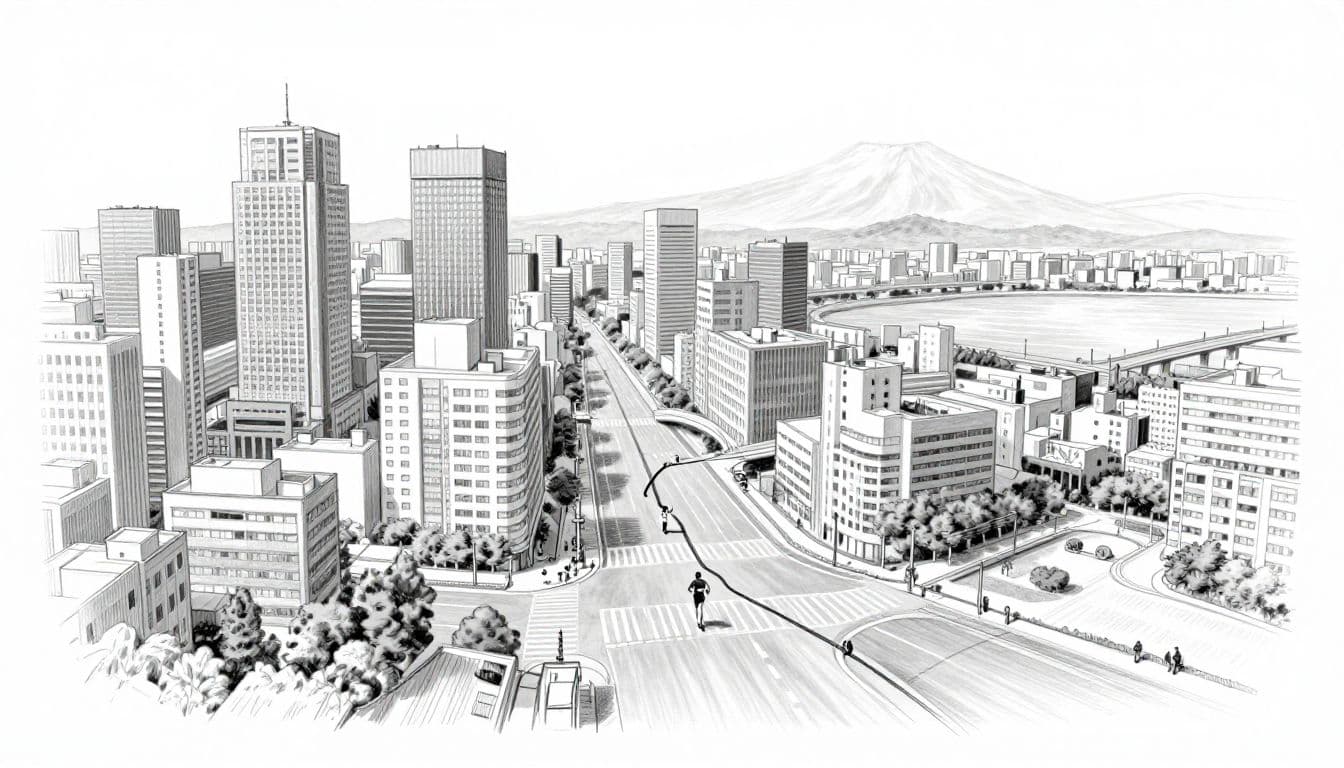
The Tokyo Marathon is widely considered one of the flatter major city marathons. It doesn’t have long mountain-style climbs, but the route still includes gentle rises, descents, ramps, and overpasses that can affect your rhythm.
A commonly cited estimate puts total ascent near 198 feet, with the course ranging from roughly 5 to 134 feet above sea level. Treat that figure as an estimate, not a guaranteed race-day measurement. Your total can change based on the map source, GPS device, route file, and whether the system counts small road changes.
What the elevation numbers mean
Elevation gain is the total amount of uphill running during the course. If you climb 20 feet, descend 10 feet, then climb another 20 feet, your total gain is 40 feet.
Elevation loss is the total amount of downhill running. Net elevation change only compares the starting elevation with the finishing elevation. It doesn’t count every rise and fall along the way.
Those measurements can tell different stories:
- Elevation gain shows how much climbing your legs complete.
- Elevation loss shows how much downhill running may load your quads.
- Net change shows whether the finish sits higher or lower than the start.
A course can finish lower than it starts while still containing several small climbs. That distinction matters when you plan your pacing.
Where Tokyo rises and falls
The race begins near the Tokyo Metropolitan Government Building in Shinjuku and generally heads toward Tokyo Big Sight in Ariake. The route moves through broad city streets before reaching the waterfront, so its overall direction trends downward toward a lower coastal finish.
That doesn’t mean you can run the opening miles aggressively. Early downhill sections may feel free, but braking with your quadriceps can create fatigue that appears much later. Small rises also arrive throughout the course, and runners often notice them more after 30 kilometers.
Some route files produce much higher totals than the commonly quoted 198-foot estimate. For example, one mapping source lists approximately 533 meters of ascent for a 2025 course file, while another estimates 60 meters. That large difference shows why the published Tokyo Marathon elevation estimate should guide your expectations, not dictate your race plan.
Check the latest official course map and elevation profile for your race year. Organizers can adjust roads, turns, and course certification details, while GPS data can smooth or exaggerate minor changes.
Tokyo is flat enough for efficient racing, but not so flat that elevation disappears from your pacing plan.
Run gentle climbs by effort rather than forcing your exact pace. Once the road levels out, return smoothly to goal pace instead of surging to recover every lost second.
Where the Tokyo Marathon Course Rises and Falls
Tokyo’s course looks flat when viewed from street level, but that view misses the small changes under your feet. Bridges, ramps, underpasses, junctions, and flyovers create short climbs that appear and disappear before they feel like traditional hills.
The route also changes character as it moves through the city. It starts in Shinjuku, crosses central Tokyo, reaches the historic areas around Asakusa, passes through Ginza, and continues toward the waterfront finish near Ariake and Tokyo Big Sight. Use the official Tokyo Marathon course map for the current route, since turns and finishing details can change between race editions.
Shinjuku and the opening miles
The race begins near the Tokyo Metropolitan Government Building in Shinjuku. Early streets feel broad and fast, with long straight sections that encourage runners to settle into goal pace immediately.
However, the opening route is not a single, perfectly level platform. Road junctions, ramps, and changes in street elevation can produce brief rises and descents. These features rarely demand a major pace adjustment, yet they can tempt you to surge while your legs still feel fresh.
The opening miles reward restraint. Let the crowd and downhill momentum settle before you decide that your pace is too easy.
Long central-city stretches
After Shinjuku, the course passes through long urban sections toward Nihombashi and the central districts. Tall buildings can make the road appear completely flat, while repeated short rises still interrupt your stride.
Some changes come from bridges and flyovers. Others occur where major roads pass beneath one another or rise toward an intersection. Each feature may last only a short time, but several small efforts can accumulate across a marathon.
A flat-looking road can still create elevation gain when it rises and falls repeatedly over short distances.
You may notice these changes more through effort than through sight. Your watch can show a slower pace on a rise, even when the road looks level. Keep your breathing controlled, shorten your stride slightly, and return to normal pace after the road levels.
Nihombashi, Asakusa, and Ginza
The turns near Nihombashi, Asakusa, and Ginza add mental variety to the middle portion of the race. These areas include dense intersections, wide avenues, and sections where the course changes direction around major roads.
Frequent turns can disrupt rhythm even when they add little climbing. Road furniture, cornering, and brief ramps may force small changes in cadence. Avoid treating every slower split as a problem that requires immediate correction.
Instead, judge the section by effort across several minutes. Smooth cornering and relaxed acceleration will protect more energy than chasing every second after a short rise.
Ariake and the final approach
Toward Ariake and Tokyo Big Sight, the course moves closer to the waterfront. Bridges, connecting ramps, underpasses, and large road junctions can create some of the final noticeable changes in elevation.
By this stage, fatigue makes modest rises feel larger. Hold steady effort, keep your posture tall, and resist the urge to attack a rise simply because the finish is approaching.
Before race day, compare the current official route with a reliable GPX file or elevation profile. Measurement results can vary, so use the data to locate changes in rhythm rather than to chase an exact Tokyo Marathon elevation gain total.
Why Small Hills Still Matter in a Fast Marathon
The Tokyo Marathon elevation gain is modest compared with a mountain race, but total climbing does not tell the whole story. A long, obvious climb lets you settle into a controlled effort. Tokyo’s short rises appear between turns, bridges, ramps, and crowded streets, so they can disturb your rhythm before you realize it.
Small grades change how you run
A major mountain climb demands sustained uphill work. Your pace drops, breathing rises, and you adjust your effort because the slope is impossible to ignore. Repeated small changes are different. Each one may last only seconds, yet every rise asks your calves, glutes, and cardiovascular system to produce extra force.
That extra work can affect running economy, which is the amount of energy you need to maintain a given pace. Uphill running increases propulsion demands and oxygen use, while downhill running places more braking stress on the legs, according to this review of uphill and downhill running.
Your cadence may shorten on a rise as you protect your stride. If you force the same pace, you may tighten your shoulders, breathe harder, or push off aggressively. Those small changes seem harmless early, but they can accumulate by 30 kilometers, when your ability to recover from each interruption is lower.
Run short rises by effort rather than staring at your pace. Shorten your stride slightly, keep your steps quick, and allow the split to slow by a few seconds. Once the road levels, return to pace gradually. A sharp surge costs more than the brief slowdown.
Downhills, congestion, and race-day conditions
A downhill can feel like free speed, especially during the early miles. However, accelerating too much forces your quadriceps to absorb more impact while they control your descent. That damage may not appear until the final 10 kilometers, when tired legs struggle to support your normal stride.
Use downhill sections to relax rather than sprint. Let gravity assist you, keep your body aligned over your feet, and avoid reaching forward with a braking stride.
Elevation is only one part of Tokyo’s difficulty. Crowds can narrow your choices and make smooth pacing harder. Turns interrupt your line, while congestion may force repeated accelerations. Wind near open waterfront sections can increase effort even when the road is flat. Rain, heat, or cold also changes how quickly fatigue arrives.
A low elevation total makes a fast time possible, but it doesn’t make a personal best automatic.
Build your race plan around effort bands instead of one rigid pace. Stay controlled through crowded early sections, protect your legs on descents, and respond calmly to wind or weather. After 30 kilometers, treat every rise as a pacing test, not an invitation to prove your strength. The best response is usually simple: maintain form, preserve breathing control, and wait for level ground before pressing again.
How Tokyo Compares With Other Major Marathons
Tokyo is one of the flatter major marathons, but “flat” doesn’t mean effortless. The course includes short rises, bridges, ramps, and net downhill sections that influence pacing without creating a sustained mountain-style climb.
That profile becomes clearer beside other well-known races. Tokyo generally offers a steadier rhythm than Boston, San Francisco, or New York City, while Berlin and Chicago also favor runners who prefer limited climbing.
Tokyo versus Boston and San Francisco
Boston places more emphasis on sustained elevation changes. The course includes the Newton hills and Heartbreak Hill, so runners must manage a demanding middle section before handling the downhill load that follows. The official Boston Marathon course shows why its reputation depends on more than a few brief ramps.
San Francisco is a sharper contrast. Its city streets include longer and steeper climbs, with descents that can place heavy stress on the quadriceps. Tokyo’s rises usually pass more quickly, allowing you to return to a consistent stride sooner.
That difference changes race preparation. Boston and San Francisco require dedicated hill strength and downhill conditioning. Tokyo still rewards strength, but your training should focus more on holding form through small interruptions and maintaining pace late in the race.
Tokyo versus New York City, Berlin, and Chicago
New York City is hillier than Tokyo, particularly across its bridges and rolling sections. The official New York City Marathon course also includes frequent turns and changing surroundings, which can interrupt rhythm even when a particular slope is modest.
Berlin and Chicago are closer comparisons for runners seeking a fast, relatively low-climbing course. Chicago’s organizers describe its route as flat and fast, and the official Chicago Marathon course information confirms that the race starts and finishes in Grant Park. Berlin has a similar reputation for limited climbing, although small elevation changes still appear across any large city route.
Course difficulty depends on more than total ascent. Weather, wind, turns, road surface, crowding, altitude, and net downhill sections can change how a race feels. A flat course with strong headwinds may demand more effort than a hillier race run in cool, calm conditions.
Use elevation to understand a course, but never use it as the only measure of difficulty.
Before choosing a goal race, compare the verified course map, current race information, and recent event conditions. For Tokyo, plan for a fast route with modest climbing, then account for the small rises and late-race fatigue that can make a supposedly flat course feel much harder.
How to Train for the Tokyo Marathon Elevation Profile
Tokyo’s modest elevation gain doesn’t require a hill-focused training plan. Your preparation should center on marathon-pace control, aerobic endurance, and efficient form, with enough rolling terrain to handle short rises without losing rhythm.
Use the official Tokyo Marathon course map to understand the route’s major sections. Then train for the way those changes affect your stride, not for a dramatic mountain climb that the race doesn’t contain
Build endurance before chasing hills
Long runs are the foundation of Tokyo Marathon preparation. They teach your body to maintain economical movement while fatigue grows, which matters more than running repeated steep intervals.
Beginners should increase weekly volume gradually and keep most long runs comfortable. Experienced runners can add quality, but recovery still protects the workouts that matter most. A tired runner gains little from forcing another hard hill session.
Include goal marathon pace during selected long runs once your base is ready. For example, you might run comfortably for 60 to 75 minutes, add 15 to 30 minutes at goal pace, then finish easily. Later, a more experienced runner could use a long run with several controlled marathon-pace blocks separated by easy running.
Avoid turning every long run into a test. The purpose is to develop endurance and pace discipline, not to prove fitness every weekend.
Practice short rises without forcing pace
Gentle rolling terrain is enough to prepare your legs for Tokyo’s brief climbs. During an easy run, allow your pace to slow slightly on each rise while keeping your effort steady. At the top, regain pace smoothly instead of sprinting to recover lost seconds.
A treadmill can provide another controlled option. Try six to eight repetitions of two minutes at a gentle incline, followed by two minutes at zero incline. Keep the effort moderate, and stop well before the workout changes into a race.
Strength work should stay simple and consistent. Twice weekly, when your schedule allows, include exercises that support the muscles handling small elevation changes:
- Calf raises and bent-knee soleus raises support lower-leg strength.
- Glute bridges and split squats train the glutes without requiring complex equipment.
- Hamstring curls or controlled single-leg hinges strengthen the back of the legs.
- Side steps with a resistance band help develop hip stability.
Maintain relaxed shoulders, a compact stride, and quick, light steps on rises. Your goal is to change effort without chasing every pace fluctuation. When the road levels, settle back into marathon pace gradually. That skill will help you use the Tokyo Marathon elevation profile as a manageable rhythm change rather than a reason to spend energy early.
Race-Day Pacing, Watch Data, and Smart Elevation Strategy
The Tokyo Marathon rewards controlled pacing more than aggressive hill running. Settle into your goal effort early, stay patient through the middle kilometers, and save your final push for the closing stages if your body still feels strong.
Small rises can make your pace drift briefly. That change is acceptable. Forcing an exact split uphill often raises your effort more than the slope deserves, which can leave you paying for those seconds later.
Choose Your Distance, Duration and Goal Time
Make three quick selections and open the exact plan built for your race target.
Looking for a Fully Personalized Training Plan?
The training plans above are an excellent choice if they match your goal. However, if you’d rather train with a plan built specifically around your current fitness, goal race, preferred training days, weekly mileage, and target finish time, our RDA Custom Training Plans provide a personalized solution. We also have running courses available for runners seeking to run faster from the mile to the marathon.
Why Choose a Custom Training Plan?
| Standard Training Plan | RDA Custom Training Plan |
|---|---|
| Follows a fixed schedule | Built around your schedule |
| Standard weekly mileage | Peak mileage customized for you |
| Fixed workout days | Train on the days you choose |
| Same structure for everyone | Designed around your current fitness |
| Static plan | Updated as your fitness improves |
| One-time purchase | Ongoing personalized coaching and support |
What You’ll Receive
- A training plan built specifically for your goal
- Personalized training paces
- Long runs, tempo runs, threshold workouts, interval sessions, recovery runs, and easy runs
- Peak weekly mileage matched to your experience level
- Flexible training schedule that fits your life
- Ongoing plan adjustments as your fitness improves
Ready to Train Smarter?
Stop guessing and start following a plan built specifically for you, your schedule, and your racing goals.
Pace short rises by effort
When the road tilts upward, shorten your stride slightly and keep your cadence light. Let your pace slow by a few seconds if needed, then return to goal pace after the road levels. Avoid surging at the top to recover every lost second.
Your breathing and perceived effort provide better guidance than one instant watch reading. During the first half, the effort should feel controlled enough that you could speak in short phrases. In the middle kilometers, maintain that same pressure even when fatigue and small climbs begin to test your rhythm.
Use course landmarks to divide the race mentally. Identify major areas such as Shinjuku, Nihombashi, Asakusa, Ginza, and Ariake, then assign each section a simple goal: settle, hold, or press. The official Tokyo Marathon course details can help you review the route before race week.
Use your watch without becoming its servant
Watch data can support your strategy, but it shouldn’t dictate every step. Check the display at planned moments, such as after aid stations, at kilometer markers, or when you reach a familiar landmark.
These metrics are useful when you read them together:
- Lap pace shows how the current section is unfolding, although short laps can exaggerate small changes.
- Average pace gives a broader view and helps prevent panic after a crowded turn or brief climb.
- Heart rate can reveal when effort is rising, especially if your pace looks normal on an incline.
- Perceived effort tells you how the course, weather, and fatigue are affecting your body.
GPS pace can jump around in central Tokyo, where tall buildings may interfere with satellite readings. Don’t panic over a brief spike or slow reading. Look for a trend across several minutes, then compare it with your breathing and stride.
A watch should confirm your decisions, not make every pacing decision for you.
Race-week preparation that supports execution
During race week, review the latest course information and check the current aid-station details. The organizers publish updates about available Tokyo Marathon aid stations, so know where you expect to drink or take fuel.
Before traveling to the start line, complete four practical checks:
- Choose a realistic pace band rather than one rigid target split.
- Review fueling points and decide which stations require a drink or gel.
- Test your shoes, socks, watch settings, and nutrition during training.
- Set your watch to show only the fields you can use calmly.
Once the final 10 kilometers begin, reassess instead of reacting emotionally. If your form remains stable, your breathing is controlled, and your stomach feels good, gradually press after 35 kilometers. Otherwise, protect your rhythm and keep moving efficiently to the finish.
Frequently Asked Questions
Tokyo’s modest elevation profile makes the course approachable, but elevation is only one part of marathon difficulty. Your preparation still needs to account for distance, weather, crowds, pacing, and race-day logistics.
Is the Tokyo Marathon a good choice for a first marathon?
Yes, the mostly flat route can appeal to first-time marathoners because it allows a more consistent rhythm than a course with long climbs. Gentle elevation changes also make it easier to practice steady marathon-pace running without planning around a major hill section.
Still, 26.2 miles demands serious preparation. Crowded streets may slow your early progress, weather can change your energy needs, and the race time limit requires you to maintain a practical pace. Entry is also not automatic, so review the current Tokyo Marathon race information before building your plans around the event.
Does the Tokyo Marathon have a steep hill?
Runners should expect short rises, ramps, and overpasses rather than one defining mountain-style climb. These features may interrupt your pace briefly, but they don’t create the sustained uphill effort found on hillier marathon courses.
Course details can change between race years, so the latest official map is the best source for current turns, road sections, and elevation information. Use third-party route files as planning aids, not as a replacement for the race organizer’s materials.
Why does my GPS watch show more elevation than another runner’s watch?
Two watches can record different Tokyo Marathon elevation gains on the same road. Satellite reception may vary between tall buildings, while barometric sensors respond to air-pressure changes, temperature, and device calibration.
Map data, smoothing settings, and auto-correction also affect the final total. One device may remove small fluctuations, while another counts them as climbing. Treat your watch as a useful training reference, then compare trends instead of arguing over a single race-day number.
Should I train on hills for a flat marathon?
Yes, gentle hills and controlled incline work can strengthen your calves, glutes, and hips. They also teach you to shorten your stride and manage effort when the road rises unexpectedly.
Most of your training should match your experience and marathon goal. Prioritize long runs, recovery, marathon-pace work, and fueling practice, then add modest hill training without allowing it to disrupt the main plan.
Is a flatter course always faster?
A flat profile can support faster running, but it doesn’t guarantee a fast finish. Wind, rain, temperature, crowded sections, frequent turns, road width, fatigue, fueling, and pacing can affect your time more than a few small rises.
A runner who protects energy early may beat someone who attacks every flat kilometer. Use the course’s low elevation to maintain efficiency, not as permission to start beyond your planned effort.
Where can I find the most accurate Tokyo Marathon elevation profile?
Start with the official Tokyo Marathon website and the current race-year course materials. The organizer’s entry and participant guidelines are also useful for confirming current race information before travel and race week.
If you compare a third-party elevation profile, check that it follows the official route and race year. Watch uploads can reveal useful patterns, but they remain estimates because devices process elevation data differently.
Conclusion
The Tokyo Marathon is a relatively flat major marathon, which helps runners settle into a consistent rhythm and pursue a fast finish. However, the course isn’t perfectly level. Small rises, ramps, bridges, and descents can interrupt your stride, while late-race fatigue can make modest elevation changes feel far more demanding than they did early in the race.
Because GPS devices and mapping tools calculate elevation differently, no single number tells the whole story. Use the current official course information to identify likely changes in rhythm, then build your plan around steady effort, disciplined early pacing, practiced fueling, and controlled downhill running. A brief pace change on an incline matters less than wasting energy to correct it.
Train consistently, respect the full marathon distance, and prepare for the course you will actually race. Tokyo’s fast profile gives you a strong setting for a personal best, but your result will depend on how well you protect your energy and execute your plan when the final kilometers begin.


