

Tokyo Marathon Course Guide: Route, Elevation, Landmarks and Pacing Strategy
The Tokyo Marathon course takes you through a striking cross-section of the city, starting beneath the towering Tokyo Metropolitan Government Building in Shinjuku and finishing near Tokyo Big Sight in Ariake. Between those points, you’ll run past major sights, busy avenues, historic neighborhoods, and long stretches where smart pacing matters more than excitement.
A strong race plan requires more than memorizing landmarks. You need to understand the course layout, where the difficulty comes from, how to control your pace, and where spectators can reach you without disrupting your rhythm. The official route can change, so confirm the latest map and race guide before race day.
Next, I will trace the current course and identify the sections that deserve the most attention. Be sure to book your Tokyo Marathon hotels early.
Key Takeaways
- The Tokyo Marathon course starts in Shinjuku and finishes near Tokyo Big Sight in Ariake, crossing central districts and major landmarks along the way.
- Use controlled pacing early, because crowded opening roads and long straight sections can make runners spend energy too soon.
- Treat aid stations, turns, bridges, and exposed avenues as planned checkpoints for hydration, effort, and mental focus.
- Review the official Tokyo Marathon course map before race day, since organizers may update route details, logistics, or access information.
- Plan transportation, bag drop, meeting points, and spectator locations before the race, not while you’re rushing toward the start.
Tokyo Marathon Course: How the Route Runs From Shinjuku to Tokyo Big Sight
The standard Tokyo Marathon course covers 42.195 kilometers on a point-to-point route across the city. It begins at the Tokyo Metropolitan Government Building in Shinjuku, travels east and south through central Tokyo, then returns toward the waterfront for the finish near Tokyo Big Sight in Ariake.
The broad roads and long straight sections give runners room to settle into a rhythm. However, the route’s changing scenery can make the race feel shorter than it is, so use the official Tokyo Marathon race information to confirm the latest schedule, time limits, and course details before race day.
Where the Tokyo Marathon Starts and Finishes
The start area sits around the Tokyo Metropolitan Government Building, surrounded by Shinjuku’s dense high-rise district. Runners should arrive with enough time for security checks, bag drop, toilet stops, and the walk to their assigned starting block. Morning crowds can move slowly, especially near major train stations and the entrances to the race area.
Your bib determines your starting wave or block. Follow the signs and staff directions rather than trying to move forward to meet friends. Enter your assigned area early, because access routes may close as the start approaches. The race begins in waves, so your official start time may differ from the first gun.
The finish is near Tokyo Big Sight in Ariake, on the eastern waterfront. The exact finish-line layout, runner exit, baggage collection area, and meeting zones can change between editions. Check the official Tokyo Marathon entry information for the current runner flow before you travel.
Plan your post-race transportation before the race starts. You may need to walk through a controlled finish area before reaching a station, bag pickup point, or meeting location. Set a clear reunion point away from the immediate finish zone, and keep your phone, transit payment method, and a light recovery layer accessible.
The Main Tokyo Neighborhoods Along the Route
The course moves through several distinct parts of Tokyo, and each one gives the race a different feel. After leaving Shinjuku, runners head toward Iidabashi and the early central Tokyo roads, where broad avenues replace the tight visual walls of the skyscraper district.
The route continues toward Ueno, then reaches Asakusa and the Kaminarimon area. The historic streets, temple district, and large spectator presence create one of the most memorable sections of the race. Soon after, Nihombashi brings older commercial streets and a more central business-district atmosphere.
Ginza follows with wide avenues, major department stores, and dense crowds. Hibiya then offers another open urban stretch before the course heads south toward Shinagawa. That out-and-back section gives runners a clear sense of the field’s movement and places them among some of Tokyo’s busiest streets.
After the long return toward the east, the route enters Ariake and the waterfront district. The buildings spread out, the air can feel more exposed, and Tokyo Big Sight comes into view near the finish.
Timing mats, aid stations, toilets, medical support, and time limits are positioned along the course. Their exact locations can change, so confirm them in the latest runner guide rather than relying on an older map.
The Most Important Landmarks and Turning Points on the Marathon Route
The Tokyo Marathon course becomes easier to manage when you treat its landmarks as checkpoints, not just sightseeing stops. Each location can help you judge progress, reconnect with your race plan, or find supporters without staring at your watch every few minutes.
What to Expect in Asakusa, Ginza, and Nihombashi
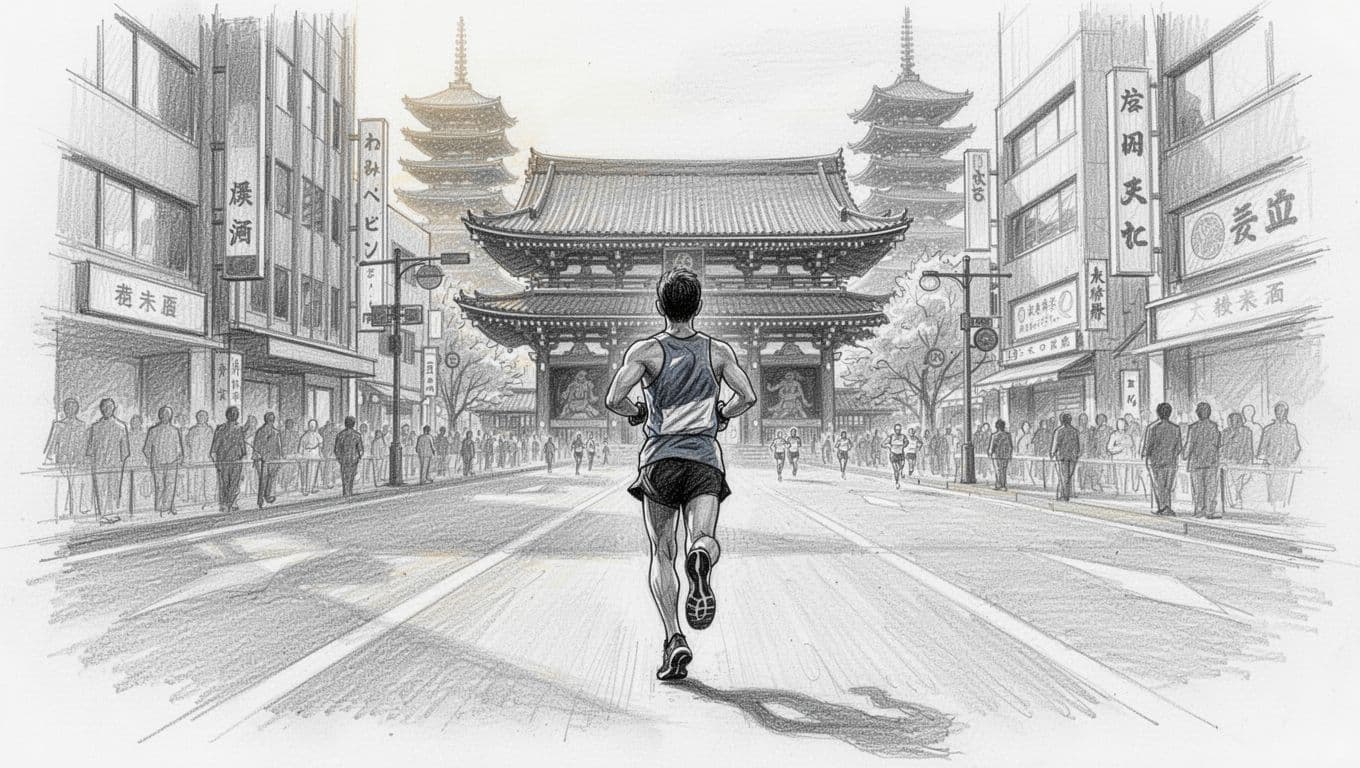
After the early roads around the Tokyo Metropolitan Government Building and Iidabashi, the course reaches Ueno Hirokoji before turning toward Asakusa. The atmosphere changes quickly. Sensoji and Kaminarimon Gate bring a traditional Tokyo setting, with temple architecture, lantern shapes, and dense crowds close to the road.
That visual lift can arrive at the perfect time. You have settled into the race, yet the halfway point remains far away. Use Asakusa as a progress marker and a reminder to keep your effort controlled. Excitement can make your pace jump before you notice it.
Nihombashi follows with broad commercial streets and a denser business-district feel. The buildings, intersections, and spectators create a strong sense of movement. If friends are watching, these central sections are practical meeting points because the route is recognizable and public transportation gives supporters several access options. They should agree on an exact location before race morning, since large crowds make last-minute phone calls unreliable.
Ginza adds another burst of energy. Wide avenues, major storefronts, and packed sidewalks can make the kilometers pass quickly. However, the same energy can pull you into someone else’s race. Keep your breathing relaxed, maintain your planned effort, and avoid accelerating simply because the road feels fast.
For a current visual reference, compare your planned spectator locations with this Tokyo Marathon attractions map. The exact course layout and access rules can change, so runners should still follow the latest official race information.
The best landmark is one you attach to a task: check your posture in Asakusa, confirm your effort in Nihombashi, and settle your rhythm through Ginza.
The Shinagawa Turnaround and the Long Finish-Run-In
Hibiya Park provides another useful reference before the course heads south toward the Shinagawa turnaround. Reaching Shinagawa means you’ve moved well beyond halfway, but it doesn’t mean the demanding work is finished. The turnaround creates an out-and-back feel, because runners retrace part of the route toward Hibiya, Ginza, and Nihombashi.
That return can test your focus. You may see runners who are farther ahead, supporters who have already cheered, and familiar streets that once felt closer to the finish. The route looks known, yet your legs now have far less margin for careless pacing.
Break the final stretch into short targets:
- Reach the turnaround and reset your shoulders.
- Get back to Hibiya while protecting your effort.
- Use Ginza and Nihombashi as separate checkpoints rather than one long section.
- After the final central streets, focus on the approach toward Ariake and Tokyo Big Sight.
The waterfront finish-run-in can feel more exposed as the buildings spread out and the road offers fewer dramatic landmarks. Hold your pace through this quieter visual stretch. Tokyo Big Sight is a powerful finish reference, but keep working until the course directs you across the line. Use each landmark to measure progress, then return your attention to the next turn, aid station, and controlled stride.
Tokyo Marathon Elevation and Pacing: Where Runners Should Save Energy
The Tokyo Marathon is often viewed as a fast course because it has long, runnable roads and no sustained mountain climb. Still, “flat” doesn’t mean effortless. Small rises, bridges, frequent turns, crowded opening streets, wind, rain, heat, and late-race fatigue can all affect your pace.
The best approach is even effort, not rigid speed. Start slightly slower than goal pace if the opening is crowded or conditions are difficult. Once the field spreads, settle into a controlled rhythm and save your strongest racing for the final 10 kilometers.
How to Break the Course Into Manageable Race Segments
A 42.195-kilometer race can feel overwhelming when you treat it as one long task. Divide the Tokyo Marathon course into broad checkpoints, each with its own purpose.
- Shinjuku to Ueno: Protect the opening. Crowded roads, excitement, and the initial downhill feel can make goal pace seem too easy. Run by relaxed effort, keep your stride compact, and allow the field to separate.
- Ueno through Asakusa: Settle into marathon rhythm. Use Asakusa as a mental checkpoint, but don’t let the cheering crowds pull you into an unwanted surge. Check your shoulders, breathing, and cadence.
- Nihombashi and Ginza: Hold steady through the central neighborhoods. These roads can feel fast because of the wide avenues and loud spectators. Keep your effort even rather than racing each turn or landmark.
- Hibiya to Shinagawa: Stay patient past halfway. The Shinagawa section is a useful test of control because fatigue is beginning to appear, yet the finish remains distant.
- The final waterfront approach: Race the last 10 kilometers in smaller pieces. Focus on reaching the next aid station, maintaining posture, and responding to fatigue before your form breaks down.
For a beginner, the first goal is to keep the opening effort comfortable and reach halfway without strain. An experienced recreational runner can use these neighborhoods to stay close to planned marathon effort without chasing every kilometer split. A personal-best runner should control the first 5 kilometers, then settle near goal pace only when the road and field allow it.
Your GPS watch can help, but don’t obey every unstable reading. Tall buildings may interrupt satellite accuracy, especially around Shinjuku and other dense areas. Use lap pace, elapsed time, effort, and official kilometer markers together. If your watch suddenly shows a pace far faster or slower than your breathing suggests, hold your effort instead of reacting.
Common Pacing Mistakes on a Fast City Course
Fast-looking roads often invite poor decisions. Correct these habits before race morning:
- Starting too quickly: Begin slightly below goal pace or at controlled marathon effort. The time you appear to lose early is easier to recover than the energy you spend.
- Weaving through runners: Choose a clear line and accept small delays. Constant lateral movement adds effort and disrupts your rhythm.
- Reacting to cheering crowds: Let the noise lift your focus, not your speed. Keep the same breathing pattern through Asakusa and Ginza.
- Taking turns sharply: Slow a fraction before each corner, then accelerate smoothly. Sharp turns waste momentum and load the legs.
- Ignoring early hydration: Take small, planned drinks before thirst becomes urgent, especially in warm or humid weather.
- Waiting until the final third to address fatigue: Shorten your stride, relax your hands, and correct posture as soon as effort rises. Small adjustments at 30 kilometers are more useful than a desperate fix at 38.
Your pacing plan should leave enough strength for the roads after Shinagawa. Save energy early, run the middle with discipline, and let the final waterfront kilometers reveal how much work you have left.
How to Prepare for the Tokyo Marathon Course Before Race Day
You don’t need to run every street in Tokyo to prepare well. The goal is to reproduce the course’s demands: controlled effort, long periods on pavement, frequent turns, crowded starts, changing wind, and the ability to keep moving when major landmarks compete for your attention.
Training for the Course Without Running in Tokyo
Build your preparation around steady long runs that teach you to hold an even effort for several hours. Practice starting conservatively, settling into marathon rhythm, and staying relaxed when your legs become heavy. Ordinary roads are enough, especially when you occasionally include intersections, gentle hills, bridges, or exposed stretches.
Add controlled marathon-pace blocks as your fitness improves. For example, run an easy warm-up, complete several miles at planned marathon effort, then finish easily. Later in your training, place marathon-pace work inside a long run so you practice finding rhythm after fatigue has already accumulated.
A treadmill can help when weather or safety limits your options. Use a small incline for part of the run, then return to flat running and finish with a faster, controlled block. You can also change direction outdoors at regular intervals to rehearse the repeated turns found on a city course.
Include at least a few workouts that finish faster than they begin. A long run with the final 20 to 30 minutes at steady or marathon effort teaches you to respond when the course becomes more demanding late in the race. Keep the finish controlled, not a sprint.
Practice the mental details, too. Run through busy areas without weaving, slow slightly before turns, and return your attention to breathing after an exciting landmark. The Tokyo Marathon course rewards discipline more than perfect route imitation.
Fueling, Hydration, Shoes, and Clothing Choices
Race day should confirm your plan, not introduce it. Test gels, sports drinks, water timing, socks, shoes, and layers during long runs and marathon-pace sessions. If a product causes stomach trouble at home, it won’t become safer after 30 kilometers of racing.
Use official aid station information as a backup, but follow the fueling and hydration routine you’ve practiced. Carry what you need when permitted, decide where you expect to drink, and take small amounts consistently rather than waiting until thirst becomes severe. Check the official Tokyo Marathon entry guidelines for current baggage procedures and runner requirements. The Tokyo Marathon FAQ can also clarify questions about liquids, checked baggage, and race-day procedures.
Weather can change your clothing decision. A cool morning may require a disposable outer layer before the start, while wind, rain, or unexpected warmth can alter what feels comfortable during the race. Choose clothing for the actual forecast, not assumptions about Tokyo in a particular month.
Before leaving for the start, confirm these details:
- Pack the shoes, socks, and race clothing tested in training.
- Check your bib, timing chip, travel route, breakfast, and wake-up time.
- Protect your sleep by organizing gear and transportation the night before.
- Review baggage rules, prohibited items, start-area access, time limits, aid stations, and medical procedures.
- Prepare a weather backup, such as an extra layer or rain protection, without changing your footwear at the last minute.
A practiced plan gives you room to handle crowds, turns, wind, and fatigue without making hurried decisions.
Race-Day Logistics and the Best Ways to Watch the Tokyo Marathon
Race morning rewards simple decisions made early. Runners and supporters should allow extra time for transportation, security, walking, and crowd control because the Tokyo Marathon course passes through busy parts of the city. Check the latest official race communications for maps, closures, baggage rules, access restrictions, and spectator guidance before leaving your hotel.
How Runners Can Move Through the Start and Finish Areas
Start with an early departure. Crowded stations, longer walks, security procedures, and restricted roads can all slow your journey to Shinjuku. Follow the marked route once you reach the event area, then complete each required check, including security screening, bib verification, and baggage drop if you use it.
After that, find your assigned starting block well before the scheduled start. Staff and signs will direct you toward the correct entrance, so don’t try to cross barriers or move into another block to meet friends. Your bib and official Tokyo Marathon entry guidelines provide the current requirements.
Protect your warm layers while waiting. A disposable outer layer can help on a cold morning, but follow the event’s instructions for anything you leave behind. Keep your phone, transportation payment method, and essential fueling items accessible. Then settle your breathing, check your watch, and avoid spending energy on last-minute movement.
The finish area may feel confusing after 42.195 kilometers. Expect a controlled exit, with barriers and designated routes that direct runners away from the finish line. Follow staff instructions, collect checked belongings only where directed, and keep moving at an easy pace until you reach the recovery area.
Drink gradually, take any planned nutrition, and add a dry layer if conditions require it. Arrange a meeting point outside the busiest finish-area streets before race morning. The official finish map may restrict movement for spectators, and some roads can remain closed after the final runners pass. Review the official finish-area information before choosing where to reunite.
Good Spectator Spots Along the Route
Supporters usually have a better day when they choose one or two viewing points instead of chasing a runner across Tokyo. Asakusa offers memorable scenery and strong crowd energy near the historic temple district, while Ginza and Nihombashi provide central locations with recognizable streets and several possible approaches. Hibiya is another practical choice, especially for supporters who want to watch a runner pass before and after the Shinagawa section.
Each location has tradeoffs. A popular area may offer atmosphere but also tighter sidewalks and slower movement. A quieter stretch may make it easier to identify your runner, yet it can take longer to reach by foot after leaving a station. Road closures can block familiar crossings, and a route that looks short on a map may require a long detour.
Build the plan around the runner’s expected pace. Allow time to exit the first viewing area, walk to transit, wait through crowds, and reach the second location before the runner arrives. Leave a generous margin because even a strong marathoner can reach a landmark earlier or later than predicted.
Supporters can also use the official event tracking system when available. Enter the runner’s details in advance, keep the phone charged, and treat tracking updates as estimates rather than exact arrival times. Confirm the latest spectator cheering information, then choose safe roadside spaces without blocking runners, volunteers, or emergency access.
Choose Your Distance, Duration and Goal Time
Make three quick selections and open the exact plan built for your race target.
Looking for a Fully Personalized Training Plan?
The training plans above are an excellent choice if they match your goal. However, if you’d rather train with a plan built specifically around your current fitness, goal race, preferred training days, weekly mileage, and target finish time, our RDA Custom Training Plans provide a personalized solution. We also have running courses available for runners seeking to run faster from the mile to the marathon.
Why Choose a Custom Training Plan?
| Standard Training Plan | RDA Custom Training Plan |
|---|---|
| Follows a fixed schedule | Built around your schedule |
| Standard weekly mileage | Peak mileage customized for you |
| Fixed workout days | Train on the days you choose |
| Same structure for everyone | Designed around your current fitness |
| Static plan | Updated as your fitness improves |
| One-time purchase | Ongoing personalized coaching and support |
What You’ll Receive
- A training plan built specifically for your goal
- Personalized training paces
- Long runs, tempo runs, threshold workouts, interval sessions, recovery runs, and easy runs
- Peak weekly mileage matched to your experience level
- Flexible training schedule that fits your life
- Ongoing plan adjustments as your fitness improves
Ready to Train Smarter?
Stop guessing and start following a plan built specifically for you, your schedule, and your racing goals.
Frequently Asked Questions
The Tokyo Marathon course looks straightforward on a map, but race-day conditions can change how it feels. These answers cover the practical questions that often matter after you study the route, landmarks, and pacing strategy.
Is the Tokyo Marathon course flat?
The Tokyo Marathon course is generally considered fast and has no major mountain climb. Still, runners face smaller rises, bridges, frequent turns, wind exposure, crowded roads, and the growing fatigue that arrives after 30 kilometers.
Elevation alone doesn’t determine difficulty. Judge the course alongside the weather, your pacing discipline, fueling plan, and ability to stay relaxed when your legs become heavy. A flat route can still punish anyone who starts too quickly.
Where does the Tokyo Marathon course start and end?
The standard start is at the Tokyo Metropolitan Government Building in Shinjuku. The course finishes near Tokyo Big Sight in Ariake, creating a point-to-point route across central Tokyo and the waterfront district.
Layouts, access routes, baggage areas, and runner exits can change between race editions. Before traveling, review the current Tokyo Marathon race information and follow the event organizer’s instructions for your specific year.
What are the hardest parts of the Tokyo Marathon?
The opening crowd can make the first kilometers feel awkward, especially if you need to weave around runners or resist an early surge. The long middle miles then test your patience, while the Shinagawa turnaround can feel demanding because the finish still seems far away.
For many runners, the final kilometers are the hardest. Your experience depends on pacing, weather, hydration, fueling, and training history, so one runner may struggle in the opening crowd while another holds steady until Ariake.
Can spectators see a runner at more than one point?
It may be possible near central Tokyo with careful planning. However, road closures, crowded trains, restricted crossings, and walking time make it safer to choose two well-planned viewing spots than to chase a runner across several locations.
Asakusa, Nihombashi, Ginza, and Hibiya can work for different race plans, but supporters need generous travel time. They should also review the official spectator cheering information, then agree on a backup meeting point in case phone service or tracking updates fail.
How long does it take to complete the Tokyo Marathon?
Completion time depends on your ability, pacing, weather, and the official time limit. The current entry information lists a seven-hour marathon limit for the standard event, but runners shouldn’t rely on an old course guide.
Cutoff points, start times, and time-limit procedures can change. Check the latest Tokyo Marathon entry guidelines before race day, especially if you expect to finish close to the limit.
Is the Tokyo Marathon course suitable for first-time marathoners?
Yes, the route can suit a first marathon because it is relatively fast, well-supported, and filled with clear landmarks. The large field, international travel, crowded start, strict procedures, and long race day still demand careful preparation.
Complete a sensible training plan and practice your fueling, pacing, clothing, and race-morning routine. Arrive knowing how you’ll reach Shinjuku, where you’ll store your bag, and how you’ll meet your supporters after the finish.
Conclusion
The Tokyo Marathon course gives runners a changing view of the city and a clear test of race discipline. The skyline around Shinjuku builds early excitement, Asakusa brings historic character, Ginza lifts the noise, and the Shinagawa turnaround reveals how much energy you have saved for the closing kilometers toward Tokyo Big Sight.
Prepare to run the route with control. Start calmly, fuel before fatigue takes hold, use landmarks as checkpoints rather than reasons to surge, and follow the latest official guidance for the course, start, finish, and aid stations. The route has fast potential, but its crowds, turns, weather, and race-day procedures demand careful preparation. Runners who respect both sides of the challenge give themselves the best chance to finish strong.


