

10 Perks of Tension Release Exercises for Runners
Have you been looking for more information regarding the benefits of tension release exercises for endurance athletes?
If so, then welcome to RunDreamAchieve. It is awesome that you have arrived here to my site.
My hope is that these running tips in this post and the fitness resources located here will be what you were looking for.
Be sure to subscribe to the RunDreamAchieve YouTube channel. My focus there is on making new videos there weekly to help runners like you surpass your training and racing goals.
Build Your Running Performance System
Move from research to action with training, recovery, nutrition, pacing, and performance tools built for runners.
More Guides for This Runner Goal
As runners, we often focus on our speed and distance, but we can’t overlook the importance of stretching. Tension Release Exercises are key to keeping our muscles relaxed and ready for the next run. They help prevent injuries, reduce soreness, and improve overall performance. In this article, we’ll explore ten effective tension release exercises that every runner should consider adding to their routine.
Tension Release Exercises Post Overview
- Tension Release Exercises help prevent muscle tightness after running.
- Doing these stretches can reduce the risk of injury.
- These exercises improve flexibility and overall performance.
- Incorporating stretches into your routine can alleviate post-run soreness.
- Holding each stretch for 10-30 seconds is recommended.
1. Toe Touch
Okay, so the toe touch. Seems simple, right? But when you’re a runner, and your hamstrings are tighter than guitar strings, it can be a real challenge. I remember the first time I tried to do a proper toe touch after a long run – I think I only made it to my shins! But hey, practice makes perfect, and it’s worth it for the relief it brings.
Here’s how I usually do it:
- Stand with your feet either together or a bit apart – whatever feels most stable.
- Keep your knees straight, but don’t lock them. You want a little give.
- Slowly bend at your hips, lowering your head toward your knees. Try to keep your back as straight as you can; it’s more about the hamstring stretch foot strengthening exercises than touching your toes, honestly.
- Reach for your toes, or just let your hands hang. Relax your neck.
- Hold it for about 20-30 seconds. Breathe!
- Slowly rise back up. No sudden movements here.
The toe touch isn’t just about flexibility; it’s about releasing tension in your hamstrings and lower back. It’s a great way to cool down after a run and prevent stiffness the next day.
And yeah, it can also improve the flexibility of the hamstrings. It’s a win-win.
2. Wall Push
Yes, the wall push is super simple and is one of many popular tension release exercises, but don’t underestimate it! I find it’s great for when my calves are feeling super tight after a run. It’s one of those stretches you can do pretty much anywhere, which is a huge plus.
Here’s how I usually do it:
- Stand facing a wall, about an arm’s length away.
- Put your hands on the wall at shoulder height.
- Step one foot back, keeping your back leg straight.
- Lean into the wall, feeling the stretch in your calf.
- Hold for about 30 seconds, then switch legs.
I’ve noticed that doing this stretch regularly really helps prevent those annoying calf cramps I sometimes get mid-run. Plus, it’s a nice way to cool down and ease the tension after pushing hard.
It’s also good to remember that stability exercises are important for runners. They help prevent injuries by strengthening your core and back, which is essential for maintaining good form. So, while you’re doing your wall pushes, think about incorporating some other stability work into your routine too!
3. Downward Dog
Downward Dog is a yoga pose and one of the most popular tension release exercises that’s great for stretching your calf muscles. I know, yoga might sound a little out there for runners, but trust me, it helps!
Here’s how to do it:
- Start on your hands and knees, making sure your hands are right under your shoulders and your knees are under your hips. Basically, you’re setting up like you’re about to crawl.
- Walk your feet back a bit so your body forms a straight line from your head to your heels – like a plank, but on your hands and knees.
- Now, slowly push your hips up toward the ceiling. You want your body to look like an upside-down “V”. Keep your arms straight and try to keep your elbows close to your ears. Your palms should be flat on the floor.
- Keep your head, neck, and back in a straight line. Don’t let your head droop down.
- Try to press your heels down toward the floor. You might not be able to get them all the way down, and that’s okay. Just go as far as you comfortably can.
- Hold this position for a few seconds, breathing deeply.
- Slowly lower your hips back down and return to the starting position on your hands and knees.
I find that Downward Dog is especially helpful after a long run. It really helps to loosen up my hamstrings and calves, which tend to get super tight. Plus, it’s a nice way to calm down and focus on my breathing after pushing myself hard.
Get your supply of NuviaLab Relax today by clicking here.
4. Heel Lifts
Heel lifts are super simple tension release exercises, but don’t let that fool you. They’re great for building strength in your calves and improving ankle stability. I remember when I first started running, my ankles felt so weak. Adding these into my routine made a huge difference. Now, I feel much more stable on my runs, especially on uneven terrain.
Here’s how I usually do them:
- Stand with your feet flat on the ground.
- Slowly rise up onto the balls of your feet, lifting your heels as high as you comfortably can. Try not to lock your knees.
- Hold for a second or two at the top, really feeling the squeeze in your calf muscles.
- Slowly lower your heels back down to the ground.
- Repeat this 10-15 times for a set. I usually do 3 sets.
Heel lifts are a fantastic way to prevent lower leg injuries like strains and tendonitis. I’ve definitely noticed a difference since incorporating them. They’re also easy to do anywhere, anytime. You can even do them while waiting in line at the grocery store (though you might get some weird looks!).
I’ve found that doing these regularly has helped me avoid those annoying calf cramps that used to plague my longer runs. Plus, stronger calves mean more power when you’re pushing off the ground, which can translate to faster times. So, yeah, don’t underestimate the power of a simple heel lift. You can improve ankle mobility with this exercise.
5. Seated Twist
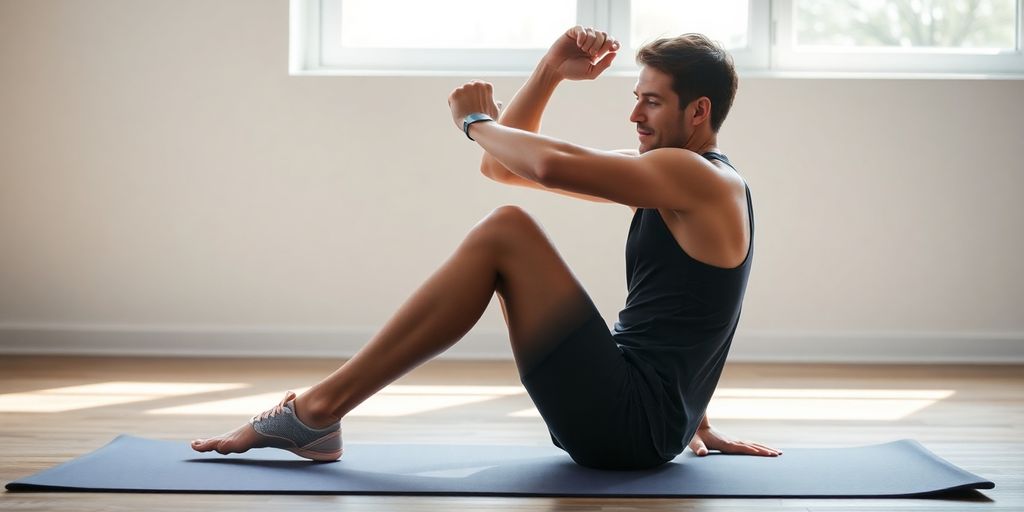
The seated twist might look like easy tension release exercises, but trust me, it can really get into those tight spots after a long run. I usually do this one after my Sunday long runs, and it feels amazing. It’s all about targeting those glutes and lower back muscles that get super tense when you’re pounding the pavement.
Here’s how I usually do it:
- Sit on the floor with your legs straight out in front of you.
- Bend your left knee and place your left foot on the outside of your right thigh.
- Place your right elbow on the outside of your left knee and twist your torso to the left, using your elbow to gently deepen the twist.
- Hold the position for about 30 seconds, breathing deeply, and then repeat on the other side.
I find that focusing on my breath really helps me get the most out of this stretch. Inhale as you lengthen your spine, and exhale as you twist a little deeper. It’s a game changer!
It’s not just about flexibility, though. Strong glutes can really help support your leg muscles when you’re running. So, this stretch is a win-win!
6. Knee Hug
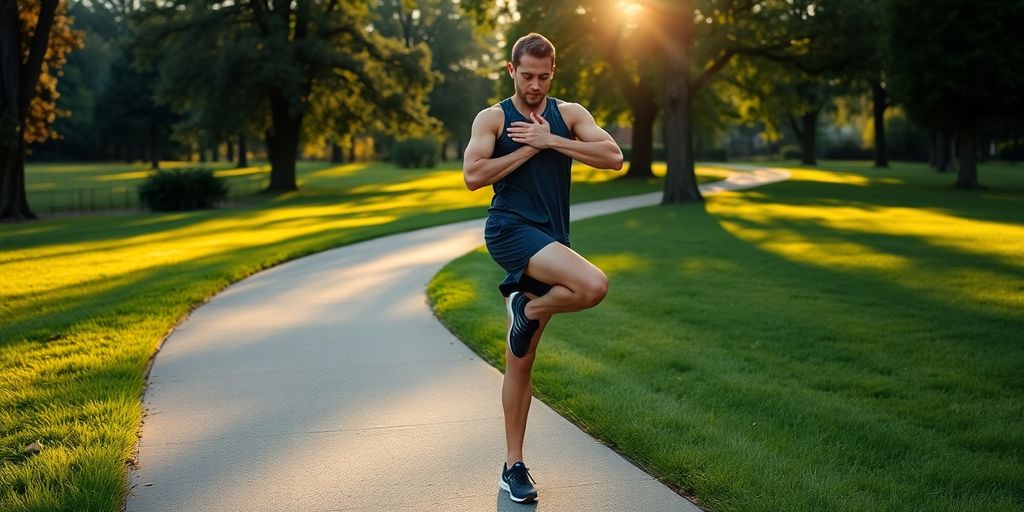
The knee hug might seem super basic tension release exercises, but trust me, it’s a lifesaver for releasing tension in your lower back and hips. After a long run, everything down there can feel super tight, and this is a simple way to get some relief. Plus, you can do it pretty much anywhere!
Here’s the deal: you’re basically just bringing your knee up to your chest. But there’s a little more to it than that. You want to make sure you’re not just yanking your leg up there. Think about gently pulling it in and really focusing on the stretch in your glutes and lower back. Hold it for a few seconds, breathe, and then release. Repeat on the other side. It’s amazing how much better you’ll feel after just a few reps.
Here’s a quick guide:
- Lie on your back with your knees bent and feet flat on the floor.
- Bring one knee towards your chest, clasping your hands around your shin or behind your thigh.
- Gently pull your knee closer to your chest, feeling a stretch in your lower back and hip.
- Hold for 20-30 seconds, then slowly release and repeat on the other side.
I find that doing this stretch before bed really helps me relax and prevents that stiff feeling in the morning. It’s become a part of my nightly routine, and I definitely notice a difference when I skip it.
Get your supply of NuviaLab Relax today by clicking here.
It’s also good to remember to keep your core engaged a little bit while you’re doing this. It helps stabilize your spine and prevents you from overdoing the stretch. You don’t want to pull anything! Just a gentle, controlled movement.
If you’re feeling extra tight, you can even rock gently from side to side while you’re holding the stretch to get a little extra massage action going on. This can help release even more tension. Remember to breathe deeply throughout the stretch. Holding your breath will only make you feel more tense. If you are looking to improve your quad flexibility, this is a great exercise to pair with other stretches.
7. Child’s Pose
Child’s Pose is like a mini-vacation for your body. They are super relaxing tension release exercises and can really help release tension, especially after a tough run. I find it’s one of the best ways to calm down and center myself. It’s also great for stretching your lower back, hips, and thighs. Plus, it gently massages your internal organs, which is a nice bonus.
Here’s how I usually do it:
- Start on your hands and knees.
- Bring your big toes together and sit back on your heels. If your hips don’t quite reach your heels, that’s okay, just go as far as you comfortably can.
- Separate your knees slightly, about hip-width apart.
- Exhale and lower your torso between your knees. Extend your arms out in front of you, palms down. You can also rest your forehead on the floor. If that’s uncomfortable, you can use a pillow or blanket for support. The goal is to relax and let gravity do its thing.
- Hold the pose for as long as feels good, usually 30 seconds to a few minutes. Focus on breathing deeply and letting go of any tension you’re holding in your body.
I’ve noticed that holding Child’s Pose for even a few minutes can make a big difference in how I feel. It’s like a reset button for my body and mind. It’s especially helpful after a long run when my muscles are tight and my mind is racing. I also like to do a simple adjustment to deepen the stretch.
To come out of the pose, slowly walk your hands back toward your body and sit up gently. Take a moment to notice how you feel. Child’s Pose is a great way to end your stretching routine or to take a break during a busy day.
8. Hip Flexor
Tight hip flexors? Yeah, runners know all about that. It’s like a badge of honor… or maybe just a sign we sit too much when we’re not running. Seriously though, these muscles, connecting your thighs to your torso, can get super tight, leading to lower back pain and messing with your running form. So, let’s loosen them up!
Stretching your hip flexors isn’t just about feeling good; it’s about preventing injuries and improving your stride. Think of it as an investment in your running future.
Here’s a simple kneeling hip flexor stretch you can try:
- Start in a kneeling position, one knee on the ground and the other foot flat in front of you.
- Gently push your hips forward, feeling a stretch in the front of your hip. Make sure you’re not arching your back too much.
- Hold for about 30 seconds, then switch sides. Repeat a few times.
Another great option is the standing hip flexor stretch. You can also try incorporating walking lunges into your routine. These movements target the muscles around the hips, promoting flexibility and mobility. Remember to listen to your body and don’t push yourself too hard, especially when you’re just starting out. Consistency is key!
9. Quad Stretch
We all know we should do them, but how often do we actually make it a priority? If you’re a runner, tight quads can lead to all sorts of problems, from knee pain to hip issues. Trust me, I’ve been there. Taking a few minutes to stretch them out can make a world of difference.
Here’s a simple standing quad stretch you can try:
- Stand up straight, feet hip-width apart. If you need to, use a wall or chair for balance.
- Bend one knee and bring your heel towards your butt.
- Grab your foot with the same-side hand. Make sure your knee is pointing down towards the floor.
- Gently pull your heel closer to your butt, feeling the stretch in the front of your thigh. Hold for about 30 seconds, and don’t forget to breathe!
- Switch legs and repeat.
I find that doing this stretch after a run really helps to prevent that tight, achy feeling the next day. It’s also great for improving your flexibility over time. Just remember to listen to your body and don’t push it too hard, especially if you’re just starting out.
Another variation is the kneeling quad stretch. Start in a kneeling position, then bring one foot forward so that knee is at a 90-degree angle. From here, you can deepen the stretch by gently leaning back, feeling it in the quad of the kneeling leg. This one can be intense, so ease into it. Remember to keep your core engaged to protect your lower back. Incorporating quad stretches into your routine can really help with overall mobility and reduce the risk of injury.
10. Seated Hamstring
Tight hamstrings can really mess with your running, leading to lower back and knee issues. That’s why incorporating a seated hamstring stretch into your routine is super beneficial. It is one of many powerful tension release exercises that can help you. It’s a simple way to improve flexibility and reduce tension in those muscles.
Here’s how to do it:
- Sit on the floor with one leg extended straight out in front of you. Bend the other leg, placing the sole of your foot against your inner thigh.
- Keep your back straight and slowly lean forward from your hips, reaching towards your extended foot.
- Hold onto your foot, ankle, or shin, wherever you can comfortably reach. You should feel a stretch along the back of your extended leg.
- Hold this position for about 30 seconds, breathing deeply.
- Release the stretch and repeat on the other leg.
Doing this stretch regularly can help improve your range of motion and prevent injuries. It’s a great way to cool down after a run or to loosen up tight muscles any time of day.
For a variation, try using a ball under hamstring while seated to target specific trigger points. This can provide even deeper relief and improve flexibility over time.
Wrapping It Up
In conclusion, incorporating tension release exercises into your running routine can really make a difference. These stretches help ease muscle tightness, improve flexibility, and even boost your overall performance. Plus, they can keep injuries at bay, which is a huge win for any runner. So, whether you’re just starting out or you’ve been running for years, don’t skip those stretches. Take a few minutes after your run to unwind and let your body recover. Your legs will thank you later!
Frequently Asked Questions
What are tension release exercises?
Tension release exercises are stretches that help relax your muscles after running. They make your body feel better and help prevent soreness.
Why should runners do these exercises?
Runners should do these tension release exercises to loosen tight muscles, improve flexibility, and reduce the risk of injuries.
How long should I hold each stretch?
You should hold each stretch for about 10 to 30 seconds. This gives your muscles enough time to relax.
Can I do these exercises if I’m not a runner?
Yes! Anyone can do these stretches, not just runners. They are good for anyone who wants to relax their muscles.
When is the best time to do these stretches?
The best time to do these stretches is right after running when your muscles are warm.
What if I feel pain while stretching?
If you feel pain while stretching, stop immediately. Stretching should feel good, not painful. You can try a gentler version of the stretch.


