Taipei Marathon Travel Guide: Everything You Need for Race Weekend
Cool morning air settles over Taipei as bright city streets fill with runners gathering before sunrise, their breath visible beneath the glow of streetlights and neon signs. Race weekend starts long before the starting gun, especially when you’re traveling from overseas or supporting someone who is racing.
This Taipei Marathon travel guide helps you plan the full trip, including registration, flights, hotels, race-day logistics, pacing, fueling, recovery, and post-race sightseeing. You’ll also find practical guidance for traveling companions, so everyone can enjoy Taipei while staying on schedule for the race.
Because race rules, dates, course maps, start times, and entry details can change, confirm the final information on the official Taipei Marathon website before booking nonrefundable travel or making your race plan. With those details checked, you can organize your arrival, protect your training, and enjoy the city without adding avoidable stress to race week. First, let’s look at the key race details and registration steps you need to handle before booking your trip.
Key Takeaways
- Confirm the official race date, entry rules, course map, start time, and bag-drop details before booking travel.
- Arrive early enough to recover from your flight, adjust to Taipei time, and complete a relaxed shakeout run.
- Choose lodging near MRT access, race transport, restaurants, and recovery options rather than focusing on location alone.
- Protect your race plan with familiar shoes, tested fuel, steady pacing, adequate sleep, and a simple post-race recovery schedule.
- Build sightseeing around your energy levels, with flexible plans for race day and the morning after.
Taipei Marathon Travel Guide: Plan Your Trip Before You Fly
A smooth Taipei Marathon weekend starts months before race morning. Confirm the current December race date, entry process, start time, course, and transportation plan on the official race website before booking nonrefundable travel. Registration windows, lottery procedures, qualifying standards, and event formats can change between editions.
Use this simple planning timeline:
- Several months out: Enter the race, check Taiwan’s visa and entry requirements for your passport, and compare travel insurance policies.
- Two to four months out: Book flights and Taipei Marathon hotels with easy MRT access. Reserve earlier if the race overlaps with holidays, concerts, exhibitions, or another major city event.
- One month out: Review race instructions, confirm your booking details, and check whether the organizers have updated the course or bib pickup process.
- Race week: Download the latest notices, plan your route to the start, and keep your schedule flexible around weather and travel delays.
Registration, race rules, and documents to save
Create a race folder on your phone and keep an offline copy of every important file. Save your confirmation email, registration number, bib pickup instructions, identification requirements, emergency contacts, transportation details, and the official course map. A screenshot can help when mobile service is slow or you’re standing in a crowded expo.
Check whether the current edition offers only the full marathon or also includes a shorter event. The two distances may have different start times, cutoffs, courses, and entry rules. Read the terms carefully because bib transfers, timing chips, baggage limits, and qualifying standards often have strict policies. Never assume another runner can collect your bib without written permission.
Keep your passport, travel documents, hotel confirmation, and insurance information together. Also, verify entry rules through Taiwan’s official immigration guidance, since requirements depend on your nationality, passport validity, and trip length.
What December weather means for marathon training
Taipei usually has mild December temperatures, but humidity, rain, and wind can change how the morning feels. Early starts may feel cool, while the afternoon becomes warmer, especially after several hours outdoors.
Wear breathable race clothing and bring a disposable warm layer for the starting area. Pack a lightweight rain shell or plastic cover for your bag, and choose socks and shoes that you’ve already tested in wet conditions. Avoid trying new gear on race day.
During training, practice in similar weather when possible. A forecast helps you pack, but repeated runs in humidity or light rain teach you more about chafing, fluid needs, and clothing choices. That preparation gives your race plan a stronger foundation than checking the temperature once before bed.
Where to Stay in Taipei for an Easy Race Weekend
Your hotel affects more than race-day travel. The right base can protect your sleep, simplify airport transfers, provide reliable meals, and give your travel companions places to explore. Choose your neighborhood based on your top priority: the shortest trip to the start, the easiest arrival, or the best sightseeing access.
Best Taipei neighborhoods for runners and travel companions
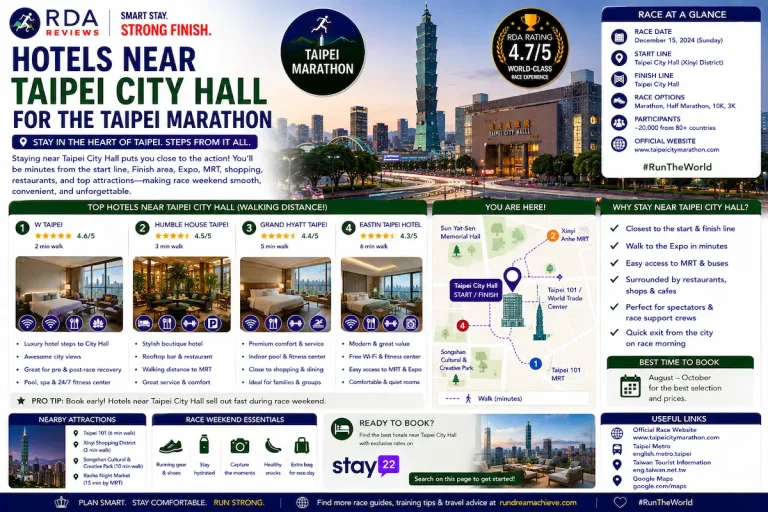
Taipei City Hall and Xinyi are practical choices when race access matters most. The area has major shopping centers, restaurants, wide streets, and strong MRT connections. Travel companions can stay busy while you rest, and runners can reach race-related areas without crossing the whole city. Xinyi can feel busy, so request a room away from major roads, nightlife, and elevators.
Taipei Main Station works well for travelers who value transportation. The station connects Taipei’s MRT and rail networks, and the Taoyuan Airport MRT makes airport arrivals easier. You can also reach other cities after the race without changing hotels. The area is busy and commercial, but its convenience often outweighs its atmosphere during a short race weekend.
For food and recovery, consider Zhongshan or Daan. Zhongshan has cafes, restaurants, shops, and pleasant streets for an easy pre-race walk. Daan offers access to parks and a more residential feel, which can make it easier to fit in a short shakeout run or post-race stroll. Both areas suit companions who want more local dining than mall-based options.
Songshan may fit travelers who prefer a calmer base. It still offers MRT access, restaurants, and useful connections, but the pace can feel less hectic than Xinyi or Taipei Main Station. However, check the race transport plan carefully before booking. A quieter neighborhood is helpful only if the start remains easy to reach.
Race routes and start areas can change between editions. Check the current start and finish locations before choosing a hotel, then confirm the exact walking route rather than relying on a map pin alone.
How to get from Taoyuan Airport or Songshan Airport to your hotel
Most international visitors arrive at Taoyuan International Airport. The Taoyuan Airport MRT is often the simplest option when your hotel is near Taipei Main Station or a connecting MRT line. Regular airport buses reach more parts of the city, while taxis provide door-to-door service when you have bulky luggage or arrive tired.
A prebooked transfer can help families, groups, or runners carrying large suitcases and gear bags. At Songshan Airport, central Taipei is much closer, and the airport connects directly to the MRT network, making many hotel areas easy to reach.
Buy or load an EasyCard for convenient use on eligible public transportation. Before traveling, check current routes, operating hours, and service updates through official airport and Taipei Metro sources. Late-night arrivals may require a taxi or transfer, especially after the MRT and airport MRT stop running.
Above all, avoid a long first-day journey before the race. A shorter transfer gives you more time to hydrate, eat familiar food, unpack your race gear, and sleep. When booking, choose a refundable room if possible, request a quiet location, confirm elevator hours, and ask whether early breakfast or hot water will be available on race morning.
Race Expo, Bib Pickup, and Getting Around Taipei
Race-week logistics should feel simple by the time race morning arrives. Confirm the latest expo schedule, start location, transportation instructions, and road-closure notices before you leave home. International runners should avoid arriving at the last minute, since flight delays, jet lag, and unfamiliar transit can quickly disrupt a tight plan.
What to expect at the Taipei Marathon expo
Bib pickup is usually held before race morning so organizers can complete identity checks, distribute participant materials, and reduce congestion at the start. Check the official Taipei Marathon website and your registration email for the current expo venue, opening hours, required identification, and collection rules. Procedures can change each year.
Bring your passport or the identification document listed in your race instructions, along with your registration confirmation and race details. At the expo, staff may verify your identity before giving you:
- Your race bib and timing chip instructions.
- A race shirt, participant bag, or other event items.
- Course information, start-zone details, and baggage guidance.
- Sponsor samples, displays, and product booths.
Before leaving, inspect your bib carefully. Confirm that your name, race distance, number, wave, and other printed details match your registration. Ask staff about anything unclear, especially timing-chip placement, bib attachment, bag drop, start corrals, or course cutoffs.
The expo can tempt you into last-minute purchases, but protect your race plan. Avoid unfamiliar shoes, supplements, gels, or recovery products right before the marathon. Use only equipment and nutrition you tested during training.
MRT strategy, EasyCard use, and race-day road closures
Practice the route from your hotel to the expo and start area before race morning. Identify the nearest MRT station, the correct exit, and a backup route. Also check the first-train schedule because early marathon starts may leave little room for delays.
An EasyCard makes eligible MRT, bus, and other transit trips easier. Load it before race day, but carry a small amount of cash for emergencies, food, or a taxi. Save your hotel address in Chinese on your phone and keep a screenshot available for taxi drivers.
Road closures can affect buses, taxis, and rideshare trips, even when the route looks short on a map. Follow the race organizer’s official transportation guidance instead of assuming normal traffic patterns will apply. Allow extra time for crowds, station transfers, and walking between exits and restricted streets.
A simple race-weekend schedule
Use this flexible outline, then adjust it to the confirmed race date and expo hours:
- Friday: Arrive, check in, hydrate, unpack, and take a short walk.
- Saturday morning: Complete bib pickup, review the course, and take a brief shakeout run if your legs feel ready.
- Saturday afternoon: Eat familiar, carb-focused meals, prepare your bib and clothing, and avoid lengthy sightseeing.
- Saturday night: Set two alarms and go to bed early, allowing for jet lag and weather concerns.
- Sunday morning: Follow your tested breakfast, reach the start early, and keep warm until your wave begins.
- Sunday afternoon and evening: Recover with fluids, food, gentle movement, and rest. Choose relaxed sightseeing only if your energy and weather allow it.
Race Morning Logistics, Course Strategy, and Pacing
Race morning should feel familiar, even in an unfamiliar city. Prepare your equipment, breakfast, transport, and pacing plan before bed so you can focus on running when Taipei wakes up.
Your night-before checklist
Lay out the complete race kit beside the door. Attach your bib securely to your shirt, confirm the timing chip is positioned as instructed, and check your shoes, socks, clothing layers, watch, and any race belt. Pack breakfast supplies, fluids, your phone, ID, transit card, hotel key, and a small post-race layer for the cooler finish area.
Set two alarms, then confirm the route from your hotel to the start. Check the first MRT service, walking time, station exits, and a backup taxi option. Plan to arrive early enough to use the toilets, locate bag drop, enter your corral, and warm up without rushing. Large city races create long lines and crowded access points, so a short trip on the map can take much longer in practice.
Keep your breakfast familiar and simple. Avoid last-minute experiments with food, caffeine, supplements, shoes, socks, or gels. Race morning is a poor time to test a product because stomach trouble, blisters, or an unexpected energy spike can damage an otherwise strong marathon.
How to pace a city marathon without burning out early
Even pacing means keeping your effort steady rather than racing the first miles. Crowded opening sections may force you to slow slightly, especially through tight turns, bridges, or busy roads shown on the current course map. Let the field settle, stay relaxed, and avoid weaving through runners to chase every split.
Use a preplanned pace range based on your training and goal. Start at the controlled end of that range, then settle into goal effort once the course opens. In the first half, judge breathing, posture, and muscle tension more than your watch. If conditions become hot, humid, rainy, or windy, slow down enough to protect your effort.
Poor sleep and unexpected hills also deserve an honest adjustment. A marathon goal is a guide, not a command. Hold steady through the middle miles, then push during the final section only if your body still responds well.
Fueling and hydration from breakfast through the finish
Eat a familiar, carbohydrate-focused breakfast with enough time to digest. During the race, take carbohydrates at the intervals you practiced on long runs, and use water or sports drink according to your pace, sweat rate, and the weather. Carry one backup gel in case an aid station is crowded or supplies are difficult to reach.
Exact carbohydrate and fluid needs vary for every runner. Follow the product information provided at aid stations, and practice the full plan before race weekend. Avoid overdrinking plain water, which can create its own risks, and never try an untested gel, drink, or supplement during the Taipei Marathon.
Eating, Recovering, and Enjoying Taipei After the Finish
Your Taipei Marathon weekend doesn’t end at the finish line. The first few hours should protect recovery, while the rest of the day gives you a relaxed way to enjoy the city without turning tired legs into a second endurance event.
The first few hours after the marathon
Use this simple routine once you cross the finish line:
- Keep walking slowly for several minutes. Gentle movement helps you avoid stopping abruptly, but don’t force extra distance or stretching. Massage and stretching may feel comfortable, yet neither guarantees that you’ll prevent soreness.
- Replace fluids and carbohydrates. Sip water or an electrolyte drink, then eat a carbohydrate-rich snack. A banana, rice ball, sports drink, or familiar recovery product can work while your appetite returns.
- Change into dry clothes. Wet clothing can leave you cold, especially if the weather is cool or rainy. Put on dry socks, a warm layer, and comfortable shoes.
- Eat a balanced meal. Choose carbohydrates and protein, such as rice with eggs or chicken, beef noodle soup, dumplings with fruit, or a rice bowl with vegetables.
- Shower and rest. A warm shower can help you feel comfortable, but keep the temperature moderate. Afterward, elevate your legs, limit unnecessary walking, and take a nap if your schedule allows.
- Check how you feel. Unusual pain, dizziness, confusion, chest symptoms, trouble breathing, severe swelling, or symptoms that worsen require medical attention. Use the race’s medical services immediately when needed, and seek emergency care rather than trying to walk back to your hotel.
Taipei food and sightseeing that work with tired legs
Choose one easy-to-reach neighborhood instead of planning a packed itinerary. Taipei’s night markets offer flexible portions, while beef noodle soup, dumplings, rice bowls, fruit, and soy milk provide familiar ways to replace energy. Convenience stores also make it easy to find water, sports drinks, bananas, rice snacks, yogurt, and simple meals near your hotel.
If your stomach feels sensitive, stay with foods you’ve eaten during training. Check ingredients carefully if you have allergies, and choose busy, reputable vendors with good food-handling practices.
Use MRT trips, short walks, cafés, museums, and scenic viewpoints to keep your day manageable. Xinyi and Taipei 101 work well when you want restaurants and views in one area. Daan Forest Park offers a calm stroll, while temples and museums provide places to sit between short outings. A night market can be enjoyable after a nap, but leave whenever your legs or stomach ask for rest.
Hot springs may suit the following day if you feel steady, although heat can worsen dehydration. Save a longer day trip for later in your visit, when you can walk comfortably and sleep well. Recovery should shape the itinerary, not compete with it.
Your Taipei Marathon Budget and Packing Checklist
A well-planned Taipei Marathon trip protects both your race performance and your wallet. Prepare your race kit first, then build a budget from real quotes rather than relying on a single package price.
What to pack for a December marathon in Taipei
Keep your race-day essentials in your carry-on luggage. If checked bags are delayed, you should still have everything needed to race.
Pack these items:
- Passport, travel documents, hotel confirmation, insurance details, and emergency contacts.
- Race confirmation, identification required for bib pickup, and offline copies of race instructions.
- Bib, safety pins or a bib belt, timing-chip supplies, race belt, watch, and a small backup battery.
- Proven race shoes and at least two pairs of tested running socks. Never bring brand-new footwear for race day.
- Breathable race clothes, a warm-up layer, a hat, and clothing for changing temperatures.
- A lightweight rain jacket or poncho, plus a waterproof cover for your bag and electronics.
- Tested gels, chews, electrolyte products, and familiar breakfast foods.
- Prescription medication, basic first-aid supplies, blister care, and any approved supplements.
- Phone, watch charger, power bank, and a suitable travel adapter.
- Comfortable recovery clothes, dry socks, supportive shoes, and easy layers for after the finish.
- A small laundry kit with detergent sheets, a sink stopper, and a lightweight drying line.
Check Taiwan’s current customs rules before packing food, medication, or supplements. Some products require declarations or may be restricted, even when they’re legal at home.
How to control costs without hurting race-day performance
Estimate your total trip cost in a simple spreadsheet. Enter the actual race entry fee, round-trip flight quotes, hotel rate multiplied by the number of nights, airport transfers, MRT and bus spending, daily meals, sightseeing, insurance, and any race gear you still need. Add a 10% to 15% buffer for taxis, rain-related changes, lost items, baggage problems, or unexpected delays.
| Budget category | Practical way to estimate it |
|---|---|
| Race entry | Use the confirmed fee for your race distance |
| Flights | Compare several dates and include baggage charges |
| Hotel | Multiply the nightly rate by every night, including taxes |
| Transport | Add airport transfers, MRT trips, and one backup taxi |
| Meals | Set a daily amount for race week and race day |
| Sightseeing | List entrance fees, tours, and planned day trips |
| Insurance | Price medical, cancellation, and baggage coverage |
| Race gear | Include shoes, fuel, clothing, and replacement items |
Save safely by booking flights and hotels early, using an EasyCard, eating some breakfasts from convenience stores, and choosing a room near public transportation. A hotel with breakfast can reduce both meal costs and race-morning decisions when the serving time fits your schedule.
Avoid cutting costs on proven shoes, sleep, hydration, reliable transport to the start, or medical and travel coverage. A cheaper room far from the MRT may cost more in fatigue, taxi fares, and missed sleep. Reserve a small cash buffer, then spend it when comfort or race-day reliability matters.
Common Taipei Marathon Travel Mistakes to Avoid
Even a well-planned Taipei Marathon travel guide can miss the small decisions that shape race weekend. Most problems are easy to prevent when you handle logistics early and keep your race plan simple.
Mistakes that make race morning harder than it needs to be
Arriving late for bib pickup creates pressure before the race begins. Check the official pickup schedule, bring the required ID, and collect your bib as early as your travel plans allow. Keep a screenshot of your confirmation and race instructions in case mobile service is slow.
A hotel far from the start can work, but only with a clear transport plan. Check the exact MRT station, exit number, first-train schedule, walking route, and a backup taxi option. Crowded trains and road closures can turn a short trip into a long wait, so build in extra time.
Race morning is also the wrong time to solve basic problems. Find the toilets as soon as you reach the start area, because lines may be longer than expected. Carry only what you need, and prepare your clothing, shoes, bib, breakfast, fuel, ID, transit card, and phone the night before.
Pack your race essentials in your carry-on rather than checked luggage. Your shoes, tested nutrition, watch, race clothing, and required documents should stay with you if an airline delays your suitcase.
Mistakes that damage pacing and recovery
Starting too fast can make the first miles feel exciting, but it spends energy you need later. Begin near the controlled end of your planned pace range, then settle once the field spreads out. If humidity, rain, heat, or wind changes the effort, adjust your goal without regret. A smart adjustment shows experience, not failure.
Don’t overtrain during race week. Extra intervals, long runs, or hard shakeouts won’t create fitness before Sunday. Keep your legs fresh with rest and short, easy movement. During the race, follow the fueling schedule practiced in training instead of waiting until hunger arrives. Sip fluids steadily, because drinking too much at once can upset your stomach.
Unfamiliar foods can also create problems before the start. Choose familiar meals, especially on Saturday evening, and save adventurous dishes for after the race. Check current course information, aid-station details, road closures, and start instructions rather than relying on an old map or a previous race report.
After finishing, skip the hours-long walking tour. Eat, change clothes, hydrate, and rest before taking a short outing. Return to hard training only when normal walking feels comfortable and soreness has eased. Recovery is part of disciplined marathon execution, not time lost from training.
Frequently Asked Questions
A few practical questions often remain after you book your flight, hotel, and race entry. These answers can help you make better decisions before your Taipei Marathon weekend begins.
How many days should I stay in Taipei for the marathon?
Plan on at least four nights, especially when traveling internationally. Arriving by Thursday gives you time to recover from the flight, collect your bib, adjust to the time zone, and handle unexpected delays without rushing.
A longer stay also gives you more freedom after the race. You can schedule temples, food tours, hot springs, or day trips once your legs feel ready instead of cramming everything into race weekend.
Can I run the Taipei Marathon if I don’t speak Mandarin?
Yes. Taipei is accustomed to international visitors, and race instructions often include English information. Still, save your hotel name, address, and race location in Chinese on your phone because that can make taxi rides and directions much easier.
Learn a few useful phrases, such as “thank you,” “excuse me,” and “where is the bathroom?” Translation apps can help with menus, transportation questions, and medical concerns, but keep screenshots of essential details for times when internet access is unreliable.
What should I do if I become sick before race day?
Protect your health before your goal time. If you develop a fever, vomiting, severe diarrhea, chest symptoms, or breathing trouble, skip the race and seek medical advice rather than forcing the start.
For mild stomach discomfort or fatigue, rest, drink fluids, and choose simple foods. Travel insurance with medical coverage can help you find care and manage costs if an illness affects your plans.
Can my family or friends watch the race?
Spectators can usually support runners near accessible roads, major intersections, or finish-area viewing zones, but the best locations depend on the current course and road closures. Your group should agree on one meeting point before race morning because phone service and crowd movement can be unpredictable.
Share your bib number, expected finish range, and hotel details with your supporters. After you finish, follow the organizer’s instructions before leaving the event area, then meet somewhere away from the busiest gates.
Should I extend my trip after the Taipei Marathon?
Extending your stay by two or three nights can improve the trip. The day after a marathon, choose low-walking activities, then add longer sightseeing plans once stairs and normal walking feel comfortable.
Taipei also makes a useful base for exploring Taiwan by rail. If you plan to visit another city, schedule that journey after your first recovery day and reserve a seat when your itinerary requires one.