

Suunto Vertical vs Garmin Enduro 3: The Ultimate Ultrarunning Watch Battle
Standing at the start line of a 100-mile race, the last thing you want to worry about is whether your watch will survive the distance. Choosing the right multisport tool is a common challenge for ultra-marathoners who need reliability during grueling efforts. At RunDreamAchieve, we help athletes push past their limits by providing the precise gear and training knowledge they need to succeed.
The Suunto Vertical vs Garmin Enduro 3 debate highlights two of the most popular choices for endurance runners today. Both devices offer impressive battery life and mapping capabilities, but they prioritize different features for your time on the trail.
This comparison looks at the battery performance, navigational accuracy, and overall durability of each model to help you decide which one belongs on your wrist. Read on to discover which watch matches your specific training needs.
Battery Life and Solar Charging Performance
When you sign up for a race that stretches past the 24-hour mark, your watch becomes your lifeline. You depend on it for pacing, nutrition alerts, and finding your way through unfamiliar terrain at night. The Suunto Vertical vs Garmin Enduro 3 comparison often comes down to this specific necessity. Both companies have pushed the boundaries of power efficiency, but they approach the challenge of long-distance energy management in distinct ways.
Build a Smarter Running Watch Setup
Compare the right watch, understand the training data that matters, and choose a model that fits your workouts, racing, recovery, and long-term goals.
More GARMIN and Running Watch Guides
Which Watch Lasts Longer on the Trail?
The math behind these two watches is staggering when you compare them to the standard GPS devices of a few years ago. In full GPS mode, both units provide enough juice to handle the vast majority of 100-mile races without needing a mid-run recharge.
The Garmin Enduro 3 stands out for its high-performance battery architecture. It delivers up to 90 hours of battery life with GPS enabled and can reach even longer durations when you adjust power settings. This is a massive improvement that allows a runner to tackle a 100-miler, navigate through the night, and still have enough power to track recovery data the next day without rushing to a wall outlet.
The Suunto Vertical is equally capable for ultra-endurance athletes. It offers roughly 60 to 90 hours of GPS tracking depending on the accuracy mode you select. While the numbers are similar on paper, the real-world experience highlights a different philosophy.
Suunto focuses on maintaining high-accuracy dual-band tracking for the duration of its battery life. This means you do not have to sacrifice data quality to cross the finish line of a multi-day event. If you need a watch that keeps ticking through a 200-mile effort in remote mountains, both devices handle the load, but the Garmin often ekes out a win for those who want the absolute maximum hours on a single charge.
How Solar Charging Impacts Your Race Day
Solar technology acts as a supplemental power source rather than a complete replacement for a charging cable. When you are out in the sun, the glass on your watch converts light into energy to extend your battery time. This feature provides a safety net during long, exposed stretches of a race.
On the Garmin Enduro 3, the solar ring is highly efficient. It excels when you spend hours above the tree line or in open desert environments where direct sunlight hits the face of the watch. In these conditions, you gain significant extra time, which is helpful if you forget your portable power bank or if the race lasts longer than anticipated.
The Suunto Vertical also utilizes solar harvesting to boost its endurance. However, the practical benefit depends entirely on your environment. If you run under heavy forest canopy or primarily at night, the solar charging feature remains dormant.
It functions best as a tool for the dedicated ultra-runner who spends weeks training in bright, clear conditions. While solar charging is an impressive engineering feat, it is not a reason to skip carrying a power bank for your race. You should view it as an insurance policy that keeps your navigation running during those final, critical hours of a long, sun-drenched event.
Mapping and Navigation Features for Ultrarunners
When you step off the beaten path, your watch becomes your primary connection to the route. Whether you face dense forest canopy or exposed high-alpine ridges, you need a device that clearly shows where you are and, more importantly, where you need to go.
Both the Suunto Vertical and the Garmin Enduro 3 offer robust map support, yet they deliver this information with different design philosophies. Understanding these differences helps you select a tool that matches your personal navigation style during long hours on the trail.
Offline Maps and Global Trail Coverage
Downloading maps for a race or a training trip should be simple. The Suunto Vertical allows you to download detailed, free outdoor maps via the Suunto app. You select the region you need, sync your watch over Wi-Fi, and the device stores the data locally.
The map clarity on the Suunto interface leans toward a clean, minimalist aesthetic. It uses high-contrast lines and terrain shading that remain legible even under the harsh glare of direct midday sun. Because the map data is vector-based, you can zoom in and out without losing detail, which helps when you encounter a complex network of switchbacks.
Garmin handles region management through its Map Manager, which is accessible directly on the watch or through the Garmin Explore ecosystem. The Enduro 3 provides incredibly dense map data that includes contour lines, point-of-interest markers, and even specific trail types.
Garmin maps often feel more detailed than the Suunto counterparts. While this offers more context, some runners find the screen feels crowded if they zoom out too far. The display brightness and resolution on the Enduro 3 maintain sharp edges, making it easy to distinguish a drainage path from a ridgeline trail at a quick glance.
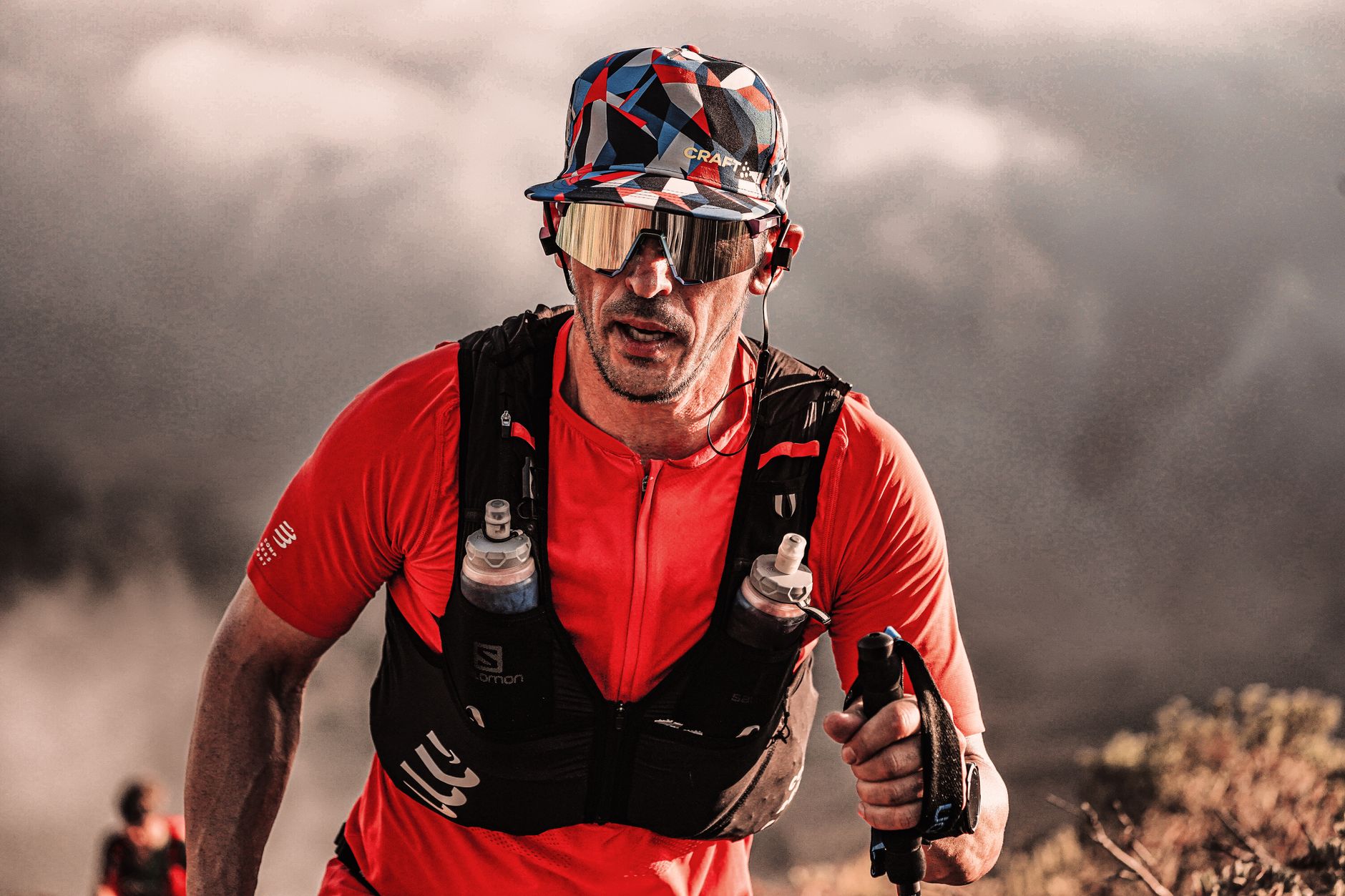
Photo by RUN 4 FFWPU
Navigating Remote Wilderness With Confidence
Reliability determines whether you reach the finish line or find yourself lost in the backcountry. Both watches excel at breadcrumb tracking, which creates a digital trail of your movement in real time.
This feature provides a simple safety net if you wander off-course and need to retrace your steps. The Suunto Vertical focuses on high-precision tracking, ensuring that your breadcrumb line matches the terrain exactly. When you follow a pre-loaded GPX file, it provides clear visual cues about upcoming turns.
The Garmin Enduro 3 adds advanced turn-by-turn navigation alerts that feel more aggressive and proactive. It tracks your distance to the next intersection and displays clear directional arrows on the screen before you reach a decision point. If you drift off your planned route, the watch alerts you immediately, helping you correct your course before you lose significant time.
For an ultrarunner who demands constant awareness, the Garmin system feels like an active co-pilot. If you prefer a quieter, simpler display that keeps you focused on your rhythm rather than the screen, the Suunto approach often feels less intrusive.
Both devices support high-accuracy dual-band GNSS tracking, which maintains a lock on your position even in deep canyons or thick tree cover where signal interference usually plagues standard watches. Your choice hinges on whether you want a comprehensive dashboard of navigation data or a simplified, high-contrast guide that helps you move forward without distraction.
Design Durability and Wearability
Rugged terrain demands equipment that survives the elements. When you compare the Suunto Vertical vs Garmin Enduro 3, you are choosing between two distinct approaches to build quality. Both watches exist to endure long-term abuse, yet they feel different on the wrist. Your comfort during a 50 or 100-mile race depends on how well the watch integrates with your gear.
Material Selection and Structural Integrity
The Suunto Vertical features a stainless steel or titanium bezel, depending on the model you select. It feels dense and solid, providing a sense of security against rock strikes. Suunto manufactures this watch in Finland, focusing on a minimalist construction that resists impact. The sapphire crystal glass sits flush with the bezel, which helps protect the screen from direct frontal hits when you stumble on rocky trails.
Garmin constructs the Enduro 3 with a lightweight fiber-reinforced polymer case and a titanium bezel. It prioritizes a low-profile weight to reduce wrist fatigue over multiple days. The sapphire lens is standard, which guards against deep scratches when you scramble through brush or brush against canyon walls.
While both devices meet military-grade standards for thermal, shock, and water resistance, the Enduro 3 feels slightly more streamlined. The Suunto Vertical carries a bit more heft, which some runners prefer for the feeling of substance, while others favor the barely-there sensation of the Garmin.
Button Feedback and Screen Visibility
Tactile feedback matters when you wear gloves or struggle with cold fingers at high altitudes. The Suunto Vertical uses three large, prominent buttons. You can press them easily even with heavy winter gear because they provide a clear, mechanical click. This design prevents accidental presses while ensuring you feel every interaction with the watch interface.
The Garmin Enduro 3 relies on a five-button layout. These buttons have a shorter travel distance but offer a distinct response. You might find the extra buttons useful if you prefer direct access to specific features like map zooming or music controls. In direct sunlight, both screens perform admirably.
Suunto uses a memory-in-pixel display that remains sharp and readable in bright light. Garmin employs a similar technology, though its display often appears slightly more vibrant. Both manufacturers optimize for low-power visibility, meaning you never squint to see your split times during a mid-day run.
Strap Comfort and Long-term Wear
The strap often decides whether you forget about your watch or count the minutes until you can take it off. Suunto provides a flexible silicone strap that is soft against the skin and easy to clean after muddy trail sessions. It holds the watch securely without requiring excessive tightness, which keeps the heart rate sensor in constant contact with your wrist.
Garmin includes an ultra-lightweight nylon strap with the Enduro 3. This material is breathable and dries quickly if you sweat heavily or cross streams. Many ultra-runners prefer the nylon band because it adds almost zero weight and fits comfortably under long-sleeve layers.
If you prefer a tighter fit, the hook-and-loop closure allows for micro-adjustments during the race. You should consider which material suits your local climate; silicone often holds up better in wet, swampy conditions, whereas nylon excels in hot, dry heat where breathability is your priority.
Health Tracking and Training Analytics
You put in the miles during long training blocks, but your gains actually occur while you rest. Both the Suunto Vertical and the Garmin Enduro 3 provide deep wells of data to help you interpret those recovery periods. At RunDreamAchieve, we emphasize that data is only as good as the action you take because of it.
If you push your body to the limit during every workout, your performance will eventually plateau or lead to injury. These tools provide a mirror for your physiological state, helping you decide whether to hit a hard interval session or prioritize a recovery day.
Recovery Tools and Sleep Insights
Garmin leans into its sophisticated Body Battery and Training Readiness metrics. These scores synthesize your heart rate variability (HRV), sleep quality, and recent training strain into one number. When your score is low, the watch effectively tells you to back off, which is a key part of maintaining consistency for a long-distance runner. If you ignore these signals, you risk overtraining.
The Enduro 3 also offers an improved sleep coach that tracks your circadian rhythms and sleep stages. This helps you understand how late-night stress or poor sleep hygiene impacts your ability to hold a specific pace during your next long run.
Suunto approaches recovery through its training zones and recovery time estimator. After a hard workout, the watch tells you how many hours you need to sit on the couch or keep your activity light before you are ready for another heavy session. Suunto displays your training load over the last 28 days, which allows you to visualize your progression without getting lost in daily fluctuations.
For the marathoner or ultrarunner, this long-term perspective is often more helpful than a daily readiness score. It prevents you from stressing over one bad night of sleep and keeps your eyes on your ultimate race-day goals.
When you look at the Suunto Vertical vs Garmin Enduro 3, consider these differences in how they track your internal state:
- Metric Focus: Garmin excels at providing instant, actionable feedback based on your current physiological stress.
- Perspective: Suunto encourages you to view your training as a long-term build, focusing on cumulative load rather than daily changes.
- Data Reliability: Both watches offer excellent HRV tracking, but Garmin integrates this into a broader, more cohesive narrative regarding your overall wellness.
If you are a data-driven runner, you will likely find that the Garmin ecosystem offers more ways to tweak your daily schedule. However, if you want a reliable, no-nonsense guide that keeps you from overworking your body, the Suunto metrics provide everything you need to stay on track. Ultimately, the best tool is the one that forces you to listen to your body rather than simply checking a screen for a green light.
Making the Final Decision for Your Running Goals
Choosing between these two high-end endurance watches forces you to define what your training actually requires. While both the Suunto Vertical and the Garmin Enduro 3 sit at the top of the market, they offer different paths to the same goal of finishing ultra-distance events. Your choice hinges on how much you value ecosystem integration versus high-precision, minimalist tracking.
Comparing Key Strengths
Deciding which device earns a spot on your wrist involves weighing their technical identities. The following table summarizes how each watch performs in areas that often decide the winner for a long-distance athlete.
| Feature | Suunto Vertical | Garmin Enduro 3 |
|---|---|---|
| User Interface | Simplified, minimal | Deep, feature-rich |
| Ecosystem | Focused, specialized | Expansive, connected |
| Navigation | Offline, high contrast | Proactive, turn-by-turn |
| Primary Strength | Raw durability, precision | Smart analytics, coaching |
The Suunto Vertical fits the runner who wants a set-it-and-forget-it tool. You receive clear mapping, incredible battery life, and a robust build without feeling like you are wearing a pocket computer. It is a favorite for those who prefer to keep their training data separate from their daily smart features. You get an honest view of your training load without the constant barrage of daily readiness scores or complex physiological suggestions.
The Garmin Enduro 3 targets the runner who loves data. If you enjoy digging into your recovery metrics, tracking your sleep architecture, and having the watch offer specific suggestions for your next run, this is your primary contender.
Garmin offers a massive ecosystem that links your watch to a wide array of other sensors and community platforms. You get a device that acts as a full-time coach, adjusting your daily expectations based on how you slept and how hard you pushed your body yesterday.
Choosing Your Running Partner
If you identify with the following traits, your decision becomes much clearer. Pick the Suunto Vertical if you value long-term reliability and a clean interface above all else. It works best for runners who want to minimize tech distractions while deep in the backcountry. You should lean toward this option if you already enjoy the Suunto app ecosystem or if you prioritize a watch that feels like a rugged instrument rather than a connected lifestyle device.
You should select the Garmin Enduro 3 if you want the most information possible about your physiological state. This watch excels for runners who are obsessed with the science of training, pacing, and recovery optimization. If your budget allows for the investment, the integration with Garmin Connect provides a level of depth that is difficult to find elsewhere. It serves as a comprehensive hub for every metric that impacts your performance.
Ultimately, your choice between the Suunto Vertical vs Garmin Enduro 3 comes down to whether you want a quiet, durable companion or an active, analytical partner for your next hundred-miler.
Conclusion
Selecting the right device from the Suunto Vertical vs Garmin Enduro 3 matchup depends on your relationship with data and your specific navigation needs.
The Suunto Vertical provides a rugged, minimalist experience for those who prefer to focus on the trail ahead without constant technical updates. Conversely, the Garmin Enduro 3 offers a comprehensive analytical dashboard that acts as a full-time training partner for athletes driven by specific physiological metrics.
Regardless of which tool sits on your wrist, remember that your results depend on your consistency rather than the specific sensors you choose. These watches record your progress, but they do not replace the work required to hit your race-day goals. Focus on your training plan, stay committed to your recovery, and let your gear simply support the effort you put in every single day.


