

Suunto Run vs Garmin Forerunner 265: Which Is Better?
Step into the early morning mist as your breath hangs in the crisp air and your running shoes hit the pavement. You need a trusty GPS companion on your wrist to track every mile, pace, and heartbeat when you push toward a new personal best.
Choosing the right wearable comes down to a tight race between the Suunto Run vs Garmin Forerunner 265. Battery life, screen displays, training metrics, and overall value all dictate which device deserves a spot on your arm. Let’s look at how these two watches stack up against each other to help you choose the best tool for your training goals.
Design, Display, and Comfort on the Run
Your running watch lives on your skin for hours, weathering sweat, rain, and relentless pounding. Because of this, hardware choices matter just as much as internal software features. When you evaluate the Suunto Run vs Garmin Forerunner 265, you notice stark differences in how each brand approaches physical engineering.
Screen Brilliance and Visibility in All Weather
A bright screen transforms your running experience when you glance down mid-stride to check your current split. Sunlight legibility dictates whether you squint or instantly absorb your pace data.
Garmin equips the Forerunner 265 with a vibrant AMOLED display that forces colors to pop with striking contrast. This glowing panel shines during early morning runs and late-night track sessions. However, direct midday sunlight can sometimes create glare on glossy AMOLED glass, requiring a deliberate tilt of your wrist to catch the data clearly.
Suunto approaches display technology with a focus on functional clarity under harsh outdoor lighting. AMOLED panels use active illumination, but traditional reflective or hybrid screen configurations often handle blazing sunshine with effortless readability.
As you accelerate through a hard interval workout, the data fields on both watches remain large enough to process without breaking your stride. Choosing between them depends on whether you prefer the smartphone-like punch of a bright organic screen or the reliable outdoor legibility of a high-contrast digital watch face.
Weight, Materials, and Wrist Comfort Over Long Distances
Every gram counts when you are slogging through a twenty-mile long run in the summer heat. Heavy watch cases bounce, chafe, and slide around as fatigue sets in and your arms start to swing heavily. Both manufacturers engineer their hardware for featherlight endurance, yet their material choices create distinct tactile experiences.
Silicone bands on the Garmin Forerunner 265 feature a soft, pliable texture that grips the wrist securely without locking in excessive moisture. Meanwhile, Suunto leans into minimalist bezel designs and breathable straps that encourage rapid airflow underneath the chassis. Case thickness also dictates how easily the watch slides under the sleeve of a tight running jacket.
Consider these factors for long-term wear:
- Case weight: Lighter chassis designs reduce wrist fatigue during high-cadence arm swings.
- Strap ventilation: Perforated bands prevent sweat accumulation and skin irritation on warm days.
- Bezel profile: Low-profile edges prevent the watch from snagging on clothing layers during cold-weather training.
A thicker watch case can catch on shirt cuffs when you check your splits in winter. Therefore, sleek construction remains a priority for runners who layer up. When you wear either device for twenty-four hours straight to track sleep and recovery, the ergonomic curves on the case back prevent pressure points on your wrist bones.
Battery Life and Daily Endurance Testing
GPS Accuracy and Power Modes on the Road
High-precision tracking drains lithium-ion batteries faster than almost any other software feature on a running watch. When you rely on dual-band GPS, your device locks onto multiple satellite frequencies simultaneously to punch through dense urban concrete canyons or thick overhead tree canopies. However, this extra communication demands substantial electrical current. Therefore, battery percentages drop much quicker during speedwork sessions in the city compared to clear rural routes.
Evaluating the Suunto Run vs Garmin Forerunner 265 requires looking closely at how their power profiles handle extended efforts. Garmin offers several GNSS settings, allowing you to switch between standard single-frequency tracking and All Systems Multi-Band mode depending on the specific route. Suunto also features smart battery modes that dynamically adjust tracking frequency without ruining your overall route map.
Consider how these tracking modes affect runtime during peak training weeks:
- Maximum accuracy mode: Multi-band GNSS drains the battery in roughly twenty to twenty-two hours on both watches.
- Balanced power mode: Single-frequency tracking extends runtime significantly while maintaining reliable distance measurements.
- Ultra-distance settings: Reduced polling intervals stretch battery life across multi-day stage races or ultramarathon efforts.
Runners tackling a marathon build-up will find that standard GPS modes easily survive a week of daily hour-long runs without requiring a mid-week top-up. Meanwhile, marathon racers targeting a four-hour finish can safely leave multi-band enabled without stressing about a dead battery before crossing the finish line.
Daily Charging Habits and Smartwatch Longevity
A sports watch performs double duty today, tracking your nightly sleep architecture, resting heart rate, and daily step count alongside grueling interval workouts. Because these sensors run continuously in the background, power consumption never truly stops. Integrating a wearable into your twenty-four-hour routine changes how often you need to tether the device to a USB charging cable.
Garmin handles round-the-clock sensor polling efficiently, typically requiring a trip to the charger roughly once a week during moderate training blocks. Suunto delivers comparable daily endurance, though heavy use of continuous heart rate monitoring and smartphone notifications will deplete both batteries faster. If you track sleep every single night, you must carve out brief charging windows during daily routines like showering or eating breakfast.
Recharging speeds vary slightly, but both devices reach full capacity within about an hour. Establishing a consistent charging habit prevents your watch from shutting down right before a key long run. Because lithium-ion cells degrade slowly over years of repeated charge cycles, minimizing deep discharges helps preserve battery health over the long lifespan of the hardware.
Training Metrics, Recovery Insights, and Software Ecosystem
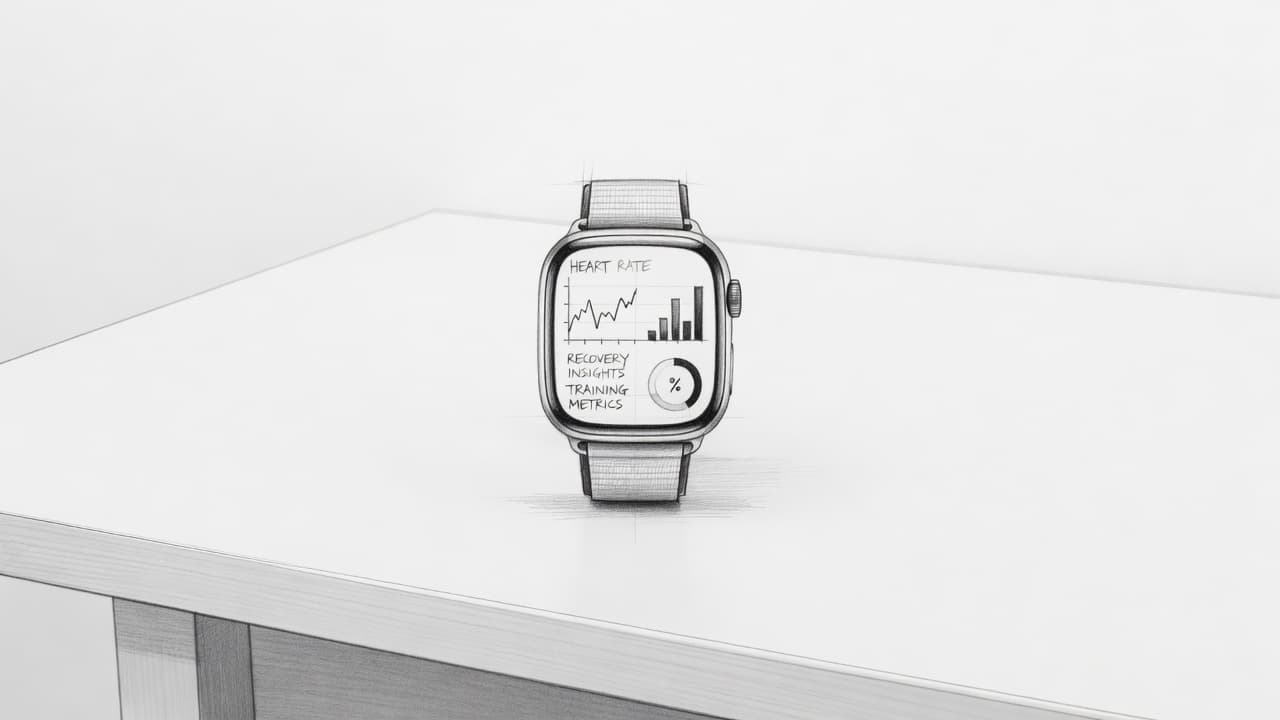
A GPS watch can record every mile and still leave you guessing about what to do tomorrow. The Suunto Run and Garmin Forerunner 265 add value through the software behind the workout, where sleep, heart rate, training load, and recovery data shape your next session. Garmin offers more direct daily guidance, while Suunto gives you a cleaner training picture through its watch and companion app.
Decoding Training Readiness and Recovery Scores
Garmin’s Forerunner 265 is the stronger choice when you want a clear daily recommendation. Its Training Readiness feature combines recent sleep, recovery time, HRV status, acute training load, and stress data into a score that indicates how prepared you may be for a demanding workout. The watch also provides a recovery time estimate after harder sessions, giving you a practical delay before your next intense effort.
That guidance works best when you wear the watch overnight and record most of your training with it. A missed night of sleep or an incomplete workout history can make the score less useful. Garmin also separates readiness from motivation. A high score doesn’t mean you must run hard, and a low score doesn’t always mean complete rest. Your legs, mood, and planned race schedule still matter.
Suunto takes a less prescriptive approach. The Suunto Run tracks training load, recovery time, sleep, resting heart rate, and heart rate variability trends when you provide enough overnight data. Instead of treating one number as the final answer, the Suunto app gives you a broader view of how recent workouts affect your body. That format suits runners who prefer to study trends before deciding whether to push.
Heart rate variability deserves careful interpretation on both watches. HRV measures small changes in the timing between heartbeats. A stable personal baseline can suggest that your body is handling training and daily stress well, while a sustained drop may point toward poor sleep, illness, or excessive load. A single low reading should not cancel a workout by itself.
Optical wrist sensors can also struggle during intervals, cold weather, and sessions with rapid pace changes. For serious training, pair the watch with a compatible chest strap when possible. The extra consistency helps your pace zones, training load, and recovery calculations start with better heart rate data.
| Training need | Garmin Forerunner 265 | Suunto Run |
|---|---|---|
| Daily readiness guidance | More prominent and prescriptive | More trend-focused |
| Recovery estimate | Post-workout recovery time and readiness inputs | Recovery time and training-load feedback |
| HRV use | Overnight HRV Status and readiness inputs | Overnight HRV and recovery trends |
| Workout suggestions | Daily Suggested Workouts and race-focused guidance | Structured workouts and app-based planning |
| Best fit | Runners who want a daily decision aid | Runners who prefer flexible analysis |
The difference matters during a marathon build. Garmin may suggest an easy run after a poor night of sleep, while Suunto may show elevated load and reduced recovery without dictating the entire session. Both approaches can work, but Garmin feels more like a coach on your wrist.
For additional user perspectives on HRV and VO2 max comparisons, see this Suunto and Garmin HRV discussion. Community reports can offer useful context, but your own multi-week trends deserve more weight than another runner’s single experience.
Navigation, Mapping, and Route Guidance Features
Navigation becomes more important when your familiar neighborhood gives way to forest roads, unfamiliar parks, or a long trail race. Both watches can follow a planned route with a breadcrumb trail, which shows your position against a simple line. If you take a wrong turn, the route view helps you retrace your path without relying on cellular service.
The Suunto Run focuses on straightforward route guidance. You can plan or import routes through the Suunto app, sync them to the watch, and follow the course using the breadcrumb view. This works well for road loops, point-to-point runs, and trail routes where you mainly need confirmation that you’re heading in the right direction.
The Forerunner 265 also supports breadcrumb-style course navigation and turn guidance for compatible routes. Garmin’s course tools can alert you before turns and display distance to the next course point. That extra direction is useful when you run a complex route with multiple junctions, especially if you don’t want to stop and inspect the line every few minutes.
Neither watch offers the full topographic map experience found on more advanced Garmin and Suunto models. You shouldn’t expect detailed streets, terrain contours, or an interactive map that lets you pan around the screen. Instead, both devices depend on a route prepared before the run. Downloading the course in advance is essential because the watch does not need a live phone connection to follow the saved track.
Route guidance is most helpful when you prepare it with care:
- Build the route in the companion app or a supported route service.
- Check the distance, elevation profile, and major intersections.
- Sync the course before leaving Wi-Fi or cellular coverage.
- Confirm the route appears on the watch before starting the activity.
- Keep an eye on course alerts instead of waiting until you’re far off track.
Garmin gains an advantage for runners who want more active course prompts and broader third-party route support. Suunto remains appealing for athletes who prefer a simple, uncluttered trail line and a route-planning workflow centered on the Suunto app. Neither replaces a dedicated phone map or paper backup on remote routes, so carry a backup plan when the course takes you far from roads.
A real-world comparison on Garmin and Suunto navigation also highlights a common pattern: Garmin tends to offer stronger point-of-interest navigation, while many runners appreciate the Suunto app’s route-planning experience. That distinction matters more on travel days and trail adventures than on a familiar five-mile loop.
Smart Features, Music Storage, and Connectivity
Garmin gives the Forerunner 265 a broader smartwatch feature set. The music version includes onboard storage for downloaded songs and playlists, so you can leave your phone at home during a run. You need Bluetooth headphones for playback, and streaming services require prior setup and downloads over Wi-Fi.
The Forerunner 265 also supports Garmin Pay in compatible regions, banks, and stores. That lets you pay for a drink or snack after a run without carrying a wallet. Availability depends on your card issuer, so check compatibility before treating the feature as a race-day essential.
Suunto Run takes a simpler route. It can control music playing on your phone, but it doesn’t provide the same standalone offline music experience. The watch is therefore better suited to runners who already carry a phone or don’t mind running without audio. Suunto also doesn’t match Garmin’s contactless payment system on this model.
Both watches can display incoming call, text, calendar, and app notifications when paired with a smartphone. Notification behavior depends on your phone’s operating system and settings. On a hard workout, frequent alerts can distract you, so turning off nonessential notifications improves focus and battery life.
The companion apps also shape everyday use. Garmin Connect offers a large training ecosystem with workout creation, activity history, health trends, courses, badges, and integrations. You can build structured intervals, review training load, and inspect sleep or HRV information in one broad dashboard. The volume of data is useful for a performance-focused runner, although new users may need time to learn where each metric lives.
The Suunto app feels more focused on activity analysis, route planning, and sharing. Its presentation makes it easier to review a run’s map, pace, elevation, heart rate, and training load without sorting through as many menus. You can also create structured workouts and sync planned sessions to the watch, giving you control without forcing a daily recommendation.
Choose Garmin if you want one device to manage music, payments, notifications, suggested workouts, and detailed training records. Choose Suunto if you want a lighter smartwatch experience and place greater value on route planning, clean activity analysis, and long outdoor sessions. The Suunto Run vs Garmin Forerunner 265 decision becomes clearer when you match the software to your routine, not just the feature list.
Making Your Final Choice Between Suunto and Garmin
Picking the right running watch ultimately depends on your daily training habits, your budget, and how much you value smartwatch conveniences. Both devices track miles accurately and monitor your heart rate with precision. However, their underlying philosophies diverge sharply. Garmin builds a feature-rich ecosystem designed to act as a 24/7 digital coach on your wrist. Suunto focuses on reliable outdoor utility, clean data presentation, and straightforward training loads.
Selecting the best model requires looking past the spec sheet and examining your actual routine. If you want on-device music storage, contactless payments, and direct daily readiness scores, Garmin wins easily. If you prefer a simpler interface, long battery endurance, and a streamlined app for route planning, Suunto stands out as the smarter investment. Your running goals should dictate which features matter most on race day.
Matching the Watch to Your Running Goals
Different training styles demand different tools from a GPS watch. A marathon runner chasing a Boston qualifier needs distinct features compared to a trail runner navigating remote forest loops.
Road runners tackling high-mileage blocks benefit greatly from the rich training feedback and recovery insights found on the Forerunner 265. The device tells you precisely when to push through a hard interval session and when to pull back. On the other hand, runners who spend their weekends exploring unpaved paths appreciate the lightweight build and dependable breadcrumb navigation offered by the Suunto Run.
Consider these specific use cases before making your purchase:
- Choose Garmin if you want daily workout suggestions, automated recovery scores, and onboard music for long solo runs.
- Choose Suunto if you prefer clean aesthetic designs, straightforward route planning, and minimal software distractions during your training.
- Consider your budget carefully because the Forerunner 265 commands a higher price tag due to its AMOLED screen and expansive smartwatch features.
Training for a specific goal also highlights software differences. Garmin pushes data constantly, giving you a daily assessment of your readiness to run. Suunto lets you absorb the numbers at your own pace without demanding constant attention. Both methods work well, but they appeal to completely different psychological approaches to training.
Weighing Budget Against Long-Term Value
Investing in a high-end GPS watch is a commitment that spans several years of training cycles. Therefore, upfront cost must be weighed against daily utility and hardware durability.
The Garmin Forerunner 265 sits at a higher price point because it packs a vibrant AMOLED screen, standalone music playback, and advanced contactless payment technology into a single chassis. You pay extra for those lifestyle features. If you leave your wallet and phone at home during every run, those additions justify the premium cost.
Conversely, the Suunto Run offers a more focused performance toolkit without charging for lifestyle extras you might never use. It prioritizes core metrics, battery efficiency, and essential navigation. For athletes on a stricter budget who care only about pace, distance, and recovery trends, Suunto delivers high value without unnecessary expenses.
Take a moment to evaluate your daily habits honestly. If smartphone notifications and onboard music make your runs more enjoyable, stretch your budget for the Garmin. If you view a running watch strictly as an instrument for tracking performance and planning outdoor routes, the Suunto provides everything you need to cross the finish line successfully.
Conclusion
Deciding between the Suunto Run and the Garmin Forerunner 265 comes down to how you prefer to process your training data. Garmin offers an immersive ecosystem with daily readiness scores, smart notifications, and onboard music for runners who want a constant digital coach on their wrist. Suunto strips away the lifestyle extras to focus on raw outdoor utility, dependable route planning, and clean recovery trends.
Your next personal best depends much more on consistent mileage and smart pacing than on any single watch feature. Choose the tool that fits your daily routine, lace up your shoes, and let your training guide you across the finish line.


