

Suunto Run vs COROS Pace 4: Which GPS Watch Is Better for Runners?
Choosing between Suunto Run vs Coros Pace 4 can feel harder than it should, especially when both watches have loyal runners behind them. Each one speaks to a performance-minded athlete, but they don’t fit every training style in the same way.
If you care about clean tracking, battery life, training support, and how a watch feels through long runs and hard sessions, the differences matter. For a broader look at how these brands fit into a runner’s setup, you can also compare them with our GPS watch for running guide.
The right pick comes down to how you train, where you run, and what you expect on race day and recovery days alike.
Design and Display Differences
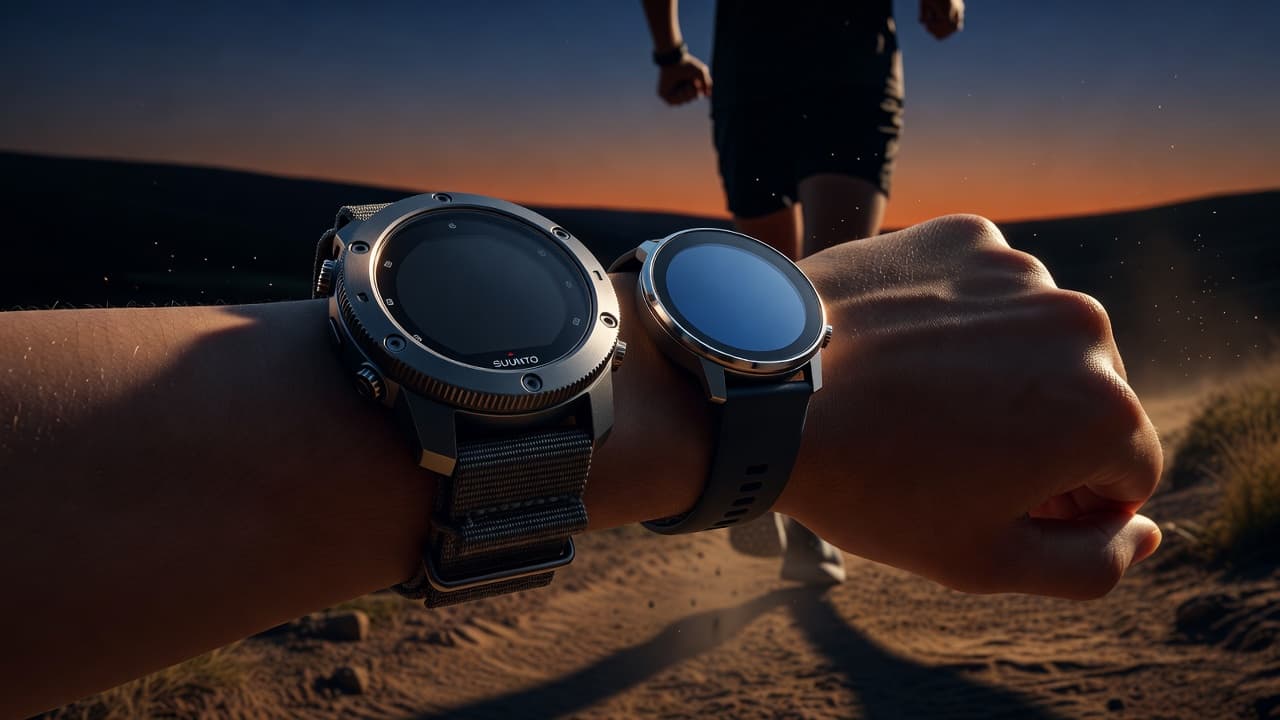
The Suunto Run vs Coros Pace 4 comparison starts to separate as soon as you put them on. One feels built for rough treatment and long miles, while the other looks leaner and more refined on the wrist. If you care about how a watch sits during a tempo run, how it handles sweat and sun, and whether it still looks sharp after months of use, these details matter.
Build a Smarter Running Watch Setup
Compare the right watch, understand the training data that matters, and choose a model that fits your workouts, racing, recovery, and long-term goals.
More COROS and Running Watch Guides
Built for Rugged Conditions
Suunto leans into a more rugged look. The case feels purposeful, with a sturdier frame and a shape that suggests durability first. That matters if you train outside often, stack up weekly mileage, or wear the watch all day, not just during workouts. A watch that feels solid can take more of the small hits that happen on sidewalks, trails, gym racks, and door frames.
Coros, by contrast, usually goes for a sleeker profile. The Pace 4 looks cleaner and more understated, which many runners like because it disappears a little more on the wrist. That lighter, slimmer feel can be a real plus for long runs, especially when you want less bulk during hot weather or race-day efforts.
Comfort is part of build quality too. A watch can be durable and still feel annoying if it sits too tall or catches on sleeves. Suunto’s stronger, more robust presence may suit runners who want a watch that feels like gear. Coros often appeals to runners who want something that feels closer to a performance tool than a tough outdoor instrument.
For runners who treat training like a daily habit, the best build is the one you stop noticing after mile three.
If you want more context on how watch design fits into runner-focused buying decisions, the best running watches for beginners guide is a useful place to compare priorities before you buy.
Screen Clarity on the Move
Display quality changes how useful a watch feels in real training. When you’re moving fast, you want pace, distance, heart rate, and lap data to pop quickly without squinting or tapping around. On that front, both watches aim at runners, but they do it with different styles.
Suunto tends to present data in a straightforward, athletic way. Its screen layout is built for clean reading, and the interface feels practical rather than flashy. Coros usually looks a bit more modern and minimal, which helps the screen feel uncluttered when you’re checking numbers mid-run. If you prefer a clean visual layout, that can make a difference.
Bright sunlight is the real test. A watch can look fine indoors and still become hard to read outside at noon. Both brands handle outdoor visibility well enough for running use, but the way the information is presented matters just as much as the panel itself. Large fields, strong contrast, and simple layouts help you catch a pace split at a glance instead of slowing down to stare at your wrist.
Controls
The controls shape the experience too. Button-based operation is easier when your hands are sweaty or wet, because you don’t need perfect touch accuracy. Touch support can feel faster for scrolling through menus, but buttons still win for reliability during hard efforts and bad weather. That is why many runners still prefer a watch that gives them both options, or at least buttons that feel responsive and intuitive.
For a broader comparison of how these brands handle runner-friendly features, Garmin vs Apple Watch for runners gives a helpful frame for how design and usability can change the whole experience.
A quick way to think about the display difference:
- Suunto feels more durable and practical, with a screen style that favors function.
- Coros looks sleeker and more refined, with a cleaner visual presentation.
- Buttons matter most when conditions get messy.
- Touch helps with convenience when you are stopped or easing through menus.
In short, Suunto puts durability and a tougher feel at the center, while Coros trims the bulk and keeps the look more streamlined. For runners, that choice shapes more than style, it changes how the watch feels every time you train, race, and recover.
Tracking Your Training Metrics
Data acts as the roadmap for your fitness journey. When you look at the Suunto Run vs Coros Pace 4, you are choosing how that map is drawn. Precision in your numbers translates into better decision-making during every phase of your training block. Whether you chase personal records or build a consistent base, the way these devices record and translate your output matters.
GPS Accuracy and Mapping
GPS performance defines the reliability of your distance and pace data. When you run through dense tree cover or alongside tall buildings in a city center, the signal often struggles to find a clear path to satellites. This is where dual-frequency GNSS capabilities change the experience.
Both Suunto and Coros utilize advanced antenna designs to maintain a lock on your location. Suunto often prioritizes a steady, consistent signal that resists drops in challenging terrain. The mapping interface focuses on simplicity, providing enough detail to keep you on the right trail without overwhelming your view. Coros targets a similar level of accuracy, but the integration with its platform feels slightly more focused on post-run analysis.
The difference shows up when you inspect the breadcrumb trails on a map after a workout. You might find that one watch handles the zig-zags of a switchback trail with more precision than the other. If your regular routes involve thick woods or urban canyons, that variance is worth noting. A reliable GPS signal ensures your average pace remains accurate, which keeps your speed work honest.
Heart Rate and Recovery Data
Wrist-based heart rate sensors provide the heartbeat of your training metrics. They track your exertion levels in real time, letting you gauge if you are pushing too hard on an easy day or falling short on a threshold effort. Consistency is the secret to improvement, and these sensors help you monitor that steady progress over weeks and months.
Coros excels at turning this heart rate data into actionable recovery insights. By analyzing your training load, the watch calculates when you are ready for a hard session and when you need rest. Suunto mirrors this approach by offering detailed load management tools that keep your fatigue in check. When your watch tells you to take an extra rest day, listening often prevents burnout or injury.
| Feature | Focus Area |
|---|---|
| Coros Pace 4 | Training load and recovery timing |
| Suunto Run | Long-term effort consistency |
These metrics act as an internal check-and-balance system. If your morning heart rate stays elevated, your watch alerts you that your body might be under stress before you even lace up your shoes. You can adjust your workout intensity accordingly. For athletes who want to understand their running recovery better, having this data on your wrist turns a vague feeling of tiredness into a clear plan for your next session.
Tracking your training metrics is not about obsessing over every digit. It is about building a clearer picture of your own fitness. Both watches give you the tools to see that picture clearly, provided you use the data to inform your decisions rather than dictate them. Consistent training requires regular review, and both devices provide the clarity you need to stay on track.
Battery Life and Daily Utility
Reliable power is the backbone of any training regimen. You need a device that stays alive through your longest long runs, your weekend adventures, and those busy weeks when charging slips your mind. When evaluating the Suunto Run vs Coros Pace 4, the battery experience shifts your day-to-day focus from technical management to simple performance.
Sustained Performance on Long Runs
Battery longevity during active GPS usage determines how much freedom you have on the trail. Coros often prioritizes efficiency, focusing on squeezing every possible hour out of the hardware to support marathoners and ultra-runners. The Pace 4 manages energy consumption with a minimalist approach, which is helpful if you frequently find yourself deep into three-hour training sessions without a charger nearby.
Suunto approaches this differently by balancing power with a robust display interface. While the consumption rates differ slightly based on the selected GPS frequency, both watches handle back-to-back workouts comfortably. If you run daily, you should check your battery percentage perhaps twice a week rather than every night. This reliability keeps your routine focused on training metrics instead of power cables.
Integration Into Your Daily Schedule
Utility extends beyond the run itself. Many athletes wear their watches around the clock to track sleep, recovery, and daily steps. A battery that drains rapidly because of intensive sleep tracking or constant notification pings quickly becomes a chore. Charging requirements dictate how you integrate the watch into your life.
The Coros Pace 4 typically remains on the wrist for days at a time, surviving well even with heavy feature use. Its software is optimized for light standby, ensuring that you don’t wake up to a dead battery before a morning tempo run. Suunto provides a similar experience but often requires a slightly different cadence if you make heavy use of high-resolution screen features or constant connectivity.
Running consistency depends on your gear being ready when you are. If you prefer to set it and forget it, a watch that survives long weekends without a wall outlet is a significant advantage.
| Feature | Charging Frequency | Ideal User |
|---|---|---|
| Coros Pace 4 | Weekly | Minimalist, long-distance focused |
| Suunto Run | Every 5-6 days | Daily athlete, rugged environment user |
Ultimately, the choice between these devices hinges on your personal tolerance for maintenance. Charging is a minor inconvenience for most, but when your goal is total focus on running performance, a watch that waits for you is always better than one that demands immediate attention. Neither of these models will let you down during a race, provided you keep a consistent eye on your weekly power habits.
The Software Experience
Every modern running watch is only as good as the software ecosystem that lives on your phone. You spend more time reviewing your stats, tweaking your settings, and planning your training blocks in the app than you do staring at the watch face itself.
Choosing between the Suunto Run and the Coros Pace 4 often comes down to which companion app aligns with how your brain organizes data. While both platforms offer deep insights, they speak different languages when it comes to user interface and the daily flow of syncing your training sessions.
Planning Your Workouts
Structured interval sessions are the bread and butter of performance gains. If you want to nail a specific pace or heart rate zone, you need a workout builder that doesn’t feel like a chore to navigate. Both brands allow you to push structured sessions directly to your wrist, but the journey to get there looks quite different.
Coros excels at being functional and fast. The workout builder inside the app feels like a spreadsheet optimized for mobile, allowing you to drag and drop intervals, rests, and warmups with minimal taps.
You can create complex repeats based on pace, heart rate, or perceived exertion, and the interface rarely hangs or forces you to dig through sub-menus. It is a tool built for the runner who wants to set up a Tuesday track session in under sixty seconds while standing in the gym parking lot.
Suunto approaches workout planning with a focus on long-term structure. Its builder is visually clean, emphasizing how individual sessions fit into your wider training calendar. If you enjoy mapping out your weeks in advance, you will likely appreciate the way the Suunto app organizes your history alongside your upcoming plan. It feels less like a quick notepad and more like a training logbook. Customizing these workouts is intuitive, though it sometimes requires an extra step or two to achieve the exact block structure you have in mind.
Build your training
- Coros works best if you value speed and simplicity in your programming.
- Suunto wins if you prefer a visual, calendar-first approach to planning your upcoming week.
- Both apps allow for granular control over intensity targets, meaning you aren’t sacrificing precision regardless of which platform you pick.
Syncing your hard-earned data from the watch to the cloud is another part of the software experience that can either motivate you or annoy you. Coros focuses on instant, reliable syncing that rarely fails, ensuring your stats hit your phone as soon as you finish your cool down. It is essentially invisible; you save your run, and the data is there, ready for analysis.
Suunto also provides stable syncing, though it occasionally takes a few extra seconds to finalize the transfer of detailed mapping or heart rate data. The interface inside the Suunto app feels more polished in its aesthetic, presenting your runs with high-resolution imagery and easy-to-read charts that look great when you share them. If you prioritize the presentation of your data after the workout, that stylistic edge makes a difference.
Ultimately, neither watch fails here, but they cater to different personalities. If you want the most efficient path from your workout to your post-run analysis, the Coros app is hard to beat for its sheer speed.
If you view your training log as a curated record of your fitness journey, the Suunto experience provides a more visually satisfying place to revisit your miles. Once you settle into your routine, you can focus on building a sustainable training plan that keeps you moving toward your goals, regardless of which app you open to check your progress.
Choosing Between Suunto and Coros
Selecting a new running watch involves balancing personal training habits with the specific strengths of the hardware. The choice between a Suunto Run vs Coros Pace 4 often comes down to how you interact with data and your environment during your daily miles. While both companies produce reliable performance tools, they emphasize different aspects of the athlete experience.
Matching Your Training Style
If you prioritize a device that handles long, technical efforts with a rugged, no-nonsense interface, Suunto often fits the bill.
These watches feel built for the elements and provide a consistent experience for those who train in variable weather or off-road conditions. You might prefer this brand if you value longevity and a physical design that withstands repeated impact. For athletes who maintain a long-term, consistent training volume, the data presentation stays predictable and clean.
Coros targets the athlete who wants a lighter, more tech-forward package. The Pace 4 is ideal if you value minimal weight on the wrist and a software ecosystem that prioritizes rapid feedback.
Runners who appreciate granular recovery insights and a quick, responsive app interface tend to gravitate toward this setup. If your training involves frequent interval changes and you need a watch that keeps up with fast-paced adjustments, this choice provides an efficient path to your goals.
Making the Final Decision
You can simplify your decision by asking how you typically spend your training time. If your runs take you deep into the mountains or through challenging trail systems, focus on the durability and GPS track quality Suunto offers. Conversely, if you spend most of your time on the track or paved roads and want a tool that delivers recovery metrics without adding bulk, the Pace 4 is a strong contender.
Consider the following steps to narrow down your options:
- Assess your primary terrain because consistent signal in dense woods matters more for trail runners than for those sticking to city tracks.
- Evaluate your tolerance for daily charging since a device that lasts through a full week of training removes one extra step from your morning routine.
- Review your preferred software workflow because you will spend time syncing data and planning your future workouts in the companion app.
- Test the weight of each watch on your wrist if you are sensitive to distractions during long efforts or racing.
Choosing between the Suunto Run vs Coros Pace 4 eventually becomes a question of what you ignore and what you track. Suunto offers a steady, reliable presence that fades into the background of a long run.
Coros provides a fast, modern platform that excels at giving you immediate, actionable data points. Both watches serve as capable partners for your running performance goals, but you should pick the one that feels like an extension of your own training personality. Once you find the right match, you can stop worrying about the hardware and focus entirely on the miles ahead.
Conclusion
Choosing between the Suunto Run and the Coros Pace 4 depends on which device aligns with your specific training environment and preferences.
Suunto favors runners who need a rugged, durable companion for trail systems or unpredictable weather, while Coros offers a lean, minimalist experience for those focused on track performance and rapid data feedback. You should prioritize the tool that simplifies your routine rather than sticking to a brand out of habit.
The right equipment acts as a bridge toward your long-term wellness goals. It removes friction from your daily sessions and helps you stay consistent over years of effort. When your gear feels intuitive, you stop looking at your wrist and start focusing on your stride. Find the watch that fits your personality and let it support your progress as you move toward your next milestone.


