

Suunto Run Pros and Cons: Is It Worth It?
You step out the front door before sunrise, hit the pavement, and want every heartbeat and mile tracked with absolute precision using a reliable running watch. Choosing the right sports watch changes how you train, but finding a device that actually fits your routine isn’t simple.
Suunto builds rugged GPS watches designed for athletes who demand reliable outdoor metrics and long battery life. Evaluating the Suunto Run Pros and Cons helps you decide if this specific ecosystem matches your training style before you invest your hard-earned money.
Key Takeaways
- Exceptional Battery Life: Designed for endurance athletes, the watch easily handles a full week of heavy training and multiple hours of active GPS tracking without needing a daily charge.
- Reliable Satellite Tracking: Multi-band GNSS technology ensures pinpoint GPS accuracy, keeping your track glued to sidewalks and trails even in dense urban areas or under heavy tree cover.
- Durable and Comfortable Build: The lightweight design and breathable silicone band stay comfortable during long, sweaty runs while withstanding harsh outdoor elements.
- Trade-Offs in Smart Features and Screen Visibility: The watch lacks deep app integrations and contactless payments, and its screen can be difficult to read in direct, blinding midday sunlight.
A Closer Look at the Suunto Run Pros and Cons
Choosing a sports watch requires balancing raw performance against daily convenience. When you look at the Suunto Run pros and cons, a clear picture emerges of a device built for serious training sessions rather than casual smartwatch wear.
The Biggest Advantages of Choosing Suunto for Running
Suunto built its reputation on durability and navigational reliability. When you strap this watch to your wrist, you immediately notice a sturdy build quality that survives torrential rain, muddy trail running, and accidental bumps against rocky switchbacks.
Navigational tools are particularly strong. Features like breadcrumb navigation and offline maps allow you to explore unfamiliar routes with confidence, ensuring you never lose your way.
Battery endurance stands out as another major victory for endurance athletes. You can log long training weeks, including multiple hours of active GPS tracking, without constantly searching for a charger.
Furthermore, satellite tracking remains exceptionally reliable. The watch locks onto GPS signals quickly and maintains a steady track, while a wide selection of customizable sport modes makes it easy to track every type of workout.
Where the Watch Falls Short for Serious Runners
Despite strong performance on the track, the Suunto Run struggles in a few specific areas. Depending on lighting conditions, the lack of an AMOLED screen means screen visibility can drop in direct, blinding midday sunlight, forcing you to squint down at your pace and split times.
Smartwatch features also feel sparse compared to mainstream competitors. You won’t find deep app integrations or advanced contactless payment systems here.
The accompanying mobile application ecosystem feels restrictive. Data syncs reliably, but custom workout builder tools lack the advanced depth that data obsessed runners often expect.
| Strengths | Weaknesses |
|---|---|
| Exceptional battery life for endurance training | Screen visibility can be difficult in harsh sunlight |
| Reliable satellite tracking and breadcrumb navigation | Limited smart features and lack of deep app integrations |
| Durable build quality suited for outdoor adventures | Restrictive custom workout builder tools in the app |
How GPS Accuracy and Battery Life Stand Up to Daily Training
Evaluating the Suunto Run Pros and Cons requires looking closely at how the hardware behaves under real training pressure. You log dozens of miles each week through concrete canyons and muddy paths, so your watch must keep up.
Double Checking Satellite Tracking on Long Runs
Multi-band GNSS technology absorbs the heavy lifting when you run beneath dense tree cover or past towering skyscrapers. Signals bounce off glass and steel easily, but dual-frequency reception locks onto multiple satellite constellations simultaneously to cut through interference, which significantly boosts overall GPS accuracy.
You notice the difference immediately on tight city loops. Instead of cutting corners through buildings on your post-run map, the track stays glued to the sidewalk where you actually ran.
For runners tackling local tracks, a dedicated track mode locks your exact lane and lap splits with pinpoint precision. When weather drives your miles indoors, treadmill accuracy holds strong against footpod calibrations. However, if you are planning to navigate unfamiliar backcountry routes, keep in mind that this watch does not support offline maps.
Forest trails present a different test. Heavy pine needles and steep ravines block weaker signals, yet the watch maintains a steady connection without erratic spikes in your current pace.
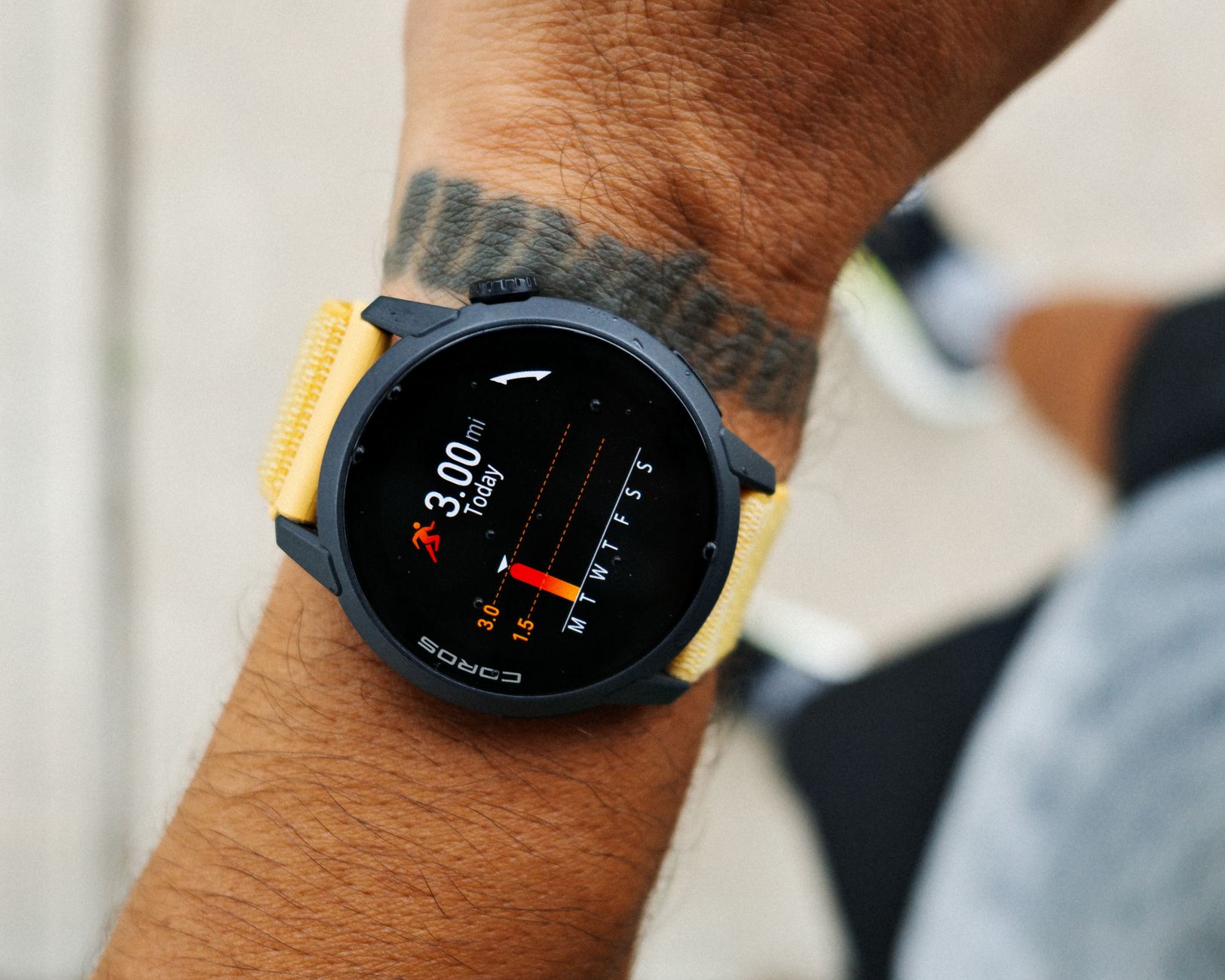
Photo by Eddie O.
Real World Battery Performance Versus Manufacturer Claims
Brands often test battery longevity under sterile laboratory conditions with every smart feature disabled. Real training tells a much more honest story about daily power consumption.
Heavy weekly mileage pushes power systems to their absolute limits. Here is how actual usage stacks up against official marketing numbers:
- Daily tracking with dual-band GPS active drains the battery slightly faster than single-band tracking.
- Continuous monitoring from the built-in optical heart rate sensor and smartphone notifications consume power in the background, though serious runners can easily pair an external chest strap for better metrics without hurting overall efficiency.
- Heavy intervals and track workouts require frequent screen activation, which pulls extra energy during every hard repetition.
- When you face ultra events or extended weekend efforts, switching over to Marathon mode trims unnecessary background tasks to preserve maximum battery life.
You still get plenty of juice for a full week of training before reaching for the charging cable. Even with multiple long runs logged in high-accuracy mode, the battery handles your routine without sudden drops in percentage.
Evaluating the Software and Training Metrics
Beyond raw hardware performance, your watch relies heavily on its digital ecosystem to process hard work. Evaluating the software and training metrics helps you determine if the companion app and recovery tracking tools provide actionable data or just confusing charts.
Understanding Training Load and Recovery Insights
Every hard interval session and long Sunday endurance effort leaves a distinct physiological footprint. The watch logs your cardiovascular strain, translating fatigue into numbers that tell you when to push harder and when to step back. Monitoring your training load and overall recovery metrics helps analyze nightly sleep quality, resting heart rate, and HRV to gauge your body’s readiness.
Suunto Coach provides valuable guidance to keep your progression on track, especially when you sync structured workouts directly to your wrist.
These numbers do not guarantee immunity from injuries, but they highlight red flags before minor aches turn into forced time off. When the recovery score drops consecutively for three days, you face a choice between resting or risking a breakdown. Ignoring these warnings usually leads to burnout. Listening to the feedback allows you to adjust your training schedule intelligently.
Navigating the App and Customizing Screens
Opening the Suunto app gives you a centralized hub for reviewing past routes, analyzing pacing splits, and updating device settings. Setting up custom data fields for race pace and heart rate zones takes only a few minutes inside the user interface. You can build specific sport profiles for track repeats, road marathons, or trail ultramarathons.
The menu layouts require a brief learning period if you transition from other ecosystems, but the configuration options offer impressive flexibility. You drag and drop data screens to prioritize current lap pace, average heart rate, or total elapsed time. Once synced, the watch mirrors your exact preferences on the run, ensuring you see the metrics that matter most without scrolling through cluttered menus.
Comfort, Design, and Daily Wearability
Weighing the Suunto Run pros and cons requires more than just checking pace accuracy on your phone screen after a hard workout. You wear this device through sweaty interval sessions, long recovery days, and even while sleeping to track autonomic nervous system recovery via continuous heart rate monitoring. The physical footprint matters just as much as the software behind it because comfort dictates whether you actually keep the device strapped to your arm day in and day out.
Strap Comfort and Weight During Hard Effort Runs
When the mercury climbs and humidity chokes the air, heavy plastic bands trap sweat and slide around your arm. Fortunately, the lightweight build of this running watch keeps it nearly unnoticeable on your wrist even when your heart rate hits threshold zone.
Soft silicone conforms snugly to your forearm without requiring you to overtighten the buckle. Air channels cut into the band let sweat evaporate rather than pooling under the chassis. You won’t find raw chafing spots or hot spots after a grueling two-hour long run in the midday sun.
Daily Smartwatch Features and Notification Handling
Outside of training hours, your sports watch pulls double duty as a lifestyle tracker and message relay. Smart notifications buzz your wrist discreetly during work meetings, keeping you connected without demanding an immediate screen check.
Music controls let you skip tracks or adjust volume easily when your phone rests in an arm holster or hydration belt, and support for offline music keeps your favorite playlists ready when you leave your phone behind. Daily step counts and all-day calorie burn estimates update continuously in the background, giving you a broad picture of your general daily activity.
Beyond core sports tracking, the interface manages daily tasks well by offering clear alarms, calendar alerts, and weather updates. You don’t get a sprawling app store with thousands of third-party add-ons, but the included utilities handle everyday smartwatch duties reliably.
Who Should Buy This Running Watch
Choosing the right sports watch depends entirely on your training philosophy and daily habits. Different ecosystems reward different behaviors. When weighing the Suunto Run Pros and Cons, you want to match your wrist companion to your actual running goals rather than buying based on marketing hype alone.
The Ideal Runner Profile for Suunto
This device fits runners who prioritize raw durability, satellite precision in difficult environments, and battery longevity over smart features. If you log heavy weekly mileage on remote trails, rural gravel roads, or dense concrete canyons, you benefit immediately from the multi-band GPS tracking. You appreciate a lightweight, breathable band that stays comfortable during sweaty two-hour endurance efforts. You also prefer charging your watch once a week instead of every single night.
How Suunto Compares to Garmin and Coros
Garmin dominates the market for athletes who want a smartwatch hybrid. Models like the Garmin Forerunner series offer contactless payments, onboard music storage, and a massive application store. If you rely on smart notifications all day and want detailed third-party app integrations, Garmin satisfies those demands better.
Coros appeals directly to budget-conscious runners who want lightweight minimalism, and devices like the Coros Pace 3 deliver exceptional battery life while keeping tracking features lean. Meanwhile, alternative options in the ecosystem, such as the Suunto Race S, offer different form factors and display types.
The price of these options remains competitive, positioning them well against both entry level and mid range alternatives. Suunto sits in the middle as a rugged tool for traditionalists. It strips away unnecessary smart distractions to focus strictly on outdoor navigation, robust physical build quality, and straightforward training load analytics.
Think about your typical training week before making a final choice. If you spend most of your time chasing personal records on measured tracks and want a dependable instrument that ignores distractions, this watch fits your wrist.
Frequently Asked Questions
Is the Suunto Run good for city running and navigating tight urban spaces?
Yes, multi-band GNSS technology helps the watch cut through interference from tall buildings. This ensures your GPS track stays accurate and avoids cutting corners across blocks.
How long does the battery actually last during heavy training weeks?
The battery easily powers through a full week of training, including multiple long runs with high-accuracy GPS tracking. You can also switch to marathon mode during ultra events to preserve extra power.
Does the Suunto Run offer advanced smart features like contactless payments?
No, the watch keeps features streamlined for training rather than lifestyle tracking. You will not find deep third-party app integrations or contactless payment systems here.
How does the watch handle recovery and training load insights?
It tracks your cardiovascular strain, nightly sleep quality, and resting heart rate to calculate recovery scores. This helps you identify fatigue early and decide when to rest or push harder.
Conclusion
Choosing a sports watch comes down to prioritizing what matters most during your daily training. The hardware delivers exceptional GPS accuracy in tight urban spaces, strong battery life, and a lightweight build that stays comfortable during long efforts. However, screen visibility suffers under harsh midday sun, and the software ecosystem lacks the deep customization options found in rival brands.
Runners who log heavy miles on remote trails or demand reliable tracking without lifestyle distractions will find that this running watch matches their goals. Anyone who relies heavily on smart notifications, contactless payments, and bright third-party app displays should look elsewhere. Match the device to your actual training habits, lace up your shoes, and let your consistency do the talking.


