

Suunto Race S Titanium Review: Is It Worth the Extra Money?
A hard workout exposes a GPS watch quickly. It must guide intervals without distracting you, survive long training days, and stay comfortable when the miles build. The Suunto Race S Titanium is designed for that job as a smaller, lighter performance GPS watch for runners, hikers, cyclists, and multisport athletes, but its premium materials are only part of the story.
This Suunto Race S Titanium review looks beyond the feature list to assess how the watch fits real training. We’ll examine its design and screen, GPS accuracy, heart-rate tracking, training tools, battery life, navigation, smart features, pricing, and day-to-day value. We’ll also compare its strengths and compromises with the standard Suunto Race, along with alternatives from Garmin, COROS, and Apple Watch, so you can see whether it matches your goals, phone, and training style.
Specifications, software features, battery claims, and current pricing can change, so check Suunto’s latest information as of July 2026 before buying. The sections ahead will clarify who should choose this lighter titanium model, who may get better value elsewhere, and how it performs when training moves beyond the product page.
Suunto Race S Titanium review: what you get for the money
The Suunto Race S Titanium targets runners who want serious training tools in a smaller, lighter case. It combines a bright AMOLED display, dual-band GPS, offline maps, long activity battery life, and a premium titanium bezel without becoming a bulky outdoor watch.
Suunto positioned the Race S as a compact alternative to the larger Suunto Race. The Titanium edition adds a more expensive bezel and sapphire crystal, so the question is straightforward: does the upgraded case improve your daily training enough to justify the higher price?
A premium build in a smaller case
The Race S uses a 45mm case, which gives it a more manageable profile than many large multisport watches. That size works well for runners with smaller wrists, although the watch still has enough screen area for maps, workout data, and notifications.
The titanium bezel is the main physical upgrade over the standard Race S. Titanium keeps the outer ring light while adding a more premium feel and strong resistance to everyday knocks. It won’t make the watch indestructible, but it should age better than a basic plastic case when you wear it through training, travel, and outdoor use.
Sapphire crystal protects the AMOLED touchscreen. Sapphire is harder to scratch than conventional mineral glass, which matters when you brush against a rock, gym equipment, or a door frame. The tradeoff is cost. You are paying for protection that may go unnoticed until a cheaper lens picks up its first deep mark.
Suunto rates the watch for water resistance up to 50 meters. That covers rain, sweat, showers, and pool sessions, but it isn’t a dedicated dive computer. The included 22mm silicone strap is practical for running because it dries quickly and holds the watch securely during faster sessions.
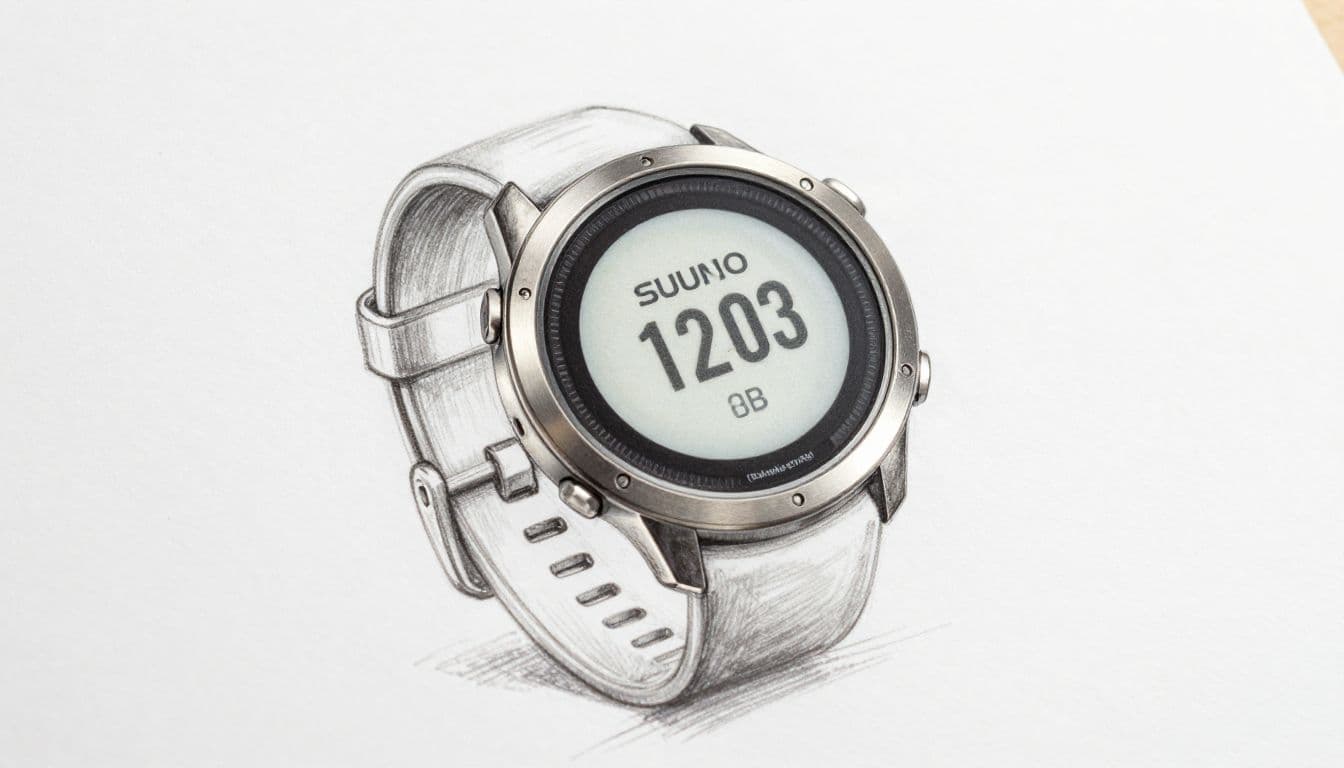 The physical construction feels more substantial than the price-focused sports watches in this category. However, titanium changes the feel more than the training experience. Your wrist won’t suddenly run faster because the bezel uses a premium alloy.
AMOLED screen and controls
The 1.32-inch AMOLED touchscreen is one of the Race S Titanium’s most noticeable strengths. Colors look vivid, map lines are easier to follow, and workout data has better visual contrast than on a traditional transflective display.
That brightness helps during indoor training and early-morning runs. You can glance at pace, heart rate, or interval information without squinting at a dim screen. Suunto also includes an ambient light sensor, which helps the display adjust to changing conditions.
Touch controls work well for everyday browsing, but physical controls matter more once your run starts. The watch includes buttons and a digital crown, allowing you to move through workout screens without relying on a sweaty fingertip. This is especially useful in cold weather, when gloves make touchscreens frustrating.
Still, AMOLED has a cost. A bright display uses more power than a simpler always-on screen, particularly when navigation and GPS run together. You can preserve battery by reducing brightness, shortening the screen timeout, or disabling always-on display mode.
The display is also more smartwatch-like than the screens on many endurance watches. That makes menus pleasant to read, but runners who prefer maximum battery life may favor a less colorful panel.
What comes in the box
The package is fairly simple. You get the watch, a 22mm silicone strap, and the charging cable. Suunto does not turn the Titanium model into a complete sensor bundle, so runners who want external heart-rate data, cycling power, or running dynamics may need to buy compatible accessories separately.
Replacement bands are available through Suunto and other retailers. Check the lug width before ordering, because a comfortable strap can change how stable the watch feels during intervals and long runs. A loose strap can also affect wrist-based heart-rate readings.
Suunto’s official US store lists the Race S Titanium Graphite, along with access to compatible accessories and support. Regional pricing differs, so buyers should compare the local Suunto store with major retailers before placing an order. An Australian listing, for example, shows a price range of $599 to $799 Australian dollars and includes the 22mm athletic silicone strap with a two-year warranty. That gap shows why the same watch can offer different value depending on where you buy it.
Launch price, street price, and warranty
The Race S launched as a more compact performance watch than the original Race, while the Titanium version occupied the premium end of the smaller model range. In the United States, the Titanium edition has generally sat around the $449 list-price level, while the standard Race S has been positioned below it. Retail discounts can narrow that difference, especially during major shopping periods.
Before buying, check both the official listing and a reputable retailer because promotions change quickly. The Amazon Race S product listing can help you compare current availability and pricing, but confirm the seller, return policy, and warranty coverage.
Warranty terms also vary by region and seller. Suunto provides product support and a return window through its official store, while international warranty coverage may depend on the purchase market and registration details. Keep your receipt and buy from an authorized source. A lower marketplace price is less attractive if service becomes difficult later.
Is the titanium upgrade worth it?
The standard Race S already delivers the core experience: GPS training, workout guidance, health tracking, maps, and a bright AMOLED display. The Titanium model adds a lighter premium bezel and sapphire crystal, but the software and training functions are not transformed by the material upgrade.
Choose the Titanium version if you:
- Want a lighter-feeling premium case for everyday wear.
- Regularly train outdoors and value sapphire’s scratch resistance.
- Prefer a bright AMOLED screen with physical controls.
- Need offline maps and long GPS battery life.
- Plan to use structured workouts and detailed training data.
The standard Race S makes more sense when price matters more than materials. The Titanium model also isn’t the best choice for someone seeking a full smartwatch experience with extensive apps, payments, and broad phone integration. Its strengths are running, navigation, recovery data, and outdoor training.
For a dedicated runner, the premium cost is easiest to justify when the watch stays on your wrist all day and sees regular trail or travel use. If you only need pace, distance, and basic heart rate, the standard model offers the better financial decision.
How the Suunto Race S performs for running, training, and navigation
Running performance relies on consistency, and your gear must keep pace with every interval, long run, and recovery jog. The Suunto Race S Titanium tracks your daily training load without adding unnecessary weight to your wrist. Testing the watch across different terrains reveals how well its hardware and software handle the demands of serious running.
Pacing and GPS accuracy on the run
Pace stability is critical when you lock into target race speeds. Dual-band GPS helps the watch hold a reliable signal between tall buildings and beneath dense tree canopies. When running through urban canyons or winding forest paths, the tracking line stays remarkably close to the actual route. Speed transitions register quickly without the lag that plagues older sensors.
Despite strong performance, atmospheric interference or heavy cloud cover can occasionally cause minor drift. You should test the watch against a known measured route and a reliable reference device during your first few weeks of use. This controlled comparison shows you how the device responds to your specific local running environment.
Training tools and structured workouts
The companion smartphone app turns raw data into actionable insights. After each session, the software breaks down training load, recovery time, and physiological strain. You can build structured interval workouts in the app and sync them directly to your wrist. During the run, alerts guide you through warmups, work intervals, and recovery periods.
However, coaching depth has clear limits. The system calculates training stress well, but it does not generate fully adaptive daily training programs based on subjective fatigue. Runners who want complex, auto-adjusting schedules will still need a separate training platform or a human coach. The watch functions as an exceptional recording and pacing tool, but it relies on your input to design the overarching training philosophy.
Maps and navigation in unfamiliar territory
Offline outdoor maps transform long trail runs and adventure routes. You download regional maps directly to the watch memory before heading out. High-contrast AMOLED graphics make trail intersections and topographical lines easy to distinguish at a glance.
Turn-by-turn alerts notify you before a junction, which prevents missed turns during fast descents. If you wander off the planned path, the breadcrumb trail guides you back without hesitation. Battery draw increases noticeably when maps and dual-band GPS run simultaneously, so monitor your power levels on multi-hour excursions.
Real-world performance across different training sessions
Different workouts push a GPS watch in distinct ways. The following breakdown shows how the device handles specific running scenarios.
- Easy recovery runs: The wrist-based heart rate monitor tracks steady efforts well, keeping you honest on days when you need to run slowly.
- Track intervals: Lap buttons respond instantly, and the bright screen shows split times clearly in direct sunlight.
- Hilly trail runs: Altitude profiles update smoothly, helping you manage effort on sustained climbs and technical descents.
- Long endurance efforts: Battery consumption remains predictable, giving you peace of mind during marathon-prep weekend long runs.
Runners seeking a dependable companion for daily miles and race-day pacing will find that the hardware delivers where it matters most. Pair the watch with disciplined training, and you have a reliable tool for chasing your next personal best.
Battery life, charging, and daily smartwatch use
A watch fails its primary mission when it dies before you finish your run. Advertised battery specifications rarely match real-world training, especially when you push hardware limits outdoors. The Suunto Race S Titanium claims up to nine days of daily use in smartwatch mode, or up to thirty hours in performance GPS tracking. However, your actual results depend heavily on how you configure the display and sensors.
Managing power consumption during training
Bright settings drain batteries quickly. The AMOLED screen looks fantastic, but running the display in always-on mode cuts daily battery longevity almost in half. Dual-band GNSS tracking delivers exceptional route precision, yet it consumes more power than single-frequency options. Pulse oximetry readings, continuous heart rate monitoring, and frequent phone notifications also chip away at your available charge throughout the week.
Your training volume dictates how often you plug the watch into the wall. A casual runner logging three short weekly sessions will easily go a full week between charges. Meanwhile, a high-mileage marathoner running every day with GPS and music playback will need to plug in much more frequently. Trail athletes spending twelve hours deep in the mountains using offline maps and maximum accuracy GPS will push the hardware right to its advertised limits.
Battery life expectations shift according to specific usage patterns.
- Casual runner: Expect seven to nine days of battery life with three weekly GPS runs and basic sleep tracking enabled.
- Marathoner: Expect four to six days of battery life with daily runs, structured workouts, and notifications turned on.
- Trail athlete: Expect twenty to thirty hours of continuous GPS navigation with maps and dual-band tracking active.
Charging speed is mercifully fast when you finally run low. A magnetic USB cable snaps securely onto the rear housing, taking the battery from zero to full in roughly an hour.
If you realize your watch is dead fifteen minutes before a morning run, a quick top-up gives you enough juice for a normal session. When the battery drops below ten percent during an active recording, the watch disables power-hungry features like maps and music while keeping core GPS tracking alive so you finish your workout.
Everyday smartwatch functions and connectivity
Beyond running metrics, the device doubles as a daily lifestyle companion. Smartphone notifications mirror instantly to your wrist, allowing you to screen text messages and call alerts without pulling your phone from your pocket. Alarms, weather forecasts, and calendar reminders help organize your day between training blocks.
Phone compatibility is reliable on both iOS and Android platforms via the official Suunto application. The Bluetooth connection re-establishes itself smoothly if you walk out of range and return. Music controls let you skip tracks or adjust volume on your phone, though the watch lacks onboard storage for offline music syncing. Contactless payment support is absent, meaning you still need a card or phone for post-run coffee stops.
Data syncing happens automatically in the background whenever you open the companion app near your phone. Workouts upload quickly to training platforms, keeping your fitness metrics up to date without manual file transfers. The interface avoids unnecessary software bloat, keeping menus snappy and focused entirely on health, recovery, and movement.
Suunto Race S Titanium versus the watches runners may also consider
Choosing a high-performance running watch requires weighing more than just a spec sheet. Different devices target distinct training styles, budget limits, and ecosystem preferences. When you step away from the Suunto Race S Titanium, several compelling alternatives wait on the market. Evaluating these choices helps you determine whether Suunto holds the true advantage for your daily miles or if another brand better matches your specific running goals.
Comparing the Suunto Race S Titanium to the standard Suunto Race S
The standard Suunto Race S shares the exact same software features, dual-band GPS, AMOLED display, and mapping capabilities as its higher-end sibling. The core difference rests entirely in the external shell. While the standard model uses a reinforced polyamide composite case, the Titanium variant introduces a grade 5 titanium bezel and a sapphire crystal lens.
This materials swap saves a few grams on your wrist and adds strong scratch resistance against rocks and gym weights. However, the internal tracking hardware remains identical.
- Standard model: Offers the identical training ecosystem and navigation tools at a lower retail price.
- Titanium model: Delivers rugged durability and a refined aesthetic for athletes who wear their watch twenty-four hours a day.
If budget is your primary constraint, the standard model gives you all the performance without the luxury markup. Choose the titanium option only if you prefer premium metal finishes and demand maximum scratch protection for rough trail adventures.
Suunto Race S Titanium versus the larger Suunto Vertical
If you want massive battery life and prefer a larger display, Suunto also builds the larger Suunto Vertical. The Vertical uses a 49mm case and a transflective screen instead of an AMOLED display. That larger frame accommodates solar charging options on select variants, which pushes battery longevity far beyond what a compact sports watch can achieve.
The Vertical appeals to ultra-runners and mountaineers who spend consecutive days deep in the backcountry without access to wall chargers. Meanwhile, the Race S Titanium targets runners who prefer a lighter, lower-profile watch for daily speed work, marathons, and everyday wear.
Map readability is sharper on the AMOLED screen of the Race S, but the Vertical wins decisively when you measure endurance in weeks rather than days. Match your choice to your typical training duration. If your longest efforts rarely exceed a weekend marathon block, the smaller titanium watch is much more comfortable on your wrist.
Suunto Race S Titanium versus Garmin Forerunner 965
Garmin remains the dominant giant in endurance sports tracking, and the Garmin Forerunner 965 is its direct rival. Both watches feature bright AMOLED screens, detailed offline mapping, and comprehensive training load metrics. Yet, their underlying ecosystems create completely different user experiences.
Garmin packs the Forerunner 965 with advanced training readiness scores, native running dynamics without extra pods, and onboard music storage for offline playlists. Garmin Pay also lets you buy post-run coffee without carrying a wallet.
Suunto counters with a cleaner interface, simpler menus, and a lower price tag for titanium and sapphire materials. Garmin software tends to overwhelm new users with data points, while Suunto focuses on essential recovery and training load metrics without the clutter.
Choose the Garmin Forerunner 965 if you want onboard music and contactless payments. Choose the Suunto if you prefer a less cluttered app interface and physical build quality that undercuts Garmin on price.
Suunto Race S Titanium versus COROS Pace 3 and Apex 2 Pro
COROS built a fierce following by offering exceptional battery life and reliable software at competitive prices. The lightweight COROS Pace 3 costs significantly less than the Suunto, making it a favorite for budget-conscious runners who only need raw tracking performance. It lacks a premium titanium bezel and an AMOLED screen, but its lightweight plastic case disappears on your wrist during fast intervals.
Stepping up to the COROS Apex 2 Pro brings you closer to the Suunto in materials, featuring a titanium bezel and sapphire glass. The Apex 2 Pro uses a memory-in-pixel display rather than an AMOLED panel, which prioritizes battery longevity and outdoor legibility under direct sunlight over vibrant colors.
COROS training software provides deep analytics and works well for structured plan creation. Suunto still holds the visual advantage when you need to read detailed offline maps on a bright, high-contrast screen. Runners who value battery longevity and minimalist hardware often lean toward COROS, while those who want vivid map displays prefer Suunto.
Suunto Race S Titanium versus Apple Watch Ultra
Comparing a dedicated sports watch to a smartwatch like the Apple Watch Ultra highlights a fundamental conflict in training philosophy. The Apple Watch Ultra offers a massive, bright display, cellular connectivity, thousands of third-party apps, and top-tier heart-rate accuracy. It functions as a powerful daily smartwatch that happens to track running exceptionally well.
However, battery life remains the Achilles heel for endurance athletes. While the Suunto lasts a week on a single charge during normal training, the Apple Watch requires daily charging, especially if you use cellular features and continuous GPS.
Physical navigation buttons on the Suunto also work much better with sweaty fingers or winter gloves than a touchscreen during a hard track workout. Select the Apple Watch Ultra if you want seamless phone integration, smart assistant features, and safety connectivity above all else. Stick with the Suunto Race S Titanium if you want a dedicated training tool that stays out of your way and rarely requires a charger.
Making your final decision
Every alternative brings distinct strengths to the starting line. Your ideal watch depends on which compromises you are willing to accept.
- Choose Suunto Race S Titanium if you want a lightweight, premium-built watch with a stunning AMOLED screen and straightforward training metrics.
- Choose Garmin if you need onboard music storage, contactless payments, and deep ecosystem customization.
- Choose COROS if you prioritize maximum battery life and lower upfront costs.
- Choose Apple if smart connectivity and daily smartwatch features matter more than multi-day battery endurance.
Evaluate your weekly mileage, your charging habits, and your favorite training environments. Selecting the right device keeps your focus on pacing and recovery rather than fighting your gear on race day.
The strengths, weaknesses, and best buyer for the Suunto Race S Titanium
Every piece of running gear demands a compromise, and titanium sport watches are no exception. Premium materials cost real money, while bright displays drain batteries faster during long training weeks. Understanding how these design choices affect your daily run helps you decide if this compact device belongs on your wrist.
Major strengths for dedicated runners
The titanium bezel and sapphire crystal transform the physical durability of the watch without adding unnecessary bulk. You get a lightweight case that sits comfortably during fast intervals, yet it shrugs off accidental impacts against rocks on technical trails.
The 1.32-inch AMOLED screen delivers crisp details, making offline maps and split times easy to read when you glance down mid-stride. Physical buttons and a digital crown complement the touchscreen, ensuring reliable control when your fingers are cold or wet. Furthermore, dual-band GPS locks onto satellites quickly, tracking your exact path through urban canyons and dense tree lines with impressive fidelity.
Notable weaknesses and compromises
Bright screens demand power, so running the display in always-on mode reduces battery longevity compared to traditional transflective panels. Offline maps and maximum accuracy tracking drain the battery even faster during long weekend excursions.
The companion app handles training load and recovery well, but it lacks the advanced coaching depth found in competing software ecosystems. In addition, the watch omits onboard music storage for offline playlists and lacks contactless payment support for post-run coffee stops.
Performance across different training needs
Different athletes require distinct features from a GPS watch, so the value of this hardware changes depending on your goals.
- Beginner runners find the straightforward menus easy to learn, although the advanced training metrics may feel overwhelming at first.
- Marathoners benefit from precise GPS tracking, reliable battery life during long training blocks, and clear interval alerts.
- Trail runners and ultrarunners appreciate the lightweight titanium build and offline maps, though multi-day races require careful battery management.
- Multisport athletes enjoy seamless profile switching, yet the lack of native cycling power metrics out of the box means extra sensors are necessary.
- Casual smartwatch buyers may miss daily productivity tools, smart assistant integration, and offline music storage.
The final verdict for your wrist
This watch shines as a dedicated training tool for runners and outdoor athletes who value a comfortable, premium build and a vibrant map display. If you prioritize maximum battery life above all else, or if you need contactless payments and offline music, another ecosystem serves you better. Match your daily mileage and training environment to these strengths, and you will find a dependable partner for your next personal best.
Conclusion
The Suunto Race S Titanium delivers a compelling mix of everyday comfort, rugged construction, vibrant AMOLED screen technology, reliable GPS training tools, offline navigation, and dependable battery performance.
Premium materials cost more money, so the titanium price is only justified for athletes who want a lighter, scratch-resistant watch for daily wear and outdoor adventures. Runners who do not care about premium bezels or sapphire glass will find better value in the standard model.
No GPS watch replaces sound training, accurate effort control, intelligent recovery, and proper race preparation. Gear supports the work, but discipline builds fitness.
The Suunto Race S Titanium is a strong choice for athletes who want a compact performance watch with outdoor navigation and a vivid screen. Buyers focused on deep coaching platforms, advanced smartwatch features, or the lowest price should compare alternative devices first. Check current firmware updates, support terms, and pricing available at the time of purchase before making your final buying decision.


