

Suunto 9 Peak Pro vs COROS Pace 4 for Trail Running
Crushing miles on technical trails requires gear that works as hard as your legs do. You need a device that tracks your vertical gain, keeps you on course, and lasts through your longest mountain efforts without failing.
Deciding between the Suunto 9 Peak Pro vs COROS Pace 4 for Trail Running often comes down to choosing between specialized durability and lightweight efficiency. Both watches provide the data you need to hit your next personal best, but they cater to different athlete preferences on race day.
We will break down these two models so you can identify which tool matches your specific training needs and helps you dominate the terrain.
Design and Durability on the Trails
Trail running requires gear that remains unobtrusive while you navigate uneven terrain. Whether you choose the Suunto 9 Peak Pro or the COROS Pace 4 for trail running, you need a device that stays secure on your wrist during rapid movements and technical descents. Both watches emphasize a low-profile design, yet their approach to construction and comfort caters to different types of runners.
Weight and Comfort During Long Efforts
When you are deep into a 50K or longer race, every ounce on your wrist becomes noticeable. A heavy watch can slide around or cause chafing, which becomes a major annoyance as your hands swell from blood flow during prolonged efforts.
The Suunto 9 Peak Pro features a slim, elegant profile that sits close to the skin. Its construction minimizes snagging on vegetation or your pack straps. Because the watch casing is compact, it feels nearly weightless even during fast, technical mountain sections.
Conversely, the COROS Pace 4 prioritizes weight reduction through advanced materials. It uses a composite body that remains exceptionally light without sacrificing the structural integrity required for endurance sports. For runners who prefer a barely-there sensation, this model often feels superior during high-intensity intervals.
Proper strap selection plays a major role in comfort regardless of the model. Both brands offer silicone straps that handle sweat effectively, but you should consider the following tips to maintain comfort:
- Adjust the tension before starting your run to account for minor wrist swelling.
- Clean the watch sensors and strap with fresh water after each outing to prevent salt buildup.
- Wear the watch slightly higher on your forearm if you find it sliding during steep, technical descents.
Build Quality and Ruggedness
Trail running pushes equipment to its limits. You might accidentally strike your watch against a jagged rock face or brush it against abrasive tree bark. A watch that lacks durable components will quickly show signs of wear or fail entirely in harsh conditions.
The Suunto 9 Peak Pro earns a reputation for extreme toughness. It uses sapphire glass, which is notoriously difficult to scratch, ensuring the display remains legible even after months of hard abuse. The stainless steel or titanium bezel adds a layer of impact protection that keeps the internal sensors safe from shock.
The COROS Pace 4 focuses on a high-strength design that emphasizes utility. While it may not feel as armored as the Suunto, its bezel design protects the screen effectively. For a deeper look at how material choices impact longevity, you can read Coros design and durability specs.
If you frequently train on rocky, technical trails, consider the following durability factors:
- Sapphire glass benefits: The material resists deep gouges and retains clarity when exposed to dirt and grit.
- Casing impact resistance: A metallic bezel provides a buffer against direct hits to the screen edge.
- Waterproofing: Both models feature robust seals to protect against rain, mud, and stream crossings.
Selecting between these two comes down to your primary environment. If you frequently find yourself scrambling over boulders, the reinforced shell of the Suunto offers additional peace of mind. For runners who value pure speed and lightweight efficiency on groomed but rugged mountain trails, the COROS provides a reliable and lighter alternative.
Battery Life and GPS Accuracy for Remote Runs
When you are miles away from the nearest trailhead, your watch becomes your primary connection to your path and your pacing. The choice between the Suunto 9 Peak Pro vs COROS Pace 4 for trail running hinges on how much confidence you need in your device’s ability to survive the distance. Reliability in these two metrics determines whether your run ends in a successful summit or a frustrating search for a signal in the dark.
How Long Can You Keep Going?
Battery management is the difference between recording your full effort and staring at a blank screen three miles from the finish line. Both devices offer multiple power modes, but they manage consumption through different internal logic.
The Suunto 9 Peak Pro includes an intelligent battery management system that suggests charging intervals based on your historical usage. During long mountain excursions, you can toggle between performance and endurance modes. Choosing the Tour mode drastically extends life by reducing the frequency of GPS pings, which is a smart trade-off if you are traversing wide-open ridges where precise turn-by-turn navigation matters less than simple distance tracking.
The COROS Pace 4 utilizes a highly efficient operating system that squeezes maximum life from its smaller battery. It excels in standard GPS mode, often outlasting watches with significantly larger physical batteries. If you tend to forget to charge your devices, the COROS power usage is predictable and stable.
To maximize your watch life on race day, you should follow these adjustments:
- Disable secondary sensors like heart rate broadcasts or blood oxygen monitoring if you do not need them for real-time adjustments.
- Turn off backlight auto-activation to prevent the screen from lighting up unnecessarily every time you check your pace.
- Sync your watch with the companion app before leaving home to ensure your satellite data is current, which speeds up the initial lock-on time.
Navigating Technical Terrain
Deep canyons, dense overhead forest cover, and steep switchbacks create a hostile environment for satellite signals. A watch that loses its connection or bounces your location around will give you inaccurate vertical gain data and make your breadcrumb trail look like a scribble.
Suunto relies on a robust multi-GNSS integration that connects to GPS, GLONASS, and Galileo simultaneously. This approach provides a stable track even when you are moving through narrow ravines where the sky visibility is limited. If you frequently run in areas with significant geological obstacles, the Suunto provides a slightly higher degree of location consistency.
The COROS Pace 4 manages satellite signal through an optimized antenna design that maintains a lock even in challenging conditions. While it may occasionally show minor drift compared to dual-frequency models, it remains accurate enough for almost every trail environment. The real advantage of the COROS interface is how easily it allows you to zoom in and out of the breadcrumb trail. You can quickly verify which fork in the path you took, even if you are moving at a fast clip.
When the path becomes confusing, you should rely on these navigational habits:
- Upload your GPX file to the watch before you leave the house to ensure the unit has a clear reference path.
- Check for satellite signal strength in an open area before entering dense forest cover.
- Use the breadcrumb trail feature as a secondary confirmation rather than relying entirely on the visual map, as internal sensors perform best when they have a clear baseline.
Reliability in the backcountry requires understanding the strengths of your specific hardware. The Suunto offers more consistency in deep canyons, while the COROS provides a lightweight, efficient platform that holds its signal well enough for the vast majority of mountain terrain. By managing your battery modes early, you ensure your watch survives until you return to the trailhead.
Performance Tracking and Training Metrics
Tracking your progress on the trail goes beyond simple distance and time. When you analyze the Suunto 9 Peak Pro vs COROS Pace 4 for trail running, you find that both watches offer a deep dive into your physiological state and output. Understanding these metrics allows you to adjust your intensity, optimize your recovery, and verify that your training block is actually driving improvement.
Essential Data for Mountain Athletes
Mountain running presents unique challenges that require precise hardware. If you are training for a PR on steep climbs, you cannot guess your vertical gain. You need a device that tracks every foot of elevation accurately because this data dictates your effort management on race day.
Both watches use barometric altimeters to calculate elevation changes, which are much more reliable than GPS-based height data. GPS signals often struggle with signal bounce in deep valleys or under heavy tree cover, while the barometer measures changes in air pressure to determine your vertical progress. For runners aiming to conquer significant vert, this sensor is the gold standard for accuracy.
Heart rate monitoring provides the context for your effort. Whether you are performing high-intensity repeats or steady-state endurance work, your heart rate tells you if you are pushing into the right zones. The Suunto and COROS models both feature optical sensors that track your beats per minute with impressive consistency. However, you should still check the fit of your watch. A loose band allows light to leak into the sensor, which ruins your heart rate data and invalidates your post-run analysis.
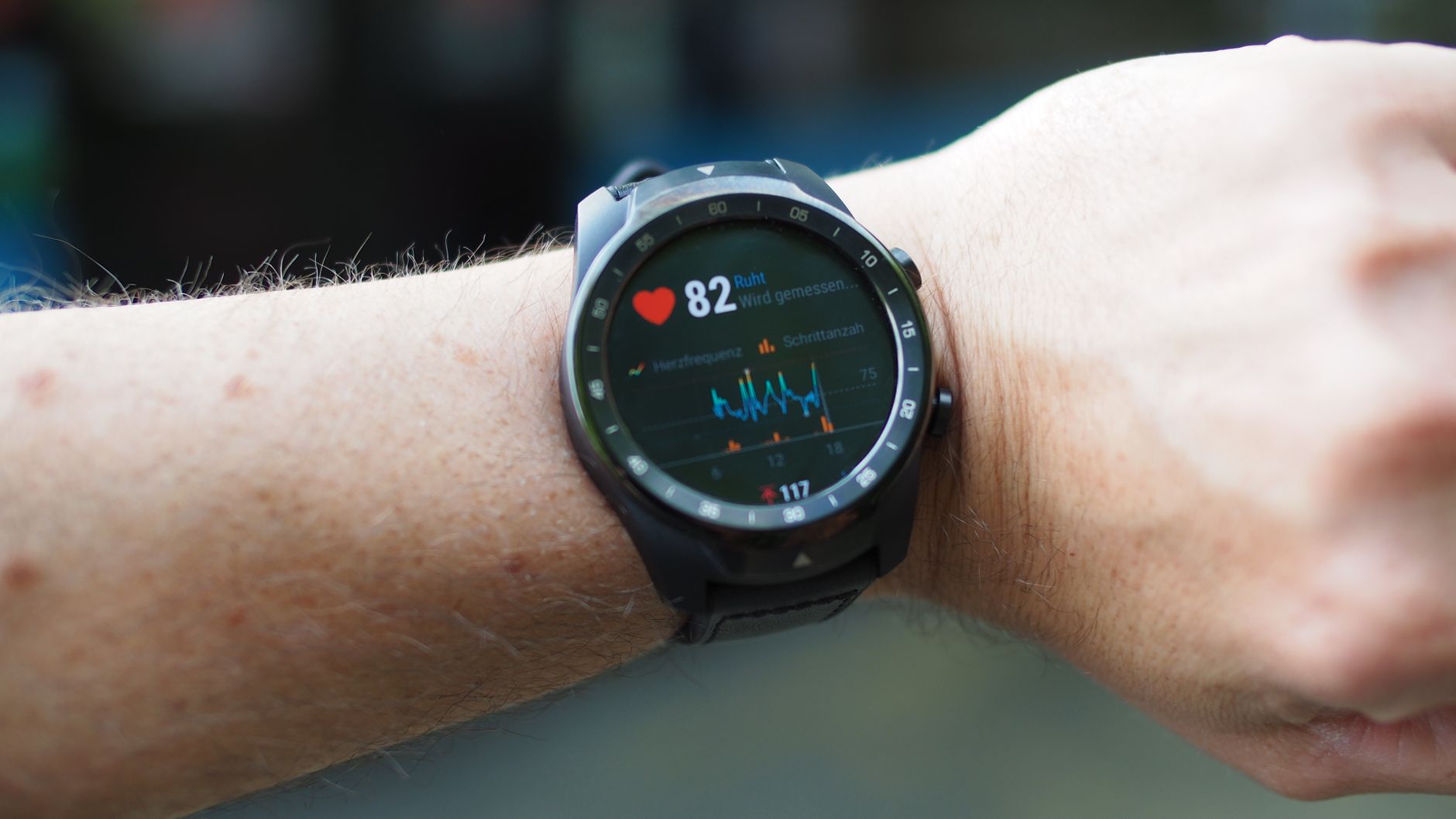
Photo by Jens Mahnke
Syncing with Your Training Plan
Modern athletes expect their hardware to act as a bridge between their watch and their coaching platform. The Suunto and COROS ecosystems shine here because they prioritize third-party compatibility. Once you finish your run, your watch automatically sends your data to your phone, which then pushes the details to apps like Strava or TrainingPeaks.
The integration is smooth on both sides. You simply connect your accounts within the respective apps, and the watch does the rest. This automation is a major advantage if you follow a structured training plan. You spend your energy on the trails rather than manually uploading files or worrying about data fragmentation.
For runners who use TrainingPeaks for workout tracking, both devices sync structured workouts directly to your wrist. Your watch will guide you through specific intervals, alerting you when to speed up or slow down based on your target pace or power zones. This takes the guesswork out of complex workouts. It keeps you focused on your form and cadence while the device manages the session timing.
Efficiency defines the experience for most users. You can review your metrics immediately after a session to see how your heart rate responded to specific climbs or how your pace held up during the final miles of a long run. By keeping your data centralized in a single coaching or tracking app, you build a clear history of your performance. You identify long-term trends and adjust your upcoming training blocks based on hard evidence rather than feelings.
User Interface and Ease of Use
Navigating your watch while running is often an exercise in patience, especially when your heart rate is red-lining on a steep mountain climb. A clear interface makes the difference between quickly glancing at your pace and fumbling with a screen that refuses to acknowledge your touch. When you compare the Suunto 9 Peak Pro vs COROS Pace 4 for trail running, you will quickly notice how each brand handles the interplay between physical hardware and software feedback.
Buttons Versus Touchscreen Controls
Suunto packs its interface with both a responsive touchscreen and physical buttons. The touchscreen feels natural in mild weather, letting you swipe through data screens as easily as you would navigate a phone.
However, the true test occurs when rain pours down or your hands are caked in mud. Touchscreens often struggle under these conditions, occasionally registering ghost swipes or ignoring inputs entirely. Fortunately, the side buttons provide a reliable backup that works even if you wear thick gloves.
The COROS Pace 4 leans heavily into a tactile experience with its signature digital dial. This rotating knob is a favorite among runners because it provides crisp feedback regardless of the weather. You can lock or unlock your screen with a simple twist, which prevents accidental inputs during a technical descent. While it lacks the fluid swipe-and-tap feel of the Suunto, it offers a consistent, mechanical reliability that never falters when the trail turns messy.

Photo by ahmed akeri
Display Visibility and Screen Brightness
Reading your data under the harsh glare of a high-altitude sun remains a major hurdle for many devices. Both manufacturers utilize high-contrast displays to combat washout, yet they prioritize different visual styles. Suunto uses a display that favors rich colors and deep blacks, which looks sharp and professional in most lighting. Its brightness settings are excellent, though you might find yourself manually adjusting them if you move between dark forest cover and bright, open ridgelines.
COROS focuses on high-legibility fonts and a simplified interface layout. The screen background is usually stark, making the data fields stand out even when you are moving quickly over uneven ground. Because of this high-contrast approach, the Pace 4 remains readable in direct sunlight without requiring excessive backlight intensity. You can learn more about these display technologies through official gear specifications.
When choosing between these two, consider your environment. If you prefer the familiarity of smartphone-style gestures, the Suunto interface feels intuitive. If you prioritize consistent performance in the worst possible weather, the tactile control of the COROS dial is difficult to beat. Every runner has a different tolerance for screen fiddling mid-run, so prioritize the setup that keeps your eyes on the trail rather than on your wrist.
Price Point and Overall Value
Evaluating the cost of your gear requires a clear look at what you get for your money. Both the Suunto 9 Peak Pro and the COROS Pace 4 occupy different positions in the market, reflecting their unique construction and feature sets. Choosing between the Suunto 9 Peak Pro vs COROS Pace 4 for trail running often means weighing premium materials against high-performance efficiency.
Understanding the Investment
The Suunto 9 Peak Pro commands a higher price because of its refined build quality. You pay for sapphire glass, a metallic bezel, and a design that bridges the gap between a rugged tool and a piece of wearable fashion. This model appeals to athletes who want a watch that withstands harsh conditions and looks good during daily wear. The extra cost provides peace of mind if you frequent rocky trails where a plastic casing might quickly accumulate scratches.
The COROS Pace 4 prioritizes performance over luxury materials. It is a workhorse that keeps costs lower by using high-strength composites. You pay for the sensor suite and the software ecosystem rather than expensive exterior components. This model is ideal for the runner who wants top-tier data accuracy without paying for premium metals. It provides every metric needed for training, including power, vertical gain, and heart rate, at a price that leaves more room in your budget for race entries or travel.
Matching Gear to Your Running Goals
Determining which watch offers better value depends on where you fall in your development as a runner. Beginners may find the COROS Pace 4 the smarter path because it offers professional-level features at a lower barrier to entry. If you are starting your journey into ultra-distance events, you do not necessarily need the ruggedness of a titanium case yet. You need reliable tracking, long battery life, and data that helps you learn your pace and effort.
Advanced marathoners and ultra runners might justify the Suunto 9 Peak Pro as a long-term investment. If you spend your weekends in high-alpine environments where your gear regularly scrapes against granite, the durability of the screen and bezel matters. You are not just paying for a watch; you are paying for an instrument designed to survive the terrain you plan to conquer for years.
Cost Considerations at a Glance
When you compare these devices, look beyond the initial purchase price. Think about the lifespan you expect from the product and the features that directly assist your training.
- Premium build: The Suunto provides a higher tactile quality, which holds value better for those who wear their watch all day.
- Feature density: Both watches include similar software capabilities, so your decision centers on build quality and design aesthetics.
- Operational costs: Both brands frequently update their firmware for free, meaning your device gets better over time without additional spending.
For a clearer breakdown of how these features align with your specific needs, you can review the product feature comparison provided by the manufacturer.
You should prioritize the device that matches your typical environment. If you want a reliable tool that handles the rigors of the trail without asking for a premium price, the COROS platform is a difficult option to ignore. Conversely, if you want a piece of equipment that blends durability with a minimalist, high-end profile, the investment in Suunto becomes quite clear.
Conclusion
The choice between the Suunto 9 Peak Pro and the COROS Pace 4 for trail running reflects your personal priorities on the mountain. The Suunto appeals to runners who demand a premium, armored device that resists the scrapes of technical rock and high-alpine exposure. It provides a robust build and a sophisticated interface for those who want their gear to handle both rugged races and daily life.
The COROS Pace 4 serves the minimalist athlete who values efficiency above all else. This model provides every metric required for elite training while maintaining a lightweight feel that disappears on your wrist during long efforts. It offers a straightforward, high-performance experience that keeps your focus entirely on the path ahead.
Pick the device that matches your specific training style and commitment to the terrain. Your watch is simply a tool to help you reach the next summit. Lace up your shoes, head out to the trails, and let your performance speak for itself.


